
I like to paint birds when I want something easy to work on in the evenings.
Acrylics are good for this because you can fix mistakes easily.
I have come up with some bird ideas that do not require a lot of skill.
They are mostly based on common birds you see around.
These might help if you are new to painting and want to give it a try.
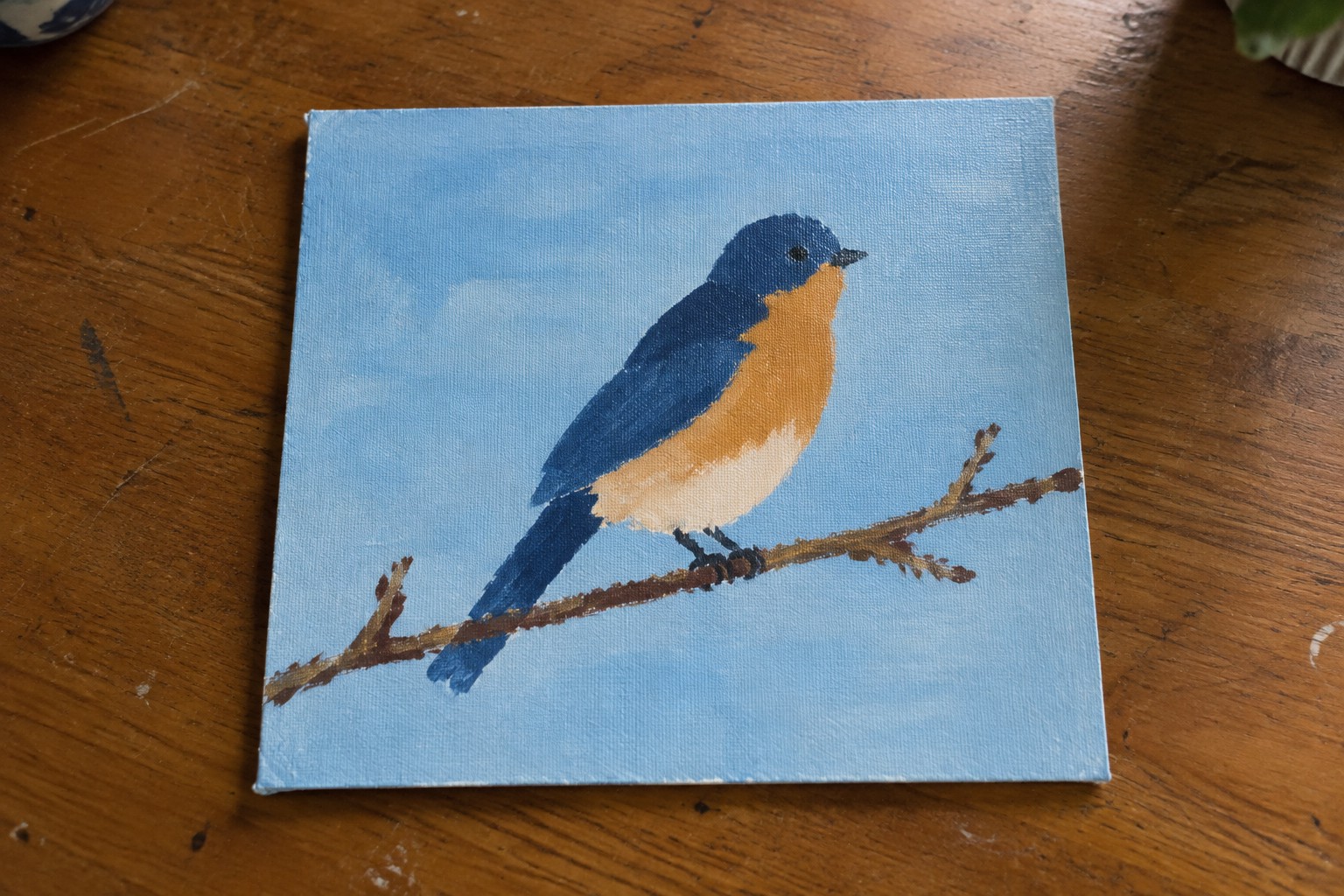
Blue and Orange Bird on a Branch

A bird perched on a branch works as a clean acrylic painting idea that focuses on shape and color blocking. The dark blue back and head contrast directly with the orange chest and light underbelly, while the thin branch keeps the composition balanced without adding extra elements. This setup fits the animal painting category and uses a simple sky background to let the bird remain the clear focal point.
What makes this idea useful is how the limited palette and clear shapes let you practice filling areas without needing fine detail work. You can swap the orange for red or yellow to try different bird species, or tilt the branch to change the angle on a new canvas. For practice sessions, this layout stays effective at small sizes and gives you a finished piece that reads well as basic wall art.
Cute Rounded Bird with Flat Color Blocks

A stylized bird with simple rounded shapes works well as a beginner-friendly acrylic idea in the cute animal category. The painting uses large color areas for the body and head plus minimal details like small eyes and feet to keep the composition balanced and easy to read. A solid light background lets the bird stand out without extra elements or complex blending.
What makes this idea useful is how the basic shapes let you focus on clean edges and color placement rather than fine brushwork. You can change the head color or wing accents to fit different seasons or room colors while keeping the same layout. For small canvas decor this style stands out on Pinterest because the graphic look reads well even in thumbnails.
Three Patterned Birds Stacked on Yellow with Side Florals
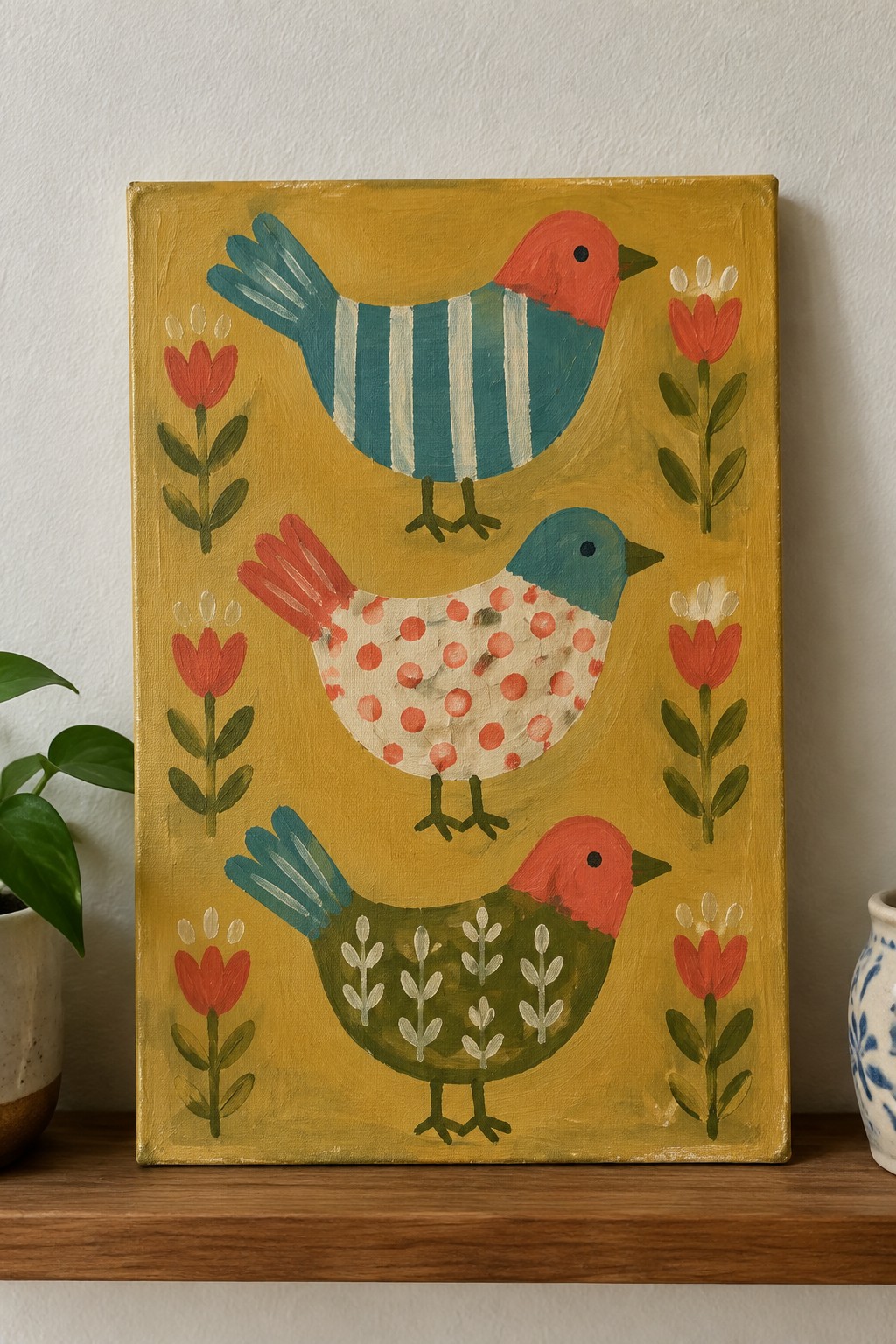
This acrylic painting idea centers on three birds stacked vertically, each given a distinct pattern on its body while sharing the same red head and teal wing accents. It fits the decorative animal category for wall art, where bold color blocks and repeated shapes create a clean, graphic look. The solid mustard background keeps the focus on the birds, and the matching red flowers with green stems on both sides add symmetry without crowding the canvas.
What makes this idea useful is how the flat shapes and repeated side elements let you build the painting quickly with basic brushes and color fills. You could swap the body patterns for different stripes or shapes to personalize it, or change the background color to shift the mood for seasonal decor. For canvas art, the bright yellow base and balanced layout help the piece stand out in a feed because it reads clearly even at small sizes. This would be easy to adapt by painting just one bird or stretching the design across two canvases.
Sparrow on a Branch Against Teal

A sparrow painting idea centers on a single bird perched on a branch with a soft teal background that lets the brown and white feathers stand out. The composition keeps the focus on the bird’s rounded shape and head tilt by using a limited color range and placing the branch low across the canvas. This fits the animal category and works because the contrast between warm tones on the bird and the cool background does most of the visual work.
What makes this idea useful is the straightforward layout that translates easily to a small canvas or practice piece. You can swap the teal for other muted shades or simplify the branch further if you want less detail. The clear edges around the bird also make it simple to adapt for wall art or cards without losing the subject. For beginners, this kind of single-bird setup builds confidence in basic blending before moving to more complex scenes.
Shorebird Standing in Shallow Surf

A shorebird in shallow water works well as an acrylic painting idea that mixes a simple animal subject with a basic coastal landscape. The composition keeps the bird as the clear focal point through its position and reflection, while the background uses stacked horizontal bands of ocean, sand, and sky to create depth without complex details. This approach fits the animal and landscape categories and relies on soft blending and limited color shifts rather than heavy texture or fine brushwork.
What makes this idea useful is how the bird shape can be blocked in with just a few tones and does not require detailed feather work to look finished. The layered background adapts easily to different canvas sizes and gives beginners practice with blending water and sky areas in acrylics. You could simplify the waves further, change the bird color, or add a few rocks to make the scene feel more personal while keeping the same basic layout.
Colorful Bird Trio on a Branch
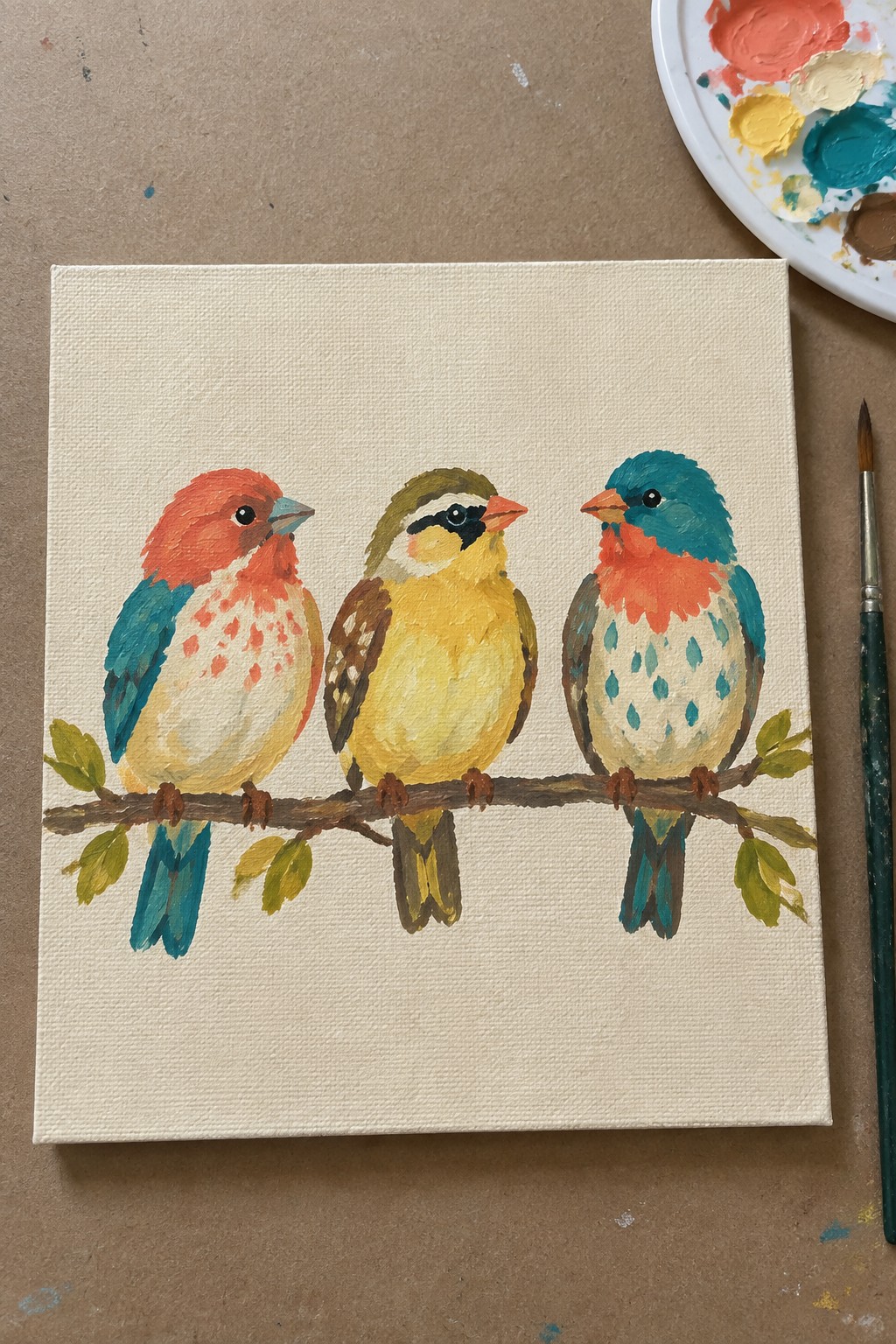
Painting three birds side by side on one thin branch gives you a clean animal subject that works well as wall art or canvas decor. The idea relies on bold color blocks for each bird, with simple shape contrasts between the red, yellow, and teal plumage against a plain background. This layout keeps the focus on the birds while using the branch as a natural anchor that connects them without adding extra elements.
What makes this idea useful is the clear separation between the three birds, which lets you practice color placement and basic form without needing detailed feathers or complex scenery. You can easily swap the color combinations, change the branch angle, or add a fourth bird if you want to adjust the composition. For practice or quick gifts, the limited background and repeated perch shape make it straightforward to repeat on different canvas sizes while still looking finished.
Bluebird Perched on a Branch

A bluebird portrait works well as an acrylic idea because it relies on clear color separation between the bright blue upper body and the warmer brown-orange chest to create focus. The soft light background keeps the bird as the main subject while the simple branch gives it a natural resting point without adding extra elements. This type of animal painting suits canvas wall art since the rounded body shape and directional brushwork on the feathers guide the eye without requiring intricate detail.
What makes this idea useful is that the color blocks let you practice blending and layering without getting lost in tiny marks. You could easily swap the blue tones for other bird species or crop the composition tighter around the head for a smaller canvas. The clean layout also translates well to Pinterest because it reads quickly as a recognizable bird painting that still feels finished.
Abstract Overlapping Bird Silhouettes

This acrylic painting idea centers on simplified bird shapes filled with solid blocks of color and layered over one another to suggest movement across the canvas. The composition relies on angled wings and bodies pointing in different directions, with the overlaps creating new color combinations where the shapes cross. It works as abstract animal wall art because the focus stays on bold shapes and color placement rather than fine details or realistic feathers.
What makes this idea useful is how the flat color areas let you build the painting quickly by blocking in large sections first. You can swap the palette for different seasons or room colors without changing the layout. For canvas decor, something like this stands out on Pinterest because the graphic style reads well even in small preview images. The same approach works if you want to reduce it to three birds or expand it with more overlapping layers.
Two Birds on a Branch Painting

A pair of birds facing each other on a single branch gives a clear focal point that works well for an acrylic animal painting. The soft green background keeps attention on the birds while the leaves and branch add just enough structure without crowding the space. This layout fits the decorative wall art category because the shapes stay simple and the colors stay muted.
What makes this idea useful is the built-in symmetry from the two birds, which helps balance the canvas without extra planning. You can change the blue and brown tones to match any room or season, or drop some leaves if you want a cleaner look. For practice, the subject lets you work on basic body shapes and branch lines before adding more detail. The gentle contrast between the birds and background makes the finished piece easy to photograph for Pinterest.
Round Bird with Striped Scarf and Flower
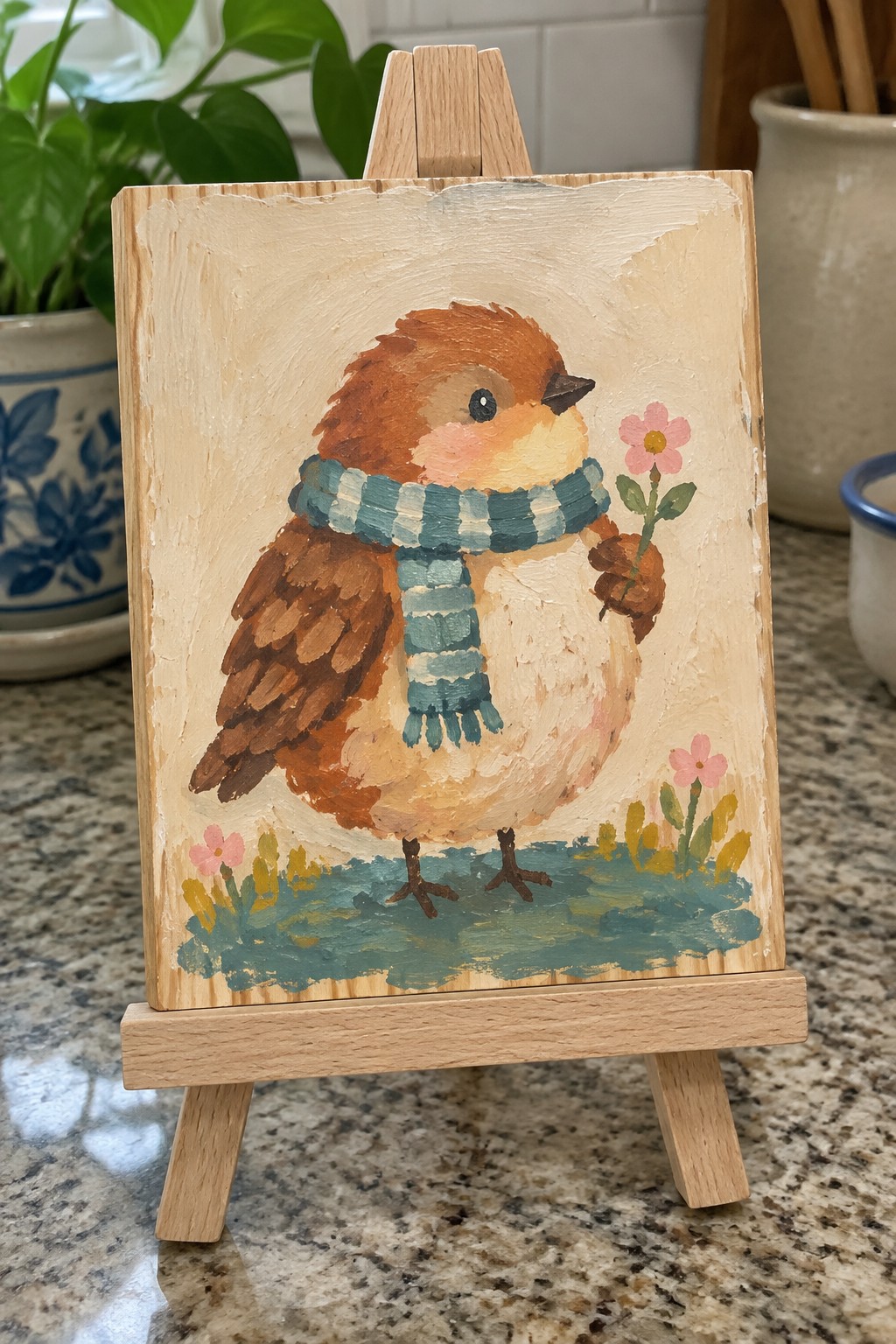
A round bird wearing a striped scarf while holding a single flower creates a simple animal subject that works well for acrylic practice. The idea relies on a centered shape, a few added details like the scarf and flower, and a narrow strip of ground at the bottom to keep the composition balanced. This type of cute animal painting uses basic color blocks and soft edges rather than fine detail, which helps the main form stand out on a small canvas.
What makes this idea useful is how the scarf breaks up the body without requiring complex patterns, so you can change its colors or thickness easily. The single flower adds a focal point that you can swap for different seasons or leave out entirely if you want a simpler version. For first-time painters this layout works because the body shape stays forgiving and the background stays flat, letting you focus on brush control and basic layering.
Seagull on a Simple Beach

A seagull standing on sand against a flat ocean and sky creates an easy acrylic painting idea that pairs a single bird with a basic coastal landscape. The horizontal layers of sky, water, and shore keep the composition balanced while the bird provides a clear focal point through shape and value contrast. This approach fits the animal-in-landscape category and relies on simple blocks of color rather than fine detail or heavy texture.
What makes this idea useful is the limited color range and clean layout that let beginners focus on shape placement and basic blending without getting overwhelmed. You can change the bird species, swap the sky for sunset tones, or crop the scene tighter for a smaller canvas. For practice, the idea works well because it builds confidence in both animal proportions and simple backgrounds while producing a finished piece that works as wall art or a gift.
Hummingbird Hovering Beside Pink Blossoms
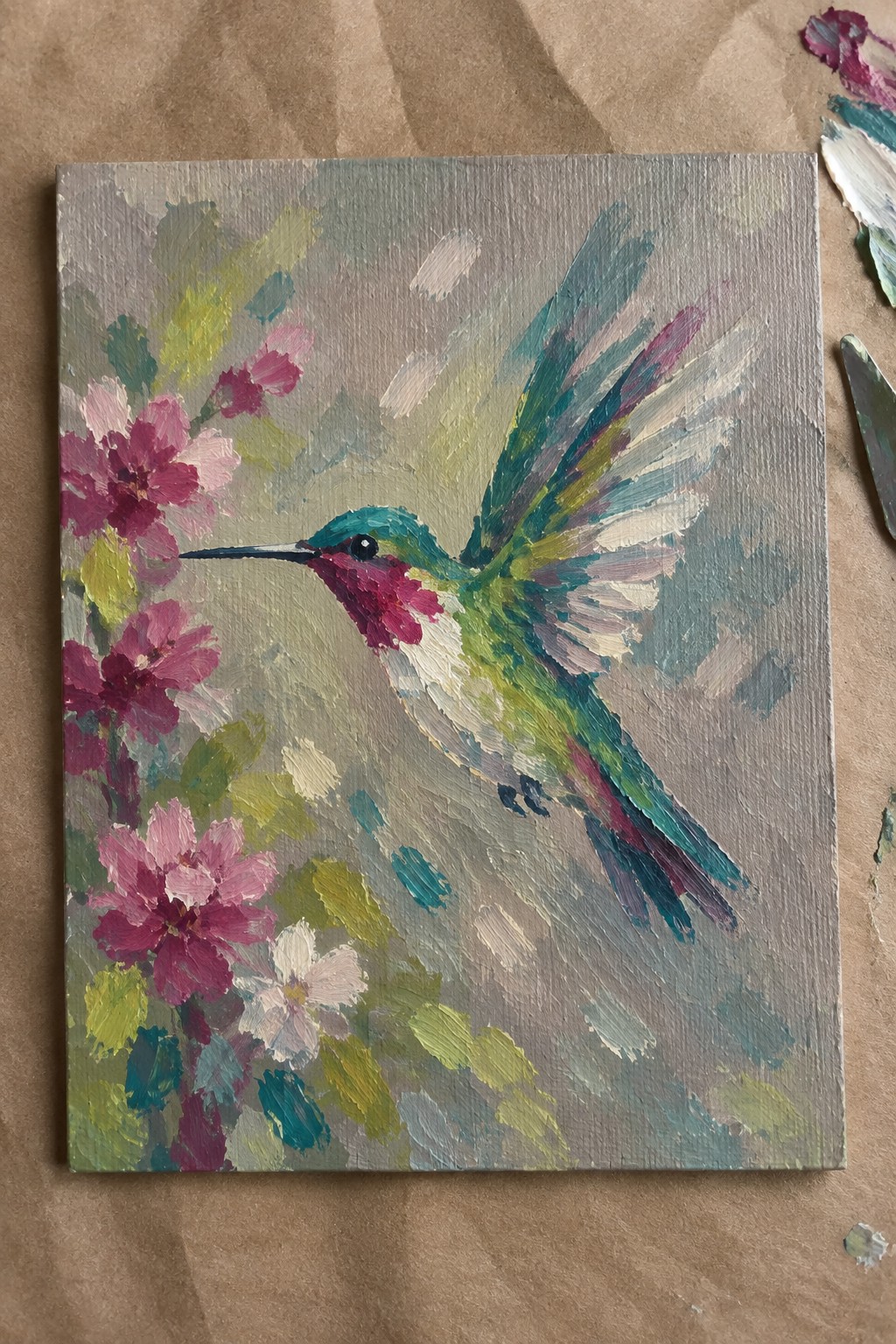
A hummingbird in flight next to a cluster of pink flowers makes a strong acrylic idea because the bird becomes the clear focal point while the flowers add color and context on one side. The soft gray background keeps the brighter greens, pinks, and blues on the bird from competing with extra elements, and the spread wings give the composition movement without needing complex details. This fits the animal category with a light floral addition that works well on a standard canvas size.
What makes this idea useful is the straightforward layout that lets you focus on building the bird first before adding the flowers as supporting shapes. The color contrast between the bird and background does most of the visual work, so you can simplify the flowers or change their hue to match other decor. For practice, this subject helps with layering body colors and suggesting wing motion while staying beginner-friendly enough to finish in one or two sessions. You could also crop the scene tighter around the bird if you want a smaller canvas version.
Chubby Bird Nestled with Patterned Eggs

A round bird painted in soft brown and cream tones makes an approachable animal subject for acrylic painting. The nest sits low on the canvas with three eggs in front that carry simple patterns like stripes and dots to add interest. A solid warm background keeps the focus on the bird and eggs while letting basic brush marks define the shapes and edges.
What makes this idea useful is the centered layout that lets you build the main shapes first before adding the nest details around them. You can swap the egg patterns for your own designs or use fewer colors to finish the piece faster on a small canvas. This subject works well for practice because the bird’s rounded form hides small mistakes and still reads clearly from a distance.
Chickadee on a Snowy Branch

A simple winter bird study works well by placing a chickadee on a bare branch that angles across the canvas. The idea uses a cool gray-blue background to make the bird’s black cap, white cheeks, and pale underbelly stand out without extra elements. Snow dabs on the branch add seasonal interest while keeping the overall layout clean and easy to follow.
What makes this idea useful is how the muted background handles most of the atmosphere, so you only need to focus on the bird and branch shapes. You could swap the chickadee for a different small bird or skip the snow entirely for a year-round version. The diagonal branch gives the composition direction, which helps it look balanced even on a small canvas or when painted quickly for practice.
Vertical Trio of Folk-Style Birds
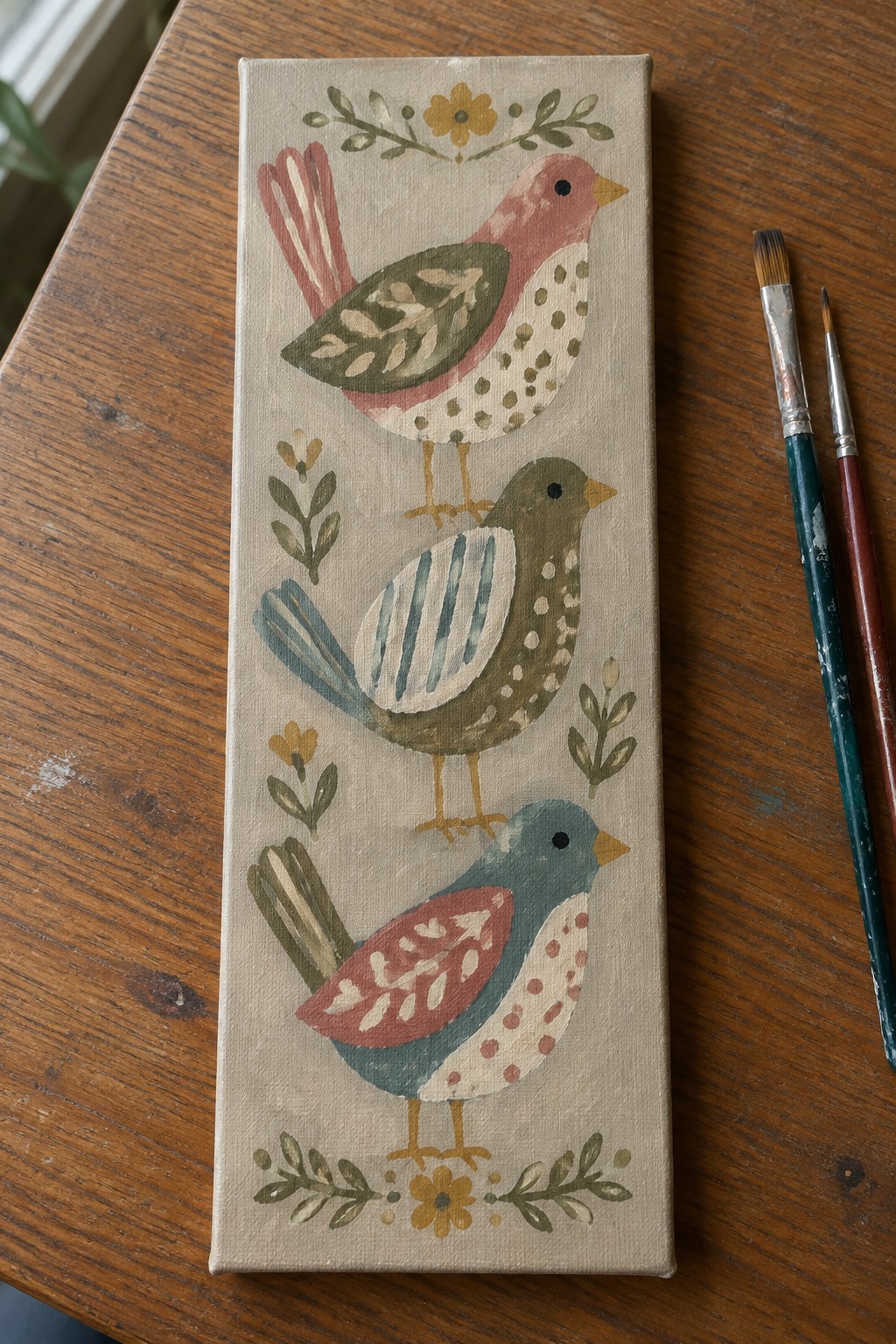
A vertical stack of three birds makes a strong decorative canvas idea when you want something simple but patterned. Each bird uses basic body shapes with different wing treatments like leaves, stripes, and dots to create variety while keeping the overall look consistent. The neutral background and small floral accents keep the focus on the birds without adding extra layers or texture.
What makes this idea useful is the repeatable format that works on tall or narrow canvases. You can swap the wing patterns for other simple marks or change the color palette to match a room without redesigning the layout. For practice, the shapes stay easy to block in first, then the patterns give you quick ways to add interest. This kind of clean, graphic arrangement tends to save well on Pinterest because the vertical format reads clearly even as a thumbnail.
Tropical Macaw with Bold Color Blocks
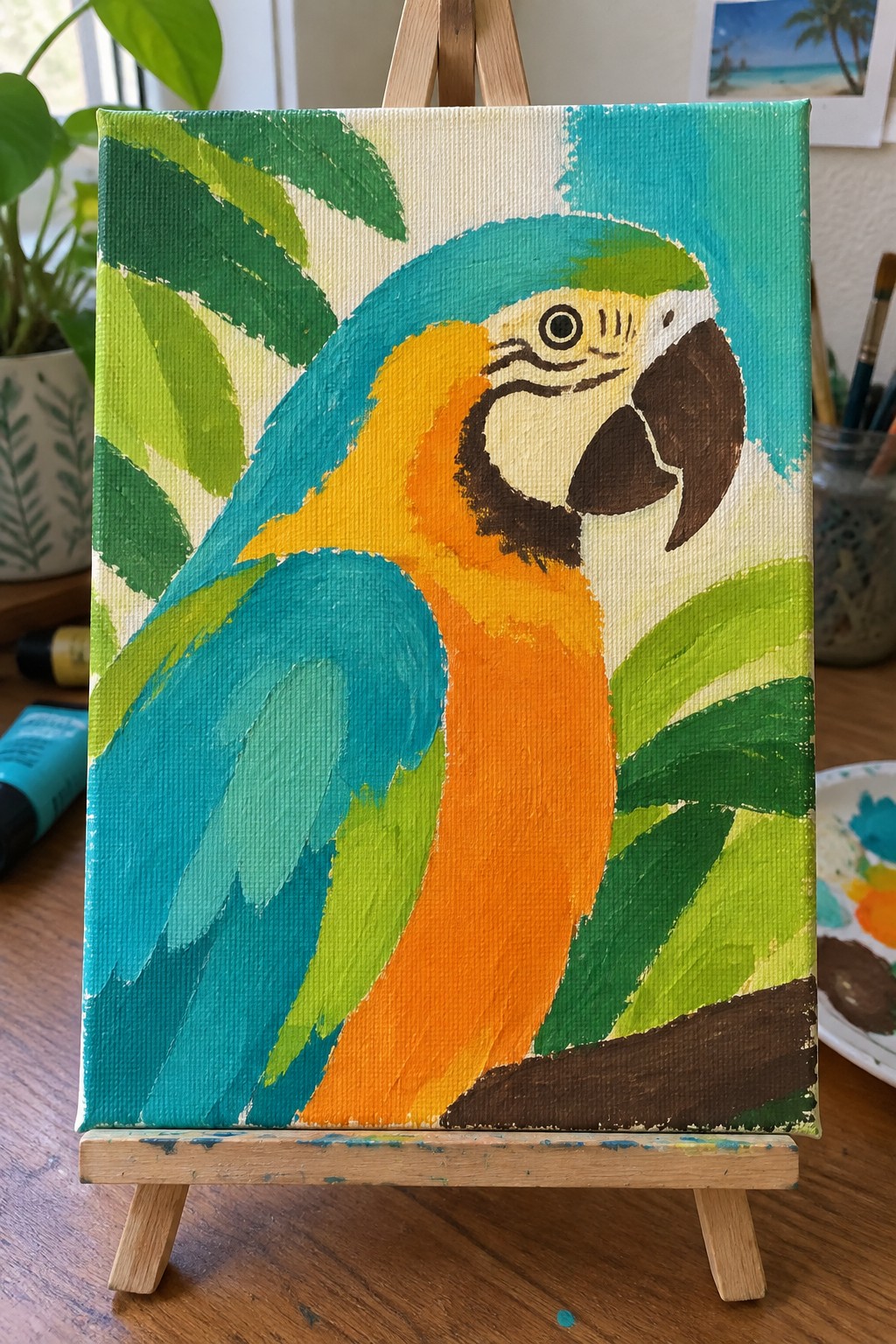
Painting a macaw with large sections of bright orange, teal, and yellow creates a strong focal point that stands out even on a small canvas. The idea relies on simplified feather shapes and a light background with overlapping green leaves to frame the bird without crowding it. This approach works as an animal acrylic painting that emphasizes color contrast and clean edges over fine detail.
What makes this idea useful is how the flat color areas let you build the bird quickly before adding small accents like the eye and beak. You could swap the macaw for a different parrot species or adjust the leaf tones to fit your space. For practice, this kind of subject works especially well because the high contrast keeps the painting looking finished even if the brushwork stays loose.
Chickadee Group on Split Color Background

Painting a small cluster of chickadees against a split background gives you an easy way to create interest without painting a full scene. The idea uses a vertical divide between a warm neutral and a soft blue to separate the birds visually while keeping the focus on their rounded shapes and simple color blocks. This fits the cute animal category and works well because the birds stay the main element even with minimal background detail.
What makes this idea useful is that the birds can be painted with basic oval bodies and short brushstrokes for wings and heads. You can adapt it by changing the split colors, reducing the group to three birds, or moving the branch higher or lower on the canvas. For practice, this layout helps with placing multiple subjects so they feel balanced rather than crowded. It would also translate well to a smaller canvas or a quick weekend project.
Songbird on a Flowering Branch

A small songbird perched on a curving branch with scattered pink blossoms creates a balanced acrylic painting idea that combines animal and floral elements. The soft color transitions on the bird’s chest and head keep the focus on simple shape work while the branch provides a clear diagonal structure that organizes the flowers around it. This approach works because the limited palette and clean edges let the composition feel complete without requiring heavy texture or fine detail everywhere.
What makes this idea useful is the way the white background and light color layers reduce the need for complex underpainting or heavy mixing. You can easily swap the pink blossoms for other seasonal flowers or adjust the bird’s colors to match a species you already have reference photos for. For practice, this kind of subject helps build control with soft blending and edge placement while staying simple enough to finish in one or two sessions. The clean layout also scales well if you want to turn it into a small canvas piece for wall decor.
Cardinal on a Branch with Fall Leaves
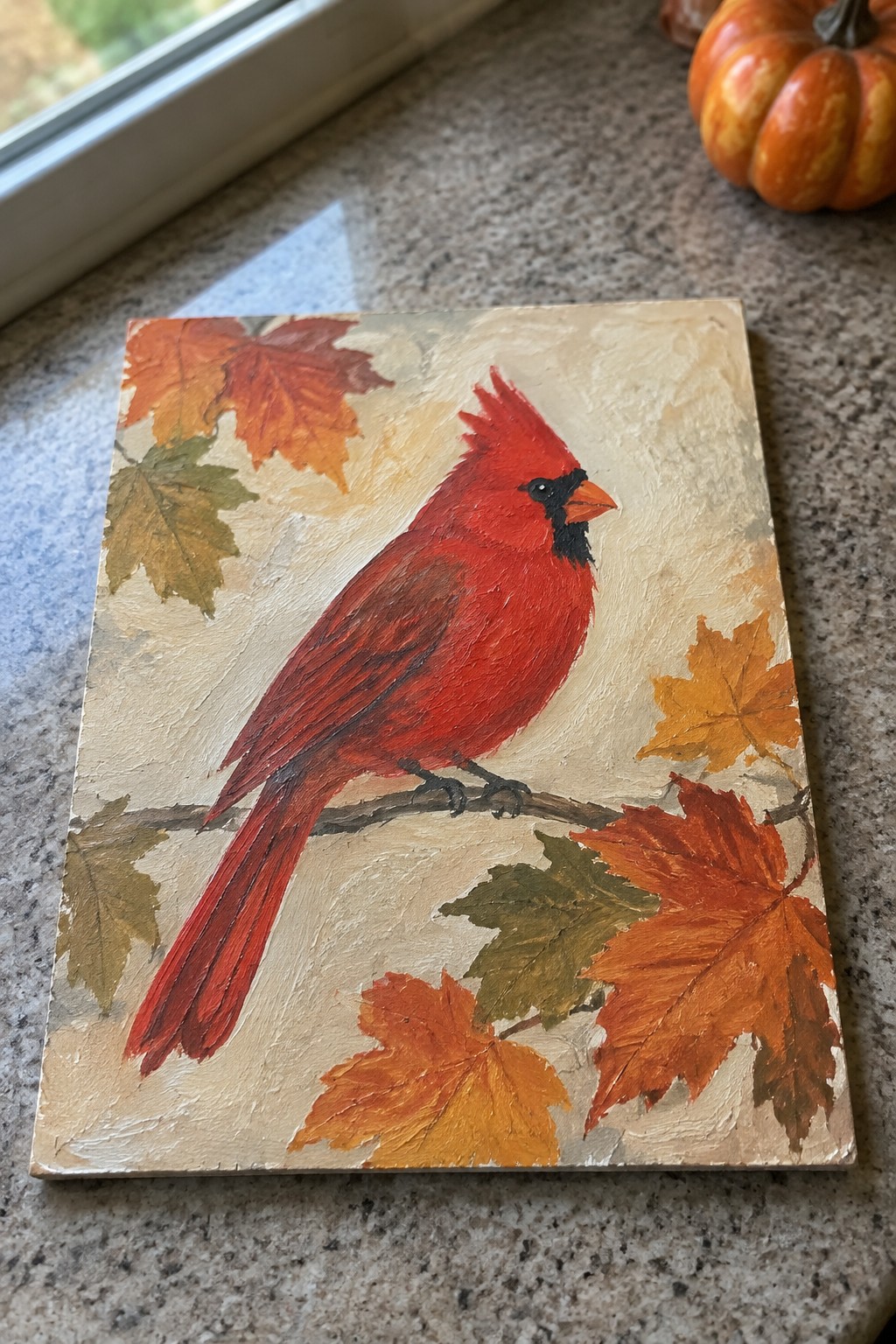
A cardinal perched on a branch with scattered maple leaves creates a straightforward seasonal animal painting idea. The solid red body of the bird against the light background gives the piece immediate visual focus while the leaves in varying shades of orange, red, and green fill out the sides without crowding the center. This layout works as a textured acrylic approach where visible brushwork builds the feathers and leaf shapes.
What makes this idea useful is how the bird’s shape stays recognizable even if the edges stay loose. You could simplify the background to a flat wash or change the leaf colors to match a different season while keeping the same layout. The strong color contrast between the cardinal and the rest of the canvas helps the subject stand out quickly on a Pinterest board or as simple wall decor.
Birds Silhouetted Across a Sunset Gradient

A row of simple bird silhouettes spaced across a horizontal gradient creates a clean acrylic painting idea that blends animal and landscape elements. The alternating dark and light bird shapes stand out against the blended blue-to-orange sky, while the dark foreground anchors the bottom edge. This approach keeps the focus on shape placement and color contrast rather than intricate detail.
What makes this idea useful is how the silhouettes remove the need for feather details and let the gradient do most of the visual work. The layout adapts easily by changing the number of birds, swapping in different species outlines, or shifting the sky colors for different times of day. For canvas decor, the wide format fits standard sizes well and can be painted in a few layers without complex blending.
Blue Jay Profile Portrait

A close-up profile of a blue jay makes a strong acrylic painting idea because it centers on building feather texture with short directional strokes while keeping the background simple and neutral. The contrast between the dark eye and beak against lighter plumage helps the shape read clearly without requiring fine detail everywhere. This animal painting approach works well for focusing practice on one area of the canvas rather than an entire scene.
What makes this idea useful is the limited color range of blues, whites, and grays, which keeps mixing straightforward while still showing variation in the feathers. You could adapt it by tightening the crop around the eye or swapping the background for a warmer tone to change the mood on a finished canvas. For practice, the subject builds comfort with layering and edge control, and the compact size makes it easy to finish in one or two sessions as a standalone piece or part of a small bird series.
Cute Owl in a Night Sky Acrylic Painting
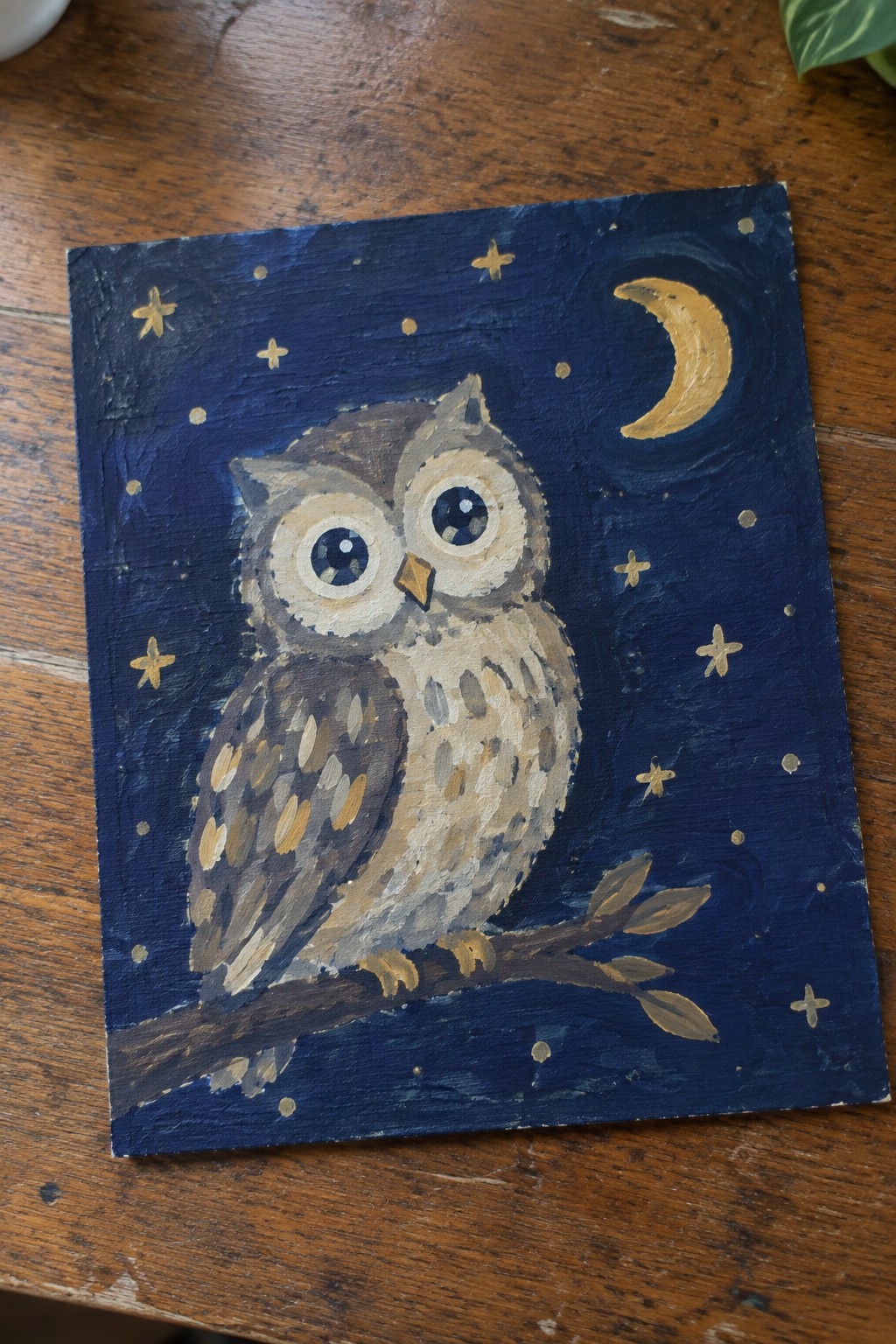
A simple owl perched on a branch works well as an acrylic painting idea when placed against a solid dark blue night sky. The large eyes and rounded body shapes keep the main subject easy to block in, while small gold stars and a crescent moon provide just enough contrast to make the composition feel complete. This type of animal painting fits the cute or decorative category and suits canvas projects where the background can stay fairly flat.
What makes this idea useful is the strong light-to-dark contrast that helps define the owl without needing fine detail work. The limited palette of blues, browns, and golds can be swapped for other colors or turned into different bird species while keeping the same layout. For practice or quick gifts, the central placement on the canvas leaves space to experiment with simple dry brushing on the feathers and sky.
Frequently Asked Questions
1. What basic supplies do I need to start these bird acrylic paintings as a beginner? You will need a small set of acrylic paints with primary colors plus black and white, a few brushes including one fine detail brush, a canvas panel or heavy paper, a palette or paper plate for mixing, water in a jar, and paper towels for cleaning. These items keep things simple and affordable while allowing you to complete any of the 22 ideas without extra cost.
2. How do I choose which bird idea fits my skill level? Begin with birds that have rounded shapes and fewer feather lines such as cardinals or bluebirds. The article lists ideas in order of simplicity, so start at the top and follow the basic outlines first. This builds confidence before moving to designs with more wing details.
3. What techniques help paint feathers without them looking messy? Apply a base color first and let it dry. Then use a small brush with slightly lighter or darker shades in short, curved strokes to suggest feather layers. Work from the body outward and keep strokes light so the texture adds interest without requiring perfect lines.
4. How do I mix colors to make the birds look lively? Start with the main color on your palette and add small amounts of white for highlights or a touch of complementary color for shadows. Test mixes on scrap paper first. For example, add a hint of blue to green for tropical bird tones. This approach keeps colors bright and consistent across the painting.
5. What should I do if I make a mistake during the painting process? Acrylics allow quick fixes. Let the area dry completely then paint over it with the correct color in thin layers. For wet mistakes, gently blot with a damp paper towel and repaint once dry. Working in stages prevents most issues from becoming permanent.

Hi, I’m Camille.
I’m a self-taught painter and creative blogger with a soft spot for acrylic painting, color play, and all the little art ideas that make everyday life feel more inspiring.
I started this space because I’ve always believed painting should feel joyful, approachable, and a little personal. Some of my favorite pieces come from simple ideas, messy palettes, and evenings where I just felt like making something pretty.
Most of what I share begins with acrylic painting, but I also love exploring other mediums when creativity pulls me in a new direction. My goal is to collect and share painting ideas that feel fun, beautiful, and actually doable, whether the mood is calm and minimal or bright and playful.
This is a space for inspiration, experimenting, and enjoying art without overcomplicating it.