
I enjoy painting robins in acrylic because their red chests stand out against the softer tones around them.
It takes a bit of practice to get the feathers looking natural but the medium handles the layers well.
I have gathered some ideas based on photos and my own attempts at these portraits.
Each one tries to keep things realistic without too much detail.
You can use them as a guide if you want to try something similar yourself.
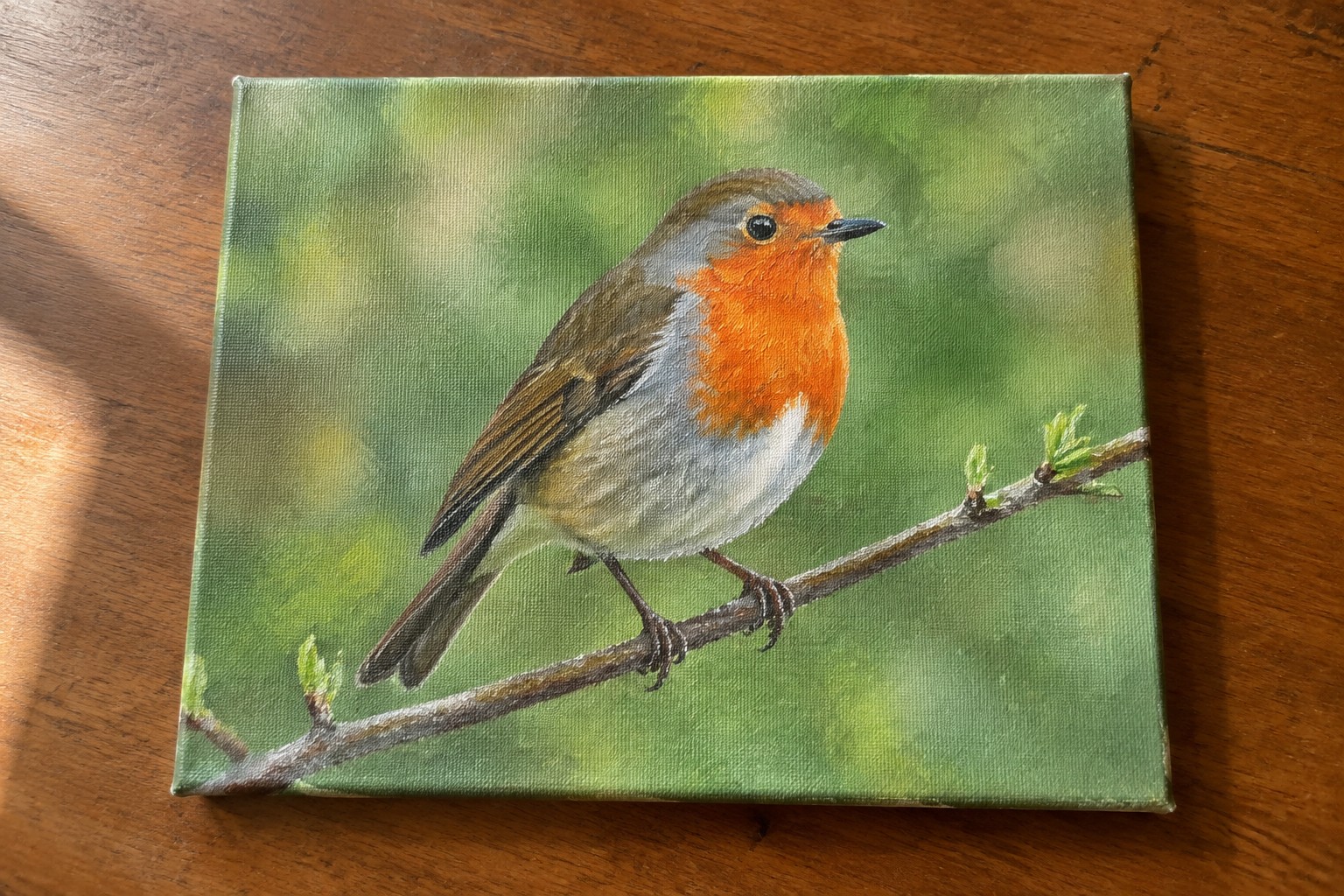
Robin Portrait on a Thin Branch with Blurred Green Backdrop

This acrylic painting idea focuses on a single robin as the main subject, shown in a close naturalistic style with accurate feather coloring and a bright orange breast. The composition places the bird slightly off center on a bare branch that runs diagonally, while the soft green background stays loose and unfocused so the robin stays the main point of interest. It belongs in the animal portrait category and works because the simple setting and clear color contrast let the bird stand out without extra elements.
What makes this idea useful is how the plain background removes the need for complex scenery, making the painting easier to plan on any canvas size. The strong color difference between the robin and the muted greens helps the subject pop even with basic layering. You can adapt it by keeping the branch minimal or adjusting the green tones to match a season, and the same layout works well for practice pieces or small wall art that still reads clearly from a distance.
Robin Portrait with Spring Bud Branches
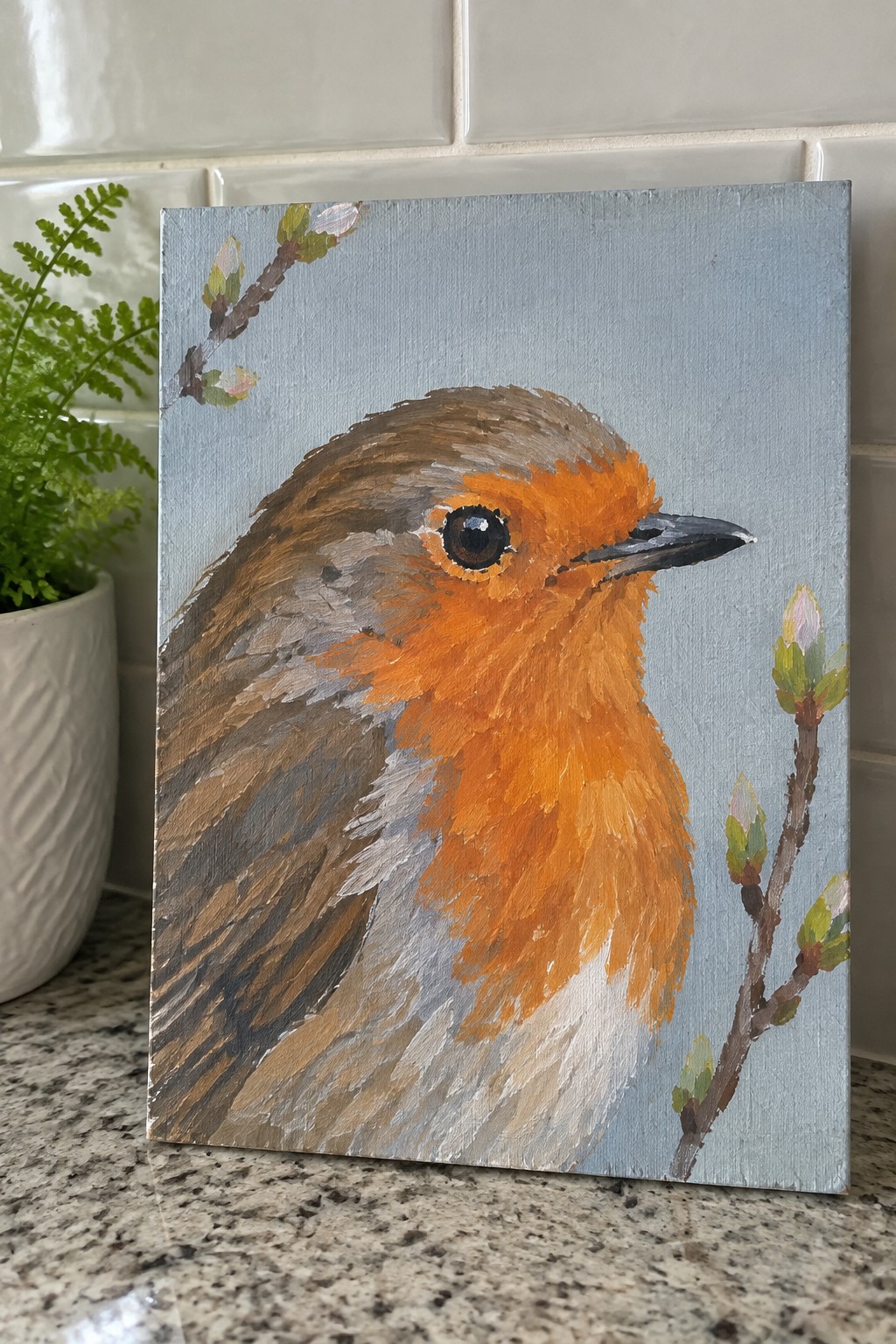
A close-up robin portrait works well as an acrylic painting idea because the bird fills most of the canvas and the bright orange breast creates a strong focal point against the muted blue-gray background. The simple budding branches on either side add a light seasonal touch while keeping the composition balanced and uncluttered. This type of animal painting relies on color contrast and cropped framing rather than complex scenery.
The strong orange-to-blue contrast does most of the visual work, so you can adapt the idea by changing how much feather detail you include or by swapping the buds for different foliage. For practice or small canvas projects, the layout stays approachable because the background stays simple and the subject stays centered. This style also translates easily to gifts or wall pieces since the robin is a recognizable bird that still feels fresh with the added branches.
Naturalistic Robin on a Mossy Branch

A robin perched on a mossy branch works well as a focused acrylic idea for naturalistic bird portraits. The main subject stays sharp and detailed while the background stays soft with faint branches, letting the orange breast and layered brown feathers stand out through simple color contrast. This fits the animal or wildlife category and keeps the composition balanced by using the branch as a strong horizontal anchor.
What makes this idea useful is how the moss texture on the branch adds interest without requiring complex techniques. You can adapt it easily by changing the background to a flat wash or swapping the branch for a simpler perch if you want a faster version. For canvas decor or practice, the clear focal point on the bird makes it straightforward to adjust size or detail level while still looking finished.
Close-Up Robin Portrait on Small Canvas

A close-up robin portrait idea focuses on the bird’s head and vibrant orange chest set against a solid dark green background. This creates a strong focal point through the contrast between the warm plumage and cool backdrop while keeping the composition tight and simple. It fits the animal portrait category where the goal is to emphasize recognizable features like the dark eye and beak using controlled blending on a compact surface.
What makes this idea useful is the small canvas size that reduces the amount of detail needed and speeds up the painting process. The limited background keeps attention on the subject and makes color mixing straightforward with just a few tones. This approach adapts easily by shifting the crop tighter around the eye or changing the green to another muted shade for variety. For practice or gifts, the format works well because it produces a finished piece quickly without requiring advanced techniques.
Profile Robin on a Solid Green Backdrop
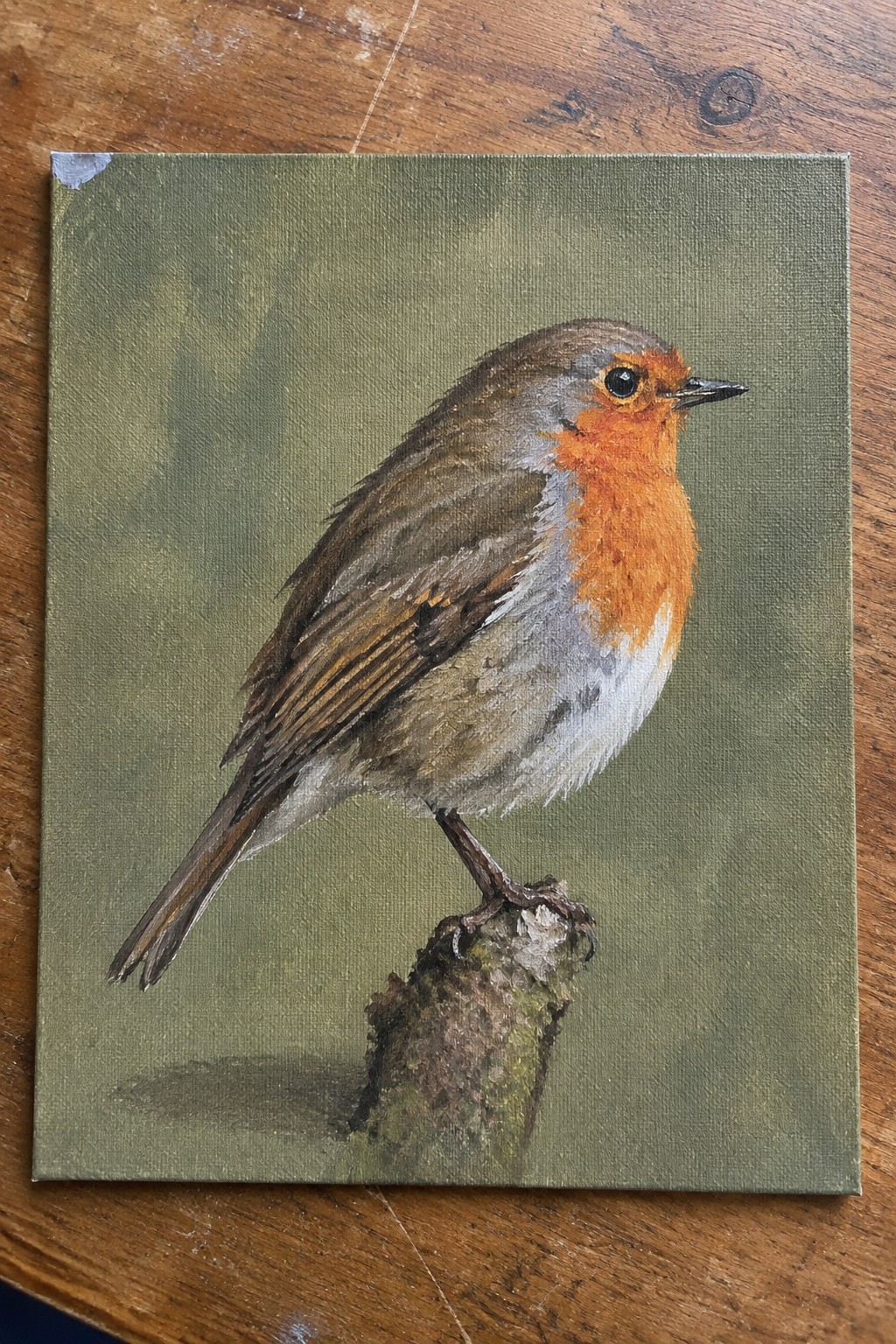
A straightforward acrylic idea for a naturalistic robin portrait places the bird in a side profile on a short textured branch, with its orange breast and layered brown feathers as the main focus against a flat muted green background. This keeps the composition simple and centered on the animal itself rather than any surrounding scene. The approach fits the wildlife or bird portrait category, where clean edges and controlled color blending on the feathers help the subject stand out without extra detail.
What makes this idea useful is the limited background, which lets you concentrate on feather texture and body shape without juggling multiple elements. The color contrast between the warm breast and cool green works well for quick practice sessions or small canvas pieces meant for wall display. You could easily adapt it by swapping the background shade or cropping tighter around the head and chest for a different format. For Pinterest, this clean layout tends to perform well because the subject reads clearly even at thumbnail size.
Robin Portrait with Cherry Blossoms on a Branch
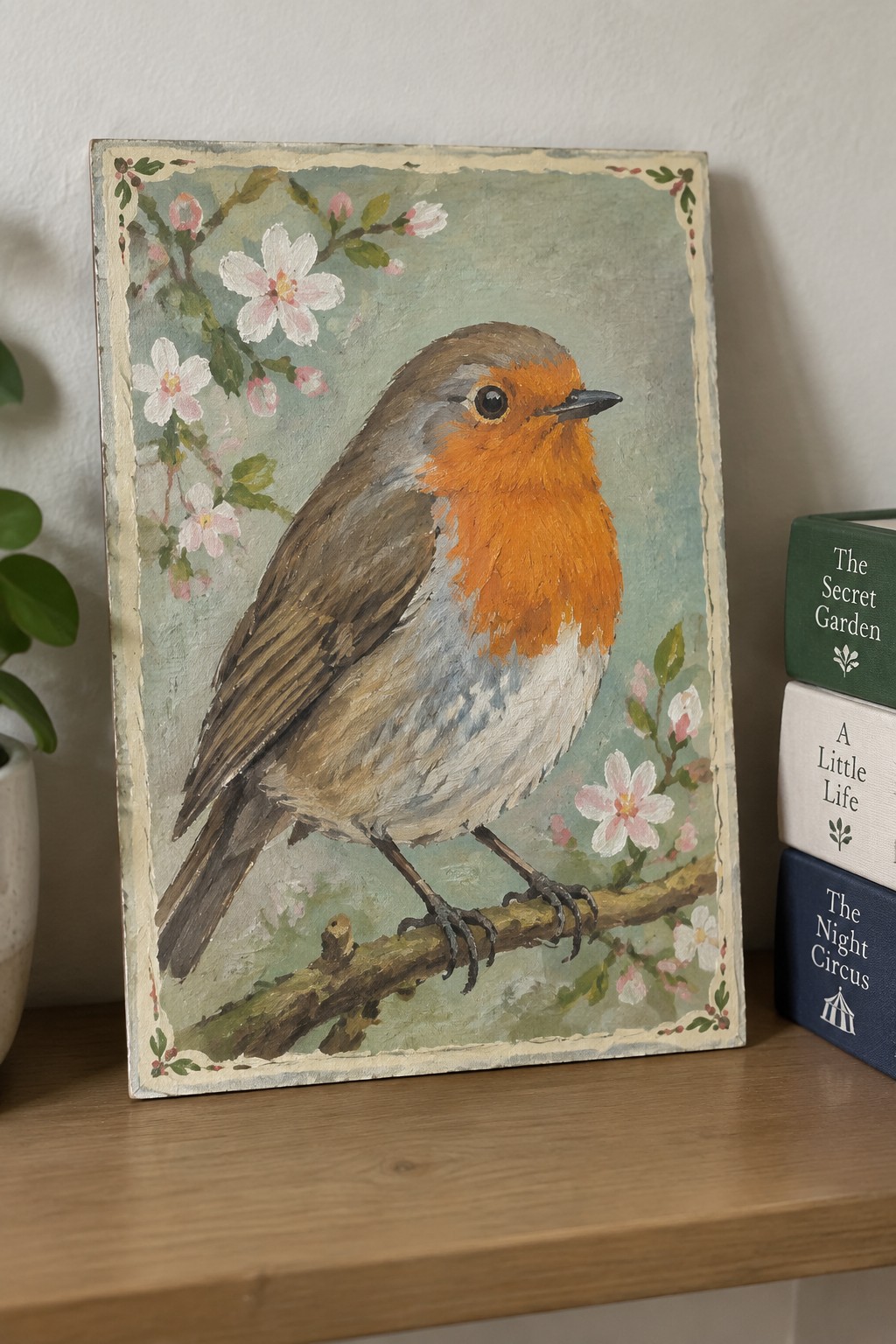
A robin portrait paired with cherry blossoms creates a strong acrylic idea in the animal and decorative wall art category. The bird serves as the clear focal point while the branch and flowers fill the surrounding space without crowding the composition. A soft muted background keeps attention on the robin’s orange and brown tones and makes the whole piece easy to balance on a canvas.
What makes this idea useful is that the bird can be painted in layers starting with broad color blocks then adding feather texture on top. For canvas decor this layout adapts quickly by changing the flower colors or simplifying the background to a single wash. The color contrast between the robin and the soft backdrop helps the piece stand out in wildlife or nature Pinterest searches, and the same approach works if you want to shrink the design for smaller panels or greeting cards.
Robin on Branch with Nest in Soft Background

A naturalistic acrylic painting idea that places a European robin as the clear focal point on a bare branch while showing a nest with eggs just behind it. The composition uses a muted, blended background to keep the bird sharp and the nest slightly softer, creating depth without extra layers. This fits the animal portrait category with a habitat element that adds context rather than competing for attention.
What makes this idea useful is how the robin stays front and center while the nest gives the scene a finished, story-like quality without needing complex details. You could simplify the nest or shift the branch angle to make it quicker for practice sessions or turn it into a small canvas series. The color palette of warm orange against cool greens helps the subject stand out on Pinterest, and the same layout works well for other common garden birds if you want to adapt it.
Robin Portrait with Autumn Leaves on Wood

A robin bird acrylic painting idea works well as a seasonal animal portrait by placing the bird in the center and surrounding it with simple fall leaves. The warm orange and brown tones on the robin stand out against the muted greens and wood background, creating clear contrast that keeps the eye on the main subject. This approach fits the animal and seasonal categories, using the wood grain as a natural texture that supports the foliage without needing extra layers.
What makes this idea useful is the compact layout that translates easily to small canvases or wood panels for wall art. The color palette of burnt sienna, olive green, and ochre can be swapped for other seasons or simplified by reducing the number of leaves around the edges. For practice, this kind of robin study helps build blending skills on a rounded form while still looking finished enough for gifts or seasonal decor.
Robin Portrait with Soft Blossom Background

A close-up acrylic painting of a robin makes an effective animal portrait idea by placing the bird slightly off-center against a loose wash of blue sky and scattered white blossoms. The idea relies on strong color contrast between the orange breast and cooler background tones, with the flowers kept soft and low-detail so the robin stays the main focus. This approach fits the naturalistic animal category while adding a light seasonal element through the blossoms.
What makes this idea useful is the simple vertical layout that works well on small canvases for quick practice or gifts. The soft background lets you experiment with blending without needing perfect edges, and the limited palette of oranges, browns, and blues is easy to adjust for different seasons by changing the flowers to autumn leaves or winter berries. For Pinterest, the clear bird shape against a muted backdrop tends to perform well as wall art because it reads clearly even in small thumbnails.
Close-Up Robin Profile on Neutral Ground
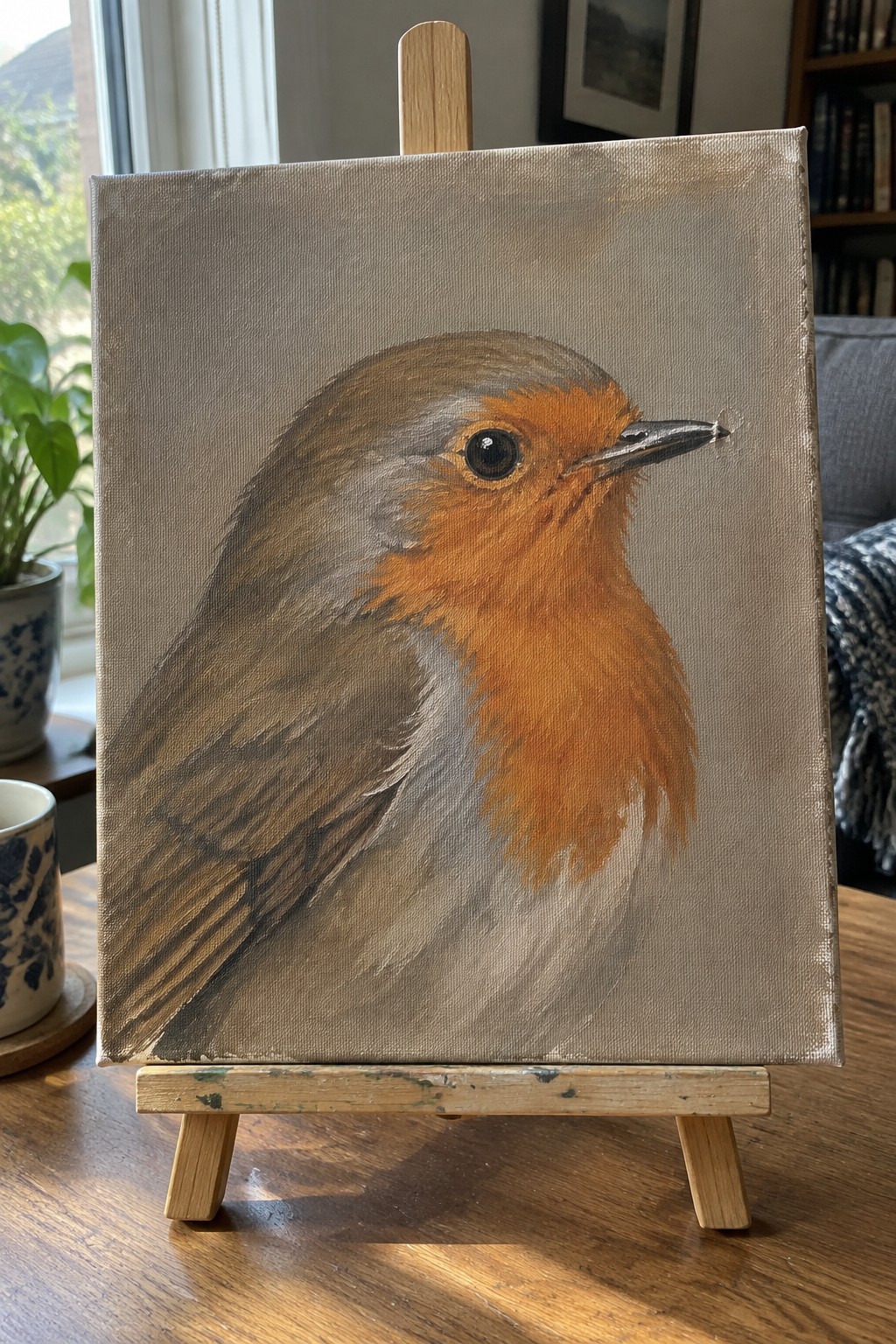
A single robin portrait idea works well when the focus stays tight on the head and orange breast against a plain background. The composition uses the bird’s natural colors to create contrast without needing extra elements or busy details. This approach fits the animal portrait category and keeps the eye on the face and chest through soft blending around the body and sharper definition on the beak and eye.
What makes this idea useful is the simple background that lets you practice color mixing and edge control on the feathers without extra distractions. The limited setting also makes it easy to adapt by swapping in different robin angles or adjusting the background tone for seasonal pieces. For canvas decor or gifts, the clean layout translates well to smaller sizes and stands out on Pinterest because the bird remains the clear focal point.
Robin Portrait with Rain Atmosphere

A close-up robin in profile makes a strong acrylic subject because the bright orange-red breast and textured feathers stand out sharply against a dark, moody background. The idea works as a naturalistic animal portrait that adds raindrops and soft wet highlights to suggest weather without needing a full scene. This approach keeps the focus on the bird while the simple dark backdrop lets the colors and feather detail carry the composition.
What makes this idea useful is how the dark background hides small blending mistakes and lets you build the bird in layers. The rain effect is easy to add last with thin white or gray strokes, so you can finish the main subject first. For canvas decor or gifts this layout adapts well by swapping rain for snow or soft fog, and the realistic bird style tends to perform well on Pinterest when the orange chest stays the main focal point.
Robin Portrait with Circular Backdrop and Leaf Frames

A robin portrait built around a solid yellow circle gives the bird’s orange breast and grey head immediate focus through strong color contrast. Simple green leaf branches placed on each side add symmetry and keep the composition balanced without adding extra elements. This setup works as a decorative animal painting that stays clean on a small canvas while still reading well from across a room.
What makes this idea useful is how the circle does most of the background work, so you only need to paint the bird and a few leaves. You can change the circle color to match a room or swap the leaves for other simple shapes if you want a different look. For practice or quick canvas decor, the limited elements make it straightforward to finish in one or two sessions while still producing something that stands out on a wall.
Robin on a Textured Perch

A close-up acrylic portrait of a robin perched on a rough, built-up surface works well as a straightforward animal painting idea. The bright orange breast creates a natural focal point against the muted green background, while the visible brushwork on the feathers and perch keeps the style loose without losing realism. This fits into the naturalistic animal category and relies on contrast and simple composition rather than complex layering.
What makes this idea useful is the limited color palette that still lets the bird stand out clearly. The plain background means you can focus practice time on the subject itself instead of filling space. You could adapt it by swapping the perch for a fence rail or shifting the background to cooler tones for a winter version. For canvas decor, the square format and earthy colors make it easy to pair with other nature pieces without clashing.
Robin with Cherry Blossoms on a Warm Solid Background
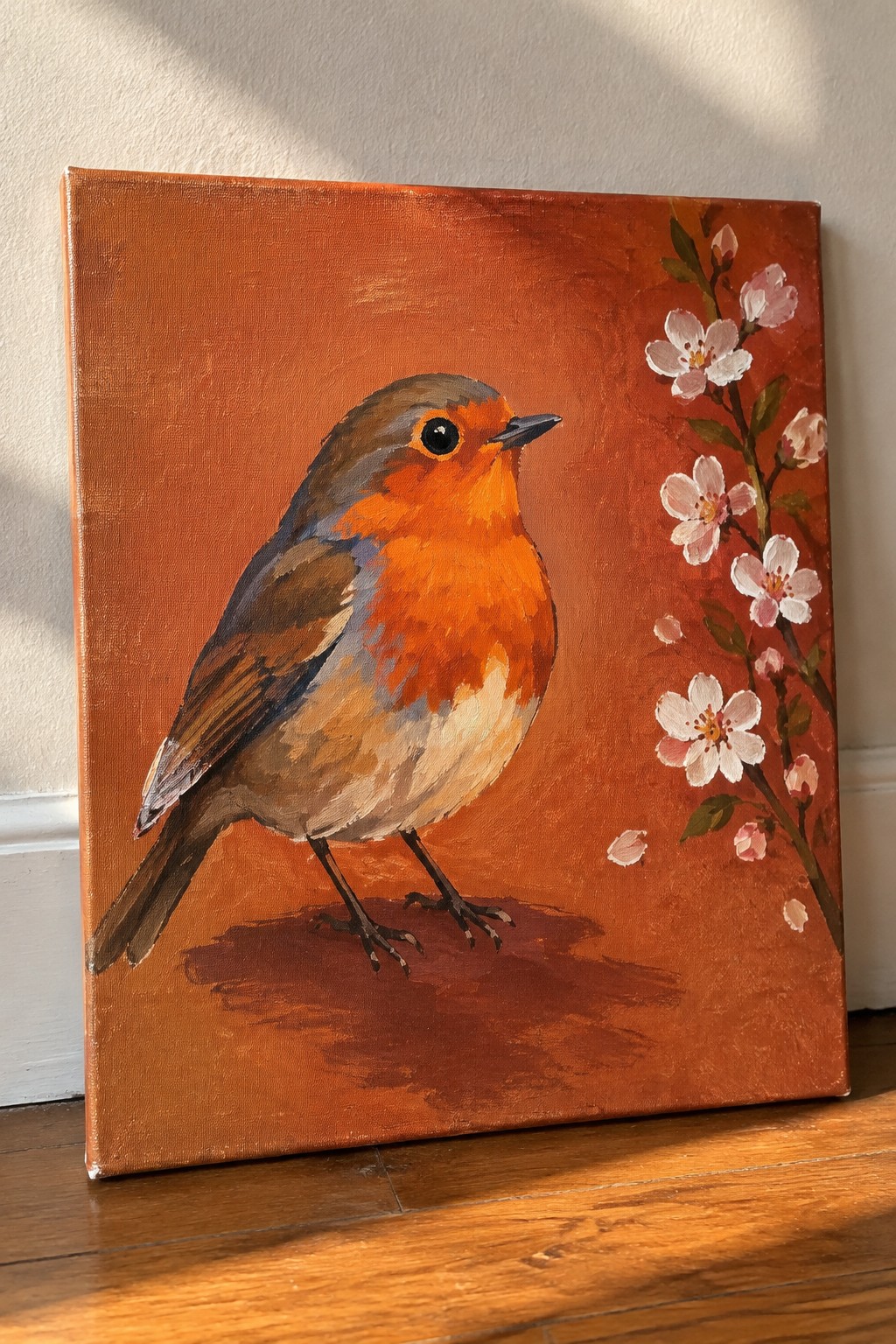
A robin portrait placed slightly off center with a flowering branch on the opposite side gives the composition breathing room while keeping the eye moving between the two focal points. The solid orange background simplifies the scene so the bird’s shape and color carry most of the visual weight, which is a practical choice for acrylic painting. This approach falls into the naturalistic animal portrait category with a light seasonal accent.
What makes this idea useful is the plain background that removes the need to paint detailed foliage or sky behind the bird. The strong color link between the robin’s breast and the backdrop lets you adjust the shade easily for different moods or seasons without repainting the whole canvas. For wall art, the vertical flower branch balances the bird so the piece works on both square and rectangular canvases. You could swap the blossoms for autumn leaves or winter berries and keep the same layout.
Robin Portrait with Soft Wash Background
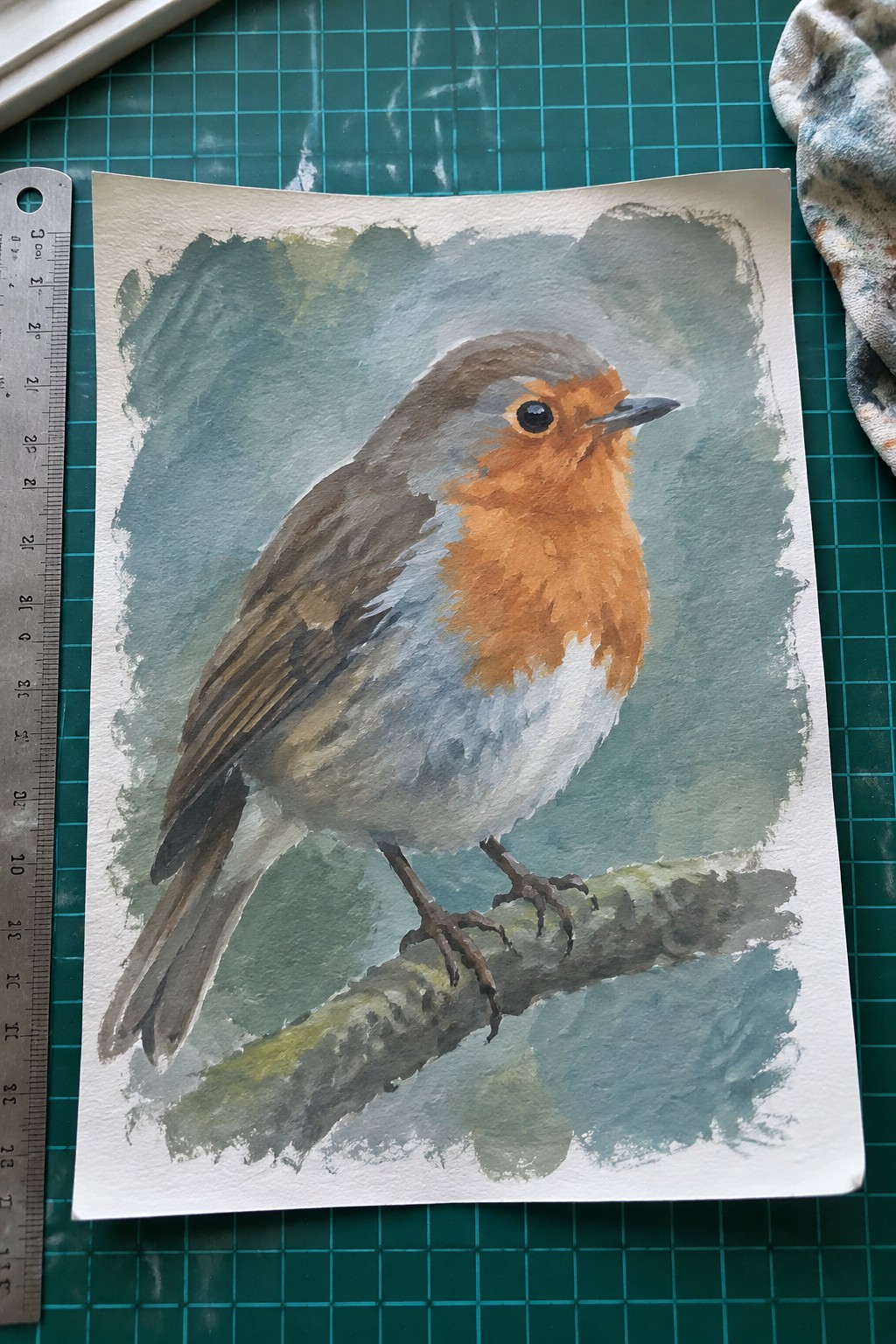
A naturalistic robin portrait works well as an acrylic idea when the bird receives most of the detail while the background stays loose and muted. The composition places the robin slightly off-center on a simple branch, letting the soft blue-green wash keep the focus on the orange breast and layered wing feathers. This approach fits the animal category and gives a clean, portrait-style result without needing heavy texture or complex scenery.
What makes this idea useful is how the limited background lets you practice feather blending and edge control without fighting a busy setting. You can adapt it by swapping the wash color for cooler tones in winter scenes or warmer greens for spring pieces. For canvas decor the layout stays strong even if you simplify the branch or reduce the number of feather layers. The clear focal point also makes the finished piece easy to photograph and share on Pinterest.
Centered Robin Portrait with Soft Background Blending

A robin portrait works well as a single-subject animal painting where the bird fills most of the canvas and the background stays simple and blended. The orange breast creates strong contrast against the cooler browns and grays of the wings and head, while the slightly turned pose adds a natural feel without extra elements. This approach fits the animal category and keeps the focus on feather shading and body shape rather than complex scenery.
What makes this idea useful is that the clear outline and limited color range transfer easily to different canvas sizes or formats. The background can be swapped for a plain wash or a light branch without changing the main subject. For practice, the solid shape of the robin lets you work on layering and edge control before adding more detail, and the same layout adapts quickly if you want to paint other common garden birds.
Robin on a Mossy Post with Soft Background
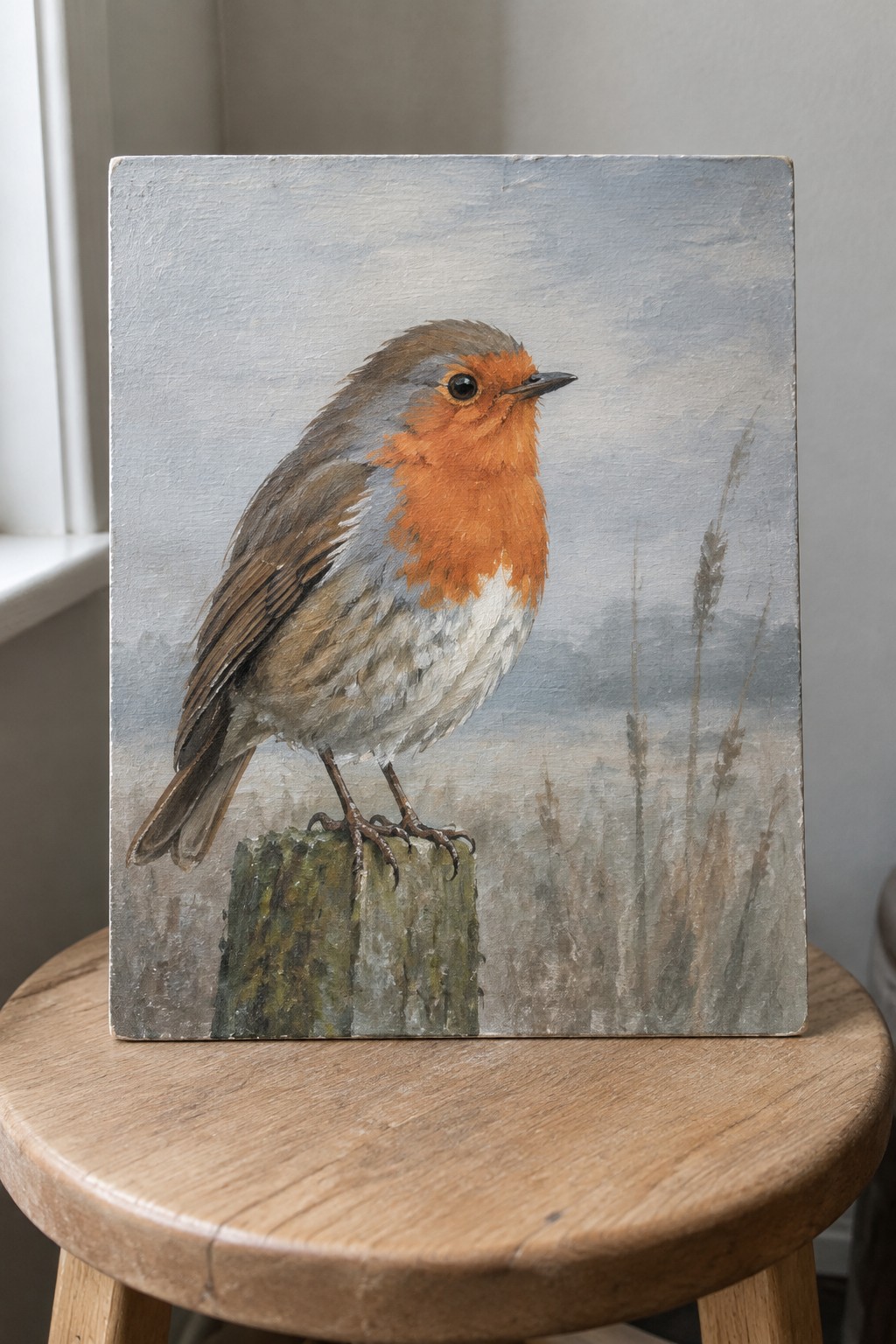
A close-up robin portrait against a muted field and sky works well as a naturalistic acrylic idea. The bird takes up most of the canvas with clear feather detail and a defined orange breast, while the background stays loose and atmospheric. This setup lets the robin stand out without needing a busy or complicated scene.
What makes this idea useful is the simple vertical composition that keeps the focus on the bird. You can adapt it by swapping the post for a branch or softening the background further if you want less detail to manage. The muted background colors also make it easier to practice blending and layering in acrylic without fighting strong contrasts. For wall art or practice pieces, this kind of single-subject layout transfers cleanly to different canvas sizes.
Robin Bird Framed by a Floral Wreath
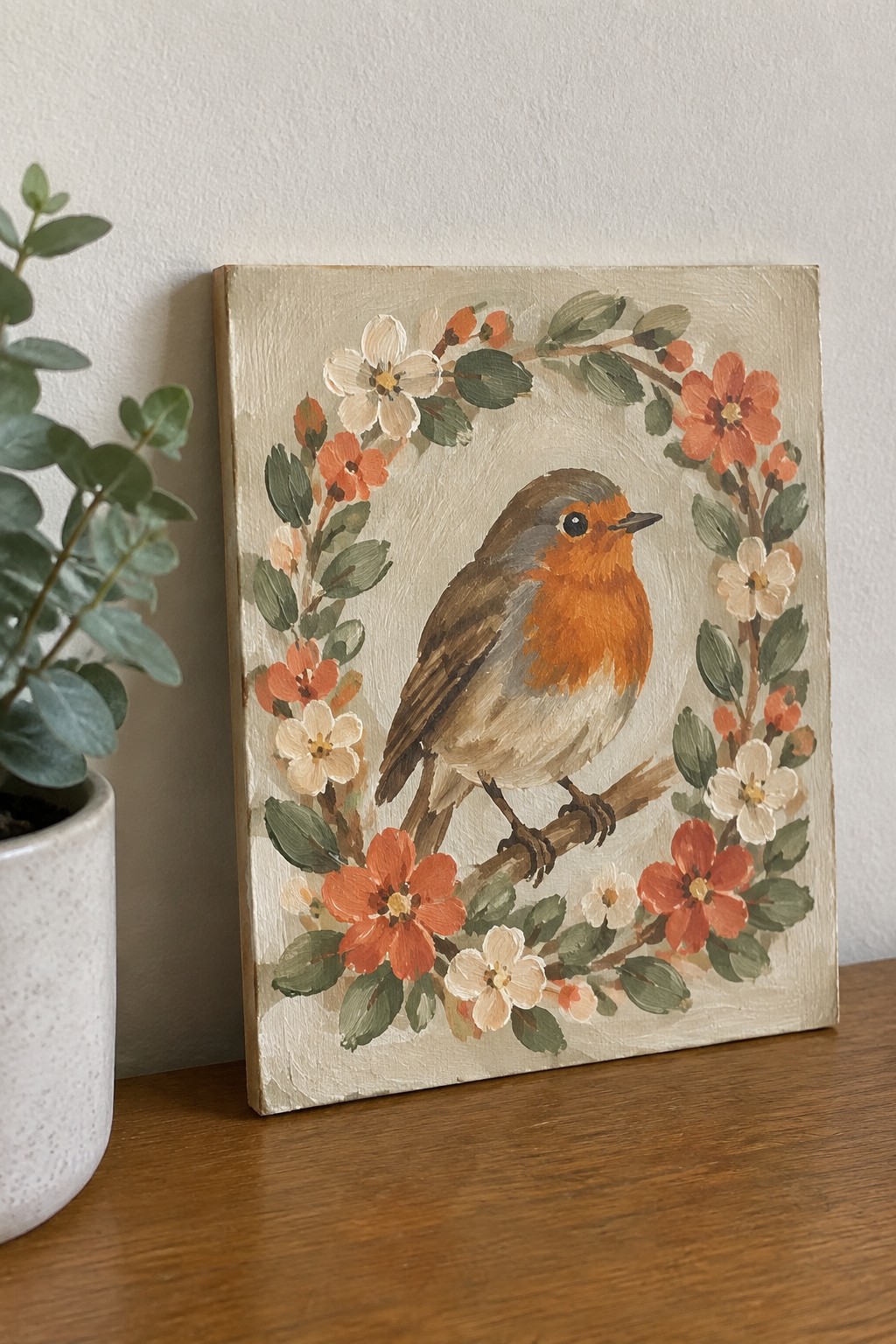
A robin perched on a branch forms the clear center of this acrylic painting idea, surrounded by a loose circular wreath of orange flowers, white blooms, and green leaves. The plain background keeps attention on the bird while the wreath adds color and shape without crowding the composition. This approach fits the animal and decorative wall art categories, using the circular border to create balance and visual interest.
What makes this idea useful is the wreath layout that naturally draws focus to the robin while leaving flexibility in how tightly or loosely the flowers are arranged. The warm orange and red tones against the muted background make it simple to adjust colors for different seasons or to match a room palette. For canvas decor, the same structure works well if you want to practice both bird proportions and basic floral shapes without building a full scene.
Robin Bird on a Mossy Branch with Autumn Leaves
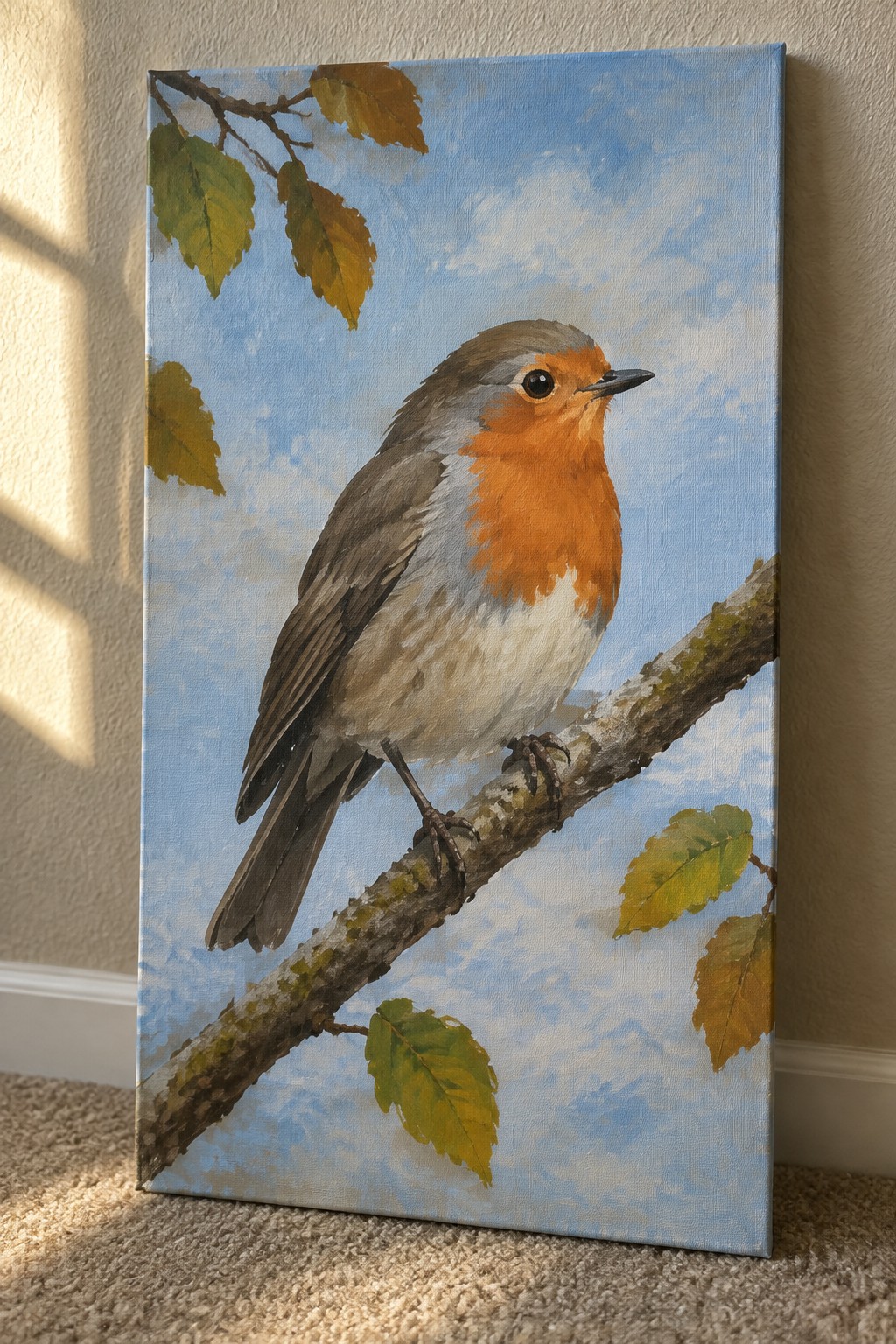
A single robin perched on a diagonal branch makes a strong acrylic painting idea because the bright orange-red breast creates instant focal contrast against the cooler blue sky and muted brown feathers. The composition stays balanced by letting the branch run across the lower half of the canvas while a few scattered leaves add variety without crowding the bird. This approach fits the naturalistic animal portrait category and works well when you want a clear subject that still feels grounded in a simple outdoor setting.
What makes this idea useful is that the robin’s distinct color blocks let you practice wet-on-wet blending on the chest while keeping the wing and tail feathers sharper with drier brushwork. The limited palette of oranges, grays, and soft blues is easy to adapt by changing the leaf tones for different seasons or swapping the sky for a darker background. For canvas wall art, the off-center placement and clean edges around the bird help the piece read clearly from a distance, so it stands out in a feed without needing extra detail in the background.
Circular Canvas Robin Profile
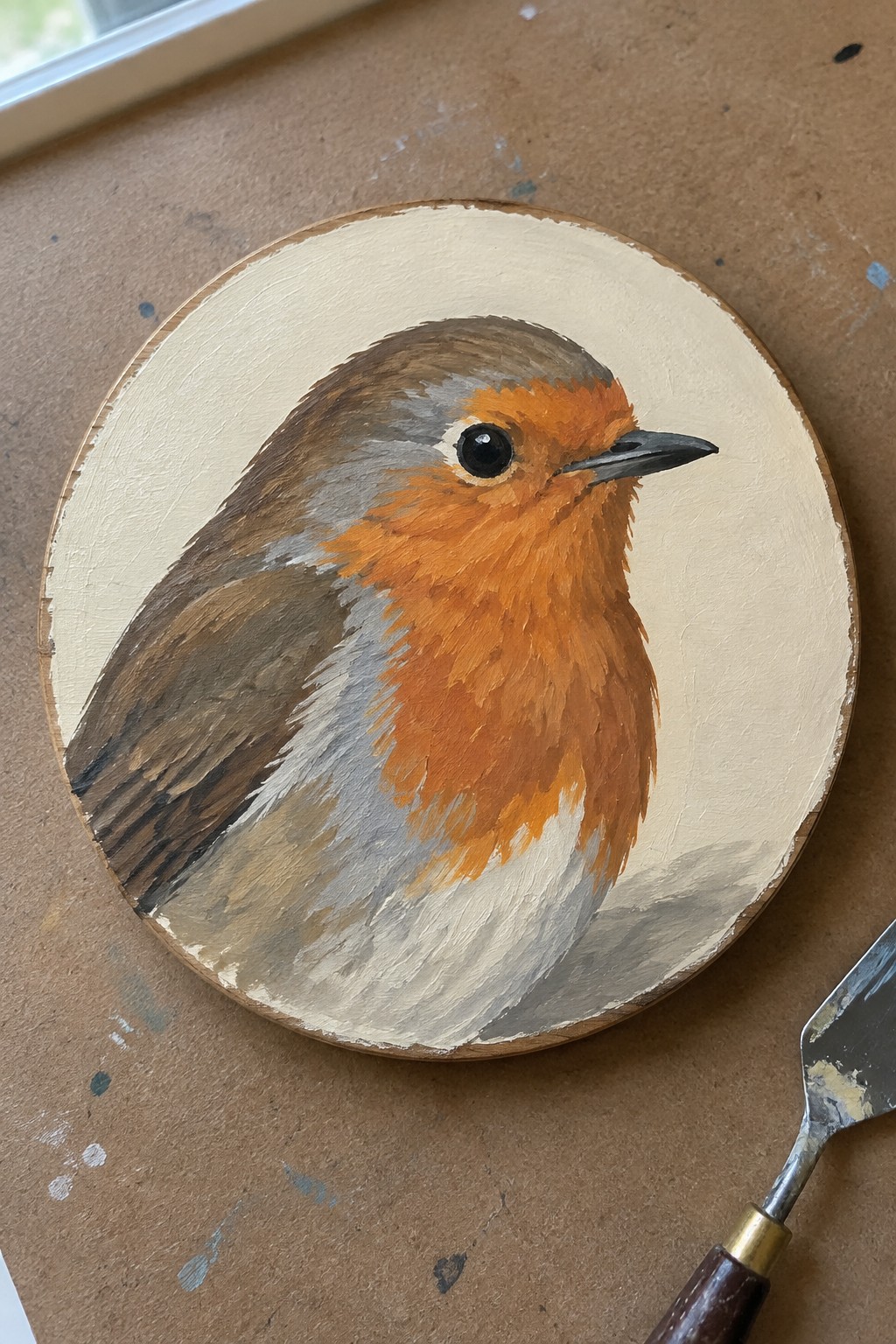
A close-up robin portrait painted in acrylics on a round wood panel works well as a simple animal study. The idea centers on a side view that highlights the bird’s orange breast against cooler wing tones and a plain background. This keeps the focus on shape and color contrast without needing extra elements.
What makes this idea useful is the contained format that lets you practice blending and feather detail on a small scale. You could adapt it easily by switching to a square canvas or adjusting the background to a soft gray for more contrast. The limited palette and clear subject make it a good option for wall art or quick practice pieces that still read clearly in a feed.
Robin Portrait with Soft Background Wash
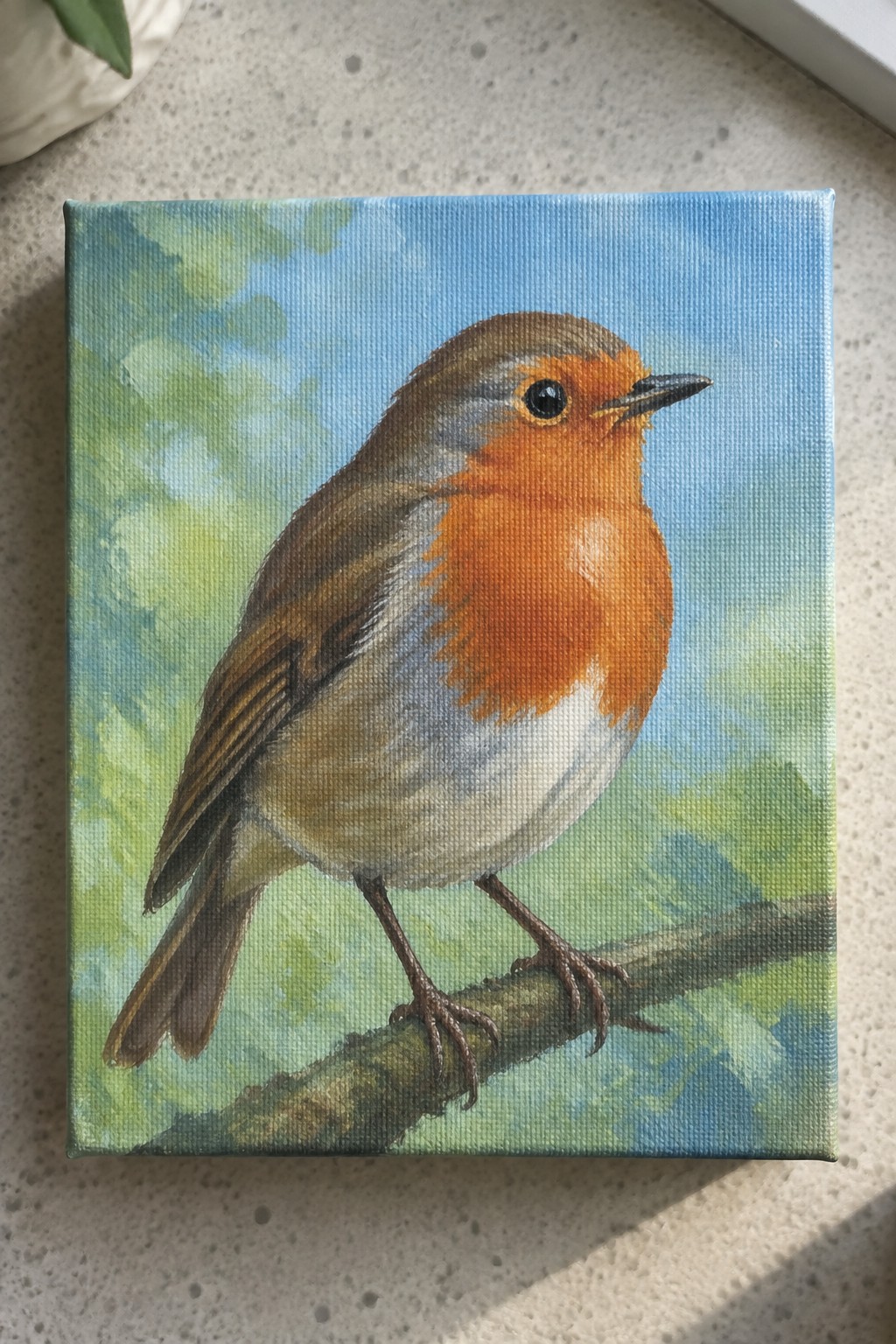
A robin portrait idea centers on placing the bird as the clear focal point with its orange chest and brown feathers built up through gradual color shifts. The soft blue and green background stays loose and blended so it supports the subject without adding extra elements or hard lines. The thin branch gives the robin a natural place to perch while keeping the overall layout simple and balanced.
What makes this idea useful is the strong contrast between the detailed bird and the unfocused background, which helps the robin stand out on canvas even if your blending is still developing. You can adapt it easily by changing the branch angle or testing different cool background mixes to fit different wall colors. For practice, this single-bird setup lets you focus on feather layering and shape accuracy without needing to plan a full scene.
Frequently Asked Questions
What supplies work best for creating the naturalistic robin portraits described in the ideas? High quality acrylic paints in earth tones, reds, and blues provide the right vibrancy for feathers and backgrounds. Use a mix of round and flat brushes in various sizes for base layers and fine details like the beak. Stretch a canvas or use heavy paper primed with gesso to support multiple thin layers without cracking.
How do you mix colors to capture the subtle variations in a robin’s red breast and brown back? Start with cadmium red mixed with a touch of burnt sienna for the breast to create depth rather than flat color. Add ultramarine blue and raw umber for the back feathers, building up with glazes to show natural light shifts. Test mixes on a scrap surface first to match real bird references under different lighting.
What techniques help add realistic texture to the feathers in these acrylic paintings? Apply thin washes for the base then use a dry brush technique with short strokes to suggest feather edges. Layer highlights with titanium white tinted slightly for shine on the wing tips. Work from dark to light areas to build volume, allowing each layer to dry fully before adding the next for clean separation.
How can beginners adapt the 21 ideas to avoid making the robin look flat or unnatural? Focus first on simple compositions from the list such as a perched bird against soft foliage. Study the eye shape closely and place a small white dot for the catchlight to bring life to the portrait. Practice blending on separate sheets to smooth transitions between body parts before committing to the full canvas.
Where should you look for reference images when trying out different poses from the ideas? Search wildlife photography sites or birdwatching databases for high resolution photos of robins in natural settings like gardens or woodlands. Observe multiple angles of the head and body to understand proportions. Take your own photos if possible during early morning light when colors appear most true to life.

Hi, I’m Camille.
I’m a self-taught painter and creative blogger with a soft spot for acrylic painting, color play, and all the little art ideas that make everyday life feel more inspiring.
I started this space because I’ve always believed painting should feel joyful, approachable, and a little personal. Some of my favorite pieces come from simple ideas, messy palettes, and evenings where I just felt like making something pretty.
Most of what I share begins with acrylic painting, but I also love exploring other mediums when creativity pulls me in a new direction. My goal is to collect and share painting ideas that feel fun, beautiful, and actually doable, whether the mood is calm and minimal or bright and playful.
This is a space for inspiration, experimenting, and enjoying art without overcomplicating it.