
Key Takeaways
- Common Kitchen Sink Issues: Clogs, foul odors, slow draining, and overflows are prevalent problems that can be effectively tackled with regular maintenance.
- Natural Cleaning Solutions: Using household items like baking soda, vinegar, lemon, and salt provides safe and eco-friendly alternatives to harsh chemical cleaners.
- Effective Cleaning Methods: Two popular methods are the Baking Soda and Vinegar Method, which deodorizes and clears clogs, and the Lemon and Salt Approach, which eliminates buildup and freshens the drain.
- Preventive Maintenance Tips: Regularly pouring hot water, using baking soda, limiting food waste, and installing a drain strainer can prevent future clogs and unwanted odors.
- Signs of a Clogged Drain: Watch for slow draining, foul odors, gurgling sounds, visible residue, and frequent clogs to address issues promptly and maintain a clean drain.
Is your kitchen sink drain starting to smell or drain slowly? You’re not alone. Many people face this common issue, and it can be frustrating to deal with. Instead of reaching for harsh chemicals, why not try some natural solutions that are safe for your home and the environment?
Understanding Kitchen Sink Drains
Kitchen sink drains often face a variety of issues. Understanding these problems helps in choosing the right cleaning approach.
Common Issues with Kitchen Sink Drains
- Clogs: Food particles, grease, and soap build-up create clogs that slow down drainage. Regularly removing debris can prevent blockage.
- Foul Odors: Leftover food and bacteria can cause unpleasant smells. Cleaning the drain regularly reduces odor development.
- Slow Draining: When water doesn’t drain quickly, it signals a potential blockage. Identifying the source of the slow drainage allows for effective intervention.
- Overflow: Excessive debris or a complete blockage can lead to overflows. Regular maintenance prevents messy situations.
The Importance of Cleaning Naturally
Cleaning kitchen sink drains with natural solutions offers several benefits.
- Safety: Natural cleaners, such as vinegar and baking soda, pose no threat to your health or the environment.
- Effectiveness: Many natural ingredients break down grime and odors efficiently, making them potent alternatives to harsh chemicals.
- Cost-Effective: Everyday household items often serve as effective cleaning agents. Using what you already have saves money.
- Prevention: Regular natural cleaning helps maintain clear drains, reducing the chances of bigger plumbing issues. Healthy drains provide peace of mind.
Natural Cleaning Solutions
Natural cleaning solutions effectively tackle kitchen sink drain issues without harsh chemicals. Two popular methods, the Baking Soda and Vinegar Method and the Lemon and Salt Approach, provide safe and eco-friendly alternatives.
Baking Soda and Vinegar Method
- Gather Materials: You’ll need baking soda, white vinegar, and a hot water kettle.
- Add Baking Soda: Pour half a cup of baking soda directly down the drain.
- Add Vinegar: Follow up with half a cup of white vinegar. You’ll notice fizzing, which indicates a reaction that helps break down gunk.
- Wait: Let the mixture sit for 15-30 minutes. This allows time for the solution to work.
- Flush: After waiting, pour hot water down the drain. This clears away loosened debris and leaves your drain fresh.
This method not only deodorizes but also helps in clearing minor clogs.
Lemon and Salt Approach
- Gather Materials: You’ll need a lemon (or lemon juice) and coarse salt.
- Add Salt: Pour about 1/4 cup of coarse salt down the drain.
- Add Lemon: Squeeze the lemon juice over the salt, or pour in store-bought lemon juice.
- Scrub: Use a brush to scrub the sink’s drain. The abrasive salt combined with the acidity of lemon helps eliminate buildup.
- Rinse: Finally, flush with hot water.
This approach leaves a fresh scent and helps prevent future clogs while being gentle on your plumbing.
Step-by-Step Cleaning Process
Cleaning your kitchen sink drain naturally involves a simple yet effective process. Follow these steps to ensure a clean and fresh drain.
Preparing the Area
- Clear the Sink: Remove any dishes, food scraps, or utensils from the sink to provide a clear work area.
- Gather Supplies: Have baking soda, vinegar, coarse salt, lemon juice, a scrub brush, and boiling water ready.
- Protect the Surroundings: Lay down towels or a bowl to catch any drips during the cleaning process.
Applying Natural Solutions
- Baking Soda and Vinegar Method:
- Pour 1/2 cup of baking soda directly into the drain.
- Follow with 1 cup of white vinegar.
- Allow the mixture to fizz for 15-30 minutes as it breaks down buildup and neutralizes odor.
- Lemon and Salt Approach:
- Pour 1/2 cup of coarse salt and 1/2 cup of lemon juice into the drain.
- Let it sit for about 10 minutes to scrub away grime naturally.
- Use a scrub brush to gently scrub the drain and any visible spots.
Flushing the Drain
- Boiling Water:
- After the solutions have set, carefully pour 2-3 cups of boiling water down the drain.
- This will flush away loosened debris and residue left from the previous steps.
- Final Rinse:
- Run hot tap water for 1-2 minutes to ensure the drain is clean and odors are eliminated.
- Check the drain for any lingering smells or blockages; repeat steps if necessary.
Tips for Maintaining a Clean Drain
Keeping your kitchen sink drain clean requires regular attention and simple preventative measures. Follow these tips to ensure your drain stays fresh and clear.
Recommended Products
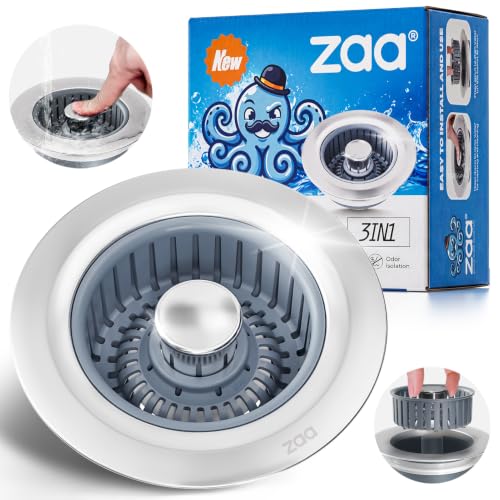
【Upgraded 3 in 1 Kitchen Sink Drain Strainer】Our kitchen sink strainer, combines sink drain strainer, kitchen sink stopper and odor isolation together. Press down the pop up button to store water for washing, press again to drain water while catching food waste or scrap from going down the drain. A reliable anti clogging helper and a must have kitchen sink installation parts

Universal Size - Precision crafted with a 4.5-inch outer diameter, a 3-inch inner sink strainer basket, and a 1-inch depth, this sink drain strainer seamlessly fits the internal diameter of most standard sink drains. As an essential drain cover, its universal design ensures a secure and compatible fit for your kitchen sink drain, making it the perfect drain strainer for everyday use.

High Quality- Kitchen-sink strainers made of long last stainless steel 304 mesh, rustproof and long life time use
Regular Preventive Measures
- Use Hot Water Daily: Pouring boiling water down the drain each day helps dissolve grease and food particles, keeping the drain clear.
- Add Baking Soda Weekly: Once a week, add a cup of baking soda followed by hot water. This prevents buildup and freshens odors.
- Limit Food Waste: Scrape plates into the trash before washing. Reducing the amount of food that goes down the drain minimizes clogging.
- Install a Drain Strainer: A strainer catches food debris and prevents clogging. Clean the strainer regularly to maximize its efficiency.
- Run the Garbage Disposal: If you have one, run it regularly with cold water to grind and wash away food particles. Avoid fibrous foods that can tangle.
Signs Your Drain Needs Cleaning
- Slow Draining: If water backs up or moves slowly, it indicates a potential blockage in the pipes.
- Foul Odors: Unpleasant smells often come from decomposing food particles stuck in the drain. Address odors quickly to prevent escalation.
- Gurgling Sounds: Strange noises from the sink can signal air trapped in the pipes, often due to a blockage.
- Visible Residue: If you notice a slimy film or buildup around the drain, it’s time to clean it.
- Frequent Clogs: If clogs occur often, regular cleaning is necessary to keep the pipes clear and prevent emergencies.
Stay vigilant and implement these tips for a hassle-free kitchen sink experience.
Conclusion
Keeping your kitchen sink drain clean doesn’t have to be a chore. By using simple natural methods like baking soda and vinegar or lemon and salt, you can tackle odors and clogs effectively. Not only are these solutions safe for your home and the environment, but they also save you money on harsh chemicals.
Regular maintenance is key to preventing future issues. Incorporating a few easy habits into your routine will keep your drains flowing smoothly. So grab those natural ingredients and give your kitchen sink the care it deserves. You’ll enjoy a fresher kitchen and peace of mind knowing you’re making eco-friendly choices. Happy cleaning!
Frequently Asked Questions
What causes kitchen sink drains to smell?
Foul odors in kitchen sink drains often come from leftover food, grease, and bacteria buildup. These substances can decompose over time, creating unpleasant smells. Regular cleaning and maintenance can help minimize these odors.
How can I prevent my kitchen sink from draining slowly?
To prevent slow drainage, avoid putting food scraps and grease down the sink. Use hot water regularly and consider adding baking soda weekly to help break down buildup, ensuring smoother water flow.
Are harsh chemicals necessary for cleaning drains?
No, it’s not necessary to use harsh chemicals for cleaning drains. Natural solutions like baking soda and vinegar are safe, effective, and environmentally friendly alternatives for maintaining clear and odor-free drains.
What is the Baking Soda and Vinegar Method?
The Baking Soda and Vinegar Method involves pouring baking soda down the drain, followed by vinegar. The fizzing reaction helps break down clogs and deodorizes. After 15 minutes, flush the drain with hot water for best results.
How does the Lemon and Salt Approach work?
The Lemon and Salt Approach uses coarse salt and lemon juice poured down the drain. Scrubbing helps remove residue, and the combination leaves a fresh scent while preventing future clogs. Rinse with hot water after cleaning.
How often should I clean my kitchen sink drain?
It’s recommended to clean your kitchen sink drain at least once a month. Regular maintenance can prevent clogs and odors, ensuring a healthier kitchen environment.
What are the signs that my drain needs cleaning?
Signs that your drain may need cleaning include slow drainage, foul odors, gurgling sounds, visible food residue, and frequent clogs. If you notice any of these, it’s time to clean your drain.
