
Key Takeaways
- Understanding Grease Buildup: Grease accumulates on kitchen cabinets mainly from cooking methods (particularly frying), types of food used, and poor ventilation in the kitchen.
- Preventive Measures: Utilize splatter guards, improve kitchen ventilation, and wipe down surfaces regularly to minimize grease accumulation on cabinets.
- Effective Cleaning Solutions: Both commercial degreasers (like Krud Kutter and Goo Gone) and homemade remedies (such as vinegar and baking soda) are effective for cleaning grease.
- Step-by-Step Cleaning Process: Prepare the area, test cleaners, apply the solution, scrub gently, rinse thoroughly, and dry to effectively clean greasy cabinets.
- Regular Maintenance: Implement a routine of daily wipe-downs, appropriate cooking practices, and scheduled deep cleans to keep kitchen cabinets grease-free long-term.
- Protective Measures: Use cabinet protectants and splatter guards while cooking, and conduct regular inspections to prevent and address grease issues promptly.
Ever looked at your kitchen cabinets and wondered how they got so greasy? It’s a common issue for many home cooks. Between splatters from frying and spills from cooking, those cabinets can quickly lose their shine.
Overview of Kitchen Cabinet Grease
Kitchen cabinet grease is a common issue for many homeowners. It builds up from everyday cooking activities, especially frying and simmering. Over time, grease collects dirt and grime, making your cabinets look dull and dirty.
Causes of Grease Buildup:
- Cooking Methods: Frying generates more grease than other cooking methods, leading to greater accumulation.
- Food Types: Fatty foods like bacon and fried chicken release significant grease particles.
- Ventilation: Poor kitchen ventilation allows grease to settle on surfaces, including cabinets.
Signs of Grease Accumulation:
- Dull Appearance: Cabinets lose their shine when covered in grease.
- Sticky Surface: A noticeable stickiness may occur upon contact.
- Discoloration: Cabinets can become yellowed or stained from excessive grease.
Methods to Prevent Grease Buildup:
- Use a Splatter Guard: Place a splatter guard over pans to minimize grease dispersion.
- Improve Ventilation: Use exhaust fans or open windows to circulate air and reduce grease settling.
- Wipe Down Surfaces Regularly: Clean cabinets with a damp cloth after cooking to limit grease accumulation.
By understanding kitchen cabinet grease, you can take steps to clean and maintain your cabinets effectively. Proper cleaning methods will help restore their shine and keep your kitchen looking fresh.
Common Causes of Grease Buildup
Grease buildup on kitchen cabinets often stems from daily cooking activities. Understanding the sources of this accumulation helps you tackle the issue effectively.
Cooking Habits
Cooking methods play a crucial role in grease buildup. Frying foods, especially those with high fat content, generates splatters that cling to surfaces. Grilling and sautéing also release grease particles into the air. If you often cook with oils, fats, or sauces, the cabinets near your stovetop are more likely to attract grease. Cleaning spills immediately and using lids or screens can help minimize this issue.
Environmental Factors
Ventilation significantly impacts grease accumulation in your kitchen. Poor airflow traps grease, moisture, and smoke, allowing them to settle on surfaces. Kitchens without exhaust fans or windows may experience higher buildup levels. Additionally, humidity can exacerbate grease retention. To combat this, ensure your kitchen is well-ventilated by using fans during cooking and opening windows when possible. Regularly checking and cleaning your ventilation system reduces grease exposure in the long run.
Effective Cleaning Solutions
Cleaning grease off kitchen cabinets requires the right approach and materials. You can choose from commercial cleaners or homemade remedies to effectively tackle this common problem.
Recommended Products

Fast Tough Grease Removal: Specially formulated for kitchen cabinets. No cabinet damage. Removes tough grease buildup and fingerprints that ordinary cleaners can’t tackle. Wipes away instantly. Leaves cabinets fresh and shiny—no streaks, residue or oily film

CABINET & FURNITURE CLEANER: Removes dirt, grime & grease buildup
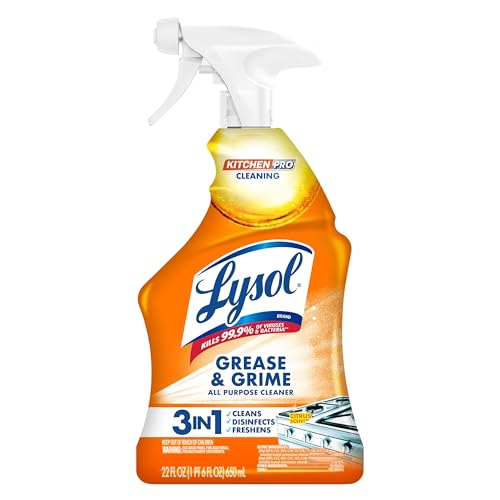
ELIMINATES 99.9% OF KITCHEN VIRUSES AND BACTERIA INCLUDNG SALMONELLA AND E.COLI: Lysol Pro Kitchen Cleaner is tested and proven to eliminate 99.9% of viruses and bacteria* (when used as directed). EPA Reg #777-91.
Commercial Cleaners
Several commercial cleaners effectively eliminate grease on kitchen cabinets. Look for degreasers specifically designed for kitchen use. Here are a few popular options:
- Spray Cleaners: Products like Krud Kutter and Goo Gone Spray are highly effective. Spray the cleaner directly onto the greasy area, wait a few moments, then wipe with a soft cloth.
- Wipes: Use disposable cleaning wipes, such as Clorox Kitchen Wipes, for quick cleanups. Simply pull out a wipe and rub it over the greasy surfaces.
- Liquid Formulas: Try liquid degreasers like Simple Green for tougher grime. Mix it with water according to the instructions, apply with a sponge, and rinse afterward.
Always follow the instructions on the label for the best results. Test the cleaner on a small area first to ensure it doesn’t damage your cabinet finish.
Homemade Remedies
Homemade solutions can effectively remove grease without harsh chemicals. Here are some popular remedies you can try:
- Baking Soda Paste: Mix baking soda with water to create a thick paste. Apply it to sticky spots and let it sit for a few minutes before scrubbing with a sponge.
- Vinegar and Water Solution: Combine equal parts white vinegar and water in a spray bottle. Spray the mixture on the greasy surfaces, let it sit for a few minutes, then wipe clean with a cloth.
- Dish Soap Mixture: Add a few drops of dish soap to warm water. Dampen a cloth with this soapy water and wipe down the cabinets thoroughly, rinsing with clean water afterward.
These homemade cleaners are not only effective, but they’re also safe and often more economical than store-bought alternatives.
Step-by-Step Cleaning Process
Follow this detailed guide to effectively clean grease off your kitchen cabinets. It simplifies the process into manageable steps.
Preparing the Area
- Clear the Cabinet Surface: Remove all items from the cabinets. This includes dishes, utensils, and any decorative pieces.
- Gather Supplies: Collect your chosen cleaning solution, soft cloths, a sponge, a bucket, and a spray bottle. If using a commercial cleaner, check that it’s suitable for your cabinet material.
- Protect the Floors: Place a towel or drop cloth under the cabinets to catch drips and spills during cleaning.
- Ventilate the Space: Open windows or turn on an exhaust fan to ensure fresh air flows through the kitchen. This improves air quality and reduces lingering fumes.
Application Techniques
- Test the Cleaner: Before applying your cleaning solution, test it on a small, hidden area of the cabinet. This checks for adverse reactions with the cabinet material.
- Apply Cleaner: Spray your cleaning solution directly onto the greasy areas. For homemade mixtures, dip a sponge or cloth into the solution and apply it again to the surface.
- Scrub Gently: Use a soft cloth or sponge to scrub the greasy areas, working in circular motions. Focus on heavily soiled spots, applying more pressure as needed.
- Wipe Down Surfaces: After scrubbing, use a clean, damp cloth to wipe away any residue. It’s crucial to remove all soap or cleaner to prevent streaking.
- Dry the Cabinets: Use a dry cloth to wipe the cabinets after rinsing. This step helps avoid water spots and maintains the finish of your cabinets.
- Reorganize: Once cabinets are clean and dry, return your items. Consider utilizing drawer organizers to maintain order and cleanliness.
These straightforward steps make tackling greasy kitchen cabinets manageable and effective.
Maintenance Tips
To maintain grease-free kitchen cabinets, implement these practical strategies.
Regular Wipe-Down
- Wipe surfaces daily. Use a damp microfiber cloth for quick cleanups after cooking.
- Concentrate on high-contact areas. Focus on handles and edges to prevent grease buildup.
- Spray vinegar solution weekly. Combine equal parts vinegar and water in a spray bottle for a quick refresher.
Appropriate Cooking Practices
- Cover pans while cooking. Lids reduce splatter, minimizing grease residue on cabinets.
- Use exhaust fans consistently. Turn on kitchen ventilation to keep airborne grease in check.
- Keep cooking areas organized. Organize tools and ingredients for easy access to reduce splatter while cooking.
Deep Cleaning Schedule
- Schedule monthly deep cleans. Allocate a specific day each month for thorough cabinet cleaning.
- Create a deep cleaning checklist. Include steps for removing items, cleaning, and reorganizing cabinets.
- Use safe cleaning solutions. Opt for natural solutions like baking soda and vinegar, which are safe and effective.
Protective Measures
- Apply cabinet protectants. Use a spray or wax designed for wood surfaces to create a barrier against grease.
- Install splatter guards. Use guards for skillets and bowls to reduce cooking mess.
- Regularly inspect cabinets. Check for signs of grease or discoloration; address issues promptly.
Maintenance Products
- Choose suitable cleaners. Select cleaners labeled for kitchen use to avoid damage.
- Invest in good-quality cloths. Use soft, lint-free cloths to prevent scratching.
- Keep cleaning tools accessible. Store cleaning supplies near your kitchen for convenience.
Implementing these tips keeps your kitchen cabinets looking fresh and eases future cleaning efforts.
Conclusion
Keeping your kitchen cabinets grease-free doesn’t have to be a daunting task. By understanding the causes of grease buildup and implementing a regular cleaning routine, you can maintain their shine and cleanliness. Whether you opt for commercial cleaners or homemade solutions, the key is consistency and using the right techniques.
Remember to protect your cabinets by adopting good cooking habits and scheduling monthly deep cleans. With a little effort and the right strategies, you’ll enjoy a fresh and inviting kitchen space that makes cooking a pleasure. So roll up your sleeves and get started on making your cabinets look brand new again!
Frequently Asked Questions
What causes grease buildup on kitchen cabinets?
Grease builds up on kitchen cabinets primarily due to cooking methods like frying, grilling, and simmering, as well as spills from high-fat foods. Poor ventilation also contributes by trapping moisture and grease, leading to a dull appearance over time.
How can I prevent grease accumulation on my cabinets?
To prevent grease buildup, use a splatter guard while cooking, improve kitchen ventilation, and wipe down surfaces regularly. Covering pans, cleaning spills immediately, and using exhaust fans during cooking can also help reduce grease accumulation.
What are effective ways to clean greasy kitchen cabinets?
Effective cleaning methods include using commercial cleaners specifically designed for kitchens or homemade solutions like a baking soda paste, vinegar and water mixture, or dish soap. Always test cleaners on a small area first before applying them extensively.
What is the best cleaning method for greasy cabinets?
Start by preparing the area and gathering supplies. Apply the cleaner to greasy spots, scrub gently with a soft cloth, wipe away residue, and dry the surface to prevent water spots. Finally, reorganize cleaned items for a tidy appearance.
How often should I clean my kitchen cabinets?
For regular maintenance, perform daily wipe-downs of high-contact areas. Schedule deep cleans monthly to thoroughly remove buildup. Additionally, using a vinegar solution weekly can keep cabinets looking fresh and free from grease.
Can I use homemade cleaners for my kitchen cabinets?
Yes, homemade cleaners like baking soda paste, vinegar, and dish soap mixtures are safe and effective. They often cost less than store-bought options and can remove grease without harsh chemicals, making them a great choice for kitchen cleaning.
