
I have spent time practicing acrylic flower paintings and noticed that brush control really helps with cleaner results.
Petal strokes are a basic move but they take some repetition to get right.
I collected these 19 tutorials because they keep the steps straightforward and focused on those areas.
You can try them one by one to build up your skills gradually.
They have helped me feel more comfortable with my own work.
Layered Peony Petals in Soft Acrylic Tones

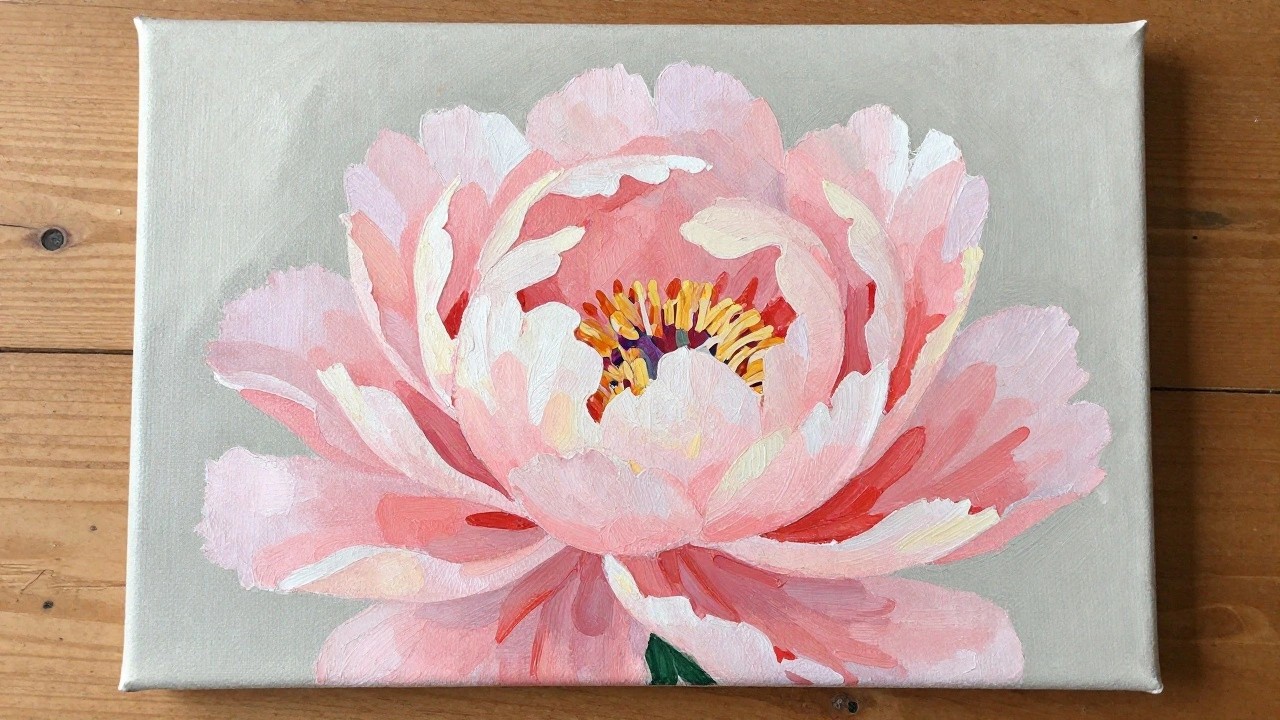
A single large bloom painted in peach and coral tones works well as a standalone floral idea because the rounded petal shapes create natural movement across the canvas. The composition keeps the focus tight on the flower by using a plain background and only a few supporting leaves at the base. This approach fits the category of simple floral studies where the main subject fills most of the space and color shifts happen within the petals themselves.
What makes this idea useful is how the overlapping petal forms let you practice brush control without needing many separate elements. You can adapt the same layout by swapping the peach tones for other colors or by tightening the center details if you want more contrast. For practice sessions, the limited leaf work and open background make it easy to finish on a small canvas while still looking complete as wall art.
Daisy Cluster with White and Pink Petals
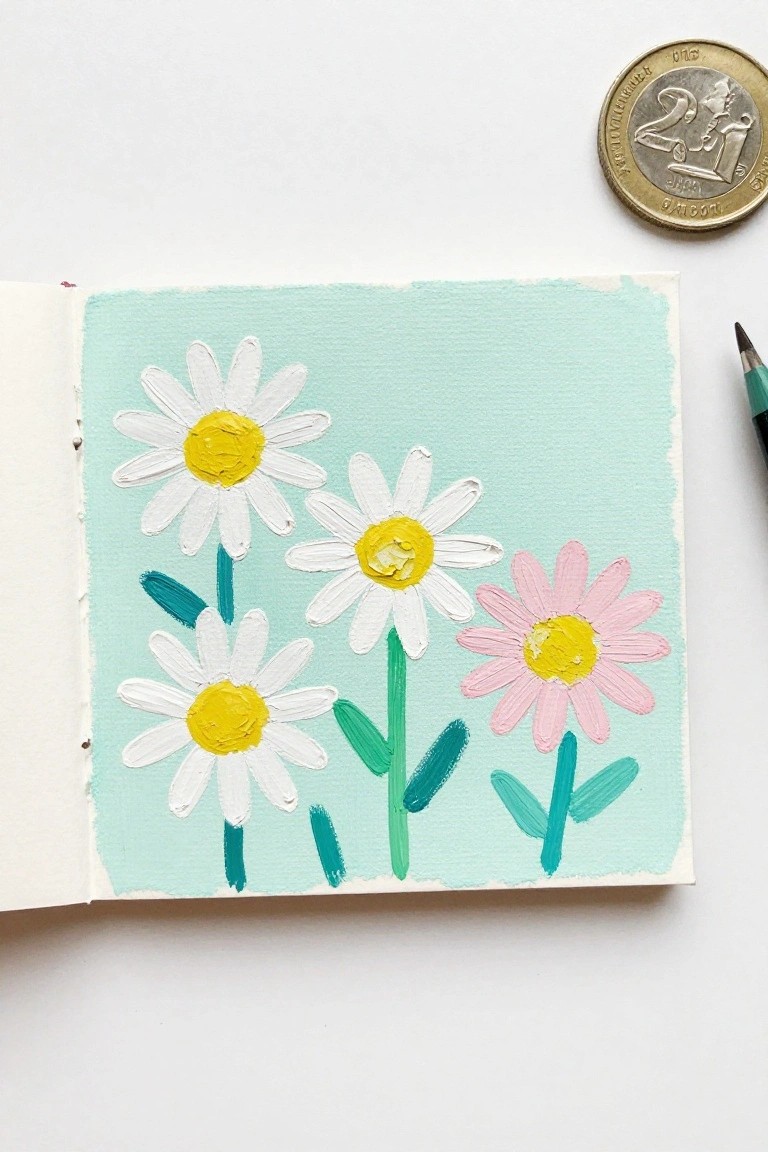
This acrylic painting idea focuses on a compact group of three daisies using white and pink petals around yellow centers on a solid mint background. The floral setup keeps the composition balanced by spacing the blooms at different heights with simple green stems and leaves filling the gaps. It fits the decorative floral category because the flat background lets the petal shapes and color contrast do the main work.
What makes this idea useful is how the small flower count lets you practice clean petal strokes without getting overwhelmed by detail. You could swap the pink bloom for a fourth white daisy or shift the background to a warmer tone to match different seasons. For practice or small canvas pieces, the layout works well because the solid color field makes the flowers pop and keeps the whole thing easy to finish in one session.
Overlapping Sunflowers with Bright Petal Strokes
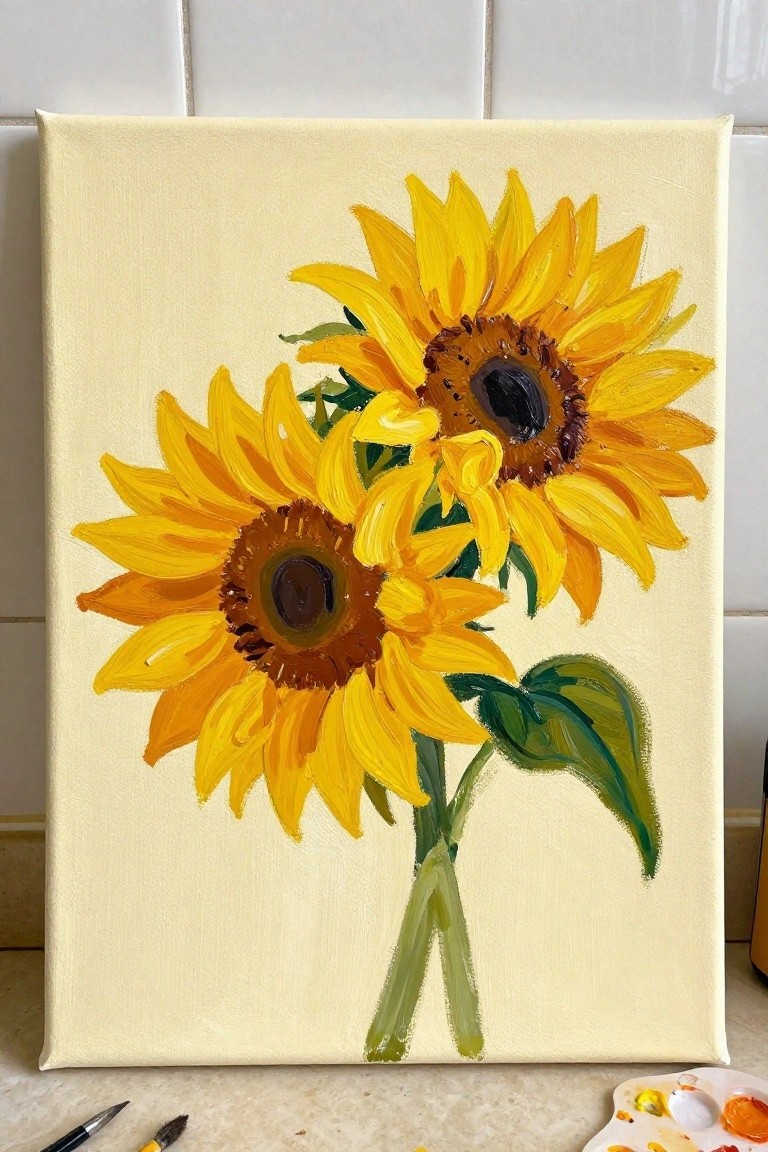
Sunflowers work well as a floral acrylic idea because their large, radiating petals give clear practice with directional brushwork and color blending. This version places two blooms at slightly different angles so the yellow layers build depth while the dark centers anchor the composition. A pale background keeps the focus on the warm tones and makes the green stems stand out without extra detail.
What makes this idea useful is how the simple bouquet layout stays manageable on a standard canvas. You can adapt it by painting just one flower or changing the background to a soft blue for variety. For practice, this kind of subject helps control petal edges and center texture without requiring many elements. It would stand out on Pinterest because the bold yellows read clearly even in small thumbnails.
Tulip Cluster Painted with Bold Directional Strokes

This acrylic idea centers on a small group of tulips built from simple, visible brushstrokes that shape the petals and leaves. The three flowers sit at slightly different angles above a spread of green foliage, creating a compact vertical arrangement that fills the canvas without crowding. Strong color blocks on a plain white background let the shapes read clearly while keeping the overall look loose and graphic.
What makes this idea useful is how the limited flower count keeps the focus on practicing petal direction and edge control. You can easily change the color mix or add a fourth bloom if you want more variety. For canvas decor this layout works well because the clean negative space around the flowers makes it simple to scale up or crop for different frame sizes.
Graphic Floral Trio with Flat Color Shapes

This acrylic idea centers on three stylized flowers painted with solid blocks of color and simple leaf forms arranged across a neutral canvas. The layout uses varying stem heights and overlapping shapes to create visual balance while keeping every element easy to read. It fits the decorative floral category where bold outlines and limited detail replace realistic shading or texture.
What makes this idea useful is how the flat shapes let you practice clean edge control and consistent brush pressure without worrying about blending. The warm flower tones against cooler greens could be swapped for different color schemes or scaled down for smaller canvases. For wall art this layout stands out on Pinterest because the strong silhouettes read clearly even in thumbnail size and adapt easily to seasonal palettes.
Oversized Blooms on a Solid Teal Field
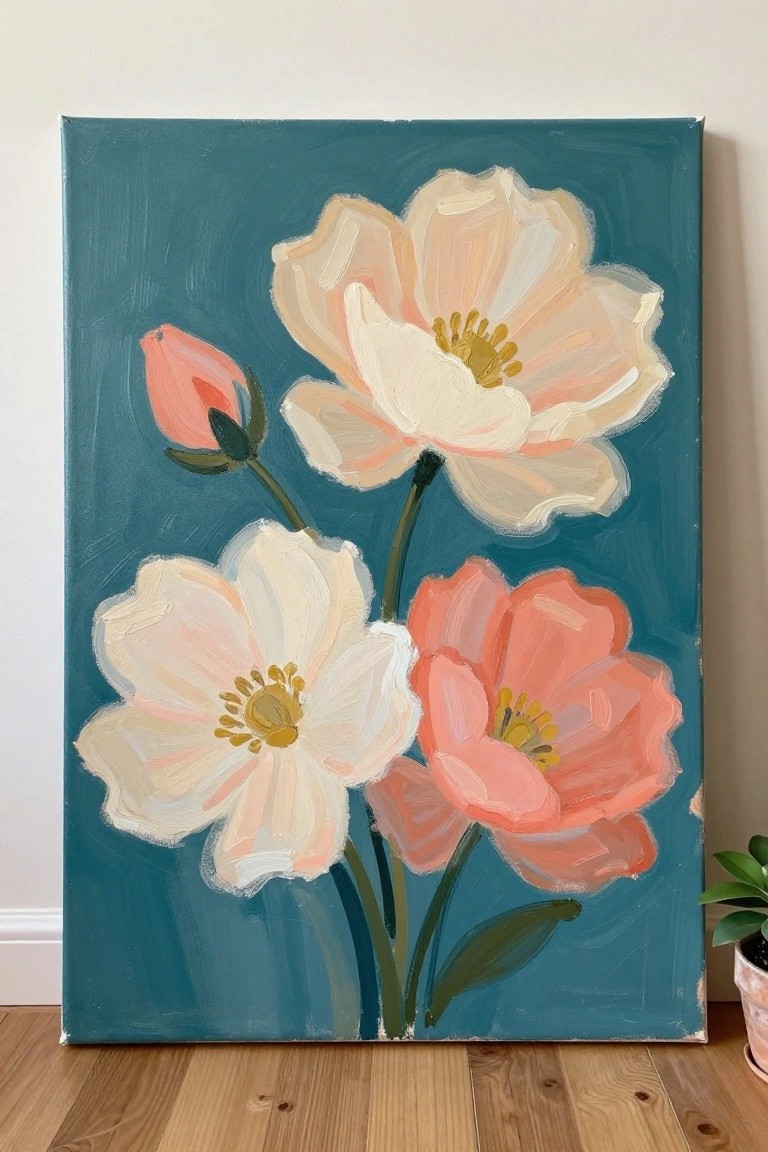
This acrylic painting idea uses a small cluster of large flowers with broad, overlapping petals in pale pink and white tones against a deep teal background. The layout places the main blooms at different heights with one closed bud to the side, letting the solid color field do most of the work in defining the shapes. Simple yellow centers and visible brush strokes add just enough detail to keep the focus on petal form and color contrast.
What makes this idea useful is the strong background choice that makes even loose petal work look finished. You can change the teal to navy or sage and shift the flower colors without losing the clean effect. For canvas decor or quick gifts, the limited number of elements keeps the painting approachable while still filling the space well. The same layout works if you simplify the centers or add a second bud for variety.
Flower Shape Practice Grid
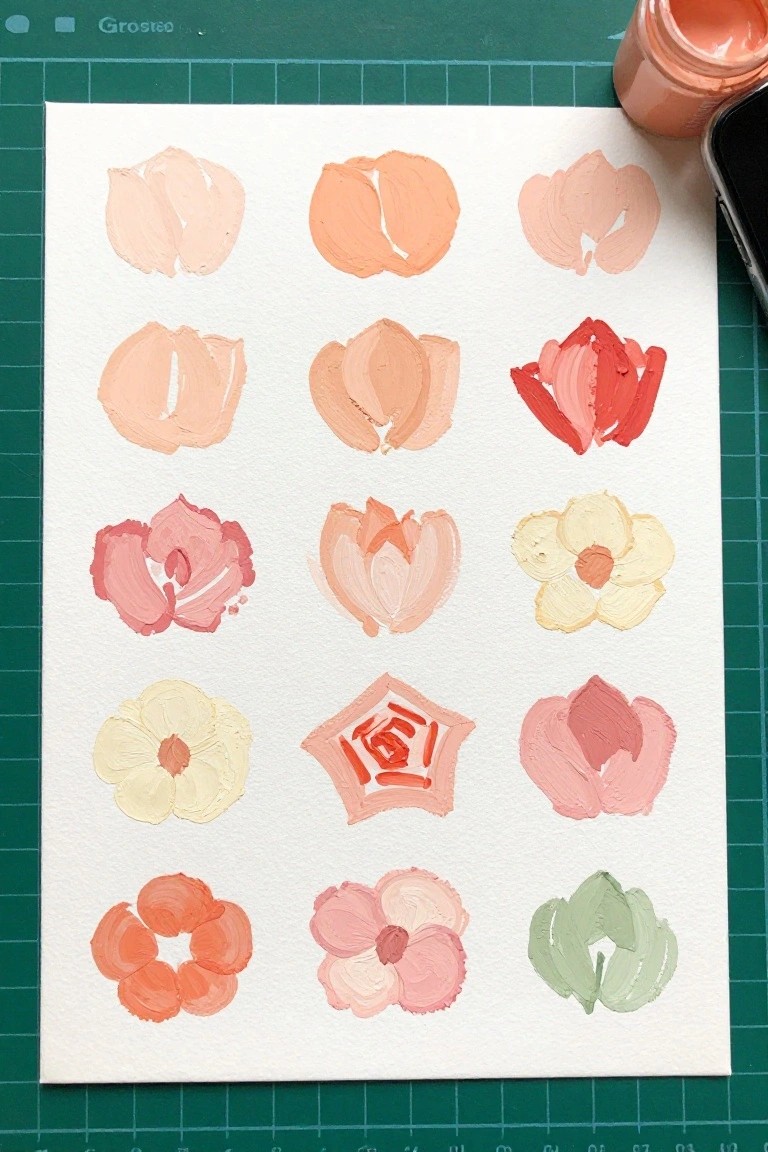
A grid of small flower studies lets you test different petal arrangements and stroke directions using the same brush throughout. Each example builds the bloom from the center out with simple overlapping marks, showing how slight changes in angle and paint thickness create new shapes. The limited warm palette keeps attention on the brushwork rather than color choices.
What makes this idea useful is the low-pressure format that fits an entire practice session on one page. You can repeat the layout in a sketchbook and swap in different hues or add a row of cooler tones for contrast. For canvas art, something like this works well as a reference before scaling up individual shapes into larger pieces.
Pastel Floral Wreath with Mixed Petal Shapes

A circular wreath made from clusters of small flowers and leaves offers a clean way to practice varied petal strokes in one composition. The design fits the decorative floral category and stays balanced because the open center prevents the canvas from feeling crowded while the scattered dots and leaves add movement around the ring. Soft overlapping colors in pinks, purples, and creams against the white ground let the petal edges stand out without needing heavy outlines.
What makes this idea useful is the repeating ring layout that breaks down into short painting sessions focused on individual flower types. You can swap the color mix for bolder tones or drop some of the tiny filler dots if you want to emphasize larger brushwork. For canvas decor this format scales easily to different sizes and works well as a quick project when you want something finished that still shows clear petal practice.
Flower Shape Studies Using a Warm Palette
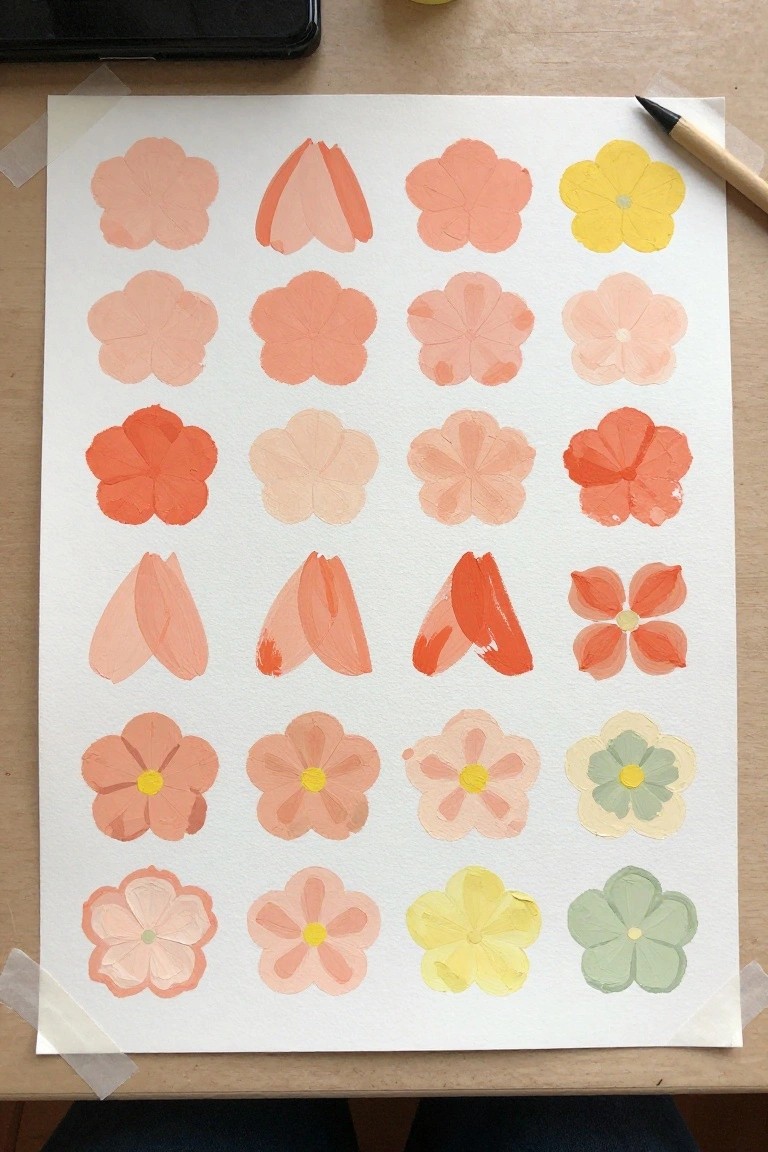
A grid of acrylic flower studies shows how different petal formations can be created by varying brush pressure and angle. The idea centers on repeating similar shapes in a cohesive peach and coral palette so the focus stays on stroke technique rather than color choices. This setup works well as a reference page for building control over curved and pointed petal edges.
What makes this idea useful is the chance to test multiple petal layouts on one sheet before committing to a larger piece. You can easily swap in cooler tones or add a background wash later if the shapes feel too flat. For practice, this kind of layout keeps the emphasis on brushwork and helps track which strokes feel most natural.
Bold Poppy Petal Study on Neutral Ground
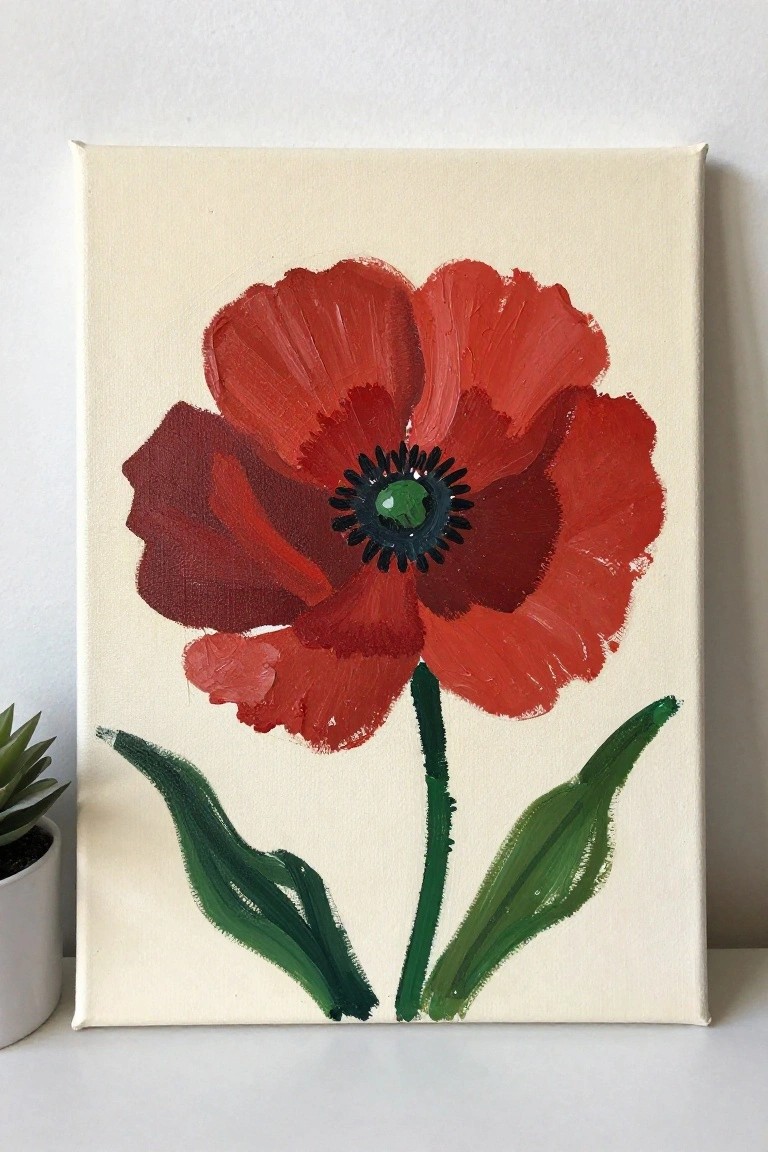
A single oversized poppy works as a floral acrylic idea by using wide red strokes to form overlapping petals around a dark center with a small green highlight. The composition stays effective because the off-white background and minimal stem with two leaves keep all attention on the flower shape and the contrast between the reds and the dark details. This type of painting falls into decorative floral wall art that relies on strong color blocks rather than fine detail.
What makes this idea useful is how the large petal areas let you focus on stroke direction and layering without crowding the canvas. The limited elements make it easy to adapt by changing the red to another bold hue or shifting the leaf placement for different layouts. For practice, this kind of subject helps build brush control while still producing a finished piece that reads clearly from a distance on Pinterest or as simple canvas decor.
Flat Color Tulip Canvases in a Series

Painting tulips with solid blocks of color on small canvases creates a clean floral set that relies on shape and hue variation rather than blending or detail. Each flower uses broad petal strokes in one main color, paired with a simple stem and two leaves against the white background. This approach fits the decorative floral category and works well because the strong color contrast and repeated layout keep the focus on the brushwork.
What makes this idea useful is how the limited shapes let you practice petal direction and edge control without extra steps. You can swap the color palette easily for different rooms or seasons while keeping the same layout. For canvas art, something like this stands out on Pinterest as a quick series that can be hung together or given as matching pieces. The flat style also makes it simple to resize onto larger canvases if you want a bigger version.
Soft Pastel Ranunculus Cluster
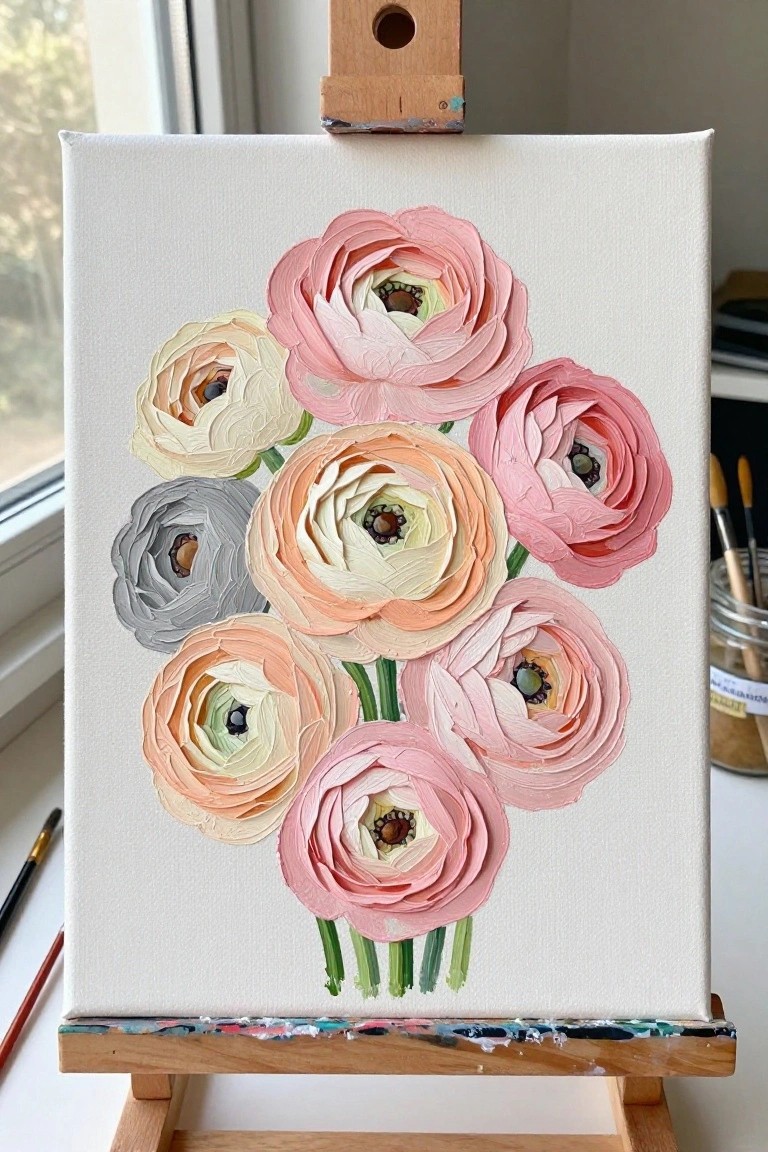
A floral acrylic idea built around a tight group of ranunculus blooms works by layering curved petal strokes in shifting pastel tones so each flower reads as rounded and full. The limited palette of soft pinks, peaches, creams, and one gray bloom keeps the arrangement simple while the white canvas background makes the color variations pop without extra detail. Green stems at the base tie the cluster together and give the eye a place to rest.
What makes this idea useful is the compact layout that fits easily on a standard canvas size without crowding. The same bouquet can be adapted by swapping in brighter or deeper shades for different seasons or by reducing the number of flowers for a quicker study. For practice, this kind of subject lets you focus on building petal edges and color transitions in one session. It also translates well to small wall pieces because the clean negative space keeps the finished piece from feeling heavy.
Mason Jar Sunflower Still Life
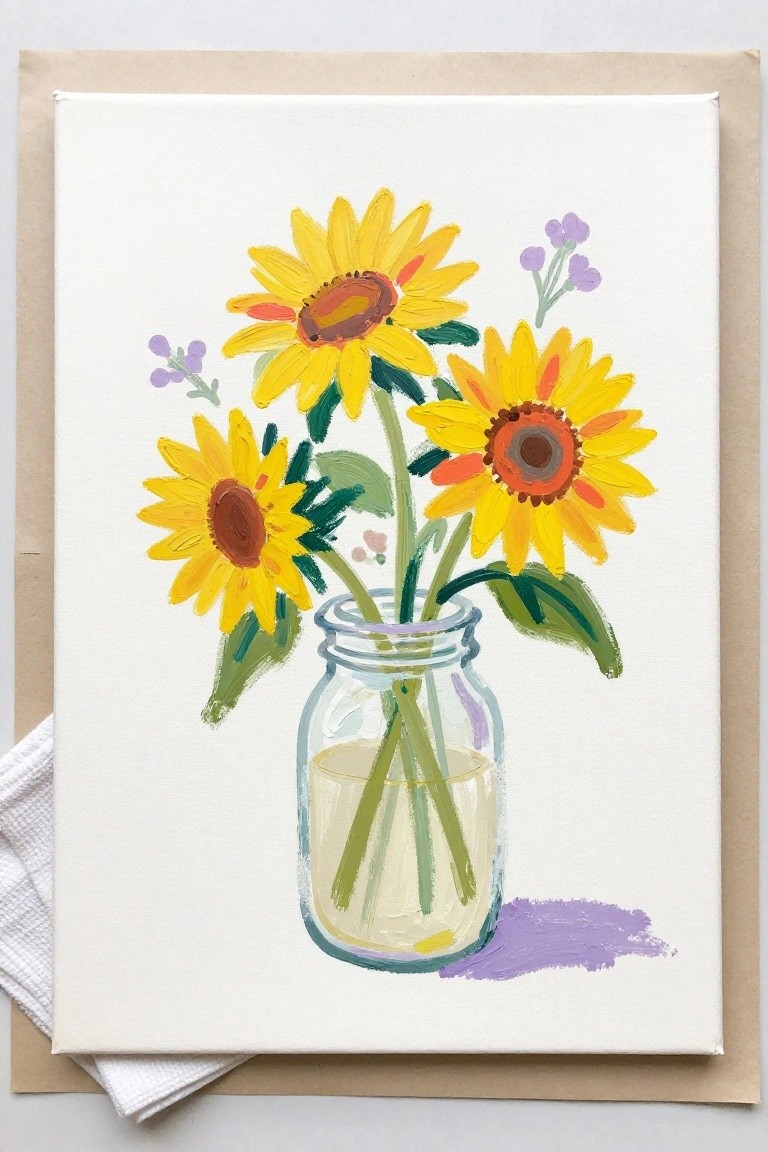
A still life of sunflowers in a clear mason jar gives you a direct way to practice bold petal strokes and simple color blocking with acrylics. The yellow flowers with darker centers create strong contrast against the white background, while the visible stems in the jar add structure without extra detail. Small purple filler flowers and green leaves help fill space and balance the composition without complicating the layout.
What makes this idea useful is the limited palette that keeps the focus on brushwork instead of color mixing. You can swap the sunflowers for other blooms or change the jar angle to match different canvas sizes. For practice, this kind of subject works well for repeating the same flower shape in varying sizes to build consistency.
Overlapping Daisies in Gentle Pastel Hues

This acrylic painting idea centers on a cluster of daisies painted in soft peach, cream, and pink tones with simple brown centers. The flowers overlap in a loose arrangement that fills the canvas while leaving plenty of negative space around the edges. The approach relies on visible petal strokes and a limited color range to create a clean floral composition without extra background elements.
What makes this idea useful is how the overlapping layout builds a full-looking canvas with fewer individual flowers to paint. The soft palette adapts easily if you want to swap in different shades or adjust the size for smaller canvases. For practice, this kind of subject works well for focusing on petal direction and basic layering since the light background keeps the shapes clear.
Single Sunflower on Light Wood Panel
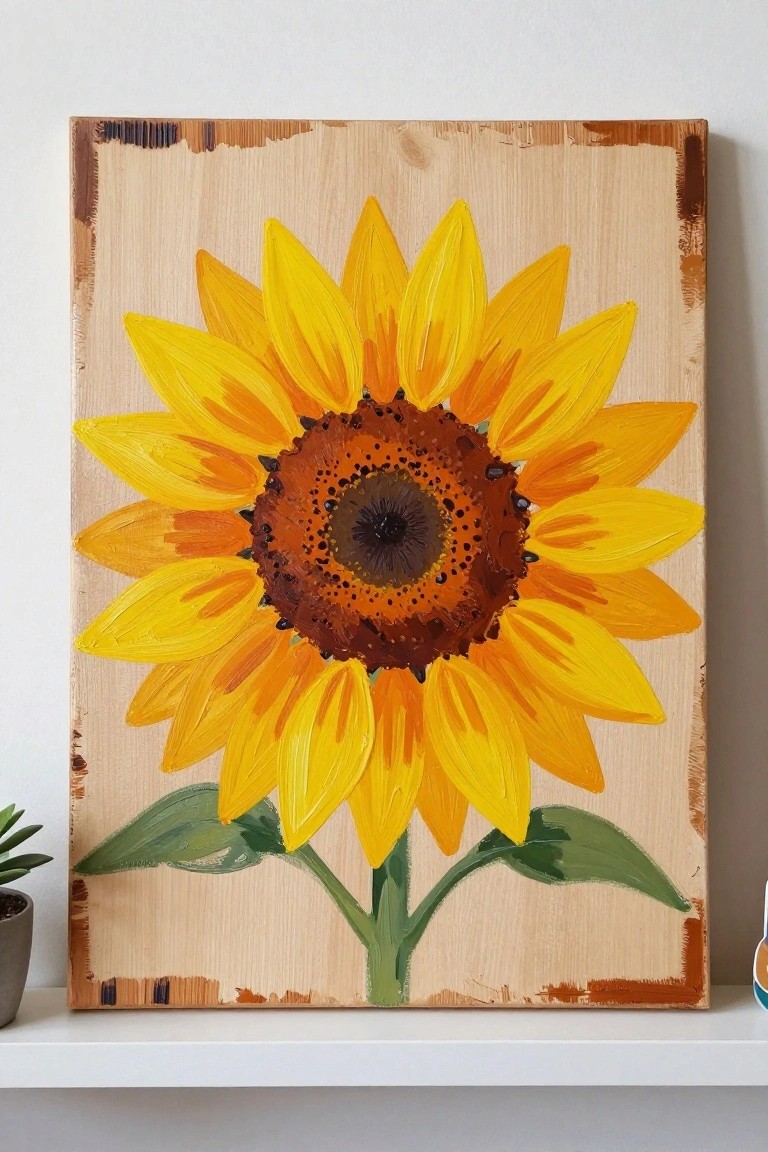
A large centered sunflower works as a straightforward floral acrylic idea that relies on radiating petal strokes and strong color contrast. The yellow petals build outward from a dark brown center while the green stem and leaves sit low on the canvas, keeping the composition balanced against the plain background. This fits the decorative wall art or still life category and uses bold color blocks to hold attention without extra details.
What makes this idea useful is the single-subject layout that reduces planning time on canvas. The light wood tone already supplies a warm base so only the flower needs full coverage, and the same structure can be repeated with different petal angles or added buds for a small series. For practice, the clear edges between petals and center help build brush control while still allowing color mixing experiments in the yellows. This kind of acrylic painting idea stands out on Pinterest because the high contrast reads well even at small thumbnail sizes.
Vertical Pink Lilies on a Tall Canvas

A vertical floral layout with multiple lily stems at staggered heights gives you a clean way to practice petal shaping and stem alignment in acrylic. The soft color shifts from white to pink on each bloom show how simple layering can build natural-looking flowers without extra texture or detail. Keeping the background plain lets the stems and leaves carry the composition while keeping everything balanced on a narrow canvas.
What makes this idea useful is the tall format that guides the eye upward and works well for narrow wall spaces or canvas decor. You can easily change the pink tones to other colors or reduce the number of blooms to make it quicker to finish. For practice this setup helps with brush control on both the open petals and the narrower leaves, and the same structure adapts quickly if you want to try different flower types on the same stems.
Grid of Flat Acrylic Flowers in Retro Color Blocks

This acrylic painting idea uses a simple grid layout of twelve identical six-petaled flowers, each filled with a single bold color and finished with a contrasting center dot. It works as decorative wall art because the repeating shapes and limited color palette keep the composition balanced and graphic without needing complex detail. The white canvas background makes the flat color blocks stand out clearly.
What makes this idea useful is how the consistent petal shape lets you focus on brush control and even coverage while trying different color combinations. You could adapt it by changing the grid size, swapping in seasonal colors, or painting it on a smaller panel for faster practice. For canvas decor this layout works well because the clean pattern reads clearly from a distance and can be personalized with your own palette choices.
Bold Tulip Bouquet in a Yellow Vase

A floral still life built around a tight cluster of tulips gives you a clear subject that stays readable even with simplified shapes. The idea relies on strong vertical stems to link the rounded blooms at the top with the rounded vase below, while the background foliage is kept loose so it supports rather than distracts. Bright blocks of red, yellow, and cream against the pale vase create enough contrast to make the arrangement stand out on a canvas.
The limited number of flower shapes makes it straightforward to practice consistent petal strokes and stem placement in one session. You can easily change the color mix or drop a few blooms if you want a smaller version for practice or gifts. The flat color approach also translates well to quick canvas pieces that still read clearly from a distance on a wall.
Gradient Petal Flower on Circular Canvas
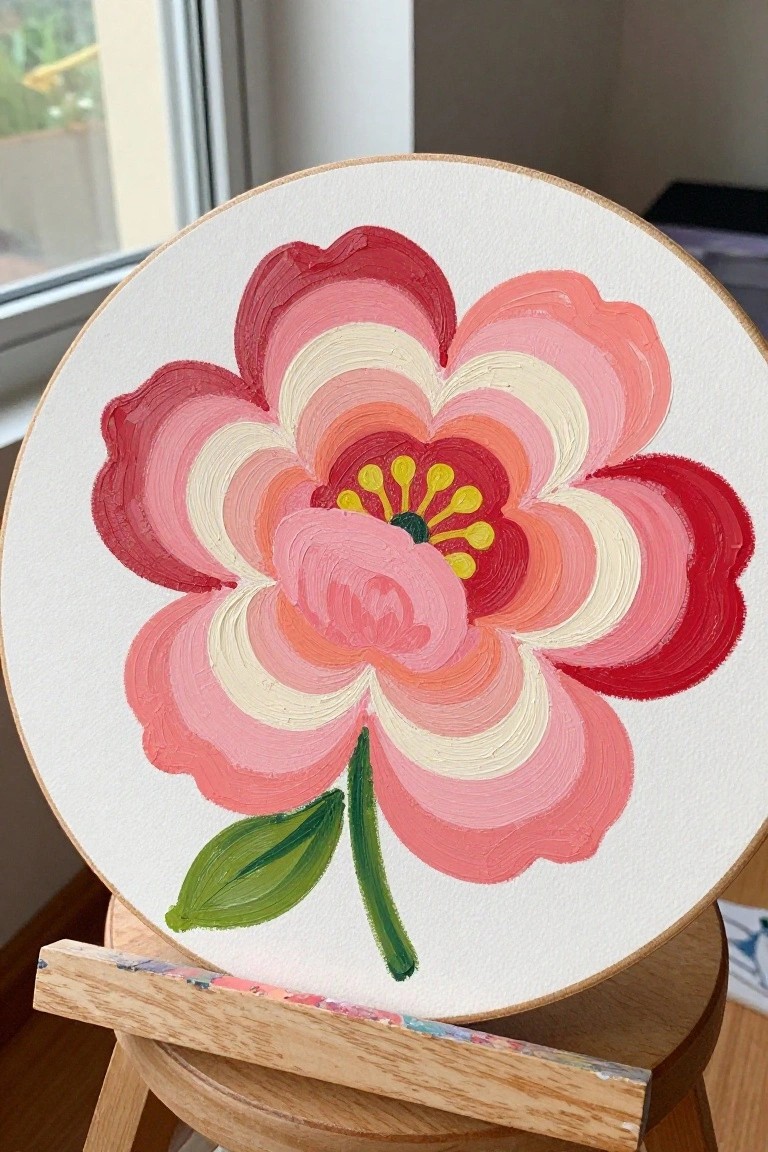
This acrylic painting idea focuses on a large central flower built from layered, curved petal strokes that shift through red, pink, and cream tones. The composition keeps the bloom centered with just a short stem and two leaves at the bottom to anchor it against the plain white background. It fits the floral category and works well for practicing petal direction and simple color blending on a round surface.
What makes this idea useful is how the overlapping strokes let you build shape and depth without needing tiny details. The color transitions from dark outer petals to lighter inner ones give it visual weight while staying easy to adapt with different shades or fewer layers. For practice, this layout works especially well because the round format forces you to think about balance and negative space around the flower. You could simplify the petals further or repeat the same idea on square canvases for a set of matching wall pieces.
Frequently Asked Questions
Q: What brushes work best for mastering petal strokes in these acrylic tutorials? A: Round brushes in sizes 2 through 6 offer the most control for petal strokes because their pointed tips allow you to start with a fine line and then press down to widen the stroke into a petal shape. Choose synthetic bristles labeled for acrylics since they hold their shape well and clean easily. Practice loading just the tip with paint and using light pressure at the start of each stroke before increasing pressure in the middle and lifting off at the end.
Q: How can beginners build better brush control when painting flower petals? A: Start each practice session by painting straight lines and simple curves on scrap paper while focusing only on steady hand movement and consistent pressure. Hold the brush like a pencil near the ferrule for finer control and keep your wrist relaxed. Repeat basic petal shapes ten times in a row without lifting the brush until the motion feels natural before moving on to full flowers in the tutorials.
Q: What should I do if my petal strokes look uneven or streaky? A: Uneven strokes usually come from too much or too little paint on the brush or from pausing mid-stroke. Reload the brush after every two or three petals and wipe excess paint on the palette edge so the load stays even. Work in thin layers rather than thick ones and let each layer dry for a minute before adding the next stroke on top to build smooth color without dragging dried paint.
Q: How do I choose and mix colors to make the petal strokes look realistic? A: Begin with a limited palette of two or three colors such as a light pink mixed with white for highlights and a darker shade for shadows. Mix on the palette until the colors blend smoothly without streaks. Apply the lightest color first with your petal stroke then add a touch of darker color at the base of each petal while the paint is still wet so the two shades merge naturally through brush pressure alone.
Q: Which tutorial should I try first if I want to focus only on brush control? A: Start with any tutorial that features single-stroke roses or daisies because these use the fewest petals and let you concentrate on pressure changes. Follow the step-by-step photos exactly and paint at least five versions of the same flower before moving to more complex shapes. This repetition strengthens muscle memory for the exact brush angle and speed needed for clean petal edges.

Hi, I’m Camille.
I’m a self-taught painter and creative blogger with a soft spot for acrylic painting, color play, and all the little art ideas that make everyday life feel more inspiring.
I started this space because I’ve always believed painting should feel joyful, approachable, and a little personal. Some of my favorite pieces come from simple ideas, messy palettes, and evenings where I just felt like making something pretty.
Most of what I share begins with acrylic painting, but I also love exploring other mediums when creativity pulls me in a new direction. My goal is to collect and share painting ideas that feel fun, beautiful, and actually doable, whether the mood is calm and minimal or bright and playful.
This is a space for inspiration, experimenting, and enjoying art without overcomplicating it.