
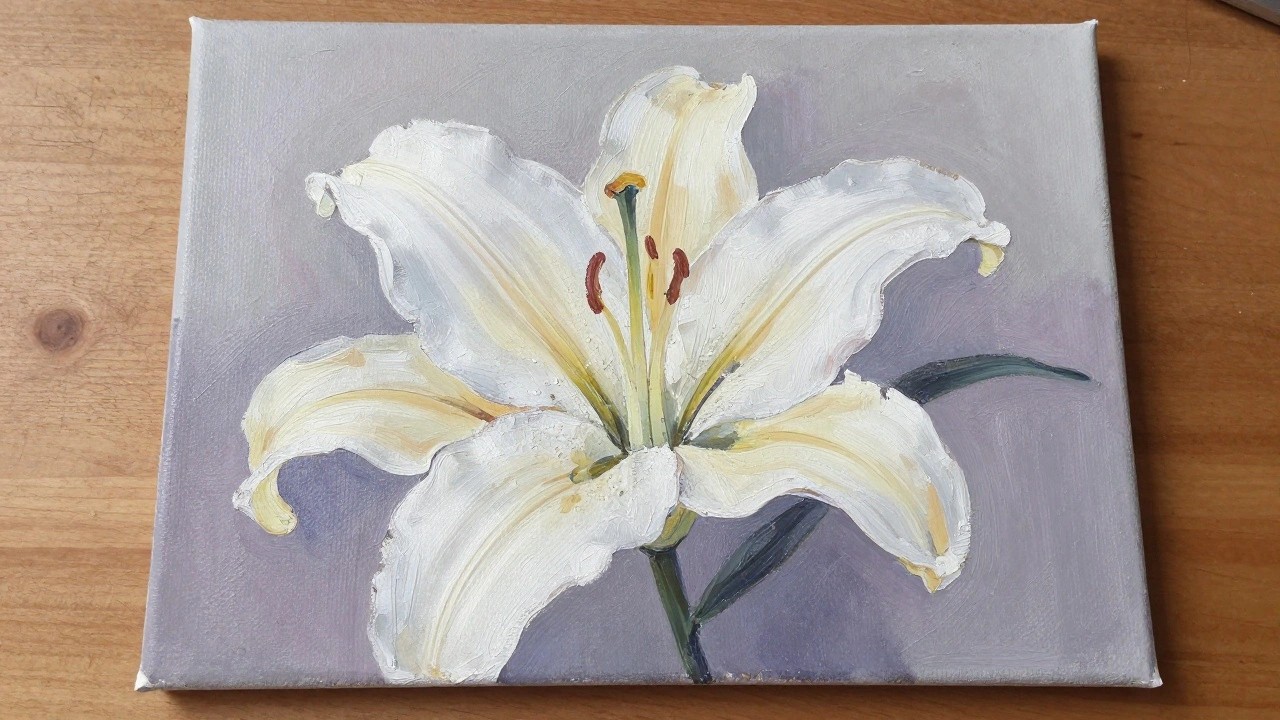
I have been working with acrylic paints for a while now and lilies with white petals are one of my favorite subjects lately.
Layering the petals gradually helps give them a fuller appearance that feels more natural.
I tried several variations on this technique and some worked better than others depending on the background I chose.
These are the approaches that seemed most straightforward to try at home.
Layered White Lily with Soft Background Contrast
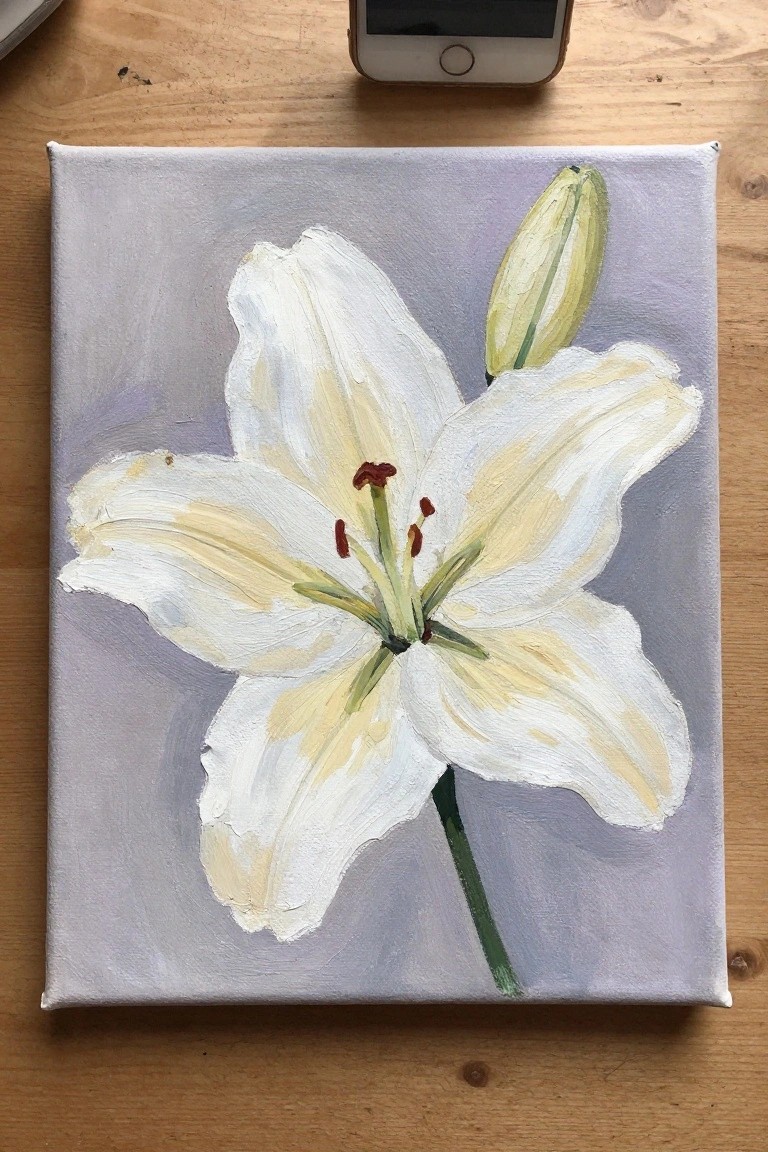
A white lily painted with broad, overlapping petals creates a clear focal point when set against a muted gray background. The acrylic idea relies on building the flower through visible brushstrokes that suggest petal layers while keeping the stamens and stem details sharp. Adding a single green bud beside the bloom gives the composition balance without adding extra elements, keeping the focus squarely on the flower itself.
What makes this idea useful is the simple layout that lets you practice layering acrylic whites and soft yellows without a busy scene. The restrained palette and centered subject work well for small canvas pieces or quick practice sessions. You could adapt it by changing the background to a deeper tone or extending the stem for a taller format. For wall art, this kind of clean floral close-up stands out on Pinterest because the contrast stays strong even at small sizes.
Layered White Lilies on a Solid Blue Background
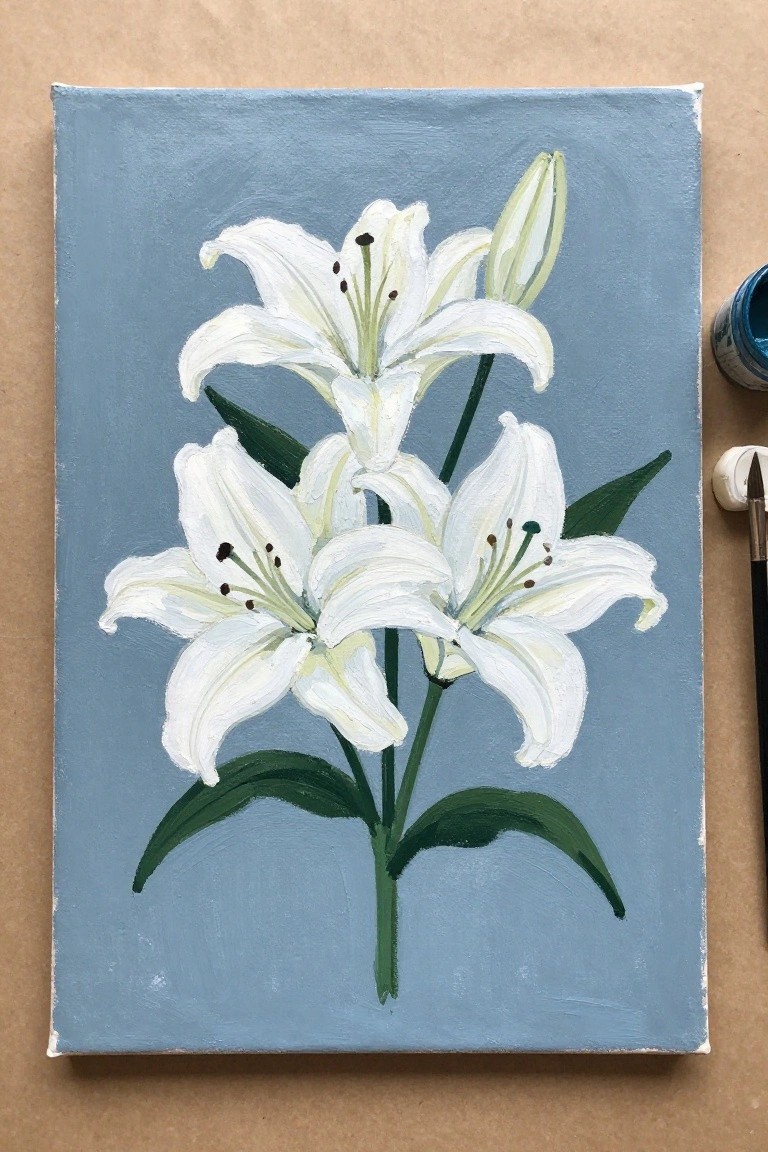
A cluster of white lilies painted with overlapping petals creates a clear focal point in this floral acrylic idea. The solid blue background keeps the composition simple so the flowers and stems stand out without competing details. Green leaves placed at the base help anchor the stems while the open blooms show how layering white paint builds natural shape and depth.
What makes this idea useful is how the plain background lets you concentrate on building the petals one layer at a time. You could switch the blue to another muted tone or adjust the number of open flowers to fit a smaller canvas. For practice this layout works well because the subject stays recognizable even if the edges stay soft.
Stacked Lilies on Striped Terracotta Canvas
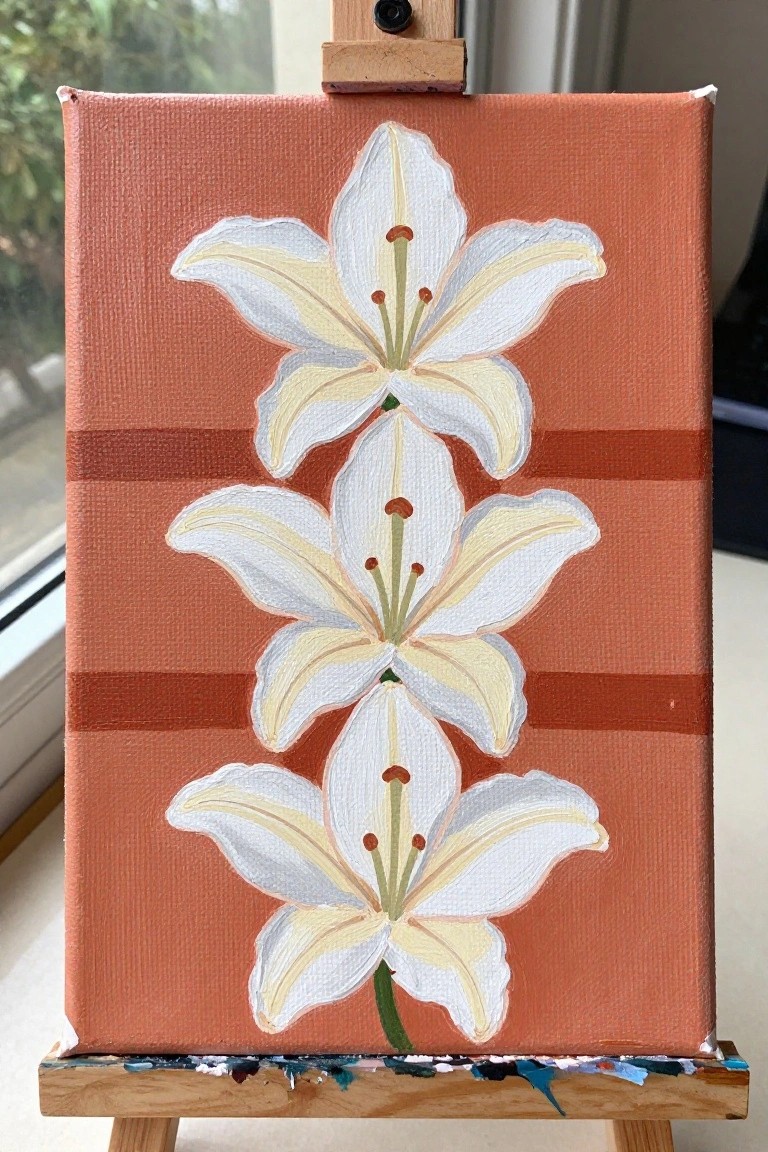
A vertical floral acrylic idea works by placing three white lilies directly in line so the blooms create a tall, repeating shape down the canvas. The petals are built with soft layering to show depth while the background uses simple horizontal bands of warm orange and red-brown to frame the flowers. This approach keeps the painting in the decorative floral category and relies on strong color contrast rather than complex detail.
What makes this idea useful is the clean layout that translates easily to different canvas heights. The limited palette lets you focus on petal blending without juggling many colors, and the stripes add structure without needing extra elements. You could swap the terracotta tones for cooler shades or shorten the stack to two blooms for a quicker version that still reads clearly on a wall.
Layered White Lilies on a Muted Gray Canvas
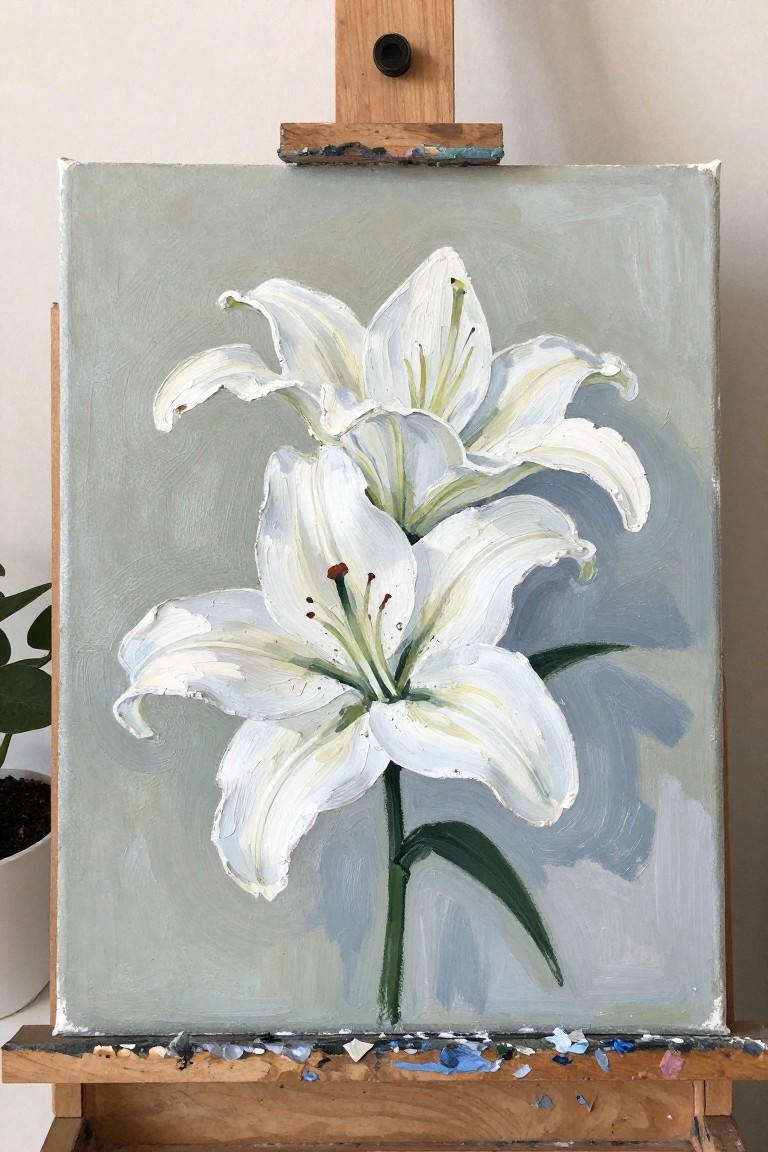
A floral still life idea built around several open white lilies with stacked petals that create depth and form through simple layering. The neutral gray background lets the bright white blooms stand out while the visible stems and leaves anchor the composition in the lower half. This approach works because the limited palette keeps the focus on petal edges and soft color shifts within the flowers themselves.
What makes this idea useful is how the large petal shapes make layering easy to practice without needing fine detail work. You could adapt it by switching the background to a warm beige or adding a second bloom at a different angle for variety. For canvas decor, the clean layout transfers well to different sizes and keeps the painting looking balanced even if the edges stay loose. The contrast here also makes it a strong candidate for quick acrylic sessions where you want a finished floral piece without extra elements.
Layered White Lilies on a Gray Canvas
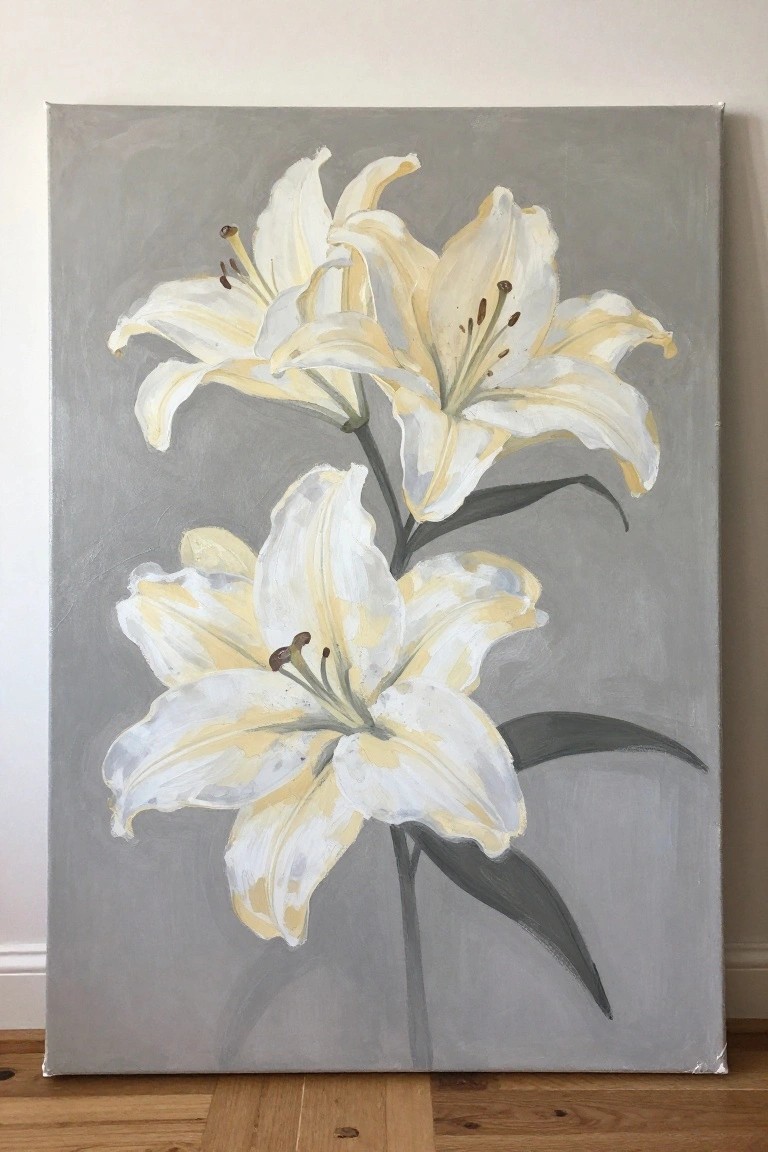
This acrylic idea centers on building up overlapping lily petals in white with soft yellow washes to give each bloom depth without heavy detail. The three flowers sit at different heights on a single stem set against a flat gray field, which keeps the composition simple while letting the pale petals stand out. It falls into a straightforward floral still life category that relies on shape contrast and limited color rather than texture or complex backgrounds.
What makes this idea useful is how the gray backdrop handles most of the contrast work so you can focus on petal edges and center details. You can easily adapt it by changing the background to a warm beige or using the same layout on a vertical canvas for a narrower wall space. For practice, the subject lets you work on layering thin white coats over a base tone without needing many colors or intricate leaf work. The tall vertical placement also translates well to a quick canvas piece that reads clearly from a distance.
Minimal Still Life of Layered Lilies in a Neutral Vase

A floral still life idea that centers on white lilies with layered petals arranged in a simple vase works well because the soft gray background keeps all attention on the blooms and the subtle shadow under the vase adds depth without extra elements. The composition stays balanced by placing the tallest flower near the top and letting one loose petal sit off to the side, which prevents the arrangement from feeling too centered or stiff. This fits the classic still life category while using a limited palette that makes the white petals pop through contrast rather than bright color.
What makes this idea useful is the straightforward layout that lets you practice building up layers on the petals without needing many colors or complex details. You can easily adapt it by painting just two or three flowers instead of four or by swapping the vase shape for something rounder or taller. For canvas decor the neutral tones make it simple to match with different room styles, and the same setup could be tried with slightly warmer background tones if you want a different mood. The clean edges around the vase and flowers also help the piece look polished even when the brushwork stays visible.
Layered White Lilies Against a Soft Background
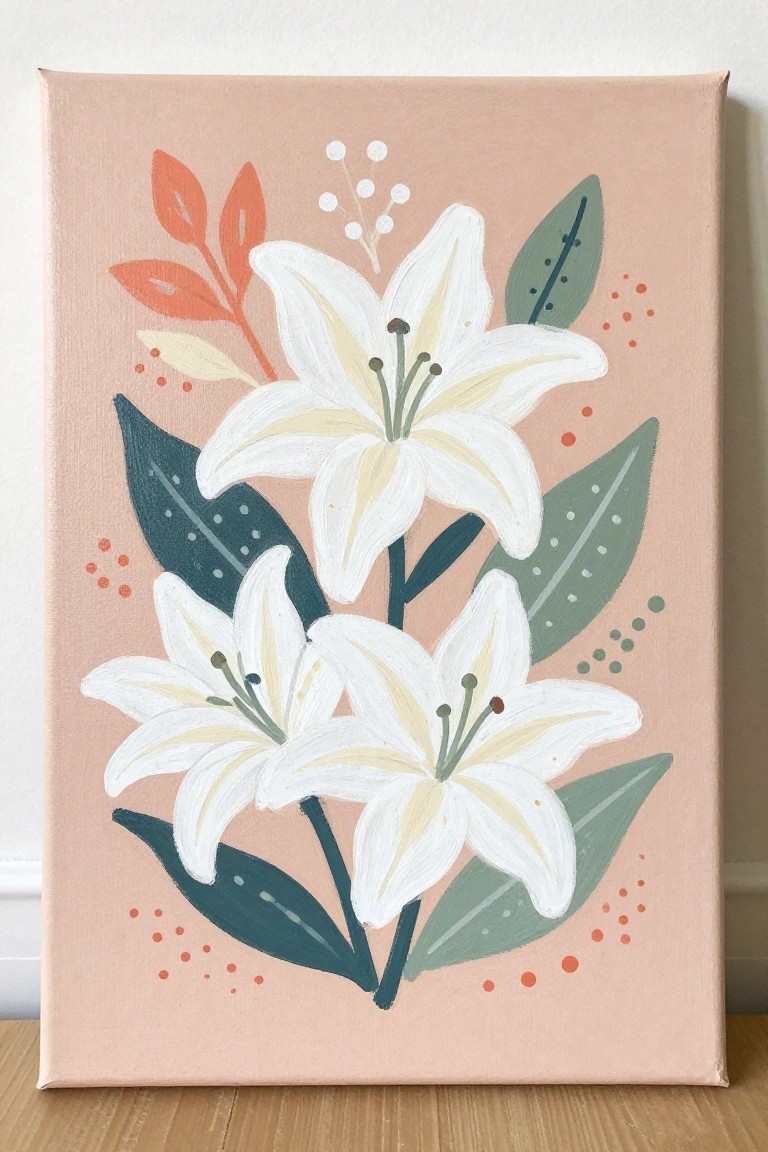
A floral acrylic painting idea built around white lilies succeeds when the petals are layered with overlapping strokes to give them form without heavy shading. The peach background keeps the focus on the blooms while the deep green leaves and small color accents supply contrast and balance. This approach fits the decorative floral category where clean shapes and limited background detail do most of the visual work.
What makes this idea useful is how the simple background reduces the need for complex blending, letting you concentrate on building the flowers. You can adapt it by changing the background tone or swapping the orange accents for another color that matches your room. For canvas wall art the vertical layout fills space well and can be scaled down for smaller projects like greeting cards or shelf pieces.
Layered White Lilies with Soft Background Wash

A floral acrylic idea built around several white lilies works by overlapping the petals to create depth while keeping the color palette limited to white, soft yellow tones, and muted greens. The composition places the main blooms in a loose cluster with one open bud above, and the pale background wash provides separation without competing for attention. This fits the still life floral category because the layered petals let you build form through repeated thin applications rather than heavy outlining.
What makes this idea useful is the way the central flower arrangement can be scaled up or down depending on canvas size. The soft background keeps the focus on the blooms and makes the piece easy to adapt for wall art or gifts. You could simplify it by reducing the number of visible stamens or personalize it by shifting the background to a cooler tone. For practice, this kind of subject helps develop control when painting light edges against a blended field.
Layered White Lily on a Bold Blue Canvas
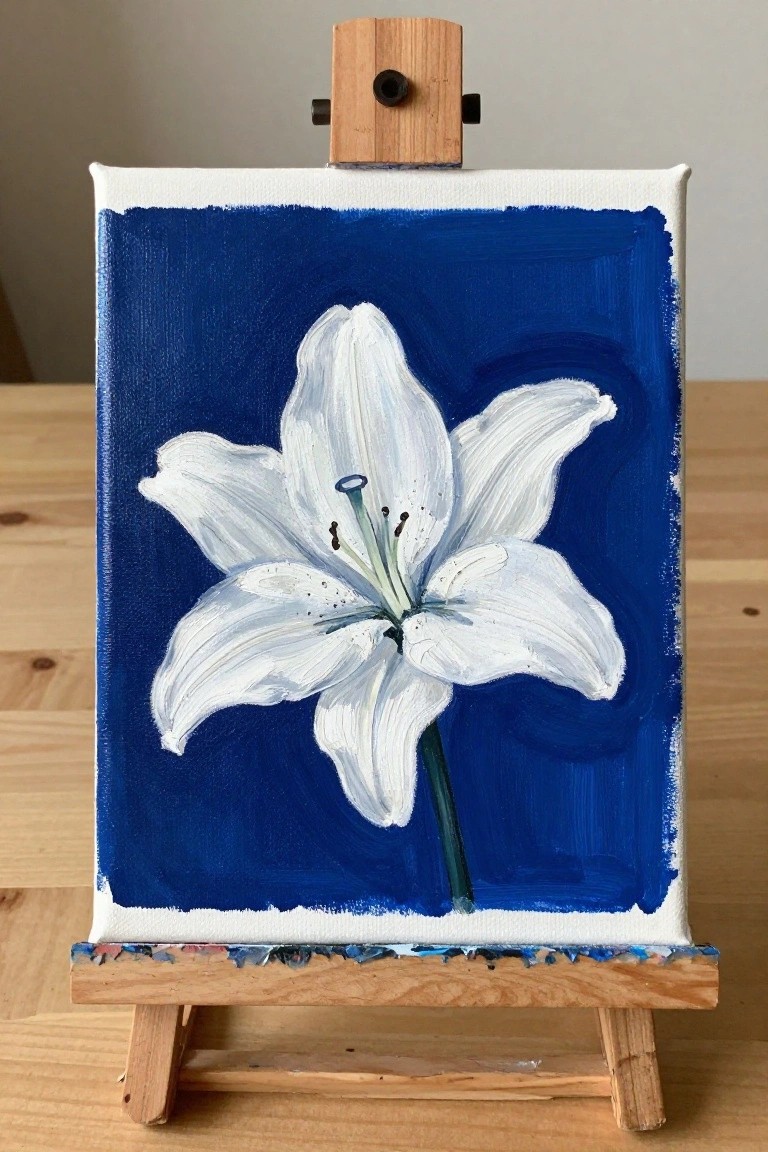
A centered white lily with layered petals makes an effective floral acrylic idea when set against a solid deep blue background. The strong contrast lets the flower shape carry the composition without extra elements or textures. This approach fits the still life or wall art category because the limited palette and direct layout keep the painting quick to complete while remaining visually clear.
What makes this idea useful is how the single background color reduces decision-making during the painting process. You can adapt it by changing the blue tone or adjusting how much the white layers overlap to create different petal depths. For canvas decor this layout works especially well because the centered subject translates easily to different sizes. The same idea could be simplified further by using fewer petal details or expanded by adding a second bloom if more complexity is needed.
Layered White Lilies on a Soft Geometric Background
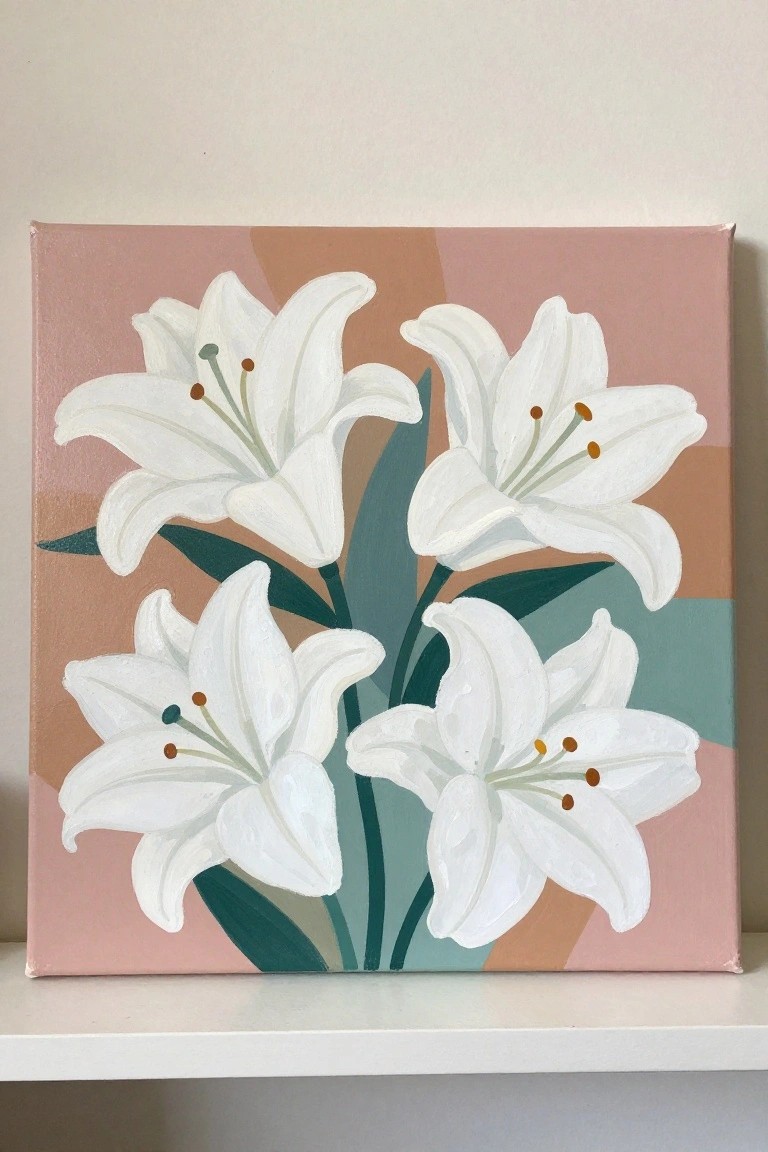
White lilies painted with stacked petals and simple color shifts make a strong floral subject for acrylic. The idea centers on grouping several open blooms together so their bright white shapes stand out against a background built from large, flat color blocks in pink, teal, and brown. This approach keeps the focus on the flowers while the muted geometric shapes give the whole piece a modern, balanced look that works well as wall art.
What makes this idea useful is how the limited background palette lets the white petals carry most of the visual weight. You can adapt it by swapping the pink and teal blocks for colors that match a room or by reducing the number of flowers if you want a smaller canvas. For practice, this kind of layout helps you work on clean edges and basic layering without needing heavy texture or fine detail, and it translates easily into a quick gift or seasonal decor piece.
Layered White Lilies on Solid Green
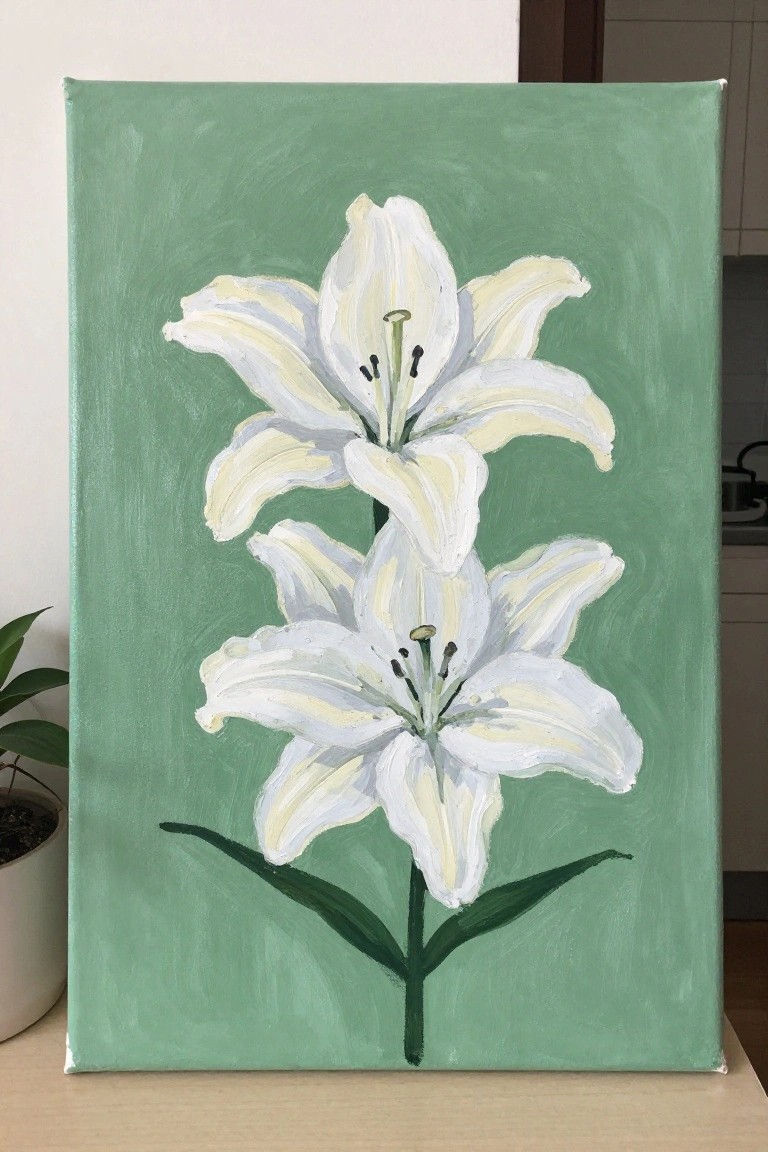
A floral acrylic idea built around two white lilies works well when the petals are built up in layers of white with soft yellow shading. The solid green background keeps the focus on the flowers and lets the overlapping petal shapes create natural depth without extra elements. This category of painting relies on contrast between the light blooms and the darker ground to make the composition read clearly from a distance.
What makes this idea useful is the centered layout that leaves room to adjust petal angles or stem length without redrawing the whole piece. You can swap the green background for another solid color or add a third bloom higher up if you want a taller canvas. For practice, the subject helps with mixing soft tints on white flowers and keeping edges soft where petals overlap. The clean look also translates easily to smaller canvases or greeting card sizes.
Profile Lilies Built with Layered White Petals

Paint several white lilies from the side view and build the petals with thin overlapping layers of white and pale gray to create soft depth. Keep the background plain so the focus stays on the gentle curves and the small orange stamens that add a single point of color. This approach works as a clean floral still life idea that uses limited tones and repeated shapes instead of busy detail.
What makes this idea useful is how the stacked layout lets you practice the same petal structure three times with small variations in angle or shadow strength. You can simplify it further by using just two flowers or stretch it across a wider canvas for a longer horizontal piece. The neutral palette also makes it easy to match with existing room colors if you plan to frame the finished work.
Oval Canvas Lily with Curved Leaf Frame
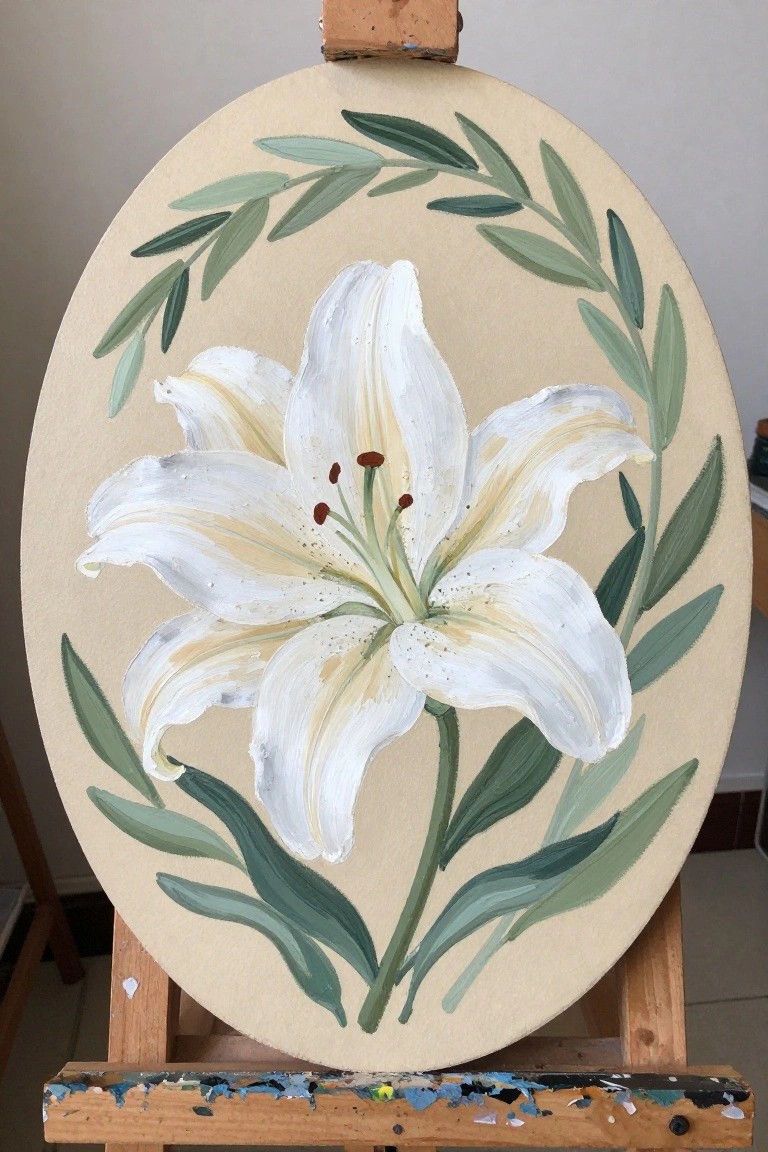
A single white lily with layered petals forms the core of this floral acrylic idea, painted on an oval canvas with a neutral background. Green leaves curve around the upper and side areas to create a loose frame that guides attention toward the flower without crowding it. The approach works as a decorative still life that relies on contrast between the bright petals and the muted setting to keep the focus sharp.
What makes this idea useful is the oval shape and partial leaf placement, which adapt quickly to round or rectangular canvases by shifting a few leaves. The white petals give room to practice simple acrylic layering for depth while the limited palette reduces color mixing decisions. For canvas decor or gifts, the clean layout photographs well for Pinterest because the central flower stands out clearly against the plain background.
Layered White Lilies on a Muted Gray Background

A cluster of white lilies built with overlapping petals offers a straightforward floral acrylic idea that relies on shape and contrast against a plain gray ground. The blooms are arranged at different angles to create depth while keeping the color palette limited to white and soft gray tones. This approach fits into still life floral work where the main goal is to show clean petal forms without busy details.
What makes this idea useful is the simple background that lets the white flowers carry the composition and reduces the need for extra color mixing. You could adapt it by painting the same lilies on a light blue or beige canvas to match different spaces. For practice, this kind of layout helps focus on building up layers in the petals one at a time before adding stems.
Layered White Lily on Neutral Canvas
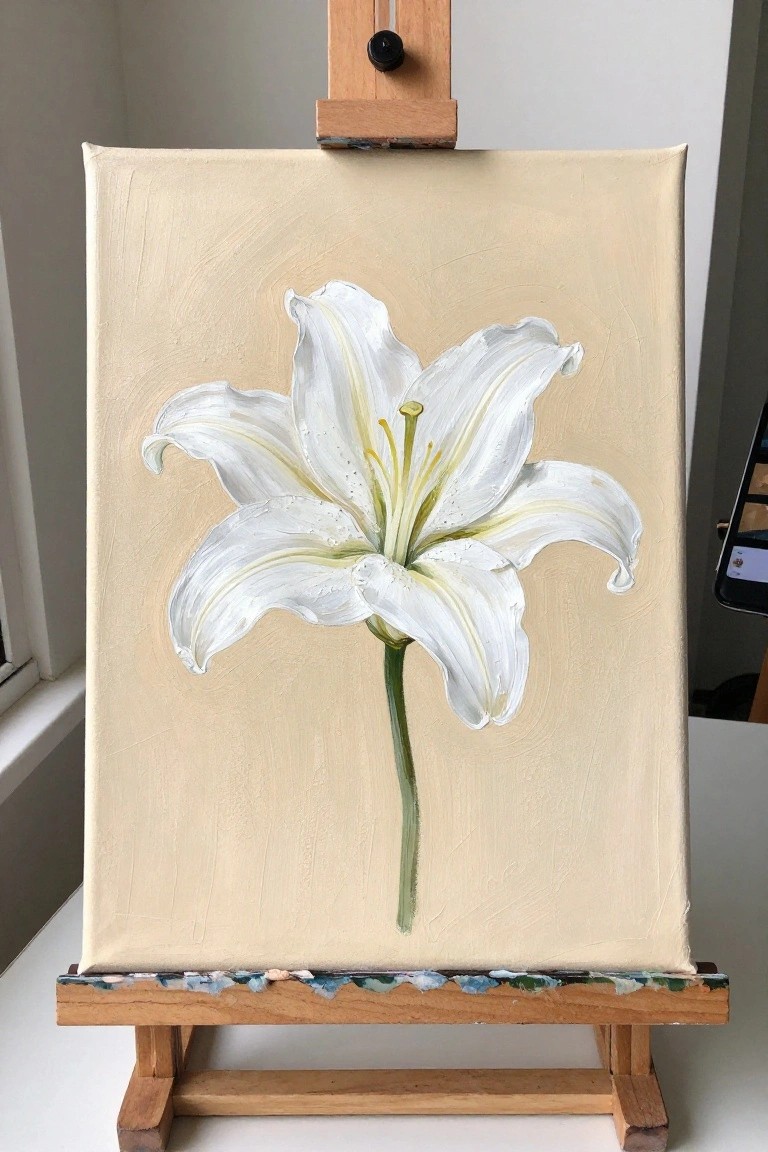
A single white lily built from overlapping petals forms the core of this acrylic idea, with each layer adding subtle depth through soft yellow and green accents at the center. This floral still life keeps the focus tight on the flower by using a plain background that lets the petal shapes and edges define the whole piece. The approach works because the limited color range and central placement make the layered structure easy to read even from a distance.
What makes this idea useful is how the isolated subject lets you practice building petal overlap without extra elements competing for attention. You could adapt it by swapping the background to a soft gray or adding faint texture to the canvas while keeping the same white layering. For wall art this clean layout translates well to different canvas sizes and stands out in searches for simple floral acrylic ideas.
Layered White Lilies on a Neutral Canvas
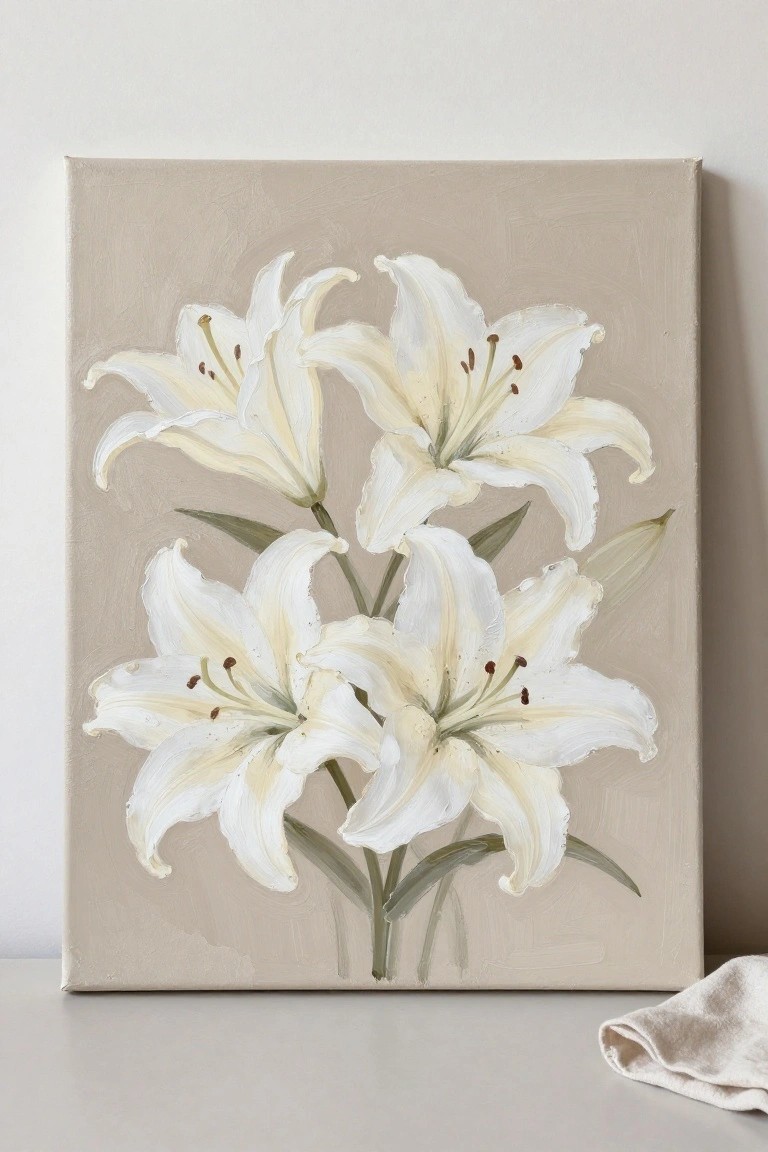
A floral acrylic painting idea built around a cluster of white lilies where the petals are stacked with visible brushstrokes to create depth. The blooms sit at varying angles with green leaves tucked between the stems, all placed against a flat taupe background that keeps the focus on the flowers. This approach works because the limited palette and soft edges let the layered petals define the shape without extra detail.
What makes this idea useful is how the neutral background simplifies color mixing while still letting the white layers read clearly. You can adapt it by shifting the background to a cooler gray or adding one more bloom lower on the canvas for balance. For canvas decor this layout stays effective because the simple stems and leaves keep the piece from feeling crowded, and it works just as well on a smaller panel if you reduce the number of flowers.
Layered White Lily on Gray with Gold Accents

A straightforward floral acrylic idea uses a single white lily built from broad overlapping petals that show soft folds and light green shading along the edges. The round gray background holds the composition together while a loose ring of gold dots adds a quiet accent above the flower. This still life approach works because the strong white-on-gray contrast lets the petal layers stand out clearly without extra texture or detail.
What makes this idea useful is how the limited palette lets you focus on building petal depth in a few steps. You could easily drop the gold dots or change them to another color if the look feels too busy for a particular canvas. For wall art the round format already gives it a finished decorative shape that translates well to different sizes. The same layout can be simplified by using fewer petals or expanded by adding a second bloom below.
White Lilies Layered on Muted Green
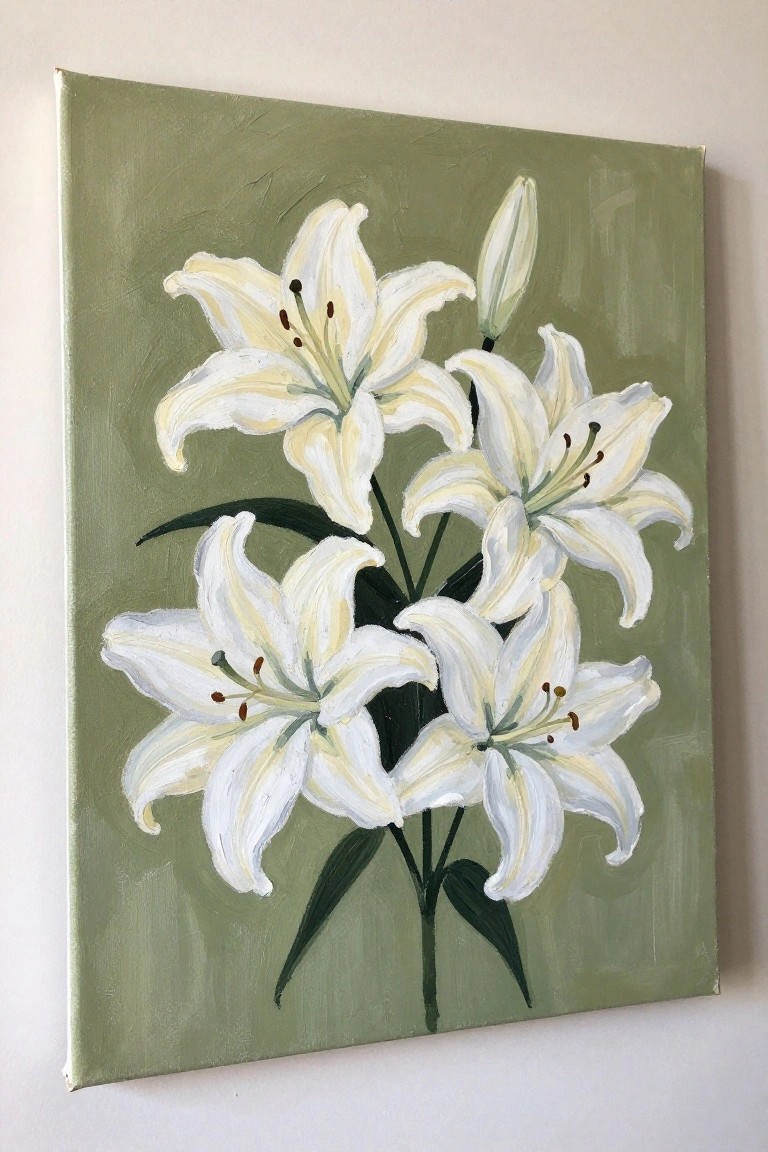
A floral still life idea built around several white lilies with overlapping petals that create natural depth through simple layering. The stems and leaves stay dark and minimal so the flowers stay the center of attention against the flat green background. This approach keeps the painting clean while still showing the soft folds and slight yellow shading inside each bloom.
What makes this idea useful is the limited color palette that removes most mixing decisions and lets you focus on petal placement. You can adapt it by painting fewer blooms for a quicker version or changing the background to a warm gray if you want it to match different decor. For canvas art this layout works because the white against green reads clearly from a distance and holds up well in photos.
Split Color Blocks Framing a Layered Lily
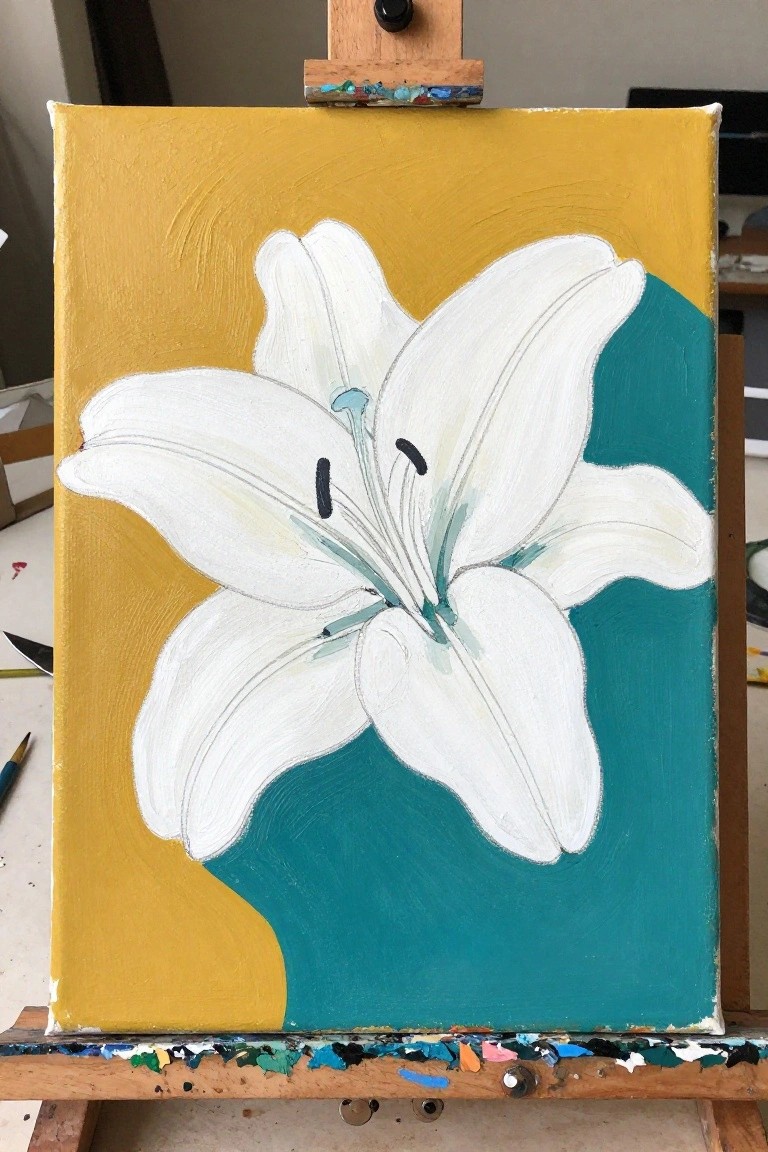
A white lily built from overlapping petals works well as a focal point when set against large blocks of yellow and teal. The acrylic painting idea relies on clean color separation to keep the flower readable while the petals receive light layering and soft shading. It falls into the floral still life category where contrast and simple shapes carry the composition more than fine detail.
What makes this idea useful is how the two background colors handle most of the separation work so the petals can stay relatively simple. You can adapt the layout by changing the teal section to another strong hue or by adding one more layer of white on the lower petals for extra form. For canvas wall art the same split works because the flower stays visible across a room. The approach can also be scaled down to a smaller canvas by keeping the background blocks but reducing the number of petal overlaps.
Layered White Lilies Tied with a Ribbon

A floral still life idea that centers on a small cluster of white lilies with soft pink shading in the petals. The stems are grouped together and finished with a single pink ribbon bow at the base, while the background stays a plain light tone to keep attention on the flowers. This approach works because the ribbon adds structure to the bottom of the composition and the layered petals create natural depth without needing extra elements.
What makes this idea useful is how the simple stem grouping and bow make the layout easy to sketch and paint on any canvas size. You can adapt it by swapping the ribbon color for seasonal themes or reducing the number of blooms to practice petal blending on a smaller scale. The neutral background also lets the flowers stand out clearly, which helps the finished piece look polished for wall art or gifts. For Pinterest, this kind of clean floral arrangement tends to get saved because it feels fresh without extra detail.
Horizontal Trio of Layered White Lilies on Pink
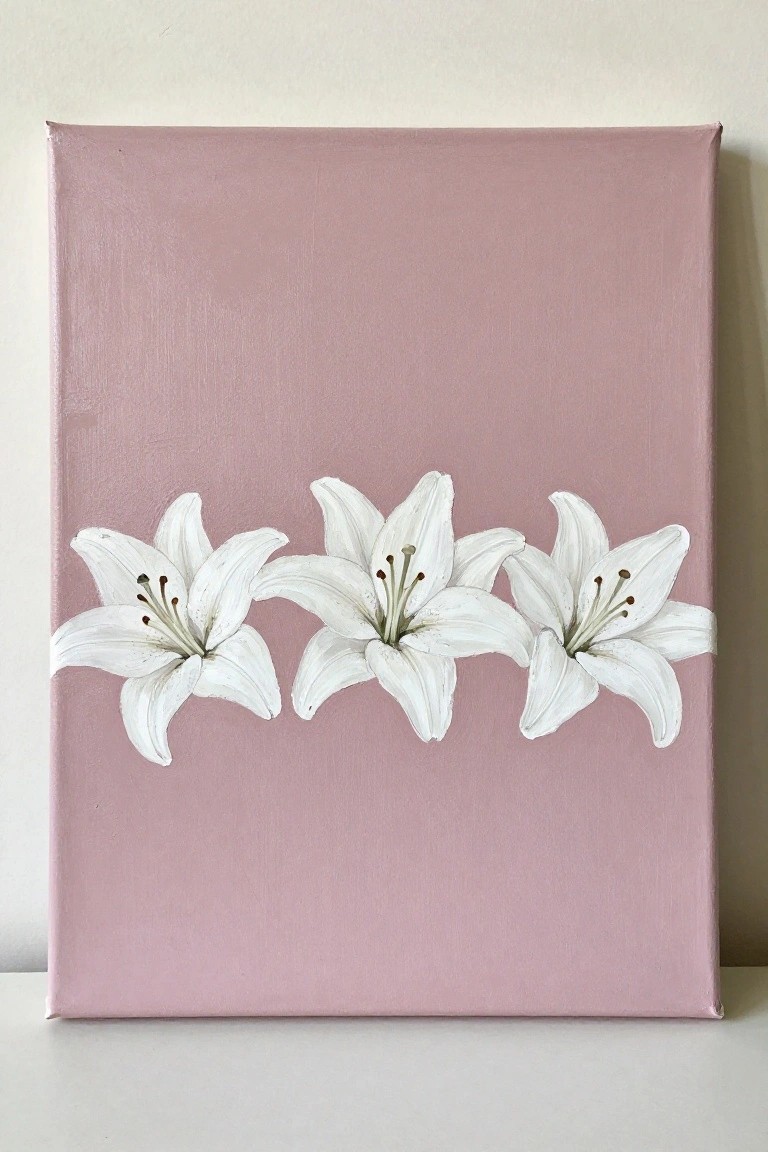
Painting three white lilies side by side in a straight line on a solid pink background gives a simple floral layout that stays balanced without extra elements. The white petals stand out clearly against the pink, and the centers get built with small layered strokes for the stamens and shading. This approach fits a decorative floral style that works well as wall art or canvas decor because the limited color palette keeps the whole piece easy to read from a distance.
What makes this idea useful is how the plain background removes the need to blend or add scenery, so you can spend time shaping the petals and stacking light layers of white. You can adapt it by shifting the pink to a deeper tone, adding one more flower, or tightening the spacing for a narrower canvas. For practice this layout works because each lily is separate, which lets you repeat the same steps and improve the centers without starting over. It would also stand out on Pinterest as a clean option when people search for easy lily ideas they can finish in one or two sessions.
Frequently Asked Questions
What supplies work best for creating these layered white petal effects in acrylics? Use a primed canvas or heavy paper, high-quality acrylic paints in titanium white plus a few soft pastels for shading, and a mix of round and flat brushes in sizes 2 through 8. Keep a spray bottle of water handy to thin the paint for translucent layers and a palette knife for adding texture to the centers.
How do I build depth when layering multiple white petals without them looking flat? Start with a light pencil sketch of the lily shape, then apply the first thin wash of white mixed with a touch of blue or gray for shadows. Let each layer dry fully before adding the next slightly thicker coat, varying the direction of your brush strokes to mimic natural petal curves and overlaps.
What background colors pair well with elegant white lilies in these painting ideas? Soft greens, muted lavenders, or warm beiges create a gentle contrast that lets the white petals stand out. Apply the background first in broad strokes, then paint the flowers on top so the petals can slightly overlap the edges for a natural integrated look.
Can beginners adapt these 21 ideas if they have limited painting experience? Yes, begin with simpler compositions that use only three or four petals and practice on small canvases. Focus on one technique at a time, such as dry brushing for soft edges, and refer to the step-by-step layering order in the article to avoid overworking the paint.
How should I seal and display a finished acrylic lily painting to preserve the layered details? Once the paint is completely dry, apply two thin coats of matte or satin acrylic varnish with a soft brush, allowing full drying time between coats. Frame the piece under glass or display it away from direct sunlight to keep the white layers bright and crisp over time.

Hi, I’m Camille.
I’m a self-taught painter and creative blogger with a soft spot for acrylic painting, color play, and all the little art ideas that make everyday life feel more inspiring.
I started this space because I’ve always believed painting should feel joyful, approachable, and a little personal. Some of my favorite pieces come from simple ideas, messy palettes, and evenings where I just felt like making something pretty.
Most of what I share begins with acrylic painting, but I also love exploring other mediums when creativity pulls me in a new direction. My goal is to collect and share painting ideas that feel fun, beautiful, and actually doable, whether the mood is calm and minimal or bright and playful.
This is a space for inspiration, experimenting, and enjoying art without overcomplicating it.