
I have painted quite a few peonies in acrylic over the past couple of years.
Layering the petals gives them a richer look that I find satisfying to work on.
It is mostly about building thin layers and letting some of the undercolors show through.
I put together these ideas based on what has worked for me in my own practice.
They range from simple single flower studies to more grouped arrangements.
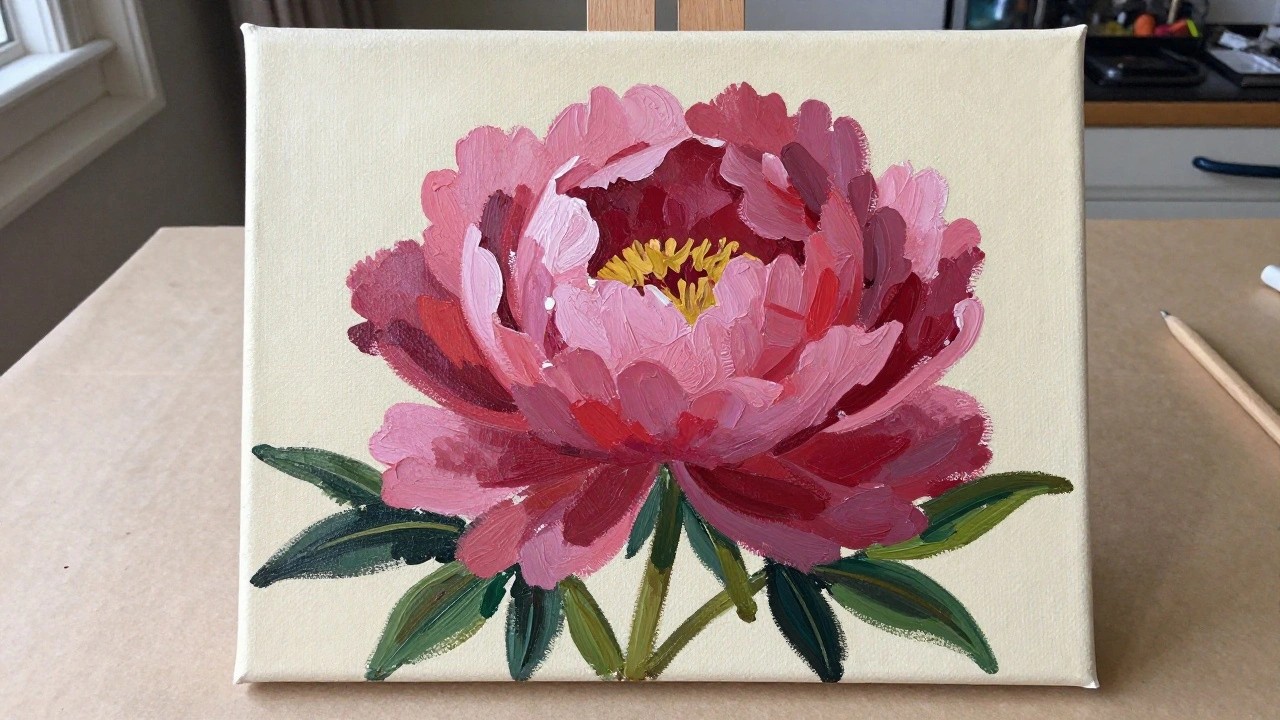
Layered Peony with Bold Color Blocks

A single peony built from overlapping strokes in several pink and red shades creates a floral acrylic idea centered on petal texture. The yellow center stands out against the darker inner petals, while the plain white background keeps the focus tight on the flower itself. This approach fits the textured floral category because the brushwork shows clearly without extra blending or fine detail.
What makes this idea useful is the simple layout that still shows how color changes can suggest depth. You can adapt it by using a different set of hues on the petals or by painting just the bloom without the stem for a tighter crop. For canvas decor this works well because the high contrast makes the piece stand out even from across a room.
Peonies Built with Layered Petal Shapes on Teal

This acrylic painting idea centers on three peony blooms arranged vertically on a canvas, each formed from overlapping petal layers in peach, coral, and white. The solid light teal background keeps the focus on the warm flower tones while the dark green leaves and stems add structure and contrast. The style fits squarely into floral acrylic work where bold color blocks and visible brush marks create the impression of depth without tiny details.
What makes this idea useful is the straightforward vertical layout that works on any standard canvas size. You can adapt it by changing the background color to match a room or adjusting the petal shades to cooler pinks if you prefer. For practice, the same setup lets you concentrate on building up layers of paint to show petal edges, and it translates easily into a quick canvas piece or gift without needing extra elements.
Clustered Peonies with Bold Red and Cream Contrast
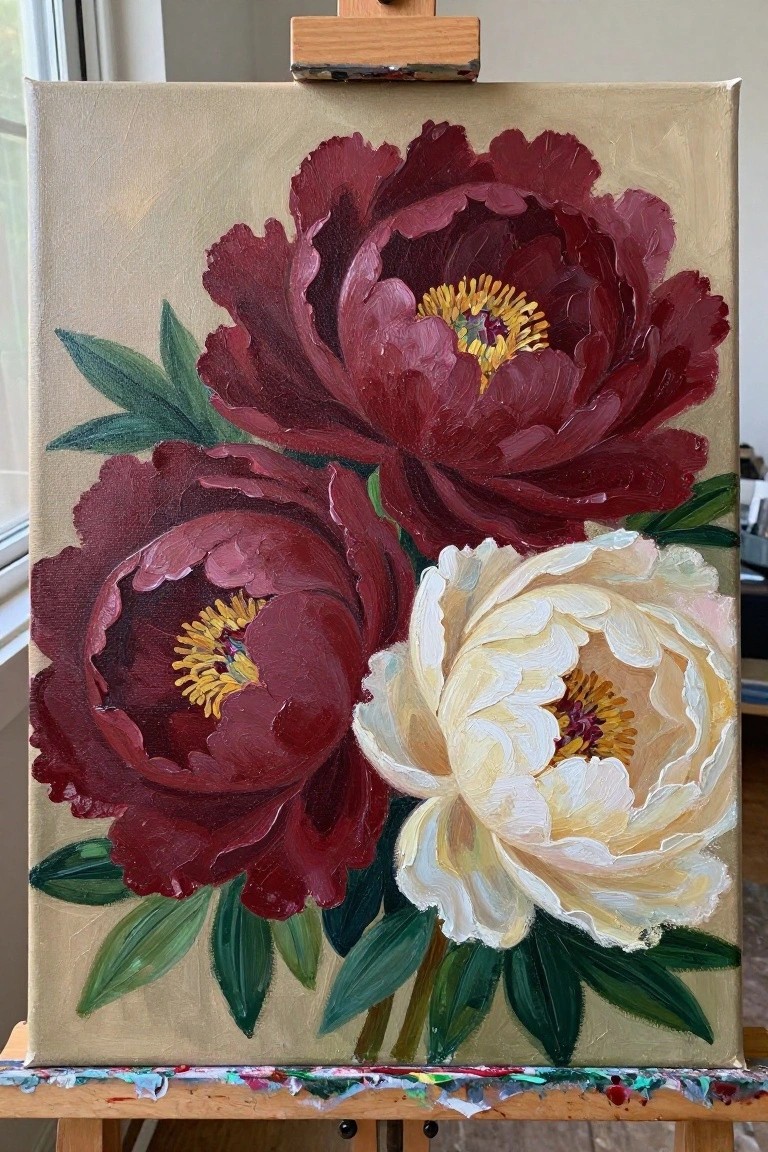
A floral acrylic idea built around three overlapping peonies uses strong color contrast to keep the composition simple yet effective. Two deep red blooms sit beside a pale cream one so the eye moves easily across the canvas without needing extra elements. Layered petal shapes and visible brush marks add texture while a few green leaves at the base tie the group together on a plain background.
What makes this idea useful is the clear separation between the dark and light blooms, which lets you practice shape overlap and color blocking before worrying about fine detail. You can adapt the layout by changing the cream flower to another red tone or extending the leaves if the canvas feels too empty. The neutral background also makes the same idea easy to scale up for wall art or simplify for smaller practice canvases.
Clustered Peonies Built with Layered Petals

A floral acrylic painting idea like this centers on grouping several peony blooms together so their layered petals create natural depth and volume. The mix of pink shades with cream highlights and yellow centers gives each flower a clear focal area while the scattered green leaves connect the arrangement across the canvas. A muted gray background keeps the composition balanced and lets the flower shapes stand out without extra detail.
What makes this idea useful is how the overlapping blooms fill the space effectively without requiring complex stems or extra objects. You can easily change the pink tones or reduce the number of flowers to fit a smaller canvas or different color scheme. For canvas decor this layout works well because the contrast between the soft petals and flat background makes the piece look finished even with visible brush marks.
Layered Peony Wreath in Warm Earth Tones

A wreath made of peonies painted in acrylic works well as a decorative canvas piece because the circular layout keeps the focus on the flowers while leaving the center open. Thick layers of paint create the petals in a limited palette of deep reds, soft pinks, and muted beiges, with small green leaves placed to break up the ring. The simple off-white background makes the arrangement easy to read from a distance.
What makes this idea useful is the way the wreath shape guides placement without requiring precise symmetry. You can mix the same warm tones from a small set of paints and build the flowers one at a time, then scale the whole design down for a smaller canvas or stretch it across a larger one. The limited background detail also keeps the project quick when you want something finished for wall decor or a gift.
Peony Cluster in Mixed Warm Tones

A group of four oversized peonies painted in deep red, rose, blush, and cream forms a compact floral acrylic idea that relies on overlapping shapes and visible brushwork. The petals show built-up layers through broad strokes rather than tiny details, while the short green stems and leaves anchor the arrangement at the bottom. This approach keeps the focus on color blocks and simple composition against a plain background.
What makes this idea useful is the clear color contrast between the four blooms, which lets you practice mixing and placing tones without needing perfect realism. You could shrink it to two or three flowers for a smaller canvas or swap the cream bloom for another pink shade to match a room. For Pinterest-style wall art, the loose edges and bold shapes hold up well at larger sizes and adapt easily if you want to try different background colors.
Peony with Layered Petals and Dew Drop Texture

A single large peony makes an effective focal point for a floral acrylic painting. The overlapping petals build depth through shifts in coral and soft pink, while small white dots add a simple texture layer across the surface. A muted circular wash behind the bloom keeps the composition balanced and directs attention to the flower and leaves below.
What makes this idea useful is how the centered layout works on a standard canvas without extra planning. The warm pink tones stand out clearly against the pale background, so the painting reads well even from a distance. For practice, this kind of subject lets you focus on building petal edges and adding scattered dots for texture. You could adapt it by swapping in different shades of the same color family or extending the stem to change the overall balance.
Layered Peonies in a Simple Glass Vase

A floral still life idea built around a tight cluster of peonies in a clear glass vase gives acrylic painters a direct way to focus on petal layering. The blooms sit high on the canvas with stems grouped tightly at the base, and the water line in the vase adds a natural break that keeps the eye moving through the stems. Strong coral, red, and peach blocks against the off-white background make the shapes readable even when the brushwork stays fairly broad.
What makes this idea useful is how the vase and water details keep the layout grounded without adding extra objects. The same grouping can be painted on a smaller canvas or with a limited palette if you want quicker studies. For wall art, the high placement of the flowers leaves room at the bottom for a simple shadow that balances the whole piece without crowding it.
Rich Burgundy Peony with Gold Outlined Petals

A strong floral acrylic painting idea centers on a large peony built from overlapping deep red petals that vary slightly in shade to suggest layers. The gold lines around each petal edge create clear separation and give the whole flower strong shape without needing complex blending. This approach fits decorative floral wall art where the emphasis stays on bold color contrast and simple composition against a light background.
What makes this idea useful is the gold outlining that does the heavy lifting for petal definition so you can focus on filling in the shapes with broad strokes. The limited palette of one main flower color plus gold and green keeps the project quick to finish on canvas. You could easily adapt it by swapping the gold for a lighter cream or trying a taller stem with more leaves if you want a different layout for wall decor.
Vertical Peony Pair with Crossed Stems
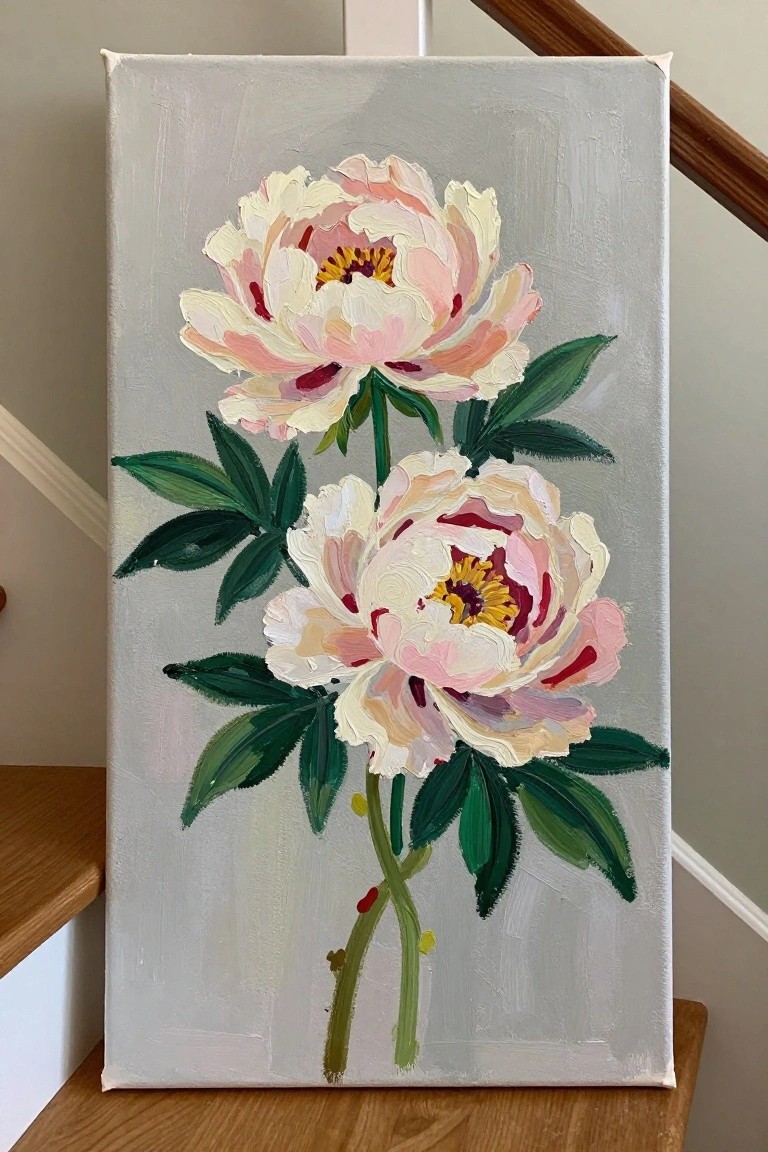
A floral acrylic idea built around two stacked peony blooms works well on a tall canvas because the overlapping petals let you build soft layers of cream, pink, and yellow without needing perfect symmetry. The idea focuses on keeping the background plain so the flowers stay the center of attention while the green leaves and crossed stems create a natural frame. This layout fits the textured floral category since the visible brushwork on the petals already gives enough depth.
What makes this idea useful is how the simple vertical arrangement fits narrow wall spaces and needs only a few main colors to hold together. You can adapt it by shifting the background to a warmer gray or swapping in different leaf shapes if you want a seasonal version. For practice this subject is forgiving because the petals hide small mistakes and the bold leaves pull the eye away from any uneven edges.
Layered Pink Peony on Olive Green Canvas

A peony built from stacked pink petals forms a straightforward floral acrylic idea that relies on visible layering to create depth. The composition works because the bright yellow and burgundy center sits against the pale petals, while the solid olive background cuts away any need for extra elements. This approach fits the textured floral category where brushwork and overlapping shapes do the main visual work.
What makes this idea useful is the strong value contrast that lets the flower hold attention even on a simple background. You can adapt it by changing the background color or reducing the number of outer petals if you want a quicker version on a smaller canvas. For canvas decor, the same layout translates easily to different sizes since the center detail stays compact while the petals can be scaled up or down.
Layered Peony Wreath in Varied Pink Tones

A peony wreath works as a floral acrylic painting idea by arranging overlapping blooms in a loose circle that leaves the center open. The idea relies on color shifts across peach, blush, and deeper rose petals to create interest, with green leaves placed to break up the round shape and guide the eye around the canvas. This fits the decorative floral category where the focus stays on petal shapes and simple color blocking rather than tiny details.
What makes this idea useful is the way the repeated flower shapes let you practice the same layering technique across multiple elements without needing complex perspective. The color palette can be swapped for brighter or cooler shades to match different decor, and the empty center makes the whole piece easier to adapt to smaller canvases or cards. For canvas wall art, the layout stands out on Pinterest because the contrast between the soft flowers and plain background keeps it clean and recognizable from a thumbnail.
Contrasting Peony Blooms with Layered Petals

A floral acrylic idea that pairs a warm peach peony with a deep burgundy one creates strong visual interest through color contrast. The arrangement places the lighter bloom lower and the darker one higher, with stems and leaves filling the middle to connect them without crowding the space. Visible brushstrokes build up the petals so the flowers gain dimension while the plain canvas background keeps the focus on the blooms.
What makes this idea useful is the clear separation between the two main flowers, which lets you practice petal layering on one at a time without getting lost in detail. The limited color palette makes it easy to adapt by swapping in different shades or reducing the number of buds for a faster version. For wall art, the vertical layout fits tall canvases well and the bold tones help the piece stand out on a light wall. You could also simplify the leaf shapes if you want to focus more on the flower centers.
Layered Peony Grid in Bold Color Blocks
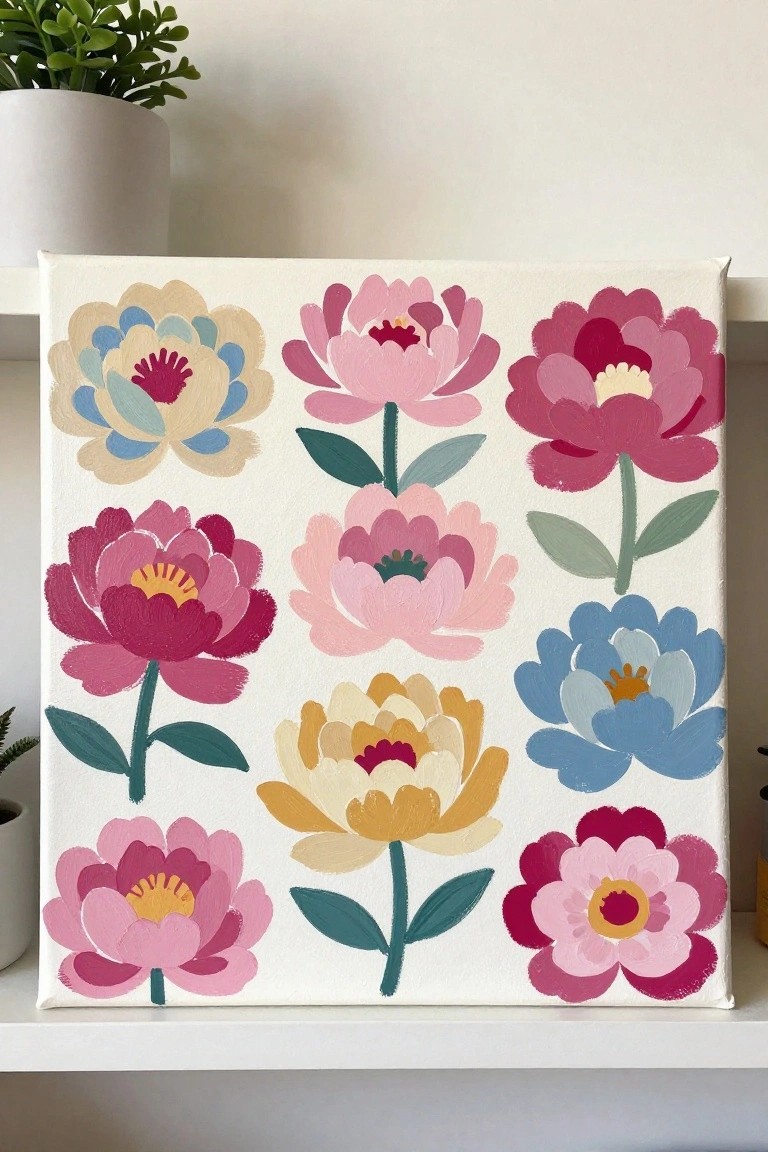
A grid of stylized peonies makes an effective acrylic painting idea because each bloom can be built from simple overlapping petal shapes filled with solid color. The layout uses even spacing and a mix of warm pinks with cooler blues and yellows to keep the composition balanced without overcrowding. This style sits comfortably in the decorative floral category where clean edges and repeated motifs deliver strong impact on a canvas.
What makes this idea useful is that the flat petal areas let you paint one color at a time and layer the next without blending worries. You could easily change the palette to match a room or shrink the grid to five flowers for a narrower canvas. The bright contrast against the white background photographs clearly, which helps the finished piece stand out if you post it as a reference or finished decor idea.
Peony Bouquet with Layered Petals in a Handle Vase
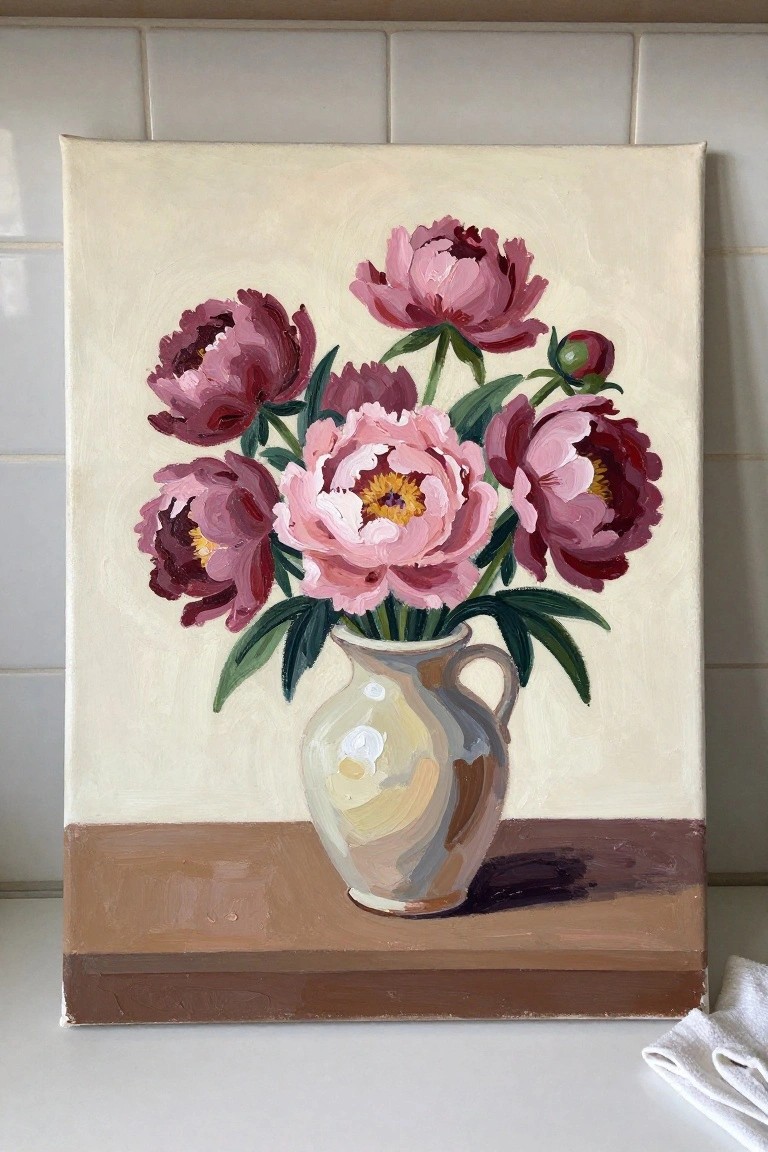
A still life acrylic painting of peonies in a ceramic vase gives a direct floral idea built around overlapping petals in pink and deep red tones. The main subject stays centered with the vase positioned low, leaving open space above and around the blooms so the rounded flower shapes stand out against the plain background. This setup fits the textured floral category because the visible petal buildup creates interest through color shifts rather than fine line work.
What makes this idea useful is the clear separation between the busy flower area and the simple vase and surface, which keeps the focus on building petal layers. You can adapt it by swapping the brown table for a different neutral or by adjusting how many dark centers you add to change the overall mood. For canvas decor this layout works because the loose edges on the blooms make it forgiving to paint while still looking full. The same idea could be simplified by reducing the number of flowers or personalized by varying the vase shape.
Oversized Peony With Layered Petals on Dark Green

A large single peony painted in pale greens, creams, and soft yellows forms the core of this floral acrylic idea. The bloom sits centered on a deep green field that makes the light petals stand out sharply, while the leaves anchor the bottom of the canvas. Loose brushwork builds the overlapping petals in visible layers so the texture comes from the paint itself rather than tiny details.
What makes this idea useful is the high contrast between the flower and the solid background, which lets the shape carry most of the impact. The same layout works if you change the petal colors to pinks or corals or shrink the canvas size for a quicker study. For wall art, the simple vertical format and limited color range make it easy to repeat in different shades for a small set.
Peony Pattern with Varied Warm Tones on Light Green

A floral acrylic idea like this fills the canvas with repeated peony shapes in coral, peach, cream, and red against a pale mint background. The main appeal comes from using different bloom sizes and a few green leaves to break up the space while keeping the overall layout balanced. It works as decorative wall art because the strong color blocks and simple petal outlines create visual interest without needing tight realism.
What makes this idea useful is the repeat layout that lets you practice the same flower form across the whole canvas. You can swap the coral and gold tones for any palette you have on hand or drop some blooms if the surface is smaller. For canvas decor the flat background keeps the focus on the flowers and makes the piece easy to hang in any room.
Layered Peony with Overlapping Petal Strokes

A single oversized peony works as a clean floral acrylic idea when the petals are built with repeated overlapping strokes in varying pinks and reds. The thick paint application gives the bloom natural depth while the yellow center adds a sharp focal point. Green leaves placed low on the stems keep the layout balanced without crowding the main flower.
What makes this idea useful is how the loose brushwork lets you add layers gradually instead of planning every edge in advance. You can shift the pink tones warmer or cooler depending on the background you choose, or crop the leaves shorter for a tighter canvas size. The strong value contrast between the dark red centers and lighter outer petals helps the piece read clearly even on a first attempt.
Layered Peony Cluster in Bold Pinks and Reds
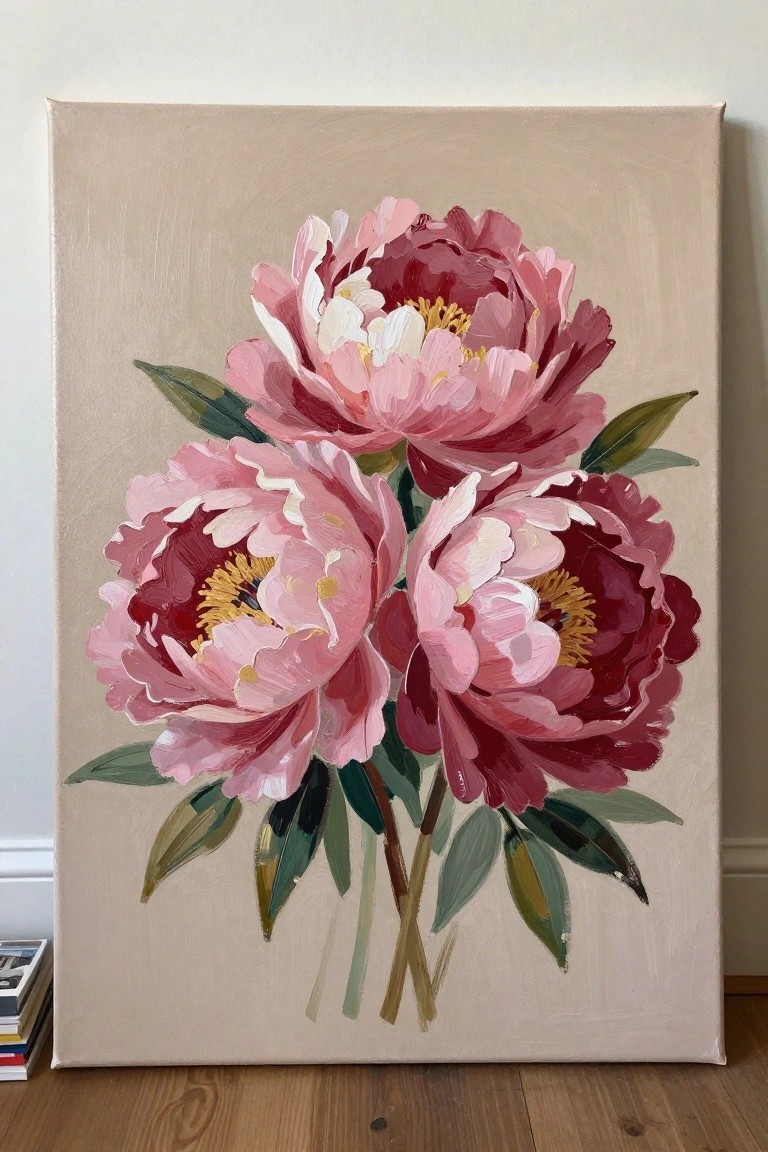
A floral acrylic idea built around three large overlapping peonies shows how simple color layering can create depth. The petals shift from light pink to deep burgundy, letting each bloom hold its own shape while the group stays balanced. This approach works as a textured floral painting because the visible brushwork defines the edges without needing fine detail work.
What makes this idea useful is the neutral background that keeps the focus on the flowers and makes the piece easy to resize for different canvases. The color contrast between the soft pinks and richer reds does most of the visual work, so you can swap in other shades without losing the impact. For practice, this layout lets you try building petal texture in stages while keeping the overall composition straightforward.
Centered Peony with Layered Petals Against Teal

A single peony built from overlapping petals in blended pinks and creams stands out when placed on a solid teal background. The idea focuses on showing petal texture through visible brushwork and gradual color shifts from the yellow-blue center outward. Green leaves and a stem anchor the bottom of the composition without competing with the bloom.
What makes this idea useful is how the strong background contrast lets the layered petals carry the painting without extra details. The limited color palette of soft pinks, teal, and greens can be swapped for other combinations to match different rooms or seasons. For practice, this layout keeps attention on building petal depth one layer at a time before moving to multi-flower setups. It would also work as a quick study that scales up to a larger canvas or repeats across a small series with slight angle changes.
Oversized Peony with Layered Petals on a Plain Background

A single large peony painted in overlapping shades of pink and magenta creates a bold floral focal point that works well as wall art. The petals are built with broad brushstrokes that show clear layering, while the yellow center adds a sharp contrast that draws the eye inward. Green leaves and a thick stem placed at the base keep the composition balanced without crowding the canvas.
What makes this idea useful is how the limited color palette and simple background let the flower shape carry the whole piece. The approach works especially well for canvas decor because the large petals cover area quickly and still look finished with basic layering. You could adapt it by swapping the pink tones for other seasonal colors or cropping the stem to focus only on the bloom for a square format. This kind of acrylic painting also pins well on Pinterest because the strong shape stands out even in a small thumbnail.
Layered Coral Peony with Bold Petal Texture

A floral acrylic painting idea built around a single peony focuses on stacking warm coral, pink, and red tones to create visible petal layers. The yellow center provides a clear focal point while the stem and leaves sit lower to balance the composition. This approach fits a textured floral category because the thick overlapping strokes add depth through color shifts rather than fine lines.
What makes this idea useful is how the petal layering can be adapted by swapping in different warm shades or extending the leaves for more coverage. The strong contrast against the light background helps it stand out for canvas wall art or quick practice pieces. For Pinterest, the saturated colors and simple layout make it easy to personalize by changing the palette or adding a second bloom.
Layered Peony on a Round Wood Slice

A peony built from stacked layers of pink and red acrylic creates strong petal texture through repeated overlapping shapes that push toward the center. This floral idea uses a round wood surface so the unpainted edges stay visible and keep the focus on the bloom. The tight grouping of petals paired with simple leaf shapes around the outside gives the whole piece a compact, centered layout that works well at smaller sizes.
What makes this idea useful is how the round format transfers easily to wood slices, coasters, or small canvas rounds without extra cropping. You can adapt the layers by blocking in the darkest reds first, then adding mid-tone pinks and highlights on top to reach the same depth. For practice the leaf shapes can stay flat while the flower receives the detail, and the limited color range keeps the project quick to finish. The high-contrast pinks against the light wood also show up clearly in search results when saved as a reference.
Bold Peony with Layered Petal Color

A peony painted in acrylic stands out through stacked layers of red and pink petals that create natural depth around a yellow center. The idea focuses on a single vertical stem that holds both the open bloom and a smaller bud, with a few leaves placed low to keep the emphasis on the flower. A plain light background lets the color shifts and brush marks define the shape without extra elements.
What makes this idea useful is the clear focal point that works even if the petal edges stay a bit loose. The color contrast between the deep reds and softer pinks does much of the visual work, so you can adjust the shades to fit whatever paint you have on hand. For practice, this layout lets you build texture in one area while keeping the stem and leaves simpler. On a canvas it translates easily into wall art because the vertical format stays balanced without needing extra details.
Layered Peony Studies in Multiple Color Palettes

Painting peonies in acrylic lets you build the flower from overlapping petal shapes using flat color blocks that vary in value. This idea keeps the same simple stem and leaf layout while switching between deep magenta, warm coral, soft pink, and muted purple versions. The strong center contrast and clean outer edges make each painting read clearly even at small sizes.
What makes this idea useful is how easily the same layout can be repeated on separate canvases to create a matching set. Shifting the color temperature changes the mood without needing new drawing skills or extra detail work. For canvas decor, these versions work well as a group or as single pieces since the bold petals hold attention on their own. You can simplify further by limiting each painting to three main tones if you want quicker studies.
Frequently Asked Questions
What techniques help create realistic layered petal texture in acrylic peony paintings? Build texture by starting with a thin base layer of paint in your main peony color. Allow it to dry fully then apply thicker strokes with a fan brush or palette knife to form individual petals. Add depth by mixing in small amounts of white or darker shades on the edges of each layer. Repeat this process two or three times while letting each layer dry to avoid smearing and to achieve a rich three dimensional effect.
Which acrylic colors produce the most vibrant rich peonies? Select a base of cadmium red or quinacridone rose mixed with touches of ultramarine blue for depth. Layer highlights using titanium white blended with a bit of yellow ochre for warm tones. For shadows incorporate dioxazine purple or burnt umber sparingly. These combinations allow petals to glow under light while maintaining the luxurious appearance shown in the ideas.
How should beginners approach the 25 painting ideas if they lack experience with texture? Begin with simpler compositions that feature fewer petals and focus first on color blocking before adding layers. Practice on small canvases to test stroke pressure and drying times. Follow the article ideas by copying one element at a time such as petal shape or color transition then gradually combine them. This step by step method builds confidence without overwhelming detail work.
What tools or brushes work best for achieving the featured petal effects? Use round brushes in sizes 4 and 8 for precise petal edges along with a flat brush for broad base layers. A silicone tool or old credit card helps spread thick paint for raised texture. Keep a spray bottle handy to mist the paint and extend working time during layering. These items allow clean control over the rich builds described across the ideas.
How can I adapt the ideas for different surfaces or add personal variations? Transfer the same layering process to wood panels or paper by adjusting paint consistency with a gel medium for better adhesion. Introduce personal touches such as subtle background washes in soft greens or metallic accents on select petals once the main layers dry. Scale the designs up or down based on your surface size while preserving the core technique of building multiple thin to thick applications for texture.

Hi, I’m Camille.
I’m a self-taught painter and creative blogger with a soft spot for acrylic painting, color play, and all the little art ideas that make everyday life feel more inspiring.
I started this space because I’ve always believed painting should feel joyful, approachable, and a little personal. Some of my favorite pieces come from simple ideas, messy palettes, and evenings where I just felt like making something pretty.
Most of what I share begins with acrylic painting, but I also love exploring other mediums when creativity pulls me in a new direction. My goal is to collect and share painting ideas that feel fun, beautiful, and actually doable, whether the mood is calm and minimal or bright and playful.
This is a space for inspiration, experimenting, and enjoying art without overcomplicating it.