

I started trying out bigger canvases for my acrylic paintings a while back.
Florals seem to hold up well at that scale without needing too much detail.
I put together some ideas that work for oversized pieces and keep things straightforward.
Many of them use simple color blocks and shapes to create impact.
These are the ones I would actually attempt myself on a big canvas.
Oversized Peony Close-Up on a Solid Background
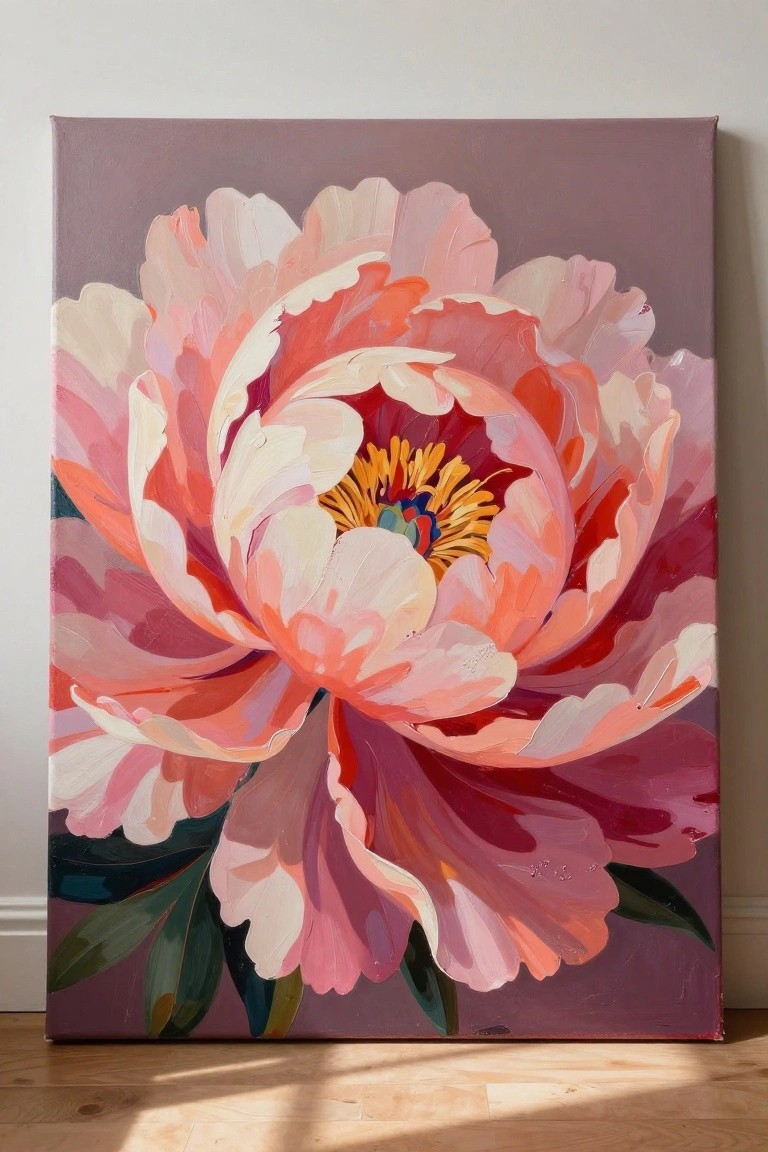
A single large peony painted in coral, pink, and cream tones works well as the main subject for an oversized canvas. The idea centers on overlapping petals that radiate outward from a bright yellow center, with the flower filling most of the frame. A muted purple background keeps the focus tight on the bloom and lets the warmer petal colors stand out without extra elements.
What makes this idea useful is the simple layout that scales easily to a big canvas while still looking complete. The strong color contrast between the flower and the background does most of the visual work, so you can adapt the palette to whatever shades you already have on hand. For canvas art, keep the edges of the petals soft in some areas and sharper in others to create depth without adding extra layers or texture.
Oversized Graphic Florals on Split Backgrounds
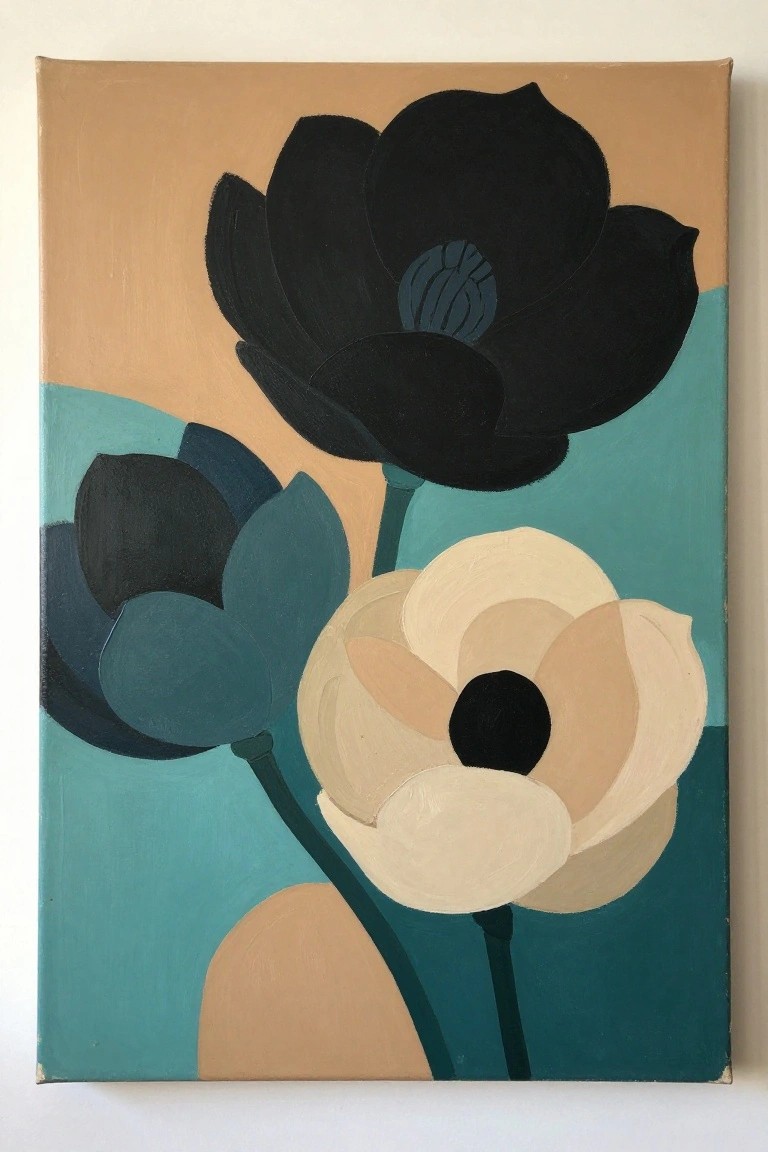
This acrylic idea centers on creating a large floral statement piece by reducing flowers to bold, simplified shapes filled with flat color. The composition works through strong contrast between the deep black bloom and the lighter cream one, set against a divided background that keeps the focus on the stems and petals without added detail. It fits squarely in the decorative floral category for oversized canvases where clean edges and limited palettes do the heavy lifting.
What makes this idea useful is how the flat shapes remove pressure to blend or build texture, letting you finish a big canvas quickly. The split background can be swapped for any two colors that suit your space, and the same layout adapts easily by changing the flower colors or adding a third bloom. For canvas art, something like this stands out on Pinterest because the graphic style reads clearly even in a thumbnail.
Tropical Monstera Leaves with Hibiscus Accents

Large monstera leaves in layered greens form the main structure of this floral idea, with two coral hibiscus blooms placed off-center to create balance on an oversized canvas. The painting uses bold leaf shapes and open negative space to keep the composition airy while still filling the frame. It falls into the decorative floral category where strong silhouettes and color contrast do most of the visual work.
The layout stays approachable because the leaves can be blocked in first with broad strokes before adding the flowers as a finishing touch. You could easily swap the hibiscus for another large bloom or adjust the green tones to fit different room colors. For statement canvases this approach works well because the simple shapes read clearly from a distance and translate into quick, eye-catching wall art.
Dense Wildflower Meadow for Large Canvases
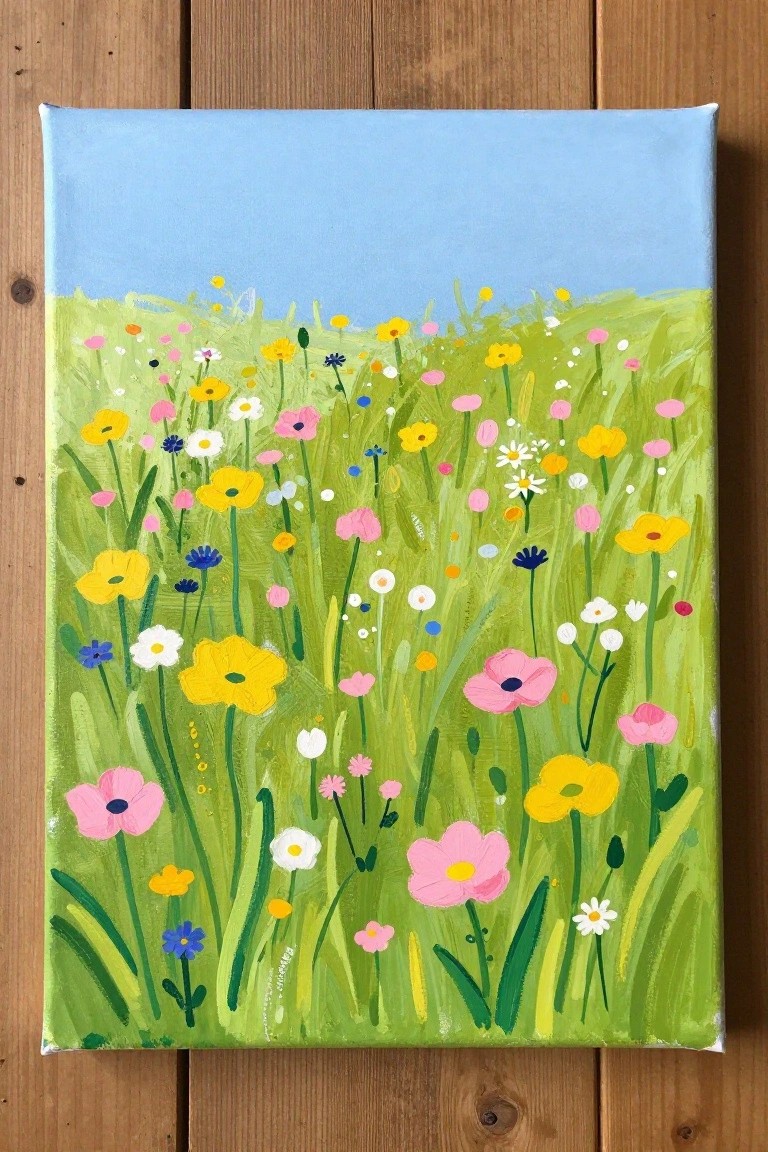
A wildflower meadow idea works well for oversized canvases by filling most of the surface with varied flower shapes and heights in bright yellow, pink, and white against a simple green field and flat blue sky. The scattered placement of different bloom sizes and colors creates visual movement without requiring precise arrangement or perspective. This floral landscape approach keeps the focus on loose layering of stems and petals so the eye travels across the whole piece.
What makes this idea useful is how the basic blocks of sky and grass give you a fast start before adding flowers wherever you want. You can easily change the mix of colors or cluster more blooms in certain areas to fit a specific wall space or color scheme. The idea also translates well to smaller canvases if you reduce the number of flower types while keeping the same loose spacing.
Stylized Floral Wreath Circle on Oversized Canvas

A floral wreath idea works well when painted as a loose ring of different flowers and leaves around the edge of a big canvas. This approach uses a mix of yellow, coral, and cream blooms with dark green foliage to create a balanced circular frame that leaves plenty of white space in the middle. The flat color blocks and simple outlines make the design easy to scale up without needing fine detail work.
What makes this idea useful is how the repeating flower shapes let you practice consistent brushwork across the whole piece. You can swap in your own color palette or add more variety in the blooms to match a room’s decor. For canvas art, something like this stands out on Pinterest because the empty center keeps the focus on the colorful border without overcrowding the composition.
High-Contrast Black Roses on a Plain Background

This acrylic painting idea centers on a cluster of stylized roses painted in solid black with brown accents for the inner petals and edges. The tall stems and leaves create a vertical arrangement that fills an oversized canvas while keeping the design simple and graphic. The strong contrast between the dark flowers and the light neutral background makes the shapes stand out without needing extra texture or shading.
What makes this idea useful is the straightforward color blocking that works well on large surfaces and requires only basic brush control. You can easily change the background color or add more stems to adjust the density for different canvas sizes. The flat style also lends itself to quick personalization by swapping the brown details for another accent color or simplifying the leaves further.
Oversized Sunflower Field in Bright Acrylics

A sunflower field works well as a floral painting idea for large canvases because the repeated flower shapes fill the space without needing complex detail. The layout places bigger blooms in the foreground and smaller ones higher up to suggest distance, while the solid blue sky strip across the top keeps the focus on the yellow and green below. This approach sits between floral and landscape categories and relies on simple color blocks and upright stems to hold the composition together.
What makes this idea useful is how the repeating sunflower shape gives you an easy way to cover a big canvas without constant decision making. You can adapt it by tightening the rows or shifting the sky line lower if you want a more graphic result for wall art. The strong yellow against the dark green background also helps the painting stand out from a distance, which matters for statement pieces. For practice, this layout lets you build the same flower form several times while adjusting size and placement.
Peony Bouquet in a Clear Vase
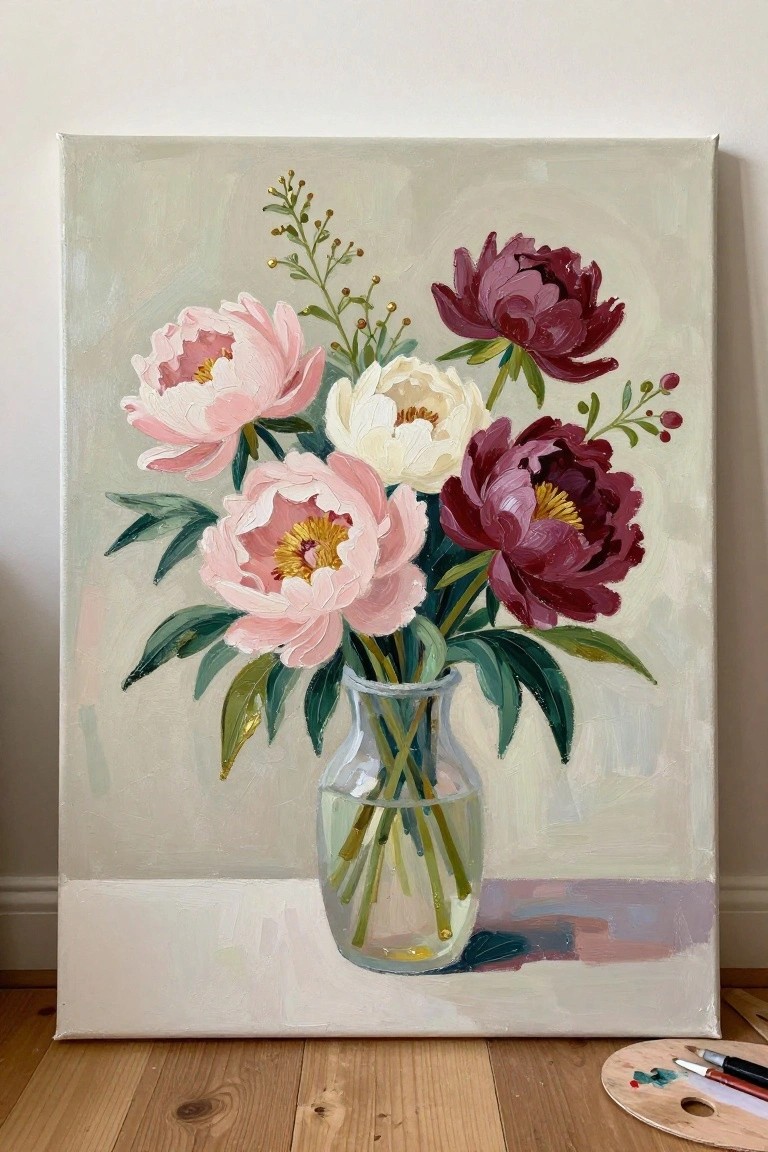
A floral still life with mixed pink and deep burgundy peonies arranged in a simple glass vase makes a strong choice for oversized canvases. The flowers sit at varying heights with visible stems in the water and leaves that add natural shape around the blooms. A muted background keeps attention on the color shifts from pale petals to darker centers.
What makes this idea useful is how the glass vase and light backdrop reduce the need for complex backgrounds, letting you focus on building the flower forms. You can easily adjust the palette by swapping in other shades or adding more stems to fill a larger canvas. For canvas decor, this layout works because the contrast between the soft pinks and rich reds stands out from a distance without requiring fine detail work.
Bold Black Tulip Silhouettes on a Light Background
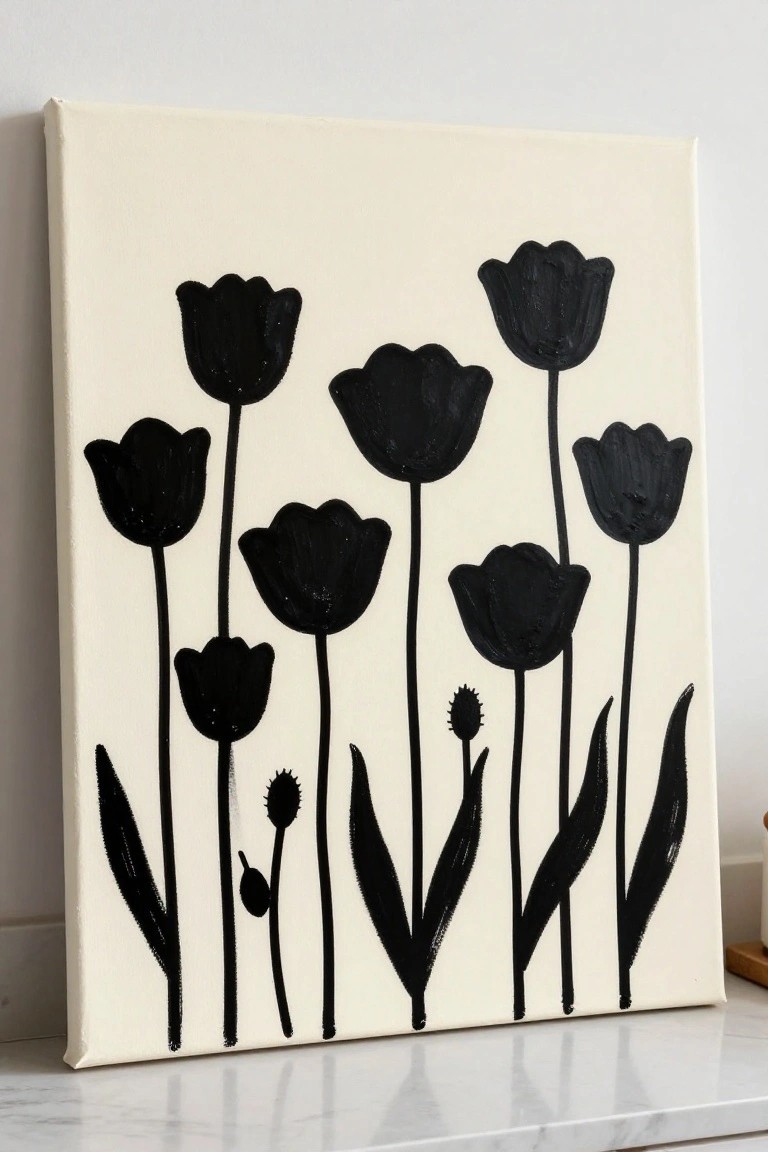
This acrylic painting idea uses flat black tulip shapes with varying heights and thin stems to create a clean graphic floral arrangement on a plain light canvas. The composition relies on strong contrast and repeated rounded flower forms to fill an oversized canvas without needing intricate details or multiple colors. It works as decorative floral wall art that emphasizes bold outlines over texture or shading.
What makes this idea useful is how the simple silhouettes let you scale up easily on a large canvas using basic brushes and just one color. You can adapt it by swapping the black for navy or deep green, adding a few more seed heads, or loosening the brushwork on the petals while keeping the same layout. For practice or quick canvas decor, this approach stands out on Pinterest because the high contrast reads well even in small preview images.
Oversized Peonies with Terracotta Stripes

Large peonies in blush, peach, and cream sit against a cream background interrupted by vertical terracotta stripes on the left. The stems and leaves overlap in a loose cluster that fills the canvas height while the stripes and soft color blocks on the right keep the layout balanced. This floral idea works as decorative wall art because the simplified shapes and repeated color family let the flowers read clearly from a distance on an oversized canvas.
What makes this idea useful is how the stripes act as a built-in frame that reduces the need for a detailed background. You can swap the flower colors or change the stripe width to fit your room without redrawing the whole layout. For canvas decor, the graphic blocks give the piece weight so it holds attention on a large wall. The same approach works if you want to simplify further by using fewer blooms or a single stripe color.
Eucalyptus Stems with White Blooms on Soft Green

This acrylic painting idea focuses on overlapping eucalyptus-style branches in several green tones placed across a large canvas with a single light background color. Small clusters of white flowers sit at the ends of some stems to add contrast without crowding the space. The loose arrangement of round and oval leaves creates natural movement while the limited color range keeps the whole piece readable from across a room.
What makes this idea useful is the straightforward color mixing that relies on just a few green shades plus white. The open layout lets you shift stems around or simplify the number of leaves if the canvas size changes. For oversized wall art the plain background cuts down on extra layers so the stems stay the main focus and the painting finishes faster.
Oversized Dahlia in Coral and Orange Tones

A single large dahlia painted in blended coral, orange, and pink layers creates a strong focal point by filling most of the canvas with radiating petals around a bright yellow center. The overlapping petal shapes and gradual color shifts give the flower dimension while the plain white background keeps the composition simple and direct. This type of floral acrylic idea works as a decorative statement piece because the bold color blocks and clear center draw the eye without extra elements or complex scenery.
What makes this idea useful is how the limited background cuts down on extra work and lets the petal color transitions handle the visual interest. You can adapt the same layout by changing the palette to different warm or cool tones or by adjusting the number of visible petal layers to fit the canvas size. For practice, this kind of subject builds skill with blending and shape overlap while still producing a finished piece that reads clearly from a distance. The color palette helps this stand out on Pinterest because the high contrast between the flower and white space makes the image pop in a thumbnail.
Pastel Daisy Grid on a Bold Yellow Background

A repeating grid of stylized daisies painted in soft pastel shades fills an oversized canvas, with each flower built from simple petal shapes and a solid yellow center. The flowers sit in even rows against a flat mustard-yellow background, using only four or five color variations that alternate for visual rhythm. This kind of acrylic idea falls squarely into decorative floral wall art because the flat color application and uniform spacing let the pattern read clearly from a distance.
What makes this idea useful is how the straight rows and limited palette remove the need for perfect freehand placement. You can easily adapt it by swapping the background color or shifting the flower tones to match existing room decor. For practice, this kind of subject works well on a large canvas since the shapes stay simple enough to repeat without losing energy. The high contrast between the pastels and the yellow ground also helps the finished piece stand out in a Pinterest feed.
Cascading Wisteria Clusters on a Plain Background

A wisteria floral painting idea centers on long hanging clusters of purple and white blooms set against a simple white canvas. The composition relies on overlapping shades of purple to create depth in the flowers while the branches and green leaves provide structure and direction. This approach fits the floral category for wall art and uses the vertical flow of the clusters to fill a large canvas without needing heavy detail.
What makes this idea useful is how the plain background keeps the focus on the flower shapes so the painting stays readable even from a distance. You can adapt it by reducing the number of clusters for a smaller canvas or shifting the purple tones to cooler or warmer hues depending on the room. For canvas decor this kind of subject works well because the cascading lines give natural movement that photographs cleanly for Pinterest.
Oversized Protea as a Single Focal Flower

A single large protea flower works as a straightforward floral idea for an oversized canvas. The painting builds the bloom with overlapping pink and cream tones around a textured center, while the stem and leaves sit low to anchor the whole piece. This approach fits the floral category because the plain background removes any need for extra details and keeps the focus on the flower’s form.
What makes this idea useful is how the centered layout lets you paint the main subject first and adjust the leaves later if needed. You can swap the pink shades for warmer or cooler tones to match a room, or simplify the petals into broader strokes for quicker versions. For canvas art, this kind of isolated bloom stands out on Pinterest because the shape stays readable at larger sizes.
Teal Lotus Pond Floral Canvas

A lotus pond idea translates easily to an oversized acrylic canvas by scattering a few blooms at varying heights with large lily pads filling the lower and side areas. The main concept uses a single cool background color to let the pale petals and rounded pads stand out through simple shape contrast rather than intricate detail. This approach falls into decorative floral wall art that depends on clean silhouettes and a limited palette for impact on big surfaces.
What makes this idea useful is the open negative space that scales up without looking crowded or busy. The flat treatment of the pads and stems keeps the painting manageable even on a large format while still allowing soft blending on the flower centers. You could easily shift the background to a deeper blue or swap the petal tones for warmer shades to fit different room colors. The same layout works for practice because the shapes stay basic and the focus stays on placement and color harmony rather than fine texture work.
Bold Floral Vase on a Dark Background

A large-scale still life of clustered flowers in a simple green vase works well as an oversized acrylic piece because the dark background lets the bright reds, golds, and greens stand out without extra detail work. The idea relies on strong color contrast and simplified leaf and petal shapes rather than fine rendering, which keeps the focus on the overall bouquet arrangement. This approach fits the decorative floral category and suits statement canvases where the composition needs to read clearly from a distance.
What makes this idea useful is the straightforward layout that fills vertical space without complex perspective. The limited color palette of deep background against saturated flowers makes it easy to adapt by swapping in different bloom colors or adjusting the vase shape for variety. For practice or quick wall art, the same idea can be scaled down or painted with thicker brushes to speed up the process while keeping the graphic impact that performs well on Pinterest boards.
Sunflowers in a Clear Glass Vase

A floral still life idea built around a cluster of sunflowers standing in a transparent glass vase. The composition relies on bold yellow petals against dark centers and a pale background to keep the flowers dominant on a large canvas. Loose brushwork around the stems and leaves lets the eye move through the arrangement without tight detail.
What makes this idea useful is how the strong color contrast handles most of the visual weight on an oversized canvas. You can adapt it by changing the flower count, swapping the vase for a taller shape, or shifting the background tone to match a room. For practice the layout works because the stems and overlapping petals forgive uneven edges while still reading clearly from across a room.
Repeating Tulip Grid in Soft Pastels
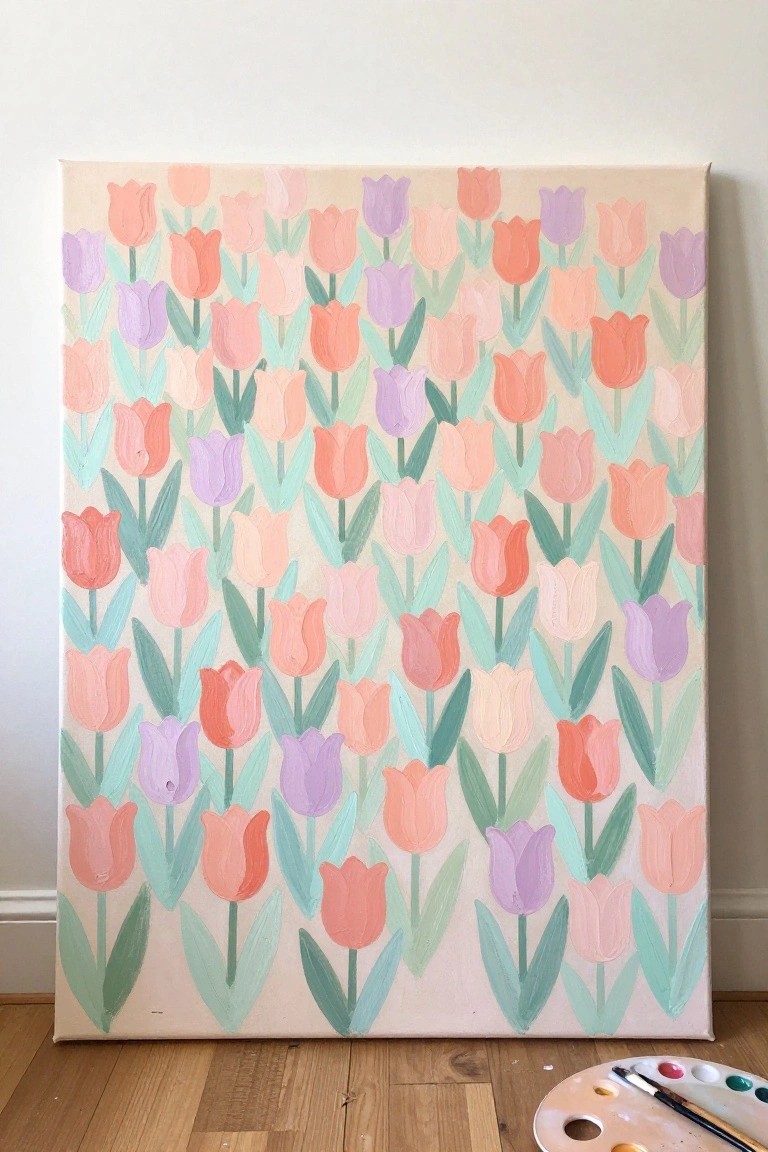
A dense repeat of stylized tulips works well as a floral idea for large statement canvases. Each bloom is reduced to a few simple curved shapes in peach, coral, lavender, and pale pink, with green leaves filling the spaces between stems. The even spacing and flat color blocks create a graphic pattern that reads clearly from a distance and suits decorative wall art.
What makes this idea useful is how the basic tulip shapes keep the focus on color arrangement rather than detail work. You can shift the palette to bolder shades or change the background tone to match a room without redrawing the layout. For oversized canvases the grid format fills the space efficiently and stays easy to adapt into a smaller practice version or a different flower type.
Graphic Floral Clusters on a Warm Solid Ground

A set of oversized stylized flowers in varied sizes and colors forms a loose vertical arrangement against a solid warm terracotta background. This acrylic idea relies on simple flat shapes and strong color contrast rather than fine detail or texture to create an eye-catching decorative pattern. The scattered placement and mix of petal styles keep the composition balanced while filling the canvas evenly.
What makes this idea useful is how the bold outlines and blocked-in colors let you work quickly with basic brushes and fewer layers. You could adapt the palette to cooler tones or shrink the number of flower types to fit a smaller canvas or shorter session. For oversized wall art, the graphic flat style photographs cleanly and gives a finished look without needing advanced blending.
Oversized Abstract Florals from Overlapping Circles

This acrylic painting idea builds a floral arrangement from simple overlapping circles and ovals that represent blooms and leaves. Thick green stems connect the shapes into a loose bouquet while a plain off-white background lets the color blocks stand out. The approach belongs to decorative floral wall art that uses bold shapes and flat color instead of realistic detail or texture.
What makes this idea useful is how the basic circular forms remove the need for complex drawing when working on a large canvas. You can swap the warm oranges and yellows for cooler tones or reduce the number of shapes to fit a smaller space. The clean edges and limited palette make the whole piece quick to paint and easy to adapt for different rooms or color schemes.
Oversized Wildflower Sunset Canvas
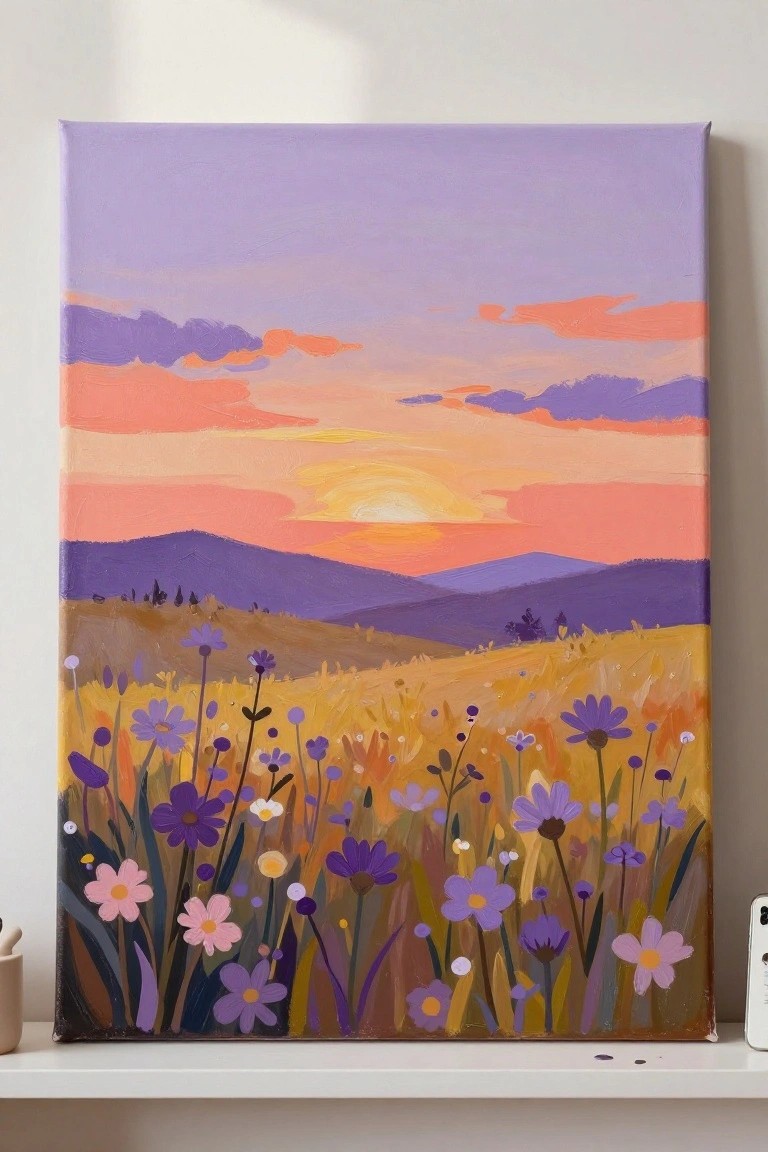
A wildflower meadow at sunset works as a strong acrylic idea because it layers a simple sky gradient and distant hills behind a dense foreground of stylized blooms. The composition relies on bold color blocks in the sky and a bright field to create depth, while the scattered flowers add variety through shape and placement rather than fine detail. This approach fits the floral landscape category where strong contrast and simplified forms keep the focus on color and overall layout.
The color palette helps this stand out because the warm sky tones against the cool hills and yellow field create built-in contrast that works on a large scale. You could adapt the idea by swapping flower colors to match a specific room or reducing the number of bloom types for faster coverage. For canvas decor this layout is practical since the flowers can be blocked in with basic shapes and the background can be painted in broad strokes first.
Oversized Daisies with Layered Petals on Gray

A cluster of four daisy-style flowers painted in bright yellows, oranges, and pinks makes an effective focal point for a large canvas. The idea relies on simple overlapping petals around concentric circle centers, with thick green stems and a couple of leaves anchoring the bottom. This approach fits the decorative floral category and works because the solid gray background lets the bold color blocks stand out without extra detail.
What makes this idea useful is that the flat background can be painted first, leaving you free to focus on building the flower shapes on top. The limited leaf count and straightforward stem lines keep the composition balanced on a big canvas while still leaving room to adjust petal colors or center rings. You could easily swap the gray for another neutral or change the yellows to a different dominant hue to match existing decor. For Pinterest, the high-contrast color blocks photograph cleanly and read well even at small sizes.
Coastal Dunes with Grasses and Wildflowers

A landscape acrylic idea that combines a wide ocean view with a detailed foreground of dune grasses and scattered wildflowers on an oversized canvas. The low horizon keeps the focus on the sandy slope and plant clusters while the simple sky and water areas stay minimal. This fits the landscape category with added floral touches that give the composition natural height and texture.
What makes this idea useful is the clear split between broad background washes and the layered plant details in front. You could adapt the greens and soft blues to match a favorite beach photo or reduce the number of flowers for a faster version. For canvas art, something like this works especially well because the vertical grass lines add structure without needing perfect realism. The color palette helps this stand out on Pinterest since the contrast between pale sand and deeper vegetation draws the eye.
Oversized Orchid Cluster in Soft Purple Tones
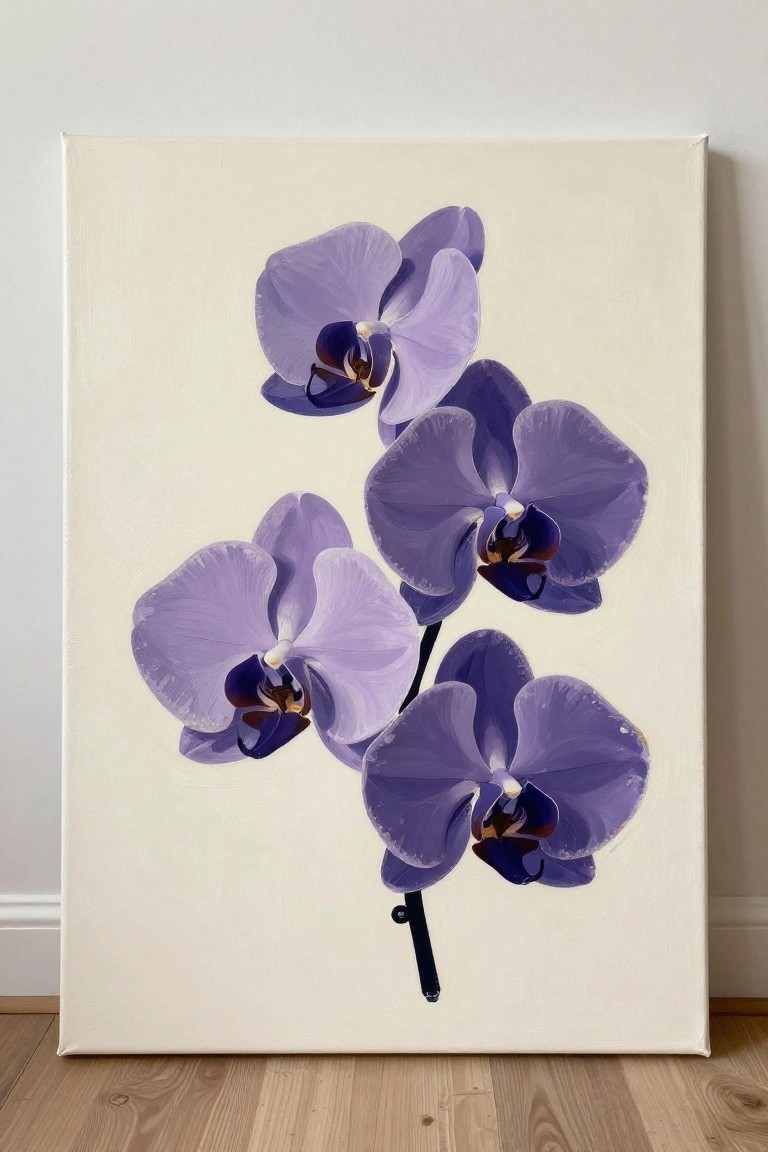
A cluster of orchid blooms painted in layered shades of purple makes a clean floral statement on a large canvas. The idea centers on a single dark stem holding multiple open flowers, with the light background left mostly empty to let the shapes stand out. This approach works well as decorative floral wall art because the contrast between the deep petal colors and the plain ground keeps the eye on the flowers without added details.
What makes this idea useful is the straightforward layout that lets you practice blending and edge control in acrylic without complex backgrounds. You can simplify it by using fewer blooms or adjust the purple range to match a room’s colors. For oversized canvases, the negative space around the flowers prevents the piece from looking busy and helps it read clearly from a distance.
Frequently Asked Questions
What size canvas works best for these oversized floral ideas? Large statement canvases typically measure at least 36 by 48 inches or bigger. Start with a sturdy stretched canvas or a wooden panel primed with gesso to prevent warping under heavy paint layers. Acrylics dry quickly and allow easy layering, so they suit big surfaces well.
How do I scale a small floral sketch up to a large canvas without losing detail? Project your sketch onto the canvas using a digital projector or grid method. Block in the main shapes first with thin paint washes, then build up petals and leaves in sections. Keep reference photos nearby and step back often to check proportions from a distance.
Which painting techniques create the most impact on oversized floral works? Broad brushstrokes for backgrounds and bold color blocking work well for overall drama. Add fine details like vein lines on leaves with smaller brushes only after the base layers dry. Experiment with wet-on-wet blending for soft flower edges and dry brushing for texture on stems.
What color choices make floral paintings stand out in a room? Choose high-contrast palettes such as deep navy backgrounds with bright white or coral blooms. Limit your palette to three or four main hues to avoid visual clutter on a large surface. Test colors on a small sample board first to see how they read from across the room.
How should I hang or display an oversized floral canvas safely? Use heavy-duty picture hooks rated for the painting’s weight and secure them into wall studs. Add a French cleat system for even support across the back. Place the piece at eye level in a well-lit spot, and avoid direct sunlight to prevent fading over time.

Hi, I’m Camille.
I’m a self-taught painter and creative blogger with a soft spot for acrylic painting, color play, and all the little art ideas that make everyday life feel more inspiring.
I started this space because I’ve always believed painting should feel joyful, approachable, and a little personal. Some of my favorite pieces come from simple ideas, messy palettes, and evenings where I just felt like making something pretty.
Most of what I share begins with acrylic painting, but I also love exploring other mediums when creativity pulls me in a new direction. My goal is to collect and share painting ideas that feel fun, beautiful, and actually doable, whether the mood is calm and minimal or bright and playful.
This is a space for inspiration, experimenting, and enjoying art without overcomplicating it.