
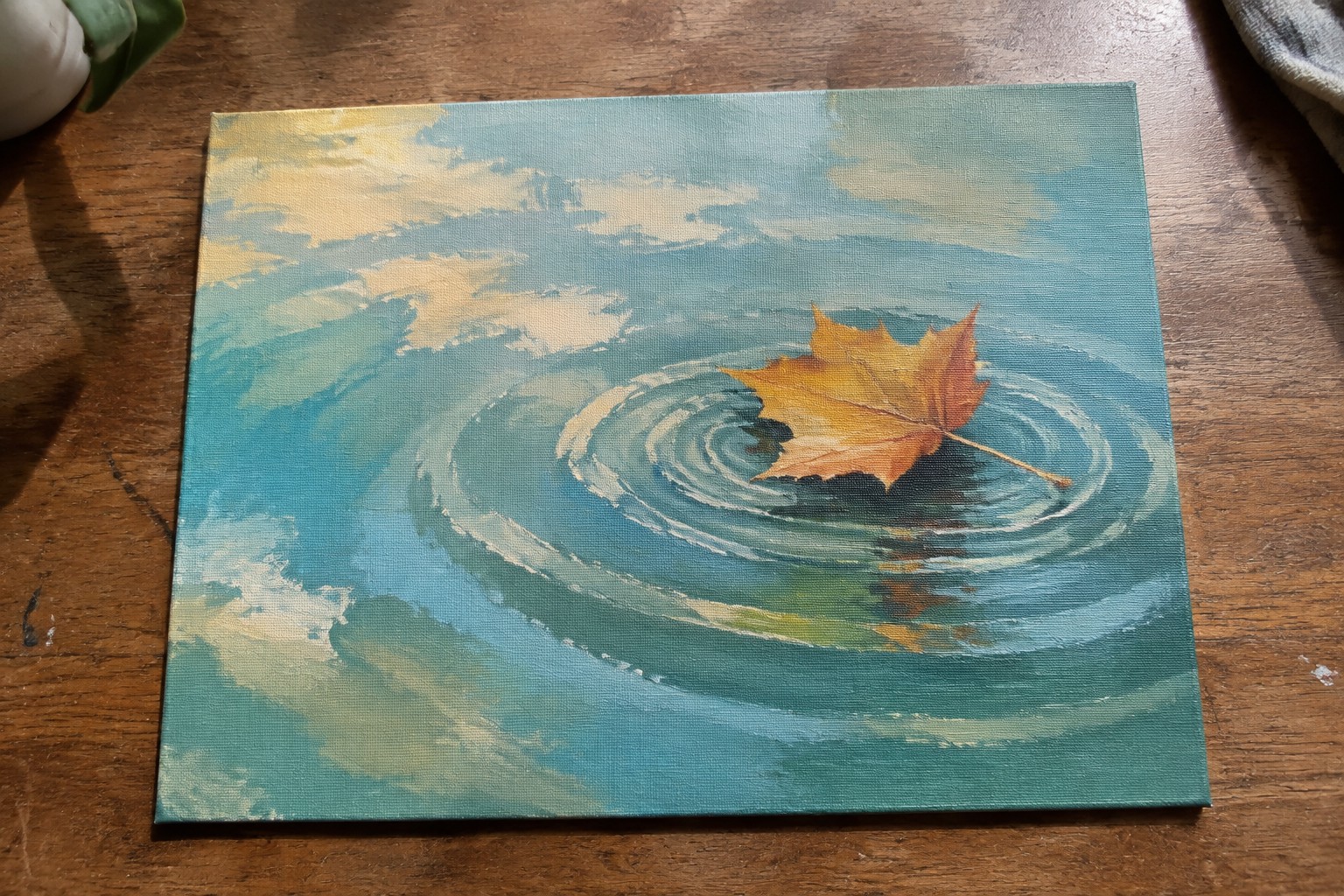
I’ve spent time working on water scenes in acrylic and adding ripples has become a regular part of my process.
Layering reflections takes a bit of planning but it gives the surface more depth once the paint dries.
I tried different color mixes and brush strokes to see what felt natural in the water.
Some versions worked out better than others so I kept track of the ones I liked.
These nineteen ideas are the ones I return to when I want to paint something simple yet interesting.
Autumn Leaf on Expanding Water Ripples
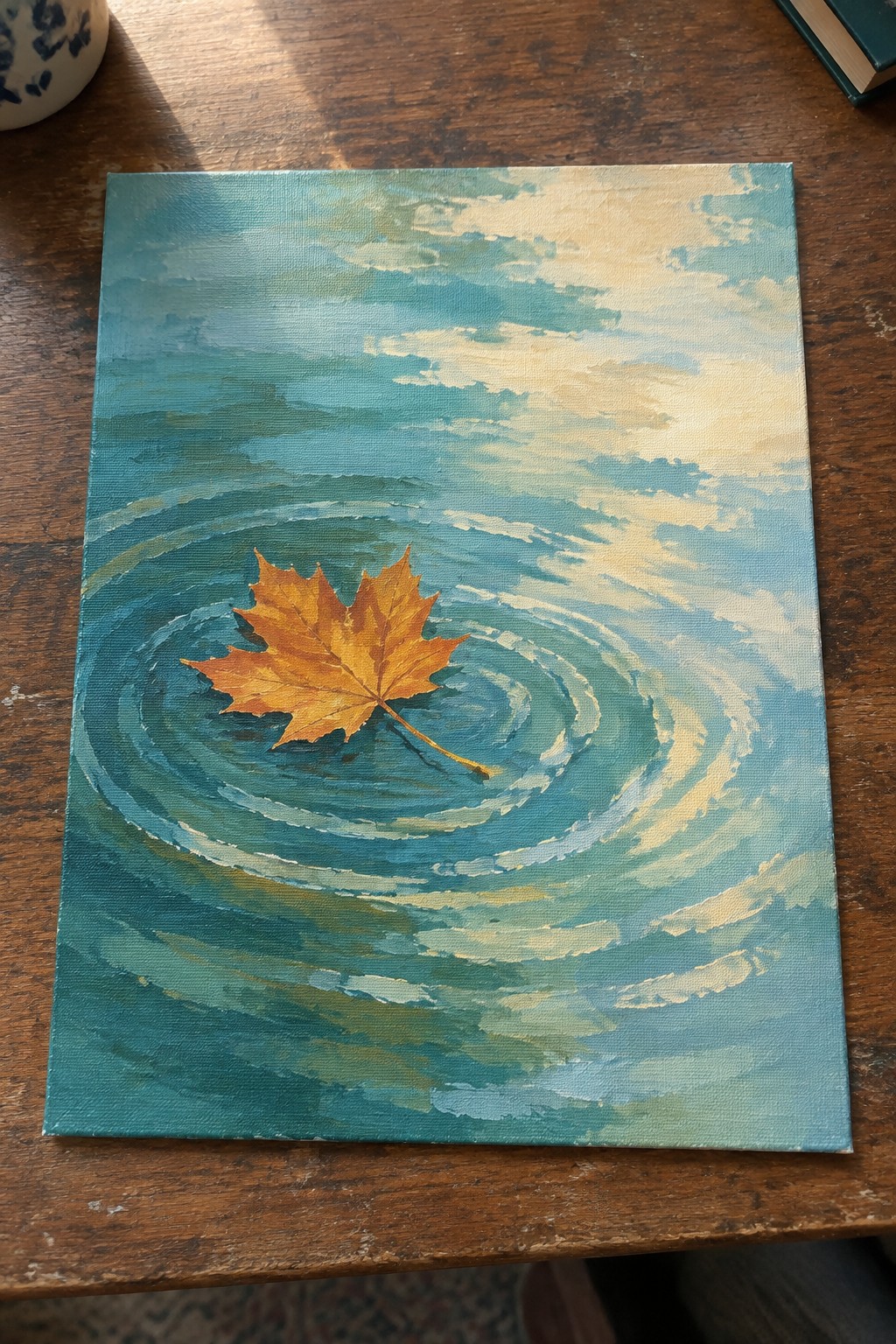
A single maple leaf resting on water creates a strong focal point when paired with concentric ripples that radiate outward in layered blue and green tones. This acrylic idea centers on a seasonal nature subject where the warm leaf stands out against the cooler water surface, using simple circular motion to suggest movement. The composition works as decorative wall art because the ripples fill the space without requiring detailed backgrounds or multiple objects.
What makes this idea useful is how the central leaf and ripple pattern keep the layout balanced and easy to follow. You can swap the leaf color for different seasons or reduce the number of rings to make it quicker on a smaller canvas. For practice, the smooth water blending and soft edges help build control with acrylic washes while the bold leaf keeps the whole piece from looking empty.
Sunset Reflection Landscape with Boathouse
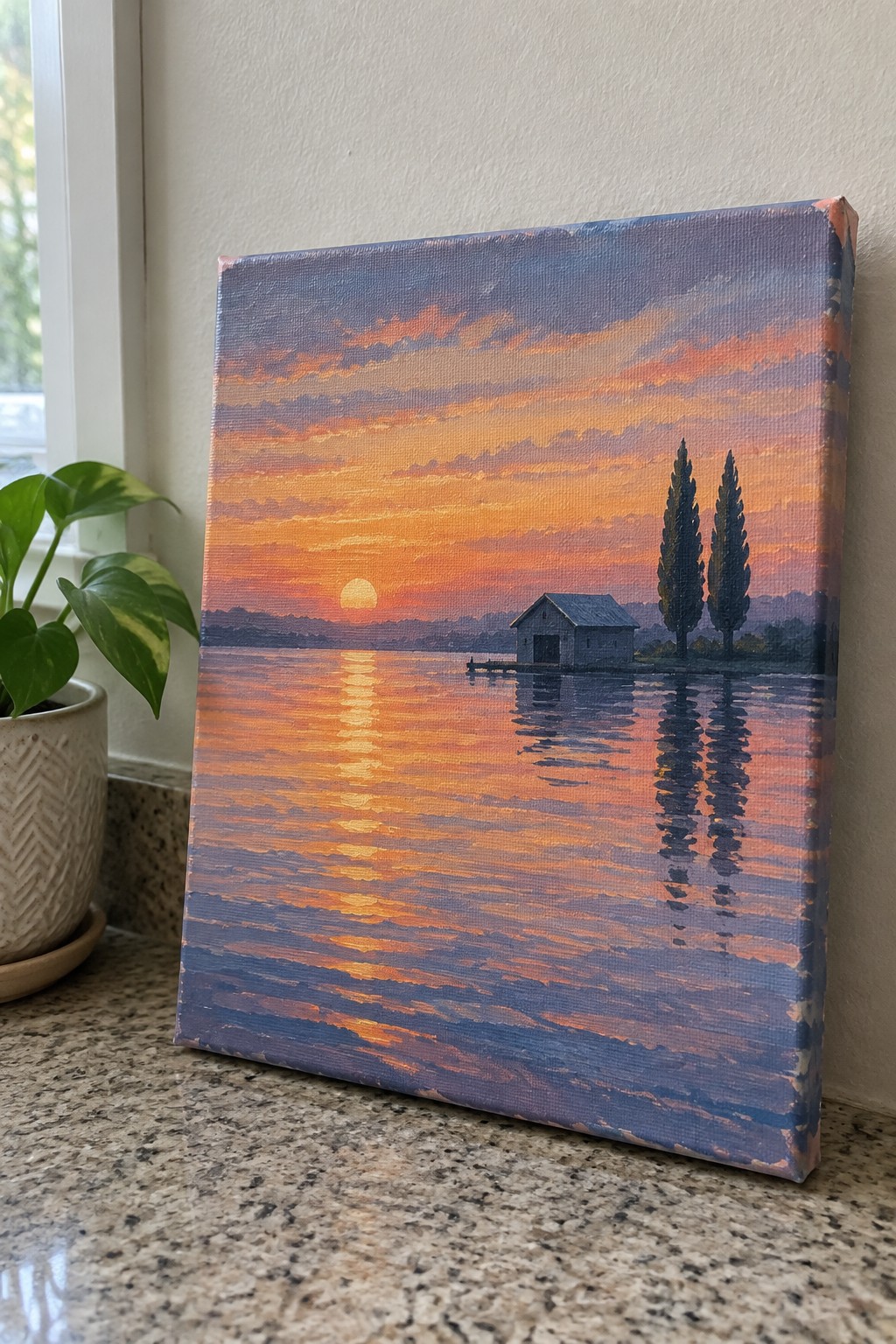
A sunset over calm water works well as a landscape idea because the sky and water share the same color bands, creating a natural mirror effect that fills the canvas. The boathouse and two tall trees sit off-center to give the scene a clear focal point while the horizontal water lines keep the eye moving across the composition. This approach fits the layered reflection category of acrylic landscapes since the bright upper sky contrasts directly with the darker reflected tones below.
What makes this idea useful is how the reflection does half the color work for you once the sky is blocked in. You can shift the palette toward cooler tones for a different mood or crop the scene tighter around the boathouse if you want a smaller canvas. For practice this layout helps because the straight water lines and simple tree shapes keep the focus on color blending rather than fine detail, and the same idea adapts easily to other shoreline subjects.
Concentric Teal Ripple Rings on a Mini Canvas
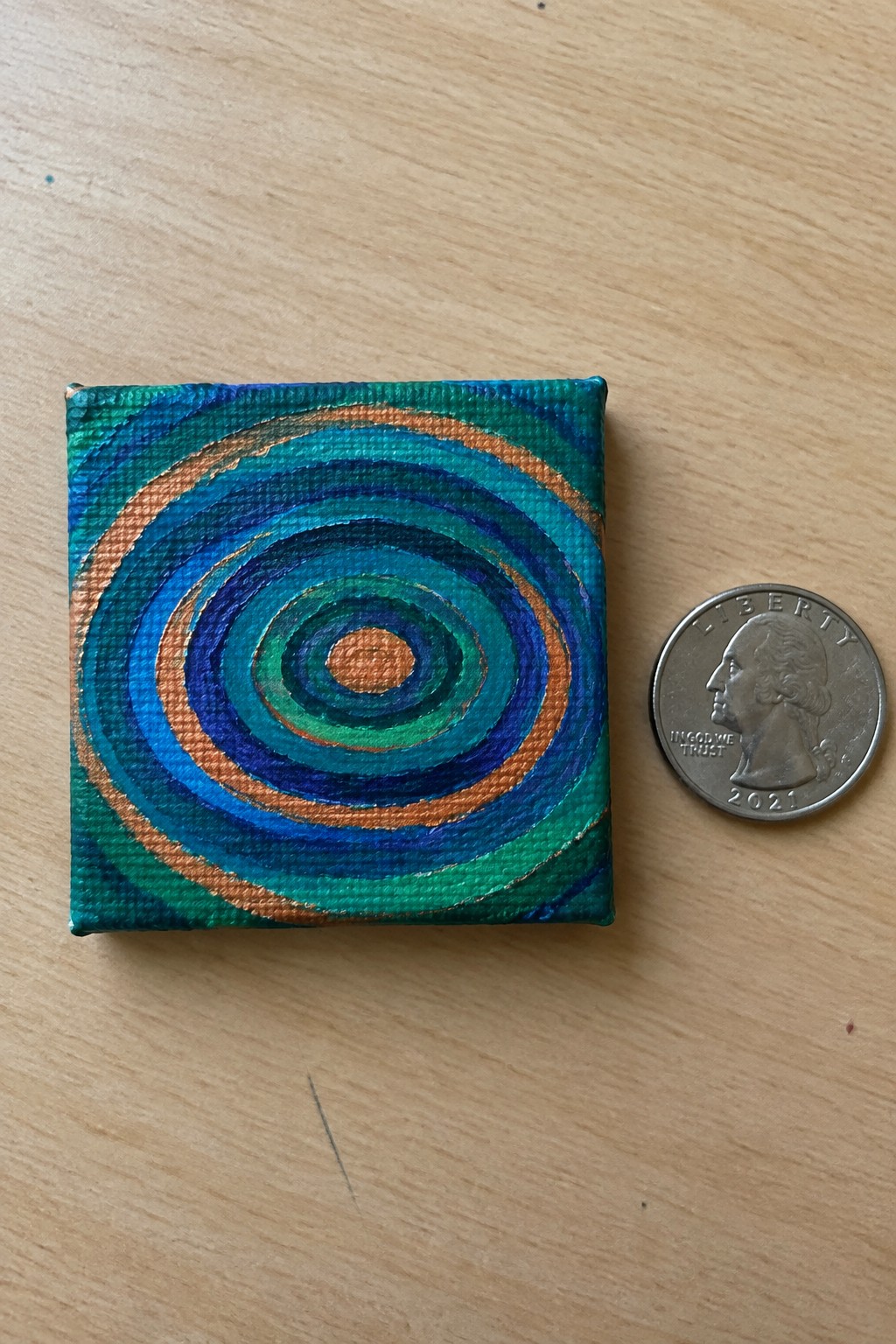
This acrylic idea builds a water ripple effect through simple concentric circles that tighten toward the center in shades of blue, teal, and green. Thin orange rings break up the layers and create contrast without extra detail. The approach works as abstract decorative wall art where repeated curved shapes and color shifts handle the visual interest.
What makes this idea useful is how quickly it scales to any canvas size or color palette while staying recognizable as ripples. You can lay down the rings with broad strokes first then add the brighter accents on top for separation. For practice, this kind of subject helps you test acrylic layering and color mixing on a small surface before moving to larger pieces. It also translates easily into a series for canvas decor or gifts.
Koi Fish Moving Through Rippled Pond Water
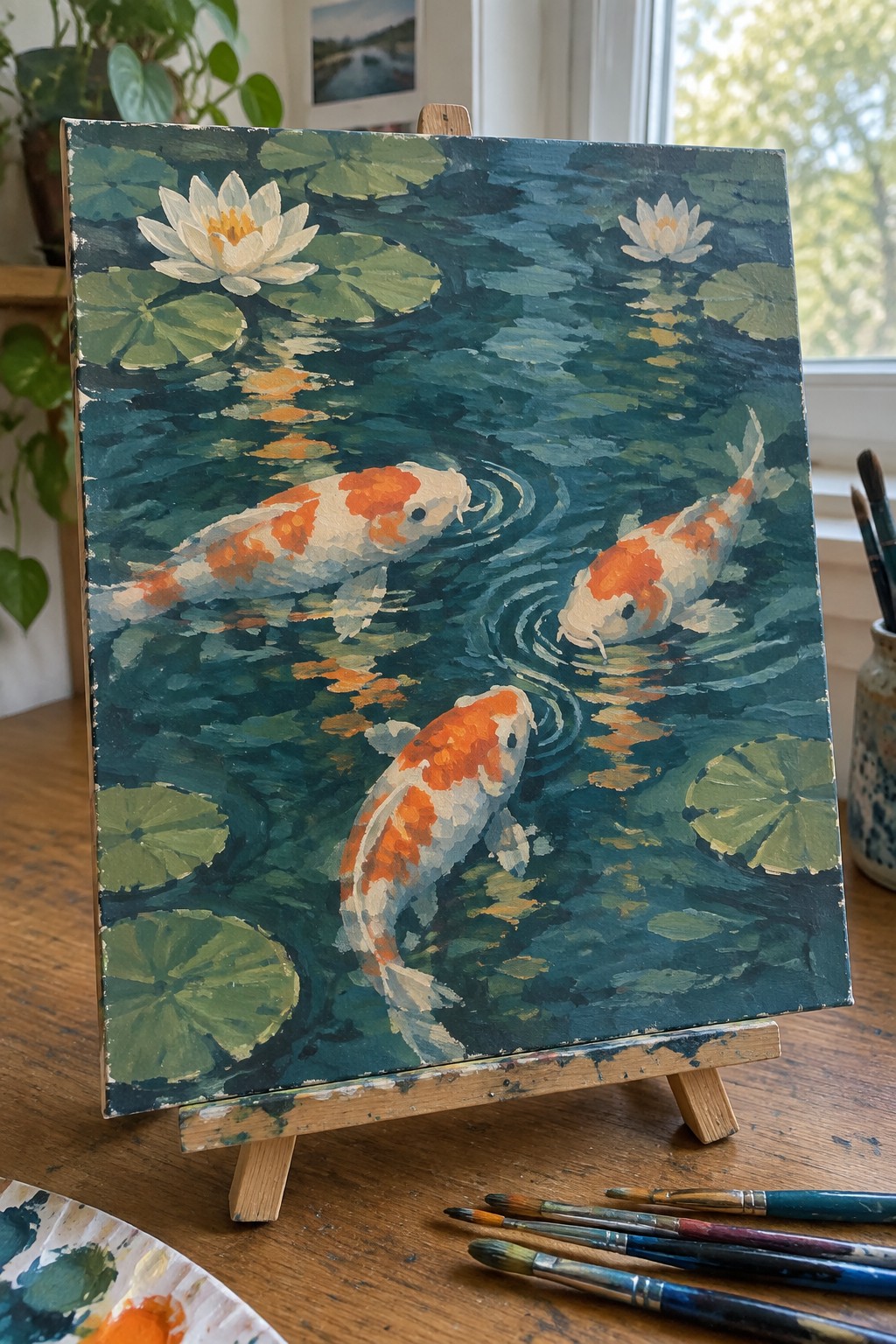
This acrylic idea focuses on three orange and white koi swimming just below the surface of dark teal water, with circular ripples showing their movement and direction. Green lily pads and two white water lilies frame the scene and break up the water area, while scattered orange reflections add warmth to the cooler background. The strong value contrast between the bright fish and deep water makes the composition read clearly even with relatively simple shapes.
The bold fish against the dark water does most of the visual work, so the idea stays effective even if the brushwork on the ripples stays loose. This layout works well for a medium square canvas and can be adapted by reducing the number of fish or shifting their positions to change the flow. For practice, the subject gives clear opportunities to layer lighter ripples over the base water color without needing fine detail everywhere. The same setup translates easily to a vertical format or a smaller study if you want to test the color mix first.
Lamppost Reflection in Rainy Ripples
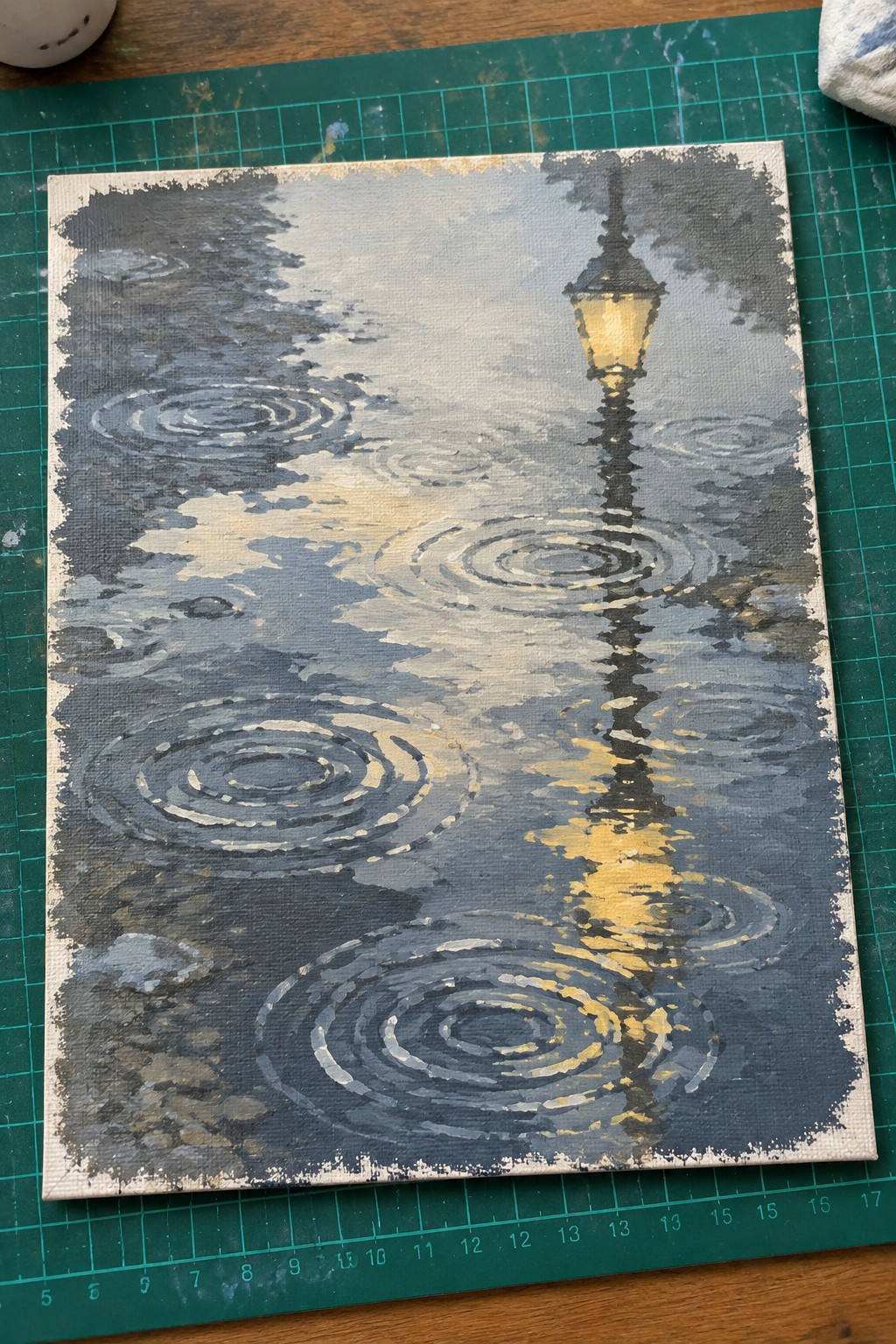
Painting a single glowing lamppost reflected in wet pavement or shallow water creates a strong focal point through the contrast of warm yellow light against cool dark tones. The idea centers on layering concentric ripples that break up the vertical reflection into soft glowing rings, turning a simple night scene into an exercise in light distortion and repeated circular shapes. This fits the water reflection category well because the limited palette and vertical composition keep the focus on how the ripples interact with the light source.
What makes this idea useful is the clear structure of one vertical element against repeating ripple patterns, which makes it straightforward to sketch and build up in acrylic without getting lost in details. The cool background with warm highlights adapts easily to different canvas sizes or a small series of similar night scenes. For practice this layout works well because the ripples can be added in stages and the same light-on-water approach translates to other subjects like window reflections or puddles along a road.
Nighttime Lake Reflection with Moon and Mountain Silhouettes
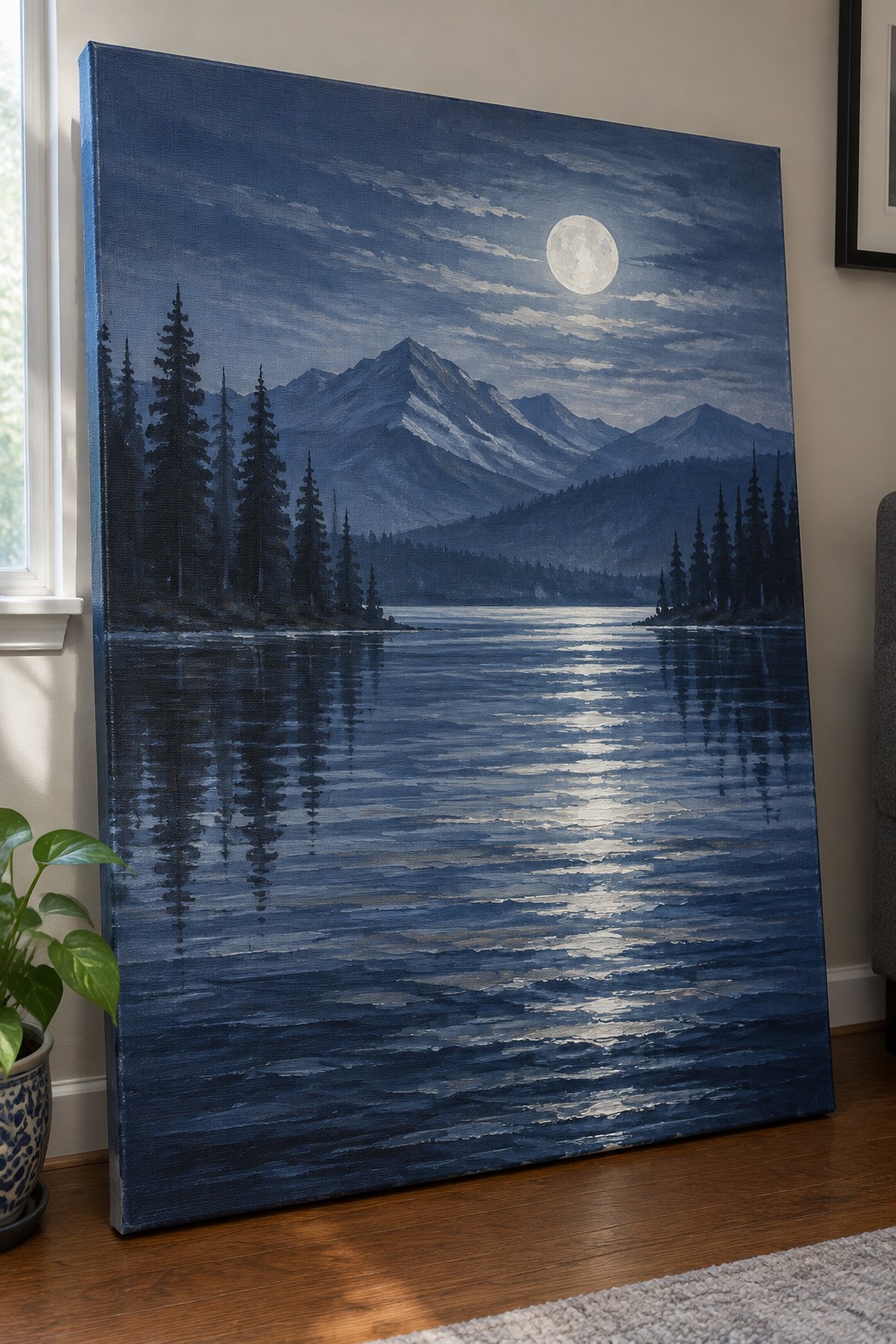
A nighttime landscape idea built around a full moon and its bright path across still water works well for acrylic because the reflection becomes the main focal point. Dark pine silhouettes on both sides and layered mountain shapes in the background create depth without needing fine detail, while the horizontal light streak on the water balances the vertical tree forms. The limited palette of deep blues and soft grays keeps the composition calm and easy to read from a distance.
What makes this idea useful is how the strong value contrast between the moonlit water and dark land masses does most of the visual work. You can simplify the mountain range or reduce the number of trees to fit a smaller canvas, or shift the color temperature toward cooler greens if you want a different season. For wall art this layout stays effective even when painted at a moderate level of detail, and it adapts easily if you want to try the same reflection idea with a sunset instead.
Coastal Rock Anchored by Layered Wave Ripples
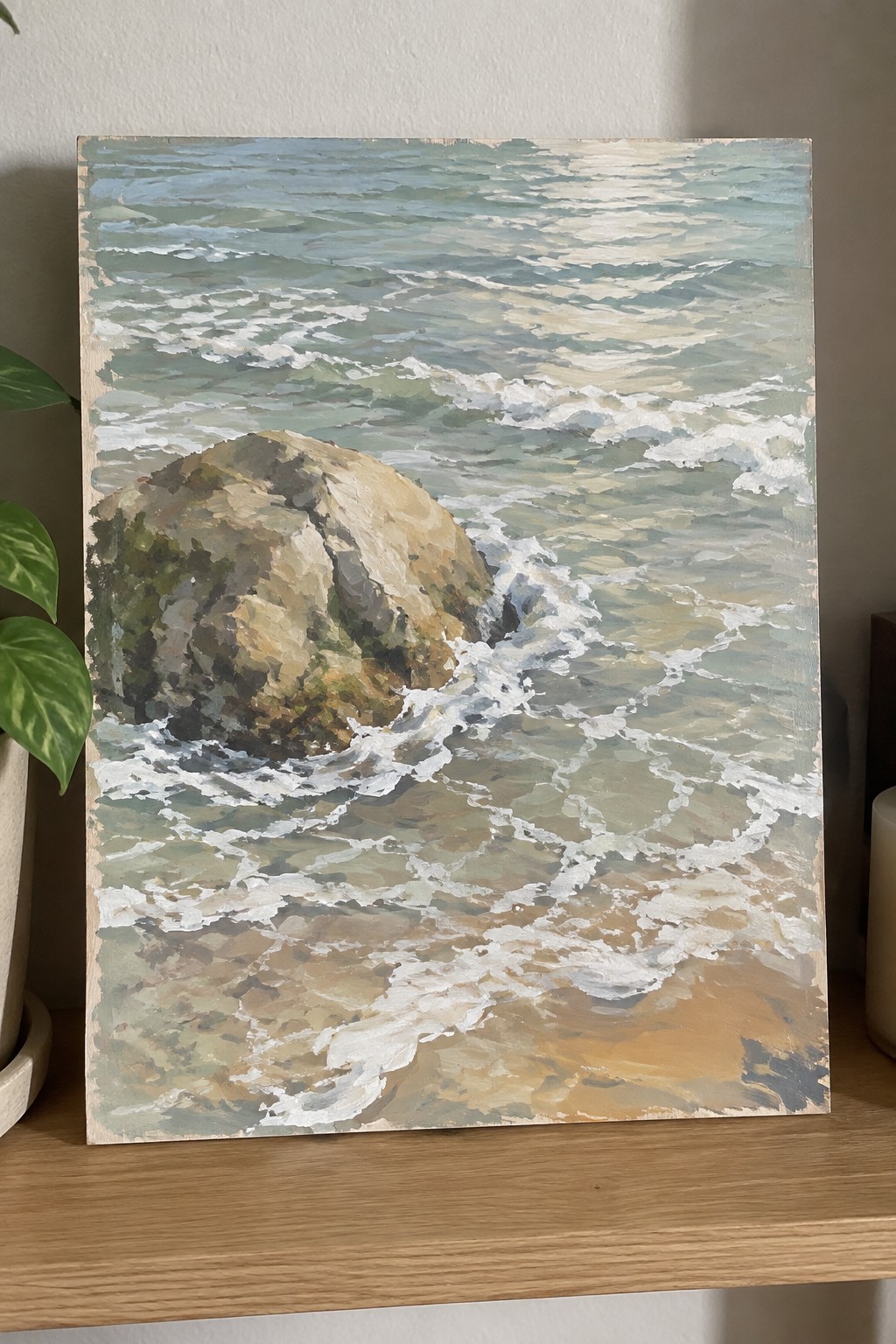
A seascape idea built around a large central rock gives structure to water ripple studies in acrylic. The waves and foam are painted in overlapping bands of blue-green and white that flow around the rock’s shape, creating clear movement across the surface. This approach works as a landscape painting focused on water effects and natural contrast between solid form and fluid motion.
What makes this idea useful is how the rock provides a fixed shape to build ripples and foam around, which simplifies planning the composition. You can shift the palette toward deeper blues or warmer sands to fit different coastal scenes or reduce the number of foam layers for a faster version. For canvas decor, this subject stands out on Pinterest because the strong focal point and visible brushwork translate well in photos.
Abstract Rainbow Reflections Using Layered Ripple Bands
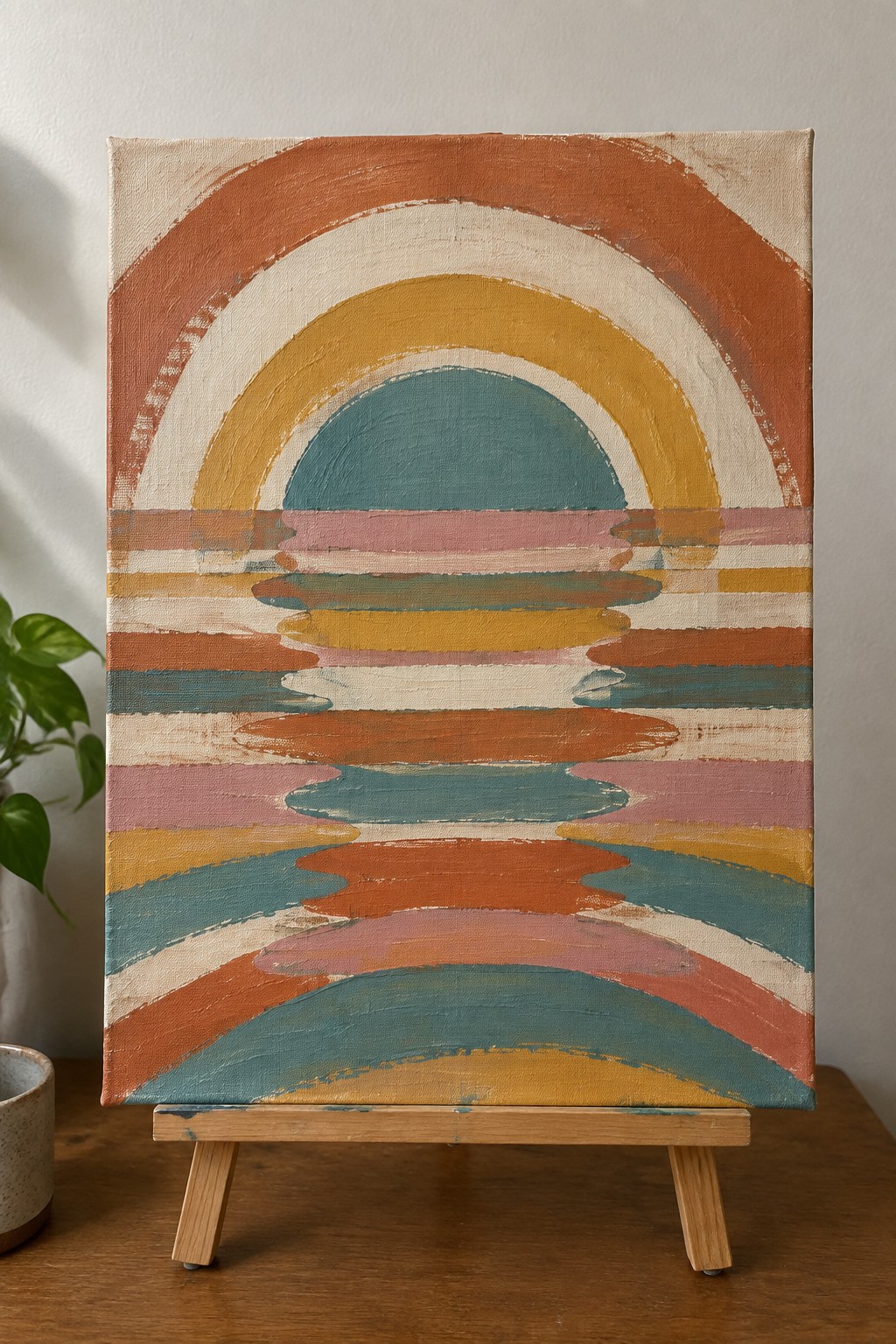
This acrylic idea centers on a large arched rainbow form positioned above a series of horizontal wavy bands that suggest water reflections. The composition uses flat color blocks in warm oranges, yellows, and teal with soft white negative space to create contrast between the solid upper arch and the broken lower stripes. It fits the category of abstract landscape wall art where simple shapes and bold color placement carry the visual weight without needing fine detail or texture.
What makes this idea useful is the straightforward layout that relies on color blocking rather than precise blending, so it adapts easily to different palettes or canvas sizes. You can simplify the waves into straighter lines for faster work or extend the ripple bands to fill a taller canvas. The graphic style also photographs cleanly for Pinterest, which helps the finished piece stand out in a feed of softer watercolor-style ideas.
Urban Night Street with Layered Umbrella Reflections
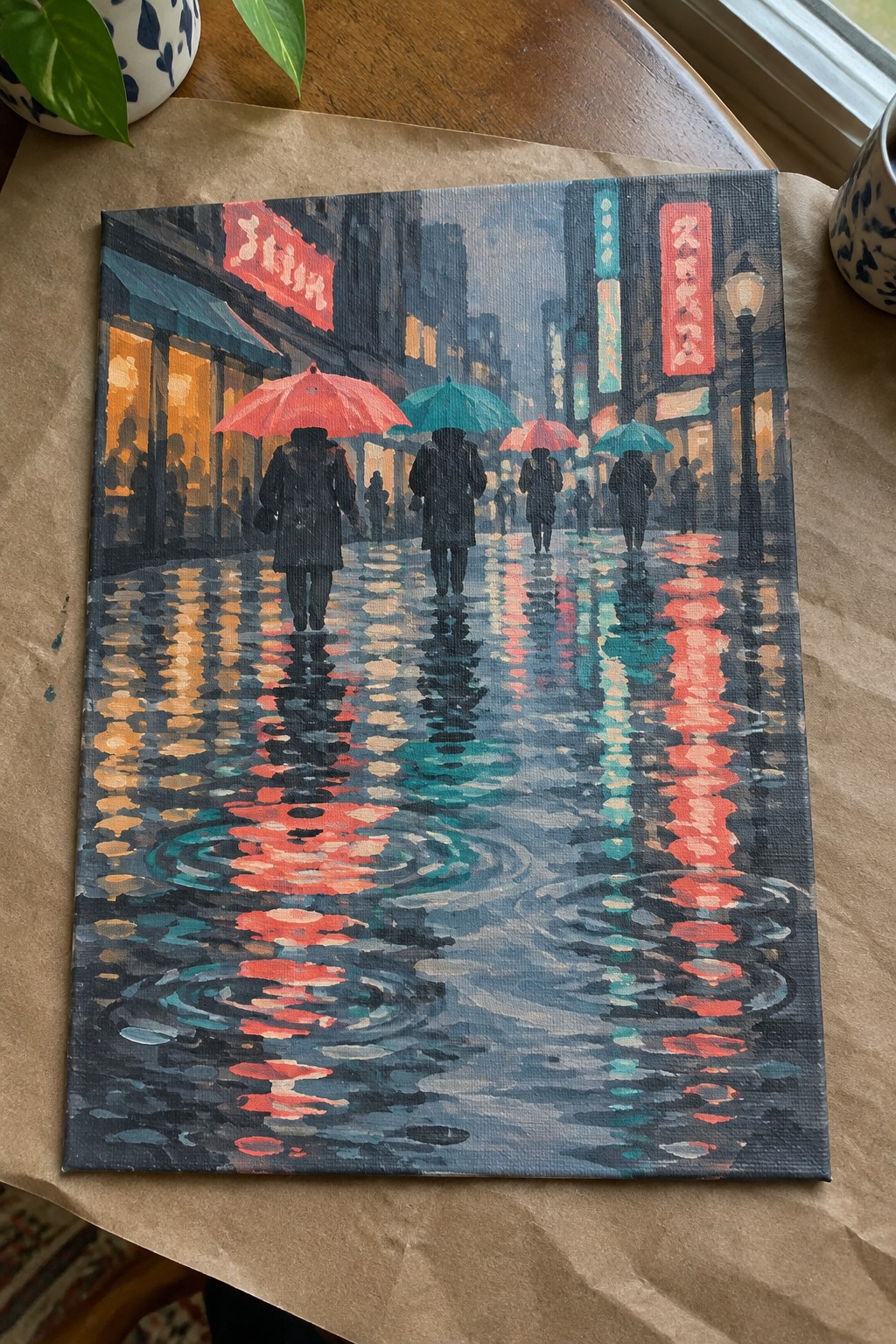
This acrylic painting idea uses a rainy city street at night as the setting, where people carrying bright umbrellas walk along a wet pavement filled with ripples. The main focus is the way umbrella colors and neon signs reflect downward in vertical streaks that break into circular ripples in the foreground. It works as a landscape piece with strong reflective elements that suit wall art or seasonal decor.
What makes this idea useful is the dark background that lets a few bold umbrella colors carry the whole composition without needing intricate details on every figure. You could swap the red and teal for other bright pairs or crop the scene tighter around just the ripples and lower halves of the umbrellas for a simpler version. The layout also gives clear practice with building up water layers and keeping reflections readable even when the paint is applied thickly.
Floating Blossoms Across Layered Ripples
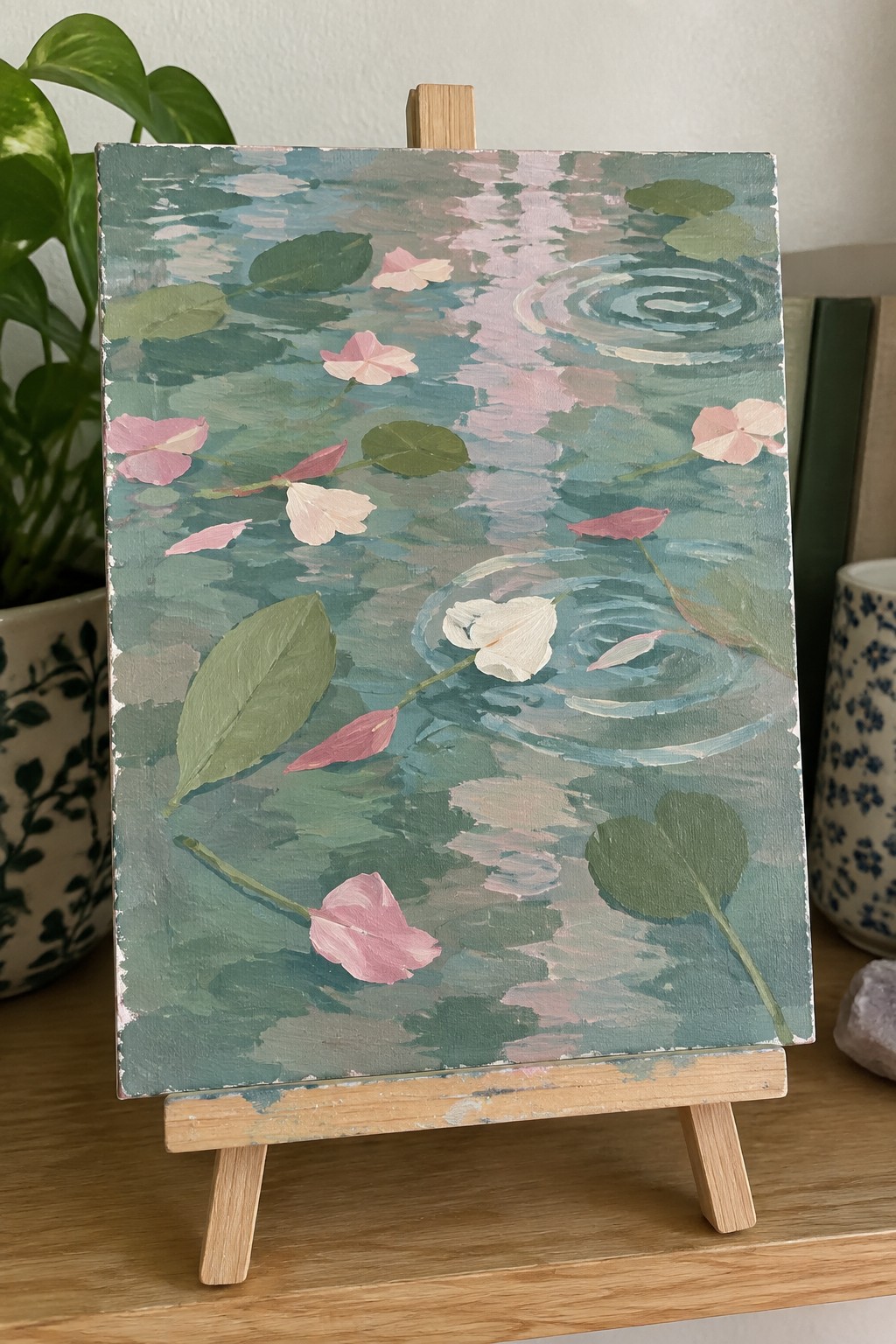
This acrylic idea focuses on a calm water surface where pink and white flowers drift among green leaves, with soft ripples catching pink sky reflections. The composition works as a floral water scene that blends still life elements with gentle landscape qualities. Overlapping petals and leaves against the rippled background create depth through simple layering rather than heavy detail.
What makes this idea useful is how the soft color shifts in the water let you practice blending without needing perfect edges. You could swap the pink tones for cooler shades or change the flower types to match a different season while keeping the same ripple layout. For canvas decor, the loose circular strokes around the reflections keep the focus on movement and make the piece easy to adapt to different sizes. The balanced mix of floating elements and open water gives it a clean look that performs well on Pinterest for nature-themed boards.
Grayscale Post Ripples with Reflection
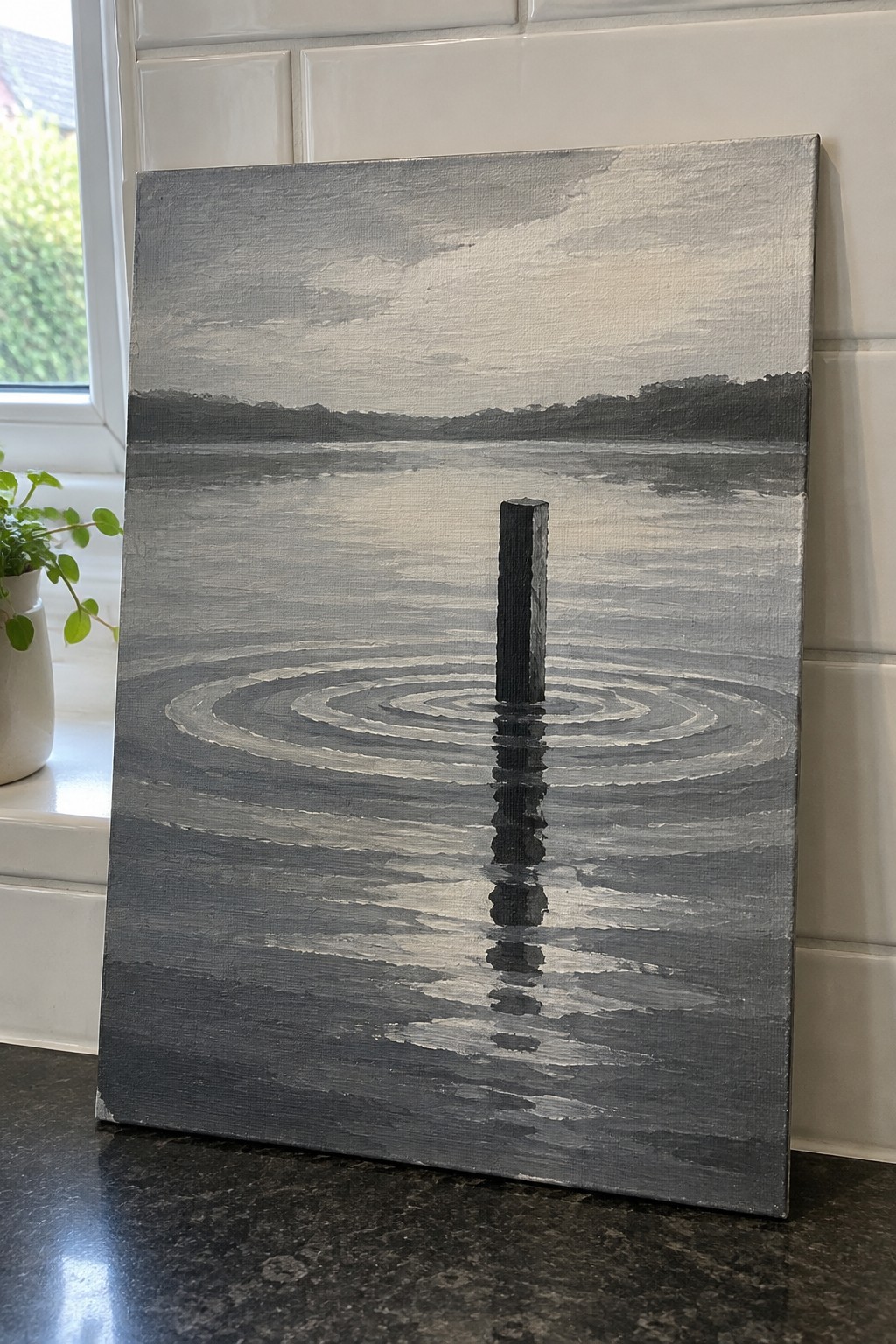
A single dark post standing in still water creates the main focus here, with evenly spaced concentric ripples radiating outward from the point of contact. This landscape idea keeps the palette strictly monochrome so the ripple lines and the long vertical reflection stay sharp and easy to read. The flat bands of sky and distant shore act as simple framing that lets the central water pattern carry the composition.
What makes this idea useful is how the limited color range removes the pressure of mixing while still letting you practice clean ripple edges and controlled blending. You could adapt it by swapping the grays for a cool blue-and-white scheme or by cropping tighter around the post for a more abstract version. For canvas art, the straightforward layout works well as a quick study or as one piece in a set showing different ripple sizes. The bold contrast between the post and water does most of the visual work, so the painting reads clearly even at smaller sizes.
Ducks with Rippled Reflections in Teal Water
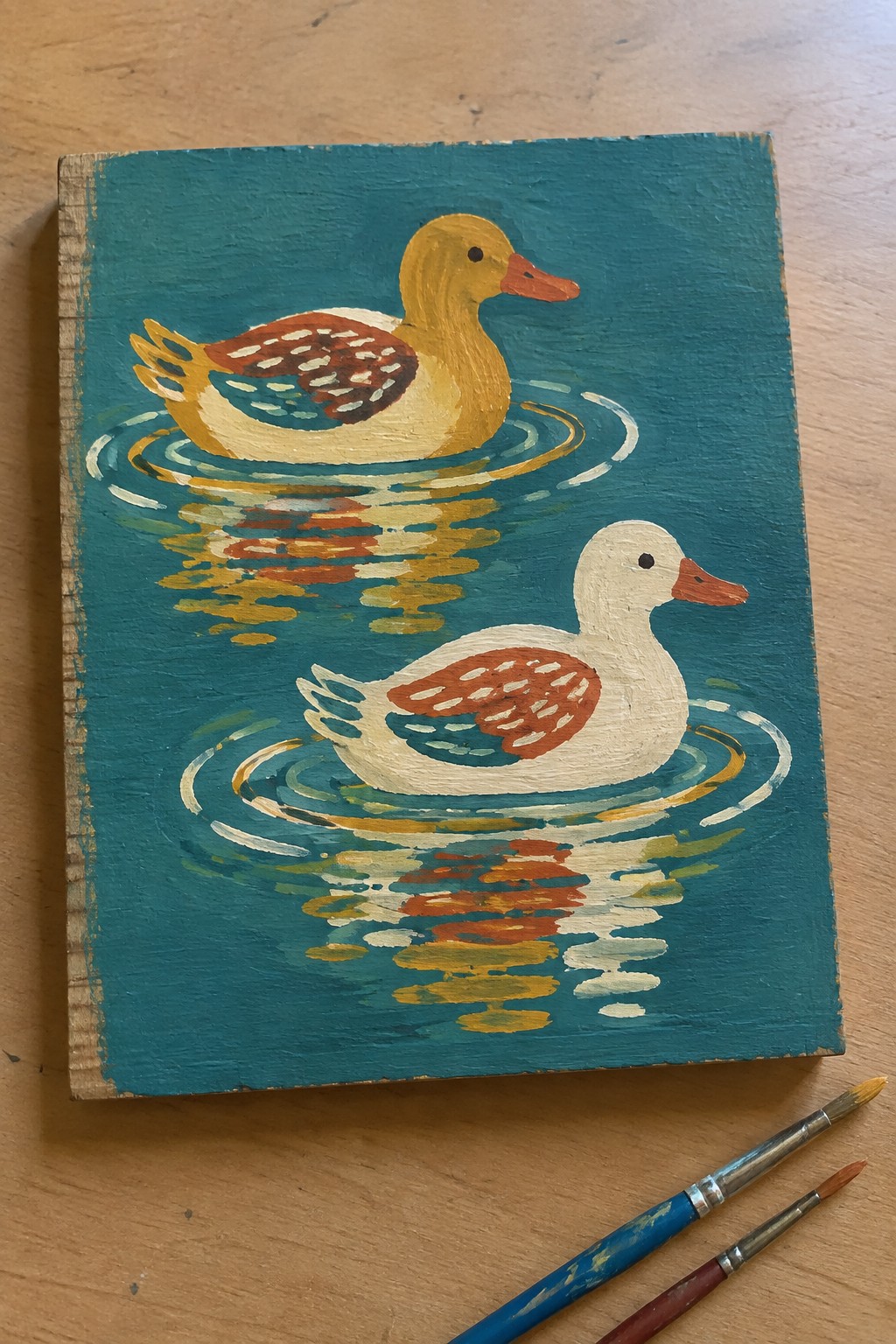
Painting two ducks on water with matching reflections and simple ripple rings gives a clear animal subject that relies on color contrast and shape repetition. The teal background keeps the focus on the warm duck tones and their mirrored versions below, while the concentric rings add movement without extra layers. This fits into an animal or water scene category where bold blocks of color handle most of the visual work.
The color palette helps this stand out because the reflections reuse the same browns, whites, and golds from the ducks above. You could adapt it by painting just one duck or switching the water to a different solid hue for quick variations. For practice, this kind of subject works well on small canvases since the flat background removes the need for gradients and lets you focus on placing the ripples.
Twilight Harbor Reflections on Calm Water
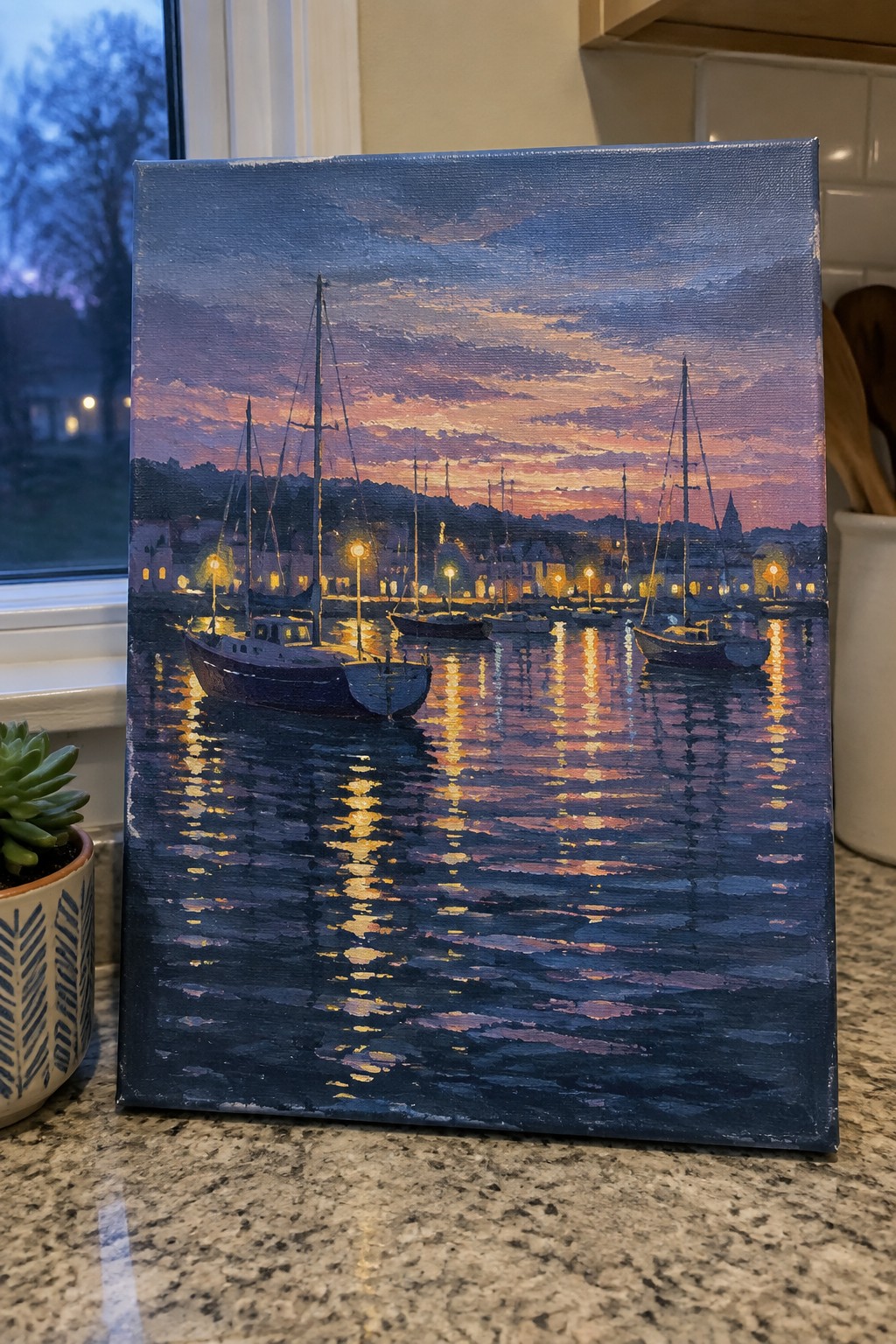
This acrylic painting idea focuses on a landscape scene of boats moored in a harbor at dusk, with the water surface used as the main area for showing layered reflections. The composition works by placing dark boat shapes against a bright sky gradient, then repeating those shapes and light sources as vertical streaks in the water below. The result is a straightforward landscape approach that emphasizes contrast between the colorful sky and the deep blue water to guide the eye downward.
What makes this idea useful is how the reflection pattern lets you practice blending and layering without needing fine detail on every boat. You can simplify it by reducing the number of masts or change the color temperature of the sky to shift the mood for different seasons. For canvas decor, the vertical format and strong light-to-dark contrast make the piece stand out in a feed even at small thumbnail size.
Layered Water Ripples with Gold Reflections
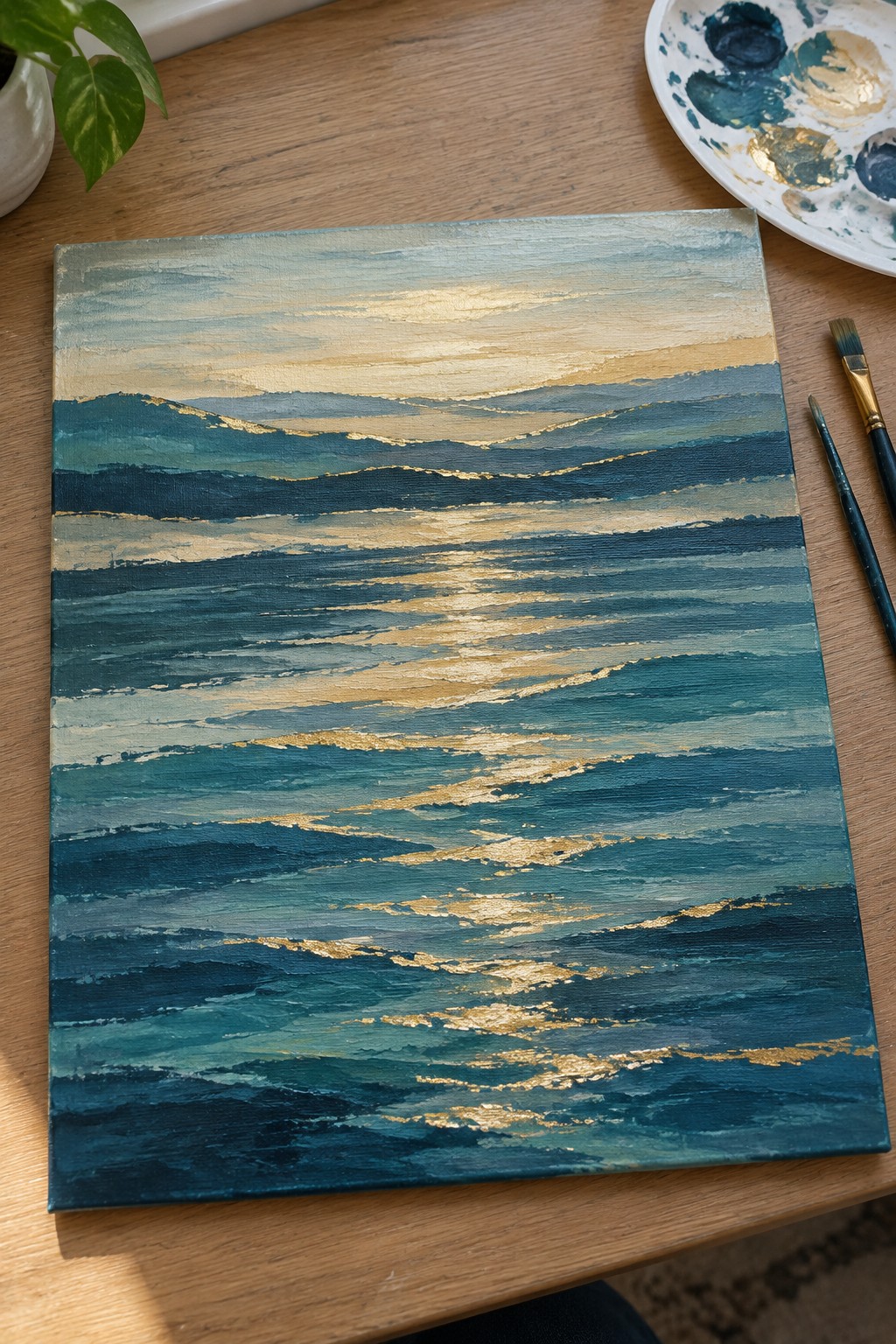
This acrylic idea centers on a seascape built from stacked horizontal bands of blue and teal that suggest rolling water. Gold paint is brushed along select edges to create the effect of light reflecting across the surface. The layout belongs to the landscape category and uses simple color shifts and repeated strokes to imply depth and motion without complex details.
What makes this idea useful is the straightforward horizontal structure that helps keep brushwork consistent across the canvas. You can adapt it by swapping the gold for other metallics or shifting the blues toward cooler tones for a different time of day. The same layout works well on smaller panels if you want quicker practice or need a piece that fits standard frame sizes.
Cracked Ice Reflections in a Winter Landscape
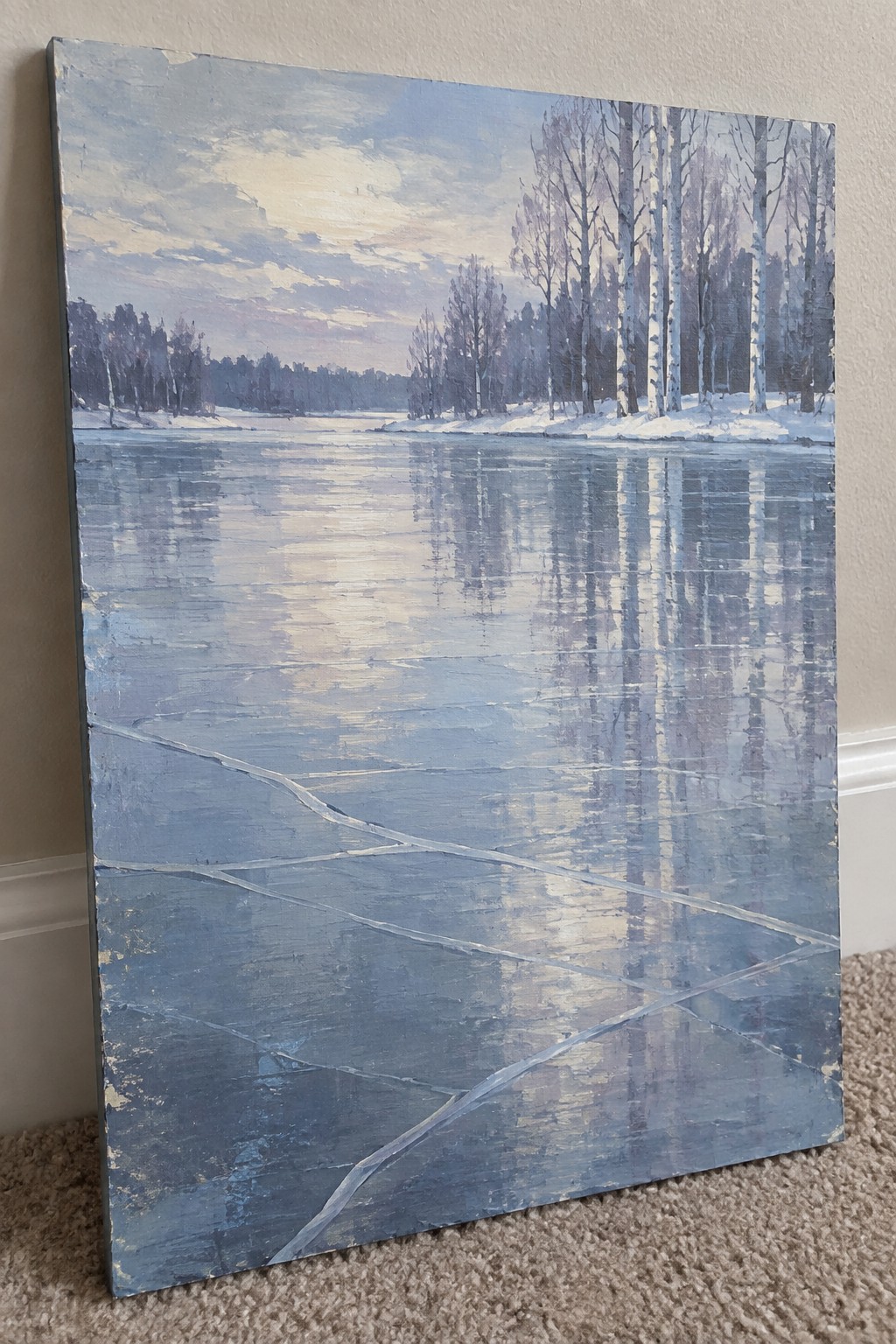
This acrylic idea uses a frozen water surface to reflect a line of bare trees and a pale sky while the cracks in the ice create strong linear interest across the foreground. The painting works as a seasonal landscape that builds depth through stacked horizontal bands of color, from the textured ice up to the distant treeline. Cool blue and gray tones keep the focus on how the reflections and cracks interact rather than on fine details.
What makes this idea useful is how the cracks can be painted last with a small brush or the edge of a palette knife to sit on top of the already blended reflections. The simple color range of blues, whites, and soft purples is easy to mix in layers and adapts well to different canvas sizes or slight changes in tree spacing. For practice, the layout gives clear zones to work on one at a time without needing complex brushwork.
Yellow Duck with Layered Colorful Water Ripples
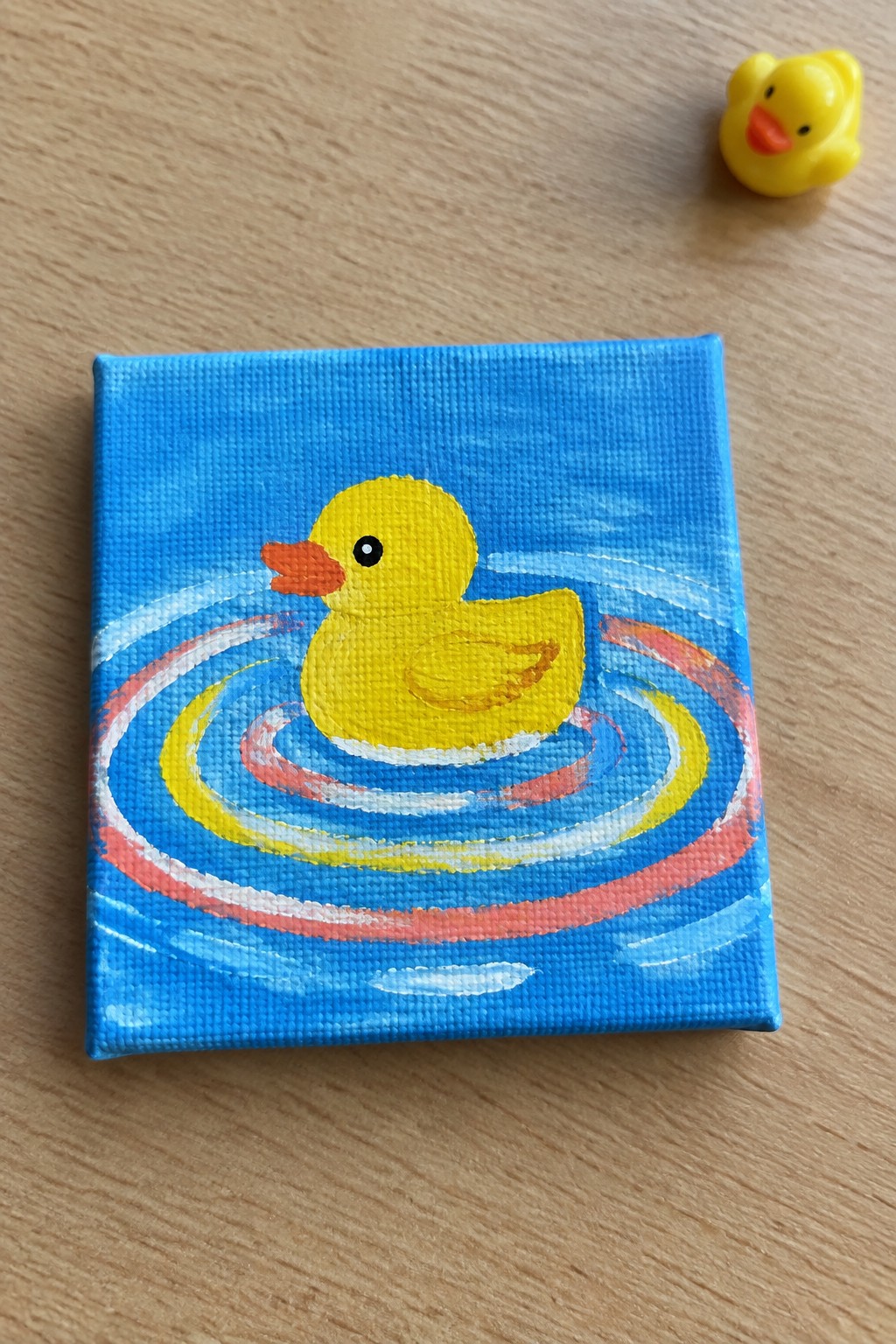
A central yellow duck surrounded by overlapping ripple rings offers a straightforward way to practice water effects in acrylic. The rings use separate colors like blue, white, yellow, and coral to create movement across a solid blue background, keeping the duck as the clear focal point. This layout works as a compact decorative piece that relies on color contrast rather than fine detail.
The layered ripple rings make this easy to build up one color at a time without needing advanced blending skills. You could swap the duck for another basic shape or adjust the ring colors to fit different room schemes. For canvas decor, the simple subject and small scale let you finish the piece quickly while still showing off the ripple pattern.
Neon Reflections Across a Rain-Slicked City Street
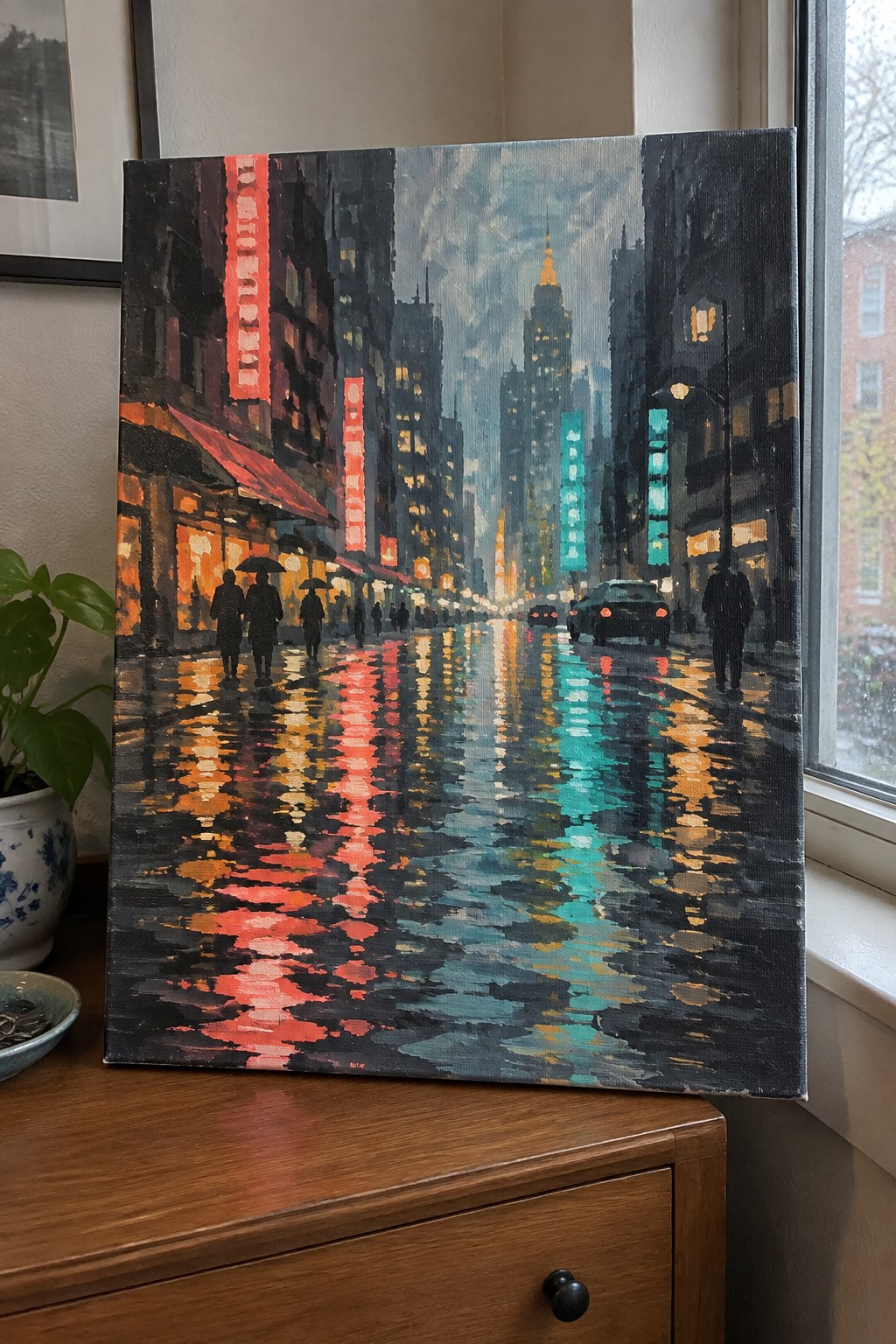
This acrylic idea focuses on a nighttime city street where wet pavement turns reflections into the main subject. The composition works by stacking horizontal color bands of red, orange, teal, and yellow to suggest water while keeping the buildings and figures as darker supporting shapes. It fits the urban landscape category and relies on strong value contrast rather than fine detail to hold the scene together.
What makes this idea useful is how the reflections let you work in large color blocks before adding smaller shapes like cars or umbrellas. You could simplify it by cropping to just the lower half of the street or change the palette to match a different season or city. The bold light-to-dark contrast also helps the finished piece photograph well for Pinterest without needing perfect edges.
Sunset Mountain Reflection Interrupted by a Foreground Ripple
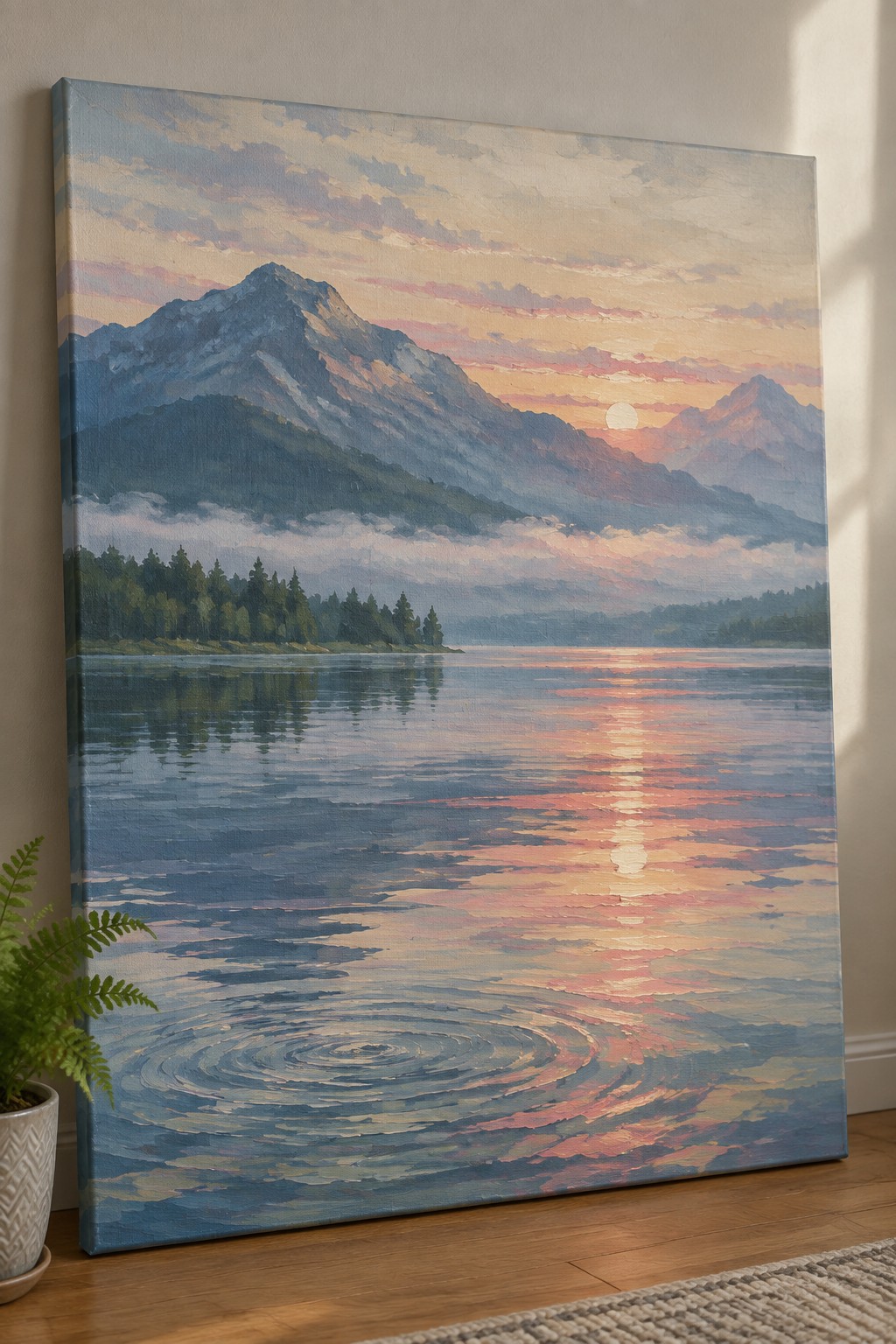
This acrylic painting idea uses a calm mountain landscape at sunset as the base, then places a single circular ripple in the foreground water to break up the reflection. The layered sky colors transition into the water, and the ripple acts as the main focal point while keeping the rest of the scene relatively smooth. It fits into the landscape category with a clear emphasis on water reflections and simple movement.
What makes this idea useful is how the ripple gives you an easy starting point for practicing controlled circular strokes without needing complex texture everywhere. The warm-to-cool color shift in the reflection can be adapted to sunrise or twilight palettes, and the open water area lets you add or remove ripples depending on how much detail you want. For practice or wall art, the layout works well because the mountains stay simple while the ripple draws the eye.
Frequently Asked Questions
What supplies are essential for creating layered acrylic water ripple paintings? Start with a good selection of acrylic paints in blues greens and earth tones along with a variety of brushes from fine detail to wide flat ones. You will also need a sturdy canvas or watercolor paper primed for acrylics plus glazing medium to build transparent layers that mimic reflections. Keep a spray bottle handy for keeping paints workable and a palette knife for adding texture in some of the 19 ideas such as those involving rocky shores or urban reflections.
How do I build realistic depth with layered reflections in ripple paintings? Apply a base layer of dark water tones first then let it dry completely before adding successive glazes of lighter colors mixed with medium. Each layer should suggest subtle distortions from ripples above so focus on soft blending at the edges. Many of the creative ideas rely on this method to show sky or object reflections breaking apart in the water so practice on small test pieces to see how light interacts across four or five layers.
Which of the 19 ideas work best for beginners who have never painted water before? The simpler ripple patterns like those based on gentle pond surfaces or raindrop circles are ideal starting points because they use fewer colors and basic layering. Begin with one or two practice canvases using only three tones to master the reflection effect before moving to more complex scenes such as sunset ripples or underwater light play. This approach builds confidence while still exploring the creative variations listed.
What common errors should I watch for when trying these ripple techniques? Avoid overloading the brush with paint which can cause muddy colors instead of clean reflections so always thin layers with medium. Another frequent issue is rushing the drying time between layers which blurs the ripple lines so allow each coat to set fully. Many of the 19 ideas succeed because they emphasize patience with these steps resulting in crisp yet fluid water effects.
How can I adapt the ideas to different surfaces or add personal twists? The techniques transfer well to wood panels or even fabric once primed though canvas remains easiest for beginners. To personalize any of the 19 concepts incorporate unexpected elements like floating leaves or city lights by adjusting your color palette and adding one extra reflective layer. Experiment with metallic acrylics on a few ideas to give ripples a shimmering quality that stands out in natural light.

Hi, I’m Camille.
I’m a self-taught painter and creative blogger with a soft spot for acrylic painting, color play, and all the little art ideas that make everyday life feel more inspiring.
I started this space because I’ve always believed painting should feel joyful, approachable, and a little personal. Some of my favorite pieces come from simple ideas, messy palettes, and evenings where I just felt like making something pretty.
Most of what I share begins with acrylic painting, but I also love exploring other mediums when creativity pulls me in a new direction. My goal is to collect and share painting ideas that feel fun, beautiful, and actually doable, whether the mood is calm and minimal or bright and playful.
This is a space for inspiration, experimenting, and enjoying art without overcomplicating it.