
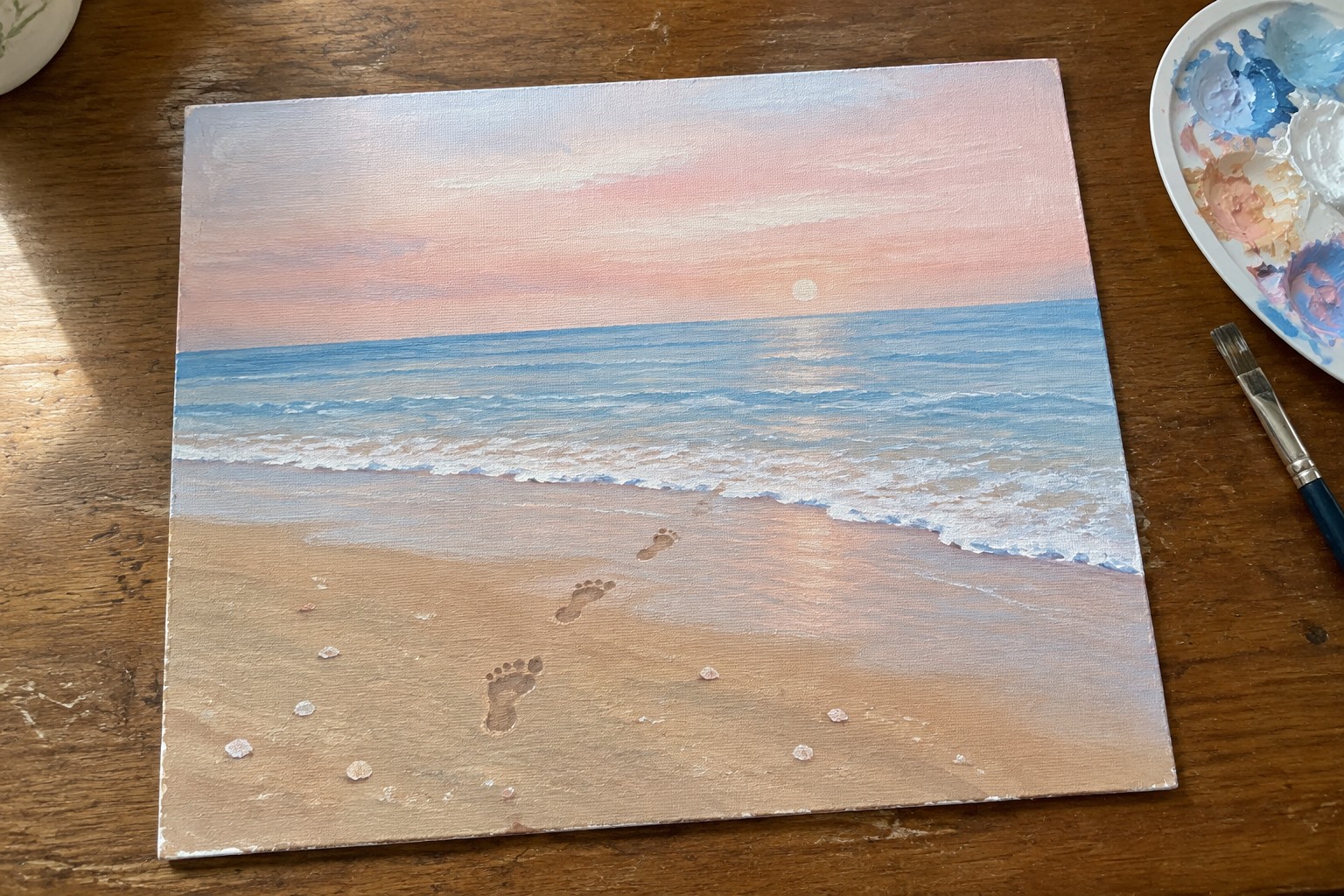
I have been painting beach scenes in acrylic for a while now.
The shoreline details are what I enjoy adding the most because they give the painting more interest.
I came up with these ideas from my own attempts and sketches.
They are simple enough to try without needing a lot of supplies.
You can use them as they are or change them to match your style.
Beach Sunset with Footprints in the Sand
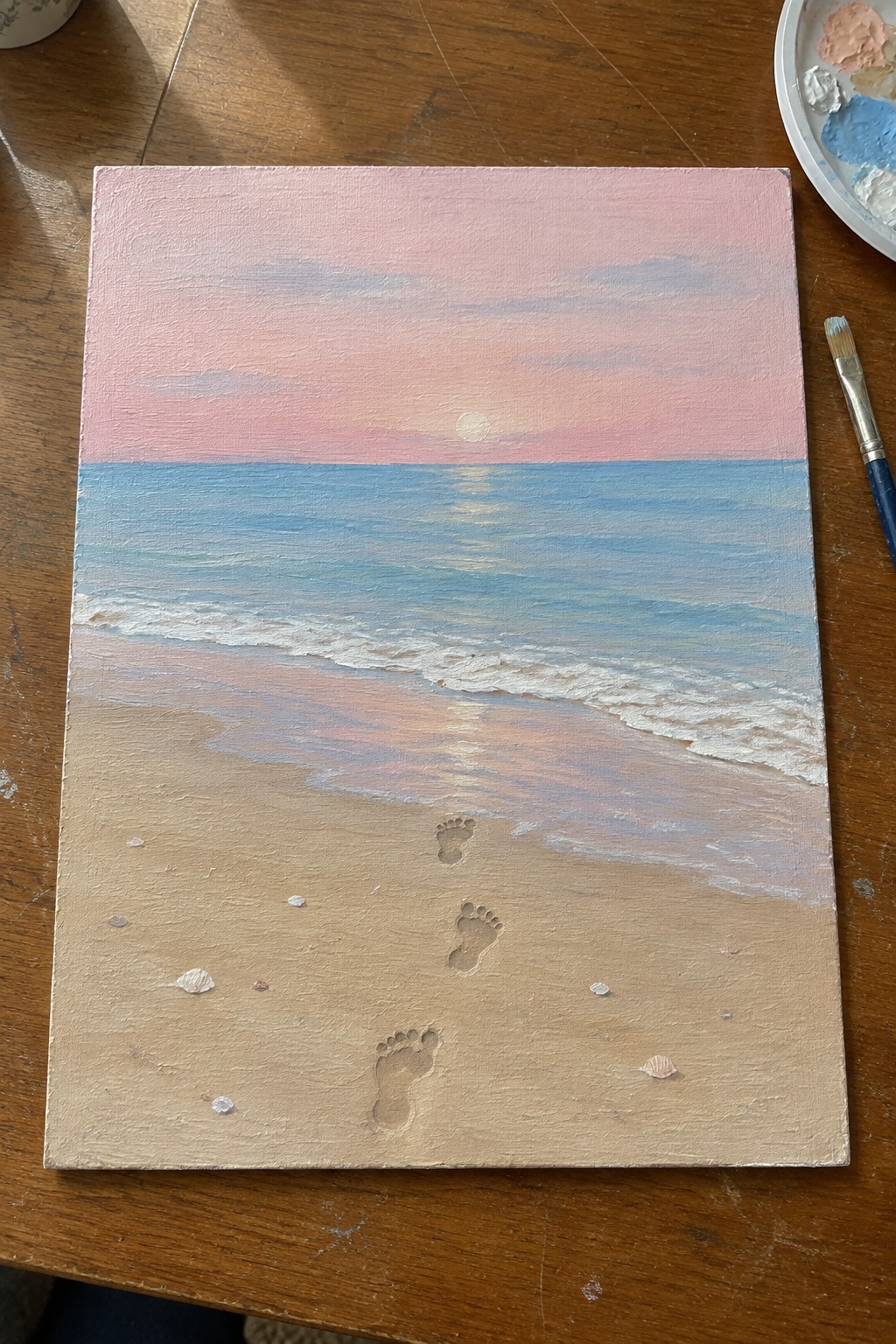
A beach sunset landscape makes a strong acrylic painting idea because it pairs a smooth color gradient across the sky with simple horizontal layers for the ocean and sand. The footprints create a clear focal path that leads the eye toward the water without adding clutter, while the scattered shells keep the foreground interesting but easy to paint. This approach fits the landscape category and relies on soft blending and restrained detail to hold the composition together.
What makes this idea useful is the clear separation of sky, water, and sand areas that lets you build the painting in stages. You can simplify it further by reducing the number of footprints or swap the shell shapes for different shoreline textures if you want variety. For practice or canvas decor, the balanced layout adapts well to different canvas sizes and gives you room to adjust the color intensity in the sky and reflections.
Sunset Beach Landscape with Curving Shoreline
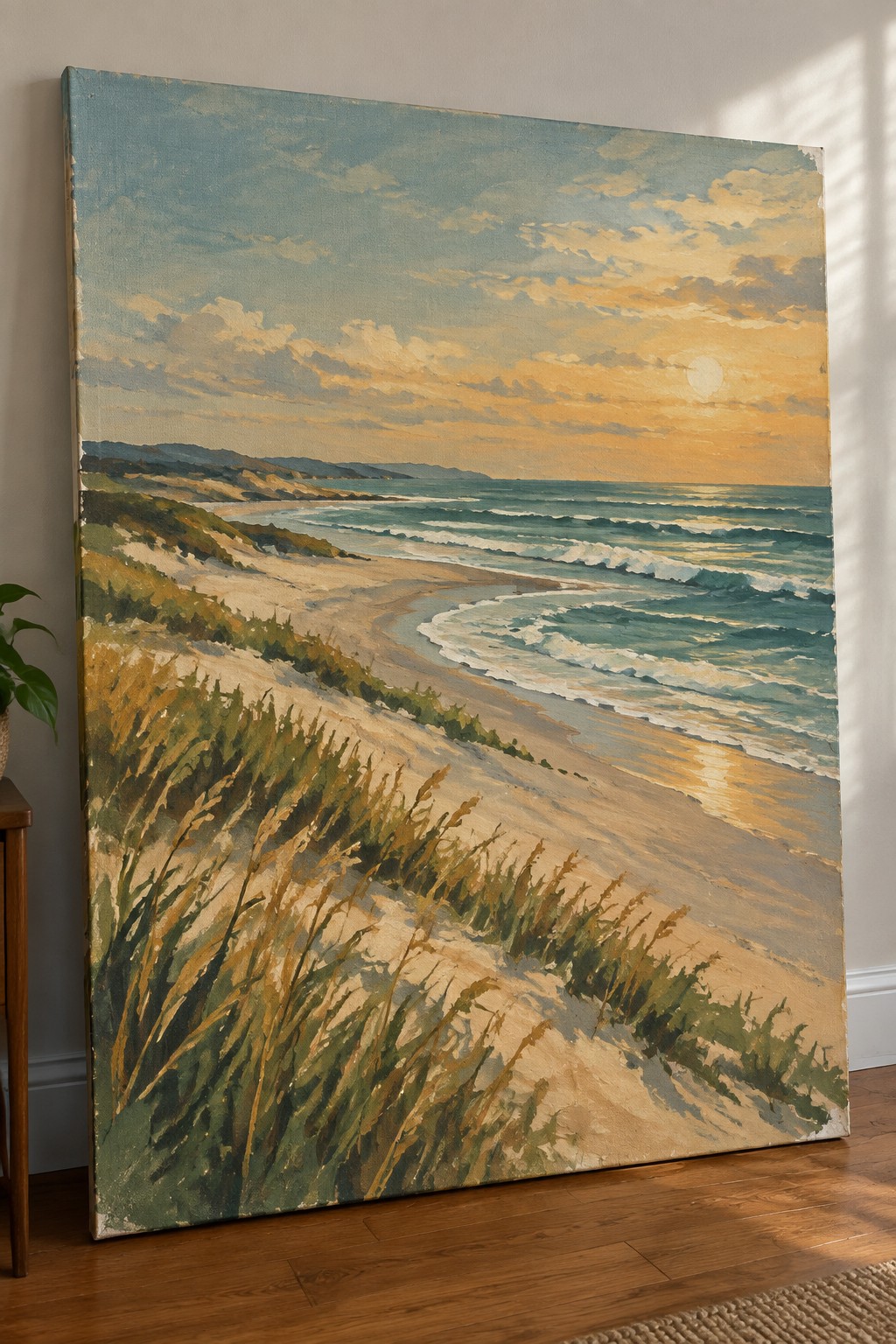
A sunset beach scene makes a strong acrylic landscape idea by letting the curving shoreline and wave patterns lead the eye across the canvas toward the horizon. The low sun creates a bright reflection on the water that naturally pulls focus, while the foreground grasses on the dunes add depth without crowding the composition. This fits the shoreline detail category because it balances open water with textured land edges.
What makes this idea useful is how the warm sky tones against cooler water give you an easy color contrast to work with on canvas. You can simplify the wave lines or vary the grass strokes to change the level of detail depending on your canvas size. For practice, this layout helps build skills in blending and light placement while still looking complete as wall art. The same setup adapts well if you shift the sun position or crop tighter on the dunes for a different feel.
Shallow Waterway Between Rocky Shoreline
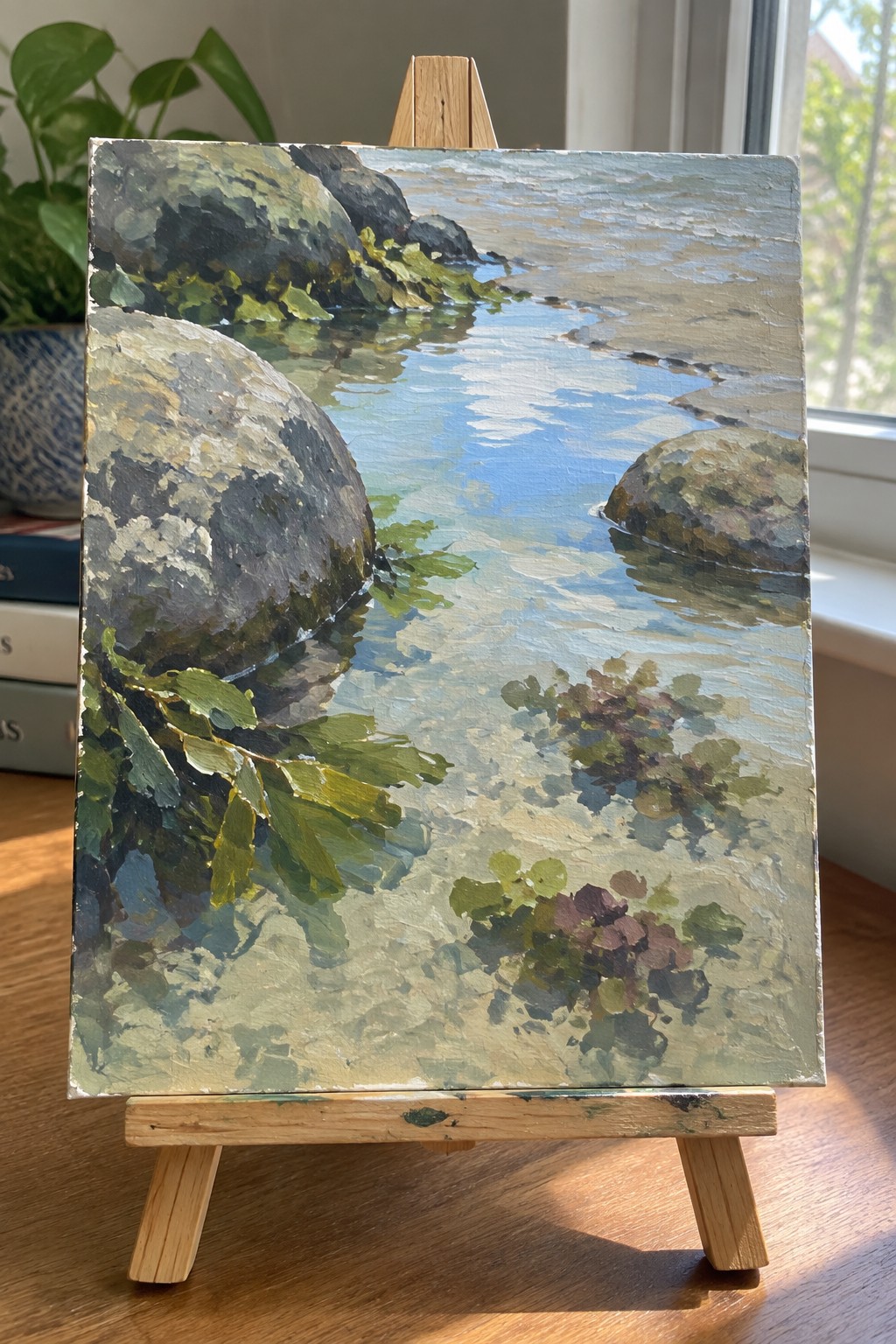
A shoreline landscape idea that focuses on a narrow channel of water flowing between large rocks, with soft sky reflections and patches of coastal plants along the edges. This acrylic approach uses the rocks as bold shapes to lead the eye through the scene while the water adds cool contrast against the warmer stone and sand tones. It works as a straightforward landscape painting where depth comes from color layering rather than heavy detail work.
What makes this idea useful is how the rocks can be blocked in first with broad strokes before adding smaller plant shapes and water highlights. You could adapt the palette by swapping the greens for autumn tones or simplifying the reflections if you want a faster version on a smaller canvas. For wall art, this layout stands out because the water path creates natural movement without requiring intricate brushwork everywhere.
Beach Scene with Footprints Leading to the Shore
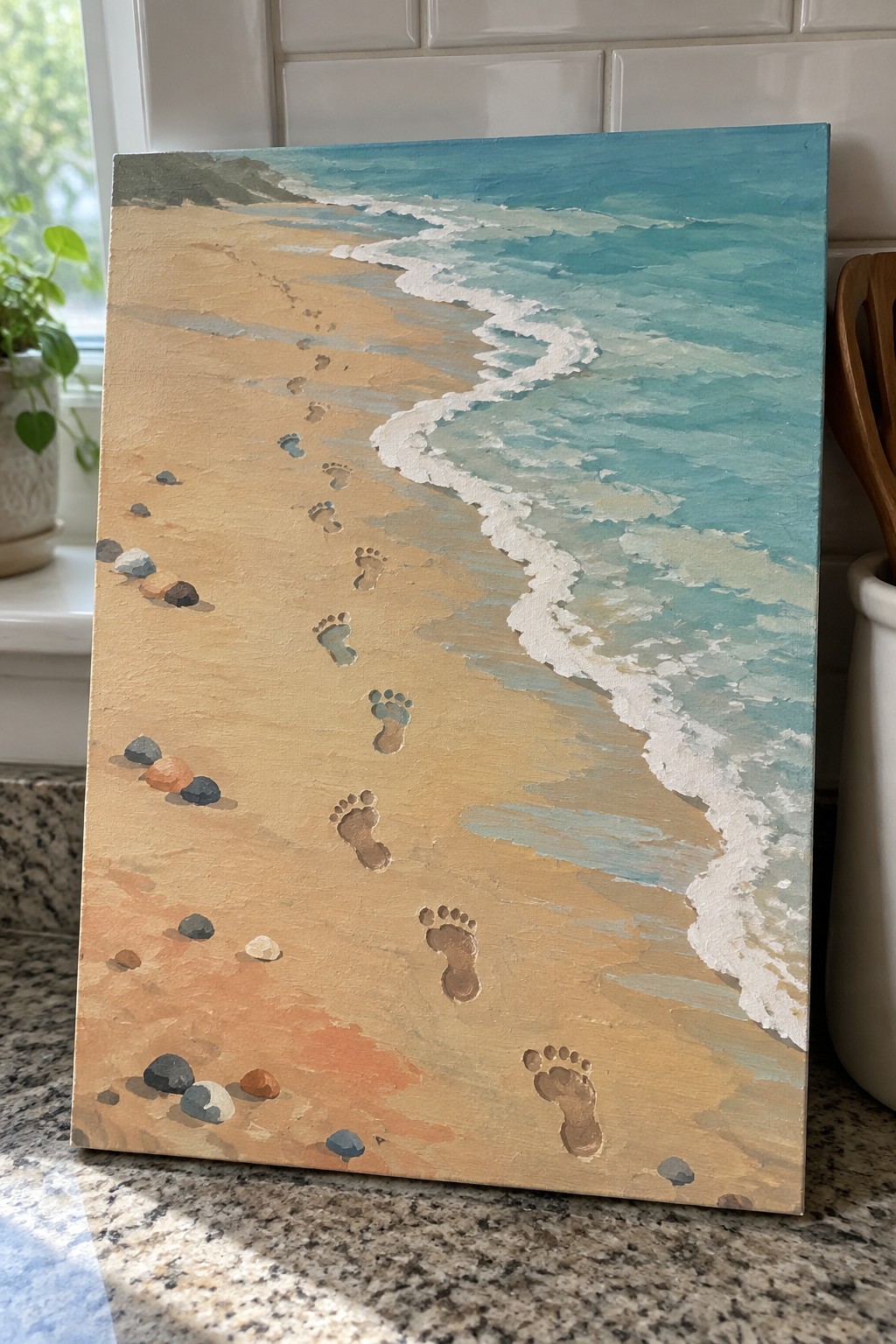
A beach landscape acrylic painting works well when the shoreline cuts diagonally across the canvas and footprints create a clear path through the sand. The idea centers on a simple contrast between warm sand tones and cooler water, with the wave line acting as a natural divider that guides the eye. This layout fits the landscape category and keeps the focus on the transition between land and water rather than on small details.
What makes this idea useful is how the footprints give the composition direction without needing complex shapes or extra elements. The color split between sand and sea makes it easy to block in large areas first, then add smaller marks like rocks or foam last. For wall art or canvas decor, the same layout can be adapted by changing the angle of the shoreline or using fewer footprints to keep the surface cleaner. This kind of painting stands out on Pinterest because the path invites the viewer to follow it into the scene.
Driftwood Focal Point on a Quiet Beach
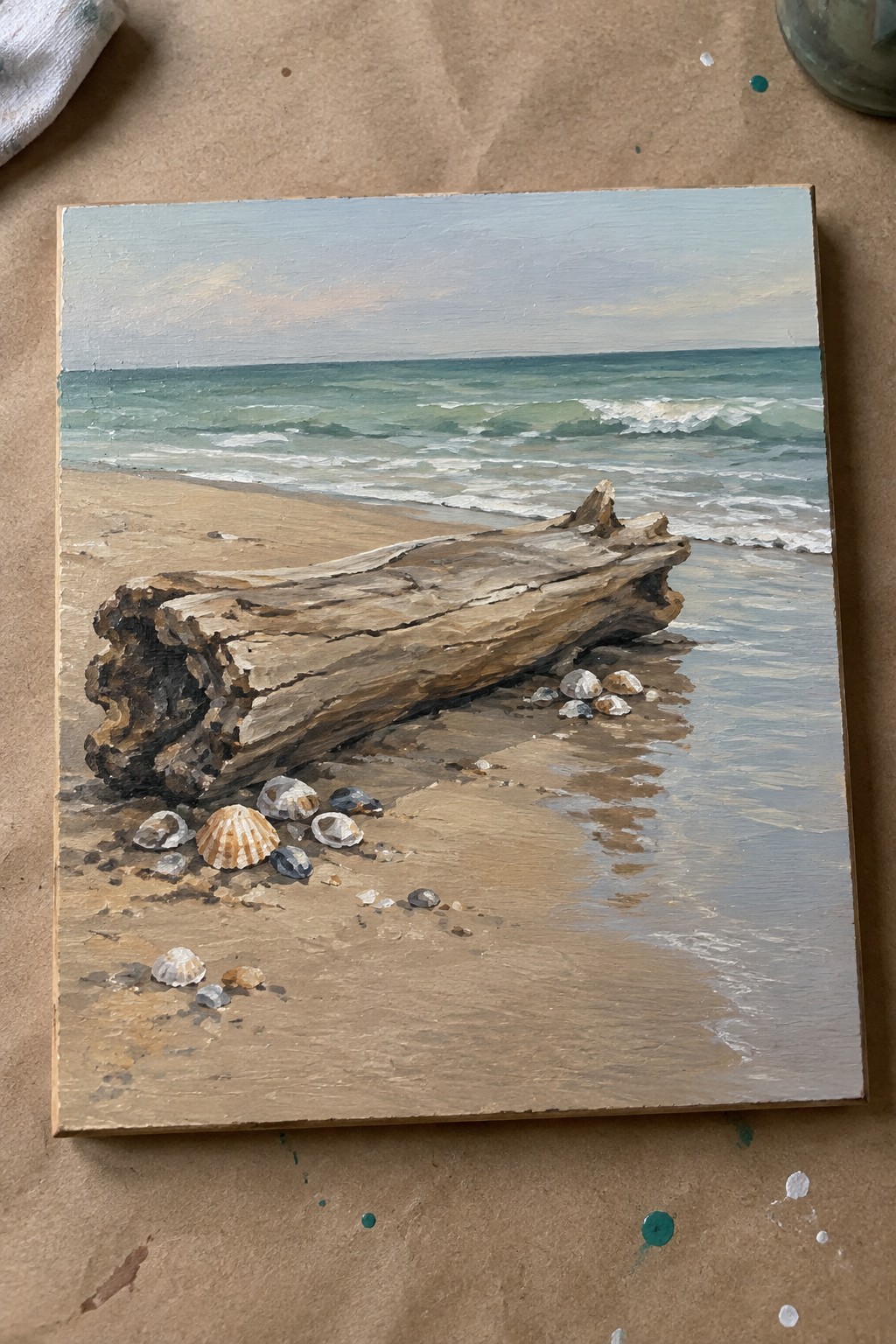
A strong shoreline landscape idea centers on a large piece of driftwood angled across the sand as the main subject, with clusters of seashells placed naturally around its base and gentle waves rolling in behind. This approach works well as a realistic acrylic landscape because the wood creates a clear focal point while the soft horizontal lines of the water and sky keep the background calm and balanced. The scattered shells add small points of interest without crowding the scene, and the slight diagonal of the driftwood helps guide the eye through the composition.
What makes this idea useful is how the main elements stay simple enough to paint in stages, starting with the sand and water before building up the wood texture and shell details. The limited color palette of muted greens, browns, and soft blues makes it easy to adapt for different times of day or to swap in different shell shapes. For canvas decor or practice work, this kind of shoreline setup stands out on Pinterest because the natural arrangement feels familiar yet has enough structure to hold attention. You can simplify it further by reducing the number of shells or keep the same layout and change the wave direction for variety.
Striped Towel Beach Scene with Umbrella
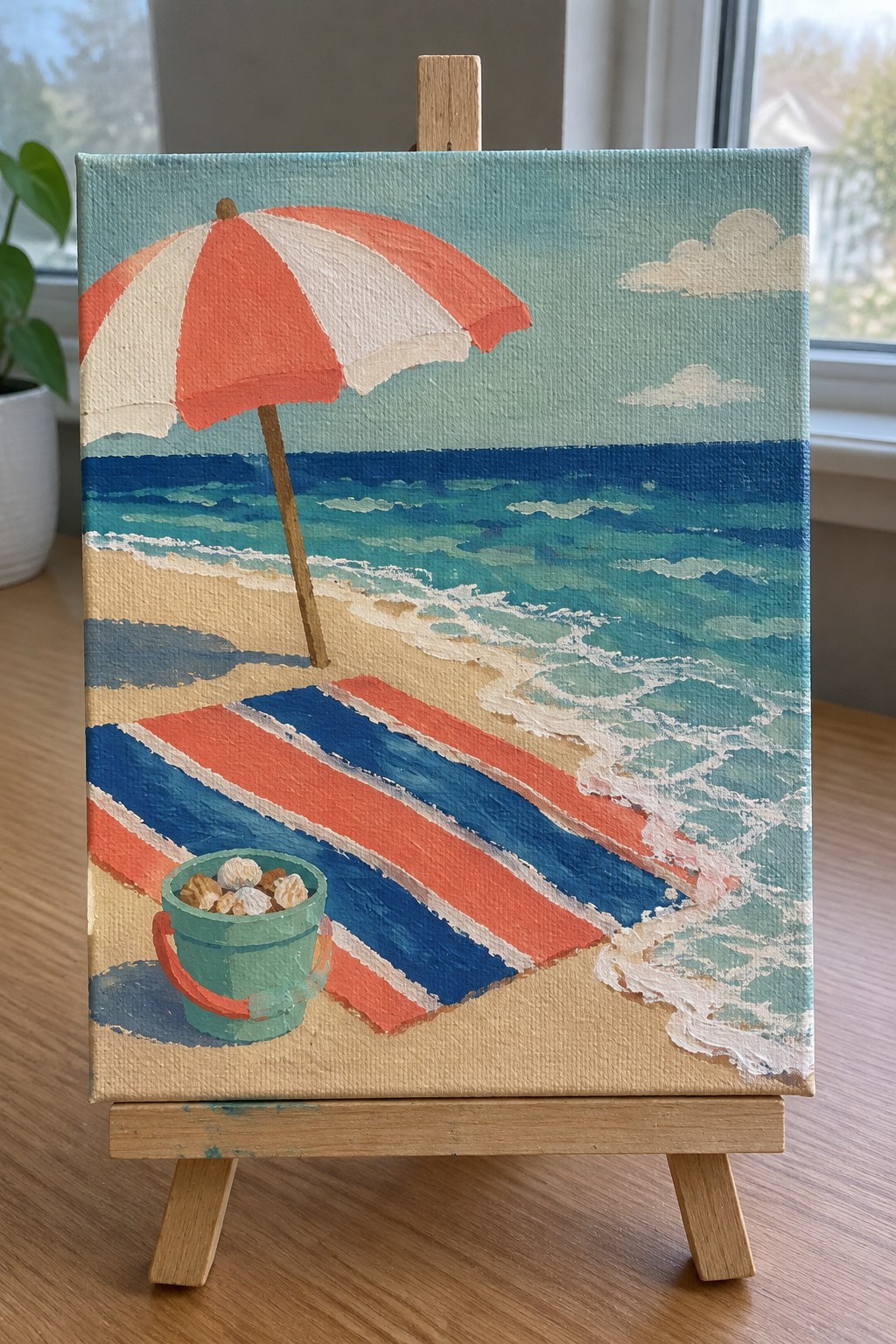
A beach landscape idea built around a bold striped towel as the main foreground element works well for acrylic because the stripes create instant structure and lead the eye toward the water. The composition uses a simple color split between warm sand tones and cooler ocean blues, with the umbrella and bucket of shells adding clear focal points without crowding the space. Horizontal brushwork on the waves and sky keeps the background light while the towel and bucket stay sharp in the lower half.
The bold stripes do a lot of the work here since they can be painted flat first and then adjusted with a few edge touches. This layout adapts easily by swapping the towel colors or adding more shells along the sand for variety. For canvas decor it stands out because the strong contrast between the red-blue stripes and the teal water reads clearly from a distance. You could simplify the wave details for a faster version or enlarge the towel to fill more of the frame if you want a closer crop.
Seascape with Central Light Reflection on the Waves

This acrylic painting idea focuses on a straightforward ocean horizon where soft bands of sky, water, and wet sand create a calm shoreline view. The vertical path of light running from the horizon down through the waves gives the composition a clear focal point without requiring intricate wave details. It fits the landscape category and works well because the horizontal layers keep the eye moving across the canvas while the light streak adds natural contrast.
What makes this idea useful is how the muted blue-gray palette stays easy to mix and build up in thin layers on a standard canvas. You could adapt it by shifting the colors toward warmer sunset tones or simplifying the waves into broader strokes for a faster session. For canvas decor, the balanced layout with the light path in the center makes it a strong choice for a medium-sized piece that still reads clearly from across a room.
Rocky Shoreline Waves in Acrylic
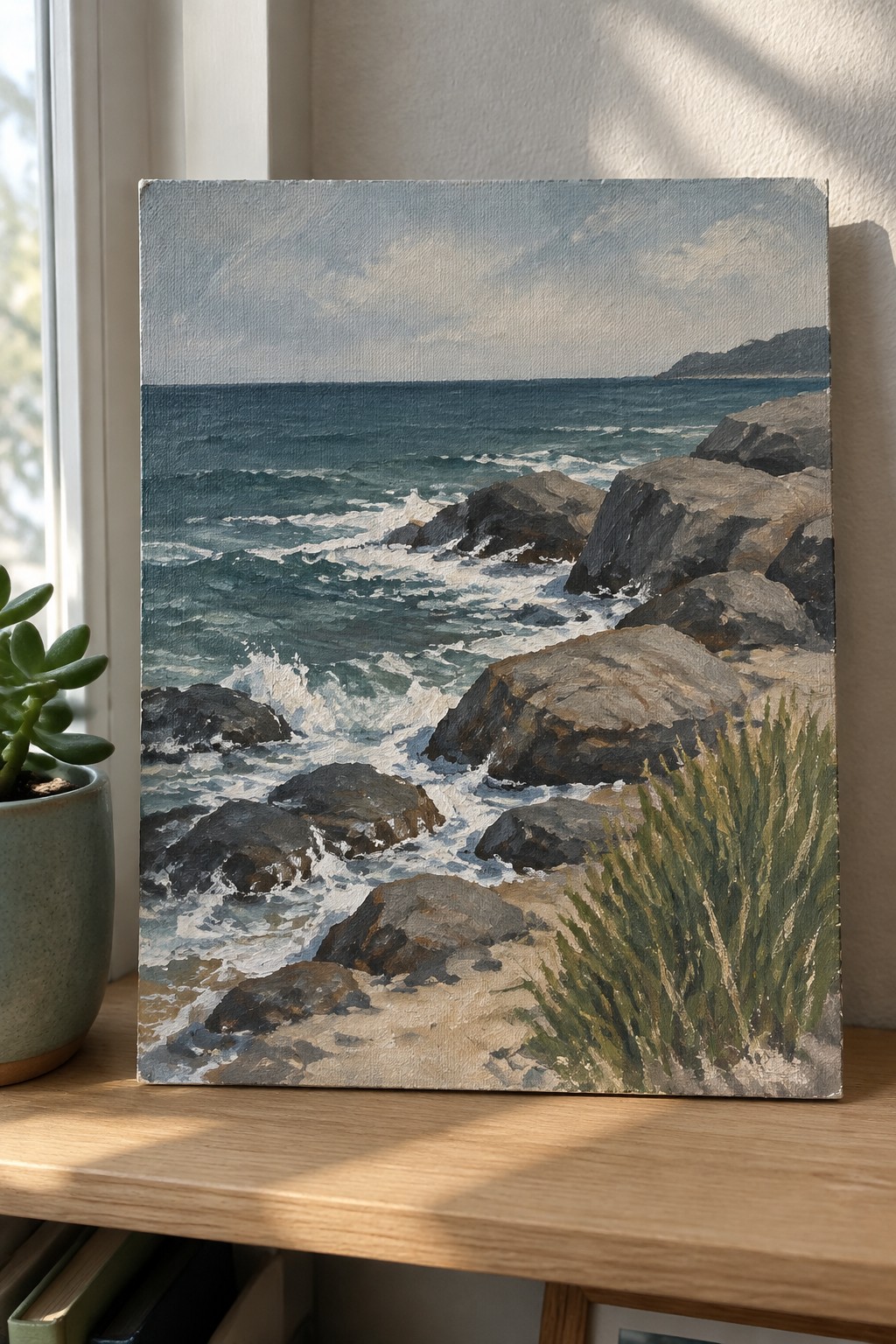
A coastal landscape built around waves hitting dark rock clusters makes a strong acrylic idea because the contrast between churning water and solid forms creates natural movement across the canvas. This approach fits the landscape category and relies on broad color blocks for the sea and sky with tighter brushwork reserved for the foam edges and rock surfaces. The layout keeps the horizon line high to emphasize the shoreline action while still leaving room for distant land shapes that add depth without extra detail.
What makes this idea useful is the clear separation between the active water and the static rocks, which helps control where the eye lands first. The color range of deep teal and gray tones stays manageable for mixing and can be adjusted easily if you want a brighter or more muted version. For practice, this kind of shoreline view works well on a standard canvas because the main shapes stay readable even when simplified, and the same setup can be reused with different wave heights or a lower horizon for variety.
Mini Canvases with Waves Sand Dollar and Sunset Views

Painting a few small square canvases lets you cover several beach shoreline ideas in one go. One shows waves breaking with white foam over wet sand, another centers a sand dollar on damp shoreline, and the third captures a sunset with the sun’s reflection stretching across the water. The square format keeps each scene contained while the shift from cool water tones to warm sky colors gives the set natural contrast.
What makes this idea useful is how the small size lets you finish each canvas quickly and practice different water effects without a big time commitment. You can swap the sand dollar for a shell or change the sunset palette to cooler tones if you want a different mood. For wall art these three pieces work well grouped together, and the simple shoreline layouts make it easy to adjust the wave lines or sky colors to match your own supplies.
Bold Sunset Waves With Layered Shoreline Curves
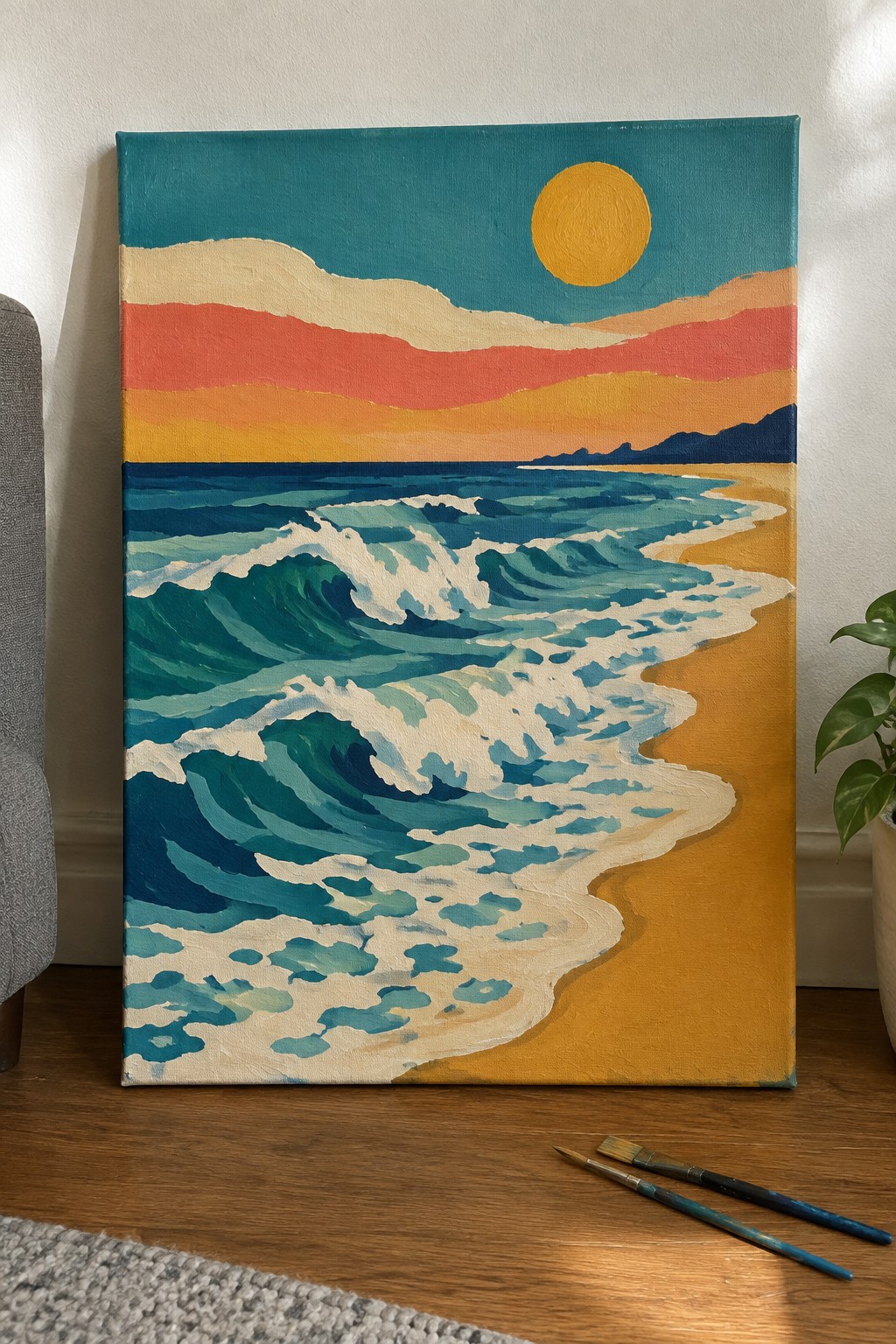
This acrylic painting idea centers on a shoreline landscape where stylized waves roll toward a sandy beach beneath a striped sunset sky. The composition relies on strong horizontal color bands in the sky paired with curved wave forms that create movement and lead the eye along the water’s edge. It works as a landscape piece that uses simplified shapes and clear color separation to keep the focus on the interaction between ocean and shore.
What makes this idea useful is the way the sky can be painted in flat layers first before adding the water details on top. The wave shapes are easy to scale up or down depending on canvas size, and the warm-to-cool color shift helps the painting stand out on a wall. For practice, this kind of subject lets you work on edge control between the sand and water without needing tiny details. You could swap the sun color or add a few more wave crests to make it your own.
Moonlit Reflection Over Calm Night Shore
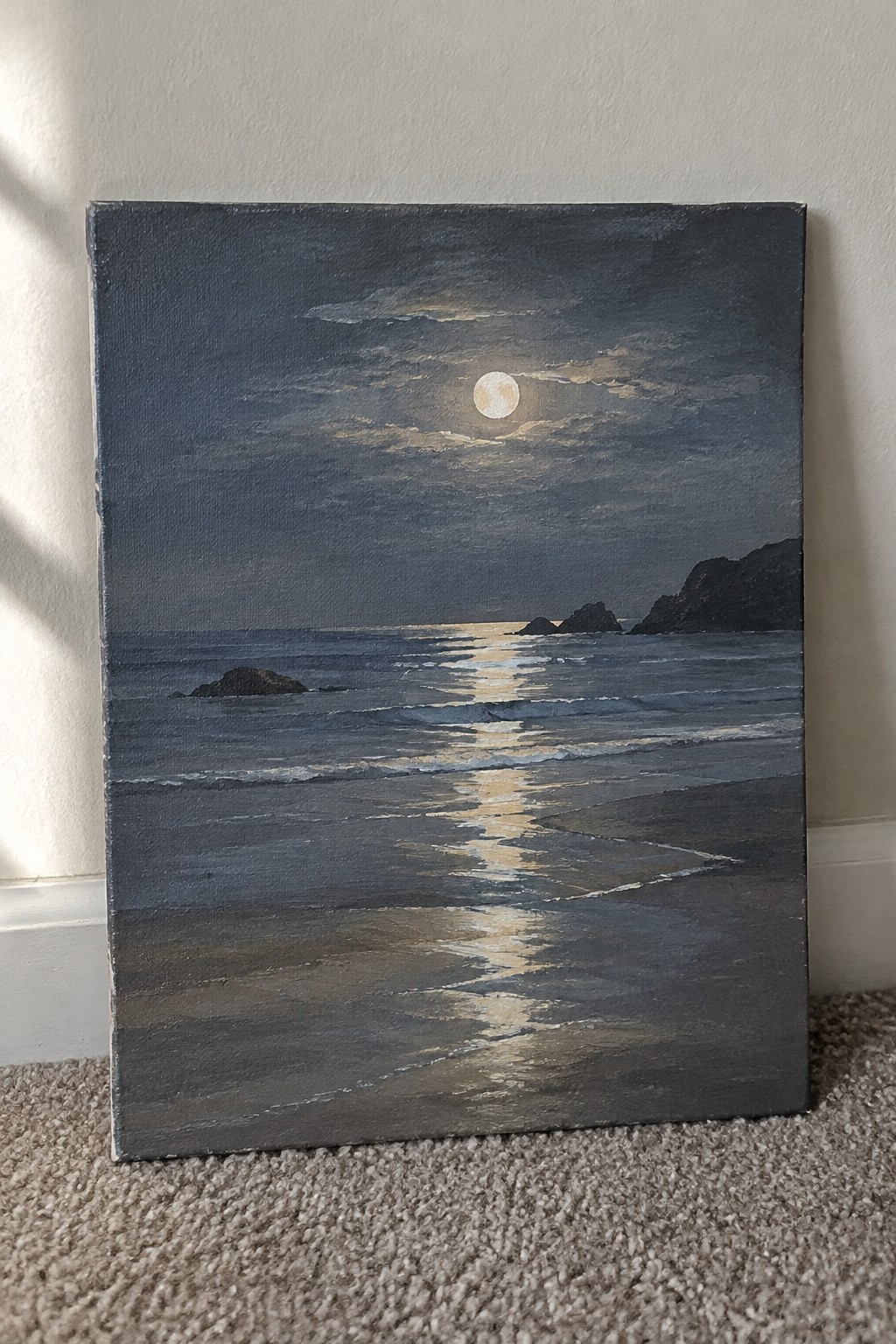
A night beach landscape idea built around a full moon and its bright reflection stretching across the water works well for acrylic because the strong light path acts as a natural focal line. The limited palette of deep blues, grays, and soft whites keeps the focus on contrast and simple blending rather than many colors or tiny details. Dark cliffs on one side balance the open water and help frame the reflection without crowding the scene.
What makes this idea useful is how the reflection simplifies wave painting into a few horizontal strokes with light accents on top. The same layout adapts easily by shifting the moon higher, changing the rock shapes, or extending the shoreline for different canvas sizes. For practice, this kind of night seascape helps build confidence with value changes and soft edges while still looking finished on a wall. It also photographs cleanly for Pinterest because the bright path stands out against the dark background.
Tropical Beach Landscape with Palm Shadows and Shoreline Waves
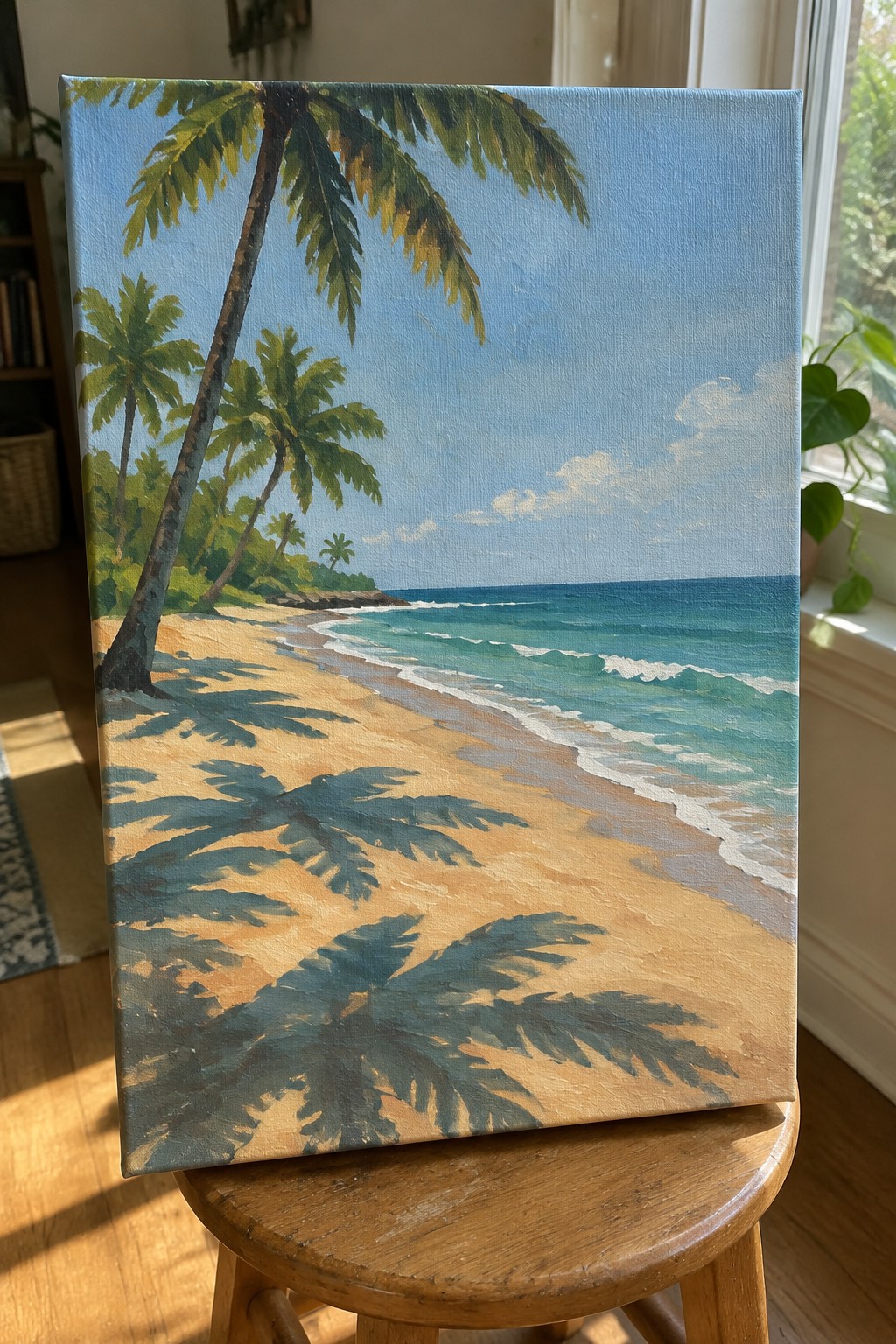
A tropical shoreline landscape works well as an acrylic idea because it relies on clear shapes and directional shadows to lead the eye from the foreground sand toward the distant water. Tall palm trees on the left cast strong blue-green frond shadows across the beach, while the curving shoreline and simple wave lines keep the ocean section easy to paint in layers. This approach fits the landscape category and uses contrast between warm sand tones and cooler water to hold the composition together.
What makes this idea useful is how the shadow shapes on the sand do most of the work for depth and interest without needing fine detail everywhere. You could simplify the palm fronds or change the wave size to match your canvas size while keeping the same layout. For practice, this kind of subject helps because the main elements stay recognizable even with loose brushwork on the leaves and horizon. The color split between sky, water, and sand also makes it straightforward to adjust for different lighting or to paint as a quick study series.
Seagull Standing in Shallow Shoreline Waves
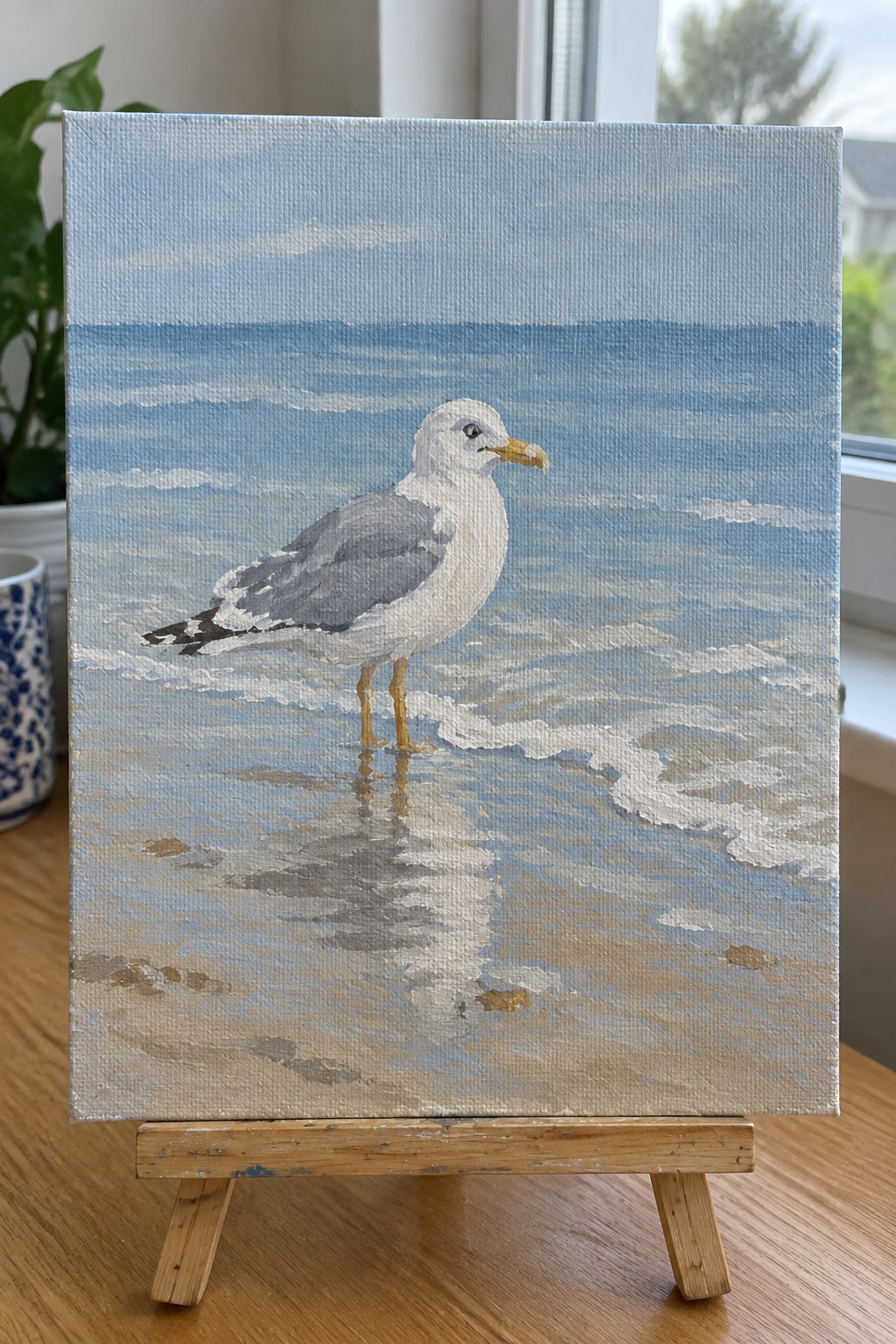
A single seagull placed slightly off-center in shallow water makes a strong focal point for a beach scene acrylic painting. The idea works by combining an animal subject with simple horizontal layers of ocean, sky, and wet sand. The reflection beneath the bird and the soft wave edges help tie the elements together without needing complex details.
What makes this idea useful is the clear focal point that guides the rest of the painting, so you can build the background in broad strokes first. You could easily swap the seagull for another shorebird or adjust the wave size to fit a larger or smaller canvas. For practice, this layout lets you work on water reflections and basic bird shapes in one session without getting lost in too many elements.
Curving Waves Along a Sandy Shoreline
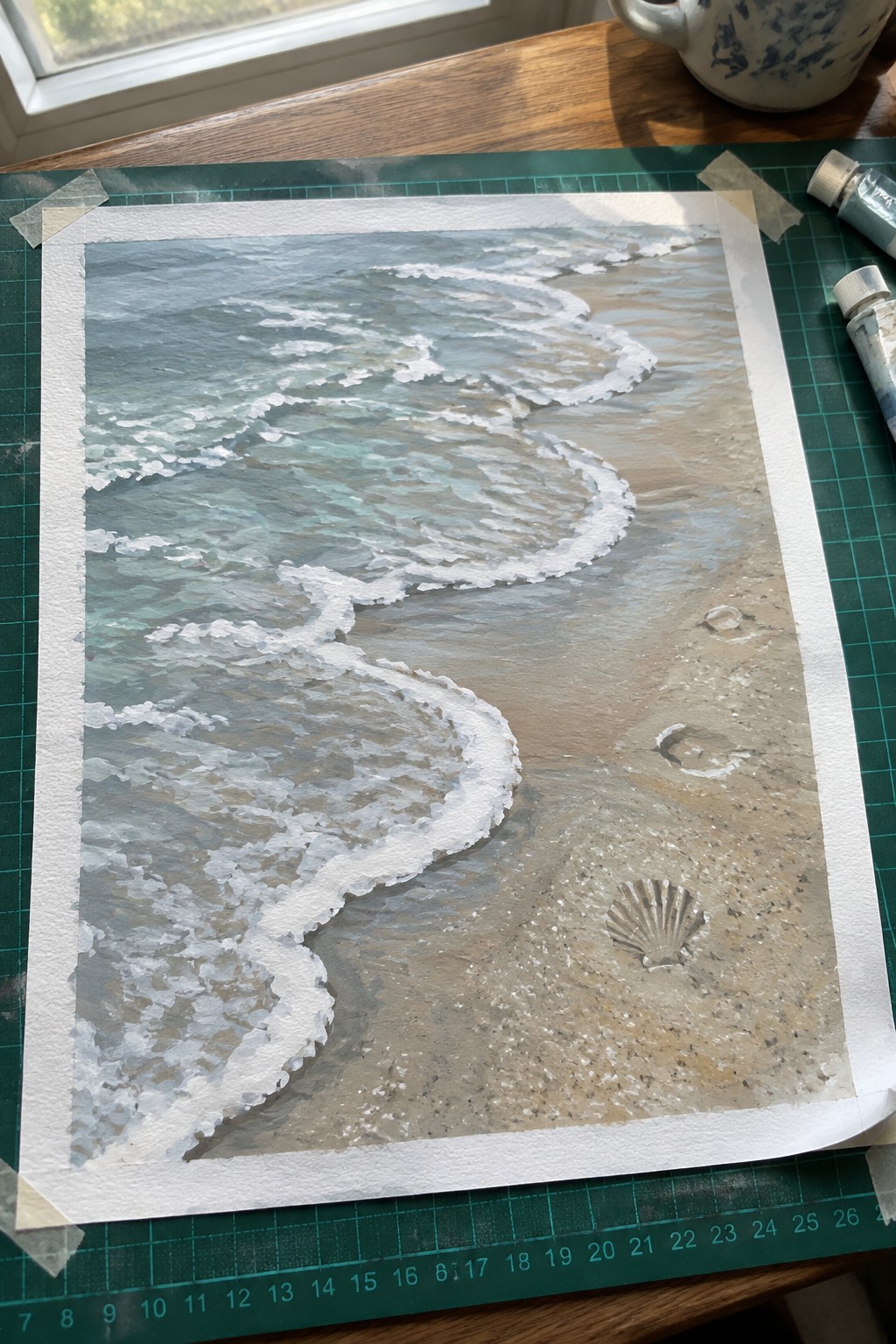
This acrylic painting idea focuses on the transition zone where ocean waves meet the shore, using repeated curving lines to show water movement across the sand. The composition balances the cooler tones of the sea against the warmer beach area, with the wave edges kept soft where they overlap and sharper where they break into foam. A single seashell near the bottom right serves as a clear focal point while the rest of the sand stays relatively open.
What makes this idea useful is the clear separation between water and sand areas, which lets you work in sections without needing perfect wet-on-wet blending across the whole canvas. The wave shapes can be adjusted in size or number depending on your canvas proportions, and the shell detail can be swapped for footprints or small rocks if you want a simpler foreground. This kind of shoreline view translates well to wall art because the horizontal flow fits standard canvas sizes and still reads clearly from a distance.
Central Sun With Radiating Rays Over Rolling Waves
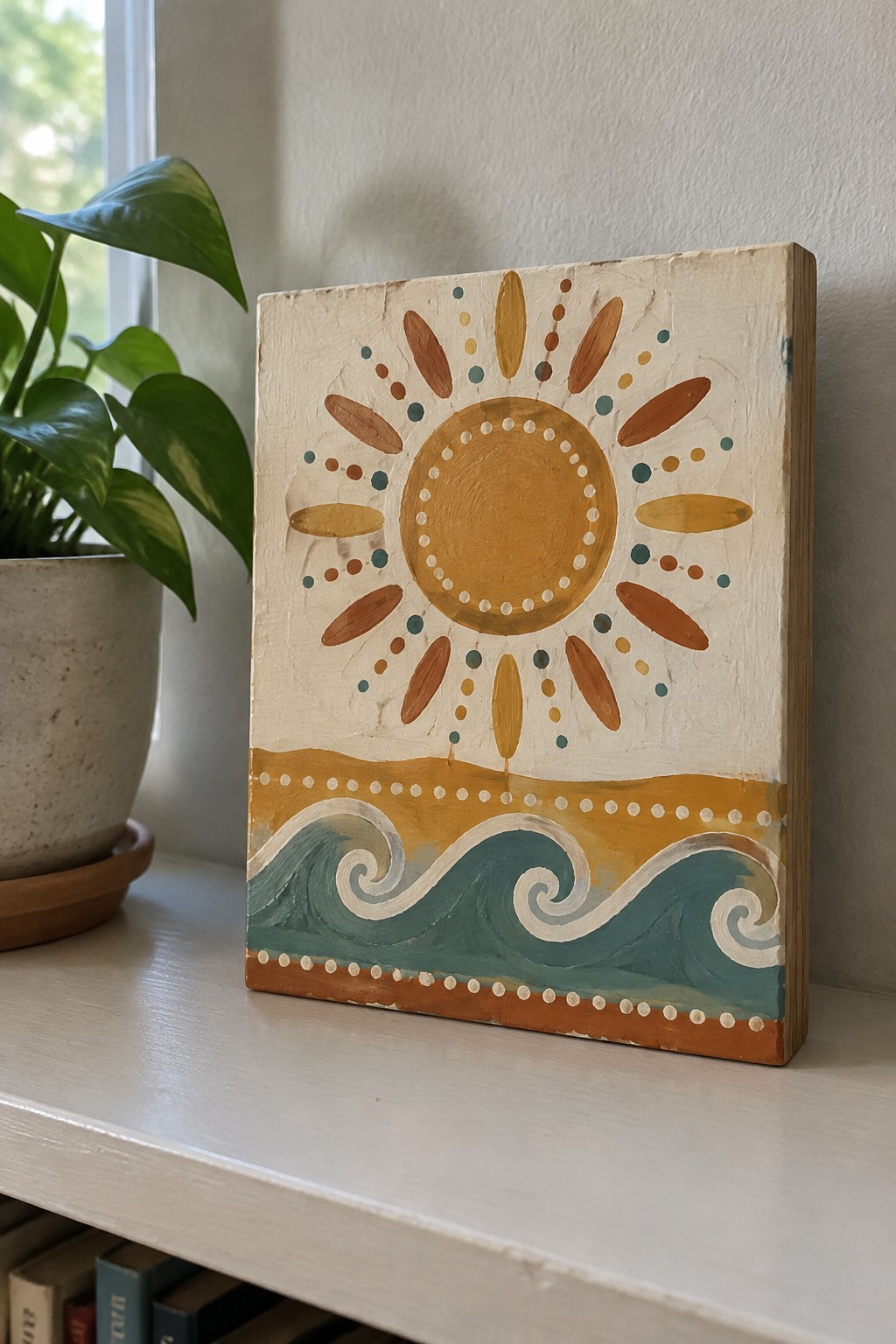
A sun-centered beach scene makes an effective acrylic idea by using a large circle as the main focal point with oval rays extending outward in warm tones. The layout splits the canvas into horizontal sections that move from the sun down through a dotted horizon band into layered wave shapes below. This approach relies on repeating curved forms and dotted lines to create movement without needing complex blending or fine details.
What makes this idea useful is how the clear separation between the sun area and the wave area lets you paint one section at a time. The repeating oval rays and wave curls are simple shapes that stay readable even if your brushwork is loose. You could swap the teal and brown palette for sunset colors or shrink the whole design onto a smaller panel for quick practice pieces.
Textured Shoreline with Scattered Shells and Footprints
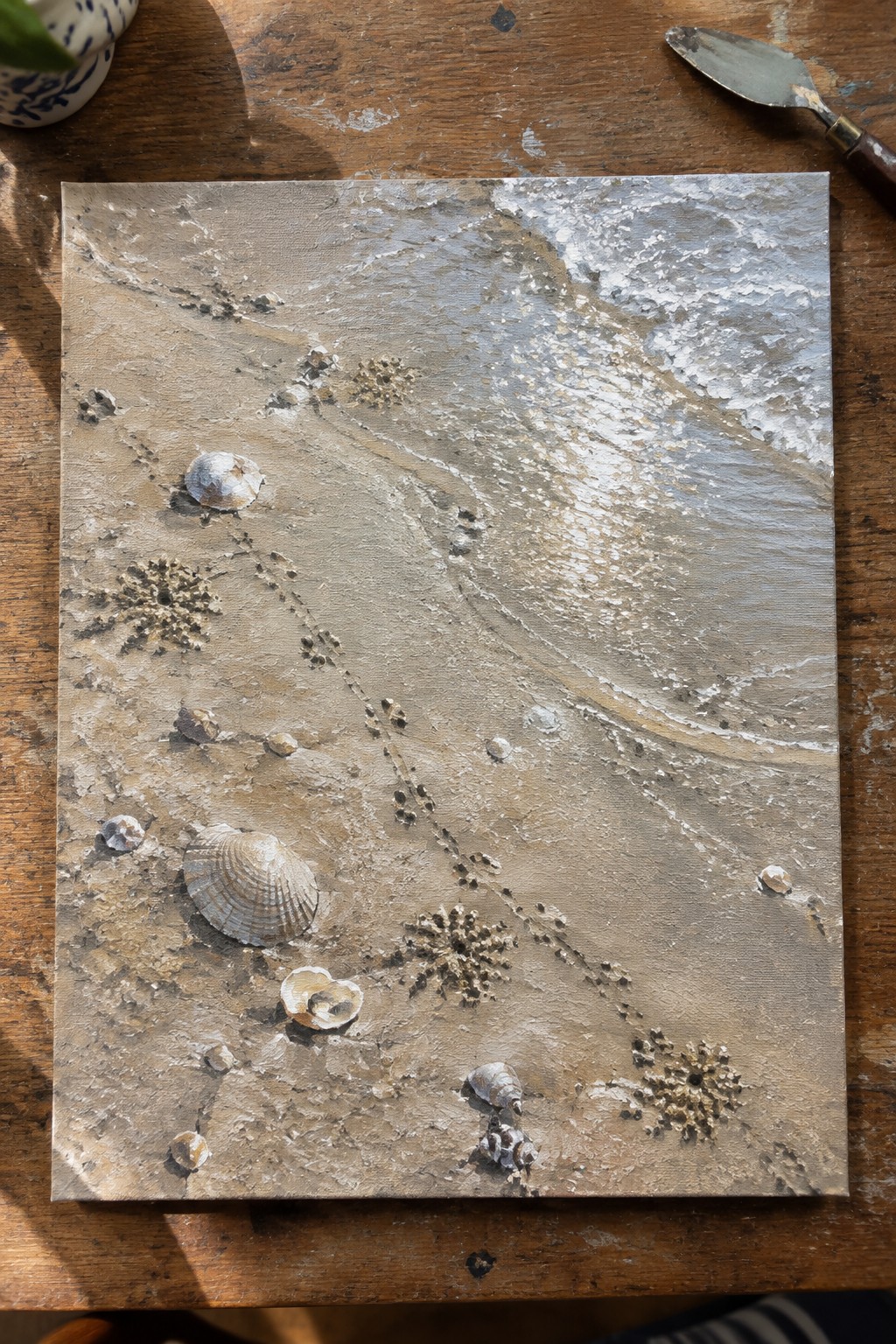
This acrylic painting idea centers on a close-up shoreline view that combines painted sand texture with real or molded shells placed along the surface. The layout uses a diagonal path of footprints leading toward the water, balanced by clusters of shells and areas of thick white foam. It fits the textured landscape category, where the focus stays on surface variation and material contrast rather than detailed drawing.
What makes this idea useful is the way the shells provide built-in focal points that reduce the need for fine brushwork. You could swap in different shell sizes or skip the footprints entirely to simplify the composition for a smaller canvas. For wall art, the raised textures give the piece more visual weight than a standard flat beach scene, and the neutral palette makes it easy to match with existing decor.
Sunset Over Rocky Tide Pools
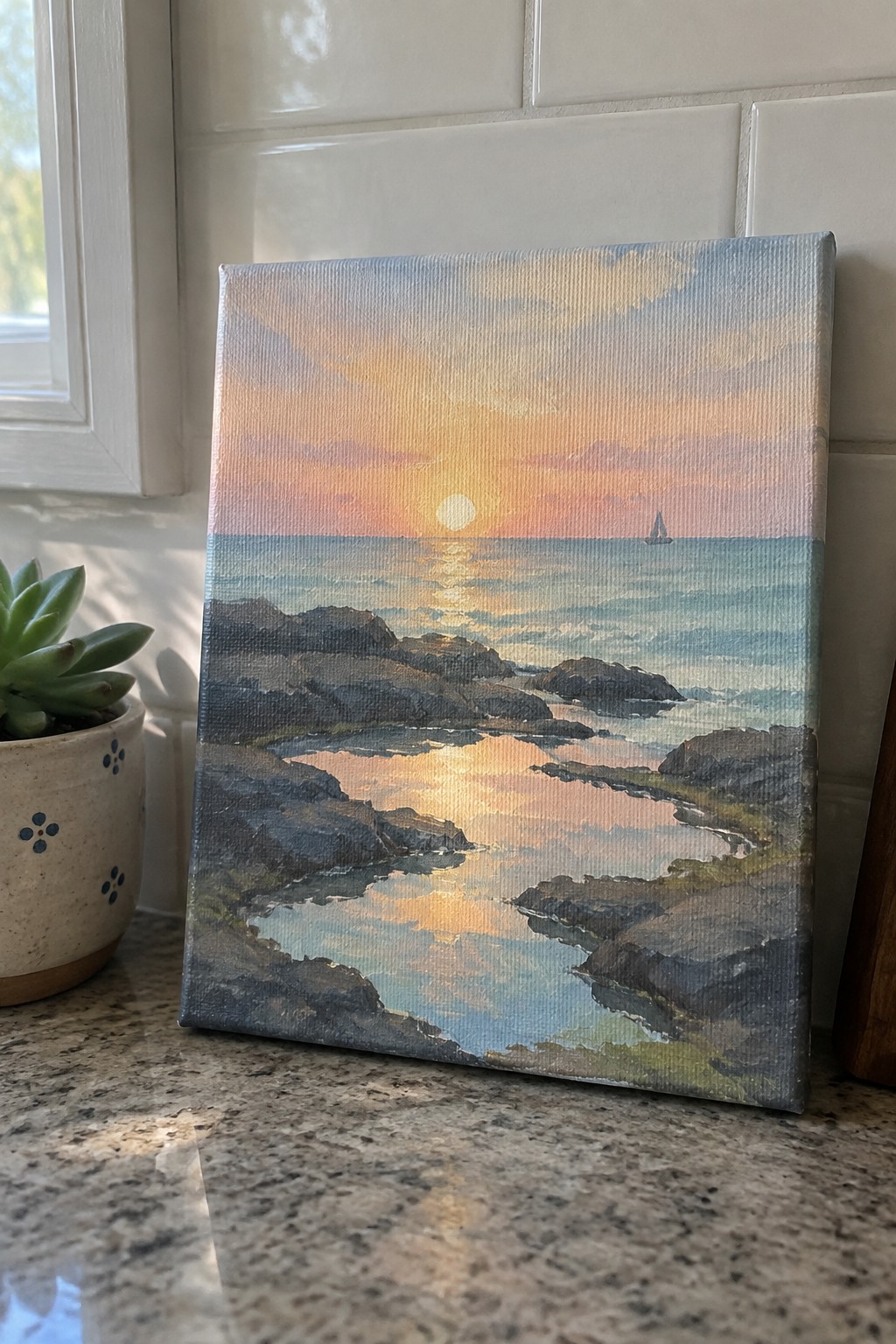
A sunset beach scene with dark rocks framing reflective pools of water makes a strong landscape acrylic idea. The glowing orange and pink sky meets the horizon with a bright sun reflection that leads the eye across the water toward a small sailboat. This setup works because the contrast between the cool rocks and warm sky creates natural depth without needing complex details.
What makes this idea useful is the clear horizon line and reflection path that guide the whole composition. You can simplify it by using fewer rocks or swap the sailboat for a different element if you want a more open feel. The sky gradient is easy to layer in acrylic and gives good practice with blending while still leaving room to add your own color choices. This kind of coastal layout stands out on Pinterest because the bright reflection gives instant visual pull.
Beach Scene with Kids Building a Sandcastle
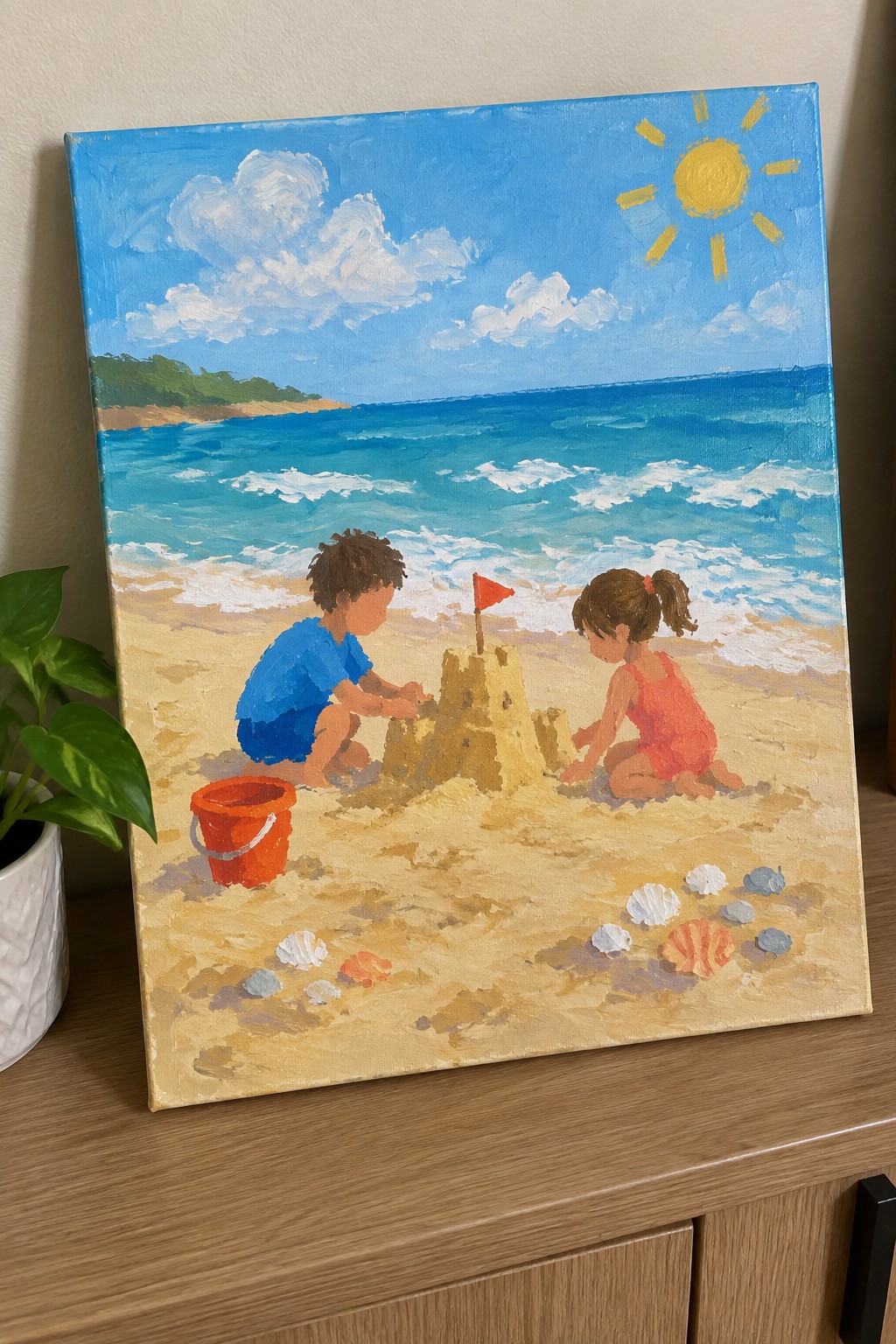
A beach scene centered on two children working on a sandcastle makes a strong acrylic painting idea because it combines a clear focal point with the simple lines of shoreline and water. The bright sky and ocean create a natural backdrop that keeps the composition balanced while the sand foreground gives room for small details like shells. This type of landscape idea works as cute wall art or seasonal summer decor since the layout stays easy to read from a distance.
What makes this idea useful is how the main shapes stay straightforward to block in with acrylic layers. You can paint the sky and water first then build the children and castle on top without needing fine detail everywhere. The warm sand against cool blues helps the subject stand out so the painting still reads well even if you simplify the waves or change the flag color. For canvas decor this layout adapts quickly if you want to add more shells or shift the sun position.
Soft Toned Beach Shoreline Landscape
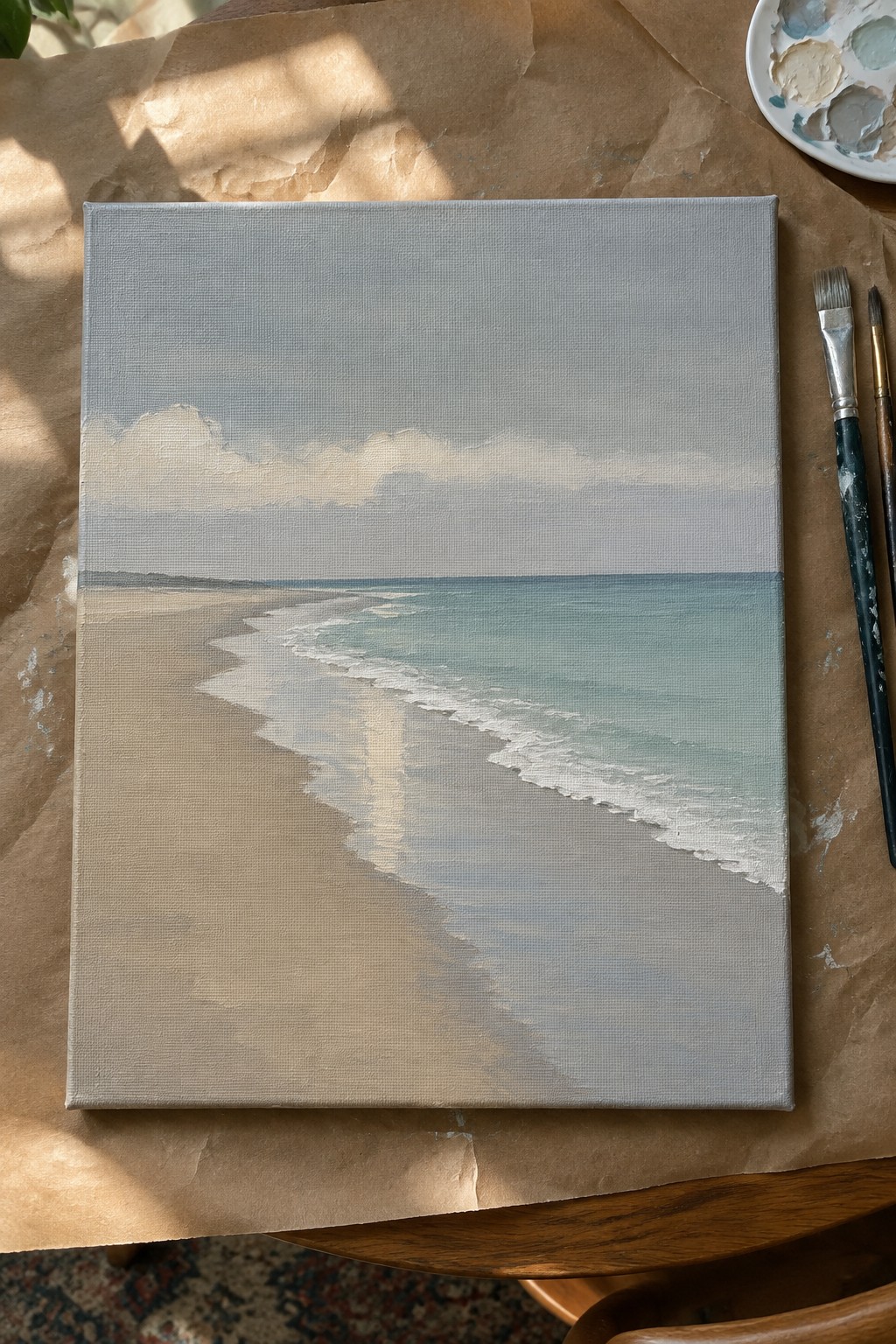
This acrylic painting idea focuses on a calm coastal landscape where a sandy shore meets gentle waves that curve diagonally toward the horizon. The composition relies on a restrained color palette of soft grays, muted blues, and beige tones, with the shoreline creating a clear visual path that draws the eye across the canvas. It works as a straightforward landscape piece because the simple horizon line and blended sky keep attention on the water’s edge rather than scattered details.
What makes this idea useful is how the limited palette reduces color mixing decisions while still giving room to practice smooth blending on the water and sky. You could adapt it by shifting the tones warmer for a sunset version or tightening the wave lines for more definition. For canvas art, this layout works especially well for beginners because the main shapes stay large and forgiving, and it translates cleanly to smaller sizes without losing impact.
Frequently Asked Questions
What supplies work best for painting shoreline details in acrylic beach scenes? Use heavy body acrylics for texture on sand and rocks, along with a mix of round and flat brushes in sizes 2 through 8. A palette knife helps build wave crests and wet sand edges. Choose a primed canvas or panel with at least 300 gsm weight to handle layering without warping. Keep a spray bottle handy to mist paints and extend working time for smooth blends along the shoreline.
How can I paint realistic foam and wet sand effects at the water’s edge? Start with a base layer of raw umber mixed with titanium white for damp sand, then add thin glazes of ultramarine blue where water meets shore. Use a dry brush technique with unbleached titanium and a touch of paynes gray to dab irregular foam shapes. Work quickly in thin layers, letting each dry slightly before adding highlights so the foam appears to sit on top of the receding wave.
Which color combinations create depth in beach shoreline paintings? Mix cerulean blue with a hint of phthalo green for shallow water near shore, then deepen with ultramarine and burnt sienna for deeper areas. For sand, blend yellow ochre, raw sienna, and touches of cadmium orange in varying ratios to show dry versus wet zones. Add subtle violet-gray shadows along the shoreline edge to separate land from water and give a natural receding effect.
What techniques help add fine details like shells and pebbles without overworking the painting? Apply a thin wash of transparent brown over the dried shoreline area, then lift out highlights with a clean damp brush for shell shapes. Use the tip of a small round brush loaded with thick white and a touch of yellow for pebble highlights. Work in stages, allowing drying time between details so edges stay crisp and the shoreline looks naturally cluttered rather than cluttered with paint.
How do I fix common issues like muddy colors when painting beach water and shore? Avoid mixing too many colors on the palette at once, and always start with the lightest values first before adding darker tones. If colors turn dull, wipe back with a clean damp cloth while wet or glaze over with a transparent mix once dry. Test mixes on a scrap canvas first to ensure water stays vibrant and sand retains its warm undertones along the shoreline.

Hi, I’m Camille.
I’m a self-taught painter and creative blogger with a soft spot for acrylic painting, color play, and all the little art ideas that make everyday life feel more inspiring.
I started this space because I’ve always believed painting should feel joyful, approachable, and a little personal. Some of my favorite pieces come from simple ideas, messy palettes, and evenings where I just felt like making something pretty.
Most of what I share begins with acrylic painting, but I also love exploring other mediums when creativity pulls me in a new direction. My goal is to collect and share painting ideas that feel fun, beautiful, and actually doable, whether the mood is calm and minimal or bright and playful.
This is a space for inspiration, experimenting, and enjoying art without overcomplicating it.