
Have you ever wondered why your brakes feel spongy or unresponsive? It might be due to insufficient vacuum in your brake booster. This little component plays a big role in your vehicle’s braking system, making it crucial to understand how much vacuum it really needs to function properly.
You’re not alone if you’ve faced issues with braking performance. Many drivers experience this frustration, often without realizing that the solution might be as simple as checking the vacuum levels. In this article, you’ll discover the ideal vacuum requirements for brake boosters and learn how to troubleshoot common problems. Understanding this can help you maintain your vehicle’s safety and performance, giving you peace of mind on the road.
Key Takeaways
- Brake Booster Function: Brake boosters amplify the force applied to the pedal, leading to improved braking efficiency crucial for vehicle safety.
- Optimal Vacuum Levels: Most vacuum brake boosters require a vacuum level between 18-27 inches of mercury (inHg) for effective operation.
- Signs of Vacuum Issues: Indicators of insufficient vacuum include a soft brake pedal, longer stopping distances, hissing noises, and engine stalling during braking.
- Factors Affecting Vacuum: Engine performance, altitude, vacuum leaks, and brake booster design influence the necessary vacuum levels for optimal performance.
- Regular Testing: Regularly test vacuum levels using a vacuum gauge to ensure the brake booster operates effectively, promoting safe driving.
Understanding Brake Boosters
Brake boosters play a critical role in enhancing your vehicle’s braking efficiency. They amplify the driver’s input, making braking easier and safer. Understanding brake boosters is crucial for maintaining optimal braking performance.
What Is a Brake Booster?
A brake booster is a device that increases the force applied to the brake pedal, allowing for improved stopping power. It works by utilizing vacuum pressure from the engine, which assists in pushing the master cylinder and engaging the brake system. In modern vehicles, you’ll find either vacuum or hydraulic brake boosters, both designed to enhance braking effectiveness.
- Vacuum Brake Boosters:
- Use engine vacuum for operation.
- Common in most passenger vehicles.
- Require a minimum vacuum level, typically 18-20 inches of mercury (inHg), to function effectively.
- Hydraulic Brake Boosters:
- Use hydraulic pressure, usually from the power steering system.
- Often found in applications like trucks or SUVs.
- Don’t rely on engine vacuum, making them suitable for vehicles with turbochargers or superchargers.
- Electric Brake Boosters:
- Operate independent of the engine vacuum and use electric actuators.
- Provide precise control and are becoming more common in electric vehicles.
- Offer flexibility, especially in hybrid and electric powertrains.
The Importance of Vacuum
Vacuum plays a vital role in brake boosters, directly affecting your vehicle’s braking performance. Understanding how vacuum functions in this context helps in maintaining safety and efficiency.
How Vacuum Works in Brake Boosters
Vacuum operates by creating a pressure difference that amplifies the force applied by your foot on the brake pedal. In most vehicles, the engine produces vacuum in the intake manifold. This vacuum enters the brake booster when you press the brake. The booster then uses this vacuum to pull a diaphragm, which multiplies the force applied to the brake master cylinder. Without sufficient vacuum, the brake system won’t function as designed, resulting in increased pedal effort and longer stopping distances.
Benefits of Adequate Vacuum Levels
Adequate vacuum levels ensure optimal brake performance. Efficient vacuum enhances braking response and reduces the effort needed to stop your vehicle. For example, a vacuum level around 18 to 22 inches of mercury (inHg) supports most hydraulic brake boosters. This level allows for smoother braking action, helping to maintain control during sudden stops. Moreover, maintaining proper vacuum prevents premature wear on brake components, leading to fewer repairs and longer-lasting parts.
How Much Vacuum Is Needed for a Brake Booster?
A brake booster operates effectively with a specific range of vacuum levels. Understanding these levels ensures optimal braking performance and safety while driving.
Recommended Products

Greatly Reducing Noise: The 12V Electric Vacuum Pump is not always running, it will do intermittment work according to the degree of vacuum to reduce noise. At -0.004MPA to -0.006MPA, the switch is turned on and the vacuum pump is running.The pump is designed to kick on when the vacuum falls below -0.04 MPA and kicks off around -0.06 MPA

【NEW DESIGN delivering 25" of vacuum】If you have an engine that does not produce at least 15" of vacuum at idle , then your brake pedal could be hard and you have no brakes... This pump will solve your problem.The pump operates when vacuum drops below 18 inches and turns off when over 25 inches, Ideal for vehicles with low vacuum such as supercharged, turbocharged or big cam engines

【Factory directly sale】Saving your cost,Professional tracking product quality and after-sales service.
Recommended Vacuum Levels
Most automotive brake boosters function best with vacuum levels between 18 and 27 inches of mercury (inHg). This vacuum range provides sufficient assist to the brake system. At less than 18 inHg, the boost diminishes, leading to increased effort needed on the brake pedal. Maintaining this vacuum range is crucial for enhancing braking response and minimizing driver fatigue.
Factors Influencing Vacuum Requirements
Multiple factors influence the vacuum requirements for brake boosters:
- Engine Performance: An engine running efficiently produces adequate vacuum. When engine performance declines, such as during high throttle conditions, vacuum levels may drop, affecting braking assistance.
- Altitude: Higher altitudes result in thinner air. This decrease in atmospheric pressure may reduce available vacuum, which impacts the brake booster’s efficiency.
- Vacuum Leaks: Any leaks in the vacuum system cause a drop in pressure. Ensure all hoses and connections are tight and free from damage to maintain the necessary vacuum levels.
- Brake Booster Design: Different vehicles feature various designs of brake boosters. Some may require higher or lower vacuum levels based on their specifications.
By monitoring these factors, you can ensure your brake booster operates within the recommended vacuum range, ensuring better braking performance.
Diagnosing Vacuum Issues
Diagnosing vacuum issues is essential for maintaining effective brake performance. Recognizing the signs of insufficient vacuum and testing vacuum levels can help identify problems early on.
Recommended Products

Complete Package Contents: This package contains 2 check valves matched with 2 rubber grommets, compatible with part numbers #179-1266 and 18022219
The vacuum pump is made of high-quality aluminum alloy materials, which are wear-resistant and built for long-term use.

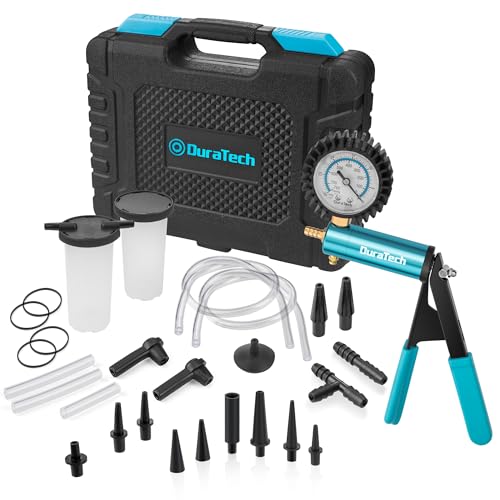
Professional Fuel Pump Pressure & Vacuum Tester Kit: This comprehensive kit is designed for testing fuel delivery pressure to the engine, making it an essential tool for diagnosing worn or defective parts. It is also highly effective in diagnosing various engine issues such as leaking valves, incorrect timing, leaky intake manifolds, and clogged mufflers.
Signs of Insufficient Vacuum
You can spot insufficient vacuum through several indicators.
- Soft Brake Pedal: A consistently spongy or soft brake pedal may signal low vacuum levels, reducing braking effectiveness.
- Longer Stopping Distance: Notice if your vehicle requires more distance to stop than before; it suggests that the brake booster isn’t receiving enough vacuum.
- Hissing Noise: Listen for a hissing sound coming from the engine bay; it often indicates a vacuum leak affecting the brake booster.
- Stalling Engine: If your engine stalls or runs roughly during braking, it could mean the brake booster is struggling due to inadequate vacuum supply.
Testing Vacuum Levels
Testing vacuum levels is straightforward and can be done with simple tools.
- Gather Tools: Obtain a vacuum gauge, hose, and wrenches.
- Locate Test Port: Find a vacuum source on your engine, such as an intake manifold or brake booster.
- Connect the Gauge: Attach the vacuum gauge in line with the hose.
- Start the Engine: With the engine running, observe the gauge.
- Read the Measurement: Ideally, you should see readings between 18 and 27 inHg. If the level falls below this range, inspect for leaks or performance issues.
By monitoring these signs and testing vacuum levels regularly, you can ensure your brake booster works effectively, promoting safety while driving.
Conclusion
Understanding the vacuum needs for your brake booster is vital for safe and efficient driving. Keeping those levels between 18 and 27 inches of mercury ensures your brakes respond effectively when you need them most.
It’s important to stay vigilant about factors that can impact vacuum performance. Regular checks and maintenance can go a long way in preventing issues that might compromise your braking system.
By monitoring these elements and addressing any concerns promptly, you can enjoy a smoother and safer driving experience. So keep an eye on your brake booster’s vacuum levels and drive with confidence.
Frequently Asked Questions
What is the role of a brake booster?
A brake booster enhances braking efficiency by using vacuum pressure to amplify the driver’s input on the brake pedal. This system reduces the effort needed to apply the brakes, making it easier and safer to stop a vehicle.
What are optimal vacuum levels for a brake booster?
For optimal brake performance, vacuum levels should be maintained between 18 and 27 inches of mercury (inHg). Staying within this range ensures that the brake booster functions effectively.
What factors affect vacuum levels in a brake booster?
Several factors can influence vacuum levels, including engine performance, altitude, vacuum leaks, and the design of the brake booster. Each of these elements can impact the overall braking response.
How can I diagnose a vacuum issue in my brake booster?
Common signs of a vacuum issue include a soft brake pedal, longer stopping distances, hissing noises, and engine stalling. If you notice any of these, it’s essential to investigate further.
How do I test the vacuum level in my brake booster?
To test the vacuum level, use a vacuum gauge to measure the reading at the brake booster. Ensure the level falls within the recommended range of 18 to 27 inHg for effective operation.
Why is maintaining my brake booster important for safety?
Maintaining your brake booster is crucial for safe driving, as optimal function improves braking response and minimizes driver fatigue. Proper maintenance can enhance overall safety while on the road.
