
Key Takeaways
- Identify Causes: Grease build-up on kitchen floor tiles is often due to cooking spills, steam, foot traffic, and infrequent cleaning.
- Establish Routine: Regular cleaning prevents stubborn stains, maintains tile appearance, enhances hygiene, and prolongs tile life.
- Gather Supplies: Essentials for cleaning include a mop, bucket, degreaser, scrub brush, sponge, gloves, and a broom for initial debris removal.
- Follow Steps: Clean effectively by sweeping, selecting the right cleaning solution, applying techniques, and rinsing thoroughly to avoid residue.
- Daily Maintenance: Implement daily routines like sweeping, immediate spill cleanup, and using a fabric softener solution to repel dirt and grease.
- Tackle Stains: Use baking soda paste, commercial degreasers, or vinegar solutions to address stubborn stains effectively.
Ever walked into your kitchen and cringed at the sight of greasy floor tiles? It’s a common struggle, especially after cooking up a storm. Those stubborn stains can make your kitchen feel less inviting, and nobody wants that.
Understanding Greasy Kitchen Floor Tiles
Greasy kitchen floor tiles often result from cooking activities. Identifying the causes and establishing a cleaning routine helps maintain their appearance.
Common Causes of Grease Buildup
- Cooking Spills: Oil, butter, and food particles can splatter onto tiles during meal preparation.
- Steam and Heat: Steam released while cooking can carry grease particles, which then settle on the tiles.
- Foot Traffic: Walking on greasy tiles can spread the grease, creating a larger mess.
- Infrequent Cleaning: Delayed or inadequate cleaning allows grease to accumulate over time.
Importance of Regular Cleaning
- Prevents Stains: Consistent cleaning stops grease from forming stubborn stains.
- Maintains Appearance: Regularly cleaned tiles retain their shine and enhance the kitchen’s look.
- Improves Hygiene: Cleaning reduces bacteria and allergens, promoting a healthier cooking environment.
- Extends Tile Life: Proper maintenance can prolong the lifespan of your tiles, saving you money on repairs or replacements.
Preparation for Cleaning
Cleaning greasy kitchen floor tiles requires some preparation. Gather the necessary supplies and take safety precautions to ensure an efficient cleaning process.
Recommended Products

Powerful Cleaning Action: The Pink Stuff Multi-Purpose Cleaner is formulated to tackle tough stains and grime, leaving surfaces sparkling clean with minimal effort.

FRESH CLEAN SCENT your clients and restaurant customers will love! Deep cleaning enzymatic commercial floor cleaner concentrate.

#1 Most effective Heavy-Duty Degreaser – This Heavy Duty formula breaks down stubborn grease and grime for a deep clean in seconds!
Gathering Necessary Supplies
- Mop: Use a microfiber or sponge mop for effective dirt removal.
- Bucket: Have a clean bucket to mix your cleaning solution.
- Cleaners: Choose a degreaser or a solution made of warm water and vinegar. Dish soap also works well against grease.
- Scrub brush: Get a scrub brush with stiff bristles for stubborn stains.
- Sponge: Keep a sponge handy for spot cleaning dirty areas.
- Gloves: Wear rubber gloves to protect your hands from chemicals.
- Broom and dustpan: Sweep the area to eliminate loose dirt and debris.
Safety Precautions
- Ventilation: Open windows and doors to ensure proper air circulation while cleaning.
- Floor Stability: Ensure the floor is non-slippery during the cleaning process. Stay cautious to avoid slips and falls.
- Storage: Store cleaning supplies out of reach of children and pets.
- Chemical Safety: Read labels on cleaning products for safety instructions and potential hazards.
Prepare by organizing your space and materials for a clean and safe kitchen.
Step-by-Step Cleaning Process
Follow these steps for effectively cleaning greasy kitchen floor tiles.
Recommended Products
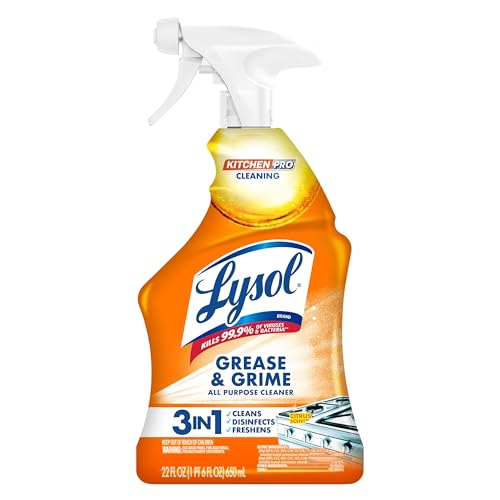
ELIMINATES 99.9% OF KITCHEN VIRUSES AND BACTERIA INCLUDNG SALMONELLA AND E.COLI: Lysol Pro Kitchen Cleaner is tested and proven to eliminate 99.9% of viruses and bacteria* (when used as directed). EPA Reg #777-91.

The Pink Stuff Floor Cleaner is designed to penetrate and dissolve stubborn stains, dirt, and grime, leaving your floors gleaming.

2X Concentrated* *vs. Mr. Clean Original
Initial Sweep or Vacuum
Start by sweeping or vacuuming the floor. Remove loose dirt, crumbs, or debris to prevent scratching the tiles while cleaning. Pay attention to corners and under furniture where grime can accumulate. This initial step sets the stage for a more effective cleaning process.
Choosing the Right Cleaning Solution
Select an appropriate cleaning solution for greasy tiles. Options include commercial degreasers or a vinegar-water solution (1 cup of vinegar per gallon of warm water). Test a small area first to ensure the solution doesn’t damage the tiles. Choose the right solution based on the level of grease buildup.
Application Techniques
Apply the cleaning solution using a mop or scrub brush. For tough spots, let the solution sit for a few minutes to break down the grease. Scrub in a circular motion for better results, focusing on heavily soiled areas. Use a sponge or soft cloth for spaces that require extra care, like grout lines.
Rinsing and Drying
After scrubbing, rinse the floor with clean water to remove any residue from the cleaning solution. Change the water frequently to keep it clean. Once rinsed, dry the floor using a clean mop or towels. Ensure the floor dries completely to prevent slips and maintain a clean appearance.
Tips for Maintaining Cleanliness
Maintaining cleanliness in your kitchen helps prevent greasy floor tiles from becoming a persistent issue. Follow these tips for an efficient approach.
Daily Maintenance Routines
- Sweep or Vacuum Daily: Remove crumbs and dirt every day to prevent buildup. This small step makes a significant difference in tile cleanliness.
- Wipe Up Spills Immediately: Address spills promptly to minimize grease stains. Use a damp cloth to clean fresh spills effectively.
- Use a Fabric Softener Solution: Mix one part fabric softener with three parts water. Test it on an inconspicuous area, then mop the floor to repel dirt and grease.
Dealing with Stubborn Stains
- Apply Baking Soda Paste: Combine baking soda and water to create a paste. Apply it to the stain, let it sit for 10-15 minutes, then scrub with a sponge.
- Use a Commercial Degreaser: Choose a product designed for tough stains. Follow the instructions closely for the best results.
- Vinegar Solution Soak: Mix equal parts vinegar and water, apply it to the stain, and let it soak for 5-10 minutes. Scrub with a brush to lift the stain effectively.
Regular upkeep and swift action on stains help keep your kitchen tiles looking their best.
Conclusion
Cleaning greasy kitchen floor tiles doesn’t have to be a daunting task. With the right supplies and a simple routine you can keep your tiles looking fresh and inviting. Regular maintenance is key to preventing those stubborn stains from becoming a headache.
By taking a few minutes each day to sweep or wipe up spills you’ll save yourself time and effort in the long run. Remember to tackle tough stains promptly and use safe cleaning solutions to protect your tiles. A clean kitchen not only looks great but also creates a healthier space for you and your family. So grab your mop and get started on making your kitchen shine!
Frequently Asked Questions
What causes greasy kitchen floor tiles?
Greasy kitchen floor tiles are often caused by cooking spills, steam, heat, foot traffic, and infrequent cleaning. These factors can lead to a buildup of grease and grime, making tiles look uninviting.
How can I prevent greasy floor tiles?
To prevent greasy floor tiles, establish a regular cleaning routine. Sweep or vacuum daily, wipe up spills immediately, and consider using a fabric softener solution to repel dirt and grease.
What supplies do I need to clean greasy tiles?
You’ll need a mop, bucket, degreaser or vinegar solution, scrub brush, sponge, gloves, and a broom. Having these supplies on hand makes the cleaning process more effective.
What is the best way to clean greasy kitchen tiles?
Start by sweeping or vacuuming the floor. Then, apply a degreaser or vinegar solution, scrub in a circular motion, allow it to sit on tough spots, and rinse thoroughly with clean water to finish.
Are there any safety precautions to take while cleaning?
Yes, ensure proper ventilation to avoid inhaling fumes, maintain floor stability to prevent slips, store cleaning supplies safely, and read product labels for safety instructions. Taking these precautions helps ensure a safe cleaning environment.
