

I’ve been working with acrylics on and off for a while now and noticed that simple animal outlines give me room to try different color mixes without too much planning.
Starting from those basic shapes keeps things straightforward when I want to paint but don’t have a big idea in mind.
I collected twenty of the approaches that worked best for me using this method.
Some focus on soft backgrounds while others add small details on top of the main form.
They might be useful if you’re looking for easy ways to practice with acrylics at home.
Fox with Side Floral Accents
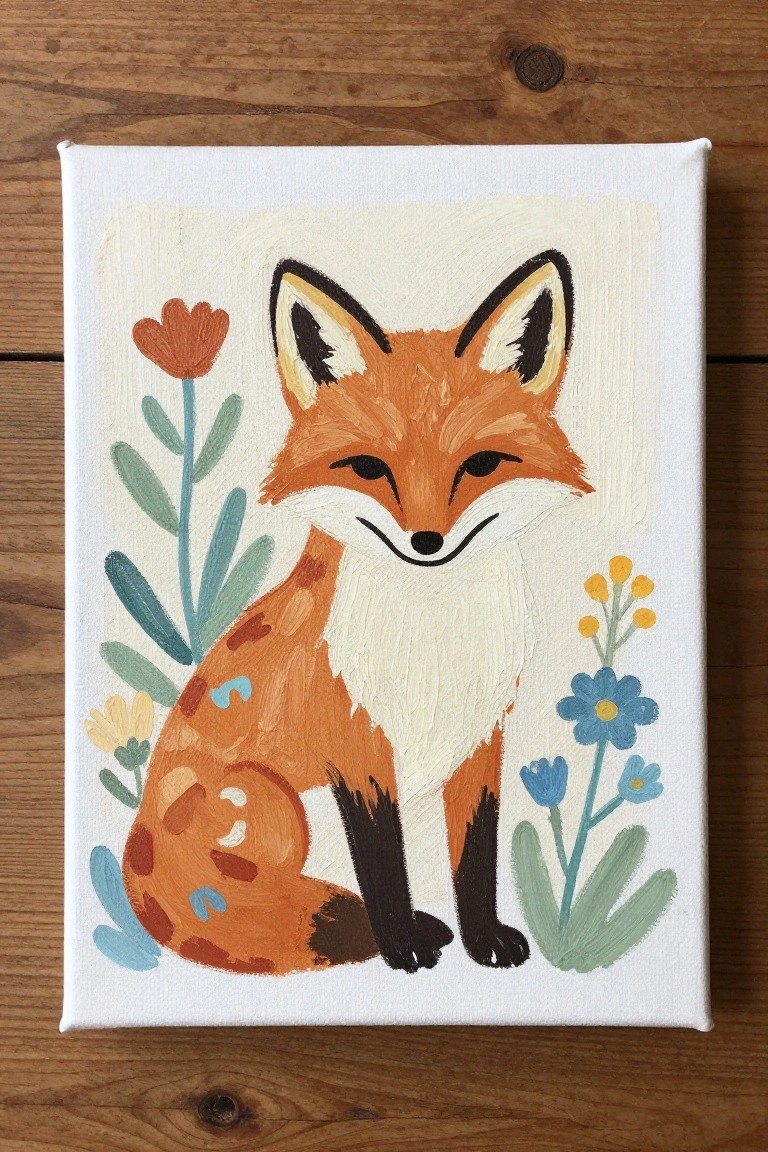
A fox serves as the main subject in this acrylic painting idea, built from simple shapes filled with orange and brown tones plus a white chest area. Stylized flowers and leaves placed on either side create a balanced layout against the light background. The approach fits a decorative animal category that relies on clear shapes and limited color rather than heavy texture or detail.
What makes this idea useful is the strong central silhouette that holds up even when colors are adjusted or flowers are swapped for other shapes. The side placement of the florals keeps the focus on the fox while adding interest without crowding the space. For practice, this kind of subject works well on small canvases because the flat areas let you build color quickly before deciding whether to add more layers.
Breaching Whale Over Layered Waves

A breaching whale works as a strong acrylic animal idea when the main shape stays large and simplified against stacked bands of ocean and sky. Flat color areas with soft edges between the teal waves and pale background let the dark whale form stand out without needing fine details or blending. The small sailboat and single bird add scale while keeping the layout balanced around the central animal silhouette.
What makes this idea useful is the high contrast that lets you block in the whale first and then build the water layers around it. You can easily swap the deep sky color for a brighter one or move the boat position if you want a different balance. For canvas decor or quick practice pieces, the clean shapes translate well to smaller sizes and still read clearly from a distance.
Bold Colored Birds with Minimal Pattern Accents

A pair of stacked bird silhouettes filled with solid color sections creates a simple yet striking animal painting that relies on shape and contrast rather than fine detail. The upper bird combines a red head with a yellow body dotted in gold, while the lower bird uses teal and gold with striped wing details to add variety without complexity. This flat style works well for decorative animal paintings because the clean outlines and limited patterns keep the composition balanced on a plain background.
What makes this idea useful is how the basic silhouettes let you focus on color placement and small accents instead of drawing skills. You can easily change the color scheme or swap the dot and stripe patterns to match different rooms or seasons. For canvas art this layout also scales well to larger sizes or can be simplified further by removing the patterns if you want an even quicker project.
Black Cat Silhouette Against a Night Sky

A black cat silhouette set against a blue night sky forms a clean acrylic painting idea built around strong shape contrast. The solid dark cat shape sits in front of a crescent moon and scattered stars, with simple grass at the bottom and soft purple and white marks in the background. This approach belongs to the animal silhouette category, where the main subject stays flat and graphic so the sky elements can add movement without extra detail.
What makes this idea useful is how the solid silhouette keeps the painting straightforward to block in while still looking finished on a canvas. The layout works well for wall art because the high contrast holds up from a distance and stays readable even when scaled down for smaller pieces. For practice, this kind of subject can be adapted by changing the sky colors or swapping the moon for different star patterns without redrawing the cat.
Patterned Elephant Silhouette with Floral Motifs

A patterned elephant silhouette works as a clean decorative animal painting by filling a basic outline with repeating floral, dot, and line designs. The idea relies on a limited palette of teal, terracotta, and peach to keep the patterns readable while the plain white background provides strong contrast. This approach fits the decorative animal category because the focus stays on shape and internal motifs rather than shading or realism.
What makes this idea useful is how the single solid silhouette removes the need for complex anatomy, letting you concentrate on pattern repetition instead. You can simplify it further by using only three or four motifs across the whole shape or adapt the colors to match a room. For canvas decor this layout stands out on Pinterest because the graphic style reads clearly even in a small thumbnail.
Deer Silhouette in a Layered Forest Scene

A deer silhouette painted in solid brown tones stands in front of overlapping pine trees that recede into the background. The acrylic idea relies on flat color areas and simple shapes rather than blending or fine brushwork, which places it in the animal silhouette category for wall art. A pale circle for the moon and a strip of green at the bottom complete the scene without adding extra detail.
What makes this idea useful is the way the dark tree trunks frame the deer and keep the main shape easy to paint first. The flat style lets you adjust the number of trees or swap the moon color to fit different seasons while keeping the same layout. For canvas decor this approach works well because the limited palette reduces color mixing and still produces a clean result that reads clearly from a distance.
White Rabbit Silhouette with Loose Floral Background

A clean white rabbit silhouette serves as the main subject in this acrylic painting idea, placed against a loose field of rounded flowers in peach, pink, purple, and yellow tones with green grass at the base. The approach relies on a simple animal shape filled with solid color while the surrounding blooms stay minimal and flat, creating contrast through shape and hue rather than detail or texture. This fits the cute animal category with a floral setting that keeps the rabbit as the clear focal point.
What makes this idea useful is how the rabbit shape can be traced or blocked in quickly before filling it with a couple layers of white acrylic. The flowers work as easy add-ons that can be swapped for different colors or reduced in number to fit smaller canvases. For practice or quick wall art, the layout stands out on Pinterest because the bright blooms draw attention without requiring tight brushwork or complex blending.
Fox Silhouette With Layered Warm Stripes

A fox built from flat overlapping color blocks in orange and rust tones creates a clear animal shape without needing fine fur details. Horizontal stripes in soft peach, pink, and beige run behind the figure to add structure while keeping the focus on the animal. This acrylic approach works as simple decorative wall art that relies on bold shapes and a limited warm palette.
What makes this idea useful is the clean silhouette that lets you practice edge control and color layering on a single subject. The stripe widths and tones can be widened, narrowed, or swapped to fit any room palette, and the fox can be enlarged or reduced easily on different canvas sizes. For practice this layout keeps the work approachable while still producing a finished piece ready for display.
Whale Silhouette with Embedded Shells

A whale silhouette painted in deep blue sits on a solid turquoise background, with small seashells and starfish placed inside the shape to fill the space. The white underbelly and tail details stay minimal so the collected shells become the main texture. This approach falls into the decorative animal category where the clean outline lets the added elements carry the visual interest.
What makes this idea useful is how the solid silhouette gives you an easy structure to arrange shells or similar small items without drawing every detail. You can swap in different shell colors or sizes to match a room or use painted versions if you want to keep it all acrylic. For canvas decor, the strong background contrast makes the piece pop in photos, which helps it perform well when shared online. The same layout works if you scale it down for smaller canvases or change the animal to another simple sea creature shape.
Colorful Bird Silhouettes with Feather Brushwork

This acrylic painting idea uses simple rounded silhouettes to form a group of birds, each filled with bold solid color and then detailed with white brush strokes that suggest feathers. The main shapes stay minimal with just dot eyes, while one larger red bird sits behind the others to create depth through overlap and scale change. The approach fits decorative animal painting because the flat white background keeps all attention on the bright shapes and their internal texture.
What makes this idea useful is that the silhouettes remove the need for precise outlines, letting the color choices and brush direction do the work. You can adapt it easily by swapping in different colors, adjusting the number of birds, or trying the same layout on a smaller canvas for quick practice. For wall art or gifts, the high contrast between the figures and background helps the piece read clearly from a distance. The same concept works if you simplify the feather marks further or add one more overlapping shape for variety.
Patterned Hedgehog Using Repeated Oval Shapes
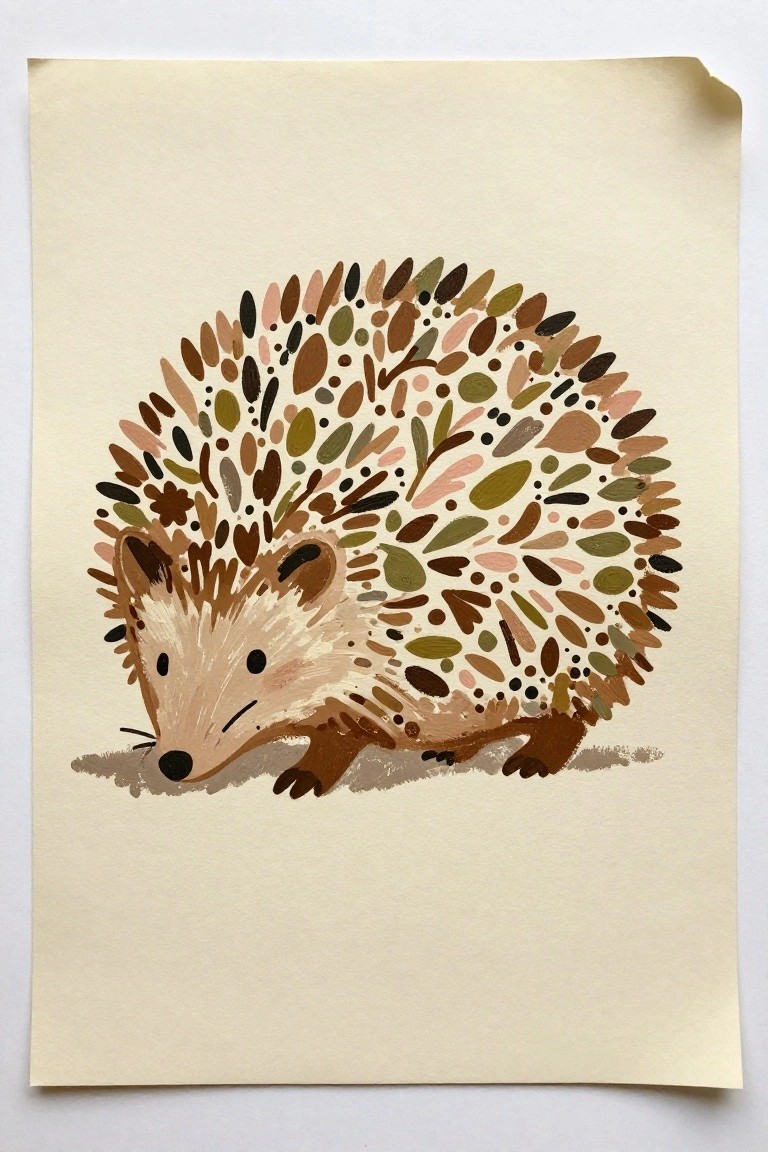
A hedgehog silhouette works well when the back is filled with overlapping oval and leaf-like shapes in a limited palette of browns, muted greens, and soft pinks. This creates a decorative animal painting that uses shape repetition and slight color shifts to suggest texture instead of painting individual spines. The clean outline against the plain background keeps the focus on the pattern and makes the whole piece easy to read from a distance.
What makes this idea useful is that the silhouette removes the pressure of drawing a realistic hedgehog while the shapes give it personality. You can swap the colors for cooler tones or change the shapes to circles or triangles to create quick variations. For canvas decor this layout prints clearly and scales nicely to different sizes. It also works as a practice piece because it trains you to layer flat shapes without overworking edges.
Sea Turtle Silhouette With Mosaic Shell Sections

A sea turtle silhouette painted in acrylics works well when the shell is divided into irregular sections and filled with different shades of green, teal, and sand. This creates a decorative animal painting that stays graphic and clean on a white background. The limited color palette and clear outlines keep the focus on the shape while adding visual interest through the patchwork effect.
What makes this idea useful is how the silhouette lets you focus on color blocking without needing realistic shading. You can adapt it by swapping in different blues or adding small details like waves inside a few sections for variety. For canvas decor this format scales easily to different sizes and stands out on Pinterest because of the bold contrast against the plain background.
Patterned Giraffe with Abstract Leaf Motifs

A giraffe silhouette filled with a grid of warm brown blocks gives this acrylic painting a clear graphic focus that reads well from a distance. The surrounding flat shapes and leaves in muted greens, browns, and beiges sit on a pale background so they support the main figure without competing for attention. This fits the decorative animal category because the idea relies on shape contrast and limited color rather than blending or fine detail.
What makes this idea useful is that the giraffe can be blocked in with straight color sections instead of smooth gradients, so the painting builds quickly on canvas. The open background leaves room to swap leaf styles or add a few more shapes if you want to personalize it for a specific room. For wall art, the simple layout keeps the piece balanced even when you change the brown tones to another earthy palette.
Sitting Dog with Bold Bandana

A clean acrylic portrait of a seated dog wearing a red bandana makes a strong choice for a simple animal painting. The idea relies on flat color areas and a clear silhouette to keep the dog as the main focus without extra background details. This approach fits the cute animal category and works because the limited palette and strong contrast make the subject pop on a plain canvas.
What makes this idea useful is how the basic shapes let you practice blocking in forms and edges before adding small details like the paws or bandana dots. You can change the bandana color or pattern to match a real pet or turn the same layout into a series with different animals. For canvas decor this style photographs clearly for Pinterest because the high contrast and minimal background keep the image sharp even at small sizes. The same silhouette can be scaled down for cards or enlarged for bigger wall pieces without losing impact.
Bear Silhouette Against Layered Mountains

This acrylic painting idea centers on a single animal silhouette placed in front of a simple stacked mountain range and open sky. The solid brown bear shape stands out sharply against the muted green and earth-tone layers, while the small sun adds balance without adding detail. It fits into the animal silhouette category and relies on flat color blocks and clean edges rather than texture or blending.
The bold contrast does a lot of the work here, so you only need a few base colors and steady brush strokes to get clean results. You could easily swap the bear for a deer or wolf, or shift the mountain tones to match a different room color. For canvas wall art this layout stays effective even at larger sizes because the shapes stay readable from a distance.
Bold Fox Portrait Using Flat Color Shapes

A fox portrait built around large flat color areas makes an approachable acrylic animal idea. The orange fur sections sit against a plain background while teal accents inside the ears and on the chest create quick contrast without extra layers. Black outlines on the ears and face keep the shapes readable even from a distance.
What makes this idea useful is how the limited palette and simple shapes reduce the need for blending or fine brushwork. You could easily swap the teal for another accent color or enlarge the canvas for bigger wall art. For practice this kind of subject works well because the main forms stay visible even if the edges stay a little loose.
Whale Silhouette with Scattered Leaves

A whale painted in blended shades of blue and teal creates a clear focal point when surrounded by leaf shapes in muted greens, peach, and beige. This acrylic idea works as decorative wall art because the white background lets the animal shape stand out while the varied leaves add interest through simple placement rather than detail. The composition fits the animal category with a botanical touch that relies on silhouette and color blocking for impact.
What makes this idea useful is the whale’s bold outline, which lets you practice smooth color transitions without needing complex anatomy. The leaves can be swapped for other tones or reduced in number to fit different color schemes or canvas sizes. For practice this layout works well because the negative space keeps the painting from feeling crowded, and the same idea could be adapted to other sea animals using the same leaf scatter approach. The high contrast also helps the finished piece show up clearly in online photos.
Deer Silhouette Over Horizontal Sunset Stripes

A deer silhouette idea pairs a solid dark animal shape with a background of wide horizontal stripes in warm sunset colors. The stripes run from pink at the top through orange and yellow tones down to a darker base layer that doubles as ground. This setup keeps the focus on the clean outline of the deer while the color bands add visual interest without extra detail.
What makes this idea useful is how the stripes can be painted first with basic brushes before the silhouette is added on top. The bold contrast does a lot of the work here so the deer shape stays readable even if the edges are not perfectly smooth. An acrylic idea like this works especially well for canvas wall art because the same layout can switch to other animals or different stripe colors for quick variations. For practice this kind of subject lets you test color mixing on the background while keeping the animal simple.
Circular Fox Silhouette with Patterned Details

A curled fox creates the main subject in this acrylic painting idea, using a simple rounded silhouette that gets filled with small leaf and star shapes plus scattered dots. The idea fits a decorative animal category where the outer shape stays bold and the interior patterns add visual interest without needing complex shading. Scattered background motifs in matching colors help balance the composition and keep the fox as the clear focal point.
What makes this idea useful is how the contained circular layout makes it easy to adapt the size for different canvas dimensions. You could replace the leaves with snowflakes or flowers to shift it toward a seasonal theme or simplify the interior patterns for quicker painting sessions. For practice or wall art, the high contrast between the fox and the light background helps the piece read well even in small formats like social media pins.
Penguin Silhouette in Cool Blue Tones

A straightforward acrylic idea centers on a penguin silhouette built from solid blocks of black, white, and yellow. The clean edges and limited palette let the shape carry the composition while the cool blue background and ground plane keep everything grounded without extra detail. This approach fits the simple animal silhouette category and works well when you want a clear focal point on canvas.
What makes this idea useful is how the flat color areas and strong contrast reduce the need for blending or complex brushwork. You could swap the background for a darker night sky or repeat the same silhouette at different sizes to fill a larger canvas. The limited palette also makes the finished piece easy to photograph and pin as a quick animal painting project.
Frequently Asked Questions
What supplies do I need to start these acrylic animal silhouette paintings? You will need acrylic paints in various colors, a set of brushes including small detail brushes and larger flat ones, canvas or heavy paper as your surface, pencils for sketching, and stencils or templates if you prefer not to draw freehand. Add water for thinning paints, a palette for mixing, and optionally some masking tape to keep edges clean. These basics allow you to follow any of the 20 ideas that build creative scenes around basic animal shapes.
How can I create the simple animal silhouettes if drawing is not my strength? Start with printable templates or trace outlines from photos of animals like deer, birds, or cats onto your canvas. Use a projector to enlarge images if needed or cut stencils from cardboard. Once the silhouette is in place, fill it with solid color and build the creative elements like patterns or scenes around it as described in the ideas. This approach keeps the focus on the surrounding details rather than perfect drawing skills.
What are some effective ways to add creative flair to the basic silhouettes? Layer textures such as splatters, dots, or geometric patterns inside or outside the silhouette using acrylics. Incorporate backgrounds like forests, skies, or abstract shapes that interact with the animal form. Try techniques like dry brushing for fur effects or adding metallic accents. The 20 ideas show how to turn plain shapes into unique pieces by combining these elements with themes like seasons or emotions.
Are these painting ideas suitable for beginners with limited experience? Yes, the concepts work well for beginners because they rely on simple base shapes that anyone can achieve with basic tracing or stencils. Focus first on one color for the silhouette and then add easy details like color blocks or lines. Practice on small canvases to build confidence, and the step-by-step nature of the ideas helps progress without needing advanced techniques right away.
How should I choose colors and backgrounds to make the paintings stand out? Select a main color for the silhouette that contrasts with the background, such as a bright animal shape against a dark night sky or soft pastels on a vibrant field. Experiment with complementary colors from the color wheel to create harmony. For backgrounds, use gradients or simple washes that enhance the theme, like water ripples for fish or mountain ranges for wolves, as outlined in the creative suggestions.

Hi, I’m Camille.
I’m a self-taught painter and creative blogger with a soft spot for acrylic painting, color play, and all the little art ideas that make everyday life feel more inspiring.
I started this space because I’ve always believed painting should feel joyful, approachable, and a little personal. Some of my favorite pieces come from simple ideas, messy palettes, and evenings where I just felt like making something pretty.
Most of what I share begins with acrylic painting, but I also love exploring other mediums when creativity pulls me in a new direction. My goal is to collect and share painting ideas that feel fun, beautiful, and actually doable, whether the mood is calm and minimal or bright and playful.
This is a space for inspiration, experimenting, and enjoying art without overcomplicating it.