

I like painting ducks now and then because their shapes are easy to handle with acrylics.
Lately I have been using color blocking on the feathers with bright shades and it works pretty well.
The method keeps things simple while still adding some life to the paintings.
I put together a few ideas that turned out nicely for me and might be useful to try.
They focus on different color mixes and feather patterns.
Bright Orange Duck with Yellow and Pink Color Blocks

This duck painting idea uses large flat areas of bright orange for the head and neck, paired with yellow on the chest and pink accents around the collar and wing edge, all set against a solid teal background. The composition works by relying on high-contrast color shapes and minimal line work to suggest the duck’s form without needing detailed blending or shading. It falls into the cute animal category of acrylic painting, where graphic color blocking creates a clean, modern decorative piece.
What makes this idea useful is that the simple blocked shapes and limited palette cut down on blending time, letting you focus on brush control and edge placement. You could swap the teal background for other bright tones or repeat the same duck in different color combinations to build a small series for wall art. The strong outlines on the beak and eye help it pop in photos, which makes it easy to adapt for Pinterest posts or quick canvas projects.
Color Blocked Duck with Bright Wing Sections

A duck painted in large flat blocks of color creates a clean graphic style that relies on shape and contrast instead of shading or detail. The body uses yellow as the main block while the wing is split into separate teal and blue sections to add visual interest without extra layers. This approach fits the cute animal category and works especially well when the background stays plain so the bold colors stand out.
What makes this idea useful is how the simple shapes let you focus on clean edges and color placement instead of blending. You can easily change the wing colors or resize the duck for different canvas sizes while keeping the same layout. For practice this kind of painting builds confidence with flat acrylic application and works quickly for small decor pieces or gifts.
Duck Trio with Bold Feather Color Blocks

Three ducks lined up on a small canvas use simple rounded shapes and solid color sections to create a clean graphic look. Each duck gets one main body color with a separate bright block for the wing area, keeping the focus on the contrast between yellow, green, and blue. The orange beaks, feet, and tiny gray shadows underneath add just enough detail without crowding the composition, making it a straightforward cute animal painting idea.
What makes this idea useful is how the color blocking lets you finish each duck quickly while still getting a finished result. You can swap the body colors or change the wing blocks to match a different palette without redrawing the whole thing. For canvas decor this layout works well on small sizes because the figures stay readable even from a distance. The same approach scales easily if you want to paint just one duck or stretch it into a longer row.
Color Blocked Mallard with Ducklings

A mallard duck painting idea built around bold color blocking keeps the focus on large flat shapes rather than fine feather details. The adult duck is divided into clear sections of green, brown, coral, teal, and white, while the two ducklings use simple yellow and lime blocks that echo the same graphic approach. This style fits the cute animal or decorative wall art category because the strong outlines and high contrast let the composition read clearly even on a small canvas.
What makes this idea useful is how the blocked colors remove the need for blending or layering, so you can finish the full scene with just a few paint layers. You could easily swap the ducklings’ colors or add a third smaller duck to change the balance without redrawing the whole layout. For practice or quick canvas decor, the flat shapes make it straightforward to adapt to different color schemes while still keeping the recognizable duck family subject.
Neon Color Blocked Feathers on Pink

A cluster of overlapping feathers painted with flat blocks of neon color creates a simple decorative canvas idea. The layout places several large feathers at different angles so they layer over each other, with each feather filled in one solid bright hue and outlined only by the background color. This color blocking approach works well for wall art because the high contrast and clean shapes keep the focus on the overall pattern rather than small details.
What makes this idea useful is how the overlapping arrangement hides any uneven edges and lets you build the piece one feather at a time. You could swap the neon palette for any set of bright colors or reduce the number of feathers to fit a smaller canvas. For practice, the graphic style is easy to adapt since it relies on shape and color placement more than blending or texture.
Color Blocked Duck Trio for Simple Canvas Decor

Painting a vertical stack of three ducks with large flat color areas gives you a clean graphic look that relies on bright shades rather than fine detail. Each duck uses a single main body color paired with a pink wing section and a few short blue strokes for feathers, while small dots scattered around the edges add just enough movement without crowding the space. This approach fits the cute animal category and works well as wall art because the high contrast shapes stay readable from a distance.
What makes this idea useful is how the flat color blocking removes the need for blending or shading, so even basic acrylic layers look finished quickly. You can easily swap the orange, lime, and yellow bodies for any three colors that match a room or a holiday theme. The same layout also scales down to a smaller canvas or gets turned into a set of three separate panels if you want more flexibility. For practice, this kind of subject helps you focus on shape placement and edge control while still producing something that stands out in a Pinterest feed.
Color Blocked Duck Portrait
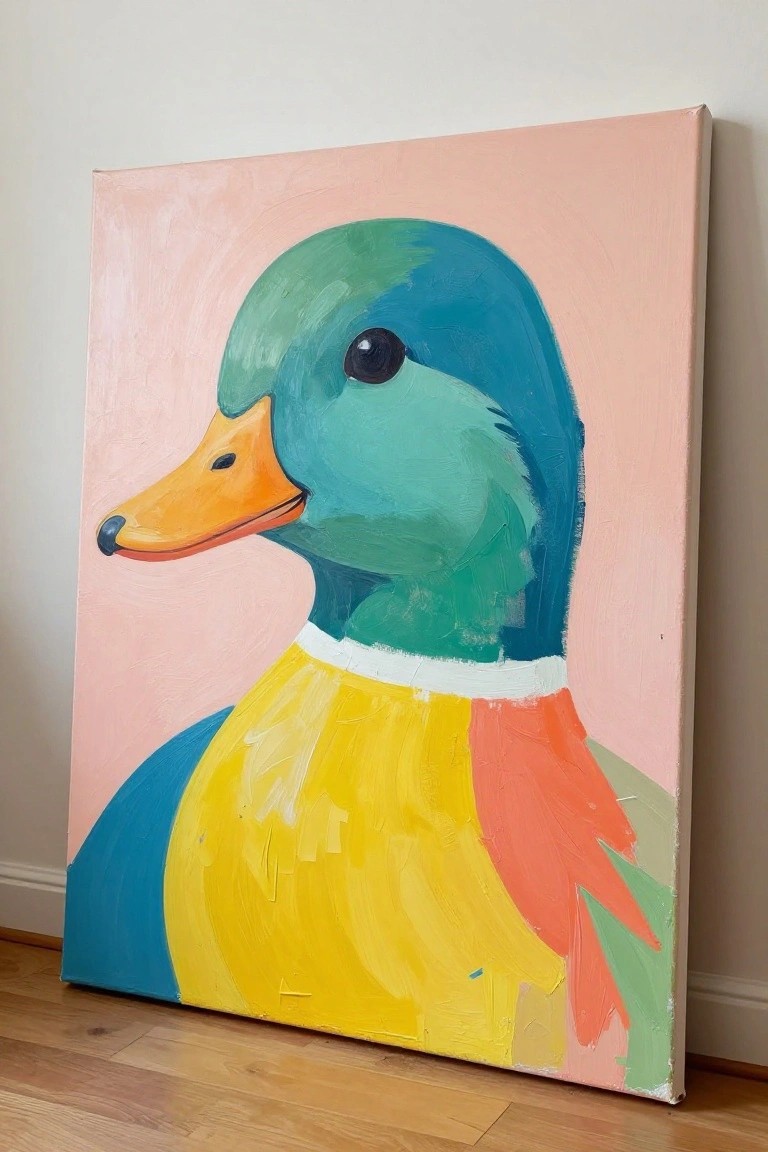
A duck portrait made from large blocks of bright color turns a familiar bird into a bold acrylic painting idea. The teal green head, orange beak, and yellow body with red wing accents rely on simplified shapes and strong color contrast rather than small details. This style works as a colorful animal acrylic piece that stands out against a single solid background.
What makes this idea useful is how the flat color areas let you focus on clean edges and shape placement without needing much blending. The same layout adapts easily to different background colors or can be scaled down for smaller canvases or greeting card designs. For practice, this kind of subject builds confidence with acrylics because the limited palette and graphic look deliver quick visual impact.
Color Blocked Duck with Polka Dot Neck Band

This acrylic painting idea uses simple color blocking to define a duck’s feathers with bold sections of yellow, teal, coral, and black instead of blending or fine shading. The white body and yellow head keep the focus on those blocked wing shapes, while the polka dot band around the neck adds a quick pattern break that separates the head from the body. The result is a clean, graphic animal painting that works well as decorative wall art or canvas decor.
What makes this idea useful is how the flat color areas reduce the need for detailed blending, so you can finish the main shapes quickly and still get a strong visual impact. You could swap the coral and teal blocks for other bright pairs or change the polka dots to stripes if you want a different pattern without redrawing the whole duck. For practice or quick gifts, the limited color palette and clear edges make it easy to repeat on smaller canvases or adjust the size while keeping the same blocked look.
Color Blocked Duck Head Profile

A duck portrait idea built around bold color blocking turns the head feathers into distinct sections of teal, yellow, pink, and brown. The flat color areas and minimal blending keep the focus on shape and contrast while the plain white background removes any need for extra scenery. This approach works well as an animal acrylic project that stays graphic rather than realistic.
What makes this idea useful is the single-subject layout that lets you practice clean edges without a complicated background. You can swap in different bright feather colors or simplify the blocks further for a quicker version on a smaller canvas. The strong color separation also makes the finished piece stand out in a feed of duck paintings.
Bold Color Blocked Ducks
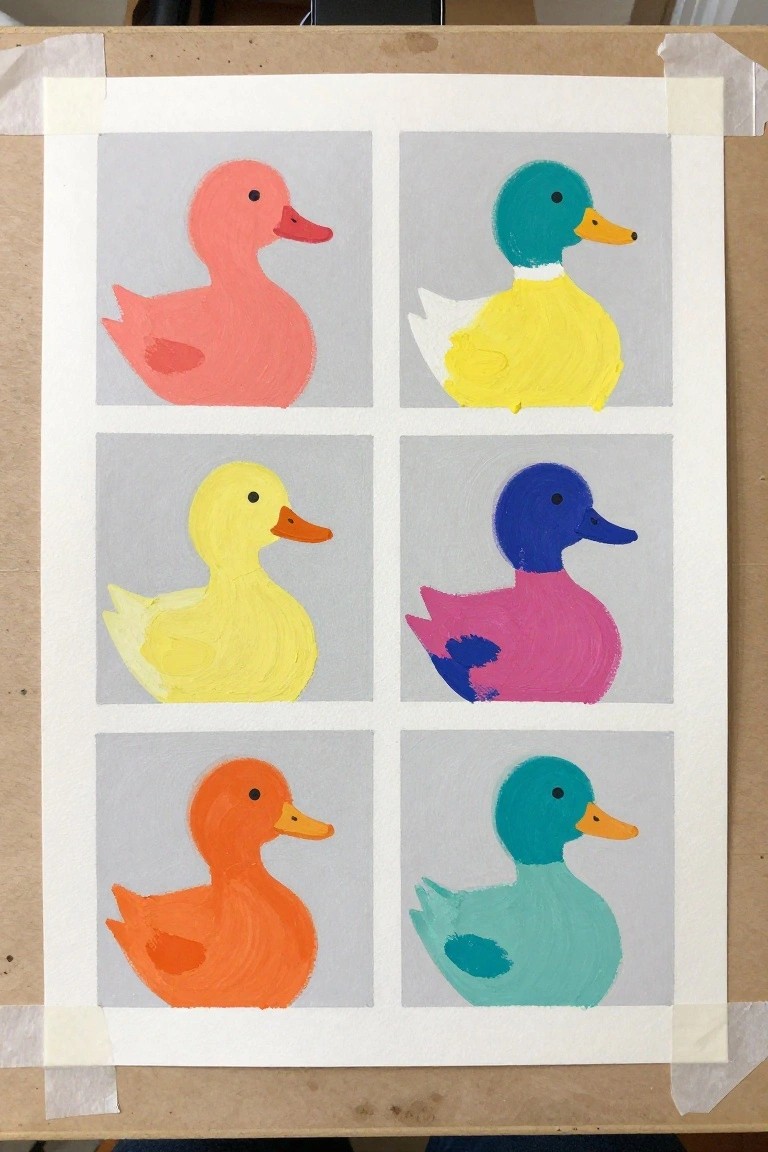
Painting ducks with large blocks of bright solid color turns a simple animal shape into a quick acrylic exercise that highlights contrast and clean edges. Each duck gets its own color scheme across the head, body, beak, and wings, keeping the forms graphic and easy to read against the gray squares. This approach works as a decorative animal idea because the flat shapes and limited detail let the bold hues carry the whole composition.
What makes this idea useful is how the basic duck outline lets you test different color combinations on small canvases or paper without much setup. You can paint one duck at a time or fill a grid like this to practice mixing bright acrylics and keeping edges sharp. The same layout adapts easily to a single larger canvas or a series where you change just the color palette for each bird. For practice or quick wall pieces, the strong color blocking stands out on Pinterest because it reads clearly even in a thumbnail.
Bold Color Blocked Duck on Teal
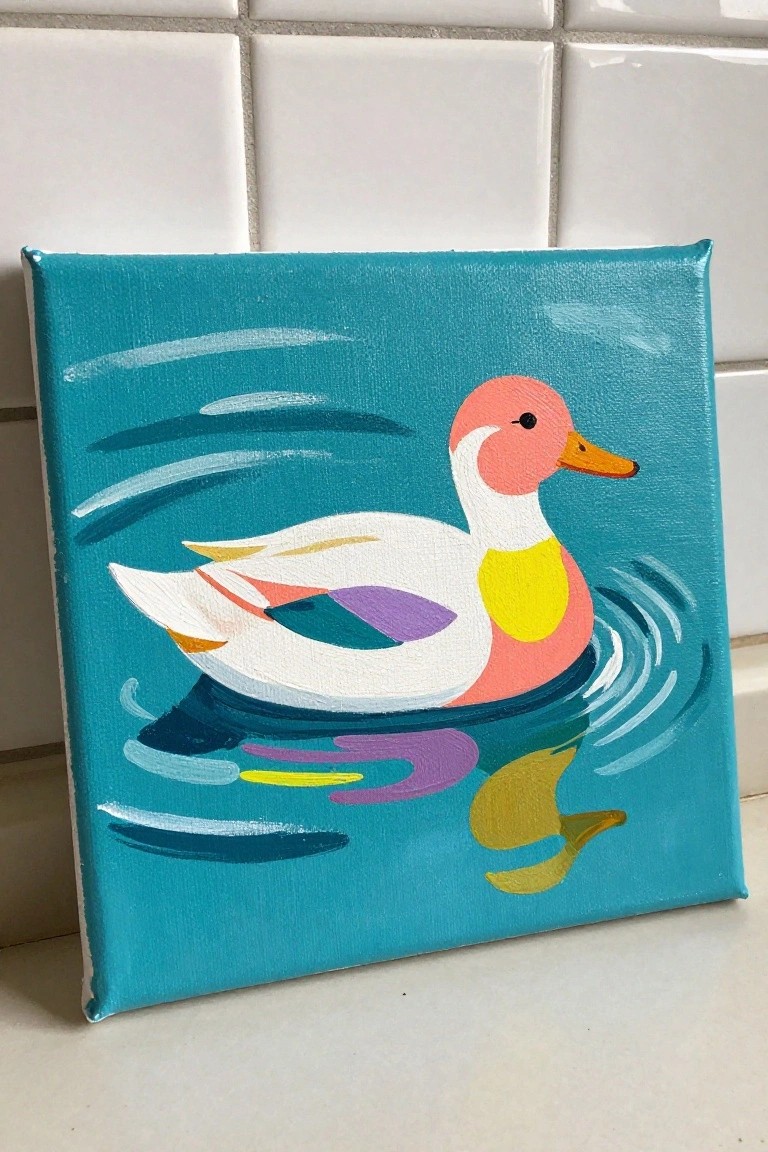
A duck with large sections of bright color creates a clean animal painting that stands out on a solid teal background. The body uses white as the base with purple, teal, and yellow blocks to break up the shape, while the pink head and orange beak add contrast without extra shading. This fits the animal category and keeps the focus on simple shapes rather than fine detail or texture.
What makes this idea useful is how the flat color blocks let you finish the duck quickly without blending. You could swap the background color or change the feather blocks to match a different palette while keeping the same layout. For canvas decor, the high contrast helps the piece read well from across the room, and the same approach works if you want to paint other birds with similar blocked sections.
Duck Under a Color Blocked Polka Dot Umbrella
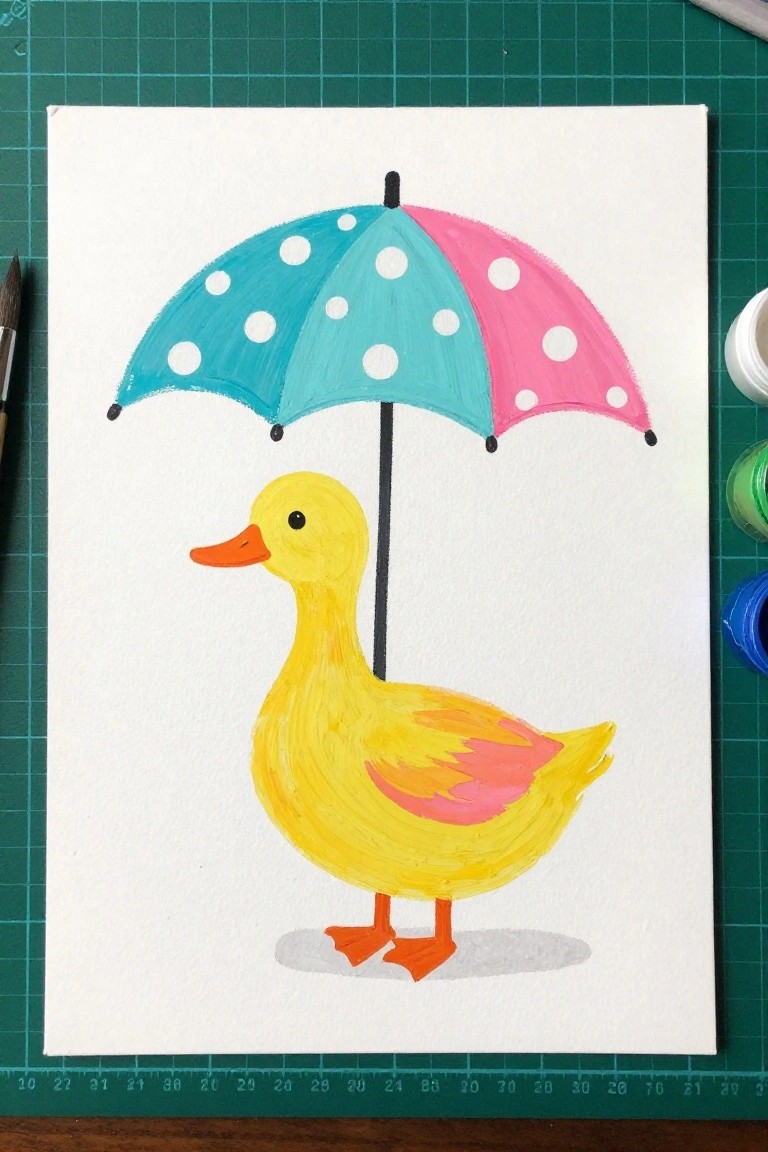
A yellow duck holding an umbrella split into turquoise and pink sections gives a clean acrylic idea built around simple color blocking. The umbrella gets white dots added after the base colors, while the wing uses a quick pink and orange block to break up the yellow body without adding extra layers. This setup works as a cute animal painting that relies on flat shapes and strong color contrast rather than fine detail or texture.
What makes this idea useful is how the umbrella and wing blocks let you practice straight edges and even coverage with basic brushes. You can swap the turquoise and pink for any two bright colors or change the dot pattern to match a different theme on the same canvas size. For practice or small gifts, the layout stays quick because most of the work happens in two or three color passes with minimal blending.
Duck with Patchwork Rainbow Feathers

A duck body painted in solid yellow serves as the base for this idea, with the wing and side broken into separate sections filled by bold blocks of blue, red, orange, green, and purple. The color blocking creates a simple feather pattern that stays graphic and easy to read against the light wood. This approach fits the cute animal category and works as decorative wall art because the strong color contrast keeps the whole piece clear even from a distance.
What makes this idea useful is that the flat color sections let you focus on clean edges and basic shape placement without needing to blend. You could swap the colors for a different palette or shrink the grass at the bottom if you want a tighter composition on a smaller canvas. The dotted border is an easy add-on that frames the duck and helps the finished piece stand out in a grid of other duck paintings.
Vertical Stack of Bright Color-Blocked Ducks

Color blocking on simplified duck shapes creates an easy graphic look by dividing each bird into large sections of solid color with small accent patches on the wings. Stacking three ducks vertically uses the full canvas height while letting each one stand out through its own bright palette against the plain background. This fits decorative animal wall art that relies on bold shapes and high contrast rather than fine detail or texture.
What makes this idea useful is how the flat color areas cut down on blending work and let you finish each duck quickly with basic brushes. You can swap the color combinations to match different room schemes or stretch the stack taller or wider depending on your canvas size. The graphic style also helps the finished piece stand out in duck painting searches because the bright blocks read clearly even in small thumbnails.
Bright Color Blocked Feathers on a Curled Duck

A curled duck painted with overlapping blocks of bright yellow, turquoise, white, and soft coral creates a clean animal subject that relies on flat color shapes rather than blending or shading. The idea uses bold feather sections to build the body form, with the solid peach background keeping all attention on the color pattern. This fits into decorative animal painting where simple shapes and high contrast do the main work.
What makes this idea useful is how the color blocks let you focus on placement and edges without needing smooth transitions or fine brushwork. You can swap the feather colors to match a room palette or change the background to a different neutral for quick variations on the same canvas size. For practice, this kind of subject works well because the pose stays compact and the main shapes are easy to sketch first. The same layout could be simplified further by reducing the number of colors or scaled down for greeting cards.
Color Blocked Duck with a Big Bow

A duck painted with its body divided into sections of bright yellow, pink, and orange gives a clear color blocking effect that turns the feathers into simple geometric shapes. Adding a large bow on top in matching bold shades like coral, magenta, and teal keeps the whole piece graphic and easy to read from a distance. This style works as a decorative animal painting that relies on flat areas of color and clean edges instead of blending or fine detail.
What makes this idea useful is how the color blocking breaks the duck into manageable sections that even beginners can paint one at a time. You can easily swap the palette for different seasons or change the bow size to fit a smaller canvas. For practice, this kind of subject helps you focus on shape and contrast without needing advanced brushwork, and the result stands out on Pinterest because the bright blocks read well even in small thumbnails.
Color Blocked Ducks in Bright Acrylic Hues

The idea uses a loose group of ducks painted in solid, high-saturation colors such as yellow, green, pink, and turquoise on a plain light background. Each duck is built from simple shapes with one main color and a slightly darker wing block, which keeps the focus on the flat color fields rather than shading or texture. This fits the cute animal category and works because the varied poses and strong color contrast make the scattered layout feel balanced without any overlapping elements.
What makes this idea useful is how the basic outlines let you practice clean edges and color blocking with minimal layers. You can swap in different bright shades or reduce the number of ducks to fit a smaller canvas while keeping the same scattered placement. The graphic look also translates well to quick canvas pieces that catch attention on Pinterest for kids’ rooms or playful wall decor.
Duck Portraits with Bright Background Color Blocking
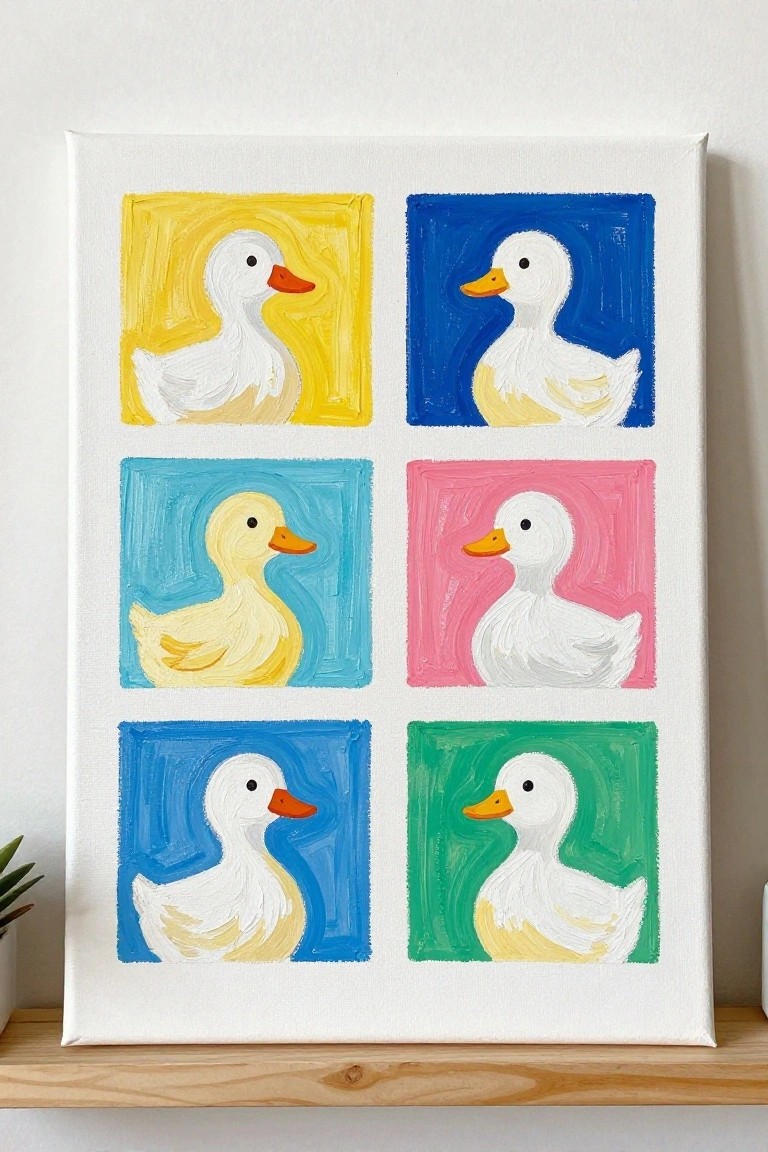
A grid of duck portraits lets you repeat one simple subject across multiple color blocks so the focus stays on bold background choices rather than fine feather detail. Each duck gets a flat white body with a small yellow tint on the lower half and an orange beak, while the square behind it supplies the main color through quick, solid fills. This approach sits in the cute animal category and works as decorative wall art because the strong color contrast keeps every square distinct even from across the room.
What makes this idea useful is that the square backgrounds remove any need for blending or soft edges, so you can finish the whole canvas in one session. Swap the six colors for whatever paint you already have or shrink the grid to four ducks if you want a smaller canvas. The layout also photographs cleanly for Pinterest because the repeating duck shape against different blocks creates an instant pattern that reads well as a thumbnail.
Frequently Asked Questions
Q: What supplies do I need to start painting ducks with acrylics and bright feather color blocking? A: Gather acrylic paints in bold shades like turquoise, magenta, yellow, and lime green along with a few flat and round brushes in sizes 2 through 8. Use a stretched canvas or heavy paper, a pencil for sketching the duck outline first, and a palette for mixing. White and black paints help create highlights and shadows on the blocked feather sections.
Q: How do I keep the bright colors vibrant and prevent them from turning muddy during color blocking? A: Apply thick layers of pure color straight from the tube without overmixing on the palette. Let each block dry fully before adding the next adjacent color and work from light to dark shades. Use a clean brush for every new hue and avoid blending edges unless you want a soft transition on specific feather areas.
Q: What techniques help beginners create clean blocks of color on duck feathers? A: Sketch simple feather shapes on the duck body first then fill each section with one solid color using steady horizontal or vertical strokes. Tape off edges lightly with painter’s tape if needed for sharp lines and build up two thin coats rather than one thick one. Practice on scrap paper to get comfortable with the blocking style before starting the main piece.
Q: How can I customize the 18 duck ideas to match my own style or skill level? A: Swap in your favorite bright color combinations or simplify the feather patterns by using fewer blocks on smaller ducks. Add personal touches like patterned backgrounds or different duck poses once the basic blocking is complete. Beginners can start with just three or four color sections per duck while more advanced painters layer in metallic accents or fine line details.
Q: How should I finish and protect my completed acrylic duck paintings? A: Let the painting dry for at least 24 hours then apply a thin coat of acrylic varnish with a wide soft brush for a protective seal. Choose matte or glossy finish based on the look you want and store the work away from direct sunlight to keep the bright colors from fading over time.

Hi, I’m Camille.
I’m a self-taught painter and creative blogger with a soft spot for acrylic painting, color play, and all the little art ideas that make everyday life feel more inspiring.
I started this space because I’ve always believed painting should feel joyful, approachable, and a little personal. Some of my favorite pieces come from simple ideas, messy palettes, and evenings where I just felt like making something pretty.
Most of what I share begins with acrylic painting, but I also love exploring other mediums when creativity pulls me in a new direction. My goal is to collect and share painting ideas that feel fun, beautiful, and actually doable, whether the mood is calm and minimal or bright and playful.
This is a space for inspiration, experimenting, and enjoying art without overcomplicating it.