
I enjoy doing fox paintings on small canvases because the size keeps everything manageable.
These projects do not take much time or materials.
I have collected 22 ideas that focus on simple shapes and basic brushwork.
You can try them even if you are new to acrylics.
Most of them use just a few colors so nothing gets too complicated.
Fox Portrait with Bold Color Contrast

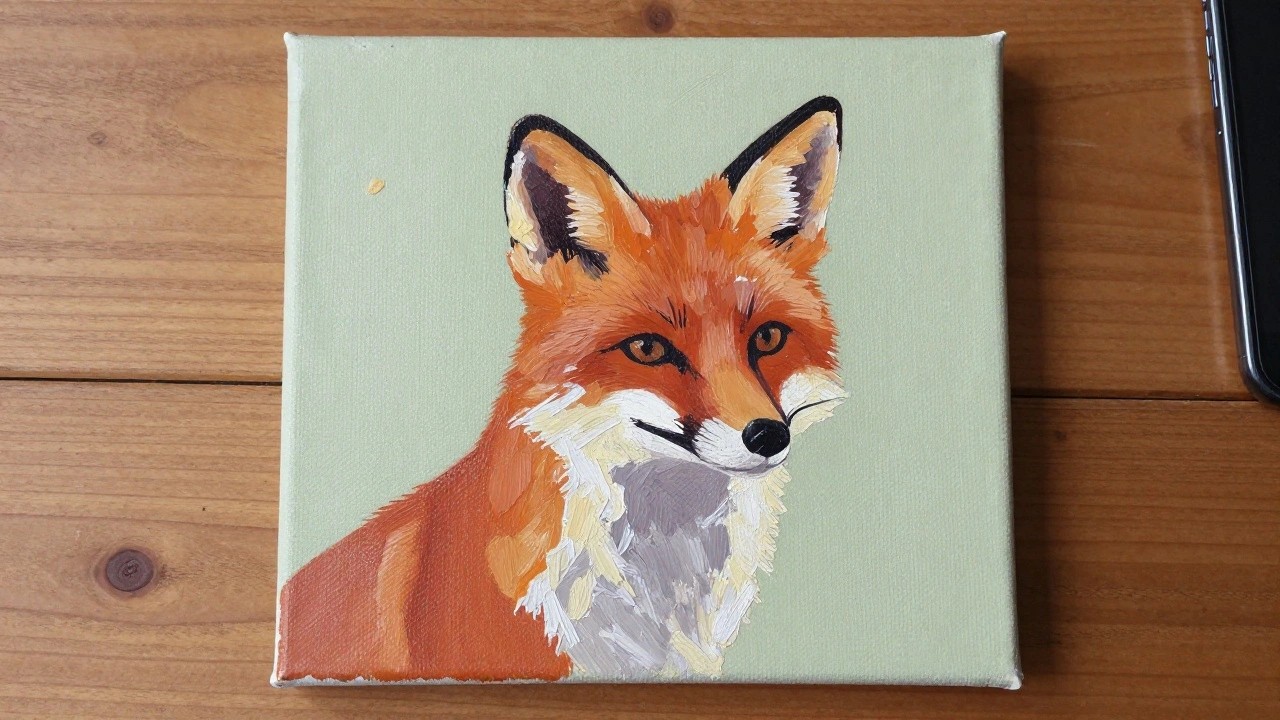
A close-up fox portrait idea centers on the animal’s face using bright orange fur tones against a pale background to create strong visual impact. This approach fits the animal category and relies on broad brushwork to define the ears, muzzle, and eye area while keeping the overall layout simple for small canvases. The contrast between the warm fur colors and the cool background helps the subject stand out without requiring fine detail everywhere.
What makes this idea useful is how the centered composition leaves room to practice color mixing and edge control on limited canvas space. You could adapt it by swapping the background shade or reducing the white chest markings for faster versions. For practice or quick gifts, this kind of direct animal face works well because it reads clearly even when the brushwork stays loose.
Sleeping Fox with a Simple Flower Ring

A curled sleeping fox works well as the main subject for a small canvas animal painting. The idea uses the fox’s rounded body and wrapped tail as the central shape, then adds a loose ring of stylized flowers and leaves around it to create a balanced frame. The light background keeps the focus on the fox while the soft teal and muted greens in the foliage add just enough contrast without crowding the space.
What makes this idea useful is how the basic flower shapes can be painted fast with a few brushstrokes and still read clearly on a small canvas. The strong orange against the cooler greens and background colors helps the fox stand out even if you simplify the details further. You could change the flower colors or add a few extra leaves to match a room or season. For practice or quick gifts, this layout adapts easily and shows up well in a Pinterest feed because of the clean circular arrangement.
Striped Fox on a Dotted Blue Background
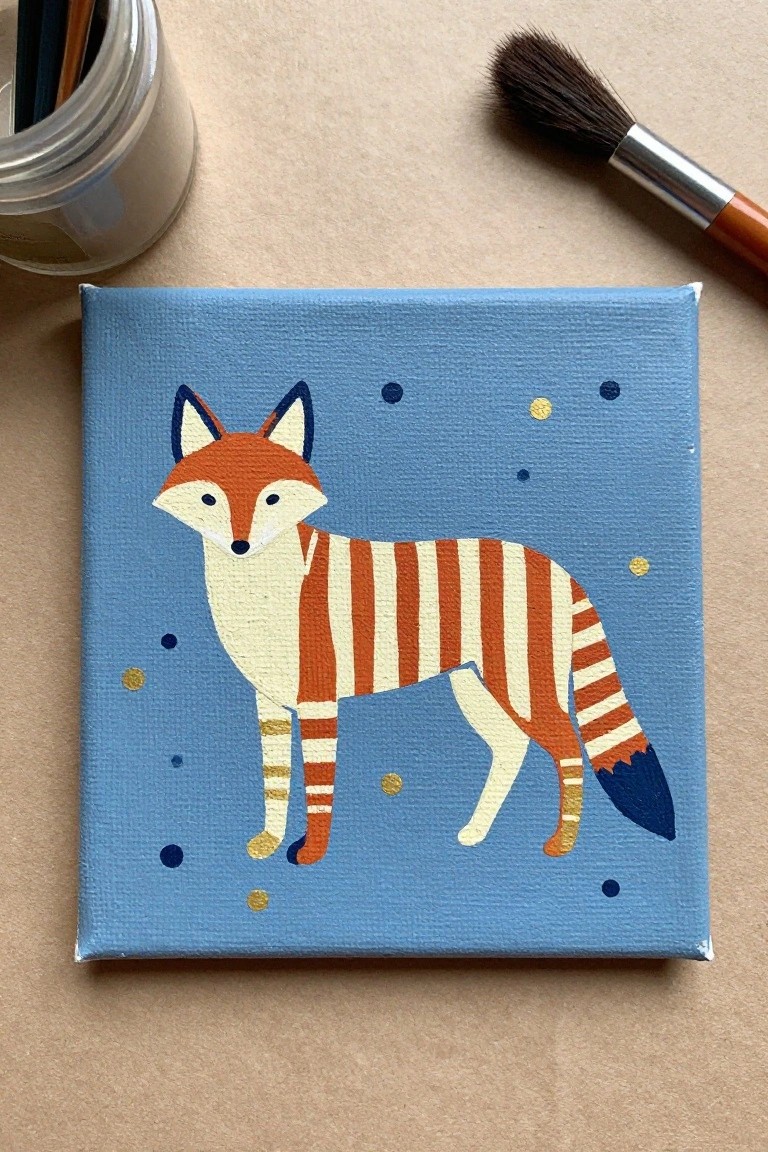
A striped fox painting uses repeating bands of orange and white across the body to turn a basic animal silhouette into a graphic design that fits small canvases. The solid blue background with scattered dots in blue, gold, and yellow creates contrast that keeps the focus on the fox without needing extra details or shading. This approach falls into the decorative animal category because the flat color blocks and clean edges make the shape easy to paint while still looking finished.
What makes this idea useful is how the stripes break the fox into simple sections that require minimal blending on a small surface. The color scheme can be swapped by using different background shades or changing the dot colors to match other themes. For practice, this kind of layout works well because the bold outlines guide the placement and the flat areas let you focus on even coverage rather than texture.
Fox with Scarf Holding a Bouquet

A fox holding a bouquet of flowers works as a simple acrylic idea that pairs an animal subject with a small floral accent. The composition keeps the fox centered with the flowers placed to one side, which balances the canvas without adding extra background elements. Flat color blocks and a light background make the main shape stand out clearly.
What makes this idea useful is how the bouquet size and colors can be changed to fit different seasons or color schemes while keeping the fox the same. The scarf adds a quick pattern detail that still stays easy to paint on a small canvas. For practice, this layout helps with shape placement and color mixing before moving on to more detailed work.
Stylized Fox Portrait with Bold Color Blocks

A fox head painted in large flat sections of orange, white, and black creates a clean animal portrait that works especially well on small canvases. The idea relies on strong shapes and high contrast between the dark eyes, nose, and ear outlines to make the face readable from a distance. This approach belongs to the cute animal category and serves as simple wall art that avoids extra texture or detail.
What makes this idea useful is how the limited color palette lets you finish the piece in one or two sessions without blending. You can easily change the inner ear color or shift the background tone while keeping the same layout. For practice, this kind of subject helps build confidence with shape placement and edge control before moving to more complex animals. The same design also translates well to different canvas sizes or can be turned into a series with varied fox expressions.
Centered Fox with Leaf Wreath and Stars
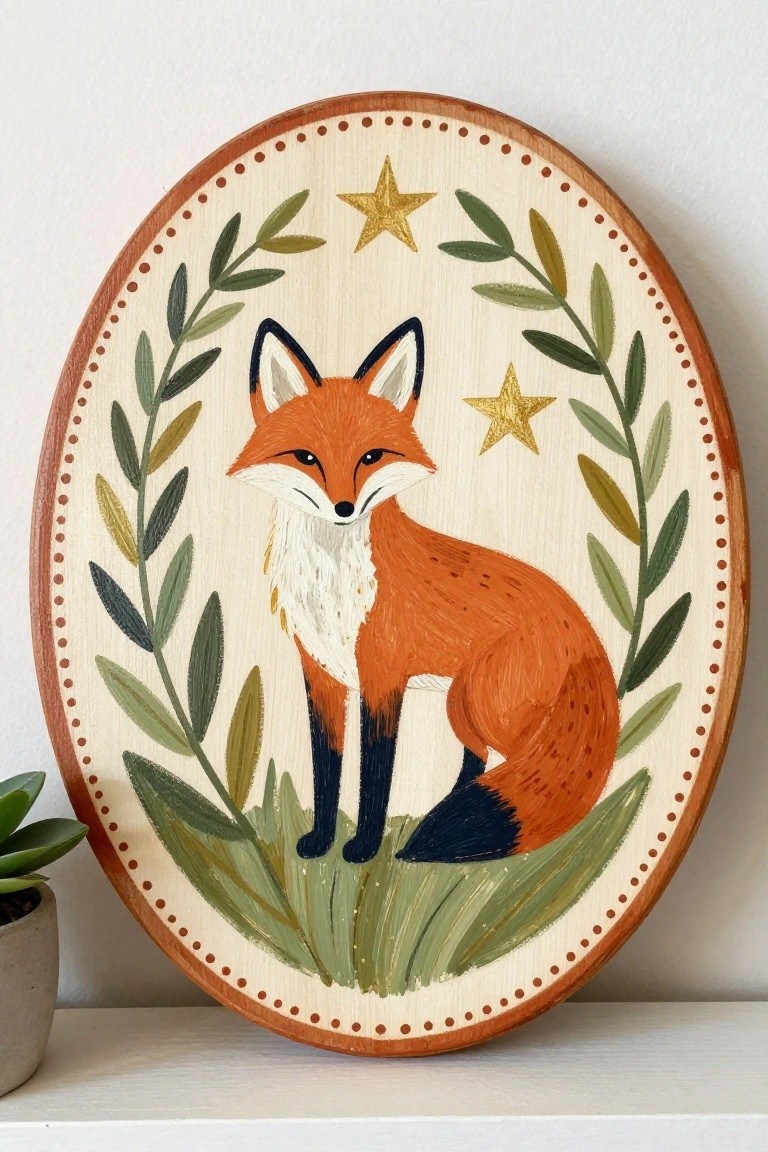
A seated fox makes a strong central subject on a round canvas when paired with a loose ring of leaves and small star accents. The idea works as decorative animal wall art because the foliage creates a natural border that frames the fox without competing for attention. Bold color blocks on the fox stand out against the light background and keep the overall layout balanced for smaller formats.
The high contrast between the orange fur and the cream surface does most of the visual work here. You can change the leaf colors or move the stars to fit different seasons or color schemes without redrawing the fox itself. This layout stays practical for practice or quick gifts because the border elements can be reduced to simple brush strokes if you want less detail.
Round Canvas Fox Framed by Leaves and Stars

A centered fox portrait on a small round canvas works as a straightforward animal painting idea. The fox face sits inside a loose wreath of leaves and scattered gold stars, creating a balanced layout that fills the circular shape without crowding it. This setup fits the decorative animal category and relies on simple color blocking plus clean edges to keep the composition readable on a small surface.
What makes this idea useful is how the wreath gives you an easy way to fill negative space around the main subject without extra planning. The limited palette and flat areas of color make it straightforward to adapt by changing leaf tones or swapping stars for other small accents. For canvas decor, this layout translates well to different sizes and stands out in a feed because the round format plus framing elements create instant visual order. You could simplify the leaves further or add a light background wash if you want to adjust the level of detail.
Minimalist Fox on a Hill with Oversized Sun
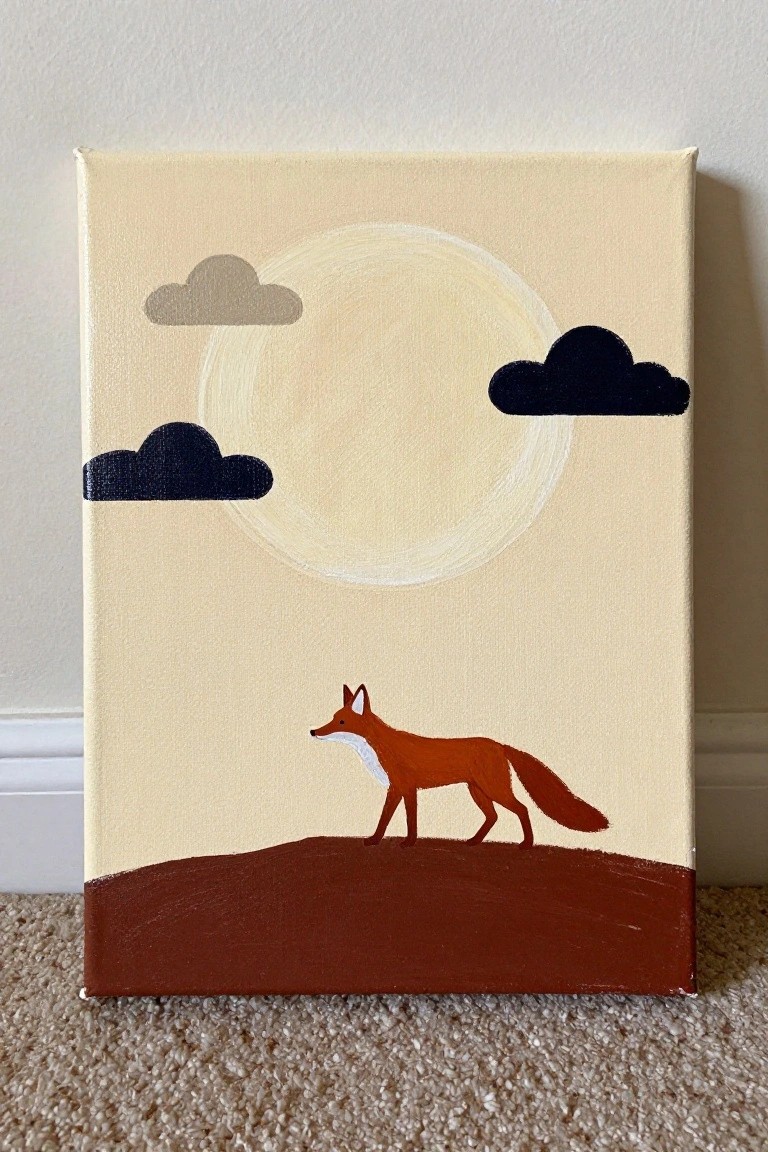
A simple fox silhouette walking across a low brown hill forms the main subject in this acrylic painting idea. The scene uses flat color blocks and a large pale circle for the sun to keep the composition balanced on a small canvas. Clean edges and negative space above the hill let the animal stand out without extra detail or texture.
What makes this idea useful is how the limited palette and bold shapes reduce the need for blending or fine brushwork on small canvases. You can easily swap the sun for a moon or adjust the cloud tones to create a night version or seasonal variation. The flat graphic style also helps the finished piece read clearly in a grid of other paintings.
Three Foxes with Colorful Collars
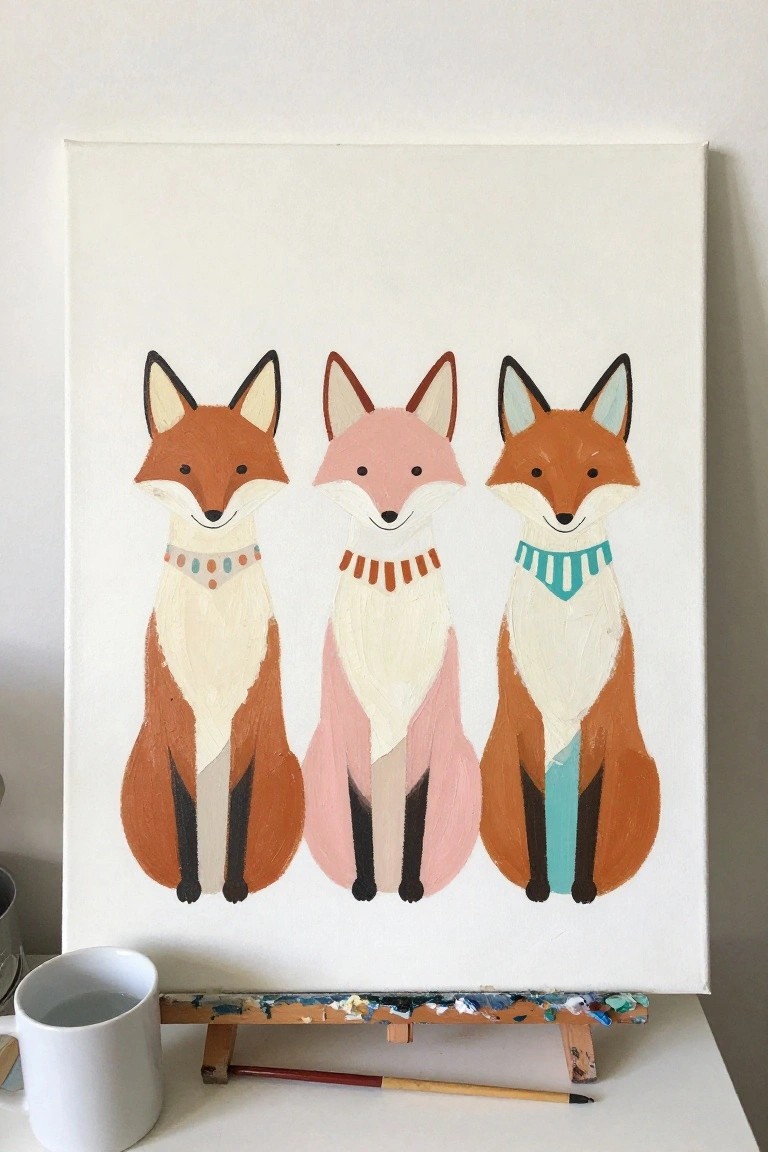
Three sitting foxes form a simple repeated pattern across the canvas, each built from flat color blocks in orange, white, and black with small collar accents in different patterns. This cute animal idea relies on aligned poses and limited detail to create a balanced composition that reads clearly from a distance. The clean edges and solid shapes make it a straightforward decorative piece for wall art.
What makes this idea useful is how the side-by-side layout works on small canvases without crowding. You can change the collar colors or simplify them to dots or stripes to match different rooms, or drop one fox if you want a faster version for practice. The graphic repetition helps it stand out in search results because the trio format feels complete with minimal extra work.
Fox Profile with Daisies
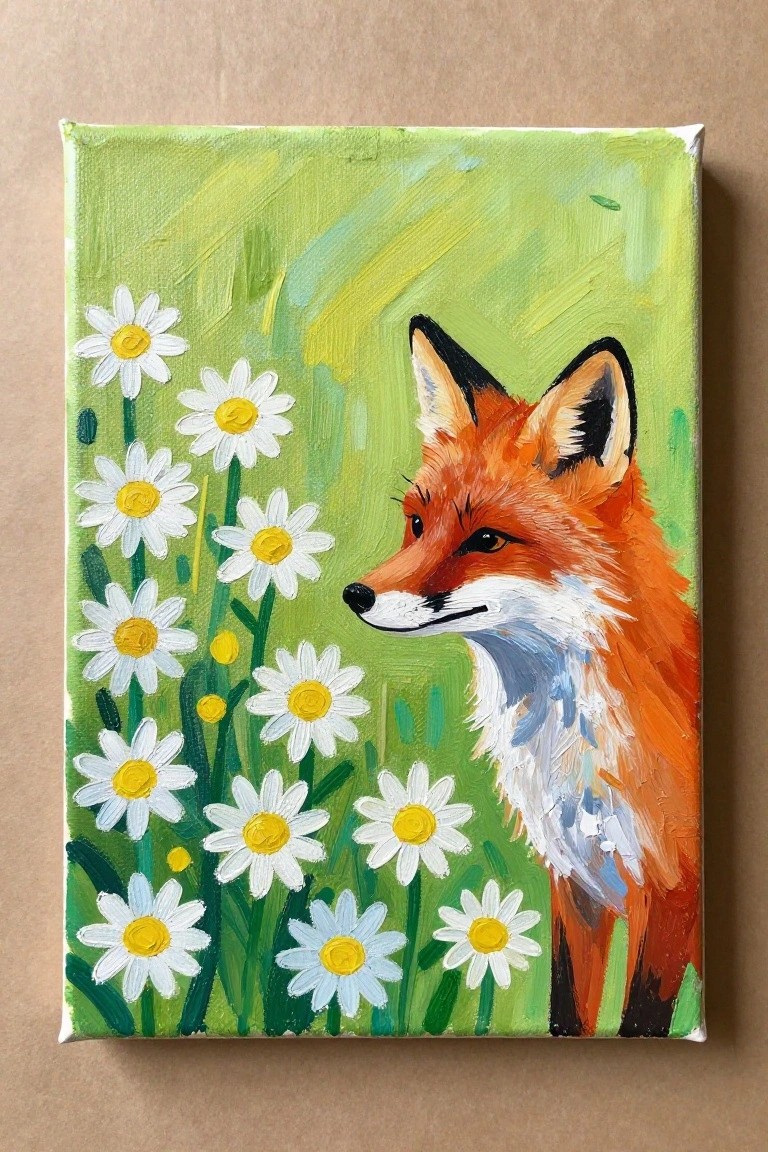
A red fox in profile sits beside a loose grouping of white daisies against a solid green background. This acrylic painting idea combines a simple animal portrait with basic floral accents to fill the canvas without needing intricate detail. The layout keeps the fox on the right and the flowers on the left so each element has breathing room on a small surface.
What makes this idea useful is the clear division between subject and background that makes it easy to block in colors first. You can change the flower type or shift the green tones to suit different seasons while keeping the same fox shape. For practice on small canvases this works well because the main forms stay readable even with thicker brushwork and fewer layers.
Geometric Fox with Teal Triangle Accent

A stylized fox built from flat color blocks works well as a simple animal painting on a small canvas. The idea uses large angular shapes for the head, ears, and body, with a teal triangle placed at the base to balance the orange and cream sections. Sharp edges and limited color areas keep the whole piece readable from a distance without needing fine brushwork.
What makes this idea useful is how the main shapes can be sketched and filled in quickly with just a few acrylic layers. The bold contrast between the orange, black, and teal does most of the visual work, so the painting still reads clearly even if the edges are slightly uneven. You could easily change the teal section to another color or adjust the angle of the shapes to create a matching set of animal canvases for wall decor.
Folk Fox with Dotted Patterns and Botanicals

A fox with repeated white dots across its body creates a clear focal point when placed against a plain background and framed by simple flowers and leaves. The idea combines an animal subject with light botanical accents, using flat color areas and minimal layering to keep the design readable on a small canvas. High contrast between the orange tones and the white space makes the whole piece feel balanced without extra detail work.
What makes this idea useful is how the pattern on the fox can be adjusted by changing the size or number of dots to match your time or skill. The layout leaves room to swap in different flower shapes or skip the gold highlights on the stems if you want a faster version. For canvas decor, this style stands out on Pinterest because the clean edges and limited color palette photograph well even in small sizes.
Sitting Fox with Mushroom on a Log
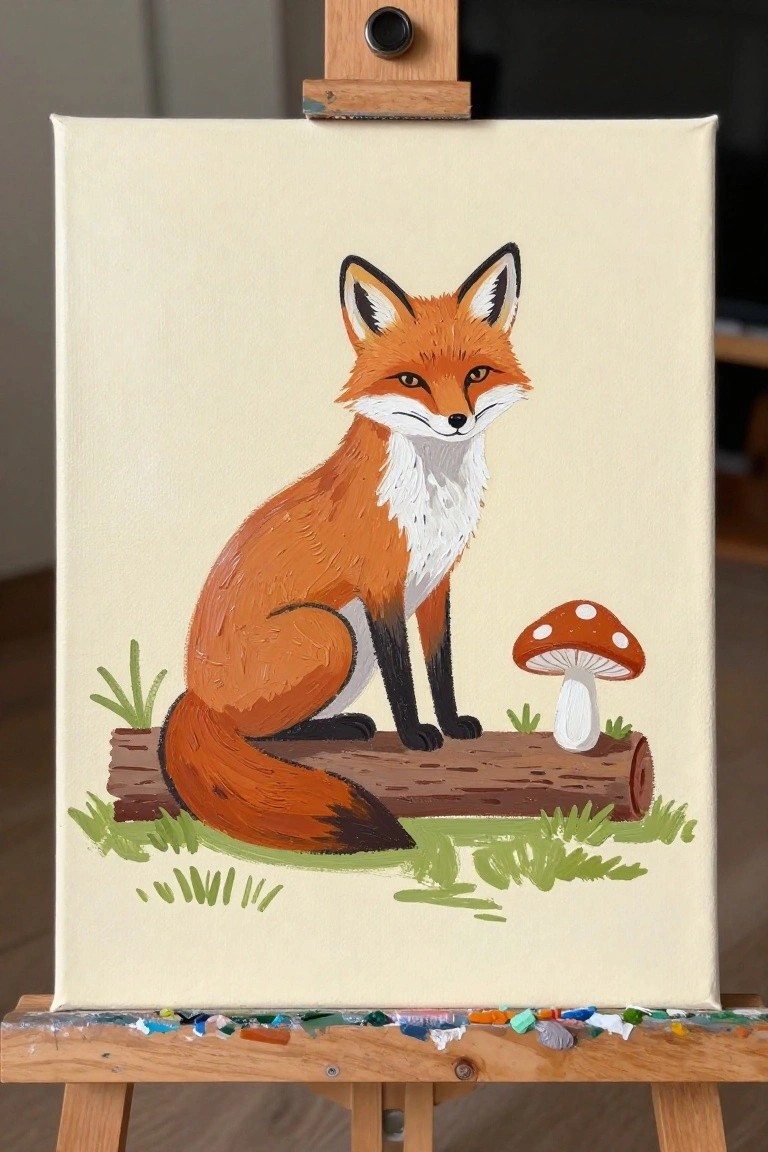
A fox seated on a log with one mushroom placed beside it creates a straightforward animal painting idea. The light background and simple ground details keep the focus on the fox’s shape and color blocks without extra elements crowding the space. This setup works as a clean animal portrait that still hints at a natural setting.
The bold color blocks and limited background make the subject easy to block in first then refine with a few layers. You could swap the mushroom for leaves or berries, or shift the log angle to fit a taller canvas. For small canvases this layout stands out on Pinterest because the fox remains the clear center while the rest stays minimal.
Fox Portrait with a Leaf and Dot Border

A centered fox face on a light background works well as a straightforward animal portrait idea. The surrounding border of repeating leaves, dots, and small circles adds structure and keeps the composition balanced without extra elements. Using a limited set of colors for both the fox and the frame helps the shapes stay distinct and easy to paint on a small canvas.
What makes this idea useful is the built-in border that frames the subject and reduces the need for extra finishing steps. You can simplify the leaf pattern to basic lines or change the accent colors to match different rooms or seasons. For practice on small canvases, the clear edges and flat areas of color let you focus on brush control rather than blending. This layout also photographs cleanly for sharing because the symmetry holds up even when the canvas size is reduced.
Fox Profile with Scattered Autumn Leaves
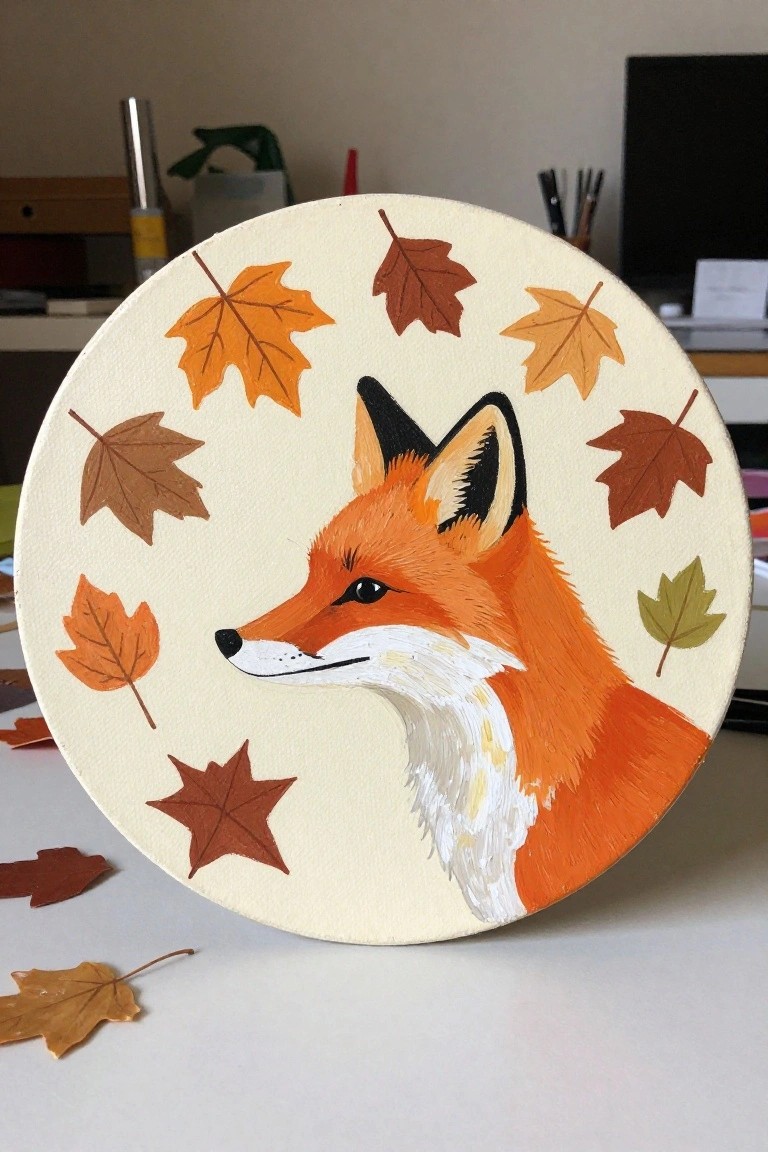
A fox head painted in side profile on a round canvas works well as a seasonal animal idea, with the orange and white fur standing out against the plain cream background. Maple leaves in warm orange and brown tones are placed around the edges to create a loose frame without crowding the main subject. The arrangement keeps the focus on the fox while the varied leaf colors and angles add visual interest without extra layers or texture.
What makes this idea useful is how the round shape and simple background reduce the amount of canvas you need to cover. You could easily adapt the leaves to other seasons or reduce their number for a faster version on a small canvas. The clear contrast between the fox and the light background helps the painting read well from a distance, which is practical for wall decor or gifts.
Centered Fox Face with Bold Color Blocks

A fox portrait makes a strong animal acrylic painting idea for small canvases because it relies on broad directional strokes to shape the face and ears. The warm orange and brown tones build the main form while dark edge lines around the ears and eyes create clear structure without needing tiny details. Adding a single cool accent color at the neck gives the composition balance and keeps the eye moving across the piece.
What makes this idea useful is how the strong value contrast between the dark ears and lighter face does most of the work, so you can finish it quickly on a small surface. You could swap the teal neck color for any other hue or drop the background to a flat wash if you want even less to manage. For practice or quick canvas decor, the centered layout and limited palette make it easy to repeat with different accent colors while still looking finished.
Stacked Fox Pair with Minimal Floral Accents

A stacked fox composition works well as a cute animal painting idea on a small canvas. One fox sits in front while the second rests just behind it, creating a simple overlapping layout that fills the space without crowding it. The clean color blocks on the fur and the few scattered flowers keep the focus on the subjects rather than background details.
What makes this idea useful is how the compact pose fits easily on smaller canvases and leaves room to change the side elements to leaves or stars if you want a different look. The limited palette helps beginners practice shape blocking and edge control before adding more layers. For practice or quick gifts, the same layout can be painted with different animal pairs or adjusted background colors to match existing room decor.
Fox Wearing a Knit Sweater
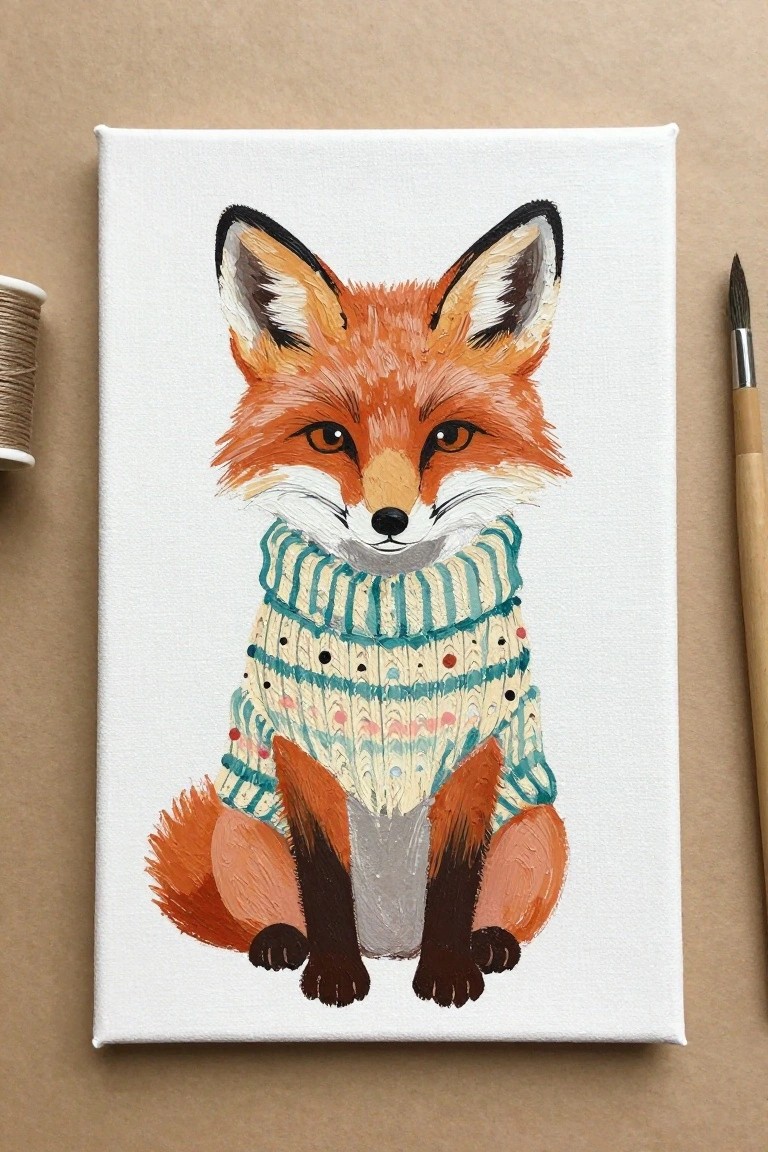
A seated fox in a patterned sweater makes a straightforward cute animal acrylic idea for small canvases. The design centers the fox against a plain white background so the orange fur and the sweater’s stripes plus scattered dots carry the visual weight. Bold black ear outlines and simple color blocks keep the focus on shape rather than fine detail.
What makes this idea useful is the sweater layer lets you practice basic pattern work without needing realistic fur texture. You can swap the teal and cream colors for any two that contrast well or drop the dots if you want a faster version. The layout also works for quick gifts or a small series where each fox gets a different sweater color.
Starry Fox Silhouette in Gold and Navy

A fox silhouette painted in a dark outline against a solid navy background forms the core of this idea, with small gold stars scattered across the body and a crescent moon placed in the upper corner. The composition keeps the focus on the animal shape while using metallic dots to create visual interest without adding extra elements. This approach fits the decorative animal category and works through high contrast between the deep background and the light accents.
What makes this idea useful is how the silhouette reduces the need for detailed fur or shading, making it straightforward to paint on a small canvas. You can change the gold to silver or white and shift the moon position to create quick variations. The clean layout also adapts easily for practice sessions or as a repeatable design for multiple canvases.
Fox Portrait with a Daisy Crown

A centered fox face with a small daisy crown offers a clean animal portrait idea that fits small canvases well. The orange fur stands out against the soft green background, and the white chest and inner ears create enough contrast to keep the focus on the face. Adding a few leaves and tiny blooms around the ears turns a basic animal study into a decorative piece without needing complex layering.
What makes this idea useful is how the crown can be changed to match whatever flower shapes or colors you already have mixed. The layout works for quick practice because the fur can stay loose while the background stays flat. For canvas decor, the same fox works on different background tones or with fewer leaves if you want a simpler version that still reads clearly from a distance.
Geometric Fox with Flat Color Blocks
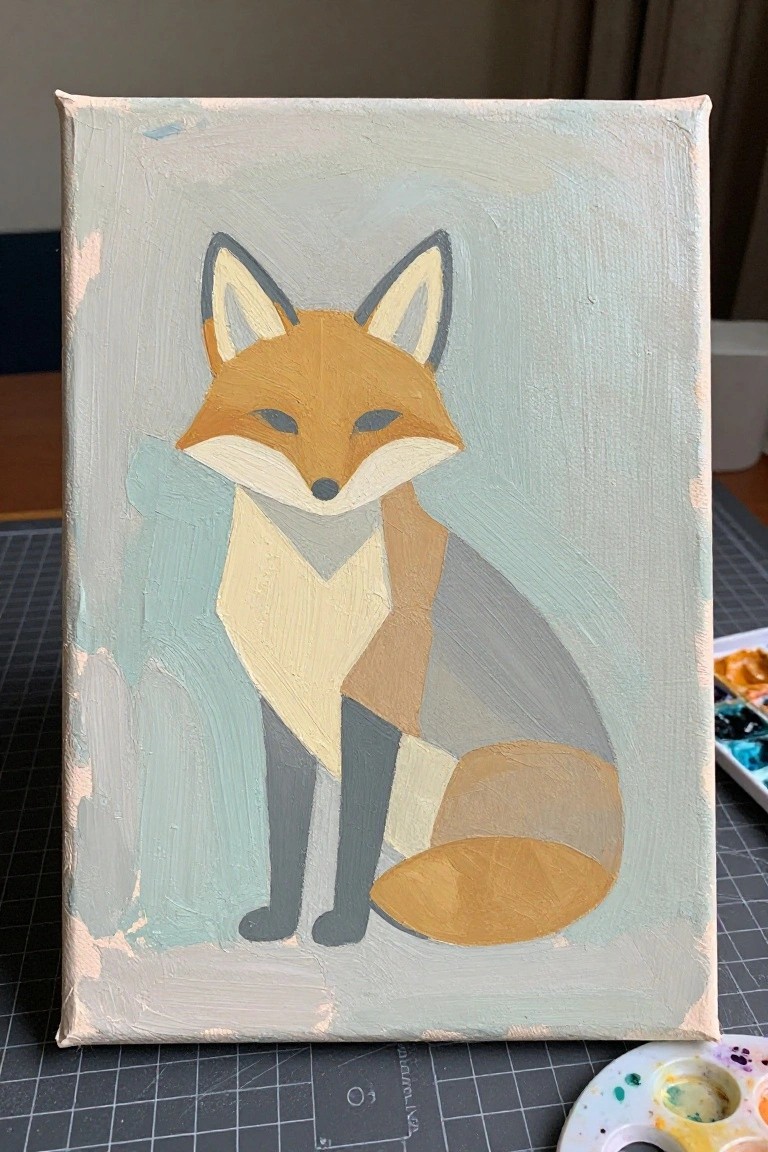
A geometric fox built from simple flat shapes makes an effective cute animal acrylic idea for small canvases. Large sections of orange, cream, and gray form the body, head, and tail while the light background keeps the focus on the figure. The clean edges and limited palette create a balanced, readable composition that works without extra texture or detail.
What makes this idea useful is how the blocky layout fits small canvases and needs only basic color blocking to finish. You can shift the background to a different neutral or swap the tail color to match a room without changing the overall design. This kind of clean animal painting shows up well on Pinterest because the strong shapes read clearly even when scaled down.
Fox Portrait Framed by a Leaf and Berry Wreath

A centered fox portrait inside a circular wreath of leaves and berries gives a straightforward animal painting idea that works well on small canvases or wood panels. The idea relies on placing the fox in the middle and building the wreath around it to create a natural border that keeps the composition balanced. This approach fits the animal category with added decorative elements that use repeated leaf shapes and a few berry accents for visual interest.
What makes this idea useful is how the wreath can be sketched first as loose ovals to guide placement before adding color. The strong orange against the green and red helps the fox stand out even with basic brushwork, and the light wood background removes the need for extra layers. You could swap berry colors or simplify the leaves to match different seasons, and the square format makes it easy to turn into quick wall art or gifts without extra framing.
Frequently Asked Questions
1. What size canvases work best for these simple fox acrylic painting ideas? Small canvases measuring 5 by 7 inches or 8 by 10 inches are ideal because they match the scale of the designs and allow you to complete a project in one or two sessions. These sizes also make the paintings easy to frame or display on a shelf without taking up much space.
2. Which acrylic paints and brushes should I use for painting foxes on small canvases? Start with a basic set of acrylics that includes burnt sienna, titanium white, black, yellow ochre, and cadmium red for fur tones. Use small round brushes in sizes 0 and 2 along with a flat brush for backgrounds. These tools help you add fine details like whiskers and eyes without overwhelming the limited surface area.
3. How can beginners simplify the fox designs even further if the ideas feel detailed? Focus on blocking in the main shapes first with larger brush strokes and then add minimal details such as ear outlines and eye highlights. Many of the ideas include step-by-step breakdowns that let you stop at a loose style rather than aiming for realism, which keeps the process enjoyable and less time-consuming on small surfaces.
4. What techniques prevent paint from drying too quickly when working on small canvases? Acrylics dry fast on small areas, so mist your palette lightly with water every few minutes and work in thin layers. Keep a damp cloth nearby to wipe mistakes immediately, and consider using a slow-drying medium mixed into your paints if you need more time to blend fur textures smoothly.
5. How should I seal and display the finished fox paintings to protect them? Apply two thin coats of acrylic varnish once the paint is fully dry, allowing each coat to cure for 24 hours. For display, attach a small sawtooth hanger to the back or place the canvas in a simple floating frame that matches the artwork size. This approach keeps the paintings looking fresh and prevents dust buildup over time.

Hi, I’m Camille.
I’m a self-taught painter and creative blogger with a soft spot for acrylic painting, color play, and all the little art ideas that make everyday life feel more inspiring.
I started this space because I’ve always believed painting should feel joyful, approachable, and a little personal. Some of my favorite pieces come from simple ideas, messy palettes, and evenings where I just felt like making something pretty.
Most of what I share begins with acrylic painting, but I also love exploring other mediums when creativity pulls me in a new direction. My goal is to collect and share painting ideas that feel fun, beautiful, and actually doable, whether the mood is calm and minimal or bright and playful.
This is a space for inspiration, experimenting, and enjoying art without overcomplicating it.