
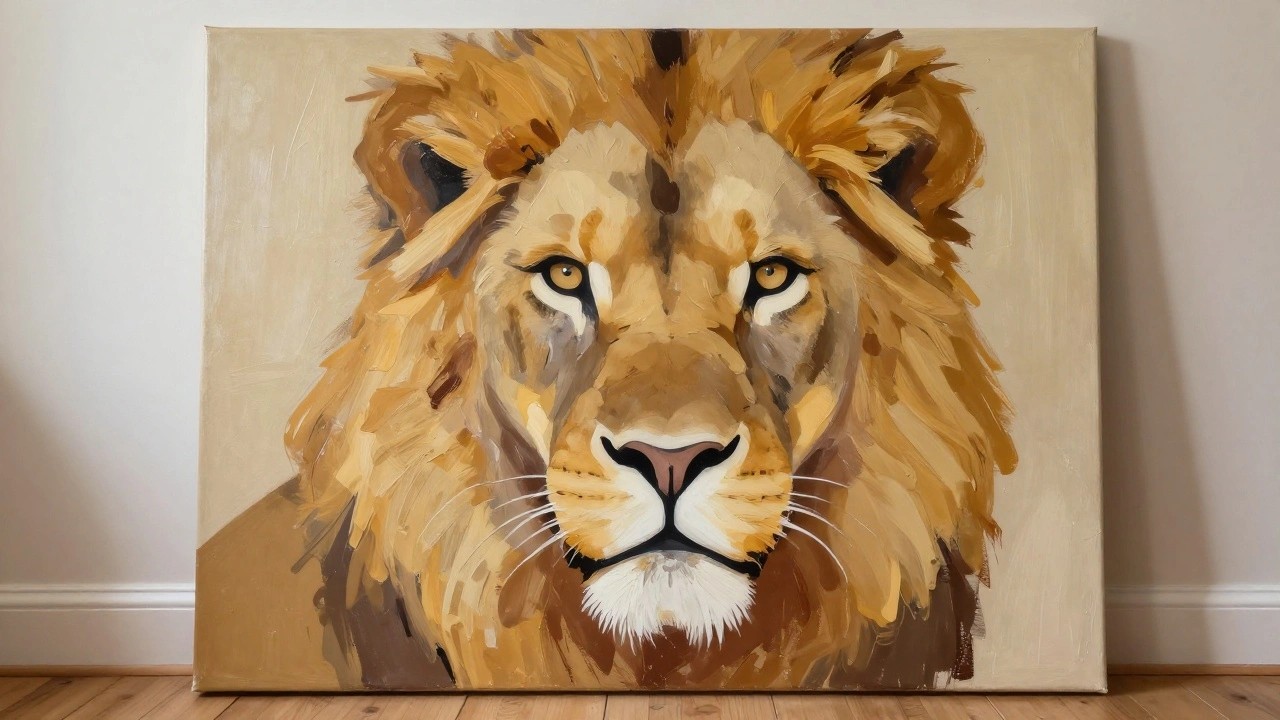
I have been trying out larger canvases for my acrylic paintings lately.
Animals work well on a big scale because you can focus on the textures without crowding everything in.
I came up with some ideas for oversized wildlife portraits that stay simple but still look solid when finished.
Most of them use basic color layers and avoid too many small details that might get lost up close.
These are the kinds of pieces I would hang if I had the wall space for them.
Textured Lion Portrait with Bold Brushwork
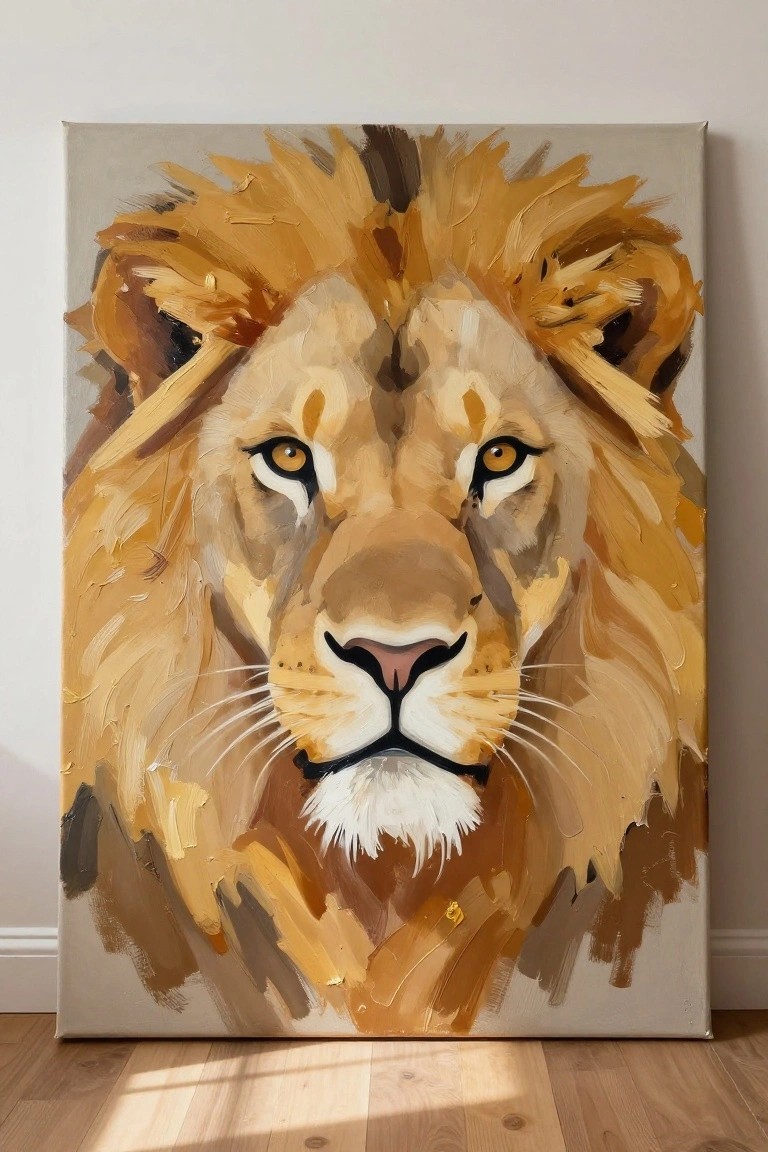
A close-up lion head makes an effective large canvas idea because the directional strokes build volume in the mane while keeping the face as the clear focal point. Warm earth tones layered over a neutral ground create strong contrast around the eyes and muzzle without requiring tight detail everywhere. This fits the textured animal portrait category and works especially well when the background stays simple so the head fills most of the frame.
What makes this idea useful is that the same loose stroke approach can be scaled down or sped up by reducing the number of mane layers. You could swap the palette to cooler grays for a different big cat or tighten the crop to a square canvas if the original rectangular format feels too tall. The centered placement also makes it easy to adapt for a statement wall piece without needing extra background elements.
Oversized Elephant Savanna Portrait

A large elephant portrait idea centers the animal’s head and trunk as the main focus while placing it against a simple savanna background with scattered trees. The acrylic painting idea uses warm browns and ochres to keep the elephant and landscape connected through similar tones. This approach fits the wildlife portrait category on a big canvas and works because the spread ears create natural framing that holds the viewer’s attention.
What makes this idea useful is the way the elephant fills most of the space, so the background stays loose and easy to paint. The limited earthy palette cuts down on color mixing time and still gives the piece strong presence on a wall. For canvas decor you could crop tighter around the head for a different version or add more foreground brushstrokes if you want extra texture. An acrylic idea like this stands out on Pinterest because the scale and direct gaze make it easy to recognize even in a small thumbnail.
Tall Giraffe Portrait with Minimal Sky and Ground
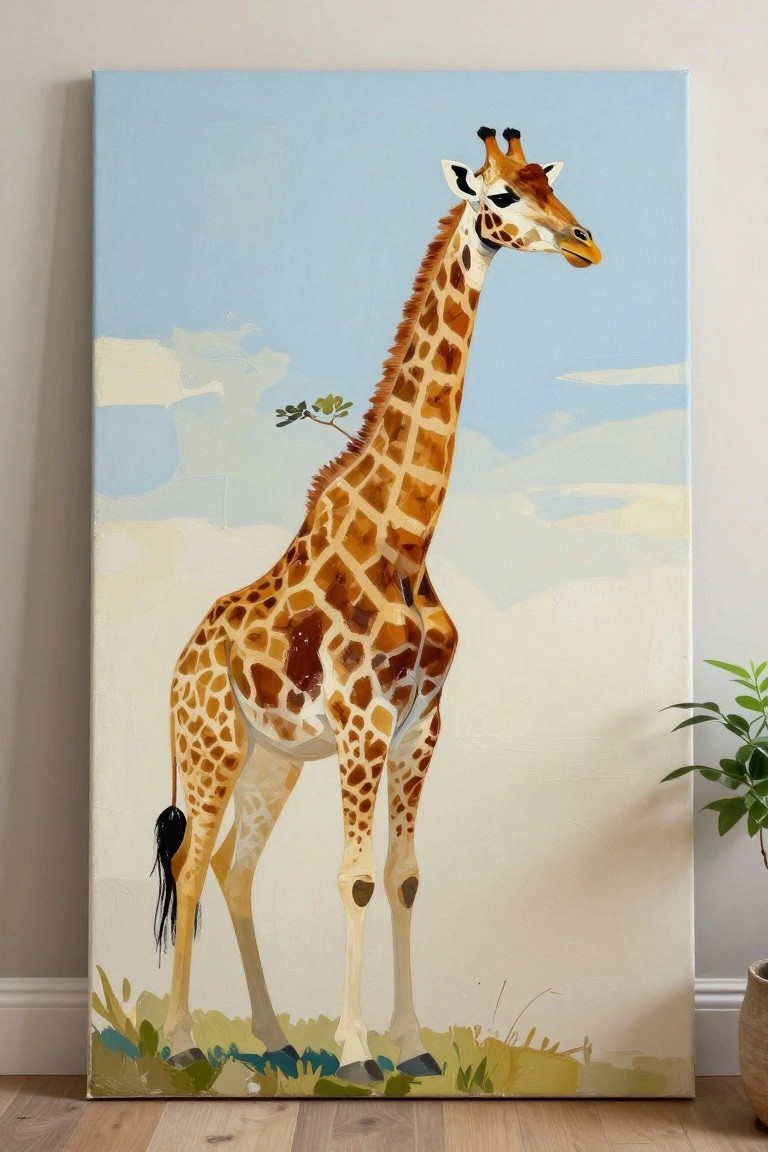
A single giraffe standing full height makes a strong large canvas animal painting because the long neck and spotted pattern naturally lead the eye upward and fill vertical space. This idea keeps the background simple with a light sky and basic ground plane so the animal remains the clear focus without extra elements competing for attention. It fits the oversized wildlife portrait category and uses clean shapes plus contrast between the brown markings and pale surroundings to work well at big sizes.
What makes this idea useful is how the limited background reduces the amount of painting needed on a large canvas while still giving the subject context. You can adapt it by shifting the sky color or ground tones to fit different rooms or seasons. For practice, this kind of subject lets you focus on building the pattern and proportions first before adding more detail later. An acrylic idea like this works especially well for wall art because the single figure reads clearly from across a room.
Tiger Face Portrait Against a Solid Green Backdrop
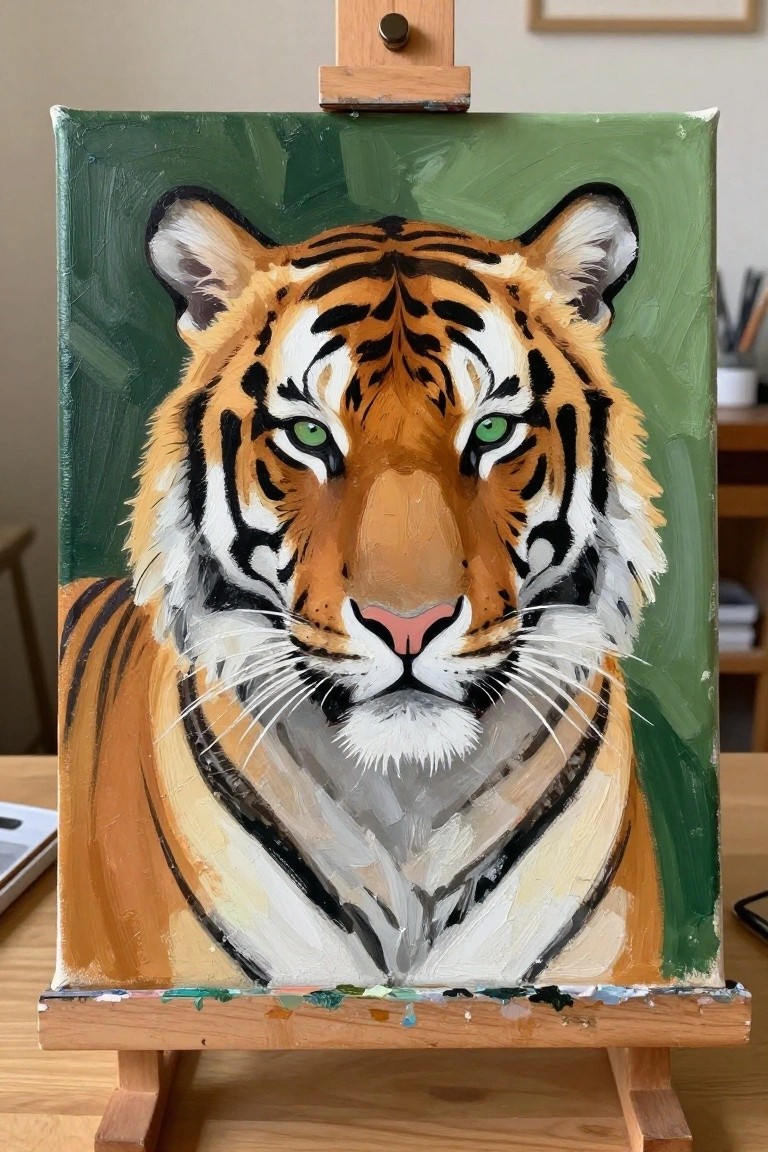
A frontal tiger portrait idea centers the animal’s face to fill the canvas while keeping the background to a single flat color. This acrylic approach relies on broad strokes for the orange and white fur sections, dark stripe shapes, and a green field that creates immediate contrast around the head. It belongs in the oversized wildlife category because the layout stays focused on the animal without added scenery or details.
What makes this idea useful is how the single background color removes the need to paint extra layers or textures behind the subject. The bold stripe placement and eye color give you clear focal points to build around, and the same layout adapts quickly by swapping the green for blue or brown on future canvases. For large wall art, this kind of direct animal portrait stands out on Pinterest because the high contrast reads well even in small preview images.
Polar Bear in a Minimal Snowy Setting

A polar bear as the main subject creates a strong large canvas animal idea by keeping the background simple with soft blue tones and white snow patches. The composition works because the bear fills most of the space and stands out through its rounded form against the flat color field. This approach fits the oversized wildlife portrait category with its clear focus on shape and limited detail.
What makes this idea useful is the straightforward color blocking that lets you build the bear in layers without needing complex blending. The same layout adapts easily by swapping the animal for another arctic species or adjusting the background to a different cool tone. For practice on big canvases, the clean edges and flat areas help the piece read well from across the room without extra texture work.
Large Wolf Portrait with Layered Fur and Forest Background
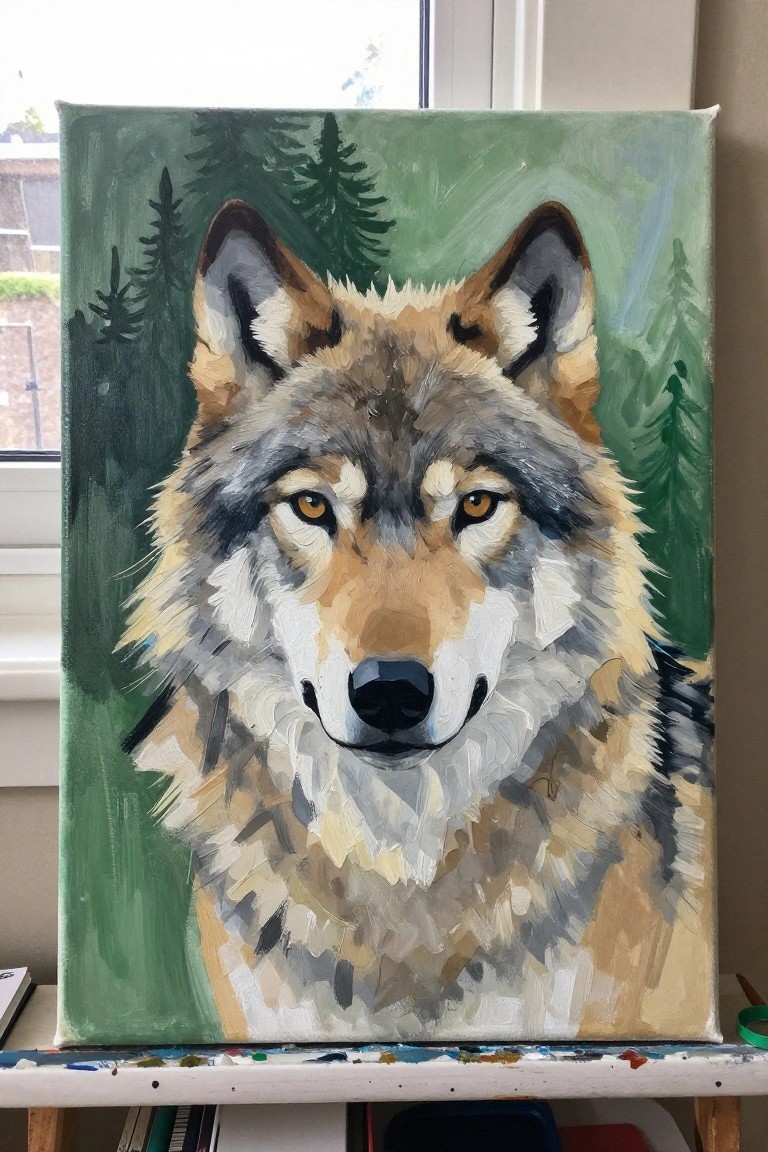
A close-up wolf portrait works well as a large canvas acrylic idea because the animal’s face fills most of the frame while a simple forest background provides context. The painting uses visible brushstrokes to build the fur in sections of brown, gray, and white, with the green trees kept loose and out of focus so they do not pull attention from the wolf. This approach fits the oversized wildlife category, where the subject stays dominant and the background stays supportive.
What makes this idea useful is the clear center of interest on the eyes and muzzle, which makes the painting read well from across a room. The earth-tone palette against green is easy to adjust if you want a different season or a plainer background, and the same layout can be scaled down or simplified by reducing the number of tree shapes. For canvas decor, the tight crop keeps the focus strong even on a big surface.
Bold Black and White Zebra Portrait

A close-up zebra head painted in strong black and white stripes against a plain canvas creates a graphic animal portrait that works well for oversized wall art. The idea centers on using the natural stripe pattern as the main visual element, with the face turned slightly to show depth while keeping the background empty. This approach keeps the focus on the sharp edges and high contrast that define the zebra’s shape without needing extra details or color.
What makes this idea useful is how the empty background lets the stripes carry the whole composition, so you can scale it up easily on a large canvas. The limited palette means fewer color decisions and more time spent on the stripe layout, which can be adjusted by making some lines thicker or softer to change the mood. For practice, this kind of subject helps you work on clean edges and value contrast before moving on to more complex animal paintings.
Gorilla Portrait with Flower Crown
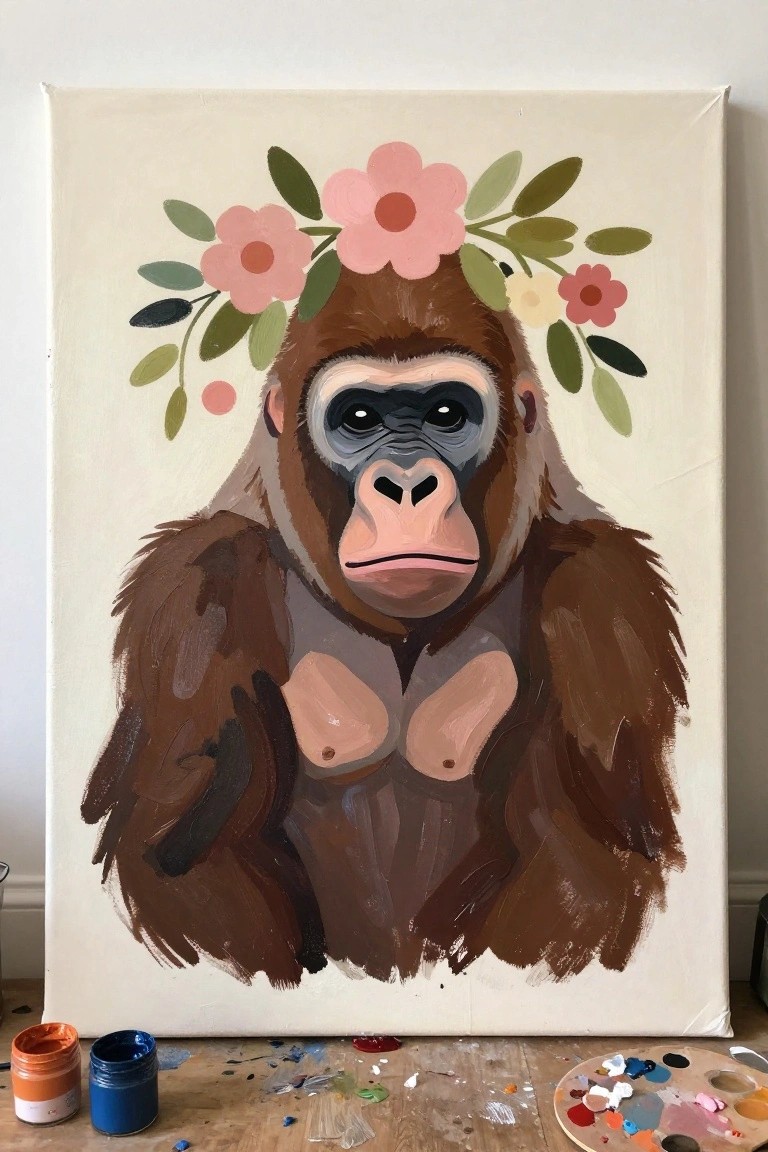
A centered gorilla portrait on a large canvas pairs a realistic animal subject with a simple flower crown made of pink blooms and green leaves. This acrylic painting idea fits the decorative animal category by using a plain background and balanced placement to keep attention on the face while adding visual interest at the top. Visible brushwork in the brown fur builds texture without needing complex details, and the soft edges on the flowers help the composition stay clean and effective for oversized wall art.
What makes this idea useful is how the flower crown can be changed in color or simplified to match different rooms or seasons. For canvas art, something like this works especially well because the large face fills most of the space and limits background work. The bold contrast between the dark fur and light background makes the piece stand out on a wall while staying straightforward to paint over a couple of sessions.
Oversized Bison Portrait Using Textured Acrylic Layers
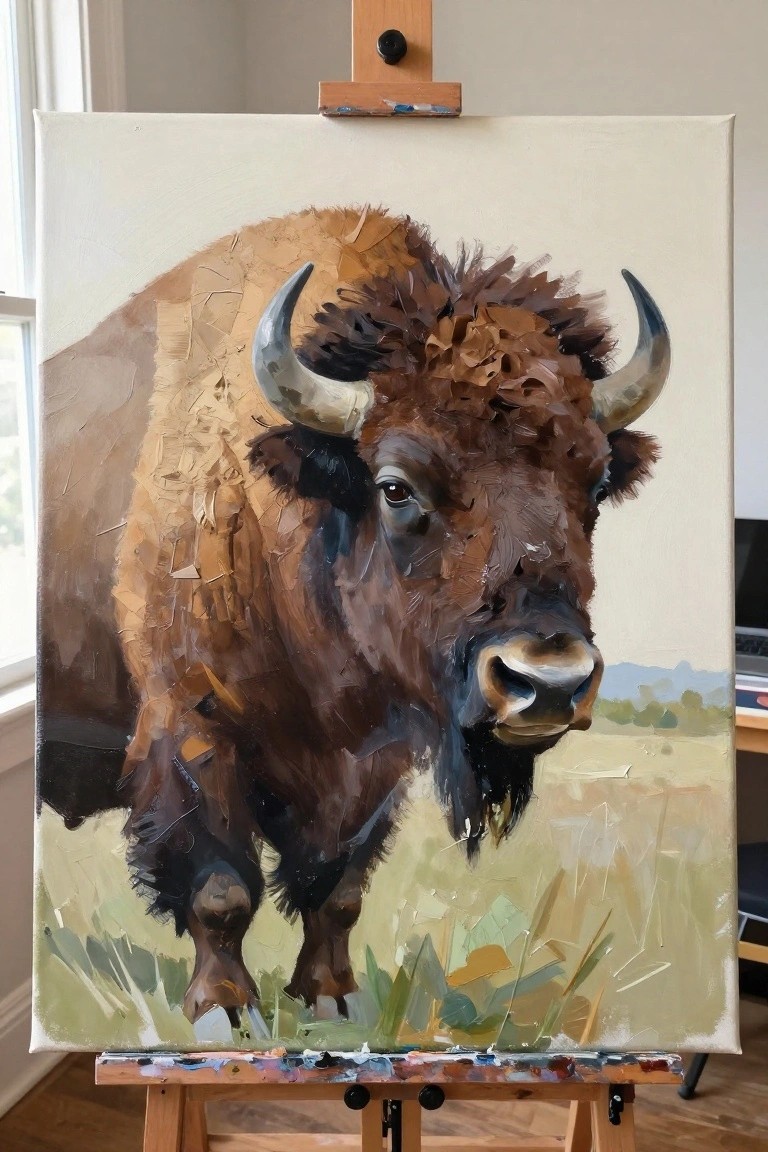
A bison works well as the main subject for a large canvas because its bulky shape and prominent horns naturally dominate the frame. Thick, broken brushstrokes build the shaggy fur and create visible texture across the body and head without needing extreme detail in every area. The muted earth tones and minimal prairie background keep attention on the animal while still suggesting an outdoor setting.
What makes this idea useful is how the strong value contrast between the dark body and lighter horns helps the painting hold up when viewed from across a room. You could crop the composition tighter around the head and shoulders to make it even simpler to paint on a big canvas. The same approach adapts easily by swapping in different neutral tones or reducing the amount of texture if you want a faster version for practice or wall art.
Peacock Portrait with Fully Fanned Tail on White Canvas

A large canvas peacock painting centers the bird in profile while its tail spreads wide to fill the upper space and create a strong focal shape. The idea uses the contrast between the deep blues and greens of the feathers against an unpainted white background to keep the composition clean and readable. This approach fits oversized animal portraits where the pattern of the tail becomes the main visual interest.
What makes this idea useful is how the plain background reduces the amount of painting needed while still letting the feather shapes carry the piece. You can adapt it by scaling the tail width to match your canvas size or by simplifying some of the eye spots if you want fewer details. For wall art the clear outline helps the painting stand out without extra elements. The same layout also works if you switch the colors to match a different room palette.
Profile View Deer Portrait for Large Canvases
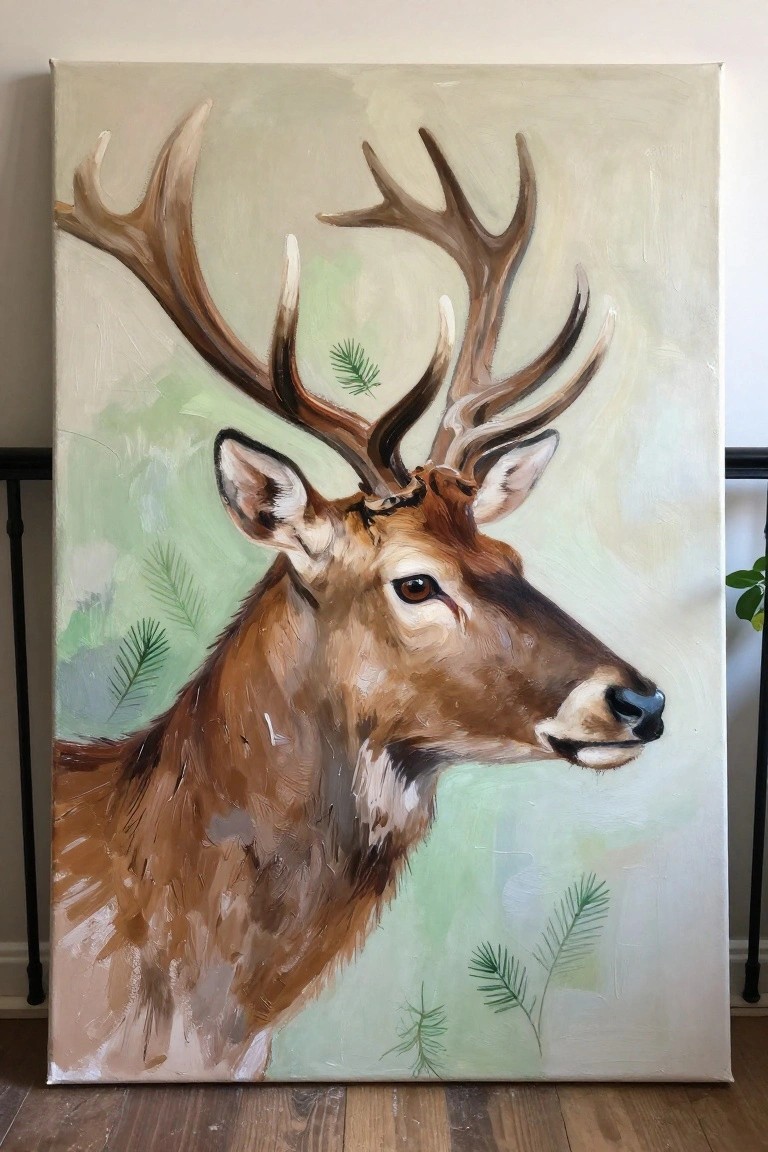
A deer head in profile makes a strong oversized wildlife painting by centering the antlers as the main focal point against a soft, blended backdrop. The idea keeps the fur and antlers textured through visible brushwork while using faint pine needles to suggest a natural setting without filling the space. This animal painting approach works as wall art because the clean side view and muted palette let the shape of the head stand out clearly on a big canvas.
What makes this idea useful is how the profile layout reduces the need for complex perspective, so you can focus on building up the antlers and face first. You can swap the soft greens for other room colors or drop the background details entirely if you want a quicker version. For canvas decor, the strong antler shape helps the piece read well from a distance and gives it more presence in a wildlife series than a full-body view would.
Leopard Face Close-Up on Large Canvas

A tight acrylic portrait of a leopard makes a strong choice for oversized wildlife painting because the direct gaze and bold spot pattern hold attention across a big surface. The idea centers on building the face with layered earth tones so the fur and markings stay readable even from a distance. This approach fits the animal portrait category where contrast between dark spots and warm base colors does most of the visual work.
What makes this idea useful is that the same close framing works for other big cats without needing a full-body layout. The limited background keeps the focus on the head and lets you adjust spot size or fur edges if you want a faster version. For wall art the earth-tone palette is easy to match with room colors, and the large scale helps the piece read clearly on Pinterest.
Stylized Peacock Built from Bold Color Blocks
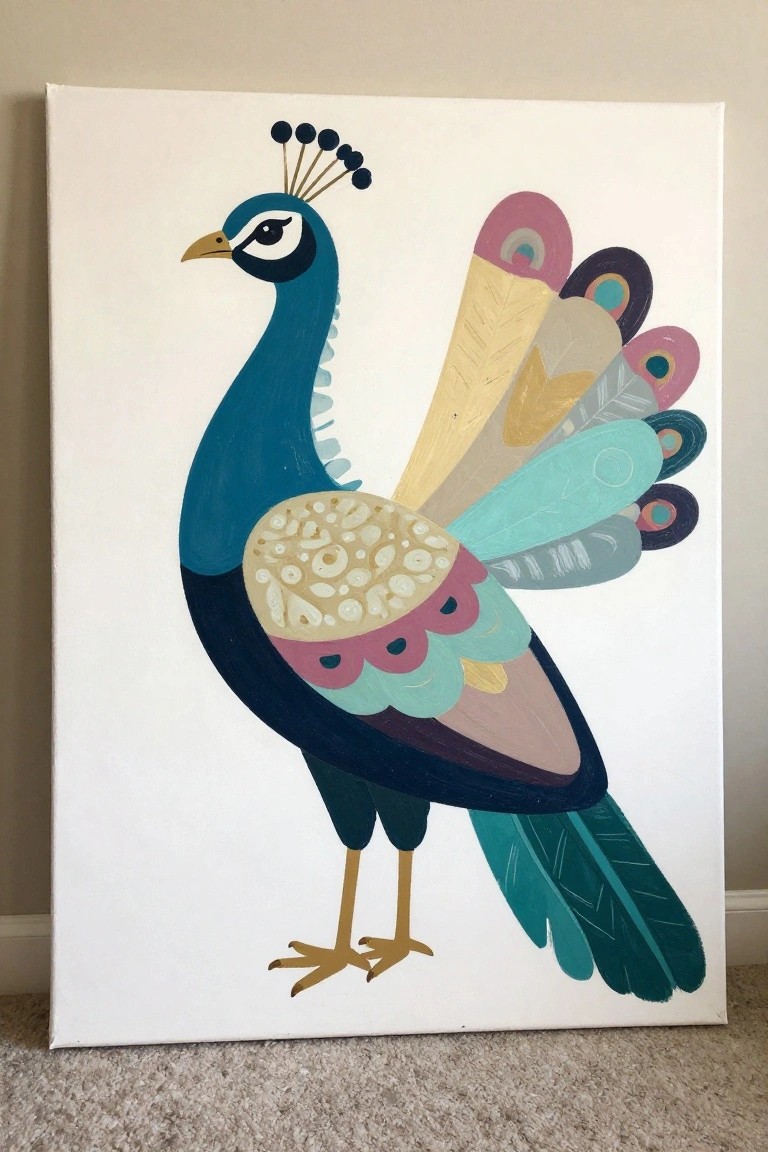
A peacock painted with large flat color areas gives a clean decorative animal idea that works well on oversized canvas. The body stays simple in dark blue while the tail breaks into separate feather shapes filled with different hues and light patterns. Strong contrast between the dark main form and the lighter tail sections makes the whole piece read clearly from across a room.
What makes this idea useful is how the graphic layout lets you adjust the number of tail feathers or swap in new colors without changing the structure. You can keep the same pose but simplify the feather details further for quicker painting or add more pattern inside each section for extra interest. The white background and sharp edges also make it easy to hang as wall art or adapt for a different animal shape.
Centered Bear Portrait on a Large Neutral Canvas

A sitting bear serves as the main subject in this oversized animal painting idea, with the body filling most of the canvas and the head positioned high for direct focus. The acrylic approach relies on broad, visible brushstrokes to shape the fur and face while keeping the background plain and the only added elements a simple strip of grass plus two small flowers. This layout fits the wildlife portrait category because the centered subject and minimal base details create clear visual weight without extra scenery.
What makes this idea useful is how the empty background keeps attention on the bear while the grass strip gives the composition a grounded base that still leaves room around the edges. You can adapt it by changing the bear’s brown tones to match a different animal or by reducing the flowers to one if you want fewer elements to paint. For large canvas decor this works especially well because the simple layout scales without becoming overwhelming and the flat background makes it easy to personalize with your own color choices.
Oversized Humpback Whale Rising Through Layered Blues
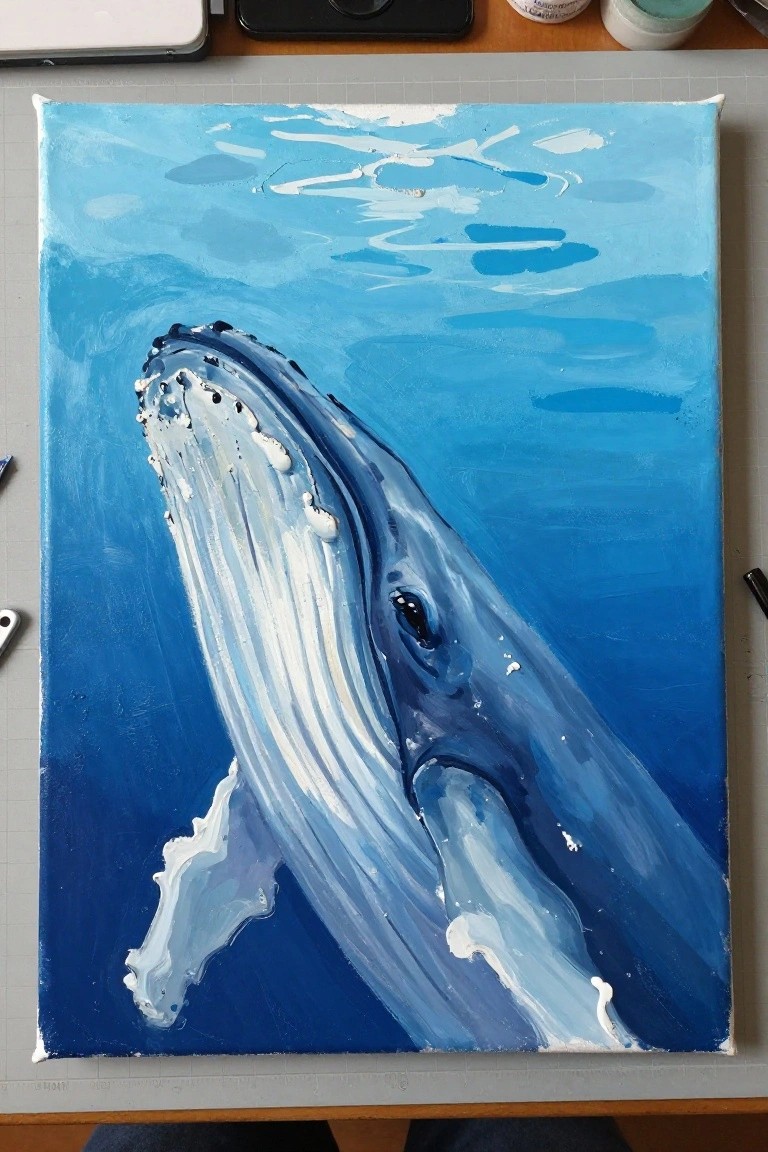
A large canvas acrylic painting of a humpback whale uses broad upward strokes and shifting blue tones to show the animal moving through water. The idea centers on a simplified animal form with strong light-to-dark contrast and minimal background detail so the whale fills most of the space. This approach works as a wildlife portrait that relies on shape and value changes rather than fine detail to hold attention on a big wall.
What makes this idea useful is the clear vertical layout that guides the eye without needing complex scenery. The limited color range keeps mixing simple while still giving enough variation for depth. You could easily adapt it by swapping in cooler or warmer blues or reducing the white highlights if you want a quicker version for practice. For oversized canvas work the strong silhouette stands out even from across a room and translates well to Pinterest boards focused on animal portraits.
Large Flamingo Portrait in Soft Acrylic Tones
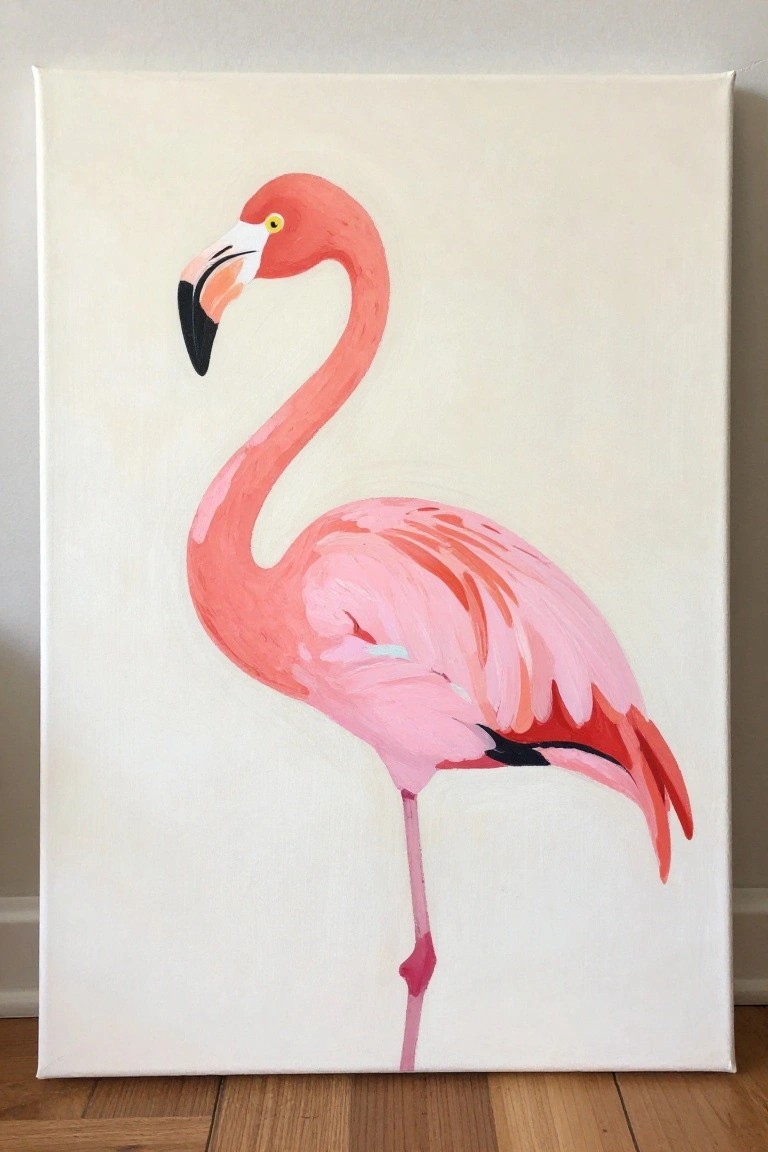
A flamingo painted in acrylics on a big canvas makes a simple yet striking animal subject by keeping the focus on its curved neck and single-leg stance. The idea relies on a narrow range of pinks and corals set against a plain neutral background so the bird’s form stays clear and balanced. This approach fits the animal category as a graphic wildlife portrait that works for oversized wall pieces without needing extra elements.
What makes this idea useful is the clean layout that lets you practice smooth color blending and basic shape blocking on a large scale. You could shift the pink tones toward coral or peach to match different rooms or swap the background shade for more contrast. For canvas art, something like this stands out on Pinterest because the bold outline and limited palette translate well even when simplified.
Oversized Rhino Portrait with Neutral Background
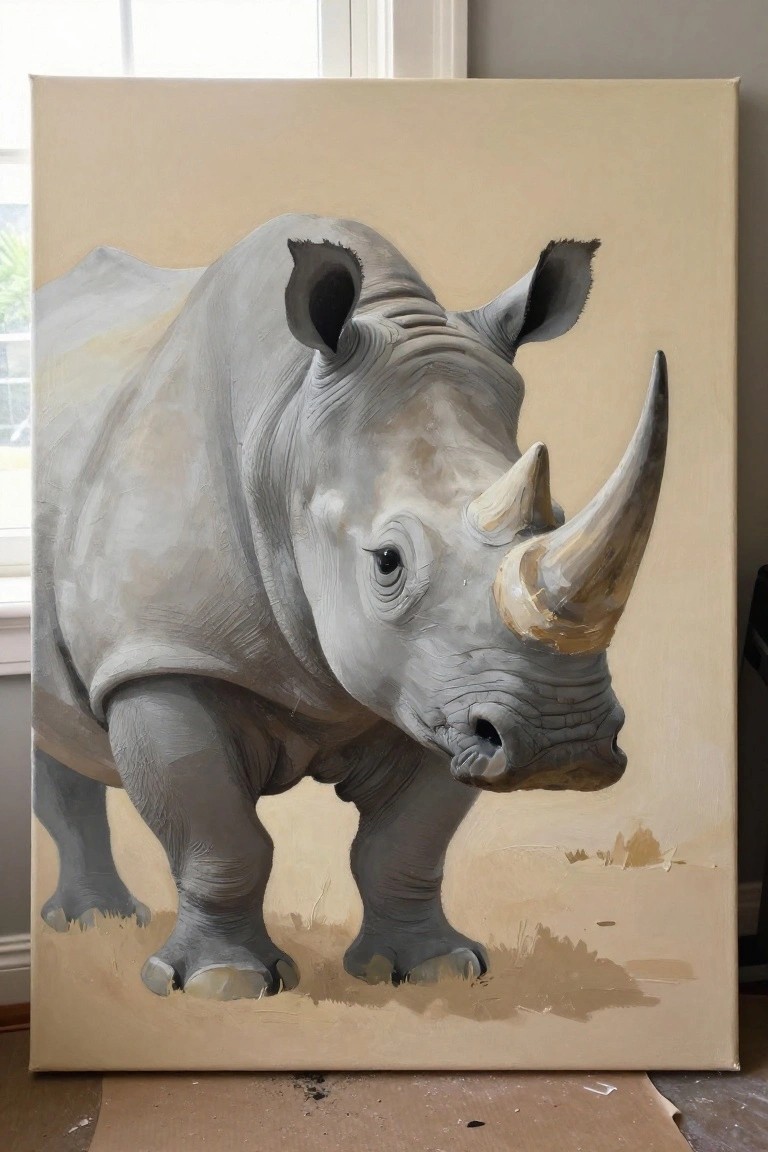
A large canvas rhino portrait uses a close head-and-shoulders view to fill most of the space while keeping the background simple and sandy. The idea relies on layered gray tones with visible brushwork to build skin texture and horn highlights without needing a busy setting. This approach fits the oversized wildlife category because the plain backdrop lets the animal’s shape and weight carry the whole composition.
What makes this idea useful is the straightforward layout that works on any large canvas size. The limited color range makes it easy to adapt by swapping in warmer browns or cooler grays depending on the room. For practice, focus first on the head and horns, then add the legs and ground only if you want more detail. The same idea can be simplified further by cropping even tighter around the face or turned into a series with other big mammals.
Oversized Horse Head in Expressive Acrylic Brushwork

A large canvas horse portrait idea works by using broad acrylic strokes to build the head and neck in profile with simplified color blocks. The composition gains strength from the sharp contrast between the rich brown tones and the white facial stripe, which keeps the focus on the overall shape rather than small details. This approach lands squarely in the animal painting category as an oversized wildlife-style piece suited for wall display.
What makes this idea useful is the way the blocked colors let you cover a big canvas fast without overworking small areas. The profile layout adapts easily if you want to swap in a different breed or shift the background tone to fit a room. For practice, the same structure works well as a quick study that still reads clearly from across the room and performs strongly on Pinterest for animal art searches.
Red Panda Portrait with Leaf Frame
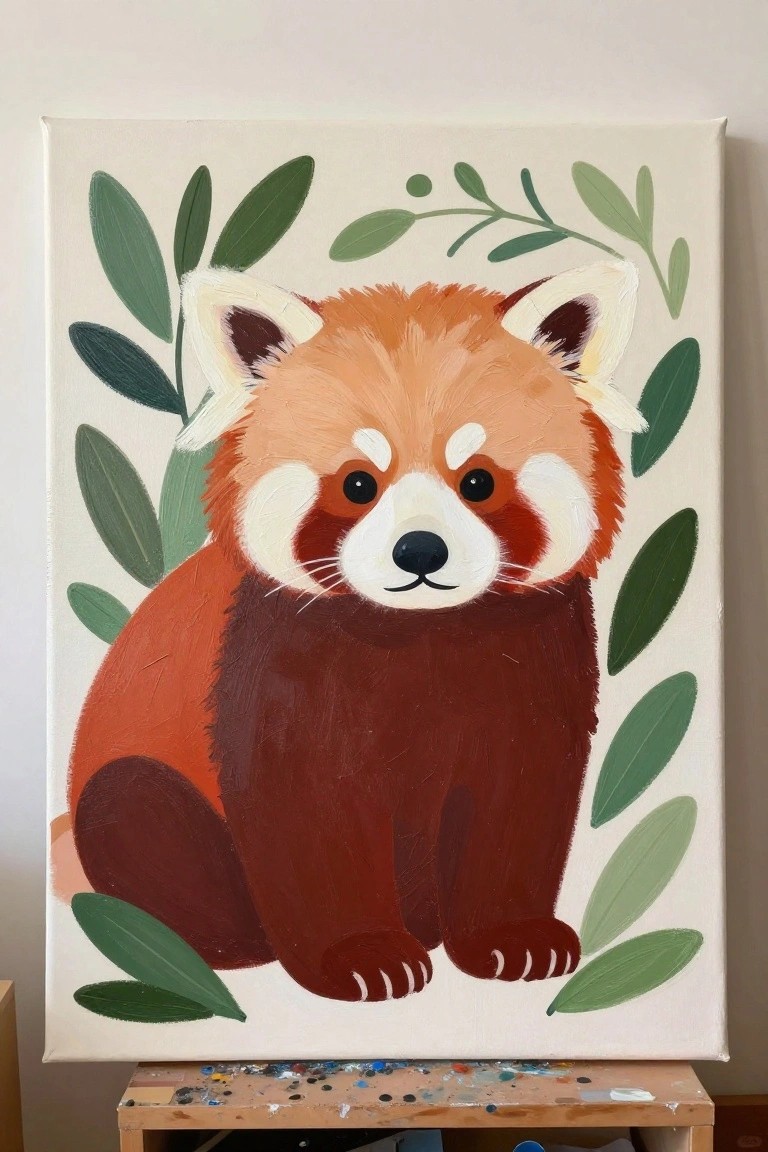
A red panda portrait idea works as a large canvas project because the rounded body and clear facial markings allow broad color blocks to define the form quickly. The composition places the animal against a plain background with a loose ring of green leaves that frames the subject without adding clutter. This approach falls into the cute animal category and relies on simple shape contrast rather than heavy detail to hold attention at a distance.
What makes this idea useful is the straightforward layout that scales easily to oversized canvases without requiring complex backgrounds. You can adapt the leaf shapes to whatever brush size feels comfortable or swap the greens for other tones that match your space. For practice, this kind of subject keeps the focus on building the face and body in layers while the surrounding leaves help balance the empty space around the edges.
Centered Orangutan Portrait on a Pale Background
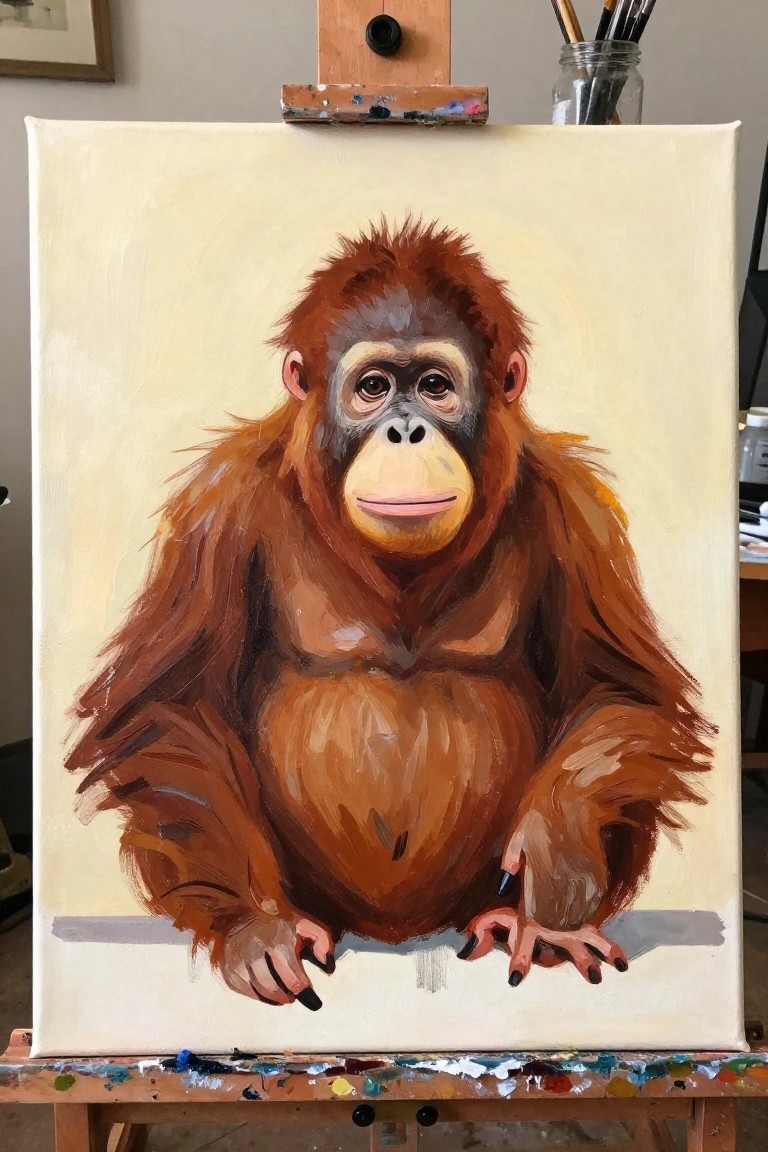
An orangutan portrait idea works as a large canvas acrylic by placing the animal front and center against a plain off-white background. The composition relies on the reddish brown fur mass and the direct face placement to hold attention across a big surface. It falls into the oversized wildlife portrait category where the focus stays on building fur volume through broad brushstrokes rather than adding scenery.
What makes this idea useful is the neutral background that keeps the painting from feeling crowded on a large canvas. You could adapt the same layout for other primates or similar mammals while keeping the limited color range and centered pose. For practice this subject helps work on layering mid-tone fur over darker base colors, and the straightforward setup makes it easy to scale up or simplify for different canvas sizes.
Segmented Bird Portraits in Solid Color Panels
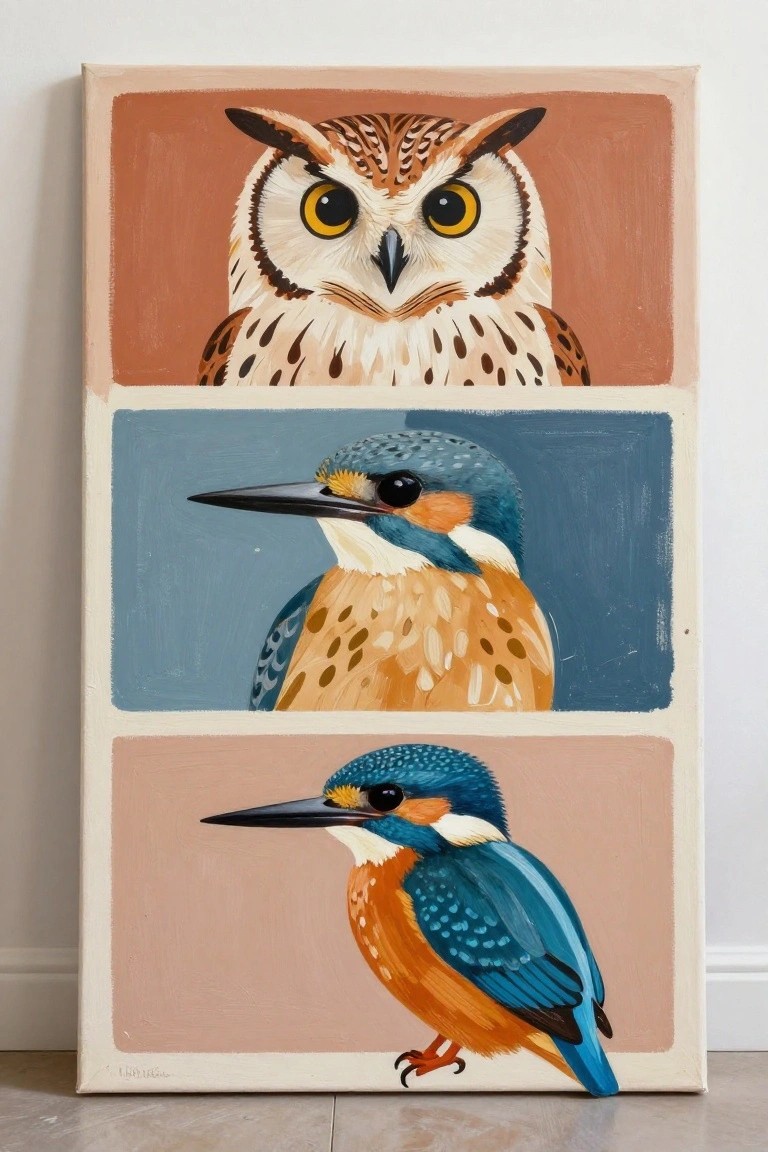
This acrylic painting idea places three bird portraits on one tall canvas divided into horizontal sections, each with its own solid background color. An owl fills the top panel while two kingfishers occupy the middle and bottom panels, all rendered with clear outlines and focused detail against the flat fields of color. The simple panel layout removes the need for shared scenery and lets each bird stand out through direct contrast with its background.
What makes this idea useful is the clean separation that lets you paint one section at a time without worrying about blending edges. You can swap the birds for other species you prefer or change the background hues to fit a specific room. The format also works well for a tall vertical canvas where a single large subject might feel too empty, and it translates easily to prints or posters if you want multiple color variations.
Oversized Walrus Portrait in Muted Tones
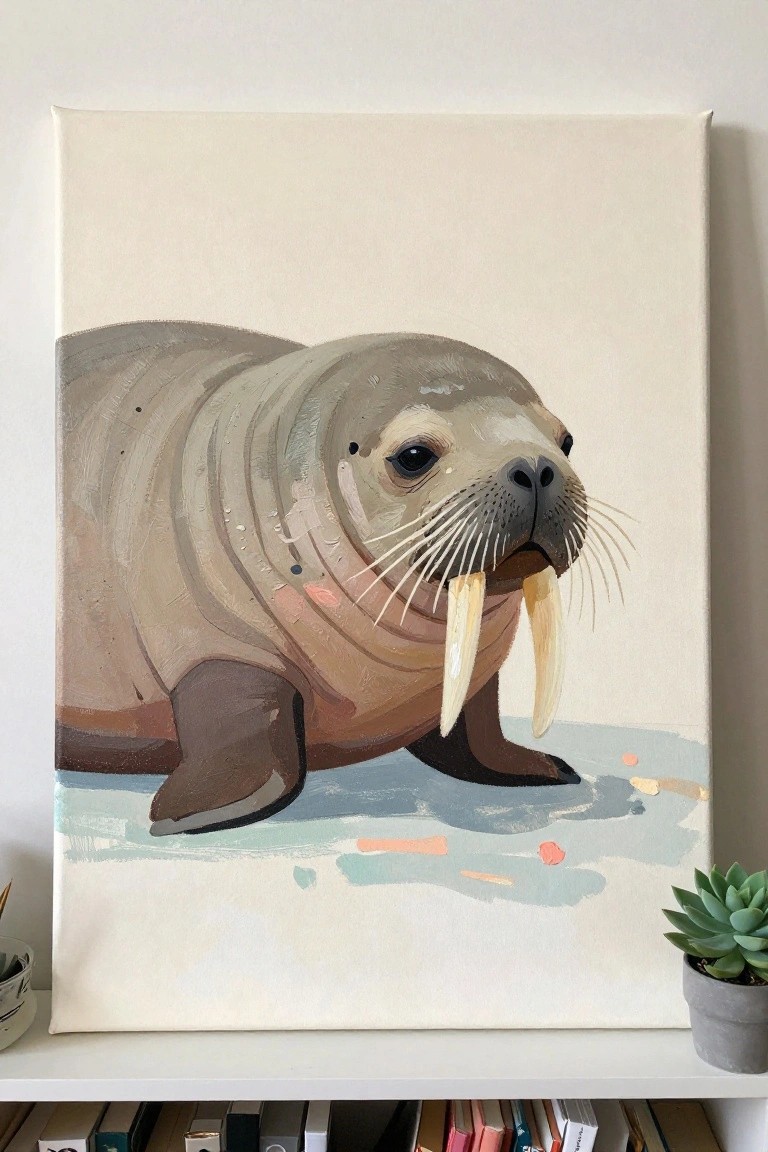
A walrus portrait makes an effective large canvas animal painting when the body fills most of the space and the background stays simple. The idea relies on a limited palette of browns and grays with a soft blue wash at the bottom to suggest a surface without adding extra elements. This approach keeps the composition balanced and lets the rounded shape and facial features stand out clearly.
What makes this idea useful is how the minimal setting reduces the need for complex backgrounds while still giving the subject context. You can adapt the colors by shifting the browns toward cooler grays or adding more warmth to match a room. For canvas art, the same layout works at different sizes and lets you build the form first before adding the tusks and whiskers as final details. An acrylic idea like this stands out on Pinterest because it reads as clean and modern rather than overly busy.
Chimpanzee Portrait with Striped Scarf Accent

Pairing a chimpanzee with a bold striped scarf turns a standard animal portrait into a decorative acrylic idea that stands out on large canvases. The concept relies on the animal’s brown fur as the main mass while the scarf introduces strong red, white, and blue stripes that create clear contrast and break up the shape. A plain white background keeps the focus tight on the subject and makes the painting easier to compose at oversized scale.
What makes this idea useful is the built-in color block the scarf provides, which lets you practice both fur texture and simple stripe patterns without needing complex backgrounds. You can easily change the scarf colors to fit a room or swap in a different accessory if you want to personalize it for a gift or seasonal piece. For canvas work this layout works well because the subject fills most of the space and the minimal background reduces the amount of area you have to cover.
Breaching Humpback Whale in Bold Blues

A breaching humpback whale works well as an acrylic painting idea for oversized wildlife portraits. The upward angle and water splashes create strong vertical movement that fills a large canvas without needing extra elements. Thick brushwork on the whale’s body paired with lighter water details keeps the focus on the animal while using contrast between deep blues and white highlights to define the shape.
What makes this idea useful is how the main forms stay readable even when scaled up, so you can block in the whale first and layer splashes afterward. The limited color palette makes it easy to adjust for different room styles or try on a smaller canvas first. For practice, this kind of animal subject stands out on Pinterest because the dynamic pose grabs attention without requiring fine detail across the whole surface.
Centered Snowy Owl on a Plain Canvas
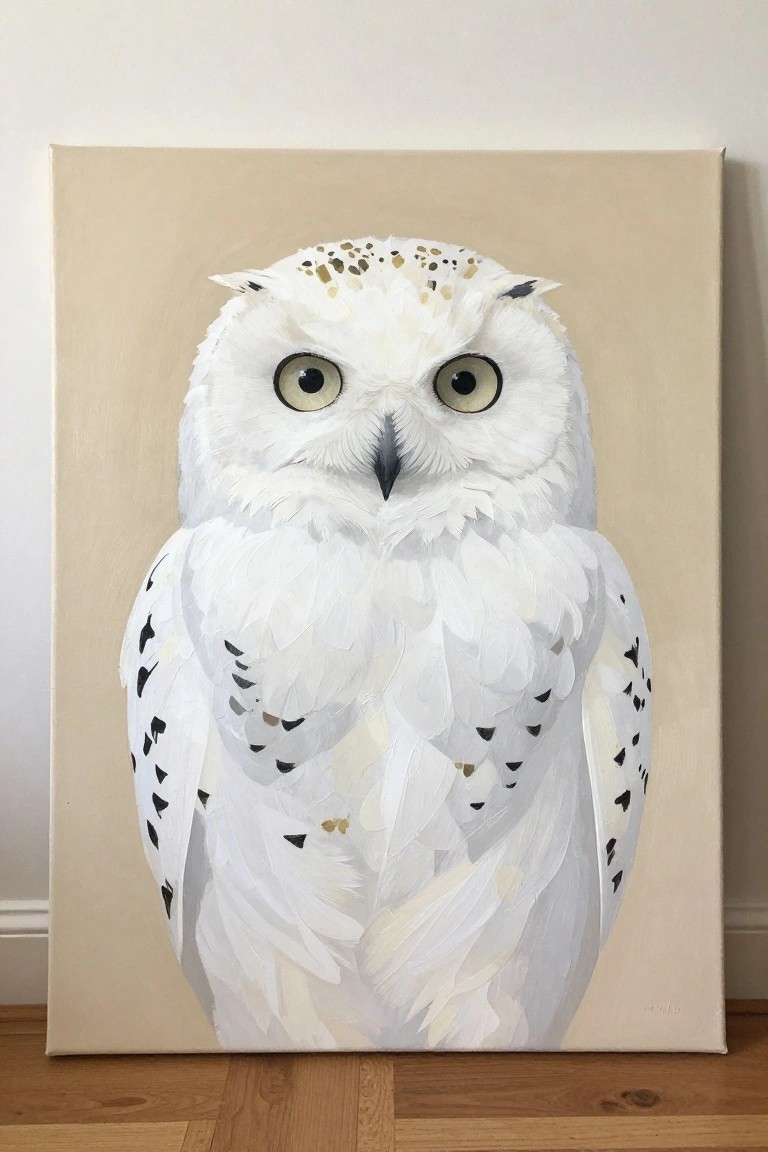
A frontal snowy owl portrait works as a large canvas animal idea by using the bird’s direct stare and soft white plumage to hold attention across the full height of the piece. The concept centers on building feather texture with visible brush marks while keeping the background flat and neutral so the dark wing spots and yellow eyes stand out. This approach fits oversized wildlife portraits because the simple layout lets the scale of the canvas do most of the visual work.
What makes this idea useful is how the empty background removes the need for extra scenery and lets you focus practice time on layering the body feathers. You can adapt it by changing the ground color to a soft gray or adding more gold flecks in the plumage without changing the centered pose. For canvas decor the strong eye contrast helps the piece read clearly from a distance. The same layout can be scaled down or simplified by painting broader feather shapes first and adding the smaller markings last.
Frequently Asked Questions
What size canvas works best for oversized wildlife portraits? Large canvases measuring at least 36 by 48 inches or bigger allow the details of fur, feathers, and expressions to stand out dramatically. Start with stretched cotton or linen canvases primed with gesso for durability, and consider the weight since these pieces can become heavy once painted. This setup supports bold brushwork without the surface sagging over time.
How do I scale a reference photo up to fit a large canvas accurately? Use a grid method by dividing your reference image and the canvas into equal squares, then transfer the outlines square by square with light pencil marks. Projectors offer another reliable option for precise enlargement. Once the basic shapes are in place, build layers gradually to maintain proportions across the full surface.
What paint types and techniques suit striking large animal paintings? Acrylics dry quickly and work well for layering vibrant colors on big surfaces, while oils provide richer blends for realistic textures like animal hides. Employ broad strokes for backgrounds and finer brushes for eyes or whiskers. Work from dark to light tones to create depth, and step back often to check how the composition reads from across the room.
How can I make my large canvas animal painting look balanced and eye-catching? Focus on strong contrasts between the subject and background, such as a dark forest behind a bright lion, to draw attention immediately. Incorporate negative space around the animal to avoid crowding, and vary brush sizes to add texture without overwhelming the viewer. Test the piece under different lighting to ensure it remains impactful in its final display spot.
Where can I source additional references to expand on the 25 ideas provided? Look to wildlife photography sites or nature documentaries for fresh poses and lighting angles that match the oversized style. Visit zoos with a sketchbook for live studies, or join online artist communities to share progress and gain feedback. These sources help customize the core ideas into unique variations suited to your skill level.

Hi, I’m Camille.
I’m a self-taught painter and creative blogger with a soft spot for acrylic painting, color play, and all the little art ideas that make everyday life feel more inspiring.
I started this space because I’ve always believed painting should feel joyful, approachable, and a little personal. Some of my favorite pieces come from simple ideas, messy palettes, and evenings where I just felt like making something pretty.
Most of what I share begins with acrylic painting, but I also love exploring other mediums when creativity pulls me in a new direction. My goal is to collect and share painting ideas that feel fun, beautiful, and actually doable, whether the mood is calm and minimal or bright and playful.
This is a space for inspiration, experimenting, and enjoying art without overcomplicating it.