
Key Takeaways
- Regularly clean your kitchen scrub brush to prevent the spread of bacteria and grime, ensuring effective cleaning.
- Signs of a dirty scrub brush include discolored bristles or persistent odors; don’t hesitate to replace it if necessary.
- Use hot water, dish soap, and optional materials like white vinegar or baking soda for thorough cleaning and sanitization.
- Implement a cleaning routine by rinsing the brush after every use and deep cleaning it weekly for optimal hygiene.
- Store the scrub brush upright in a well-ventilated area to avoid mold growth and maintain its condition.
Ever looked at your kitchen scrub brush and wondered if it’s harboring more germs than it’s cleaning away? You’re not alone. Many people overlook this essential tool, thinking a quick rinse is enough. But a dirty scrub brush can spread bacteria and grime, making your cleaning efforts less effective.
Importance of Cleaning Kitchen Scrub Brushes
Cleaning kitchen scrub brushes prevents the spread of bacteria and grime. Bacteria can thrive in the bristles after cleaning tasks, especially when brushes come into contact with food residues. Neglecting this cleaning routine creates a breeding ground for harmful germs.
Regularly cleaning your scrub brush ensures its effectiveness. A dirty brush won’t remove dirt or grease properly, leading to unsanitary kitchen conditions. You’ll keep surfaces cleaner and safer by maintaining a hygienic scrub brush.
Understanding the signs of a dirty scrub brush helps you stay on top of your cleaning tasks. If the bristles appear discolored or emit an odor, it’s time for a thorough cleaning. You can also consider replacing the brush every few months, depending on usage.
Incorporating simple cleaning practices for your scrub brush into your routine takes only a few minutes. A clean scrub brush enhances your overall kitchen hygiene, allowing you to maintain a healthier living environment.
Materials Needed
Cleaning your kitchen scrub brush requires a few essential materials. Having the right supplies on hand makes the process faster and more effective.
Recommended Products

Unique Design: Unlike traditional kitchen scrub brushes, this cleaning brush features a 90° angle and stiff bristles for easy reach into narrow spaces, effectively helps you to clean areas that are difficult to clean or stubborn stains

Pre-Load Soap Into the Handle: A dish brush with handle is not uncommon, but a handle you can pre-load with soap makes it a true dish wand. Never struggle with slippery soap bottles again

DURABLE AND RELIABLE: SetSail dish brush is made of durable hard bristles, which are wear-resistant, anti-flattening and not easy to deform. After use, it can be easily cleaned with soap without leaving any food residue and grease.
Basic Cleaning Supplies
- Hot Water: Use hot water to help dissolve grease and food particles.
- Dish Soap: Opt for a gentle dish soap. This will effectively cut through grime without damaging the brush.
- Bowl or Sink: Choose a bowl or sink to soak the brush while you clean.
- Scrub Brush or Toothbrush: Use another brush or an old toothbrush to scrub away stubborn residues.
- White Vinegar: Consider using white vinegar for its antibacterial properties, helping to sanitize the brush.
Optional Supplies for Tough Stains
- Baking Soda: Baking soda acts as a mild abrasive. Use it to tackle tough stains and odors.
- Hydrogen Peroxide: Hydrogen peroxide can boost your cleaning power. It disinfects while removing stains.
- Spray Bottle: A spray bottle helps apply vinegar or hydrogen peroxide evenly.
- Rubber Gloves: Wear rubber gloves for extra protection while cleaning, especially if you’re using harsh substances.
Gather these materials to keep your kitchen scrub brush hygienic and ready for use.
Step-by-Step Cleaning Process
Cleaning your kitchen scrub brush keeps it hygienic and effective. Follow this simple process to ensure your brush stays in top shape.
Recommended Products

Quality & sturdy bristles: High elasticity kitchen scrub brush with PET fiber bristles is not easy to deform. Ideal for cleaning, pot, pans, cast Iron skillet, sinks, bathroom and fixtures.
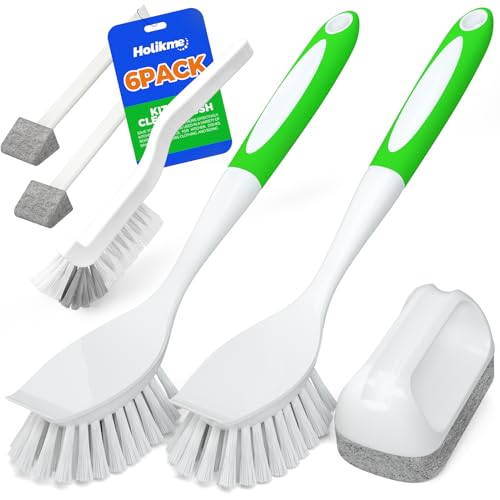
【All-in-One Kit】Tired of a cluttered drawer full of single-purpose tools that never seem to be the right one when needed? You grab a greasy baking tray, but your sponge just smears the oil around, and your cloth gets stuck on burnt edges—nothing works. Our 6-Piece Dish Brush Set covers every cleaning need in one go. From dirty dishes and crusty pans to the kitchen sink and countertops, this all-in-one cleaning brush collection gives you everything with one purchase—solve all your home cleaning challenges with a single, cost-effective kitchen brush solution that actually cleans.

STIFF BRISTLES AND WIDE USAGE: The bristle(dark bristle) of 2 pot brushes are made of stiff union fiber, and the bristle(light bristle) of another 1 pot brush is crafted with medium stiff tampico fiber. These palm pot brushes are well used for cleaning cast iron skillet, steel pots, pans, dishes, sinks, vegetables, tile, carpet, upholstery, etc.
Rinsing the Brush
Rinse the brush immediately after each use. Use warm water to remove food particles and grime. Hold the bristles under running water, gently shaking the brush to dislodge any debris. This step prevents bacteria from building up over time.
Soaking the Brush
Fill a bowl or sink with hot water and add a few drops of dish soap. Submerge the brush in the soapy water for about 10-15 minutes. If you notice tough stains or odors, consider adding a cup of white vinegar for enhanced cleaning. The vinegar helps kill bacteria and neutralizes odors.
Scrubbing with Soap
After soaking, take the brush out and give it a thorough scrub. Use an additional brush or sponge if necessary, focusing on the bristles and the handle. Pay special attention to areas with stubborn stains. This action helps remove any lingering residues.
Rinsing and Drying
Rinse the scrub brush thoroughly under warm running water to remove all soap and debris. Shake off excess water and let the brush air dry in an upright position. Avoid storing the brush in enclosed spaces while it’s damp, as this encourages mold growth. Placing it in a well-ventilated area helps maintain its condition.
Maintaining Your Scrub Brush
Keeping your scrub brush clean and functional is essential for maintaining hygiene in your kitchen. Regular maintenance ensures your brush effectively removes dirt without spreading germs.
Recommended Products

🌍 100% NATURAL BRUSH HEADS: eplanita's environmentally friendly replaceable dish brush heads are made of bamboo and agave cactus bristles. These natural materials make the brush heads a sustainable and waste-free solution for your cleaning needs.

【4*Replacement Brushes】- 4 replacement drill brush heads are suitable for OXO soap dish dispenser brush and also suitable for OXO new dish brush.(No handle included)

Durable, stain-resistant bristles for effective cleaning
Frequency of Cleaning
Clean your scrub brush after each use. Rinse it thoroughly with warm water to eliminate food particles and debris. Aim for a deeper clean at least once a week. During this deep clean, soak the brush in a mixture of hot water and dish soap for 10-15 minutes to remove stubborn grime. If you notice heavy buildup, consider soaking it in white vinegar for additional antibacterial properties.
Signs of Wear and Tear
Watch for signs that indicate it’s time to replace your scrub brush. Look for frayed or discolored bristles, which suggest it’s no longer effective. If your brush develops a persistent odor despite regular cleaning, it may harbor bacteria. A general rule of thumb is to replace your brush every 2-3 months. If you frequently clean challenging surfaces, consider replacing it sooner to maintain optimal hygiene.
Conclusion
Taking a few minutes to clean your kitchen scrub brush can make a big difference in maintaining a hygienic space. By incorporating simple cleaning routines and paying attention to signs of wear, you can keep your brush in top shape. Remember that a clean brush not only helps with effective cleaning but also prevents the spread of germs.
So next time you tackle those dishes or kitchen surfaces, give your scrub brush the care it deserves. You’ll enjoy a cleaner kitchen and peace of mind knowing you’re doing your part to keep your home healthy. Happy cleaning!
Frequently Asked Questions
How often should I clean my kitchen scrub brush?
It’s recommended to clean your kitchen scrub brush after each use and perform a deep clean at least once a week. This helps prevent bacteria buildup and maintains its cleaning effectiveness.
What materials do I need to clean a scrub brush?
To clean a scrub brush, you will need hot water, gentle dish soap, a bowl or sink for soaking, and an additional brush for scrubbing. Optional items include white vinegar, baking soda, and rubber gloves for tougher stains.
How can I tell if my scrub brush is dirty?
Look for signs like discolored bristles, unpleasant odors, or frayed handles. These indicators suggest your scrub brush may harbor bacteria and should be cleaned or replaced to ensure proper hygiene.
Can a dirty scrub brush spread germs?
Yes, a dirty scrub brush can spread bacteria and grime during cleaning. If not properly cleaned, it can undermine your efforts and create unsanitary kitchen conditions.
How often should I replace my scrub brush?
It’s advisable to replace your scrub brush every 2-3 months or sooner if you notice wear, discoloration, or persistent odors. Regular replacement helps maintain hygiene and cleaning efficiency.
