
Key Takeaways
- Understand Kitchen Grease: Recognize that grease comes from cooking oils, food residues, and smoke, making regular cleaning essential to maintain kitchen cabinets.
- Effective Cleaning Solutions: Utilize natural cleaners like vinegar, baking soda, and lemon juice, or resort to commercial degreasers and all-purpose cleaners for tougher stains.
- Step-by-Step Cleaning Process: Follow a systematic approach: prepare your materials, apply the solution, wipe, rinse, and dry the cabinets to achieve optimal results.
- Regular Maintenance is Key: Wipe surfaces daily, use ventilation while cooking, and clean spills immediately to prevent grease buildup on cabinets.
- Monthly Deep Cleaning: Schedule thorough cleaning sessions and inspect cabinets regularly to address grease accumulation early and maintain their lifespan.
Have you ever looked at your kitchen cabinets and wondered how they got so greasy? Cooking can be a messy affair, and over time, those splatters and stains can really build up. It’s frustrating to see your once-pristine cabinets lose their shine.
Understanding Kitchen Grease
Kitchen grease consists of fats, oils, and food residues that cling to surfaces during cooking. Over time, these substances accumulate, creating unsightly stains and unhealthy bacteria growth. Grease can come from various sources, including frying food, sautéing vegetables, or even just splatters from boiling liquids.
Types of grease you might encounter include:
- Food Grease: Residues from cooking oils, butter, and sauces.
- Smoke Residue: Grease created from burnt food that adheres to cabinets.
- Dust and Dirt: Outdoor elements that mix with grease, forming a sticky layer.
To tackle kitchen grease most effectively, consider these practical steps:
- Identify the Source: Determine the specific areas where grease accumulates most frequently.
- Test Different Cleaners: Not all cleaners work for every type of grease. Experiment with options like vinegar, baking soda, or commercial degreasers, observing their effectiveness.
- Apply Heat: Slightly warming up cleaning solutions can enhance their ability to cut through grease.
- Use Proper Tools: Soft sponges or microfiber cloths will help avoid scratching your cabinets while effectively removing grime.
Using the right approach means maintaining not just the appearance of your cabinets but their longevity, too.
Common Causes of Kitchen Grease
Kitchen grease stains can be persistent nuisances, often resulting from everyday activities. Understanding the sources of grease can help you prevent buildup and maintain clean cabinets.
Cooking Methods
Cooking methods significantly contribute to grease accumulation. Frying or sautéing food releases oils that can splatter onto surfaces. Grilling produces smoke that carries grease particles, settling on cabinets. Boiling can also cause condensation and splashes. Using vent fans during cooking can minimize the spread of grease, keeping your cabinets cleaner.
Food Types
Certain food types are greasier than others. Foods like bacon, fried chicken, and greasy sauces often leave behind oily residues. Baking can produce less grease but can still create dust when food particles accumulate. Ensuring proper storage and preparation can reduce food-related grease. For example, covering dishes while cooking can limit splatters, protecting your cabinets.
Effective Cleaning Solutions
Cleaning greasy kitchen cabinets requires the right tools and methods. Two main options include natural cleaners and commercial products. Here’s what works best for each.
Natural Cleaners
Natural cleaners offer a safe and effective way to tackle kitchen grease. Common options include:
- Vinegar: Mix equal parts of vinegar and water in a spray bottle. Spray on the greasy areas, let it sit for a few minutes, then wipe with a clean cloth.
- Baking Soda: Create a paste with baking soda and water. Apply it to greasy spots, scrub gently with a sponge, and rinse with a damp cloth.
- Lemon Juice: Use fresh lemon juice mixed with water to cut through grease. Spray it on the cabinets, allow it to sit briefly, and wipe clean.
- Dish Soap: Combine a few drops of dish soap with warm water. Use a soft cloth or sponge to scrub the cabinet surfaces before rinsing.
These natural solutions not only clean but also leave a fresh scent without harsh chemicals.
Commercial Products
For tougher grease stains, commercial products often provide a quicker solution. Look for:
- Degreasers: Specific kitchen degreasers target baked-on grease. Follow the label instructions for application and safety.
- All-Purpose Cleaners: Many all-purpose cleaners effectively cut through grease. Choose a product that specifies suitability for kitchen use.
- Disinfectant Wipes: Wipes make cleaning simple. Just grab a wipe and clean the surface, ensuring you get rid of both grease and bacteria.
- Foam Cleaners: Foam products cling to vertical surfaces, making them ideal for kitchen cabinets. Spray, allow it to sit, then wipe off for effective results.
Always test a small area first to ensure compatibility with your cabinets.
Step-by-Step Cleaning Process
Start with a systematic approach to clean grease off your kitchen cabinets. Follow these steps to restore their shine.
Recommended Products

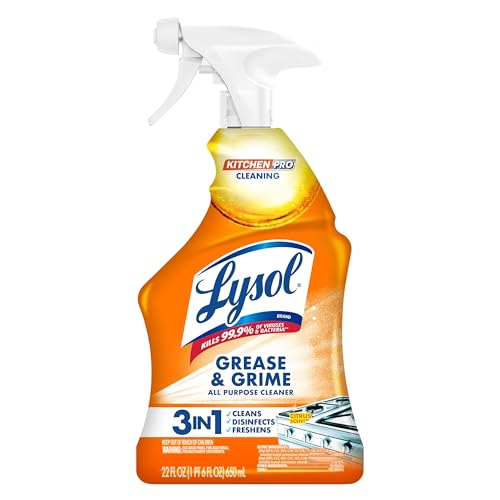
ELIMINATES 99.9% OF KITCHEN VIRUSES AND BACTERIA INCLUDNG SALMONELLA AND E.COLI: Lysol Pro Kitchen Cleaner is tested and proven to eliminate 99.9% of viruses and bacteria* (when used as directed). EPA Reg #777-91.

360° spray helps to remove tough oil, grease, adhesive & kitchen soil in hard-to-reach areas
Preparation
Gather your materials before starting the cleaning process. You’ll need:
- Cleaning solutions: Choose between natural options (vinegar, baking soda, lemon juice, or dish soap) and commercial products (degreasers).
- Cleaning tools: Use microfibre cloths, soft sponges, or non-abrasive scrubbing pads to prevent scratches.
- Gloves and mask: Protect your hands and face if using commercial cleaners.
Clear the area around the cabinets to ensure easy access. Remove any items on the counters or cabinets that might get in the way.
Cleaning Technique
Start the cleaning process with these techniques:
- Apply the Cleaning Solution: Spray or apply your chosen cleaner directly onto the greasy areas. Let it sit for a few minutes to break down the grease.
- Wipe Away Grease: Use a microfiber cloth or soft sponge to wipe the area. For tough spots, gently scrub with a non-abrasive pad. Always work in small sections.
- Rinse Off: Dampen a clean cloth with water and wipe away any leftover cleaner. Rinsing prevents residue buildup.
- Dry the Surface: Use a dry cloth to quickly absorb any moisture. This step reduces streaks and water spots.
- Repeat if Necessary: Check the cabinets after drying. If grease remains, repeat the process until clean.
Follow these steps for a thorough cleaning. Keeping your cabinets free from grease not only improves their appearance but also prolongs their lifespan.
Tips for Maintaining Clean Cabinets
Maintaining clean kitchen cabinets helps preserve their appearance and functionality. Here are practical tips to keep grease at bay.
Regular Cleaning
- Wipe Down Surfaces Daily: Use a damp cloth to remove splatters and stains. It only takes a moment, but it prevents buildup.
- Use a Gentle Cleaner: Opt for a mild dish soap solution for routine cleaning. This keeps cabinets looking fresh without harsh chemicals.
Smart Cooking Practices
- Use Ventilation: Turn on your kitchen exhaust fan while cooking. This reduces airborne grease and smoke.
- Cover Cooking Foods: Use lids for frying and sautéing. Lids help contain grease and maintain heat.
Avoiding Grease Accumulation
- Keep a Towel Handy: Place a cloth near your cooking area to quickly catch any spills. You’ll tackle messes instantly.
- Clean Up Spills Immediately: Don’t allow grease to sit. The sooner you address it, the easier it is to clean.
Maintenance Schedule
- Monthly Deep Clean: Dedicate time each month for a thorough cleaning. Use natural cleaners or degreasers, depending on the build-up.
- Inspect Regularly: Check for any signs of grease accumulation. Staying proactive prevents tougher cleaning later.
Proper Tool Usage
- Use Non-Abrasive Materials: Soft cloths or sponges will prevent scratches. Protect the finishes by using gentle tools.
- Consider Specialty Products: If grease persists, use products designed specifically for kitchen cabinets. Always test a small area first.
Following these tips helps ensure your kitchen cabinets remain clean, functional, and visually appealing.
Conclusion
Keeping your kitchen cabinets grease-free doesn’t have to be a daunting task. With the right cleaning solutions and techniques you can restore their shine and maintain a fresh look. Remember to tackle grease as soon as it appears to prevent buildup and make your cleaning routine easier.
Incorporating simple practices like using vent fans while cooking and wiping down surfaces daily can go a long way in preventing stubborn stains. By staying proactive you’ll enjoy a cleaner kitchen that not only looks great but also promotes a healthier cooking environment. So grab your favorite cleaner and get ready to give your cabinets the care they deserve!
Frequently Asked Questions
What causes greasy kitchen cabinets?
Kitchen cabinets become greasy primarily from cooking residues, which include fats, oils, and food particles. Common culprits include frying and sautéing, as well as smoke from burnt meals. Foods like bacon and fried chicken leave oils that cling to cabinet surfaces, leading to unsightly stains and possible bacteria growth.
How can I effectively clean greasy kitchen cabinets?
To clean greasy kitchen cabinets, start by identifying the grease source. Use appropriate cleaners—either natural options like vinegar and baking soda or commercial degreasers. Rinse and dry the surfaces after cleaning, and repeat if necessary. Employ non-abrasive tools to avoid scratching the cabinets.
What are the best natural cleaners for kitchen grease?
Natural cleaners effective against kitchen grease include vinegar, baking soda, lemon juice, and dish soap. These ingredients help break down oils and stains without harsh chemicals. Always test a small area first to ensure that they do not damage the cabinet finish.
How can I prevent grease buildup on my cabinets?
To prevent grease buildup, use vent fans while cooking, cover dishes, and clean spills immediately. Establish a routine of daily surface wipes and a monthly deep cleaning schedule. Smart cooking practices, like avoiding open flames and frequent frying, also help maintain cleaner cabinets.
Should I use commercial cleaners on my kitchen cabinets?
Yes, commercial cleaners can be effective against stubborn kitchen grease. Look for specialized degreasers or all-purpose cleaners. Always read labels for compatibility with your cabinet material, and test a small area first to avoid damage to the finish.
