
Key Takeaways
- Understanding Grease Accumulation: Grease builds up on kitchen cabinets due to cooking, especially near stovetops and frying stations, leading to unsightly residue that requires targeted cleaning.
- Regular Cleaning Routine: Maintain a consistent cleaning schedule by wiping down cabinets weekly with a damp cloth and mild detergent to prevent grease buildup before it becomes tough to remove.
- Effective Cleaning Solutions: Use both natural options (like vinegar, baking soda, and lemon juice) and specialized commercial degreasers to tackle stubborn grease effectively.
- Essential Tools: Utilize microfiber cloths, non-abrasive sponges, and homemade cleaners like vinegar spray and baking soda paste to safely clean without damaging your cabinet finishes.
- Prevention Strategies: Adopt practices such as covering pots while cooking, using proper ventilation, and keeping a tidy cooking area to minimize grease accumulation on cabinets.
- Testing Cleaners: Always test cleaning products on a small, inconspicuous area to ensure they are safe for your cabinet material before applying them broadly.
Ever stood in your kitchen, staring at those greasy cabinets, wondering how to tackle the mess? It’s a common struggle. Cooking can leave behind stubborn stains that seem impossible to remove, making your kitchen look less than inviting.
Overview of Kitchen Cabinet Grease
Kitchen cabinet grease accumulates due to cooking activities. Grease particles from stovetops and frying can cling to surfaces, leading to a sticky residue. This residue not only looks unsightly but can also attract dust and grime, making cleaning even harder.
Understanding the nature of grease helps in selecting the right cleaning method. Grease tends to collect in areas with constant heat, such as above the stove or near frying stations. Grease spots can be stubborn; they require targeted cleaning solutions for effective removal.
Regular cleaning routines can prevent grease buildup. Wipe down cabinets weekly to hinder grease accumulation. Using a damp cloth with mild detergent can tackle light grease easily. For tougher stains, stronger solutions or specialized degreasers may be necessary.
Testing cleaning products on a small, inconspicuous area ensures compatibility with your cabinet’s finish. Different cabinet materials, like wood or laminate, respond differently to various cleaners. Taking this precaution helps avoid potential damage.
When dealing with kitchen cabinet grease, tools play a critical role. Use microfiber cloths, sponges, or scrub brushes to scrub away grease effectively without scratching surfaces. A mixture of vinegar and baking soda can serve as a powerful homemade cleaner, breaking down grease while being gentle on your cabinets.
Effective Cleaning Solutions
Cleaning grease off kitchen cabinets requires effective solutions. Both natural and commercial cleaners can tackle these stubborn stains effectively.
Natural Cleaners
Natural cleaners provide a safe, eco-friendly option. You can make a powerful mixture using common household items.
- Vinegar and Water: Mix equal parts vinegar and warm water in a spray bottle. Spray the mixture on the greasy areas and let it sit for a few minutes. Wipe it away with a microfiber cloth for a clean finish.
- Baking Soda Paste: Combine 1 part baking soda with 1 part water to create a thick paste. Apply the paste directly onto grease stains, let it sit for 10-15 minutes, then scrub gently with a sponge. Rinse with water and dry.
- Lemon Juice: Use fresh lemon juice as a natural degreaser. Apply it to greasy areas, let it sit for a few minutes, then wipe away with a damp cloth. The acidity helps break down the grease.
Commercial Cleaners
Commercial cleaners offer convenience and often deliver quick results. Here are some effective options:
- Degreasers: Look for specialized kitchen degreasers. These products contain powerful chemicals designed to cut through tough grease. Spray on the stained area, let it sit as directed, and wipe clean.
- All-Purpose Cleaners: Choose an all-purpose cleaner with grease-cutting capabilities. Spray it on, allow it to penetrate the stain, and wipe away with a cloth.
- Citrus-Based Cleaners: These cleaners use natural citrus oils for effective grease removal. They often feature pleasant fragrances and are less abrasive on surfaces.
Using the right solution protects your cabinetry while ensuring a clean kitchen. Always test cleaners on a small, hidden area first to avoid damaging finishes.
Tips for Cleaning Grease Off Kitchen Cabinets
Cleaning grease off kitchen cabinets can seem challenging, but with the right practices and tools, it becomes manageable. Here are some practical tips to restore your cabinets’ shine.
Best Practices
- Start with a Dry Wipe: Before applying any cleaner, use a dry microfiber cloth to remove loose debris and dust, which helps prevent scratching.
- Test Cleaners: Always test any cleaner on a hidden area first. This ensures it won’t damage your cabinets’ finish.
- Work in Sections: Clean one area at a time to avoid missing spots. This method also allows for thorough cleaning without overwhelming yourself.
- Use Gentle Pressure: Apply gentle pressure while cleaning to avoid damaging the cabinet surface. Avoid using abrasive materials that could leave scratches.
- Rinse and Dry: After applying any cleaner, rinse the surface with a damp cloth and dry it immediately to prevent water damage.
Tools to Use
- Microfiber Cloths: Use these for their superior absorbency and gentleness. They effectively capture grease without scratching surfaces.
- Soft Sponges: Opt for non-abrasive sponges designed for delicate surfaces. They work well with cleaners without causing damage.
- Degreasers: For stubborn grease, use specialized degreasers. Look for products marked safe for wood or your cabinet material.
- Vinegar Spray Bottle: Mix equal parts vinegar and water in a spray bottle. This simple solution cuts through grease effectively.
- Baking Soda Paste: Make a paste with baking soda and water. Apply it to tough spots, let it sit, and then wipe clean.
By following these tips and utilizing the right tools, you can effectively clean grease off your kitchen cabinets, keeping your kitchen fresh and inviting.
Prevention of Grease Buildup
Preventing grease buildup on kitchen cabinets involves simple but effective strategies. Regular maintenance and mindful cooking practices keep your cabinets looking their best.
Recommended Products

Foam Formula for Targeted Grease Removal The clinging foam formula dissolves stubborn kitchen grease, oil buildup, and food residue on cabinets, stoves, and backsplashes, eliminating the need for hard scrubbing.

CABINET & FURNITURE CLEANER: Removes dirt, grime & grease buildup
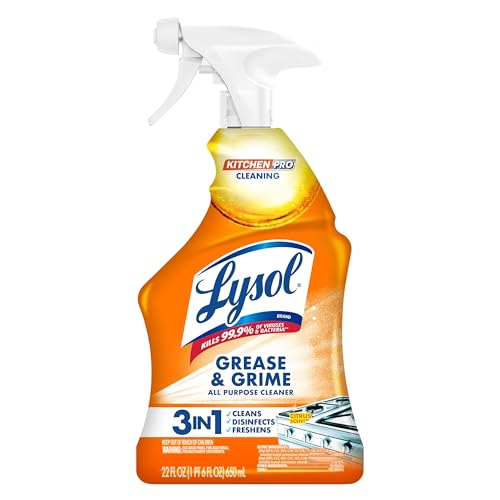
ELIMINATES 99.9% OF KITCHEN VIRUSES AND BACTERIA INCLUDNG SALMONELLA AND E.COLI: Lysol Pro Kitchen Cleaner is tested and proven to eliminate 99.9% of viruses and bacteria* (when used as directed). EPA Reg #777-91.
Clean Regularly
- Wipe down surfaces: Use a damp cloth weekly to remove oil and food residue. Focus on areas near the stove and countertops.
- Dust cabinets: Dust attracts grease particles. Clean cabinets with a dry microfiber cloth to prevent buildup.
Use Proper Cooking Techniques
- Cover pots and pans: Use lids while cooking to reduce splatter. This minimizes grease escaping into the air.
- Ventilate your kitchen: Turn on exhaust fans or open windows when cooking. This helps disperse grease particles.
Choose the Right Products
- Select grease-free cleaners: Use eco-friendly options or homemade cleaners that prevent residue accumulation.
- Maintain cabinetry finish: Avoid harsh chemicals that damage finishes, leading to more grease attraction.
Organize Cooking Area
- Keep frequently used items nearby: Less movement reduces the chance of grease spreading to cabinets and surfaces.
- Minimize clutter: A tidy cooking area makes it easier to clean spills quickly and prevent grease from sticking.
By implementing these strategies, you create a cleaner cooking environment and significantly reduce grease accumulation on your kitchen cabinets.
Conclusion
Keeping your kitchen cabinets grease-free doesn’t have to be a daunting task. With the right cleaning solutions and tools at your disposal, you can restore their shine and maintain a fresh look. Regular maintenance is key to preventing stubborn buildup and creating a welcoming cooking space.
Remember to choose products that suit your cabinets’ finish and test them in an inconspicuous area first. Whether you opt for natural remedies or commercial cleaners, a little effort goes a long way. By adopting mindful cooking habits and a consistent cleaning routine, you’ll enjoy a cleaner kitchen that’s both functional and inviting. Happy cleaning!
Frequently Asked Questions
How do kitchen cabinets get greasy?
Kitchen cabinets accumulate grease from cooking activities. Grease particles cling to surfaces due to the heat generated while cooking, especially above the stove, leading to a sticky residue that attracts dust and grime.
What is the best way to clean greasy kitchen cabinets?
To clean greasy kitchen cabinets, start with a damp cloth and mild detergent for regular maintenance. For tougher stains, consider stronger solutions or specialized degreasers. Always test any cleaner on a small area first to protect your cabinet’s finish.
Are there natural ways to clean grease off cabinets?
Yes, natural cleaning solutions include mixtures of vinegar and water, baking soda paste, and fresh lemon juice. These eco-friendly options can effectively break down grease without harsh chemicals, making them safe for your kitchen.
How can I prevent grease buildup on kitchen cabinets?
Prevent grease buildup by maintaining a regular cleaning routine, such as weekly surface wipes. Additionally, cover pots and pans while cooking, ensure proper kitchen ventilation, and use the right cleaning products to minimize grease spread.
What tools are recommended for cleaning kitchen cabinets?
Recommended tools include microfiber cloths, soft sponges, and specialized degreasers. You may also use homemade solutions like vinegar spray and baking soda paste. These tools and solutions help effectively remove grease while protecting your cabinets.
