
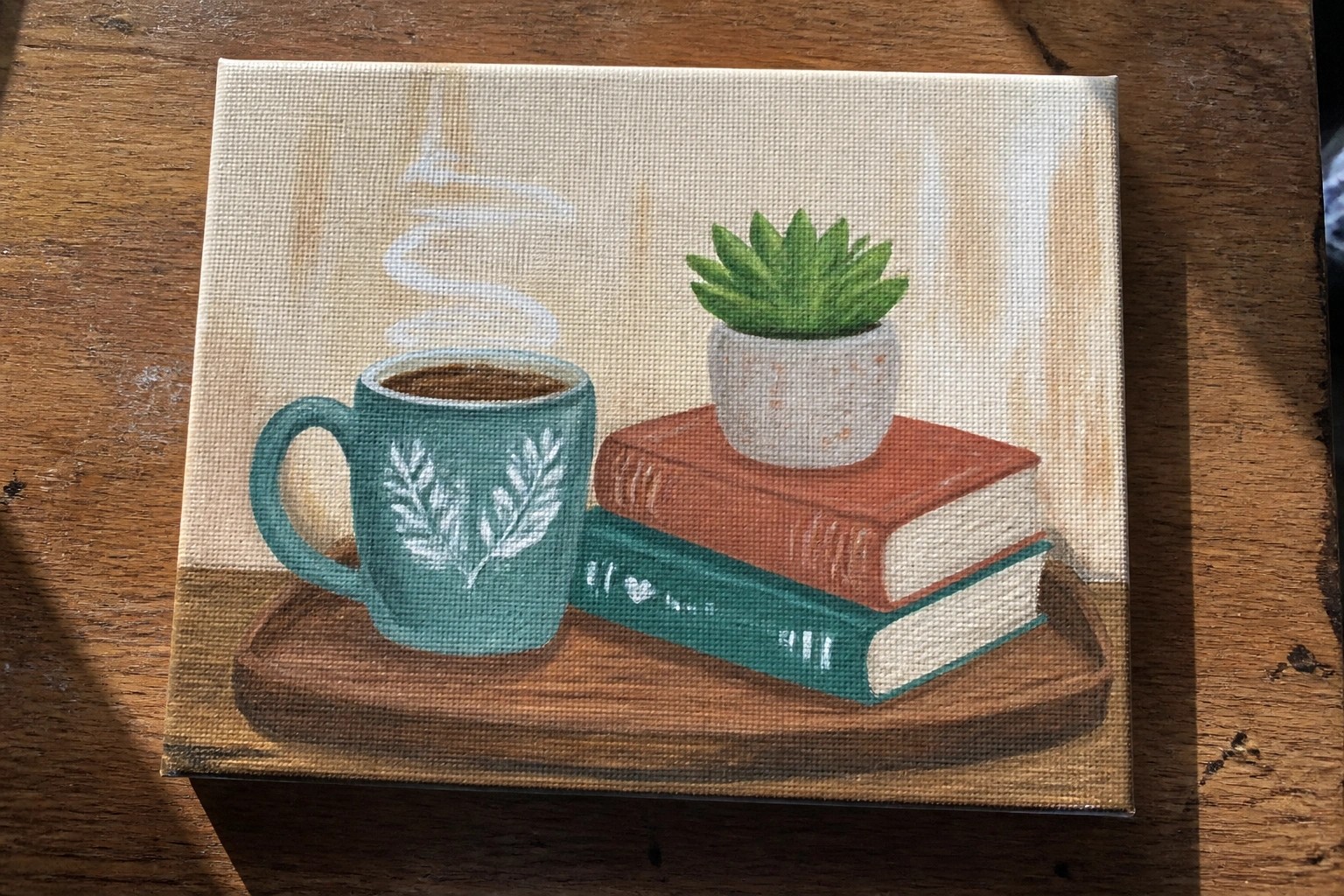
I have been using acrylics on canvas for a few years now and it has become one of my go to ways to fill my studio space.
Some days I just want something simple to work on while the light changes through the window.
I collected a handful of ideas that turned out nicely without needing too many supplies or complicated steps.
Most of them focus on soft colors and easy shapes that fit the kind of calm setup I like to keep around me.
If you are looking for something to try this season these might be worth a shot.
Still Life with Coffee, Books, and a Potted Succulent
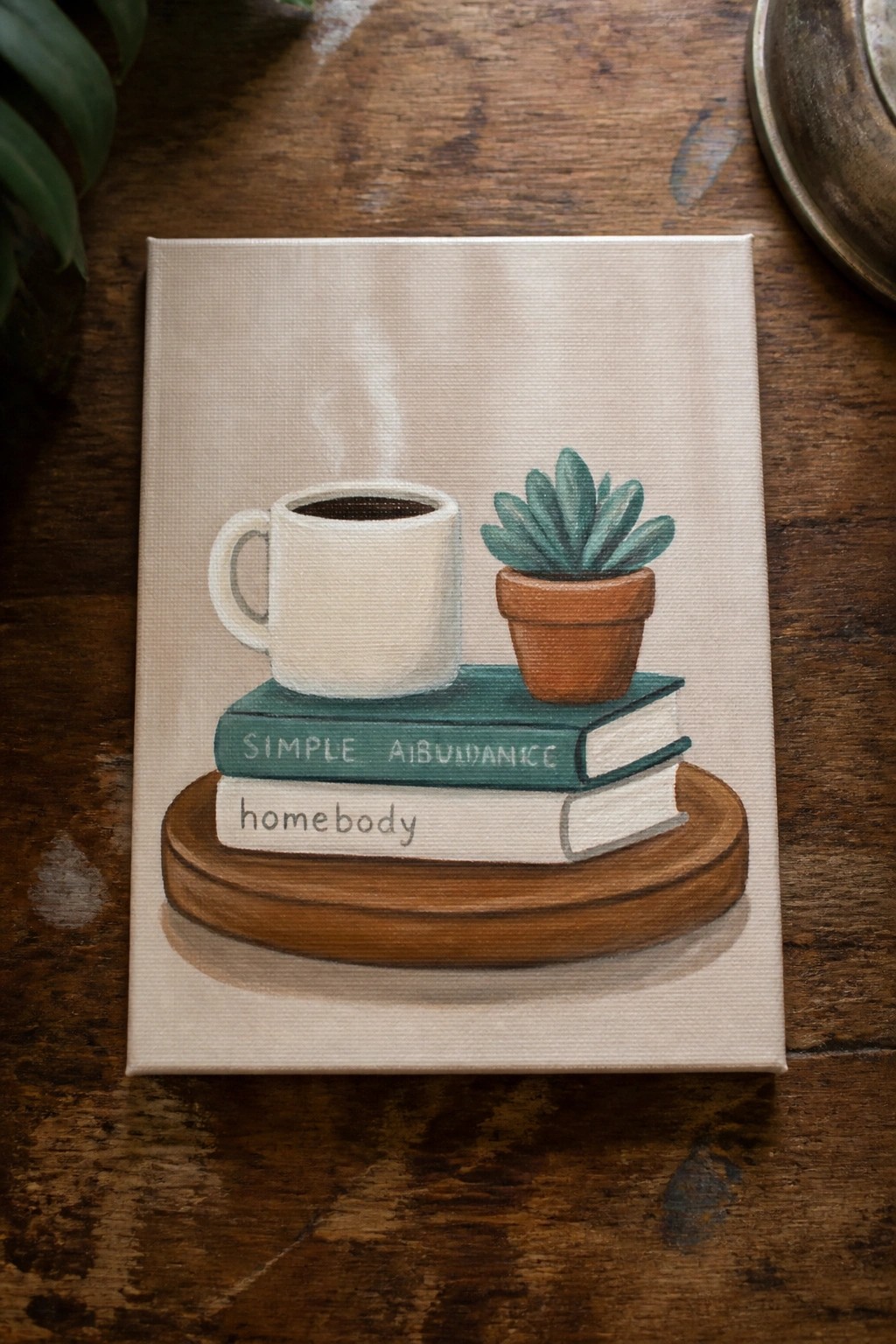
Still life paintings built around a coffee mug, stacked books, and a small potted plant give you clear shapes to work with while practicing balance and proportion. The vertical forms of the mug and plant sit against the flatter books and round base, which keeps the composition compact and easy to frame on canvas. Neutral background tones help the main objects stand out without requiring extra layers or detail work.
What makes this idea useful is how common the objects are, so you can pull them straight from your own space for reference. Swap the book titles or change the plant to match what you have on hand if you want a quick variation. The simple color range also lets you focus on clean edges and basic shading before adding anything more complex.
Coastal Dunes Landscape with Ocean Horizon

A dunes scene gives you a straightforward acrylic landscape idea built around horizontal bands of sky, sea, and sand. The composition works because the receding dune lines pull the eye toward the horizon while the foreground grass tufts add a clear focal point without crowding the canvas. This fits the landscape category and keeps the painting balanced through soft color shifts rather than heavy detail.
What makes this idea useful is how the large sky and water areas let you practice blending and layering without tight brushwork. You can swap in different sky tones or reduce the grass to simple vertical strokes to match your skill level or room colors. For canvas decor the open layout photographs well on Pinterest and leaves room to add or remove elements later.
Three-Tulip Floral Canvas on a Pastel Ground

A three-tulip floral painting uses simple rounded petal shapes and soft color shifts within each bloom to create an easy acrylic idea on canvas. The red and coral flowers sit beside a lighter white one, all with visible brush blending inside the petals rather than heavy outlines. Green stems and leaves sit low and spaced apart so the blooms stay the main focus against the solid light pink background.
What makes this idea useful is how the limited number of flowers and flat background keep the layout quick to block in. You can change the tulip colors or swap the pink ground for another soft tone without altering the basic arrangement. For canvas decor this works well because the shapes read clearly from a distance and the idea scales easily to different canvas sizes.
Nighttime Cabin Landscape with Silhouetted Pines

A landscape idea built around a small cabin with one glowing window placed among tall pine tree silhouettes. The painting uses a simple gradient sky that moves from deep blue at the top to a narrow band of warm orange near the horizon, plus a small square moon for balance. This approach fits the landscape category because the strong dark shapes against the lighter sky create clear separation without needing fine detail or texture.
What makes this idea useful is how the main shapes can be painted flat first, then the sky blended on top to create the glow around the window and horizon. The layout adapts easily by shifting the window color or moving the tree placement for different canvas sizes. For practice, this kind of painting works well because the dark foreground covers small errors and keeps the focus on the contrast between the light source and the surrounding blues.
Stylized Birds Along a Branch

A row of stylized birds perched on one branch works well as a decorative acrylic idea for a tall canvas. The design relies on flat color areas, simple shapes, and small pattern details like dots and stripes rather than blending or shading. This approach fits the animal or wall art category and keeps the composition balanced through even spacing and a solid background.
What makes this idea useful is how the clean shapes and limited detail let you finish the piece in fewer layers without worrying about realism. You can easily change the color scheme, add or remove birds, or adjust the branch angle to match your canvas size. For practice, this kind of subject helps build confidence with color blocking and basic pattern work while still producing a finished piece that stands out on a wall.
Overlapping Arches Abstract in Warm Acrylic Tones

An abstract acrylic idea built from stacked arches lets you focus on shape placement and color blocking rather than fine detail. The composition works by repeating the same curved form in different sizes and letting the warm terracotta, rose, and peach tones sit against a single deep green shape for contrast. This approach fits the decorative abstract category where clean edges and overlapping planes create the structure.
What makes this idea useful is that the arches can be sketched quickly with a few curves and filled in with flat color, so it stays manageable even on a larger canvas. The limited palette reduces mixing time and keeps the project approachable for practice or a fast decor piece. You could easily change the accent color, adjust the arch heights, or add one more layer of shapes to make it fit a different space or mood.
Sleeping Cat on Patterned Cushion

A curled sleeping cat forms the core of this acrylic animal painting idea. The composition places the cat on the left with a potted plant on the right to create simple visual balance against a plain background. The patterned cushion underneath adds interest through repeating shapes while keeping the focus on the animal form.
What makes this idea useful is how the compact pose of the cat translates well to smaller canvases without needing complex perspective. You can swap the cushion pattern for one from your own space or reduce it to fewer shapes if you want faster progress. This subject stands out on Pinterest because pet portraits with minimal props tend to get saved by people looking for easy animal paintings they can hang at home.
Overlapping Leaves in Earthy Acrylic Blocks

Large stylized leaves layered over each other create the main subject here. Broad acrylic brushwork in muted greens, olive, beige, and burnt orange fills each shape while leaving the off-white ground visible between them. The idea fits the decorative wall art category because the flat color areas and clear edges keep the focus on shape and placement rather than texture or fine detail.
What makes this idea useful is the way the overlapping layout lets you build the painting one leaf at a time without worrying about perfect blending. You can easily adapt the same approach by tracing a few simple leaf templates onto a canvas and filling them with any four or five colors from your existing palette. The high contrast between the warm oranges and cooler greens helps the finished piece read clearly from across a room, which is why similar designs perform well on Pinterest for canvas decor. For a smaller version, drop the size and reduce the number of leaves so the composition stays balanced.
Stacked Floral Teacups Still Life

A stack of three mismatched teacups with rose and daisy patterns forms the core of this still life acrylic idea. The overlapping shapes create natural depth while the soft pink background and light cloth keep the focus on the cups themselves. Gold rims and handles add clear contrast without requiring heavy shading.
What makes this idea useful is how the stacked layout lets you build the painting in simple layers starting with basic ovals and handles. The gentle color palette works well for kitchen or dining room canvas decor and can be adjusted by swapping flower colors or using whatever pastels you already have. For practice this subject helps with curved forms and small details while staying easy to resize or simplify on different canvas sizes.
Night Window with Silhouetted Plant and Crescent Moon
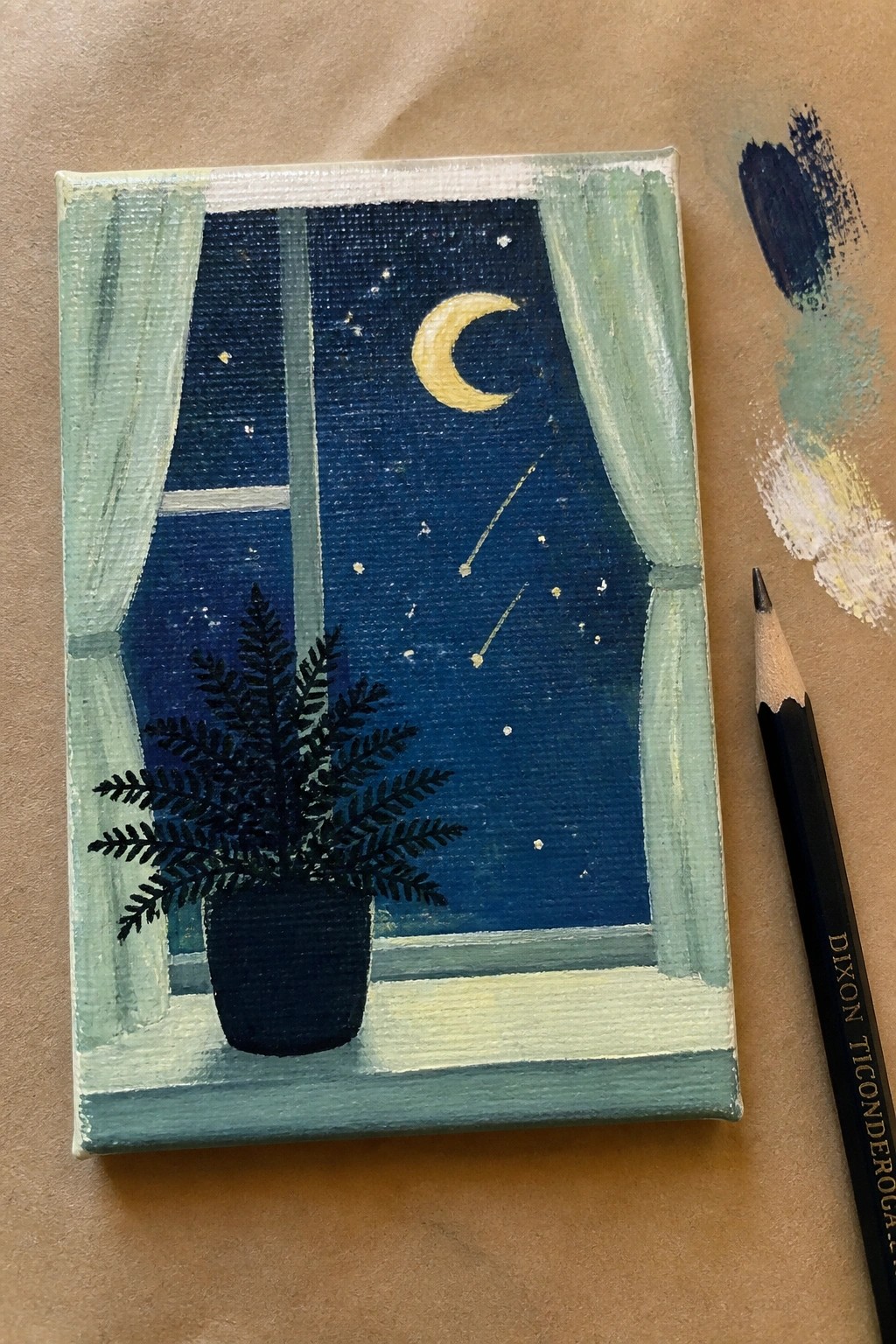
A nighttime window acrylic painting idea combines a dark houseplant silhouette on the sill with a deep blue sky, crescent moon, and scattered stars. The idea uses the window frame and pale curtains as simple borders to frame the view, which keeps the focus on the contrast between the black plant and the glowing sky elements. This fits into the decorative night scene category where bold color blocks and minimal detail create a clean, balanced result.
What makes this idea useful is the limited palette that requires only a few mixes of blue and green plus white for highlights. The plant can be simplified to basic fern shapes or swapped for another houseplant without changing the overall layout. For canvas art, something like this works especially well on small formats and stands out on Pinterest because the shooting star adds a single focal line that guides the eye.
Cinnamon Roll Still Life with Plaid Fabric

A cinnamon roll still life gives you a clear focal point through the round pastry shape and the way the icing drips down the sides. Placing it next to a striped fabric creates a simple contrast between the soft baked good and the linear pattern, which helps the whole composition stay balanced. This fits the still life category and works with a restricted warm palette so the colors stay easy to mix and layer.
What makes this idea useful is how the basic shapes let you focus on form and soft edges without needing fine detail work. You could change the plaid colors to match other seasons or swap the cinnamon roll for a different pastry if you want variety. For canvas art, something like this stands out on Pinterest because the everyday subject feels familiar and the layout stays simple enough to finish in a few sessions.
Layered Sunset Mountain Landscape with Winding Path
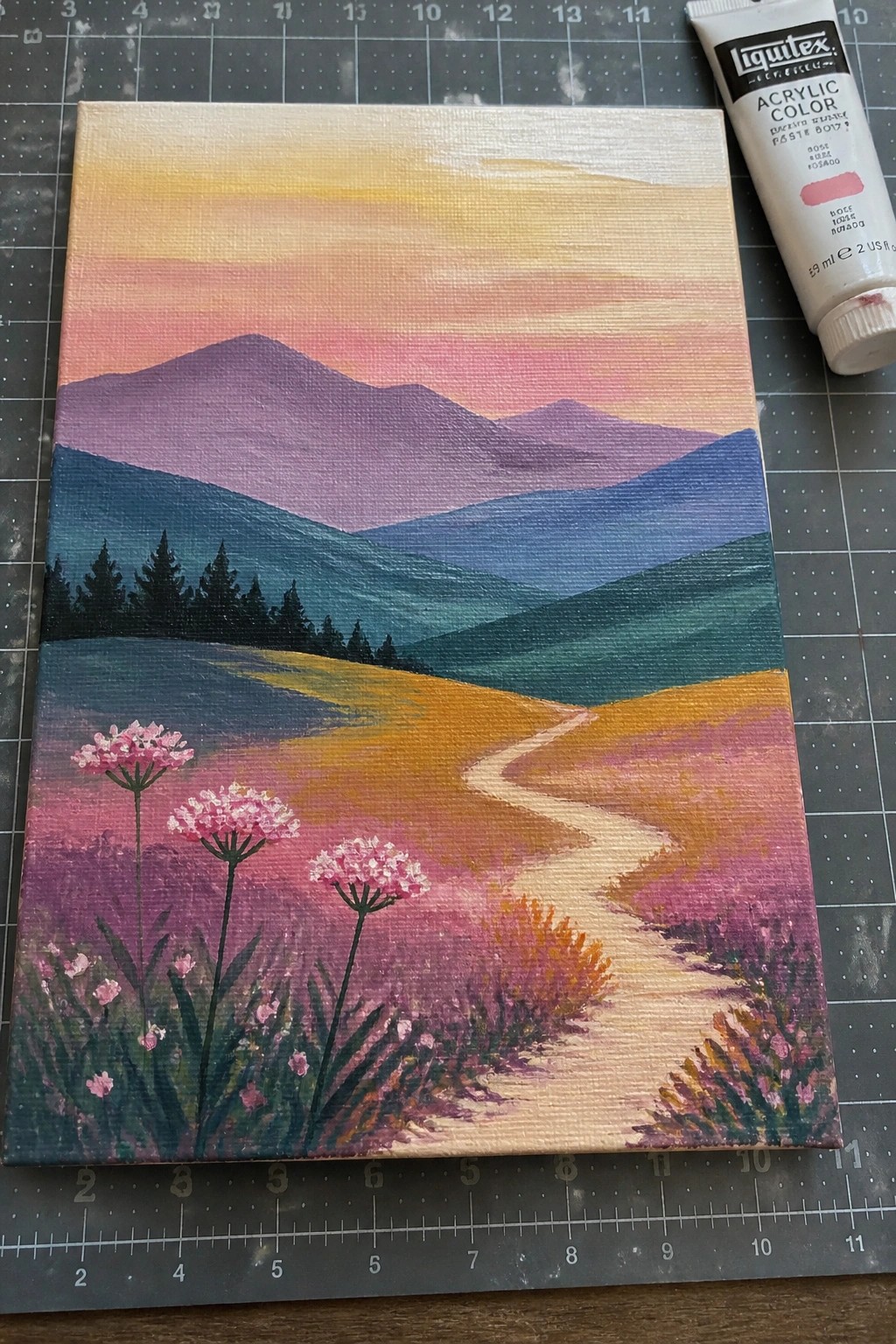
A landscape acrylic painting idea built around stacked mountain ranges and a winding path through open fields uses color gradients in the sky to set the mood while the path creates a clear sense of depth. The foreground wildflowers sit against softer background layers, which keeps the eye moving from the bottom of the canvas upward without extra detail work. This approach fits a straightforward landscape category that relies on blocked shapes and shifting hues rather than complex textures.
What makes this idea useful is that the mountain layers can be painted flat first, then blended at the edges to form the sky transitions with minimal fuss. The strong color contrast between the warm path and cooler hills makes it simple to swap in different palettes for other seasons or times of day while keeping the same layout. For wall art the composition stands out because the path gives built-in movement and the flowers provide a natural bottom anchor that works at small or medium canvas sizes.
Botanical Wreath Typography Canvas

A simple circular wreath made from overlapping leaves and small berry clusters frames a single word in the center of the canvas. This decorative acrylic idea uses a repeating natural border to create a balanced layout with a plain off-white background. The muted greens and soft purples keep the composition calm while the bold black lettering stays the clear focal point.
What makes this idea useful is how the wreath shape gives you practice with curved placement and basic leaf forms without needing complex blending. You can swap the word for a short phrase, change the berry colors, or reduce the number of leaves to make it faster. For canvas art, something like this works especially well as wall decor because the layout stays readable even from a distance. The same structure can be adapted to different canvas sizes or turned into a set with matching pieces.
Bold Color Blocked Interior Scene

A graphic still life idea built around a teal armchair and floor lamp placed against a split terracotta and beige wall. The composition relies on large flat color areas, clean edges, and a single small framed abstract element to keep the focus on simple shapes rather than detail. This approach fits the decorative wall art category and works because the strong contrast between the cool teal chair and warm background makes the whole piece read clearly from a distance.
What makes this idea useful is the limited subject matter that lets you practice shape blocking and color placement without needing complex blending. The bold contrast does a lot of the work here, so you can adapt it by changing the chair color or rug pattern to fit your space while keeping the same layout. For canvas decor, an acrylic idea like this stands out on Pinterest because the graphic style photographs well and feels current. You could simplify it further by dropping the rug details or turning the framed piece into a single circle shape.
Simple Fox Portrait with Scarf and Heart
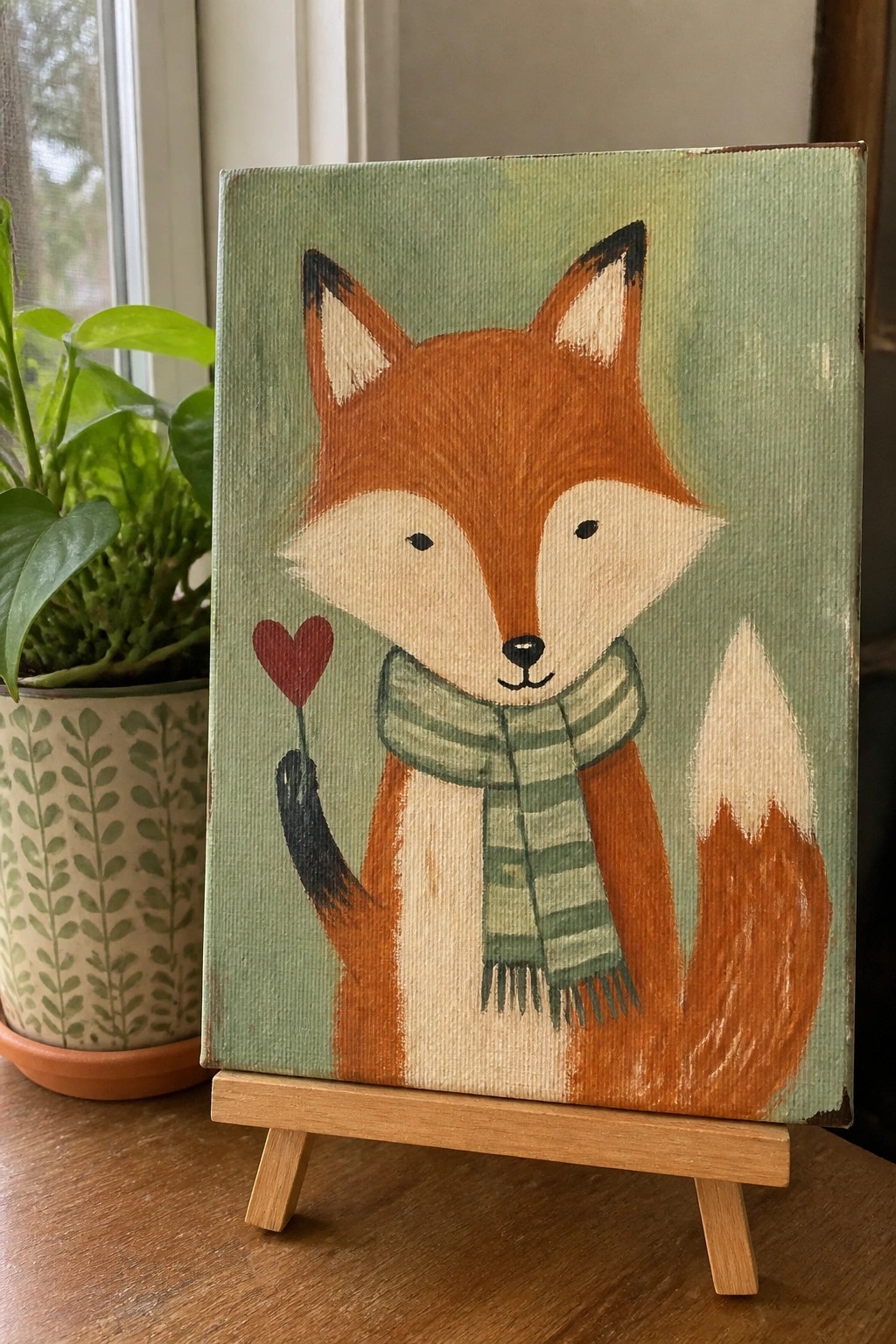
A fox portrait works as an acrylic painting idea when the subject stays centered and the colors stay flat and limited. The idea centers on a stylized fox wearing a striped scarf while holding a small heart, set against a single muted green background. This fits the decorative animal category because the clean shapes and minimal layering let the composition read clearly from a distance.
What makes this idea useful is how the solid color blocks and simple outlines let you finish the piece without blending or fine detail work. You can adapt it by changing the scarf colors or swapping the green background for another neutral tone to match different rooms. For canvas decor, this kind of graphic animal subject photographs well for Pinterest and works as a quick gift project since the layout stays balanced even if your brushwork stays loose.
Abstract Geometric Shapes in Earth Tones

This acrylic painting idea centers on three large flat shapes arranged vertically on a neutral background. A warm orange semicircle sits at the top, a blue rectangle with a curved lower edge occupies the middle, and a smaller beige semicircle anchors the bottom. The composition works through strong contrast between the matte color blocks and the light canvas, keeping the focus on simple curves and horizontal balance.
What makes this idea useful is how straightforward it is to paint on any canvas size without needing blending or texture. The color palette can be swapped for other muted tones or made brighter while keeping the same layout. For practice, this kind of subject helps build control over clean edges and even coverage. It also translates well to wall art because the minimal design fits many room styles without competing with furniture.
Wildflower Meadow with Layered Blooms
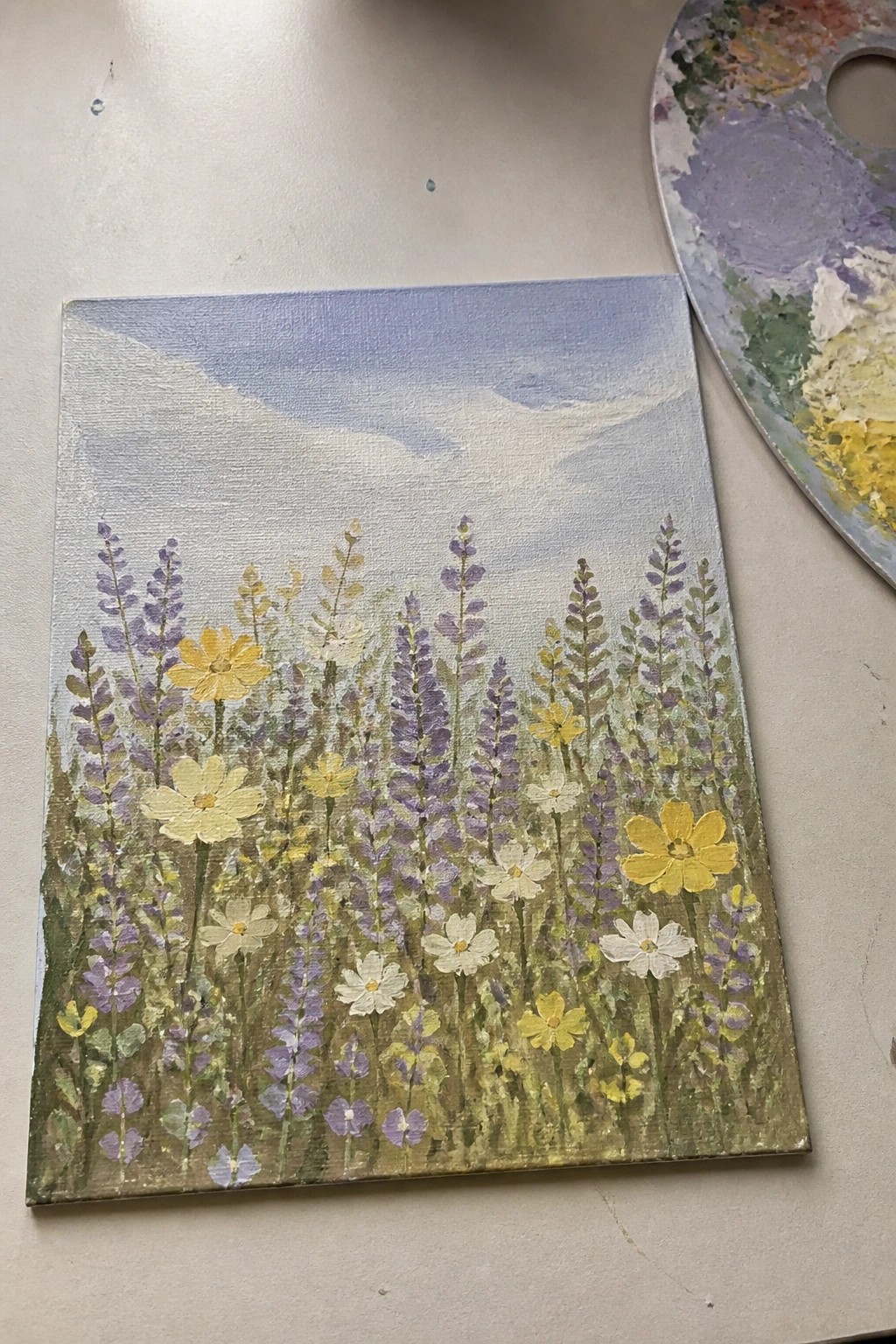
A wildflower meadow idea in acrylics focuses on mixing tall purple spikes with yellow and white blooms over a textured green and brown base. The vertical stems create natural movement while the soft blue sky keeps the composition balanced and open. This type of floral landscape relies on overlapping layers rather than fine detail to suggest a full field.
What makes this idea useful is that the flower shapes can be built with simple strokes and dabs, so you can easily change the color mix or density without starting over. The layered approach works well for practice because you can add or remove elements as the paint dries. For canvas decor, the same meadow layout adapts to different canvas sizes and lets you swap in your own preferred bloom colors.
Twilight Cottage Landscape in Acrylic

A small house under a gradient sky forms the core of this acrylic painting idea, using a simple landscape layout with a central structure, flanking trees, and a low foreground hill. The sky shifts from deep blue at the top through pink and orange tones, accented by a crescent moon and scattered stars, while the house includes basic details like lit windows and a chimney. This approach relies on flat color blocks and clear shape separation rather than heavy texture or fine detail, which keeps the composition balanced on a small canvas.
What makes this idea useful is the straightforward layering of sky colors first, followed by the ground and main shapes, so you can build it quickly without blending challenges. The limited palette of blues, pinks, and earth tones adapts easily if you want to swap in different tree colors or remove the stars for a daytime version. For canvas art, something like this works well as a standalone piece or part of a matching set, and the graphic style helps it stand out on a shelf or easel without needing advanced skills.
Vertical Striped Hearts on Canvas

A striped heart pattern uses vertical bands of color to frame repeating heart shapes and dotted lines across the canvas. The idea keeps the layout simple by alternating background colors while varying the heart tones within each stripe to add interest. This approach fits the decorative or patterned category and relies on consistent spacing and shape repetition for visual balance.
The bold contrast does a lot of the work here by making the hearts stand out quickly against each stripe. An acrylic idea like this works especially well for wall art because the basic shapes let you finish a full canvas without needing advanced detail work. You could adapt it by changing the stripe widths, swapping colors to fit a room, or scaling the hearts up or down based on canvas size.
Stacked Beach Stones Seascape

A simple stack of three smooth stones set on pale sand creates a clear focal point when placed in front of soft horizontal bands of ocean and sky. This acrylic idea combines a still life element with a minimal landscape, using rounded shapes and gentle color shifts to hold the composition together. The low-detail background keeps attention on the stones while the subtle wave lines add just enough movement without crowding the canvas.
What makes this idea useful is how the rounded forms and limited palette let you focus on basic blending and edge control. You can adjust the stone sizes or swap in warmer sand tones to match a different shoreline photo. For wall art this layout works well because it stays balanced even on smaller canvases and leaves room to personalize the wave colors.
Stylized Terracotta Vase with Flat Leaf Branches

A still life acrylic idea built around a simple rounded vase and three short branches of oval leaves keeps the shapes bold and graphic. The orange vase with its dotted texture sits centered on soft horizontal bands of beige and muted green, while the leaves in yellow and teal create clear contrast without extra shading or detail. This approach works as decorative wall art because the limited color blocks and open space let the main forms stand out cleanly.
What makes this idea useful is how the flat shapes and few colors make it straightforward to paint on any size canvas. You could change the leaf tones for different seasons or swap the vase pattern for lines if you want a quick variation. For practice, this kind of subject helps with placement and balance before adding more layers or patterns.
String Lights Over a Balcony at Night

A balcony scene with string lights strung across a dark blue sky works as a simple acrylic painting idea that combines landscape and still life elements. The main focus stays on the horizontal lines of glowing bulbs set against the deep background, while the row of potted plants along the railing fills the lower portion with repeated shapes and varying green tones. The composition gains visual interest from the contrast between the small light circles and the larger plant masses, plus the dark railing that separates the two sections.
What makes this idea useful is how the limited color palette of blues, greens, and warm yellows reduces the need for complex mixing. You can adapt it by changing the number of lights or plant sizes to fit different canvas dimensions, or by keeping the background flat and building only the lights and foliage with thicker paint. For practice, this kind of subject lets you work on soft edges around the bulbs without requiring fine detail everywhere, and the strong contrast helps it stand out in searches for canvas wall art.
Mug and Spoon Still Life

A still life acrylic painting built around a wooden spoon and a simple ceramic mug on a plaid cloth gives a clear, contained subject to work with. The idea relies on basic shapes, a muted neutral palette, and a flat background that lets the objects hold the focus. This setup falls into the still life category and keeps the composition effective through clean edges and limited color blocks rather than heavy texture or detail.
What makes this idea useful is how the blocked shapes and soft edges make it easy to adjust the plaid pattern or swap the mug color without redrawing the whole scene. You can simplify the spoon handle or add a second object if you want more practice with overlapping forms. For canvas art, something like this works especially well for quick weekend pieces or small wall decor because the everyday objects translate directly to other color schemes.
Frequently Asked Questions
What basic supplies do I need to start these acrylic painting ideas on canvas?
You will want a set of acrylic paints in various colors, primed canvases in different sizes, a variety of brushes including flat and round ones, a palette for mixing, and some water containers for cleaning. Add in optional items like a easel for comfort during long sessions and protective sheets for your workspace to keep the cozy studio atmosphere intact without mess.
How can I incorporate these painting ideas to enhance the cozy vibe in my art studio?
Choose color palettes that feature warm tones like soft terracotta, muted greens, and creamy neutrals to match the ideas. Arrange your finished canvases on shelves or lean them against walls near a comfortable seating area with warm lighting. This setup turns the space into an inviting retreat where you can relax and create more pieces.
Are these acrylic painting ideas suitable for beginners or do they require advanced skills?
Many of the ideas work well for beginners because they focus on simple techniques like layering colors or using basic shapes to build scenes. Start with smaller canvases to practice and follow step by step approaches for each concept. As you gain confidence you can add personal details to make them more complex over time.
How do I prevent acrylic paints from drying out too fast while working on these projects?
Work in small sections and keep a spray bottle of water nearby to mist your palette and brushes regularly. Use a stay wet palette or cover unused paints with plastic wrap between sessions. These steps help maintain smooth application and let you enjoy the creative process without frustration in your studio.
What are some ways to display and protect my finished acrylic paintings in a cozy studio setting?
Hang the canvases at eye level using simple clips or frames that complement the warm decor. Apply a varnish once the paint is fully dry to protect against dust and fading. Rotate pieces seasonally to keep the space fresh and inspiring while ensuring the artworks last for years.

Hi, I’m Camille.
I’m a self-taught painter and creative blogger with a soft spot for acrylic painting, color play, and all the little art ideas that make everyday life feel more inspiring.
I started this space because I’ve always believed painting should feel joyful, approachable, and a little personal. Some of my favorite pieces come from simple ideas, messy palettes, and evenings where I just felt like making something pretty.
Most of what I share begins with acrylic painting, but I also love exploring other mediums when creativity pulls me in a new direction. My goal is to collect and share painting ideas that feel fun, beautiful, and actually doable, whether the mood is calm and minimal or bright and playful.
This is a space for inspiration, experimenting, and enjoying art without overcomplicating it.