
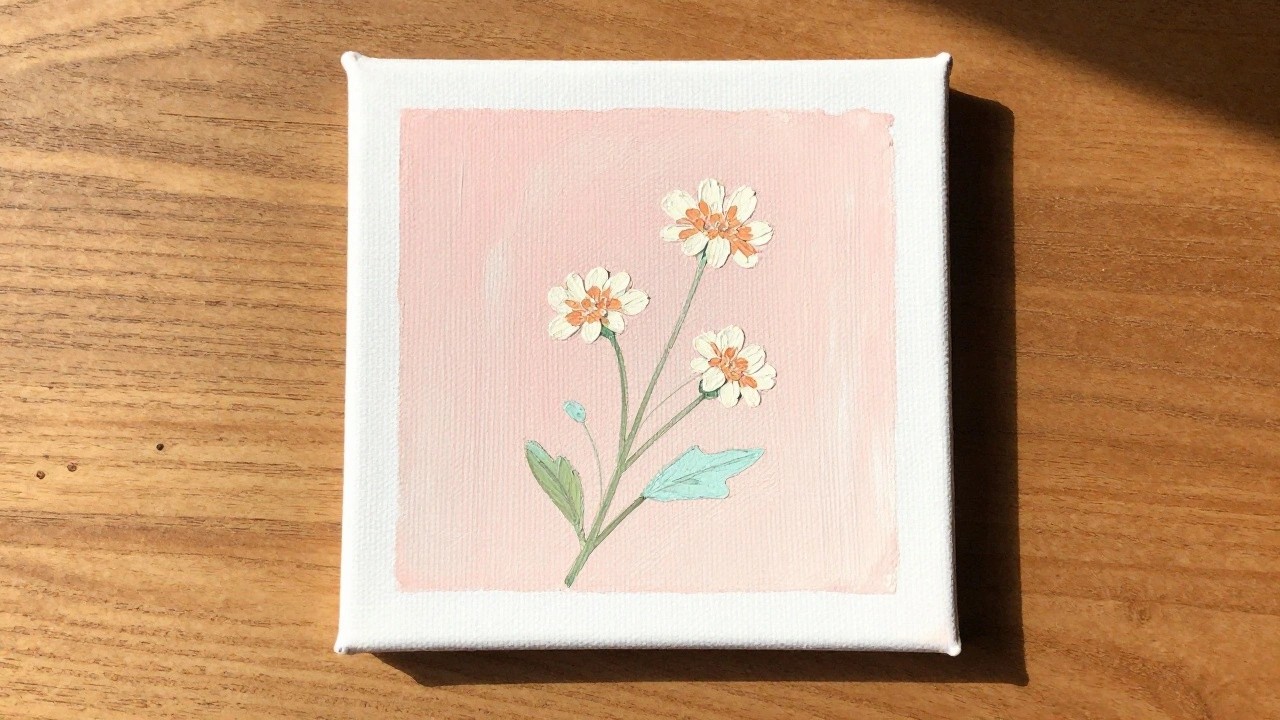
I have been trying out some small canvas paintings lately with simple flower designs.
These little projects work well when I want something quick to finish in an evening.
I picked out twenty ideas that focus on tiny florals in different styles.
They use basic acrylic paints and don’t require a lot of space or supplies.
Some of them turned out nice enough to keep around the house or give away.
Pastel Flower Clusters on a Solid Pink Canvas
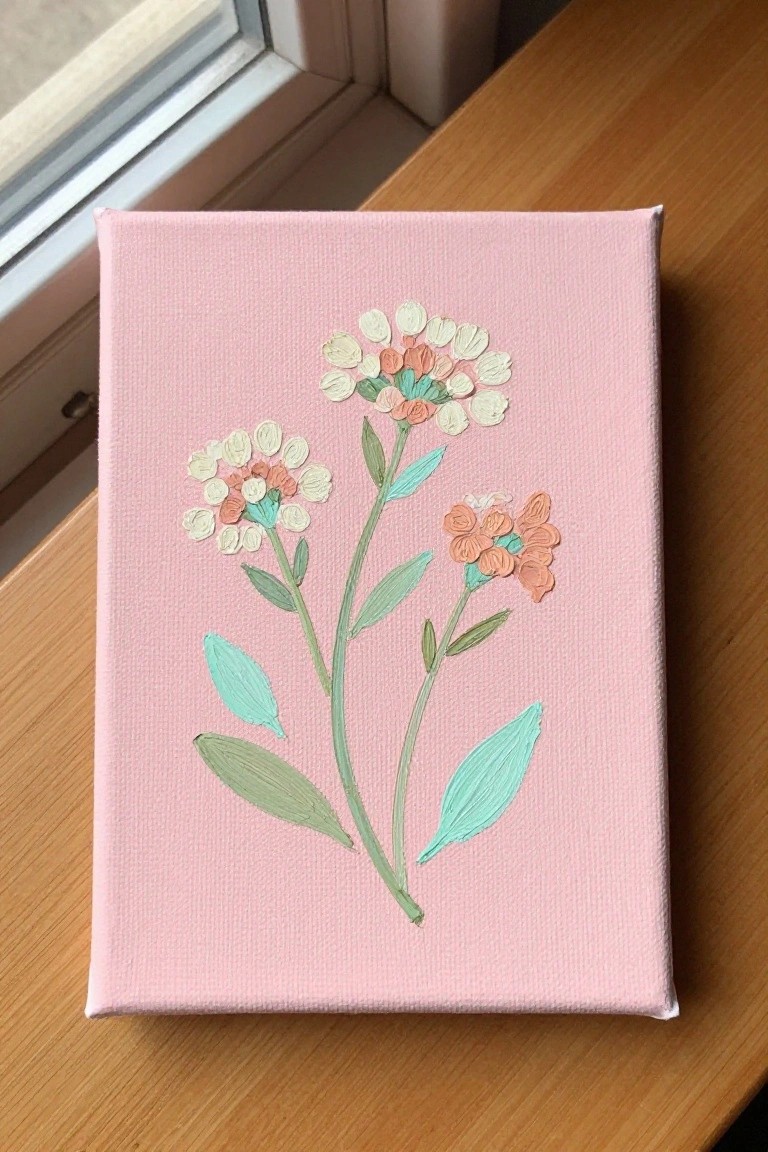
A compact floral layout with three small flower heads makes an effective acrylic painting idea for mini canvases. The petals are formed from overlapping oval shapes in cream, peach, and mint tones, while the stems stay thin and the leaves use just two shades of green against the plain pink background. This keeps the design balanced and lets the flowers stand out without filling every inch of the small surface.
What makes this idea useful is the restricted color palette, which reduces the need for constant mixing and lets you focus on building up the petal layers. You can swap the peach for another soft shade or move one flower lower to change the spacing. For practice or quick gifts, the same layout adapts easily to different background colors and still reads clearly from a distance on a shelf or desk.
Bold Daisy Cluster on Teal Mini Canvas
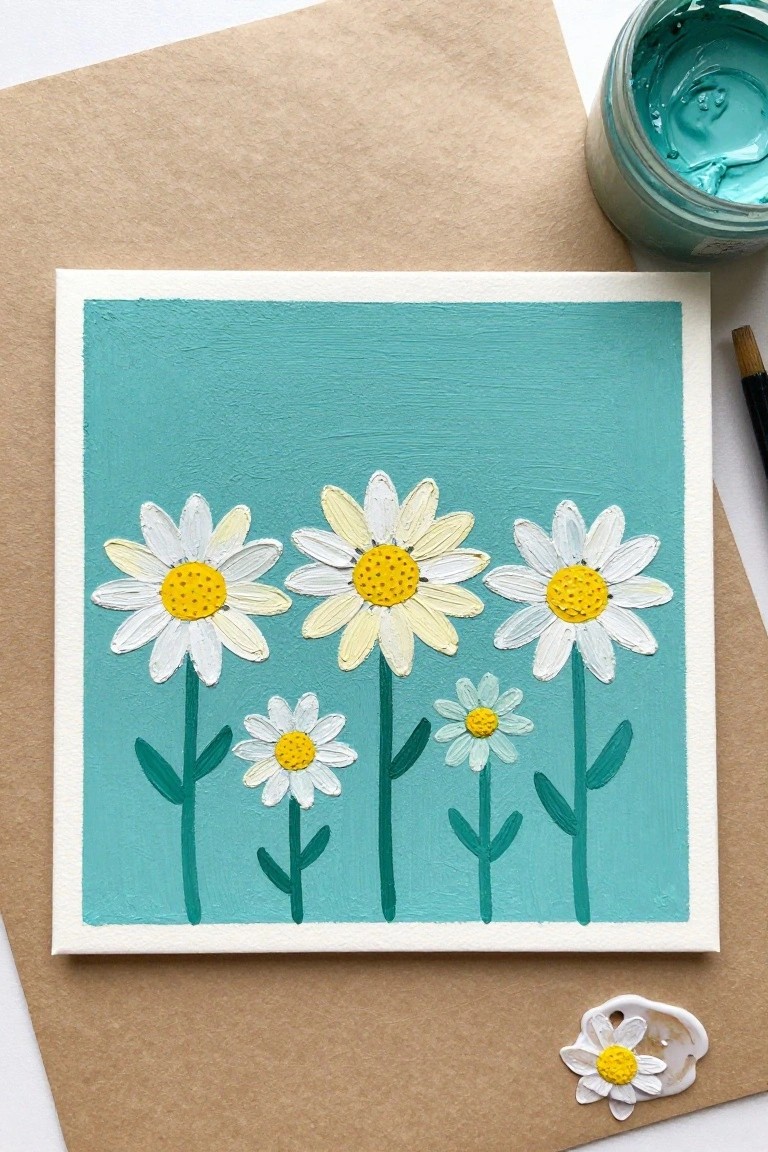
A daisy floral idea like this keeps the focus on simple shapes and strong color contrast. White petals with yellow centers sit against a flat teal background, while the staggered stem heights and small leaves prevent the layout from feeling too even or stiff. It works as decorative wall art that stays graphic and easy to read from a distance.
What makes this idea useful is how the limited palette lets you concentrate on placement and edge control without juggling many colors. The same layout adapts quickly by changing the background shade or reducing the number of blooms to fit a smaller canvas. For practice, this kind of subject helps build clean brushwork on petals and stems before trying more crowded arrangements.
Mini Canvas Bouquet Tied with a Bow
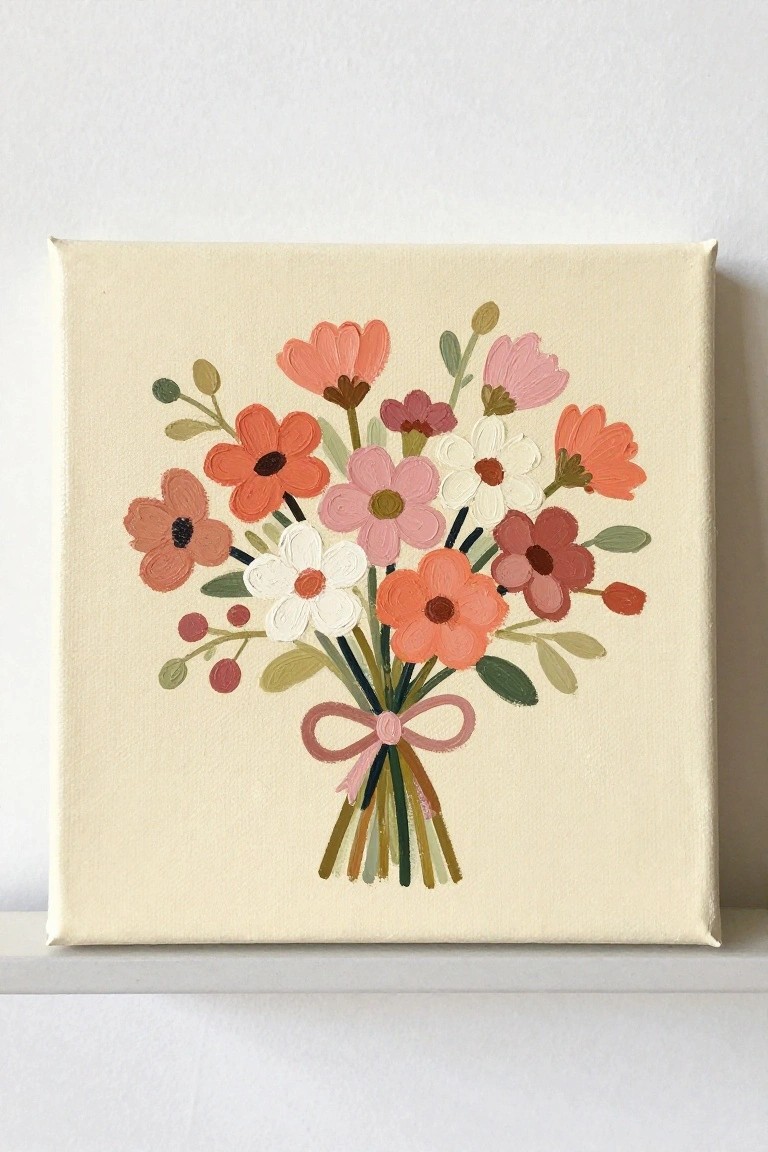
A compact bouquet of assorted flowers forms a clean acrylic painting idea for small canvases. The stems are grouped at the base and wrapped with a ribbon bow, turning the arrangement into a simple still life that sits well in the center of the canvas. Flat color areas and clear outlines let the flowers stand out without needing heavy detail or texture.
What makes this idea useful is how the bow and stem bundle give the composition an instant finished edge. You can change the flower colors or reduce the number of blooms to fit the space you have, and the plain background keeps the focus on the shape. For practice or quick gifts this layout works because it builds shape recognition and color blocking at the same time.
Pastel Floral Wreath on a Small White Canvas

A loose circular wreath of mixed flowers works well as an acrylic painting idea on a mini canvas. The design places pink, yellow, and cream blooms with blue-green leaves around the edges while keeping the center empty, which creates balance through color variation and simple overlapping strokes. This approach fits the decorative floral category and keeps the focus on the ring shape without crowding the small surface.
What makes this idea useful is how the open center and limited color palette make the layout easy to plan and paint without tight detail work. You can change the flower colors to match different seasons or room styles, or reduce the number of blooms if you want a faster version for practice. For canvas decor, the clean white background helps the wreath stand out in photos, which works well for sharing quick project ideas online.
Mini Canvas Mason Jar Flower Arrangement
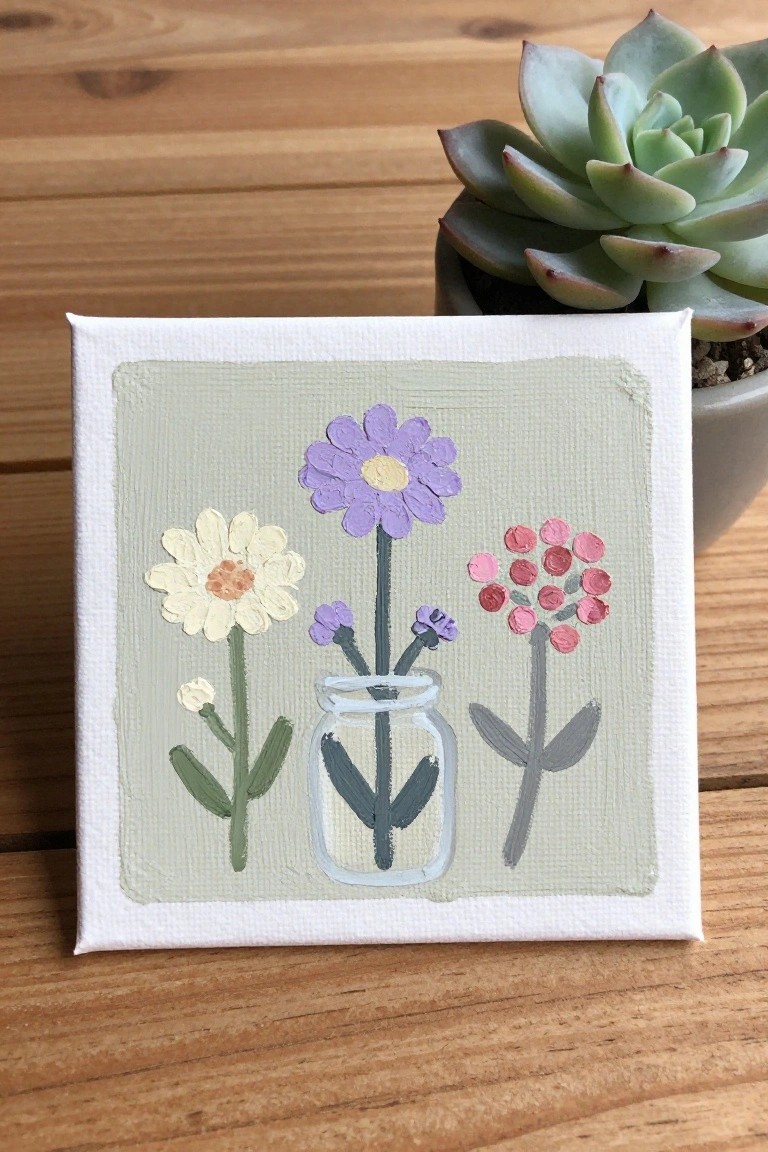
A simple still life idea works well here by grouping three different flower types around a painted mason jar on a muted sage background. The white daisy sits to the left, the purple bloom rests inside the jar, and the pink cluster stands on the right, creating an even spread that fills the small square without crowding. Flat color areas and basic stem shapes keep the focus on the overall layout rather than fine detail.
What makes this idea useful is the jar acting as a built-in focal point that connects the separate flowers into one scene. You can change the flower colors or swap the right-hand bloom for a different shape while keeping the same placement. For practice, this kind of subject lets you try basic layering on a tiny canvas without needing advanced blending skills. The layout also translates easily to a series of matching pieces.
Tiny Floral Heart on Mint Canvas
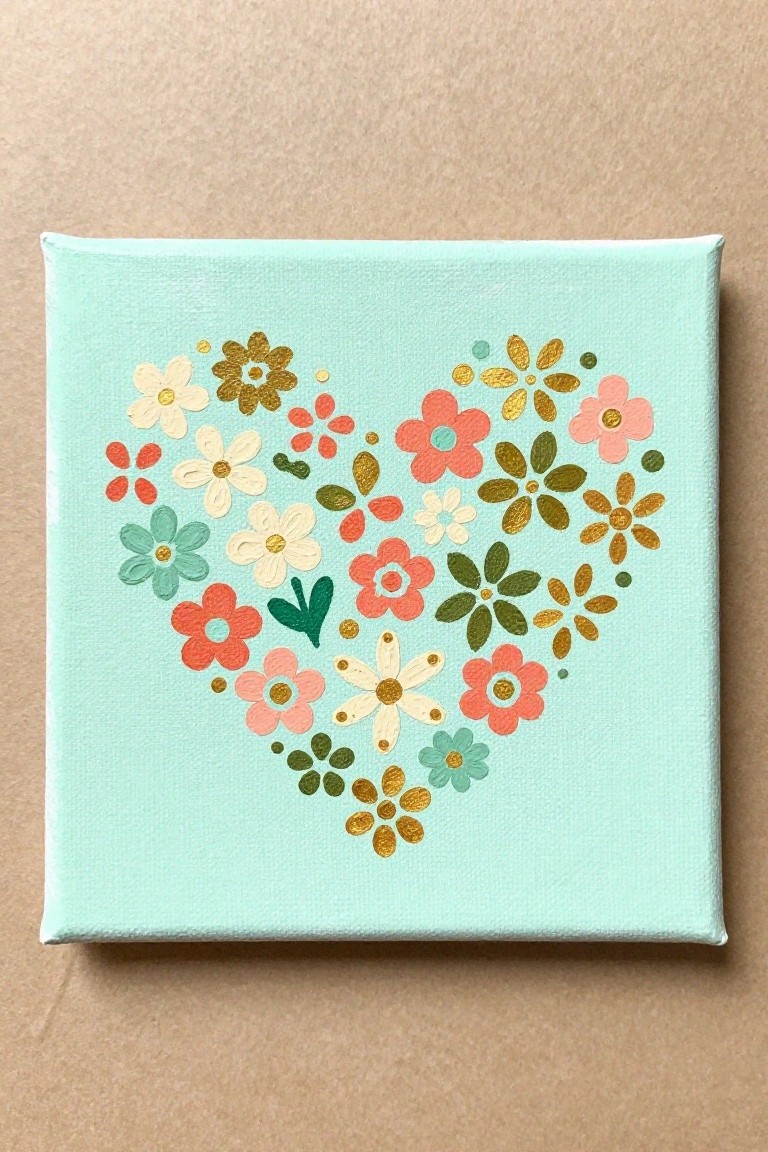
A heart shape built from many small individual flowers makes an effective mini canvas idea because the repeated blooms create a clear larger form without needing precise outlines. The soft mint background provides clean contrast that lets the coral, pink, white, and gold flowers stand out while keeping the overall look light. This fits the decorative floral category where the strength comes from color variety and simple clustering rather than heavy texture or shading.
What makes this idea useful is that each flower stays small enough to finish in a few brushstrokes once basic petal shapes are practiced. The same layout works well if you change the background color or swap in different bloom colors to match a season or room. For canvas decor or quick gifts, the design adapts easily by adding or removing a few flowers around the edges without changing the overall heart structure.
Mini Canvas Tulips in Warm Block Colors

A simple cluster of three tulips painted with solid color sections gives a clean floral idea that works well on a small canvas. The layout uses tall stems and a few angled leaves to keep the composition balanced without crowding the space. This style fits the decorative floral category because the flat shapes and limited palette let the colors carry the design.
What makes this idea useful is how the bold color blocks cut down on detail work, so you can finish it quickly on a mini canvas. You can easily swap the rust and gold tones for other color combinations or repeat the same stem placement with different flower types. For practice, this kind of subject helps you focus on clean edges and color placement while still producing something that looks finished enough to display or gift.
Soft Floral Branch on a Mini Canvas
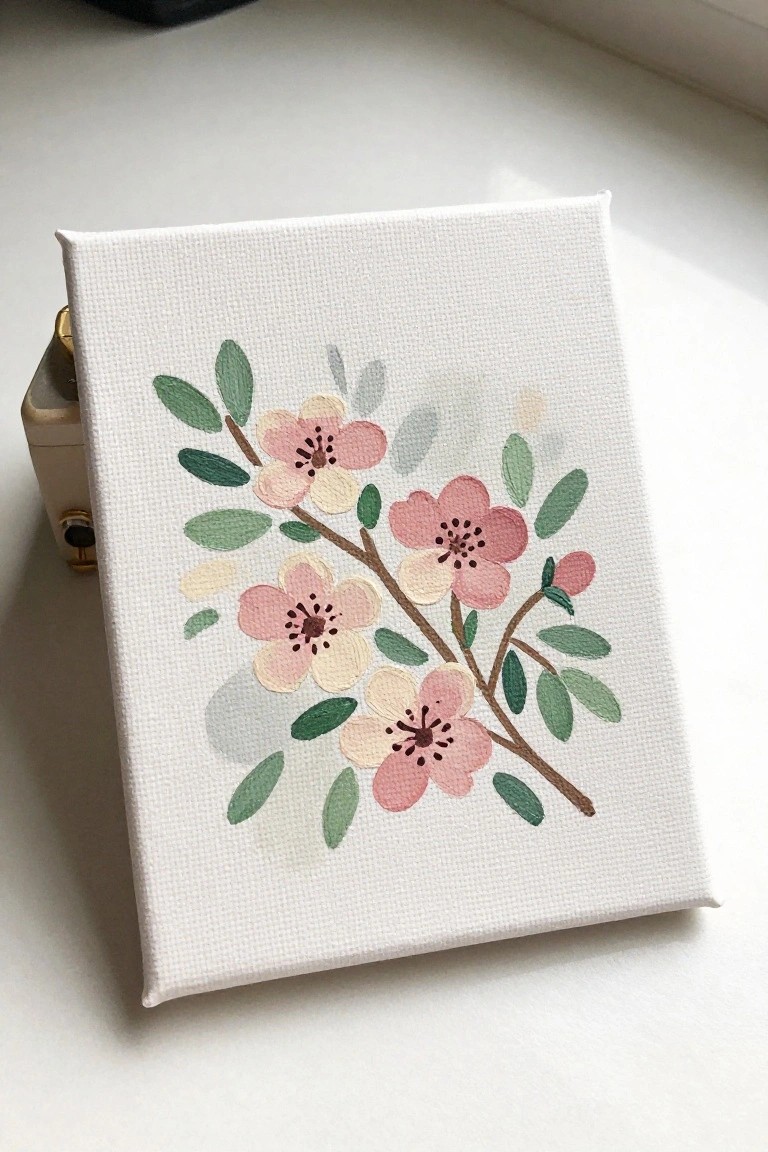
A floral branch painting works well as a mini canvas idea because it uses a few clustered flowers with varying pink and cream tones along brown stems. The oval leaves in different greens add balance without crowding the white space. This approach fits the floral category and keeps the focus on soft shapes rather than heavy detail.
What makes this idea useful is how the limited color palette and loose leaf shapes make it quick to paint on a small surface. You can swap in different flower colors or add a second branch to personalize it for gifts. For canvas art, something like this stands out on Pinterest because the clean background lets the blooms pop without extra texture.
Bound Mini Bouquet of Leaves and Berries

A small tied bundle of mixed leaves and berry stems creates a compact floral subject that fits neatly on a mini canvas. The idea combines narrow pointed leaves, broader shapes, and small round berries in earthy tones to add variety without overcrowding the space. A neutral background keeps the focus on the arrangement while the simple band at the base pulls the elements together into one clear shape.
What makes this idea useful is how the tied stems give an easy structure for grouping different foliage without needing exact balance. The color choices stay flexible so you can swap in other tones or add a seasonal berry for quick changes. For canvas decor, this layout works well because it stays readable even when kept small and leaves room to adjust the number of stems or leaf types.
Horizontal Floral Garland on Mini Canvas
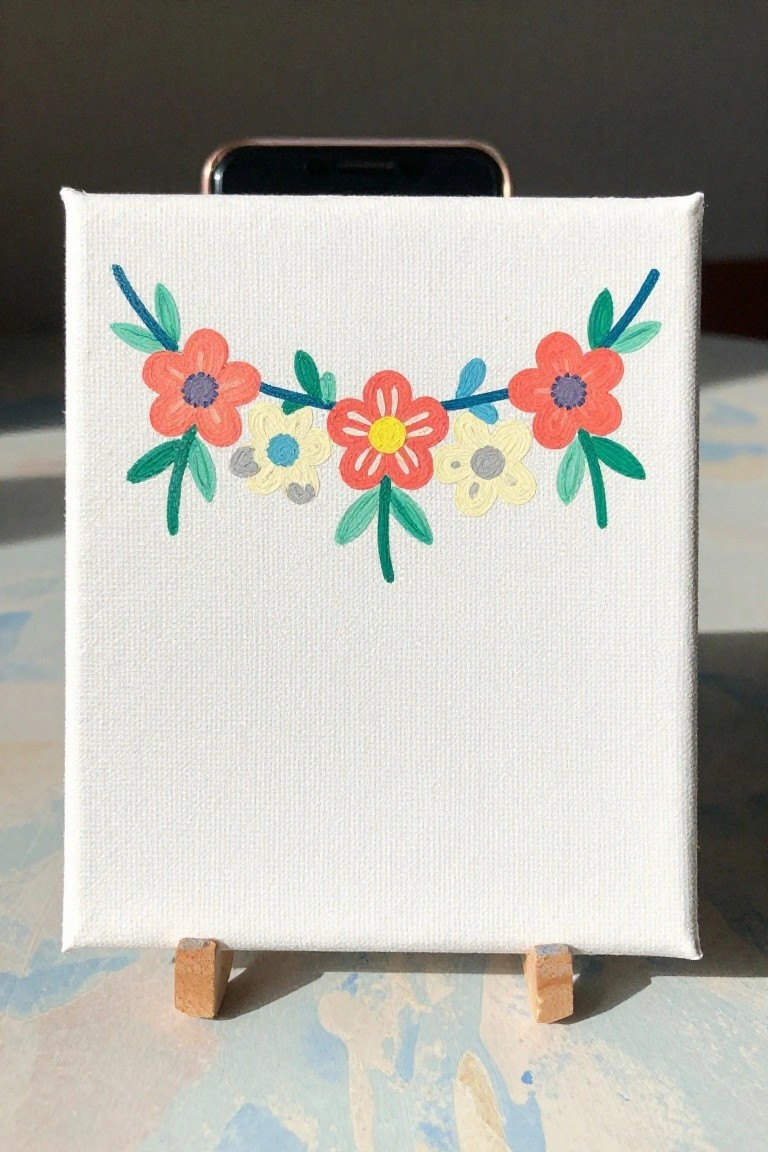
A horizontal floral garland gives a mini canvas a clear focal point without filling the entire surface. The idea uses alternating coral and yellow flowers along a single curved blue stem, with green leaves added on both sides for balance. Bright colors against the white background keep the shapes readable even at small scale, which suits decorative wall art or desk pieces.
What makes this idea useful is how the repeated flower shapes let you practice basic petal and leaf forms without complex layering. You can change the coral and yellow to any two contrasting colors or shorten the stem to fit a different canvas size. For canvas art, something like this works especially well as a quick project because the flat color blocks stay crisp and the empty lower space keeps it from looking crowded.
Grid of Nine Simple Flower Motifs on a Mini Canvas

A grid of nine small stylized flowers gives you a straightforward acrylic idea that fills a mini canvas with variety while staying easy to paint. Each bloom uses basic rounded or pointed petal shapes plus a short stem and a couple of leaves, all done in solid bright colors that pop against the white background. The even spacing and flat color blocks create a clean, balanced look that reads well from a distance without extra shading or detail.
What makes this idea useful is how little time each flower takes, so you can finish the whole piece quickly and still end up with nine different designs. You can swap the color palette to match a specific room or repeat just two or three flower shapes if you want a more uniform pattern. The grid format also works well for practice because it lets you test brush control on small areas, and the final result photographs cleanly for sharing or turning into a set of matching canvases.
Layered Pink Petals on a Mini Canvas
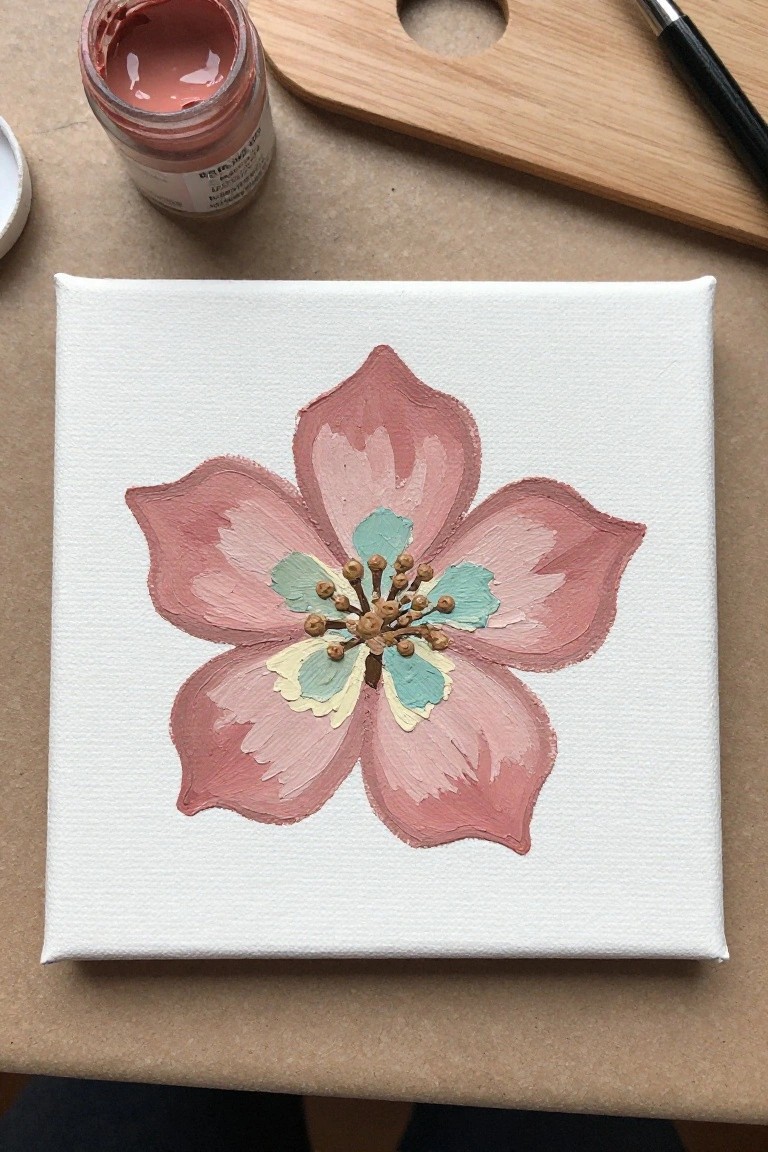
A five-petaled flower painted in soft pink shades creates a clean focal point that fills most of a small canvas. The petals show gentle color shifts from light to deeper pink, while the center uses small teal shapes and brown dots for contrast without needing fine detail. This approach works well as a straightforward floral idea that stays balanced on a limited surface.
The color palette helps this stand out even on a tiny canvas, and the rounded petal shapes are easy to paint with a medium brush. You can swap the pink tones for other hues or simplify the center dots if you want a quicker version. For practice, this kind of layout builds confidence with blending and basic composition before moving to more complex florals. It also translates well to greeting cards or small wall displays.
Bell Flowers with Chevron Stripes
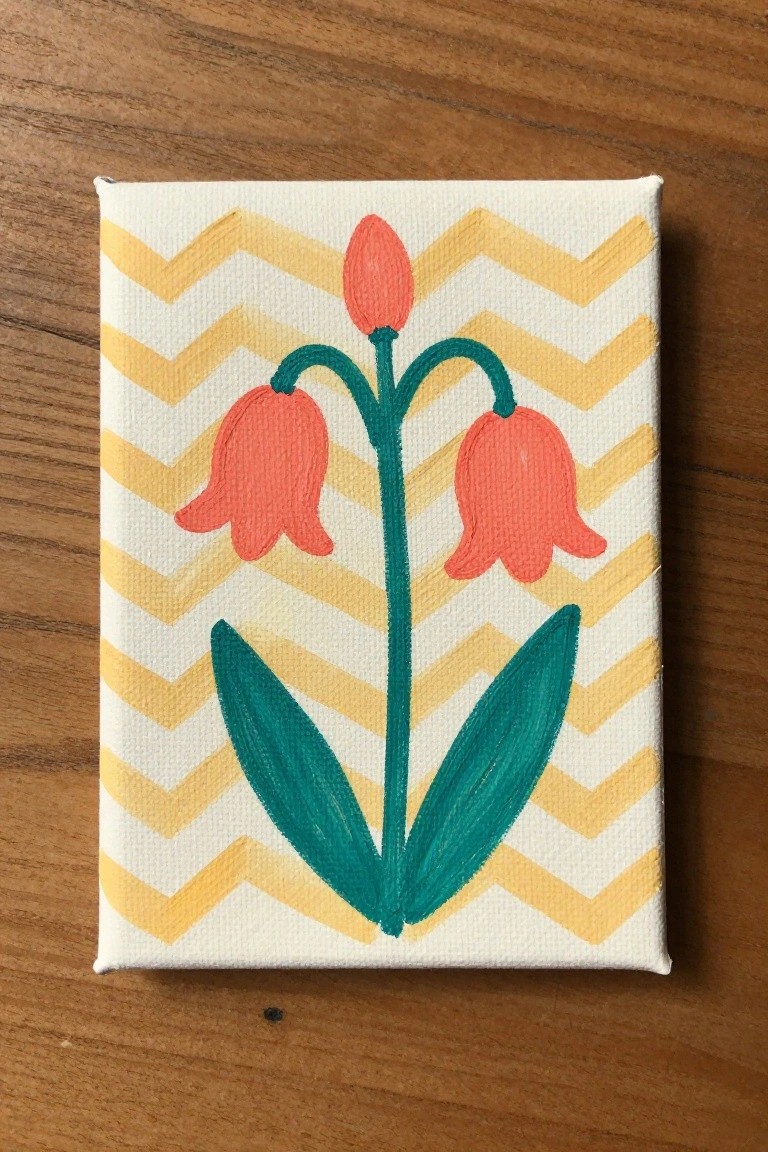
A mini canvas floral idea that uses coral bell-shaped flowers on a single green stem works well because the bold yellow and white chevron background supplies the pattern while the flowers stay simple and centered. The two drooping blooms and top bud create a clear vertical line that contrasts directly with the angled stripes. This approach fits the decorative floral category since the flat shapes and limited color blocks keep the whole piece readable from a distance.
What makes this idea useful is how the chevron pattern does most of the background work so the flowers need only a few solid color layers. You can change the coral to other bright shades or flip the stripe direction without redrawing the flowers. For canvas decor or small gifts this layout stays quick to finish and still reads clearly when grouped with other mini pieces.
Mini Canvas Wrapped Bouquet
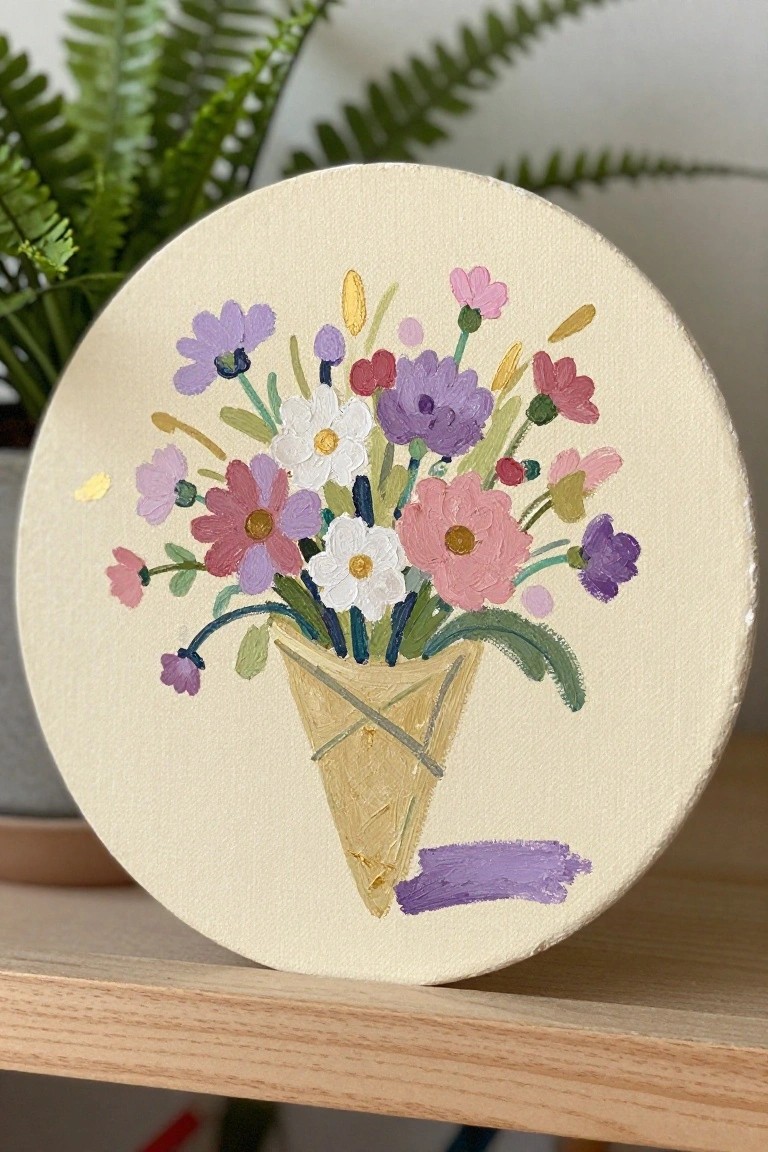
A simple paper cone holding a loose bunch of mixed flowers makes an easy still life subject for a small round canvas. The idea uses bright acrylic colors in pink, purple, and white with quick brushstrokes to fill the cone shape and let the flowers spill over the top. The cone acts as a clear base that keeps the scattered petals from looking messy while the off-white background keeps the focus on the colors.
What makes this idea useful is how the cone shape gives beginners a built-in structure so they do not have to paint a full vase or background. The flowers can be reduced to basic circles and lines in any color mix you already have on the palette. This layout works especially well for quick gifts or shelf decor because the round canvas already feels finished without extra framing. You could swap the cone for a different wrapper color or change the flower mix to match a season without changing the overall layout.
Tiny Blue Flower Cluster on a Soft Purple Canvas
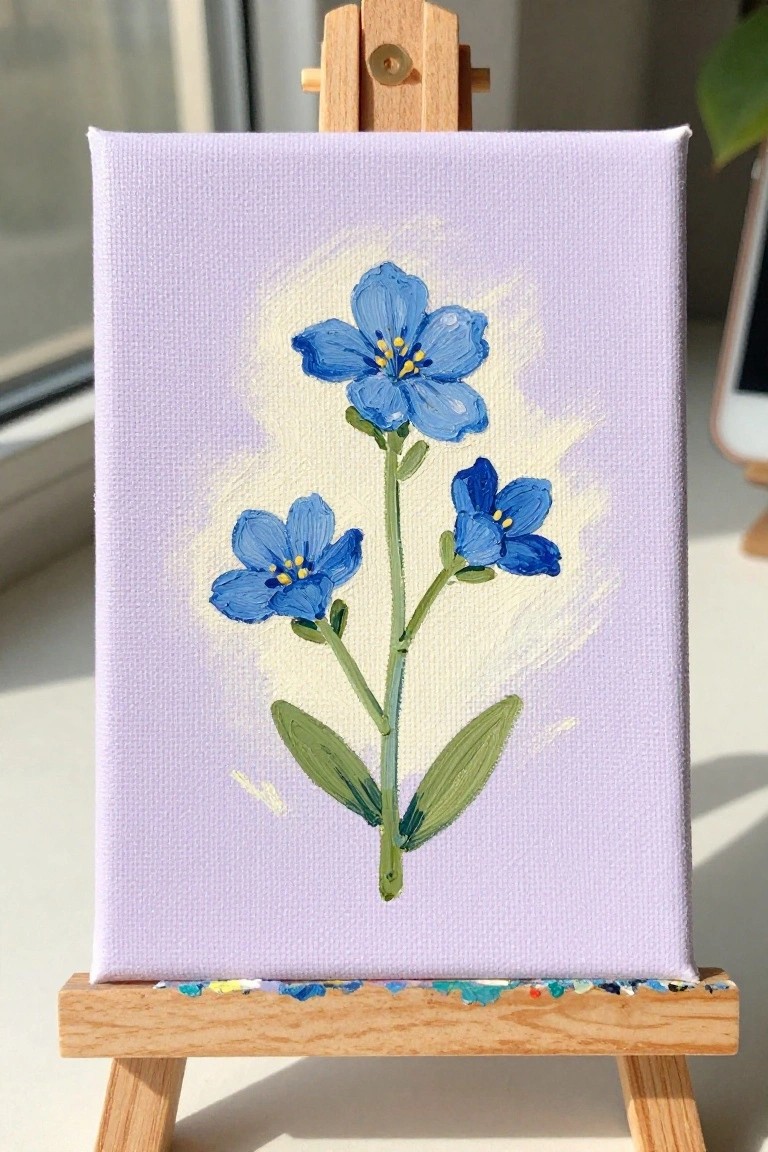
A cluster of three blue flowers on one main stem creates a straightforward focal point that fits perfectly on a mini canvas. The bright petals pop against the light purple background while a few loose yellow strokes add gentle contrast behind the blooms. Green leaves and stems keep the composition balanced and prevent the design from feeling too sparse on the small surface.
What makes this idea useful is how the simple layout works well for quick practice sessions or small decorative pieces. You can easily swap the blue for other flower colors or adjust the background shade to match different color schemes. The loose strokes around the center also make it simple to adapt the size or add extra blooms without needing precise details. For canvas art, this kind of floral setup stands out on Pinterest because the contrast stays strong even at thumbnail size.
Scattered Mini Florals With Mixed Color Groups
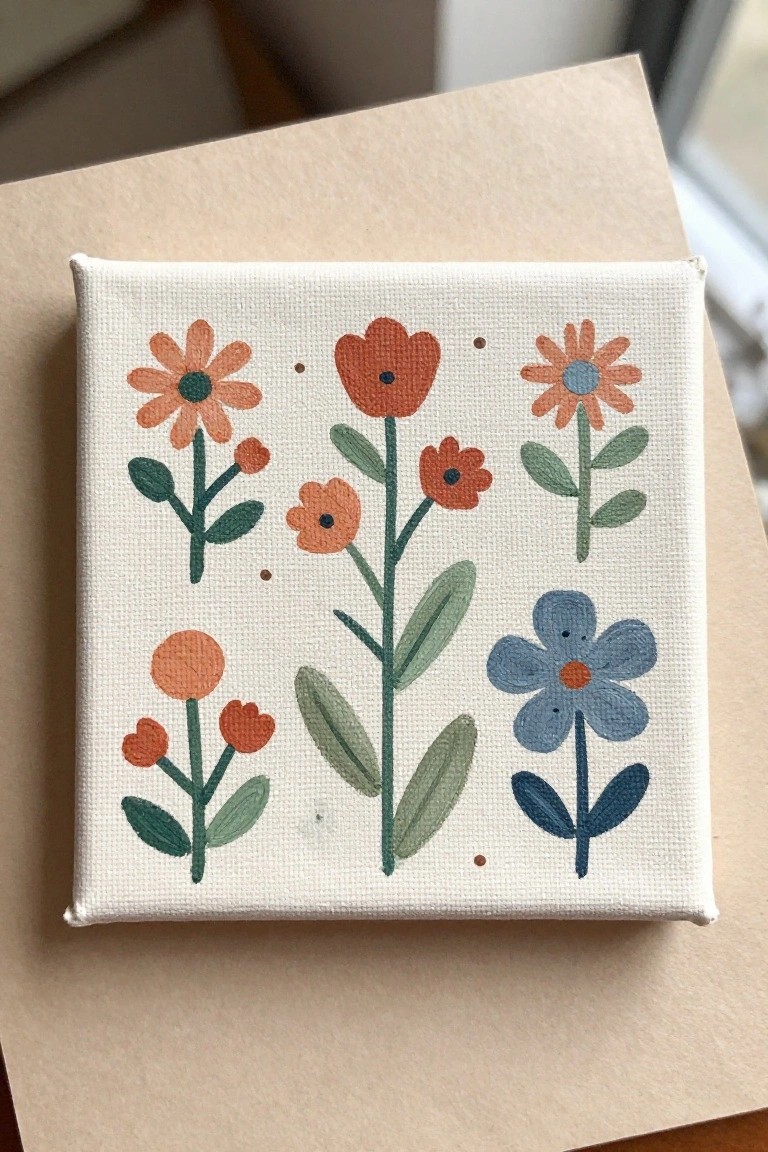
This acrylic painting idea centers on a mini canvas packed with several small, stylized flowers in varying shapes and sizes, all connected by simple green stems and leaves. The design mixes warm orange and red blooms with a single cooler blue flower to create balance across the square surface. Flat color application and clean edges keep the focus on the overall layout rather than fine detail, making it a straightforward floral category project for small canvases.
What makes this idea useful is that the individual flower motifs can be painted separately and rearranged to fill different canvas sizes or create a series. The limited color palette helps the piece stay cohesive even when colors are swapped for seasonal changes or room decor. For practice, this layout lets you work on shape variety and negative space without requiring advanced blending. It would also translate easily into matching cards or larger wall pieces by repeating the same elements.
Crescent Moon with Tiny Pink Blooms
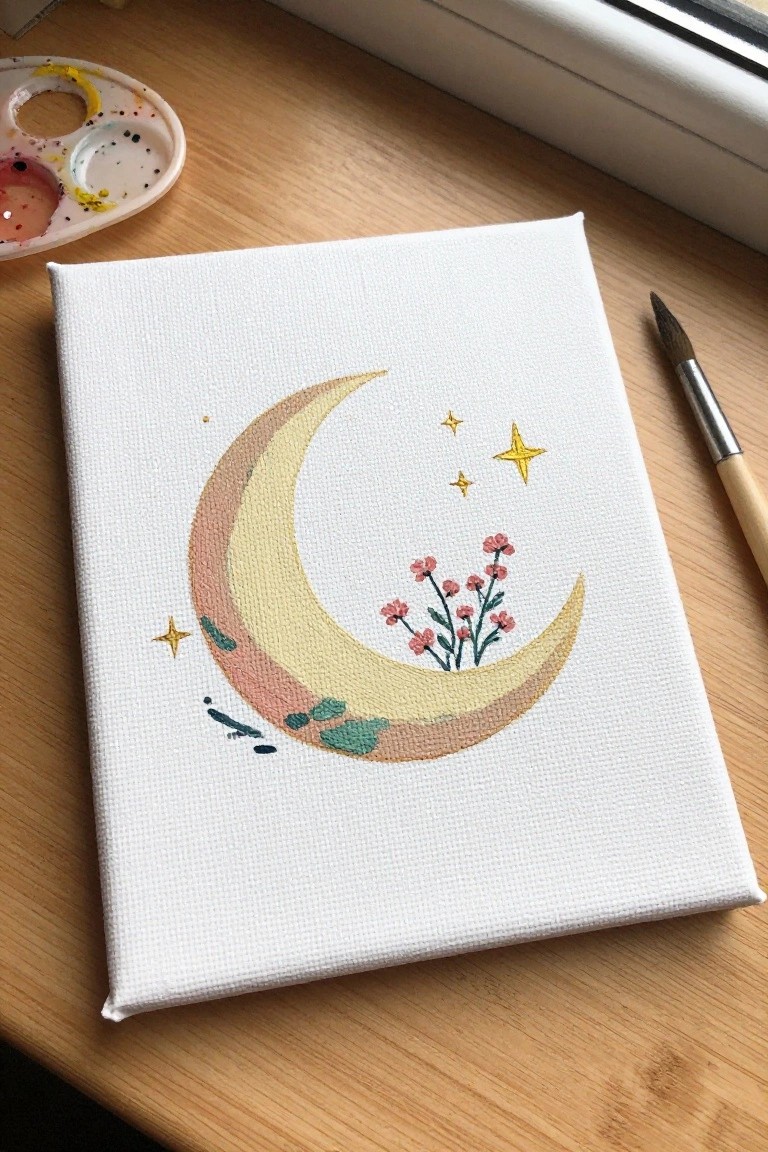
A crescent moon painted in soft overlapping layers of yellow and peach creates the main focal point on a plain white canvas. Small clusters of pink flowers sit inside the lower curve with a few green leaves tucked at the base, while scattered gold stars fill the surrounding space. This approach works as a decorative acrylic idea that pairs a simple celestial shape with minimal floral accents for a clean, balanced look.
What makes this idea useful is the open white background that keeps the focus on the moon without needing extra elements or textures. The layout adapts easily by changing the flower colors or adding more stars to fit different seasons or room styles. For canvas art, something like this stays beginner approachable because the curved form guides the brush while the tiny blooms offer quick practice in detail work without overwhelming the small surface.
Paint a Floral Monogram on Mini Canvas
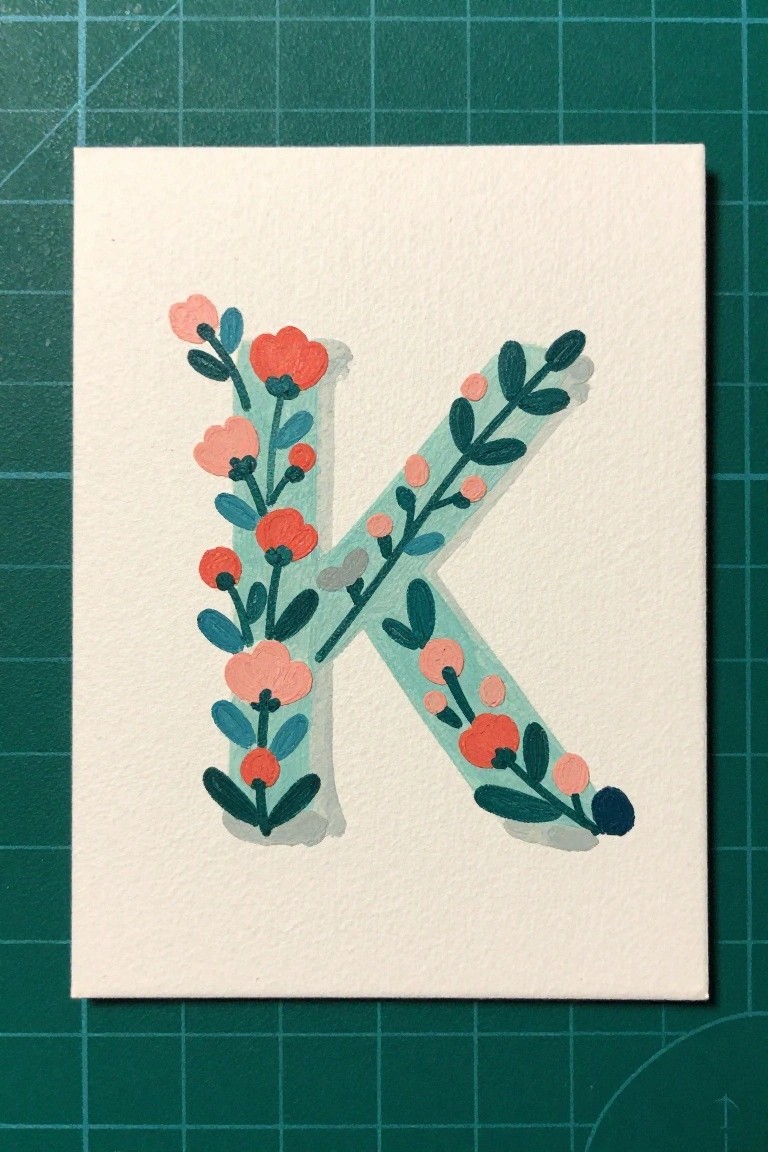
A floral monogram uses a single letter as the base and builds small repeating flowers and leaves along its edges in a limited palette. This acrylic painting idea keeps the letter in a soft teal wash so the coral blooms and darker foliage stand out clearly on the white surface. It falls into the decorative floral category because the repeated shapes and even spacing create balance without extra layers or texture.
What makes this idea useful is the built-in structure of the letter, which guides placement while the tiny flowers stay simple enough to paint in one session. You can swap the coral and teal for any two colors or change the letter to match a name for quick gifts. The same layout works on larger canvases or as a set of initials if you keep the flower size consistent.
Mini Canvas Floral Beach Scene
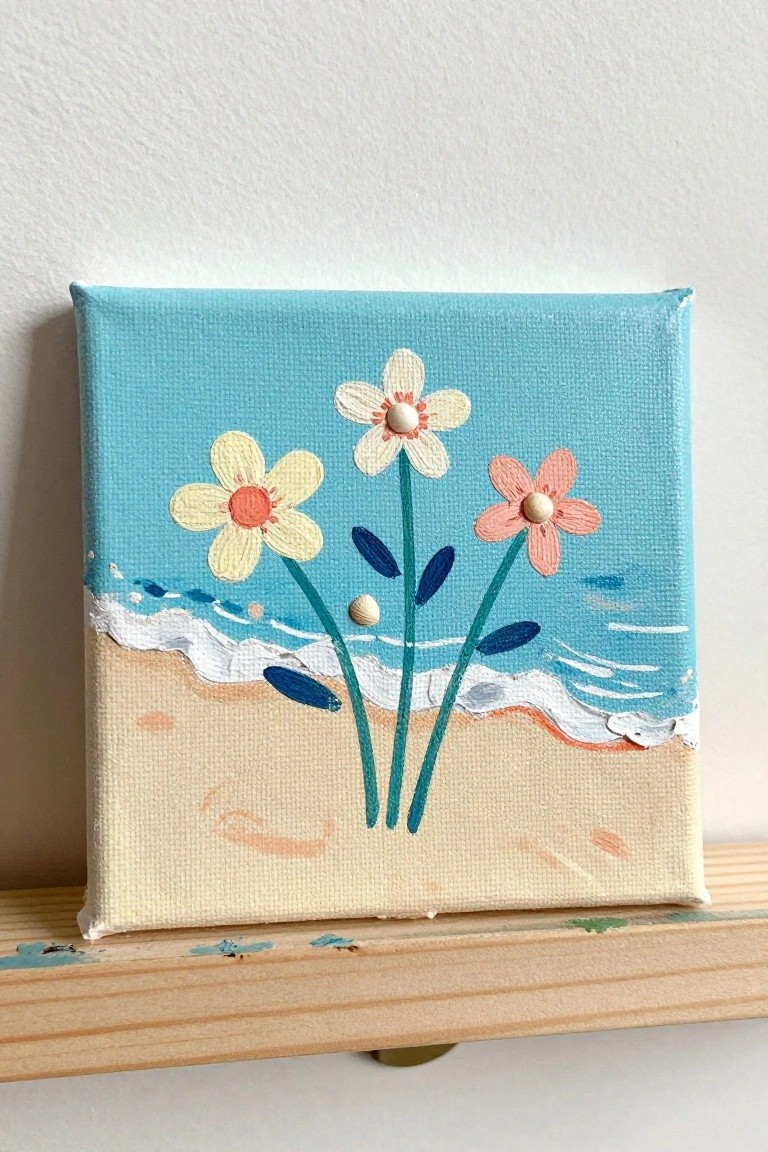
A mini canvas idea that places three simple flowers with long stems directly on a sandy beach area beneath a light blue sky and water section. The design separates the sand from the water with soft white wave lines while using vertical stems to connect the lower and upper parts of the composition. This approach fits into the cute floral category and keeps the focus on clean shapes and a clear division between the two zones.
What makes this idea useful is the straightforward layout that works well on small canvases without needing many layers. You can easily change the flower colors or simplify the wave lines to fit different color schemes or seasons. For practice, this kind of subject helps with balancing vertical elements against a horizontal background split. It would stand out on Pinterest as a quick floral option that adds a landscape twist to typical mini flower paintings.
Bold Poppy Cluster on Mini Canvas
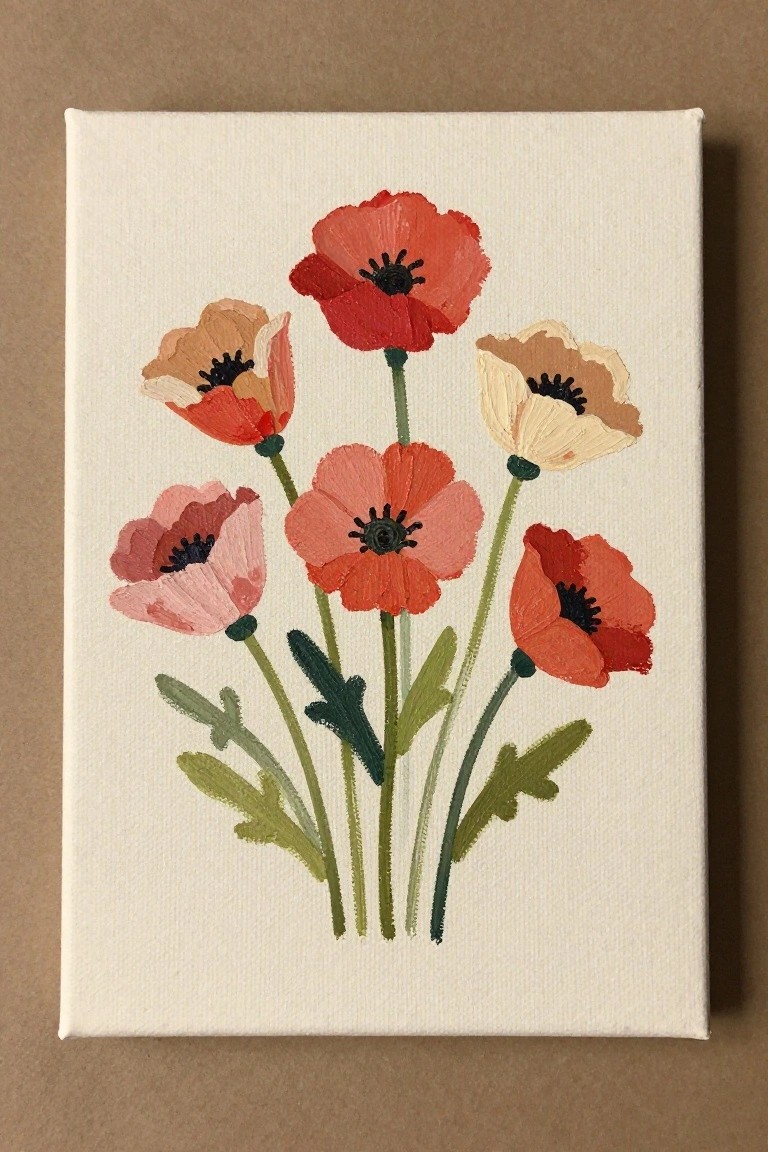
A group of poppies painted in several shades of red, coral, pink, and cream creates a compact floral idea that fits well on a small canvas. The flowers sit at different heights with simple petal shapes and dark centers, while the stems and leaves stay low to leave plenty of white space around them. This layout works as a straightforward floral subject because the bright colors stand out against the plain background without needing extra detail.
What makes this idea useful is how the limited number of blooms and the white background keep the focus on color placement rather than fine blending. You can easily change the shades or add one more open flower to match a room or make a quick gift. For mini canvas work, the upright stems and rounded petals also make the finished piece photograph clearly if you want to share it online.
Frequently Asked Questions
What supplies do beginners need to create these mini floral paintings on canvas? Start with small stretched canvases around 4 by 4 inches or 5 by 5 inches, acrylic paints in soft pastel shades, fine detail brushes in sizes 000 and 00, a pencil for light sketching, and a palette for mixing colors. Add a clear sealant spray at the end to protect the finished work. These basic items keep costs low while allowing precise control over tiny petals and leaves.
How can I paint very small floral details without the lines looking blurry or uneven? Use a steady hand by resting your wrist on a stable surface and apply thin layers of paint rather than thick strokes. Choose high quality fine tip brushes and dilute acrylics slightly with water for smoother flow. Practice simple shapes like dots for flower centers and curved lines for stems on scrap paper first before moving to the canvas.
Where are the best places to find affordable mini canvases for these projects? Check craft stores like Michaels or Hobby Lobby for multipacks of small canvases that often go on sale. Online options such as Amazon or Etsy offer bulk sets at reasonable prices, and dollar stores sometimes stock basic versions suitable for painting. Look for primed canvases to save time on preparation.
What simple techniques help turn basic flower shapes into more adorable and varied designs? Layer multiple small blooms in clusters with different sizes and add tiny leaves or dots around them for depth. Experiment with color combinations like soft pinks with greens or whites with yellow centers, and incorporate subtle backgrounds such as light washes or speckles. Rotate the canvas as you work to reach all areas easily and keep designs balanced.
How should these finished mini paintings be displayed or preserved for long term enjoyment? Seal each piece with a matte or glossy varnish to prevent dust and fading, then mount them on small easels, in shadow boxes, or grouped on a gallery wall using removable adhesive strips. Rotate them seasonally or gift them in tiny frames to highlight the delicate floral details without overwhelming a space.

Hi, I’m Camille.
I’m a self-taught painter and creative blogger with a soft spot for acrylic painting, color play, and all the little art ideas that make everyday life feel more inspiring.
I started this space because I’ve always believed painting should feel joyful, approachable, and a little personal. Some of my favorite pieces come from simple ideas, messy palettes, and evenings where I just felt like making something pretty.
Most of what I share begins with acrylic painting, but I also love exploring other mediums when creativity pulls me in a new direction. My goal is to collect and share painting ideas that feel fun, beautiful, and actually doable, whether the mood is calm and minimal or bright and playful.
This is a space for inspiration, experimenting, and enjoying art without overcomplicating it.