

I started trying out these animal painting ideas by keeping the faces and ears to simple shapes.
It makes the whole process quicker and easier especially when I just want to paint without overthinking.
Acrylic paint layers nicely on these basic forms and I can add little touches like noses or fur lines afterward.
I’ve come up with 21 different ones that range from common pets to wild animals.
Most of them use the same starting point but change up the ears or face proportions a bit.
Rounded Face Cat with Minimal Ear Details

A cute animal acrylic idea built around one oval face shape and two simple triangular ears works well for quick canvas projects. The cat uses flat color blocks with a few added stripes and leaf accents to create visual interest without extra layers. The solid warm background keeps the focus on the central figure and makes the whole piece feel balanced and easy to read.
What makes this idea useful is how the limited shapes let you finish a complete animal painting fast while still looking intentional. You can swap the peach background for any bold color or change the leaf placements to match a different season or room. For practice, this kind of layout helps you work on clean edges and simple color placement before moving to more detailed animals. It would also translate easily to smaller canvases or greeting cards if you keep the same rounded face and ear structure.
Bunny with Lavender Side Accents

A simple gray bunny painted with basic oval body and head shapes plus long upright ears forms the center of this acrylic idea. The clean white background and purple dotted border keep the focus on the animal while the lavender stems placed on each side create visual balance. This fits the cute animal category and uses flat color blocks with minimal layering to keep the shapes easy to read.
What makes this idea useful is how the side flowers fill empty space without needing complex backgrounds or extra details. You can swap the lavender for any tall simple flower or adjust the ear color to match a different palette. For practice this layout works well because the dotted border adds a finished look without extra brushwork, and the same bunny shape can be repeated with new accents for a quick series.
Bear in a Polka Dot Nightcap

A bear portrait built from basic rounded shapes works well as a cute animal acrylic idea because the head and ears stay easy to block in first. The cream nightcap with pink dots sits across the top of the head and adds a simple pattern that breaks up the brown fur without extra layers. A flat teal background with two soft white clouds keeps the whole piece balanced and lets the bear remain the clear focal point.
What makes this idea useful is how the hat pattern gives you an easy way to add personality while the rest of the painting stays loose. You could change the dots to another color, swap the background to a different solid shade, or enlarge the clouds if you want more sky. For canvas decor this layout works because the big shapes fill the space quickly and still look finished even if your brushwork stays visible.
Bandana Fox Using Basic Face and Ear Shapes
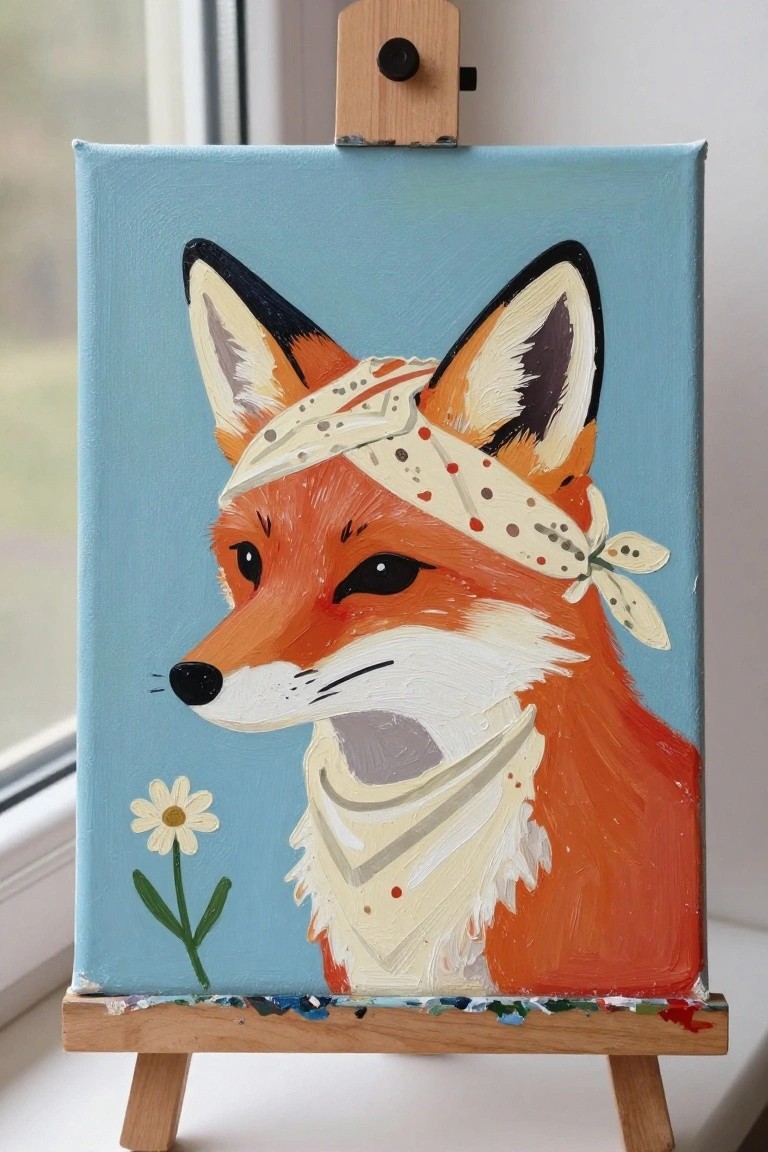
A cute fox portrait built from simple face and ear shapes works well as an acrylic idea when paired with a tied bandana and one small daisy. The solid light blue background keeps the orange and cream tones in the foreground while the bandana pattern adds just enough detail to hold interest. This layout fits the cute animal category and suits quick canvas projects or wall decor.
What makes this idea useful is the clear profile view that reduces the need for complex anatomy while still letting the ears and snout define the character. The bandana can be swapped for different fabrics or colors to match seasons or personal style without changing the core shape. For practice, this kind of subject helps focus on clean edges and limited color mixing before trying busier backgrounds.
Stacked Owls Built from Simple Face Shapes

A stacked trio of owls works well as an acrylic painting idea when each bird is built from the same round face and small ear shapes. The vertical layout keeps the focus on pattern variety across the three bodies while the light background lets the colors and markings stand out clearly. This approach belongs to cute animal wall art that relies on graphic shapes and repeating details rather than realistic shading.
What makes this idea useful is how the repeated face shape lets you spend time on the patterns instead of getting proportions right every time. You can change the color scheme or swap which owl sits on top without redrawing the basic layout. For canvas decor the stacking fills the space efficiently and gives you three subjects to practice on one surface. The same idea scales down easily for smaller canvases or greeting card designs.
Pig Portrait with a Simple Flower Accent
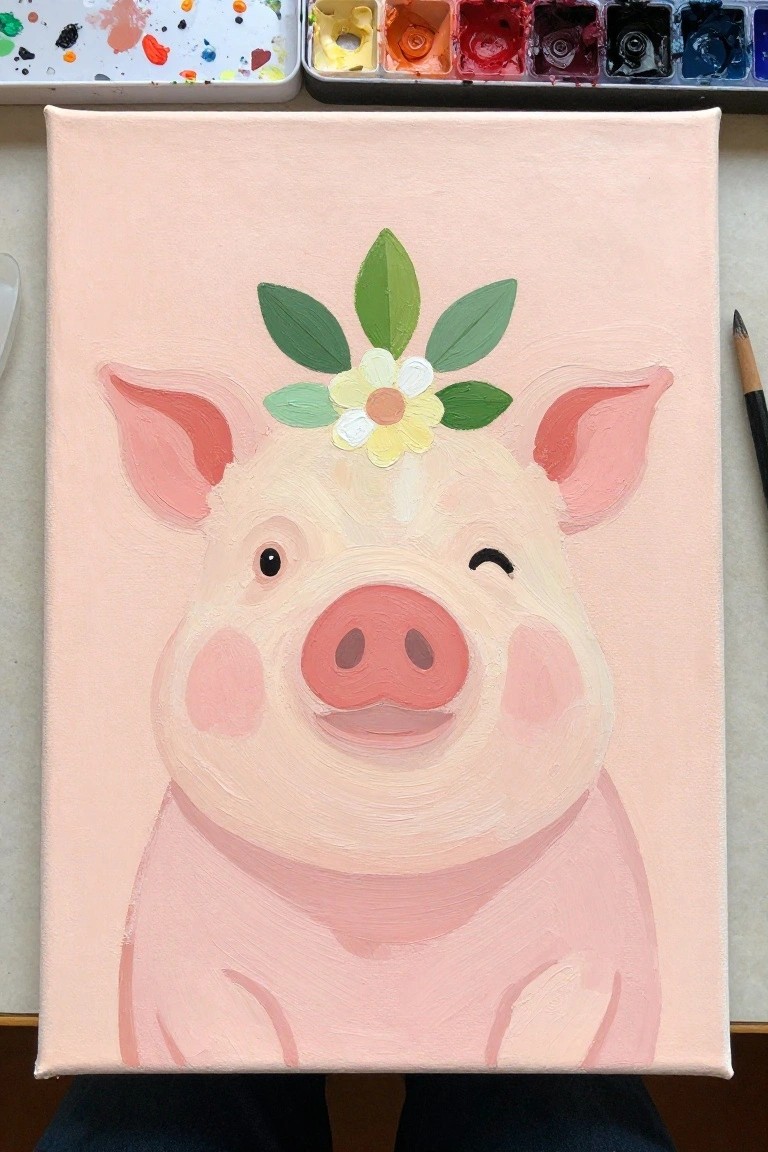
A rounded face and ear shape forms the base of this pig acrylic painting, with the snout and cheek circles added next to build the expression. A small flower and leaf cluster placed on the head gives the composition a focal point without adding extra layers or detail. The matching pink background keeps the color scheme tight and lets the animal stay the center of attention.
What makes this idea useful is how the large central shapes let you practice smooth blending on the face while keeping the overall layout simple. You can change the flower colors or swap the background to a different pastel without redrawing the whole pig. For canvas decor this layout works well because it scales easily to smaller sizes and still reads clearly from a distance.
Koala Holding a Leaf

A cute animal painting idea built around basic rounded shapes for the head and ears works well here with a koala as the main subject. The koala sits centered against a flat green background while holding a single leaf that adds a natural focal point and breaks up the body mass. Simple color blocks in gray and off-white keep the form readable without extra detail.
What makes this idea useful is how the large ear shapes and leaf create instant recognition even with loose brushwork. You can swap the leaf for a different object or shift the background to another solid tone to fit different room colors. For practice this layout helps test proportion and contrast before moving on to busier scenes and it translates cleanly to smaller canvases for quick projects.
Giraffe with a Striped Scarf

A giraffe portrait idea works by building around basic face and ear shapes while adding a scarf as the main accessory. The light blue background with soft clouds keeps the focus on the animal’s warm tones and spotted neck without adding extra elements. This type of cute animal acrylic painting relies on clear shapes and a limited palette to stay simple yet complete.
What makes this idea useful is how the scarf adds personality to a standard giraffe layout without extra detail work. The color contrast between the blue stripes and the orange-brown spots makes the subject stand out quickly on canvas. You could swap the scarf for a different pattern or color to match a room or season while keeping the same face and ear structure. For practice, this kind of subject lets you focus on shape placement before adding any extras.
Simple Mouse with Rounded Face and Ear Shapes

A cute animal acrylic painting idea works well here by building the mouse from basic overlapping circles for the head and ears in soft neutral tones. The three small gold stars sit above to balance the composition without adding clutter, while the plain light background keeps attention on the central subject. This approach fits the cute animal category and relies on clean edges and minimal layering to stay approachable.
What makes this idea useful is how the rounded shapes let you start with quick base forms before adding small details like the collar or whiskers. You could swap the stars for other simple icons or adjust the ear shading to practice color mixing on different animals. For canvas art, this layout works especially well for gifts because it stays compact and easy to frame. The limited palette also makes it simple to adapt for seasonal themes by changing just one accent color.
Cute Penguin With a Pom-Pom Beanie

A simple penguin built from basic oval shapes for the body and head works well as a quick acrylic animal painting on a solid teal background. The pink striped beanie with its fluffy pom-pom gives the piece a clear focal point while the small puddle and scattered white dots add just enough context without crowding the canvas. Flat color blocks and soft edge blending keep the style clean and graphic, which suits cute animal projects that rely on shape and contrast rather than fine detail.
What makes this idea useful is how the limited background lets you focus practice on smooth belly blending and even hat stripes. You can swap the beanie color for different seasons or shrink the whole design onto a smaller canvas for cards or ornaments. The strong dark-and-light contrast also helps the finished piece stand out in a grid of other animal paintings on Pinterest.
Cat Portraits Built from Basic Face and Ear Shapes

Painting two cats side by side works well when you keep the faces as simple ovals and the ears as basic triangles. The black eyes, small nose lines, and added accessories like bows or a collar give each cat its own identity without needing extra detail. A soft background color and a flat base strip at the bottom hold the composition together and let the shapes carry the design.
What makes this idea useful is how the limited shapes let you finish the whole piece on one canvas without getting stuck on fur or shading. You can easily swap the bow ties and collar for other small items or change the cat colors to fit a different room. For practice or quick gifts this layout stays balanced and leaves room to add more animals later if you want to expand the idea.
Elephant Portrait with Flower Crown

This acrylic idea builds a friendly elephant around two large ear shapes and a central oval face that sits between them. A narrow band of flowers across the top adds color without crowding the main form, while the soft gray body and pink inner ears keep the palette simple. The result is a clean animal painting that relies on basic shapes rather than fine detail.
The rounded ears and head make the layout easy to transfer onto canvas and block in with a few acrylic layers. You can change the flower colors or skip them entirely if you want a faster version for practice. This style works well for quick nursery decor or as a template you can repeat with different animals using the same ear-and-face approach.
Raccoon Holding an Acorn

A cute animal acrylic painting built around simple rounded shapes for the head and ears works well here as the main subject. The raccoon is centered on the canvas with the face divided into clear light and dark zones to create the mask effect, while the body fills the lower half and supports an oversized acorn held in both paws. High contrast between the black facial markings and the gray fur keeps the composition readable from a distance and fits the decorative cute animal category.
What makes this idea useful is the shape-first layout that lets you block in the head and ears before adding the mask and whiskers. The limited palette of gray, black, white, and brown means fewer color mixes and easy adjustments if you want to swap the acorn for a different object or change the background tone. For canvas decor or quick gifts this approach keeps the focus on the face while the centered placement helps the finished piece photograph cleanly for Pinterest.
Llama Face with Colorful Dot Accents

A llama face built from simple oval and ear shapes sits centered on a solid terracotta background. The idea keeps the main forms flat while using short dashes and scattered dots in several colors to suggest wool without adding complex shading. A border of repeating dots in warm tones frames the canvas and balances the composition.
What makes this idea useful is the clear separation between the solid background and the animal, which lets you finish the base layers quickly. The small decorative marks can be adjusted in color or spacing to match different themes or to practice brush control on a small scale. For canvas decor the bold outline and limited palette help the piece read well from a distance.
Hedgehog Built from Simple Oval and Spike Shapes
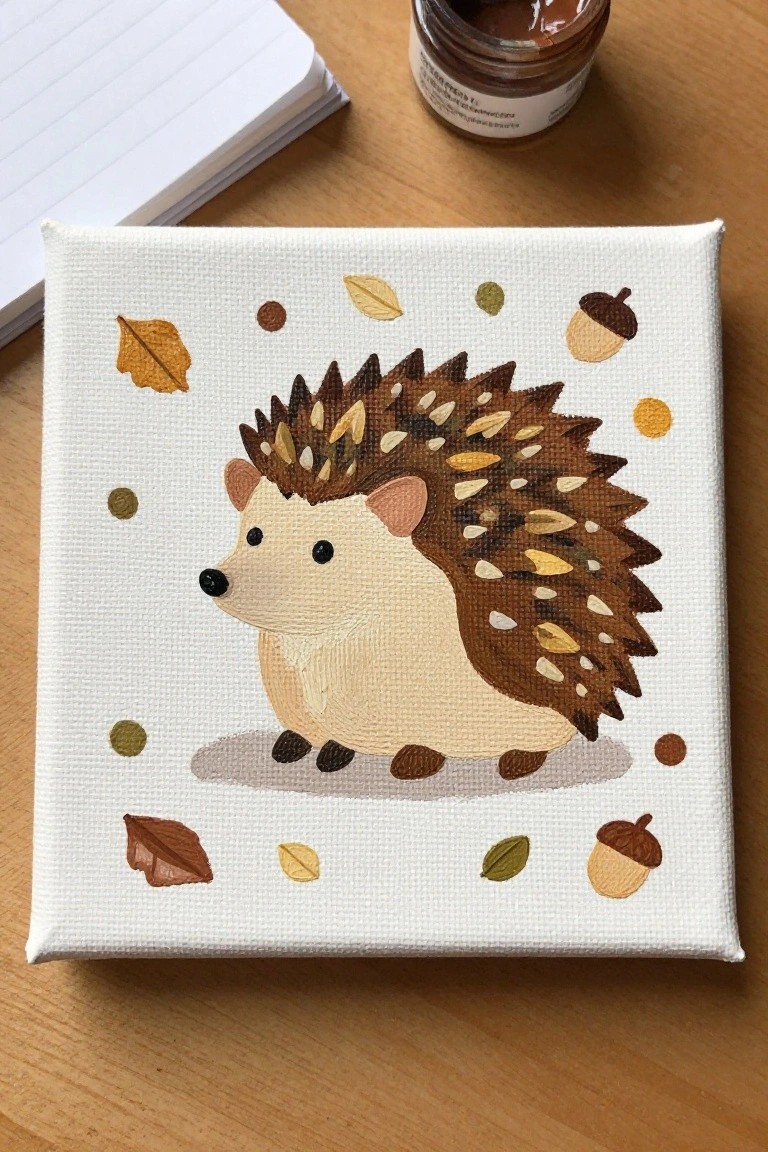
A hedgehog acrylic painting works well when the body starts as a basic oval and the quills are added as short overlapping triangles that fan outward from the back. The face uses a small rounded shape with dot eyes and minimal snout detail, while the ears stay as simple half-circles attached near the top. Scattered leaves, acorns, and dots on a clean white background keep the whole piece balanced without extra layers or shading.
What makes this idea useful is how the oval-and-triangle construction makes the subject quick to block in before adding color. You can swap the earth tones for brighter colors or replace the autumn bits with flowers or snowflakes to change the season. For canvas decor this layout stands out on Pinterest because the animal stays front and center while the loose background elements add interest without crowding the space.
Deer Portrait with Leafy Antlers

A centered deer face built from basic oval and ear shapes creates an approachable animal painting that works well as wall art. The antlers get extra interest from small leaf clusters that add a natural touch without extra detail. A light background and a soft green base strip keep the focus on the face while the white chest patch gives clean contrast.
What makes this idea useful is how the simple shapes let you finish a full canvas without getting stuck on proportions. You can swap the leaf colors or size for different seasons and still keep the same layout. For practice this works well because the flat color areas build up quickly with basic brushes. The centered composition also photographs cleanly for sharing or turning into prints.
Corgi Portrait with Party Hat

A corgi face built from oversized ears and a rounded snout gives this acrylic idea a clear starting point. The striped party hat sits directly on the head shape while scattered dots fill negative space and pull attention back to the center. This fits the cute animal category and relies on simple shapes plus a light background to stay balanced without extra detail.
The bold ear outlines do most of the work so you can block in color quickly and adjust as you go. Swap the hat stripes or dot colors to match a birthday theme or room palette and the same layout still reads as a corgi. For practice this keeps the focus on edge control and shape placement rather than fur texture so it finishes faster than more detailed animal paintings.
Panda Painted with Basic Round Face and Ear Shapes
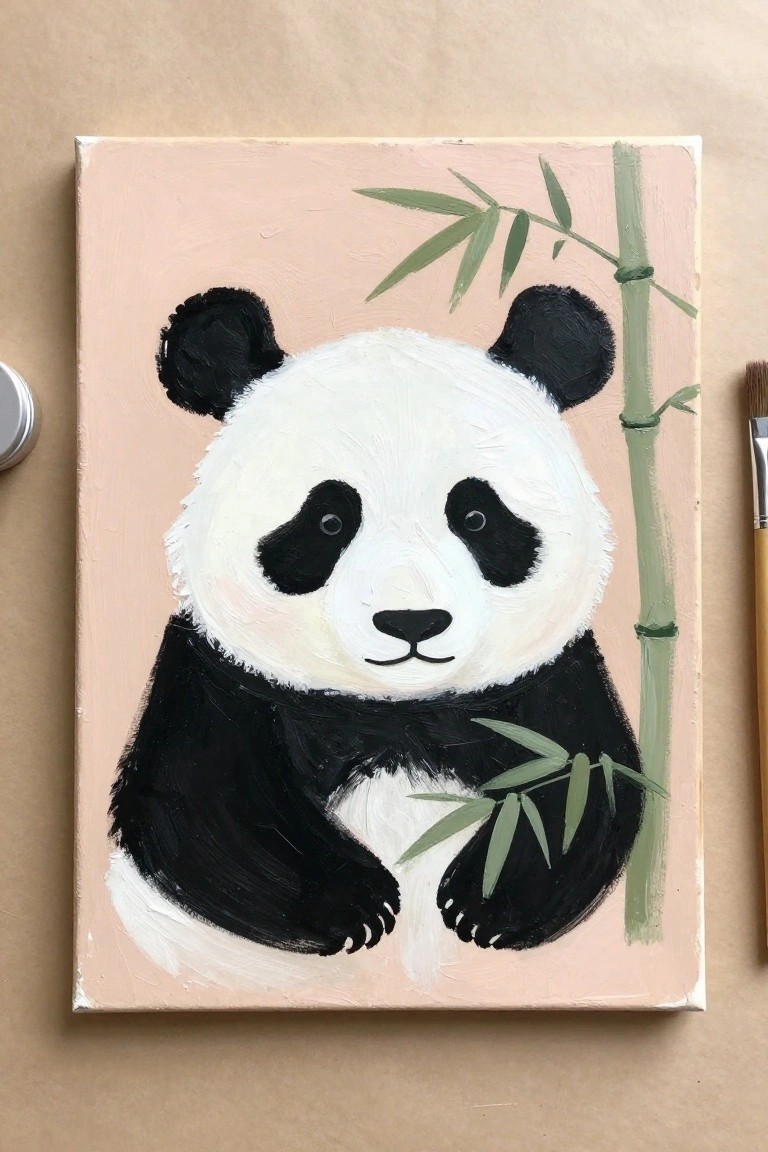
This acrylic painting idea uses a simple round head shape and two solid black circles for ears to create a recognizable panda without needing complex details. The black and white areas are blocked in with clear edges against a soft pink background, while a few bamboo stalks add just enough context on one side. The approach fits the cute animal category by relying on strong contrast and basic shapes rather than fur texture or shading.
What makes this idea useful is how the limited palette and clean shapes let you finish a canvas quickly without blending challenges. You can easily swap the pink background for another soft color or drop the bamboo if you want a tighter close-up. The same ear-and-face structure works for other animals too, and the bold black and white stands out well in small Pinterest previews.
Rounded Squirrel with Tall Ears and a Pinecone
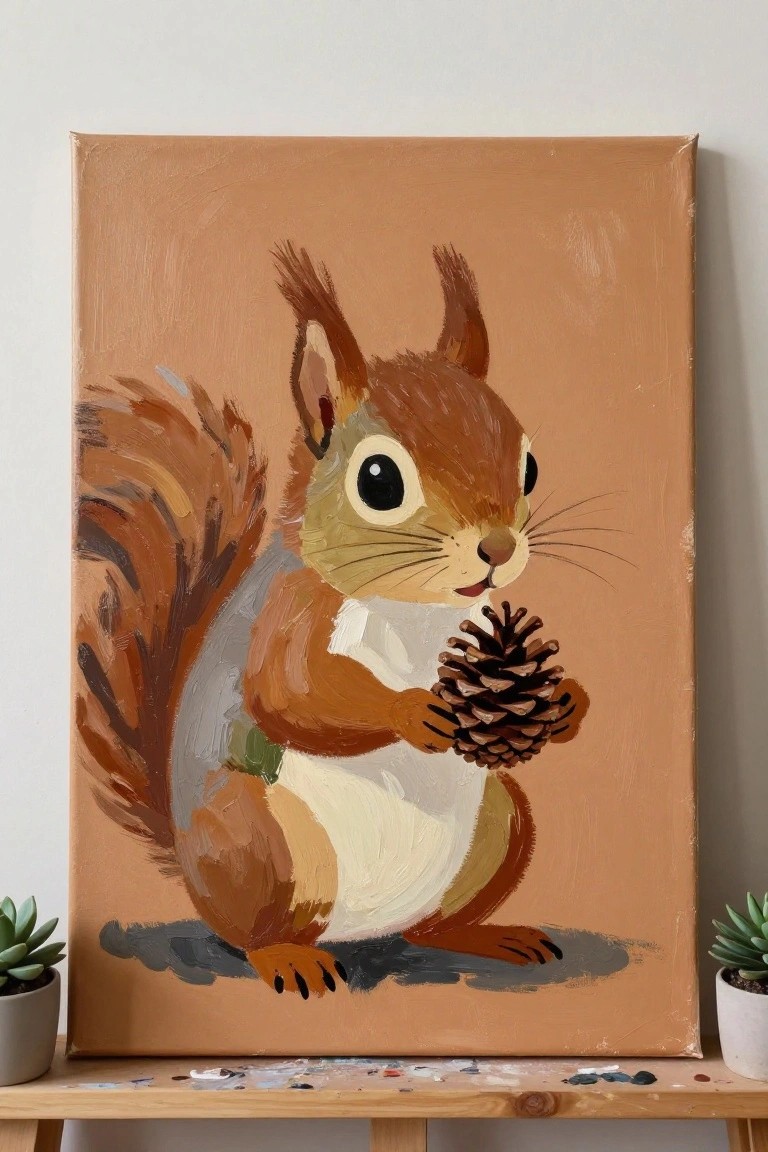
A squirrel painted with simple rounded shapes for the body and head works well as a cute animal acrylic idea. The large ears and face stay easy to block in first, then the pinecone adds a single clear detail that pulls the eye without needing fine work. A solid warm background keeps the whole piece from feeling busy and lets the brown and white fur tones stand out.
What makes this idea useful is how the basic ear and face shapes cut down on drawing time so you can focus on brushwork and color mixing. You could swap the pinecone for an acorn or berry, or shift the background to a cooler tone if you want a winter version. For quick canvas decor this layout stands out on Pinterest because the clean silhouette reads well even at small thumbnail size.
Lion Face Using Simple Rounded Shapes for Head and Ears
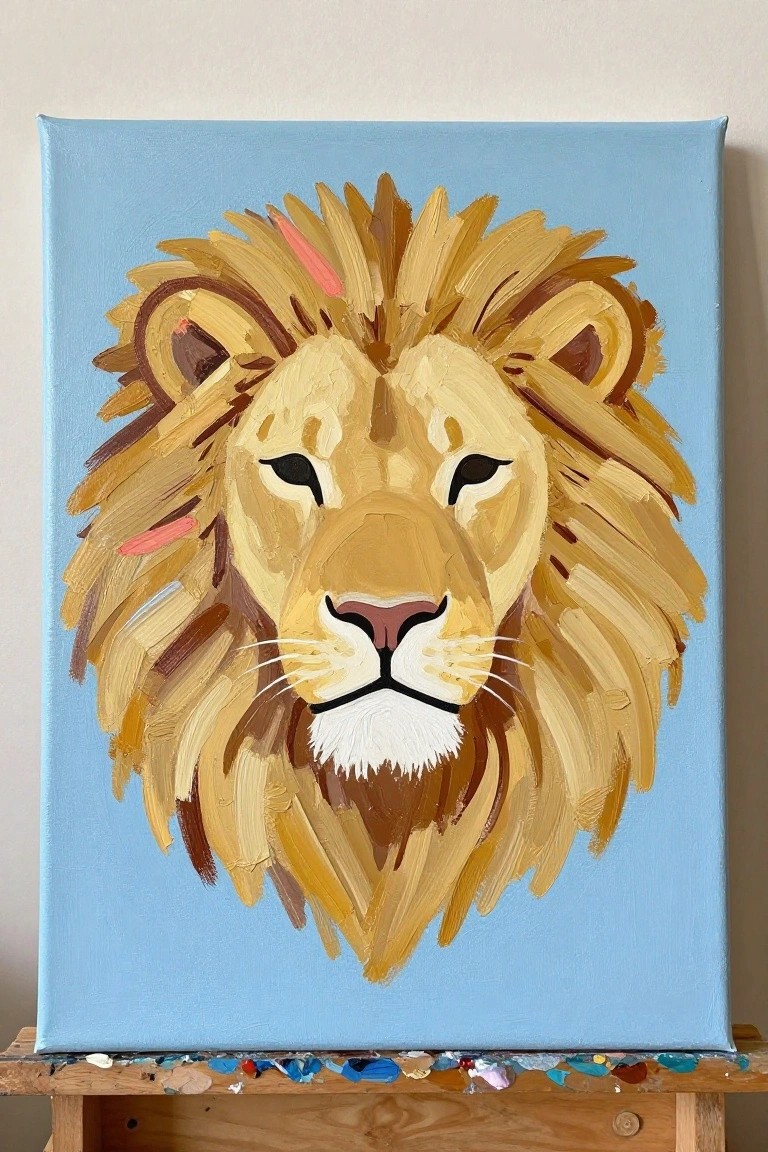
A lion face built from basic circular shapes for the head and ears gives a clear structure that keeps the focus on the animal without extra planning. The mane grows outward through overlapping brushstrokes in yellow and brown tones that add volume while staying loose around the edges. A solid light blue background makes the darker eye shapes and white muzzle pop without competing for attention.
What makes this idea useful is how the large face and ear outlines let you block in the mane quickly with broad strokes. You can change the background color or shift the mane tones to match whatever palette you have on hand. For canvas decor this layout works because the main shapes stay readable even from a distance. It would also adapt easily to smaller canvases or different animal faces by swapping the ear angles and muzzle details.
Simple Seal with a Striped Scarf

A rounded seal shape painted in soft grays and creams makes an easy cute animal subject for acrylics. The striped scarf adds pattern and color contrast while the solid teal background with scattered bubbles keeps the composition balanced and uncluttered. This approach fits the decorative animal category and relies on basic oval forms plus minimal facial details to stay beginner-friendly.
What makes this idea useful is the way the scarf pattern turns a plain body shape into something more interesting without extra work. You can change the scarf stripes or bubble placement to create quick variations for gifts or small canvases. The limited palette also helps the piece stand out on Pinterest while staying simple to adapt for practice sessions.
Frequently Asked Questions
What materials do I need to start these animal painting projects? You can use basic acrylic paints or watercolors along with thick paper or a small canvas. Grab a few brushes in different sizes, a pencil for light sketching, and an eraser. The method focuses on simple circles for faces and triangles or ovals for ears, so household items like cotton swabs for blending or old toothbrushes for texture can add fun details without extra cost.
How do I choose the right animal idea for my skill level? Start with animals that have clear ear shapes such as bears, bunnies, or cats because their faces rely on one main circle and two easy ear additions. Practice drawing the shapes a few times on scrap paper first. Once comfortable, move to ideas with added elements like whiskers or spots to build up your confidence across the full list of 21 options.
Can these ideas work well for painting with kids or in a group setting? Yes, the approach keeps everything simple by using basic shapes, which makes it perfect for children or beginners. Let everyone sketch the face circle and ear placements together, then encourage free color choices for a playful result. Set up a shared paint station with washable options and paper plates for mixing to keep the activity organized and enjoyable for all ages.
What colors create the most playful and cute effects? Soft pastels like light pink, mint green, and sunny yellow work well for faces while brighter accents on ears add energy. Use white for highlights around the eyes and a touch of darker shade underneath to give gentle dimension. Experiment with color combinations from the ideas, such as pairing warm browns with rosy cheeks, to keep each animal looking cheerful and full of personality.
How can I fix mistakes or adjust shapes that do not look quite right? Lightly repaint over the area with the base color to correct a face circle or ear placement, then redraw the shape once dry. Add extra details like bigger eyes or fluffy fur lines with a thin brush to balance any uneven spots. Remember that the charm comes from the simple style, so small adjustments often make the final animal even more endearing.

Hi, I’m Camille.
I’m a self-taught painter and creative blogger with a soft spot for acrylic painting, color play, and all the little art ideas that make everyday life feel more inspiring.
I started this space because I’ve always believed painting should feel joyful, approachable, and a little personal. Some of my favorite pieces come from simple ideas, messy palettes, and evenings where I just felt like making something pretty.
Most of what I share begins with acrylic painting, but I also love exploring other mediums when creativity pulls me in a new direction. My goal is to collect and share painting ideas that feel fun, beautiful, and actually doable, whether the mood is calm and minimal or bright and playful.
This is a space for inspiration, experimenting, and enjoying art without overcomplicating it.