
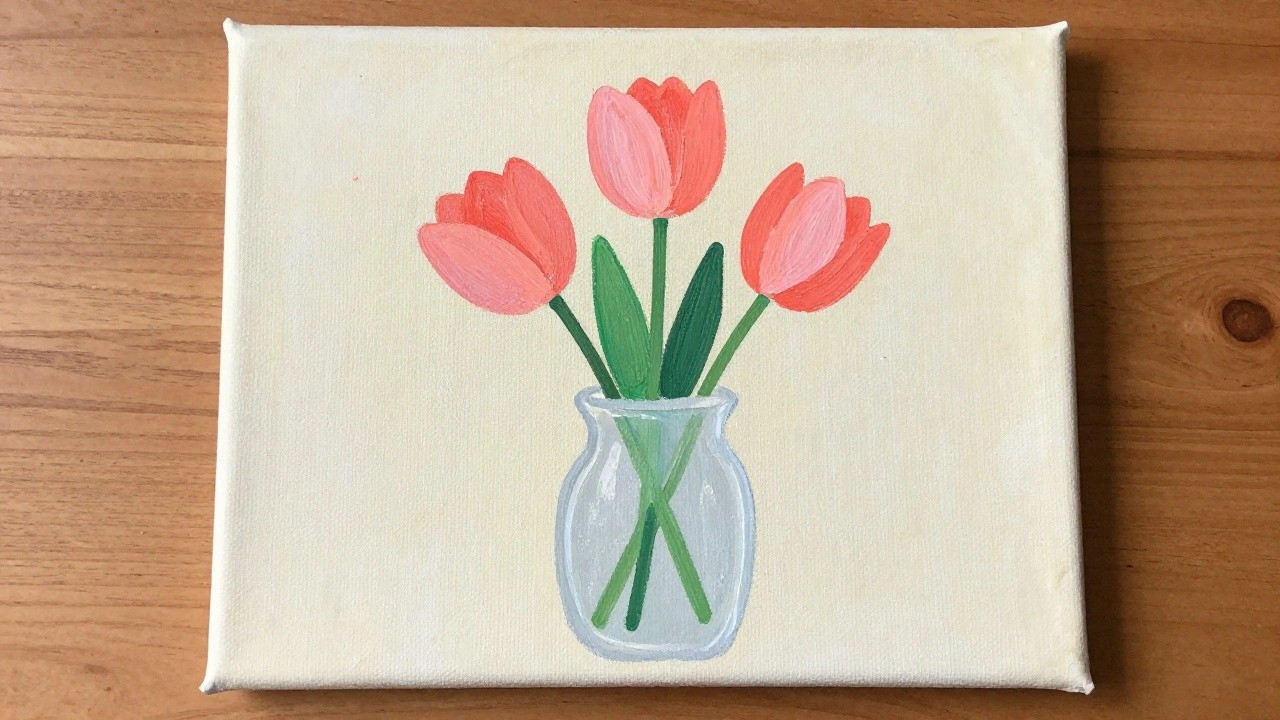
I have painted quite a few tulips in vases using acrylics over the past year.
I prefer keeping the vases plain and the setups straightforward.
That way the colors of the flowers stand out without extra fuss.
I ended up with 23 different versions that I think work well.
I am sharing them here in case you want to try something like this yourself.
Soft Tulips in a Cream Vase on Pink
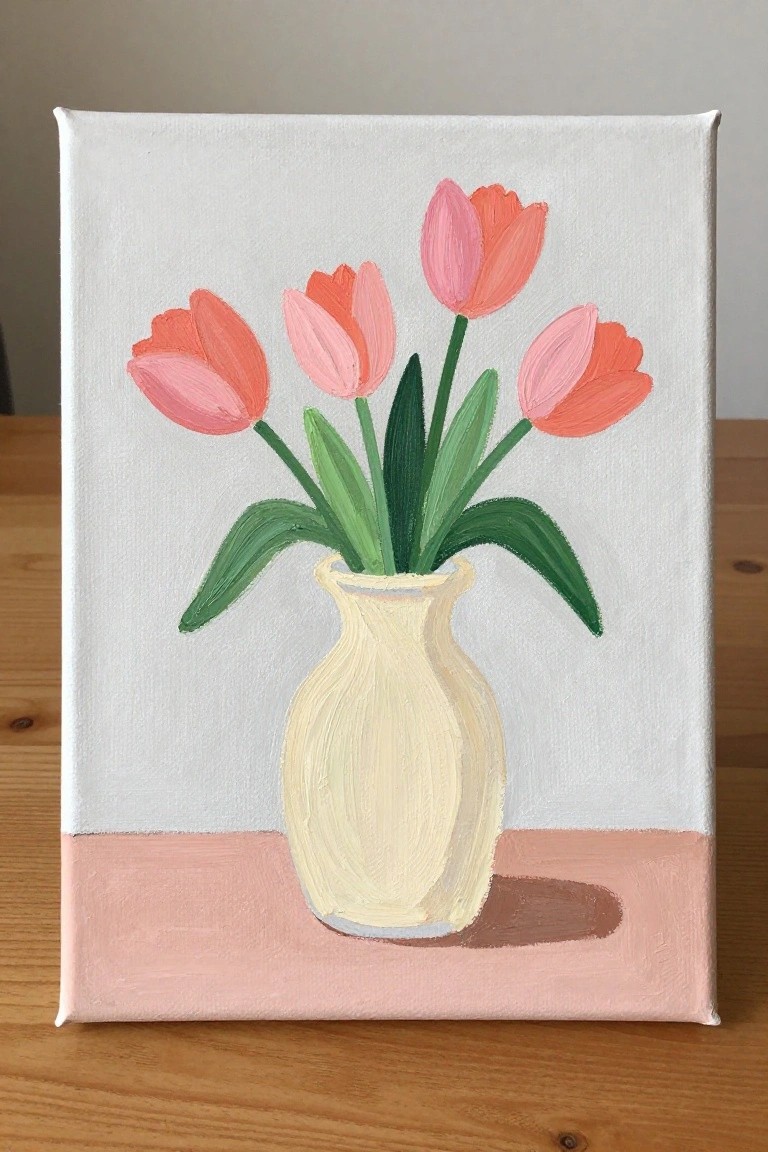
A simple still life of tulips in a rounded vase works well as a clean floral acrylic idea. The limited palette of pinks, corals, and soft greens against a pale background keeps the focus on the flower shapes and vase form without extra elements. This type of composition suits still life practice because the main shapes stay easy to block in while the stems and leaves add just enough variation.
What makes this idea useful is the flat background and solid table color that remove the need for complex blending or depth. You can swap the table shade or change the tulip colors to match a room without changing the overall layout. For canvas decor this kind of vase arrangement stays quick to finish and looks balanced on a wall even at smaller sizes.
Mixed Tulips in a Simple Bundle Arrangement
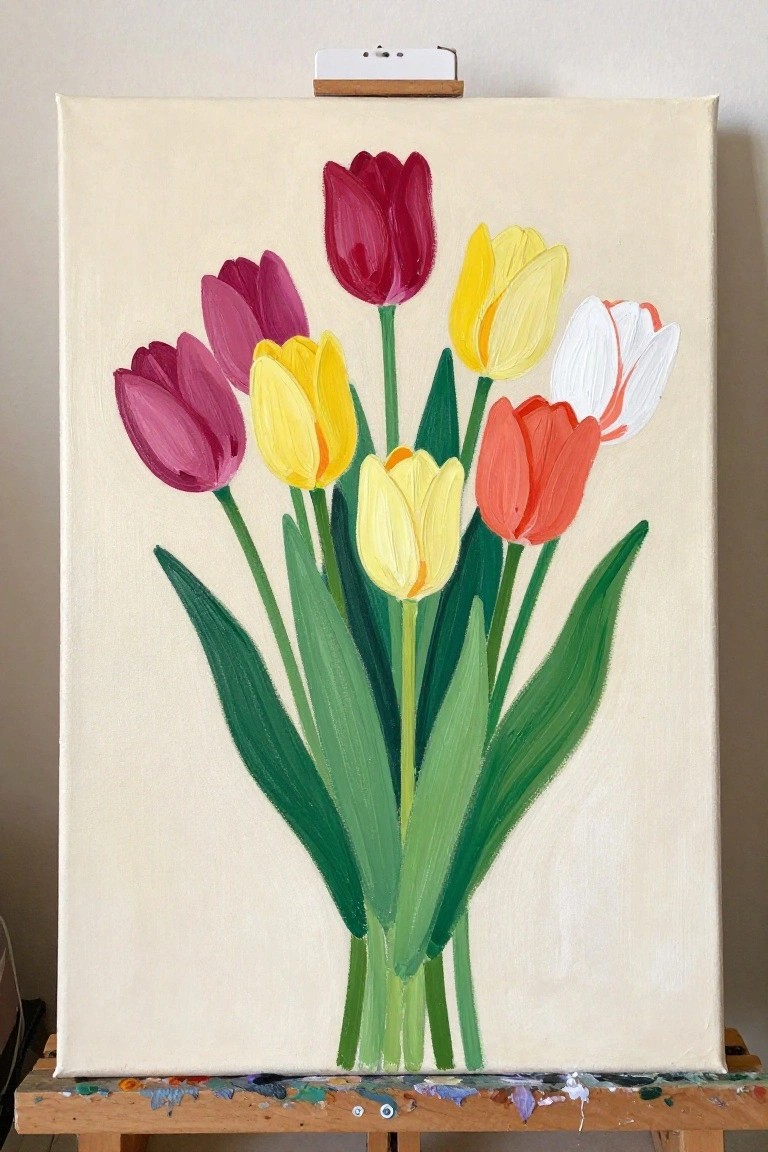
A floral still life idea built around a loose cluster of tulips in several solid colors works well when the stems are grouped tightly at the base and the leaves spread outward in broad strokes. The concept relies on bold blocks of color for the petals against a plain background so the different shades of purple, yellow, red, and white stand out without extra shading or detail. This keeps the painting in the decorative floral category and makes the composition easy to read from a distance.
What makes this idea useful is how the plain background does most of the work, letting you focus on placing the blooms and leaves without worrying about a vase or table surface. You can swap the color mix to match whatever paint you already have or reduce the number of flowers if you want a quicker session. For canvas decor this layout stays effective even if you keep the brushwork loose, and it translates easily to different sizes while still looking finished.
Three Tulips in Patterned Vases
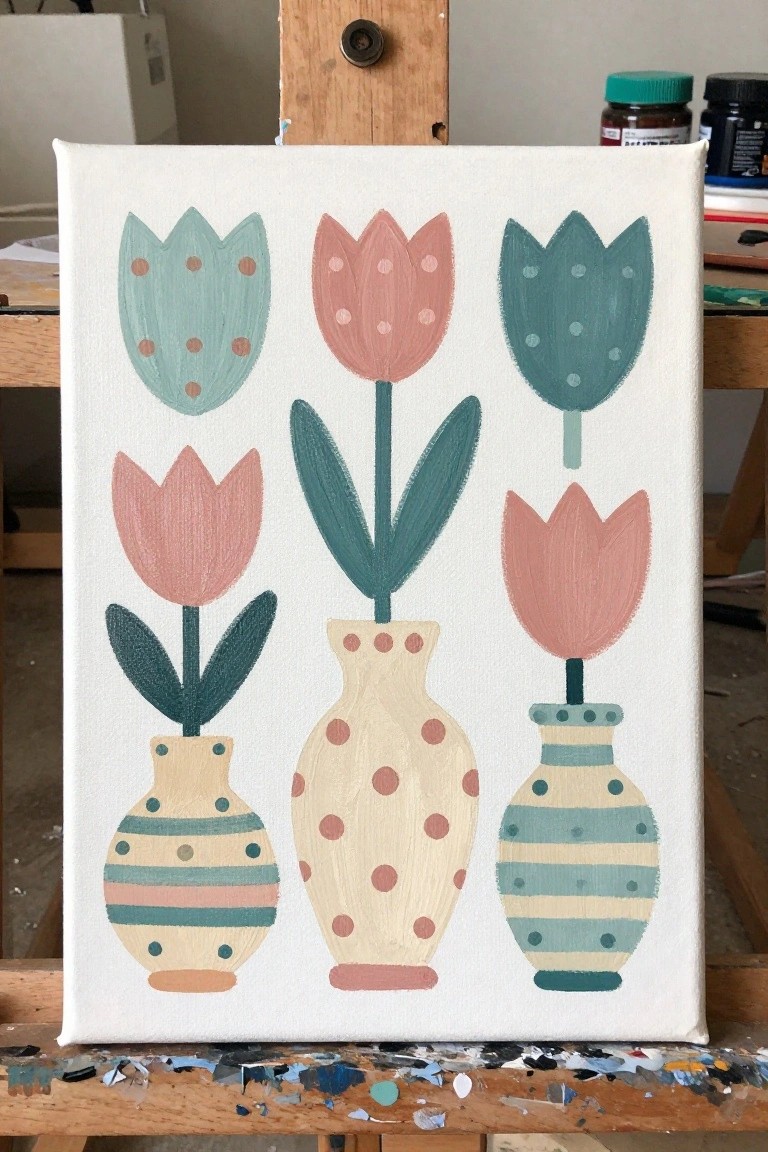
A still life acrylic idea that features three stylized tulips standing in separate decorative vases works through clean shapes and a repeating pattern of dots and stripes. The central bloom sits taller with added leaves while the side flowers stay shorter, creating a balanced row that keeps the eye moving across the canvas. Flat color blocks and soft pastel tones against the plain background make the composition read clearly without extra shading or detail.
What makes this idea useful is the simple row layout that fits easily on a standard canvas size. You can swap the vase patterns or shift the tulip colors to fit different seasons while keeping the same structure. For practice, this kind of subject helps build confidence with shape placement and color blocking before adding more complex backgrounds. The graphic look also translates well to prints or small wall pieces that show up clearly in online boards.
Single Tulip in a Rounded Vase
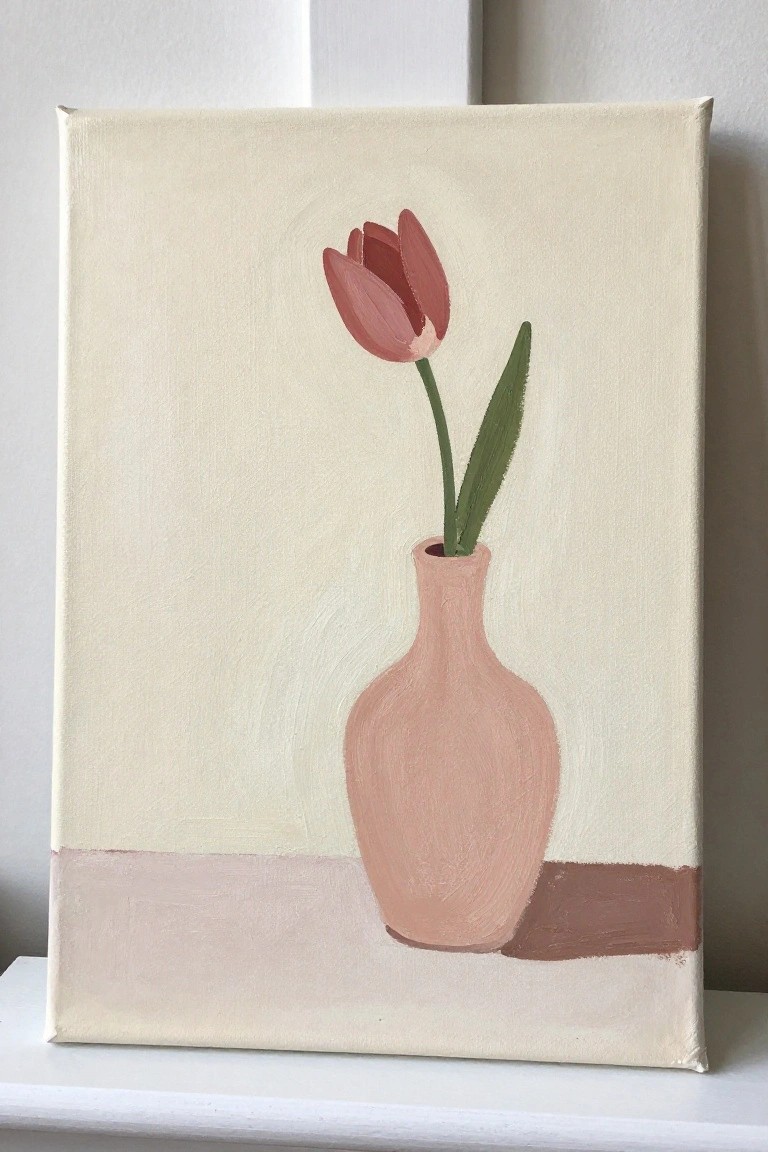
A single tulip placed in a simple rounded vase creates a straightforward still life idea that relies on basic shapes and a muted color scheme. The composition works because the flower sits off-center with the stem and leaf adding a slight vertical line, while the vase fills the lower half without crowding the space. This approach fits the floral still life category and keeps the painting easy to read from a distance.
What makes this idea useful is how the limited elements let you focus on shape and color mixing rather than complex details. You can change the tulip color or vase tone to match a room or season while keeping the same layout. For practice or small canvas decor, the idea adapts quickly by shifting the background shade or adding a second stem if you want more variation.
Loose Tulip Bouquet in a Simple White Vase

A still life acrylic idea built around a casual bunch of pink and peach tulips dropped into a basic white vase. The painting relies on broad strokes for the petals and leaves, letting the flowers tilt naturally rather than lining them up perfectly. The plain background and muted tabletop keep the whole setup clean so the color variation in the blooms stands out.
What makes this idea useful is how the limited palette and loose arrangement let you focus on shape and color mixing without extra layers. You can swap the tulip shades or drop a couple of stems if you want a smaller canvas version. For practice or quick wall decor, the same layout works well for spring pieces and translates easily when you need something that looks finished without a lot of fine detail.
Bold Tulips in a Simple Glass Vase
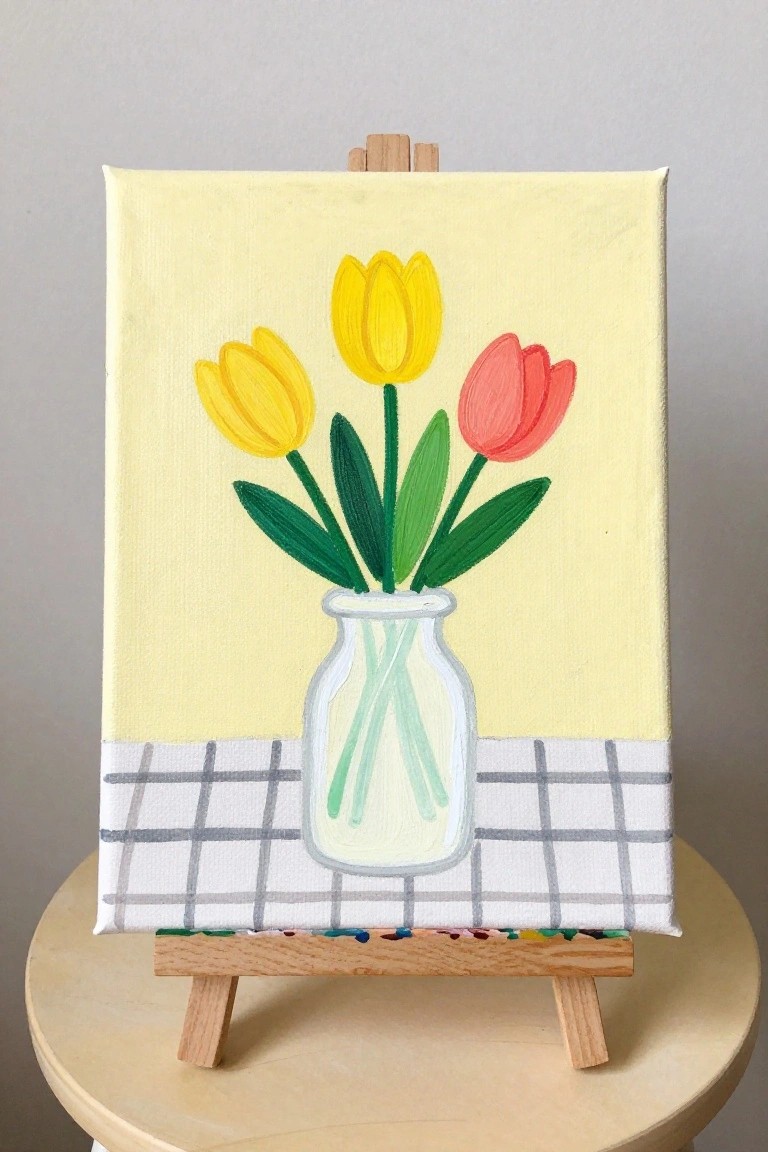
A still life idea built around three tulips in a clear glass vase uses a solid yellow background to keep attention on the flower shapes and the gray checkered cloth. The composition works by placing the vase slightly off center and letting the stems cross naturally, which adds movement without extra detail. This approach belongs to the floral still life category and relies on flat color areas rather than blending or texture.
The bold contrast does a lot of the work here, so the painting stays readable even with basic brushwork. You could swap the yellow background for a soft blue or change the cloth pattern to match a holiday without redrawing the whole layout. For practice, this kind of subject helps you focus on stem angles and vase transparency before moving to more complex arrangements.
Mixed Tulips in a White Vase with Lemon Accent
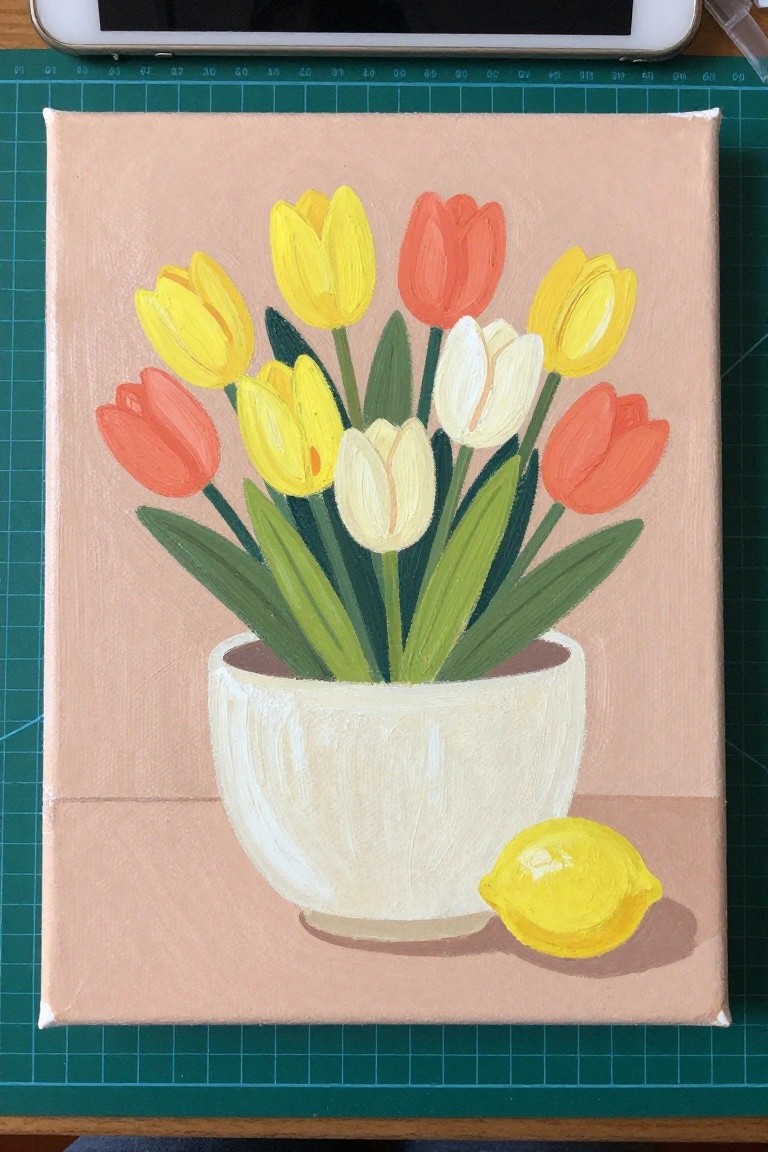
A still life of tulips grouped in a rounded white vase paired with one lemon creates a clean acrylic painting idea built around simple shapes and bold color blocks. The concept uses a muted pink background to let the yellow, red, and white flowers stand out while the dark green leaves add structure and depth. This approach works well as a floral still life because the limited elements keep the focus on color contrast and basic form rather than fine detail.
What makes this idea useful is the easy-to-paint vase shape and the lemon that breaks up the lower space without adding extra objects. You can swap tulip colors or shift the background to a soft blue or beige to change the mood while keeping the same layout. For canvas decor or seasonal pieces, the bright flowers and single accent fruit make the painting quick to finish and simple to adapt for different color schemes.
White Tulips in a Simple Vase with Strong Background Contrast
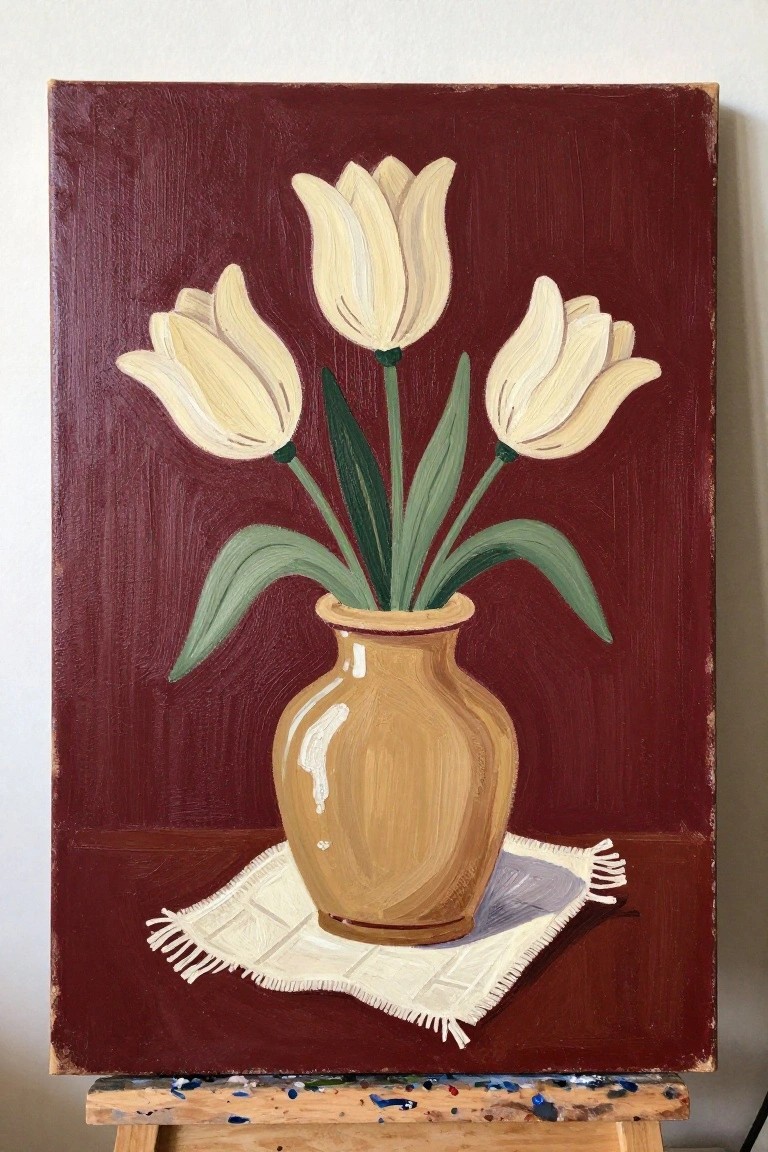
A still life acrylic painting idea built around a small group of tulips in a rounded vase uses a solid deep red background to create clear separation between the light flowers and the darker setting. The limited elements keep the focus on the vase and blooms while the contrast handles most of the visual work. This type of floral still life works because the simple shapes and bold color choice reduce the need for extra detail or texture.
What makes this idea useful is the straightforward layout that lets you practice basic form and value changes without a busy background. You could swap the flower color or adjust the vase tone to fit different seasons or room colors while keeping the same arrangement. For canvas decor, the high contrast makes the piece stand out even from across a room and works well as a quick weekend project.
Flat Color Tulips in a Contrasting Dark Vase
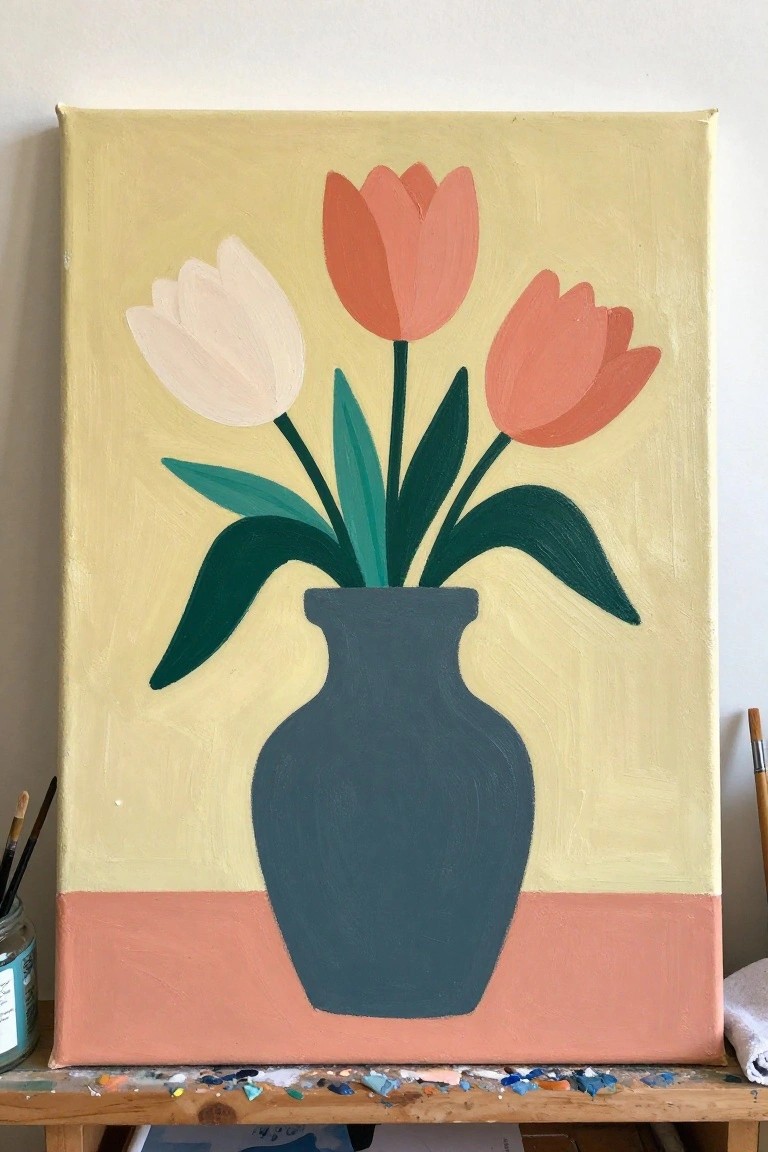
This acrylic painting idea uses a still life format built around three tulips in a simple rounded vase, rendered with solid color blocks and clean edges rather than blended shading. The layout gains its impact from the dark vase sitting against a light background, which lets the flower shapes and stems read clearly without extra detail. It belongs in the floral still life category and works well when the goal is a graphic, uncluttered result.
What makes this idea useful is the limited palette and bold outlines, which keep the painting fast to complete on any canvas size. You can easily swap the tulip colors or adjust the vase tone to fit a different room while keeping the same arrangement. The strong silhouette also helps the finished piece stand out in online searches for vase paintings.
Tulip Bouquet in a Clear Glass Vase
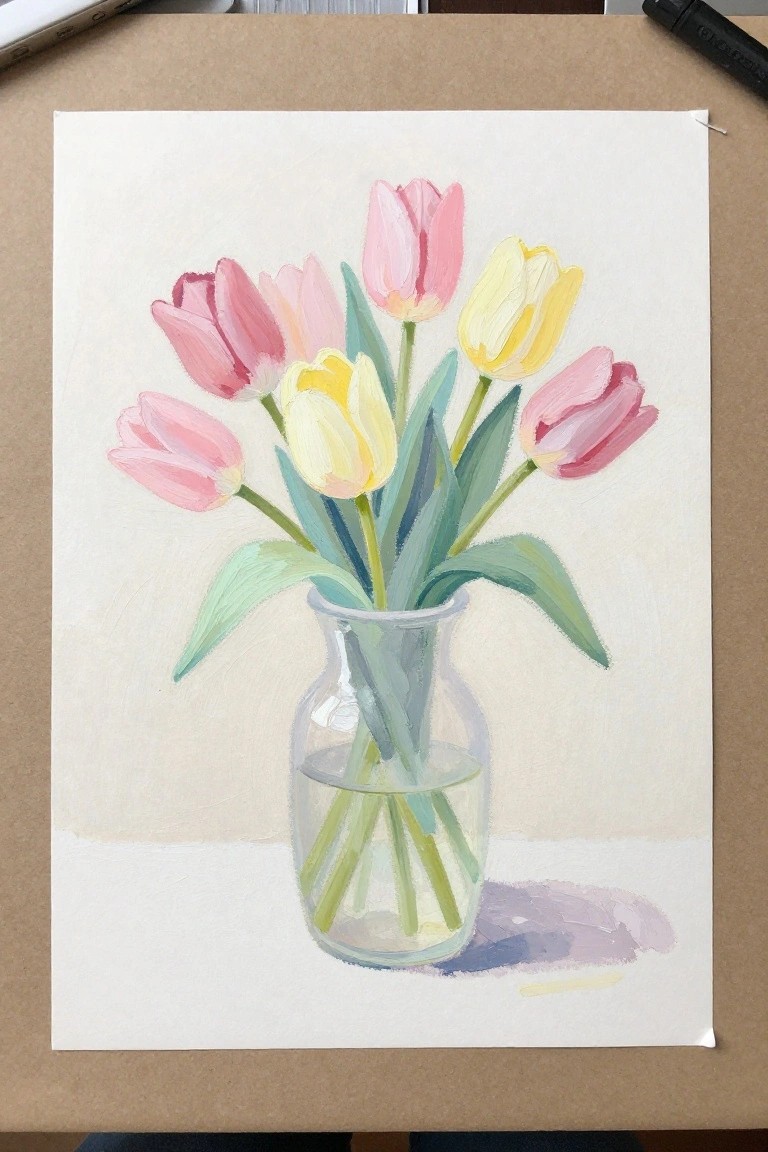
A still life of mixed pink and yellow tulips clustered in a transparent glass vase gives a clean floral acrylic idea built around simple vertical stems and overlapping blooms. The painting idea focuses on soft color transitions across the petals paired with cooler greens and blues in the leaves and water, which helps the flowers stand out without extra background detail. This fits a classic still life category where the clear vase creates natural contrast through visible stems and light reflections.
What makes this idea useful is the limited color range that keeps mixing straightforward while still letting the tulips look full. The vase shape adds interest through basic transparency effects that you can adjust by changing water level or stem angles. For practice or quick canvas pieces, the same layout works well if you reduce the number of flowers or swap the pink and yellow for other seasonal shades.
Simple Tulips in a Grid-Patterned Vase
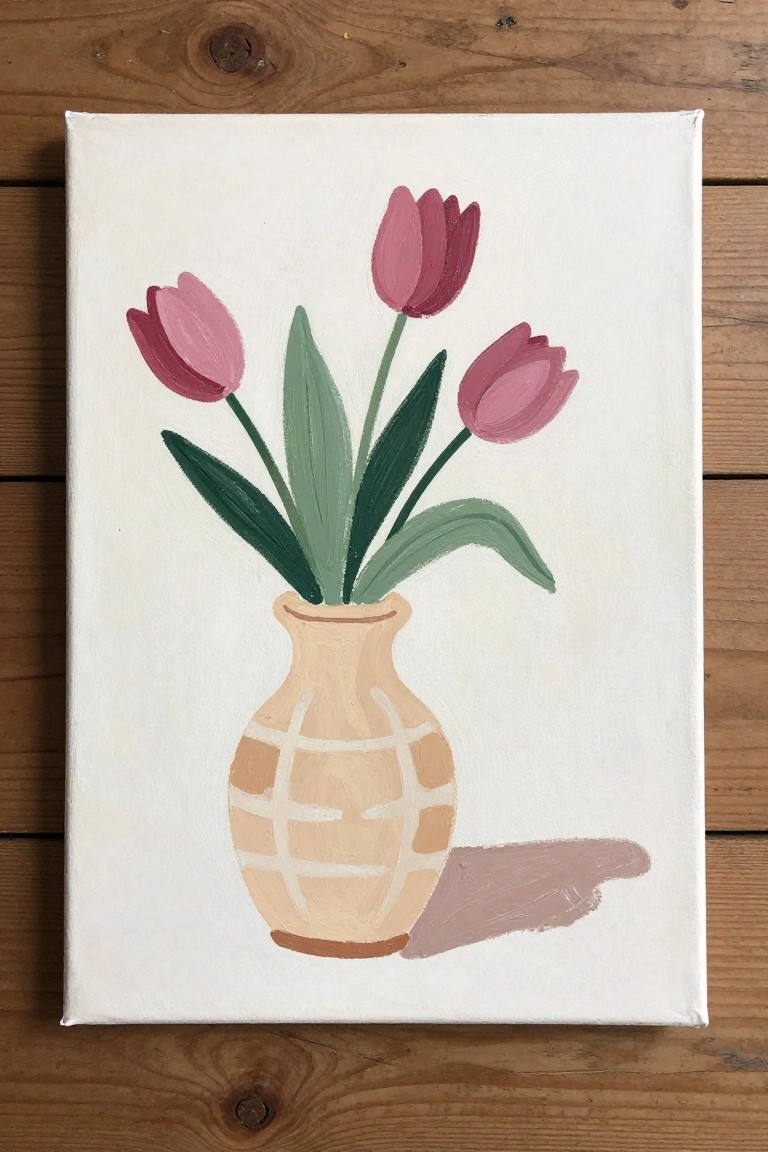
A still life acrylic idea that centers on a small cluster of pink tulips set inside a rounded beige vase marked with white grid lines. The composition relies on flat color blocks, clear shapes, and a few overlapping leaves to keep the arrangement balanced without crowding the canvas. This approach sits comfortably in the decorative floral still life category and works especially well when the background stays plain.
What makes this idea useful is the small number of flowers and the straightforward vase shape that still feels complete. The muted palette can be swapped for brighter pinks or different vase patterns while keeping the same layout. For practice, this kind of subject helps you focus on shape placement and simple color separation before adding more detail.
Mint Green Polka Dot Vase with Scattered Tulips

A floral still life built around a mint green vase with cream polka dots gives a clean, graphic tulip arrangement that works well in acrylic. The idea centers on six upright tulips in red, pink, and yellow with broad green leaves, plus one single bloom placed at the base to break the symmetry. Bold color blocks and flat shapes against a plain background keep the focus on the vase pattern and the simple flower placement.
What makes this idea useful is the straightforward layout that lets you practice color blocking and shape work without needing fine detail. The limited palette of bright tulip tones against the soft teal vase translates easily to other color schemes or smaller canvases for quick seasonal pieces. For canvas art, something like this stands out on Pinterest because the polka dots add instant pattern without extra layers. You could swap the tulip colors or shift the fallen bloom to change the balance while keeping the same vase shape.
Tulips in a Glass Vase Still Life

A still life acrylic painting of tulips grouped in a glass vase works when the flowers are painted as simple overlapping shapes rather than individual details. Using a mix of deep purple and soft pink petals against a light background keeps the arrangement from feeling flat while the dark vase anchors everything at the bottom. The green stems add just enough line work to connect the blooms without crowding the canvas.
What makes this idea useful is how the limited color range lets you focus on shape and balance first. You can swap the purples for other flower tones or change the vase color to match a room without starting over. For practice this layout is forgiving because the background stays plain and the stems can be adjusted if the spacing feels off.
Coral Tulips in a Blue Polka Dot Vase

A simple still life idea that centers on a cluster of tulips arranged in a white vase covered with large blue dots. The composition uses flat color areas and clear outlines to keep the focus on the flowers and vase, with the blue background section and brown table creating a clean division behind them. This fits the decorative floral category, where the strong color contrast between the coral blooms and the spotted vase does most of the visual work.
The bold shapes make this layout easy to paint on a small canvas without needing detailed blending. You can swap the polka dots for stripes or change the tulip color to match a room, and the same layout still reads clearly. For practice or quick gifts, the limited number of elements keeps the process straightforward while still producing something that looks finished on a wall.
Neutral Tulip Still Life in a Rounded Vase

A still life floral idea built around a small group of pale tulips placed in a simple rounded vase against a flat beige background. The limited neutral palette keeps attention on the flower stems and the vase shape rather than bright color shifts. A soft shadow under the vase gives the composition a grounded feel without adding extra elements.
What makes this idea useful is how the muted tones make it simple to paint even if you are still learning to handle acrylic layers. You can easily swap in different flower types or adjust the vase color to fit a room while keeping the same layout. For canvas decor the clean setup works especially well because the shapes stay readable from a distance and the whole piece fits many wall styles without needing extra framing.
Bold Tulip Bouquet in a Simple White Vase

A floral still life idea built around a cluster of tulips in varying shades of pink, orange, and red works well when the flowers are simplified into rounded shapes with visible stems. The solid yellow background and muted purple base keep the focus on the bouquet while the white vase anchors the lower half of the canvas. This approach falls into the decorative floral category and relies on color contrast rather than fine detail to hold attention.
The color blocks make this layout approachable for acrylic because you can block in the main shapes first and adjust edges afterward. You could swap the yellow for a different solid tone or change the tulip shades to fit a seasonal palette without redrawing the whole composition. For canvas decor the centered vase and straight stems give it a balanced look that prints cleanly for wall art.
Tulips in a Blue Pitcher on an Oval Wood Slice
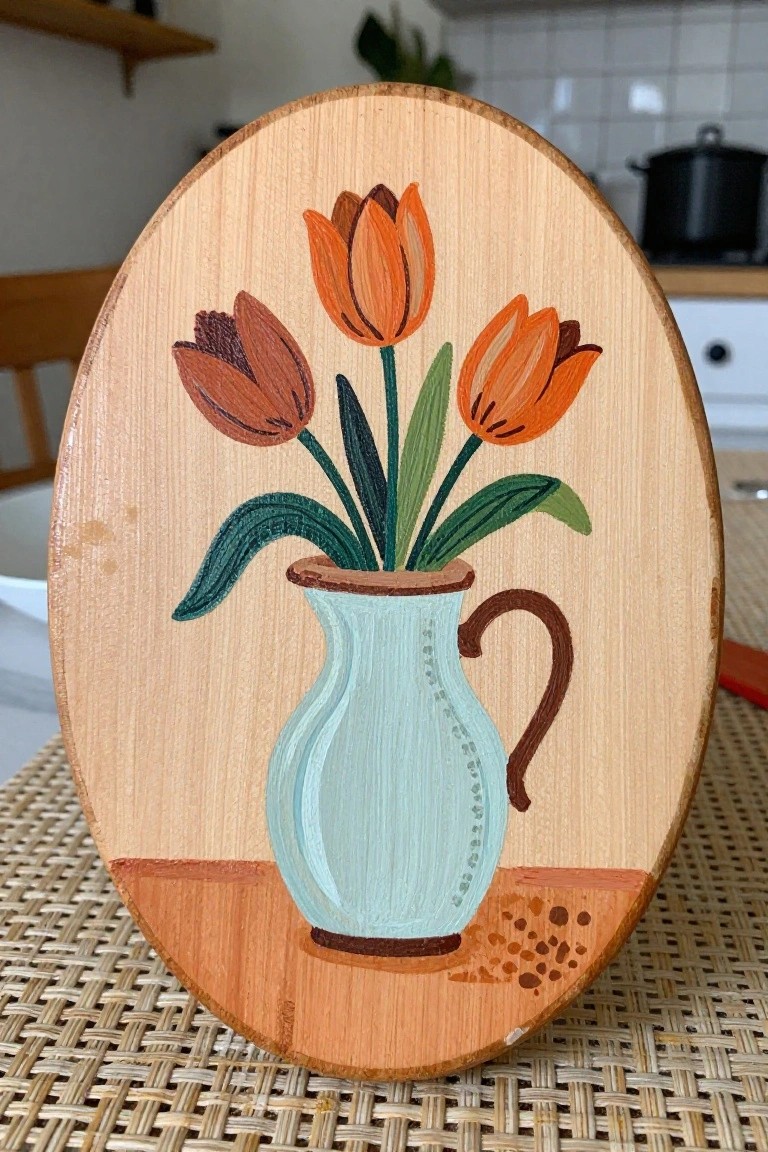
A small group of orange tulips tucked into a light blue pitcher forms a compact still life idea that suits acrylic on wood. The layout uses a few strong shapes and a limited color set to keep the flowers and vase as the clear focus against the natural grain. This approach lands in the floral still life category and works especially well for decorative pieces on small or irregular surfaces.
What makes this idea useful is the way the pitcher’s solid form anchors the composition while the tulips add quick color without lots of tiny petals. You can easily change the flower color or swap the pitcher for another simple vase shape to match different rooms. For canvas decor or gifts, the oval wood format already gives the piece a finished look, and the same basic arrangement can be scaled down or simplified by dropping one flower.
Coral Tulips with Yellow Centers in a Rounded Vase
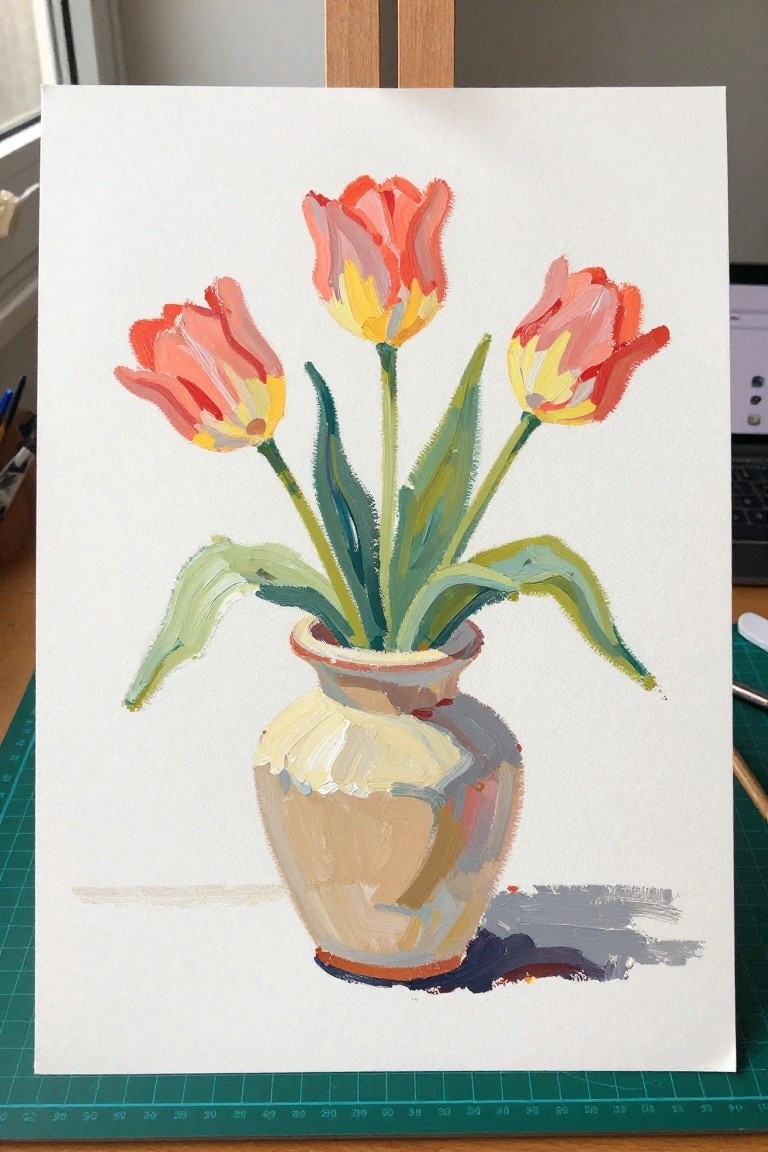
A still life idea built around three tulips in a single vase works well when the petals are blocked in with broad strokes of coral, red, and yellow to create quick contrast. The green stems and leaves cut across the composition with angled lines that keep the eye moving upward from the vase. This approach fits a floral still life category where the goal is clear color separation and simple shapes rather than fine detail.
What makes this idea useful is the limited number of blooms, which keeps the layout easy to sketch and paint without overcrowding the canvas. The plain background lets the flower colors stand out immediately, so the same setup can be adapted by swapping in different tulip shades or adjusting the vase tone to match whatever paint is already on the palette. For canvas decor or quick seasonal pieces, the strong base shadow gives depth without extra layers. The result holds up well on Pinterest because the bright petal colors read clearly even at small thumbnail size.
Tulips in a Clear Glass Vase with One Bloom on the Table
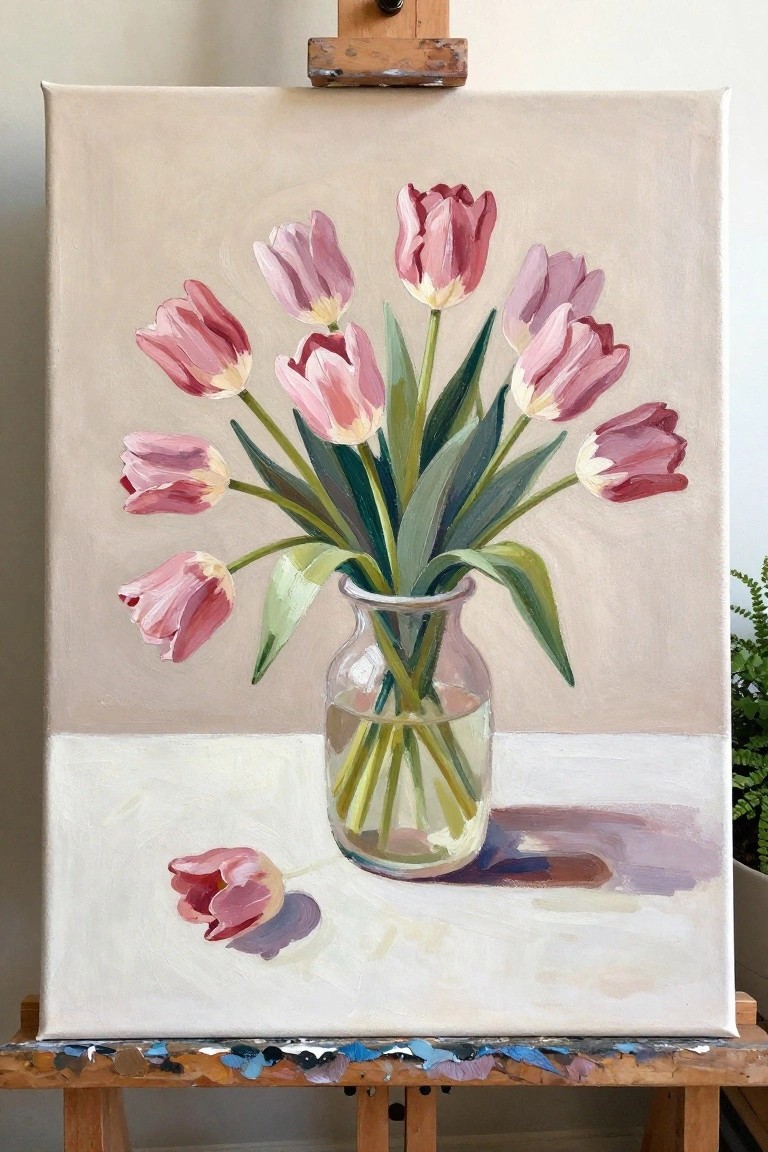
A still life idea built around pink tulips in a transparent glass vase keeps the focus on visible stems and water, which naturally break up the lower half of the canvas. The layout works because most flowers stay upright in the vase while one rests on the table, creating a simple variation that avoids a perfectly symmetrical bunch. This approach fits the floral still life category and uses soft edges and muted background tones to let the blooms and vase remain the clear center of attention.
What makes this idea useful is how the neutral backdrop and limited palette reduce the need for complex color mixing, so you can concentrate on basic shapes and stem angles. You could adapt it by changing the tulip colors or cutting the bouquet size in half for a faster session on a smaller canvas. For practice or seasonal wall art, the setup stays approachable because the glass vase lets you study transparency without extra layers, and the single fallen bloom adds interest without extra elements.
Flat Tulip Vase with Color Block Background
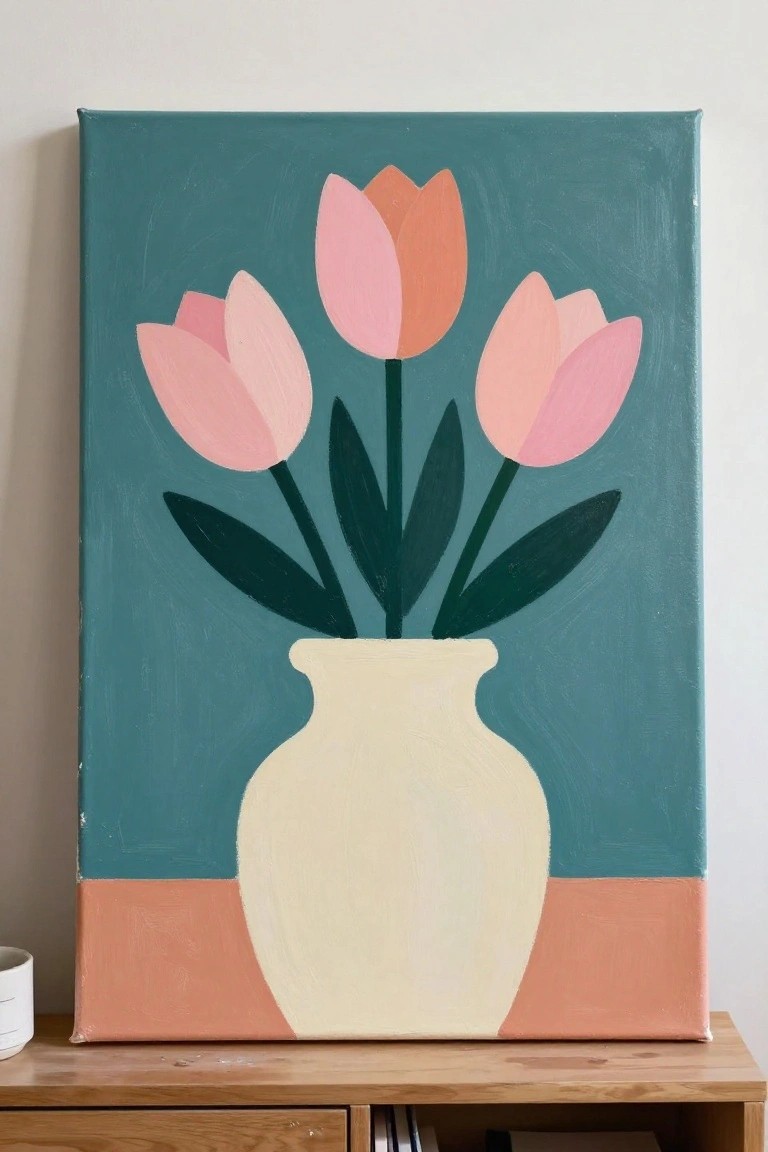
This acrylic idea uses a still life setup of tulips in a rounded vase to explore simple shape blocking and flat color application. The composition relies on clean outlines and a limited palette of teal, peach, and cream to keep the focus on the flower forms and vase silhouette. It fits into the floral still life category but stays graphic rather than realistic by avoiding heavy blending or detail work.
What makes this idea useful is the straightforward layout that translates easily to canvas without needing advanced brush control. You can change the background color or swap the tulip shades to fit different room palettes while keeping the same blocked structure. For practice, this kind of subject helps build confidence with edge definition and negative space before moving into more layered work. The high contrast also makes the finished piece stand out quickly on Pinterest boards.
Tulip Still Life with Graphic Polka Dot Vase
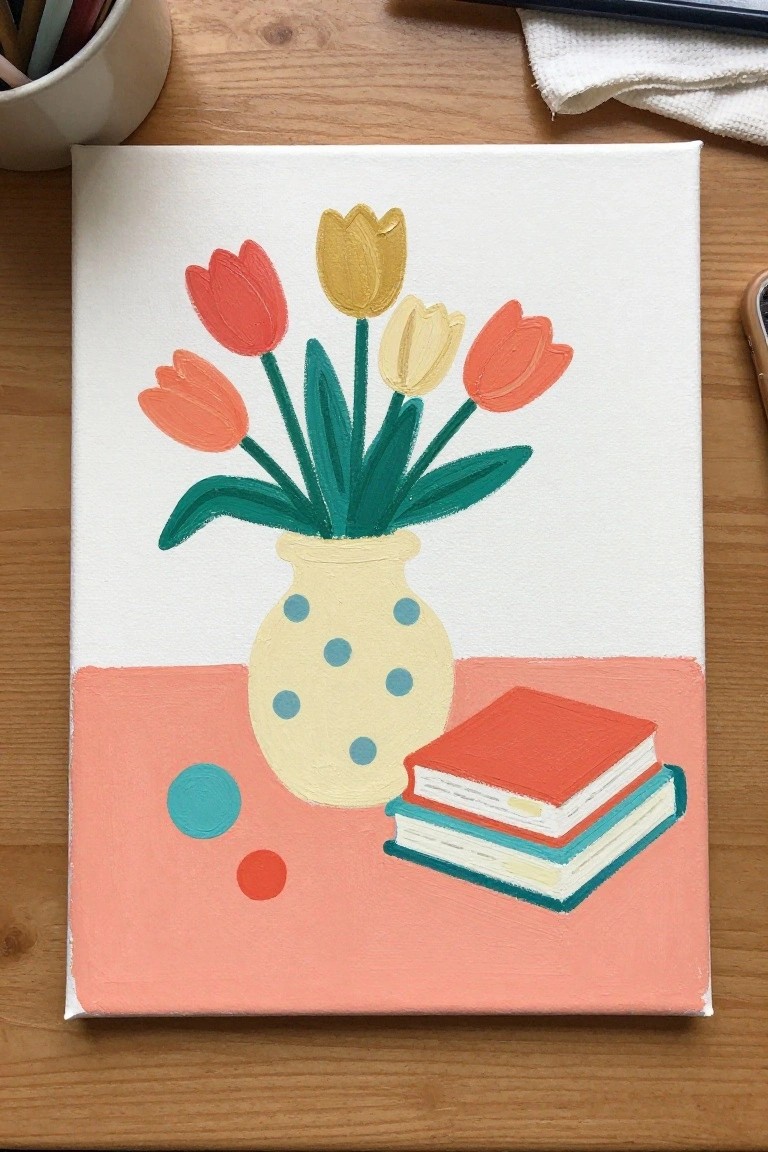
A still life acrylic idea built around a small bunch of tulips in a yellow vase dotted with blue circles. The flowers rest on a solid pink surface beside a short stack of books, with a couple of loose colored dots placed nearby. Strong color blocks and simple shapes give the arrangement clear visual weight without relying on shading or fine texture.
What makes this idea useful is how the flat color areas and bold outlines translate easily to canvas and require little blending. You can swap the tulip shades or change the dot pattern on the vase to fit different seasons or room colors. For practice or quick gifts, the layout works well because the main elements stay readable even when simplified further.
Tulips in Varied Hues with a Neutral Vase
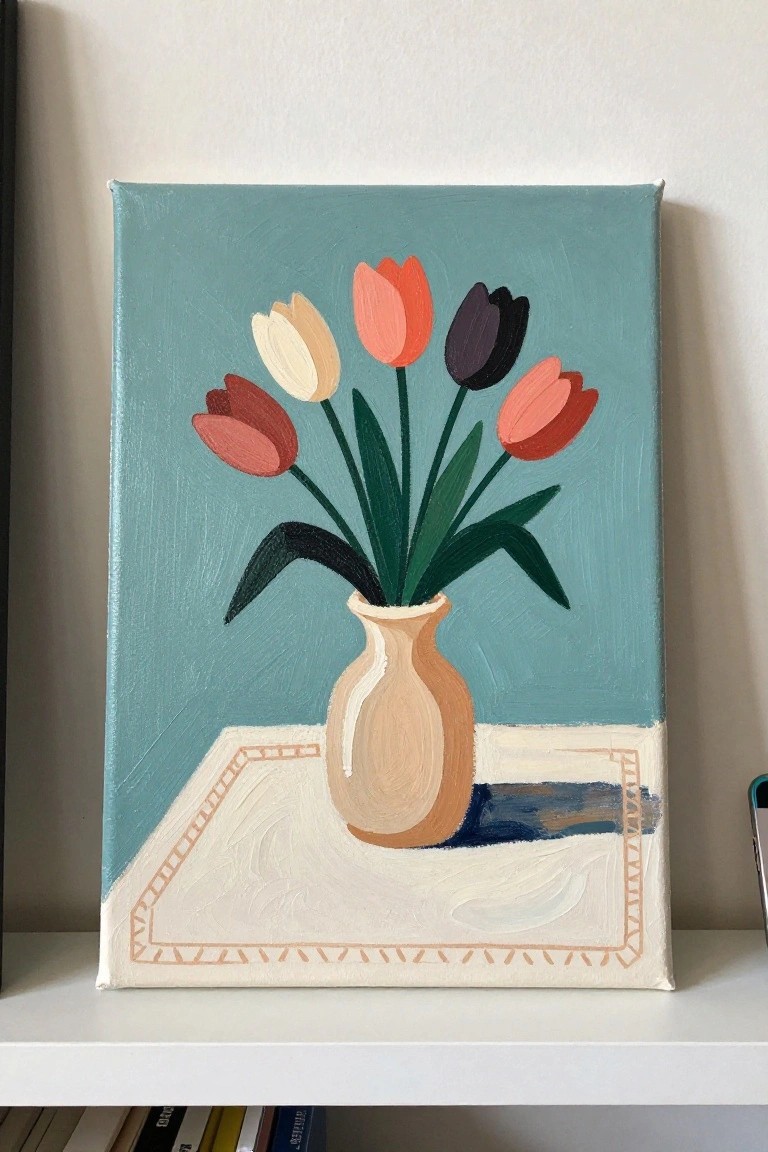
A still life floral idea that groups several tulips in different shades inside a single rounded vase. The solid teal background and plain white surface underneath create clear separation so the flowers and stems stand out without extra detail. Simple shapes and flat color areas keep the focus on the bouquet itself rather than on shading or texture.
What makes this idea useful is the straightforward layout that lets you practice basic flower outlines and stem placement without complicated backgrounds. The limited palette of pinks, reds, and dark purple tulips can be swapped for any colors you already have on hand. For canvas decor this kind of clean composition works well because the strong contrast makes the painting readable from a distance. You could easily simplify it further by using fewer blooms or change the surface pattern to match other pieces in a set.
Bold Tulips in a Simple Dark Vase
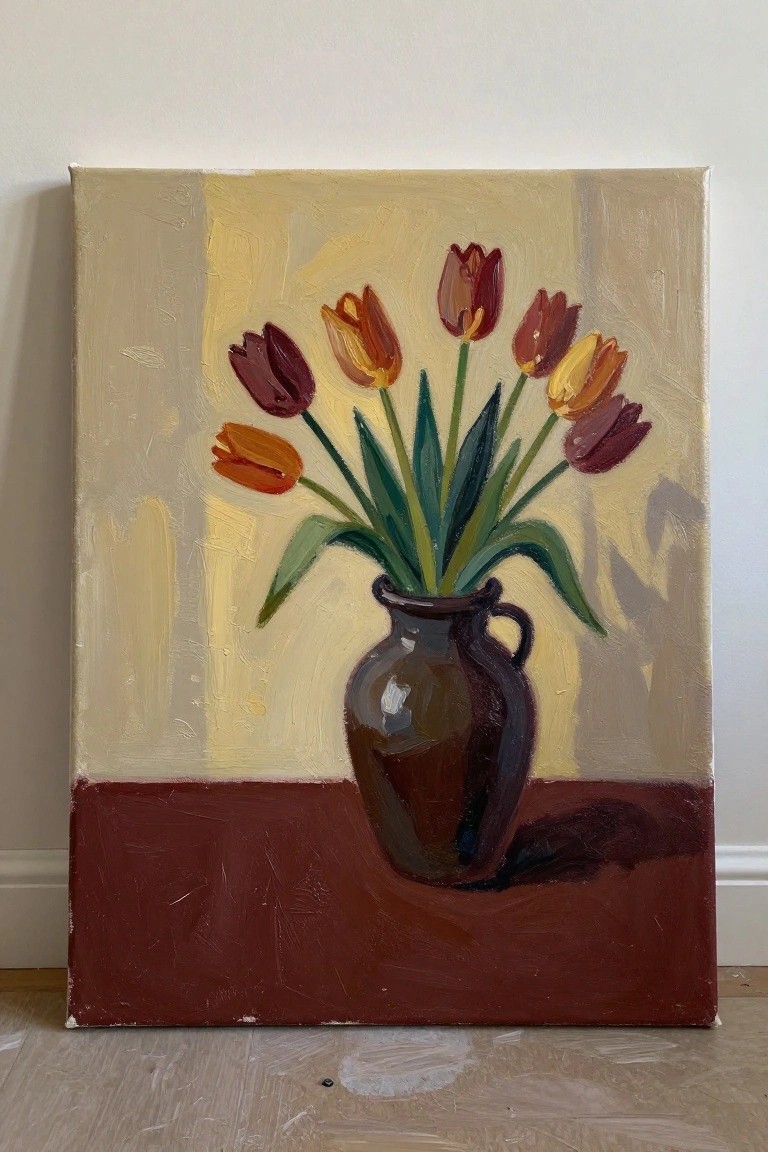
A still life of tulips in mixed warm tones placed in a single dark vase creates an easy focal point when the background is split into a light upper section and a solid reddish-brown table. The idea relies on the contrast between the bright flower heads and the deep vase color to keep the arrangement from looking flat. Vertical stems and angled leaves give the composition enough structure while staying loose with the brushwork.
What makes this idea useful is the clear separation of light and dark areas that helps block in the main shapes quickly on canvas. You can swap the tulip colors for whatever is in season or reduce the number of blooms if you want a faster study. The layout works well for practice because the vase and table edges stay simple while still giving the piece a finished look that stands out in a grid of floral paintings.
Frequently Asked Questions
What supplies do I need to recreate these tulip acrylic painting ideas? Start with a basic set of acrylic paints including reds, yellows, pinks, greens, and whites for the tulips plus neutrals like beige or soft gray for the vases. Grab a few brushes in small round, flat, and detail sizes along with a stretched canvas or heavy paper, a palette for mixing, and water for thinning. Simple household items like a pencil for sketching and paper towels for blotting work well too. These materials keep the focus on the charming vase arrangements without extra cost.
How do I begin sketching a simple vase arrangement before adding paint? Lightly draw an oval or rounded shape for the vase near the bottom center of your canvas. Add a few curved lines above it to suggest tulip stems and position the flower heads as loose ovals or cups at the top. Keep the lines faint so they blend into the paint later. This approach mirrors the article’s emphasis on straightforward compositions and leaves room for creative tweaks in each of the 23 ideas.
What techniques help make tulip petals look soft and layered in acrylic? Apply a base coat of your chosen petal color and let it dry slightly. Then layer lighter shades on top with short, curved strokes to build depth while the paint is still workable. Use a dry brush technique for subtle highlights on the edges. This method creates the charming, fresh appearance described in the ideas and works especially well on simple vase setups where the flowers are the main focus.
How can I choose colors that make the vase arrangements feel cohesive and inviting? Pick two or three main tulip hues that complement each other, such as soft pink with pale yellow, and echo one of those tones in the vase or background. Add a touch of green for stems and leaves to tie everything together. Test mixes on a scrap piece first to ensure the overall palette stays harmonious. Such choices enhance the simple yet elegant feel across the different painting concepts.
What are good ways to finish and protect these completed tulip paintings? Let the acrylic layers dry fully for at least 24 hours. Apply a thin coat of matte or satin varnish with a wide brush to seal the surface and bring out the colors. Frame the piece in a simple wood or metal frame that matches the vase style, or display it unframed on a small easel. These steps preserve the artwork and let the charming arrangements stand out in any room.

Hi, I’m Camille.
I’m a self-taught painter and creative blogger with a soft spot for acrylic painting, color play, and all the little art ideas that make everyday life feel more inspiring.
I started this space because I’ve always believed painting should feel joyful, approachable, and a little personal. Some of my favorite pieces come from simple ideas, messy palettes, and evenings where I just felt like making something pretty.
Most of what I share begins with acrylic painting, but I also love exploring other mediums when creativity pulls me in a new direction. My goal is to collect and share painting ideas that feel fun, beautiful, and actually doable, whether the mood is calm and minimal or bright and playful.
This is a space for inspiration, experimenting, and enjoying art without overcomplicating it.