

I enjoy painting sunsets with acrylics because the colors mix easily on the canvas and dry at a steady pace.
Loose brushwork suits me since it lets me focus on shapes and light without worrying about every edge.
I have tried various ways to handle the sky and water in these scenes over time.
Some of my attempts turned out better when I kept the strokes broad and varied the pressure.
Here are a few ideas that came from those sessions.
Loose Brush Sunset with Water Reflection and Reeds

An impressionist acrylic landscape idea built around a low sun that sends a bright vertical streak of light across calm water. The sky uses stacked bands of orange, pink, and purple that meet a thin dark tree line, while the foreground holds a cluster of tall reeds painted as simple dark shapes. The composition stays effective because the strong horizontal layers and high color contrast make the reflection the clear focal point without any complicated detail.
What makes this idea useful is how the main blocks of sky and water can be blocked in first with broad strokes, leaving the reeds as a quick final step. You can easily change the sky colors to match a photo from any season or shift the sun position higher for a different mood. For canvas decor, the simple layout scales well to larger sizes and still reads clearly from a distance.
Sunset Boats Along the Shore
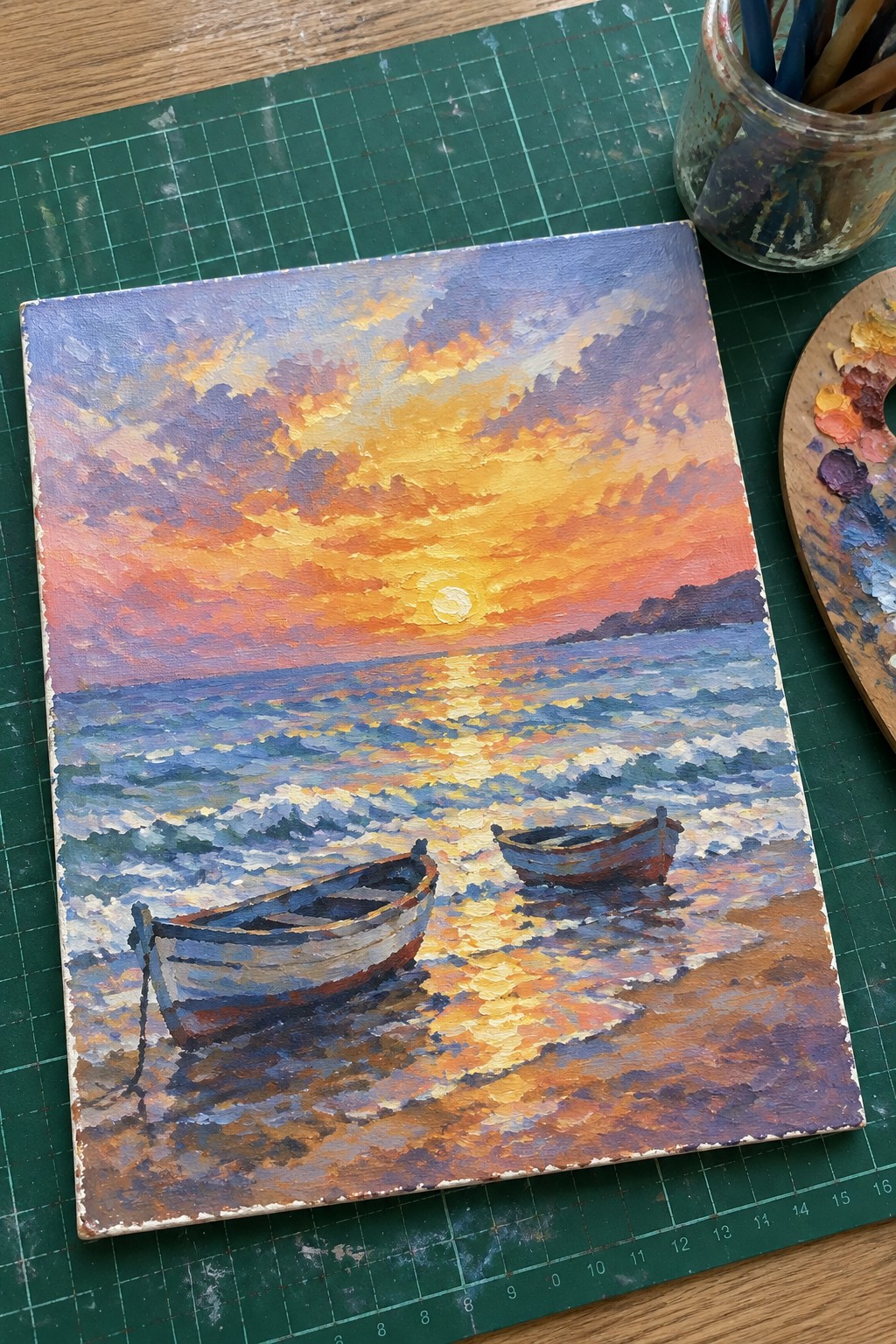
An impressionist seascape idea centers on two small boats pulled up on the sand at the edge of the water during a bright sunset. The sun sits low on the horizon and sends a strong reflection across the waves, which helps pull the eye through the middle of the painting. Broad brushwork in the sky and water keeps the focus on color and light rather than fine detail, which suits acrylics well for this type of landscape.
What makes this idea useful is the clear division between the darker boats in the foreground and the glowing sky that carries most of the interest. The limited number of main shapes makes it straightforward to sketch and block in before adding color. You can easily change the boat colors or shorten the horizon line if you want a simpler version on a smaller canvas. This kind of sunset layout also photographs well for sharing as reference or finished work.
Sunset Over Jagged Ocean Cliffs
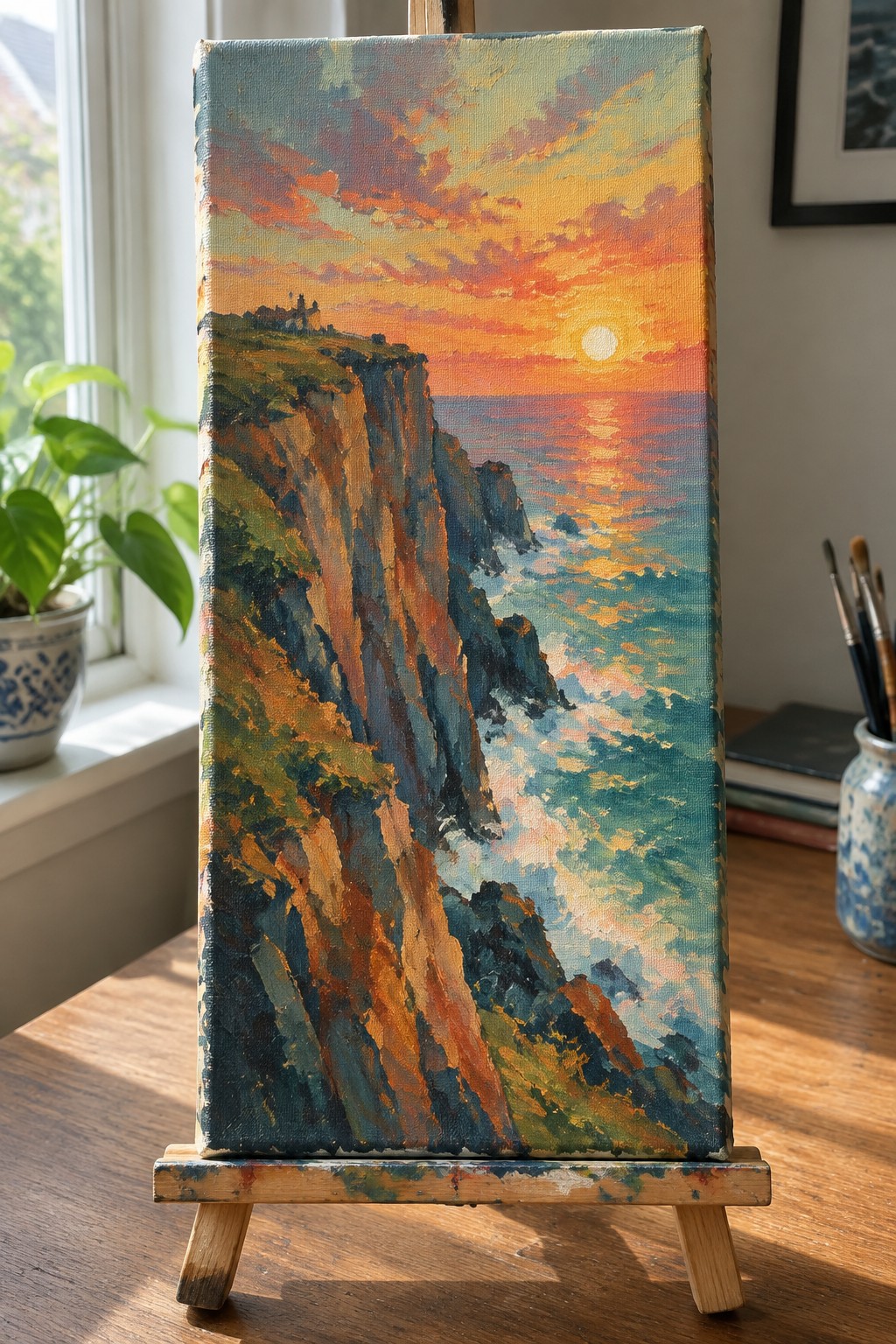
A coastal cliff landscape works well as an acrylic idea when the goal is loose, expressive brushwork. The main subject combines a tall rock face dropping into rough water with a full sunset sky that shifts from orange to red. Strong value contrast between the dark cliffs and the bright horizon keeps the composition readable even when edges stay soft and strokes remain visible.
What makes this idea useful is the simple three-part layout of sky, cliff, and sea that lets you block in big color areas quickly. The palette of warm sky against cooler water gives instant impact without needing fine detail. This would be easy to adapt by changing the cliff angle or stretching the wave foam across a wider canvas for a different format. For practice, the visible brush marks make it forgiving while still looking intentional on the wall.
Tree Silhouettes Against a Striped Sunset Sky

A landscape idea built around a sunset over water works well when the sky is painted in broad horizontal bands of orange, pink, and blue that gradually shift in tone. Dark tree shapes placed across the middle ground create clear vertical breaks that repeat as reflections below, giving the composition balance without needing extra elements. This approach fits the expressive impressionist category because it relies on color contrast and simple repeated shapes rather than precise outlines or fine detail.
What makes this idea useful is how the dark tree masses let you focus on brushwork and color mixing instead of drawing accuracy. You can change the sky colors to cooler tones or warmer oranges while keeping the same layout, which makes it easy to adapt for different seasons or moods. For practice, this kind of subject helps you learn how reflections can anchor a loose painting and make the colors stand out more on the canvas. An acrylic idea like this also translates well to small canvases for quick studies or gifts.
Pier Sunset with Loose Brushwork
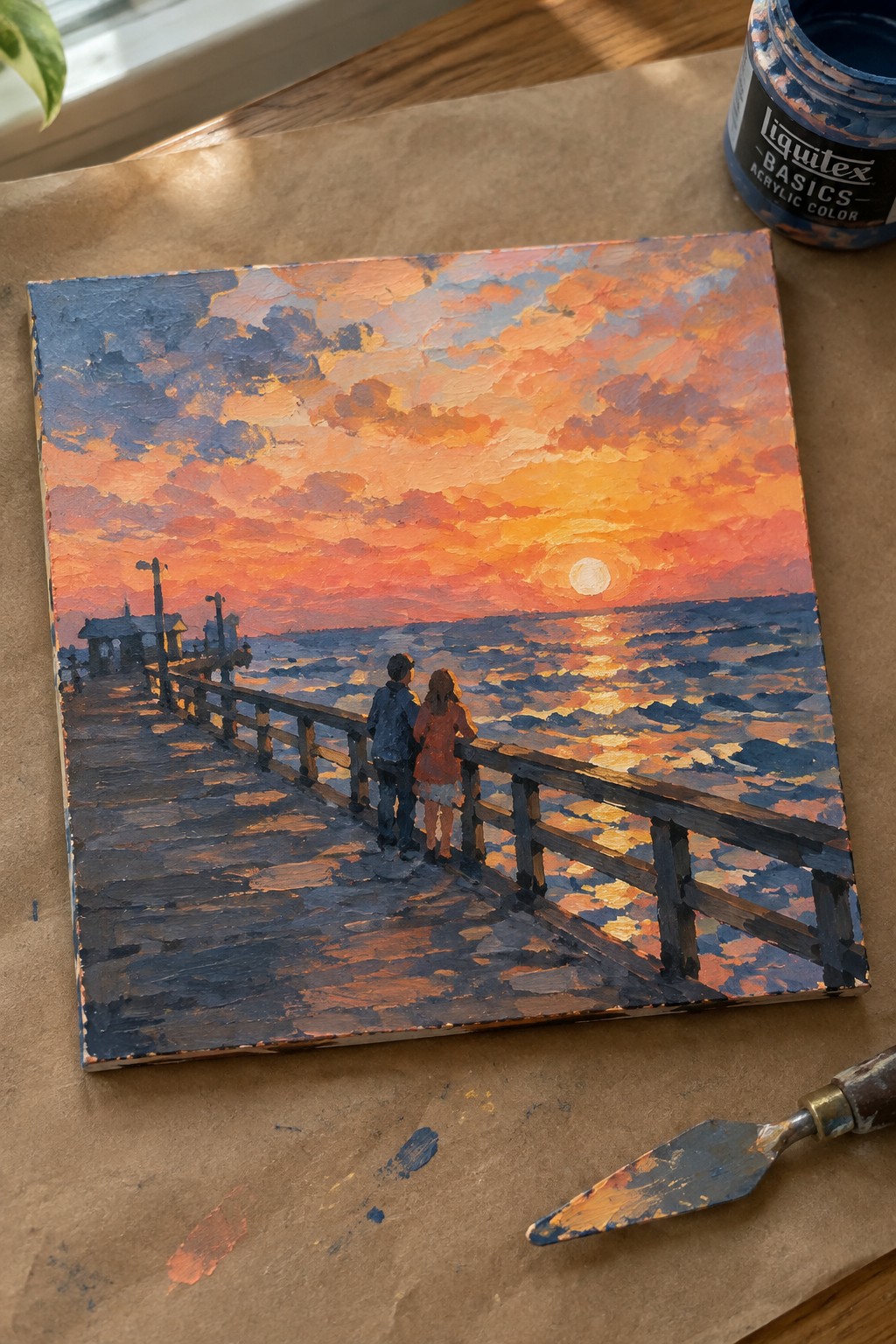
An impressionist acrylic landscape idea that centers on a wooden pier stretching into the ocean at sunset, with two small figures leaning on the railing. The main focus is the glowing sky and water created through broad, visible brushstrokes in warm oranges, yellows, and cool blues rather than tight detail. This type of seascape works because the dark pier and figures provide strong contrast against the bright sky, letting the loose brushwork and color blocks carry the composition.
What makes this idea useful is the straightforward layout that keeps the pier as an easy anchor while the sky and reflections invite free acrylic layering. The warm-to-cool color split can be swapped for different seasons or times of day without changing the structure. For practice, the subject helps you work on building light effects and water texture quickly on a small canvas. It adapts well to a vertical format or a larger wall piece by simply extending the water area.
Palm Tree Silhouettes Over a Colorful Ocean Sunset

A sunset seascape with two dark palm trees set against layered bands of orange, pink, and blue sky makes a strong acrylic landscape idea. The composition relies on the contrast between the solid tree shapes and the bright horizontal streaks in the water to guide the eye toward the small sun near the horizon. Loose brushwork across the sky and waves keeps the focus on color blocks rather than fine detail while still suggesting movement in the ocean.
What makes this idea useful is how the simple silhouette shapes let you practice bold color mixing without needing accurate drawing skills. You can easily adapt it by changing the tree placement, stretching the sky colors into more purples, or adding thicker paint in the water reflections for extra texture. The high contrast layout works well for quick canvas pieces or gifts because it reads clearly from a distance. For Pinterest, this kind of sunset idea performs well when the color bands stay distinct and the trees stay flat and dark.
Sailboats Anchored in a Sunset Reflection Study
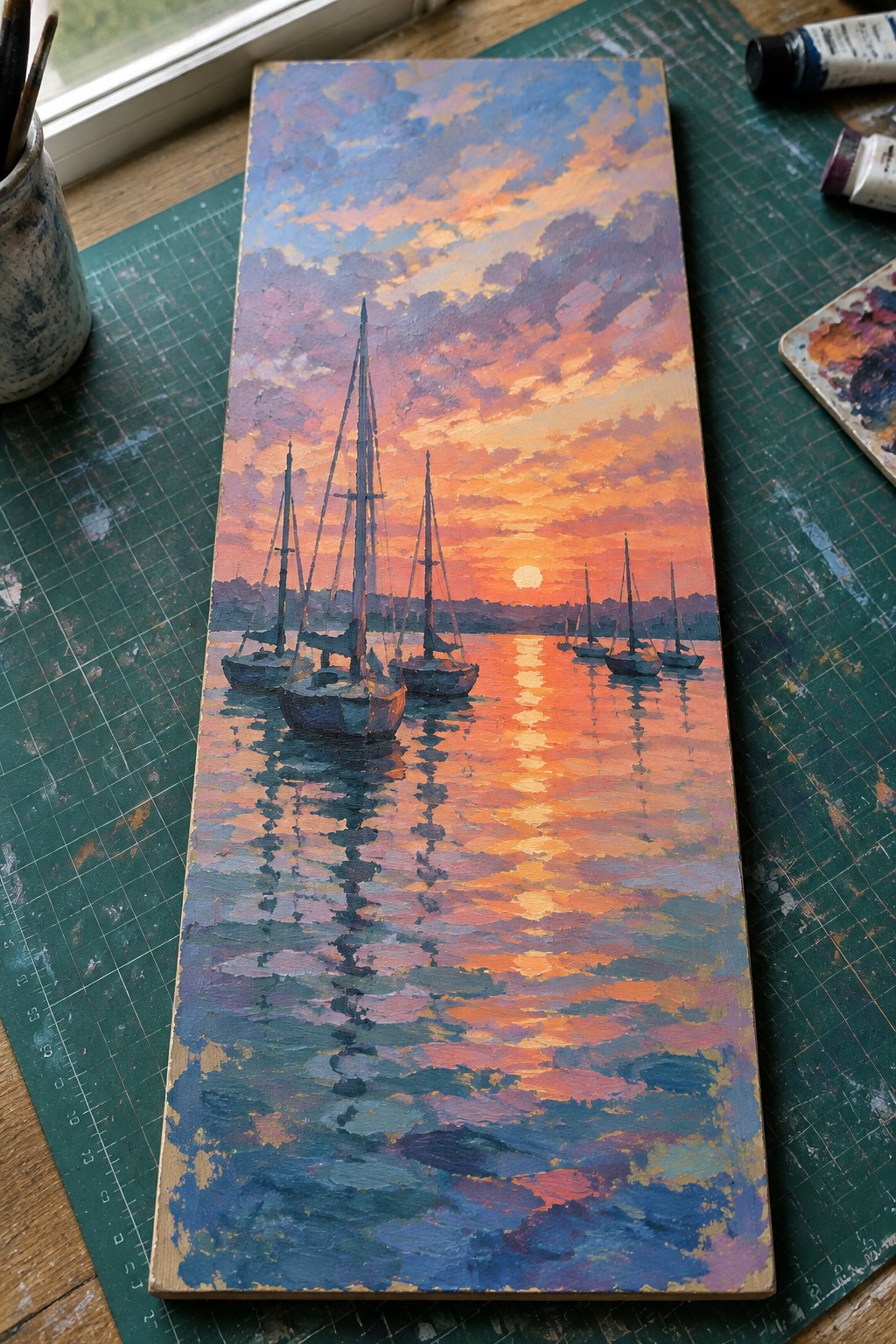
A vertical sunset landscape with several sailboats lined up across calm water gives you a clear acrylic idea to work with. The main focus stays on the boats as simple dark shapes against the bright sky, while the water carries the same colors downward through loose reflections. This fits the landscape category and works well when you want to practice color blending without getting stuck on fine details.
What makes this idea useful is the repeated boat shapes that let you vary size and angle without changing the overall layout. The strong horizontal divide between sky and water makes it easy to build the painting in layers, starting with the sky then dropping the reflections in afterward. You could simplify it further by using fewer boats or shift the palette toward cooler tones for a different time of day. For Pinterest, the bright color blocks and clear subject stand out even as a small thumbnail.
Lone Tree Sunset Over Water With Wildflower Foreground

A compact sunset landscape works as an acrylic idea when you frame the water with a single dark tree on one side and a loose field of multicolored wildflowers across the bottom edge. The sky moves from warm orange near the horizon into soft lavender and pink above, with the water carrying the same colors in simple horizontal strokes. This setup creates a clear focal point on the sun and its reflection while letting the flowers add texture without requiring fine detail.
What makes this idea useful is how the small canvas size forces you to keep the sky and water simple, which helps beginners practice color blending without getting overwhelmed. You can easily change the tree to a different shape or swap the flower colors to use whatever paint is already mixed. The same layout also works on a larger canvas if you want more room to vary the brushwork in the clouds and reflections.
Sunset Landscape With Wildflower Meadow Foreground
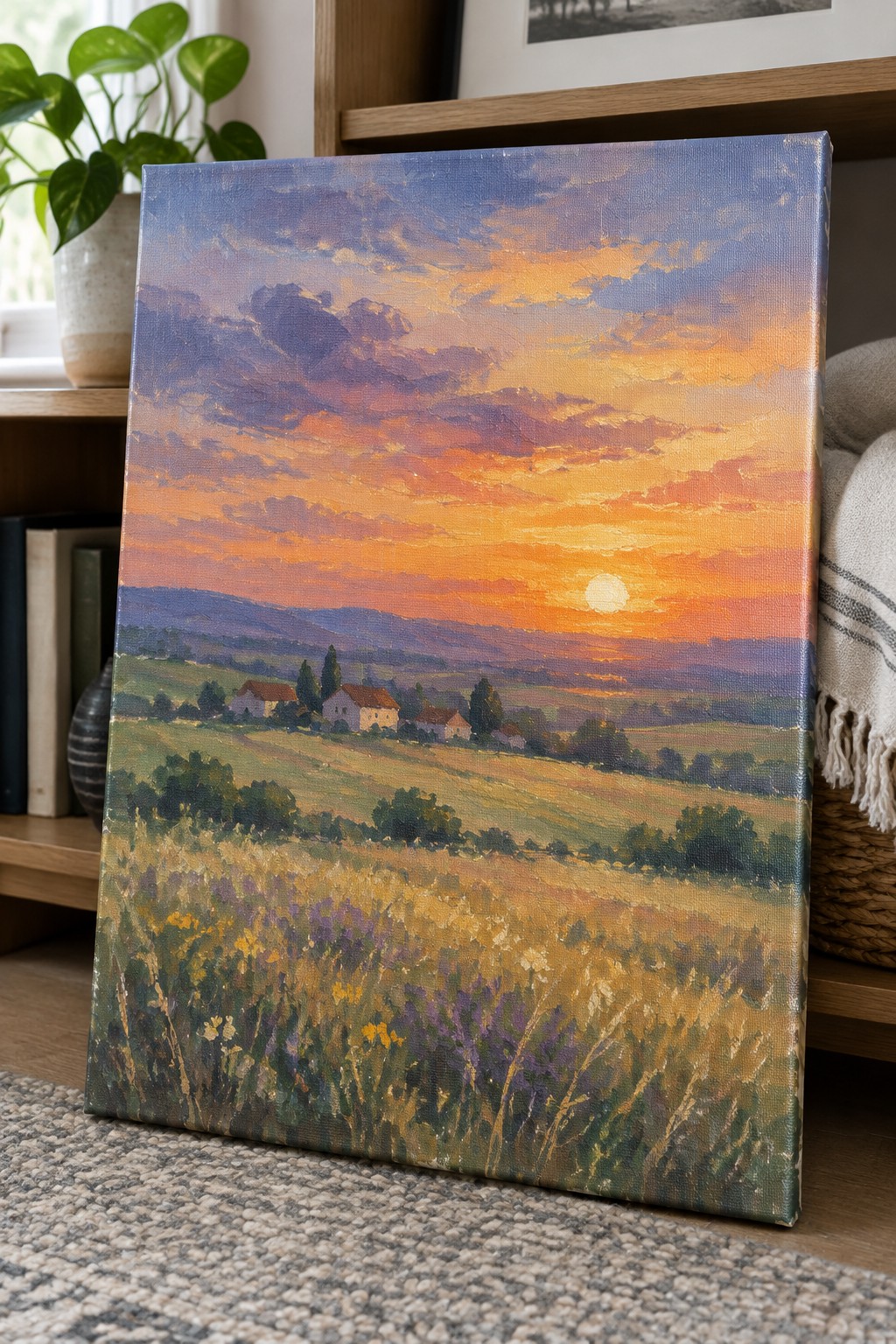
A wide sunset view across fields and low hills works well as an acrylic idea because the sky carries most of the color while the land stays simpler. The composition stays balanced by keeping the sun low and letting the warm sky gradient lead the eye toward the small cluster of buildings. Loose brushwork in the clouds and foreground grass gives the scene movement without requiring tight control over every stroke.
What makes this idea useful is how easily the sky can be blocked in first with broad color passes before the land is added. You could swap the wildflowers for whatever grows locally or drop the houses entirely if you want a faster version. The strong sky-to-ground contrast also helps the finished piece stand out on a wall or in a Pinterest feed without needing extra detail work.
Sunset Mountain Landscape with Cabin

A sunset mountain landscape with a small cabin on a hillside makes a strong acrylic painting idea because the layered mountain ranges create natural depth and the bright sky acts as the main focal point. This type of landscape works well when the sky uses bold color shifts from orange to teal while the foreground stays darker and simpler. The composition stays effective because the cabin sits off-center and the sun placement balances the overall scene without crowding the canvas.
What makes this idea useful is how the strong sky-to-ground contrast does most of the visual work, letting you focus on broad brushstrokes rather than tiny details. You can easily adapt it by changing the cabin size, swapping in different foreground plants, or shifting the sun position for a new time of day. For practice or wall art, this layout stands out on Pinterest because the warm and cool color split creates quick impact even on a medium-sized canvas.
Riverside Path Sunset with Bold Reflection

An impressionist landscape idea built around a low sun casting a strong vertical reflection across open water, paired with a curving shoreline path that leads the eye inward. The layout relies on large color blocks for sky and water, with the path and trees acting as darker anchors that keep the composition from feeling flat. It works as a classic loose landscape approach where the main goal is capturing light and directional movement through simple shapes.
What makes this idea useful is how the path naturally divides the scene and gives you a clear place to start blocking in values. The warm-to-cool color split across the water makes color mixing practice straightforward, and you can easily shorten the path or reduce the number of trees if you want a quicker version. For canvas decor this kind of sunset layout stands out on boards because the bright reflection reads well even at small sizes.
Loose Brush Sunset with a Pier and Birds

A sunset landscape centered on a wooden pier stretching into reflective water makes a strong acrylic idea because the loose brushwork lets the sky shift from warm orange to cool blue without tight blending. The low sun position creates a clear light path across the water that guides the eye, while scattered birds add motion through simple dark shapes against the sky. This approach fits the landscape category and works especially well when you want color and light to carry most of the impact rather than fine detail.
What makes this idea useful is how the pier gives the scene a solid foreground anchor that keeps the composition from feeling empty. You can simplify the water ripples or reduce the number of birds if you want a faster study, or extend the sky colors further down the canvas for a taller format. For practice, the strong value contrast between the dark pier and bright sky helps you focus on shape and placement before worrying about texture.
Loose Brushwork Wildflower Sunset

An impressionist landscape idea that combines a glowing sunset sky with a dense foreground of wildflowers painted in loose, visible strokes. The composition places the horizon low so the colorful blooms fill most of the canvas while the sky and low sun create a strong horizontal band of warm color. This approach fits the expressive sunset category because it relies on color blocks and soft edges rather than tight detail to suggest depth and light.
What makes this idea useful is the way the bright foreground flowers let you practice bold color mixing without needing perfect shapes. You could simplify the flower count or swap in different bloom colors to match a room’s palette while keeping the same sky and horizon layout. For canvas decor, the strong value contrast between the dark treeline and the bright sky helps the piece stand out on a shelf even at small sizes.
Vertical City Sunset with Loose Reflection Layers
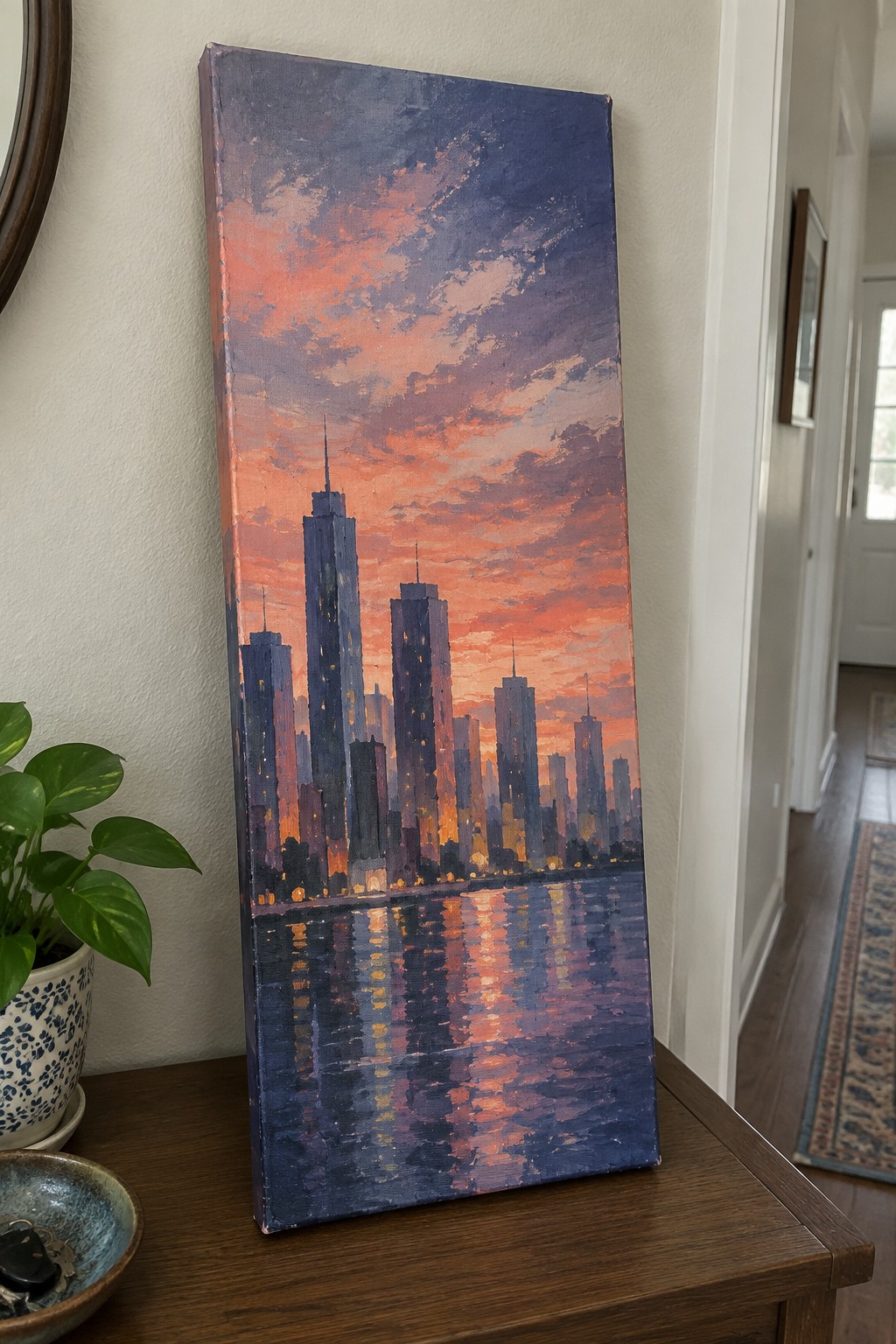
This acrylic painting idea uses a tall canvas to frame a city skyline against a vivid sunset, with loose brushwork blending warm oranges and cool purples across both sky and water. The buildings read as dark shapes with scattered light dots rather than detailed structures, letting the color shifts and their mirrored reflection carry the composition. It works as a landscape wall art piece that relies on broad color blocks and simple vertical alignment instead of intricate edges or textures.
What makes this idea useful is the way the reflection doubles the sunset impact without adding more subjects to paint. You can adapt it by changing the building shapes to match a different skyline or reducing the number of towers for faster sessions. The bold color contrast handles most of the visual weight, so the loose brushwork stays forgiving on canvas. For practice or quick decor pieces, the vertical format keeps the layout easy to balance even if your sky blends turn out uneven.
Sunset Field Landscape with Tall Grass and Lone Tree
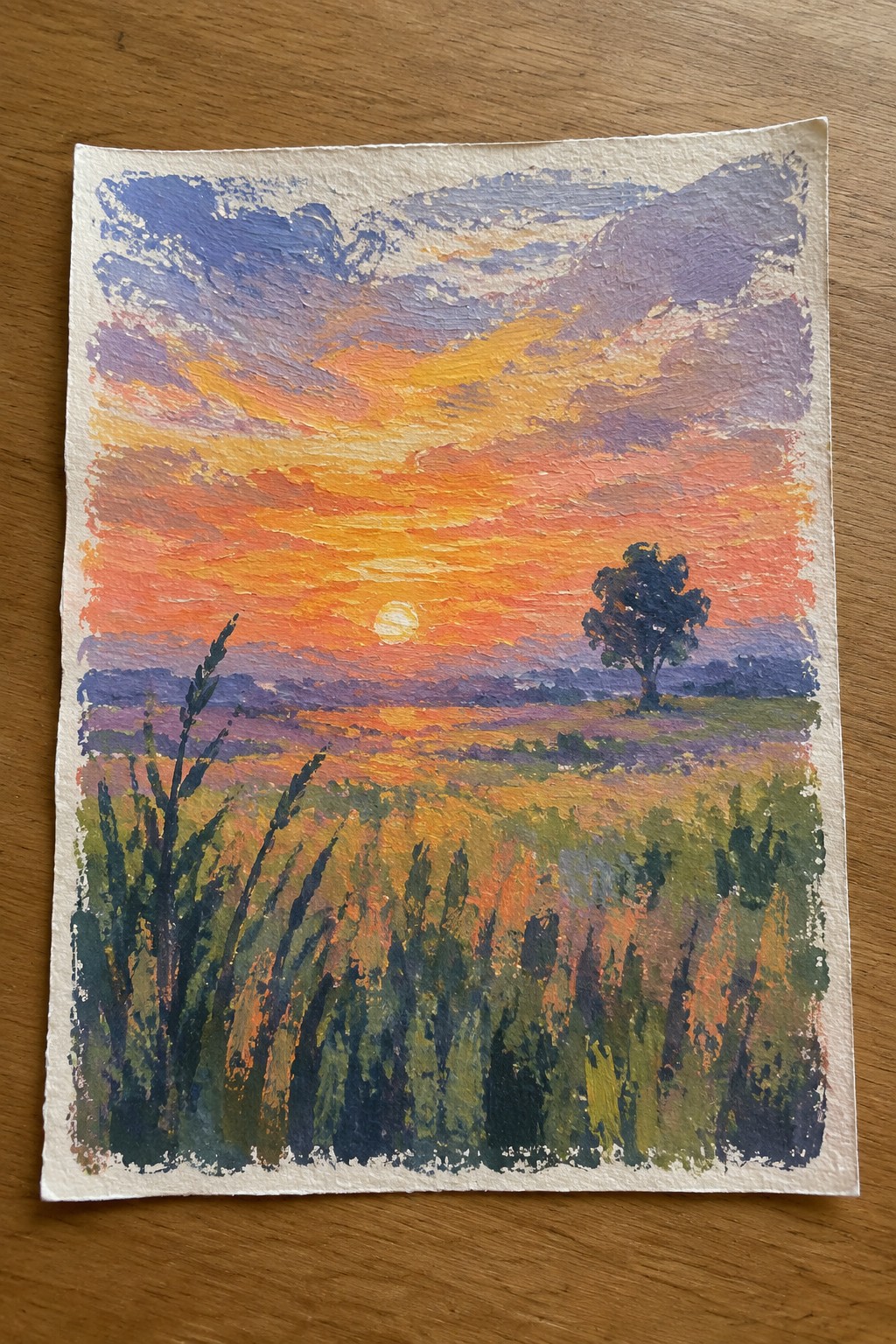
This acrylic painting idea centers on a wide open landscape at sunset, where bands of warm sky colors stretch across the horizon above layered fields. The composition relies on a strong foreground of vertical grass strokes that frame the glowing sun and distant tree silhouette, creating natural depth through color shifts rather than fine detail. It fits squarely into the landscape category and works because the horizontal color blocks guide the eye while the darker foreground elements add structure without tight edges.
What makes this idea useful is how the sky does most of the visual heavy lifting with broad color blending, leaving the foreground as a simpler shape exercise. You could adapt it by muting the oranges for an autumn version or reducing the grass strokes to just a few dark marks if you want a faster practice piece. For wall art or Pinterest pins, the high contrast between the bright sky and dark foreground makes the whole scene read clearly even at small sizes.
Frequently Asked Questions
What materials are best for creating these impressionist sunset paintings with loose brushwork in acrylic?
Acrylic paints in vibrant hues like cadmium yellow, alizarin crimson, ultramarine blue, and titanium white form a strong starting point. Use a variety of brushes including flat, round, and fan shapes in larger sizes to encourage broad strokes. A canvas or heavy paper primed with gesso provides a good surface, and a palette knife can help mix colors quickly without overworking them. Keep a spray bottle of water nearby to maintain paint consistency during the process.
How can beginners develop the loose brushwork technique for expressive sunset scenes?
Start by holding the brush farther back on the handle and make quick, confident marks without lifting your hand too often. Practice on scrap paper by painting simple shapes like circles and waves using only a few strokes per area. Focus on varying pressure and direction to create texture rather than blending everything smooth. Work from reference photos of sunsets but limit yourself to 30 minutes per study to avoid tightening up the details.
Which color mixing approaches help capture the mood of impressionist sunsets effectively?
Mix warm tones like oranges and pinks directly on the canvas by placing adjacent colors side by side so they optically blend from a distance. Add cool violets or deep blues in the shadows of clouds for contrast that adds depth. Use more white in highlights to suggest glowing light, and keep mixtures loose rather than uniform to maintain an energetic feel across the 15 ideas.
How do artists avoid common issues like muddiness when painting multiple layers in these loose styles?
Apply thin layers and let each one dry partially before adding the next to preserve vibrancy. Limit the number of colors on your palette at once and clean your brush often between strokes. Build up the composition by starting with the sky and working downward so lower elements like water reflections can tie into the upper colors without overmixing on the surface.
What tips help translate the 15 painting ideas into personal variations while keeping the expressive quality?
Experiment with different times of day within the sunset theme by shifting the angle of light or adding unexpected elements like distant trees or birds in flight. Adjust the scale of brushstrokes based on the canvas size and try rotating the canvas during painting to encourage freer marks. Review your finished work from across the room to check if the overall impression feels dynamic before making small adjustments.

Hi, I’m Camille.
I’m a self-taught painter and creative blogger with a soft spot for acrylic painting, color play, and all the little art ideas that make everyday life feel more inspiring.
I started this space because I’ve always believed painting should feel joyful, approachable, and a little personal. Some of my favorite pieces come from simple ideas, messy palettes, and evenings where I just felt like making something pretty.
Most of what I share begins with acrylic painting, but I also love exploring other mediums when creativity pulls me in a new direction. My goal is to collect and share painting ideas that feel fun, beautiful, and actually doable, whether the mood is calm and minimal or bright and playful.
This is a space for inspiration, experimenting, and enjoying art without overcomplicating it.