
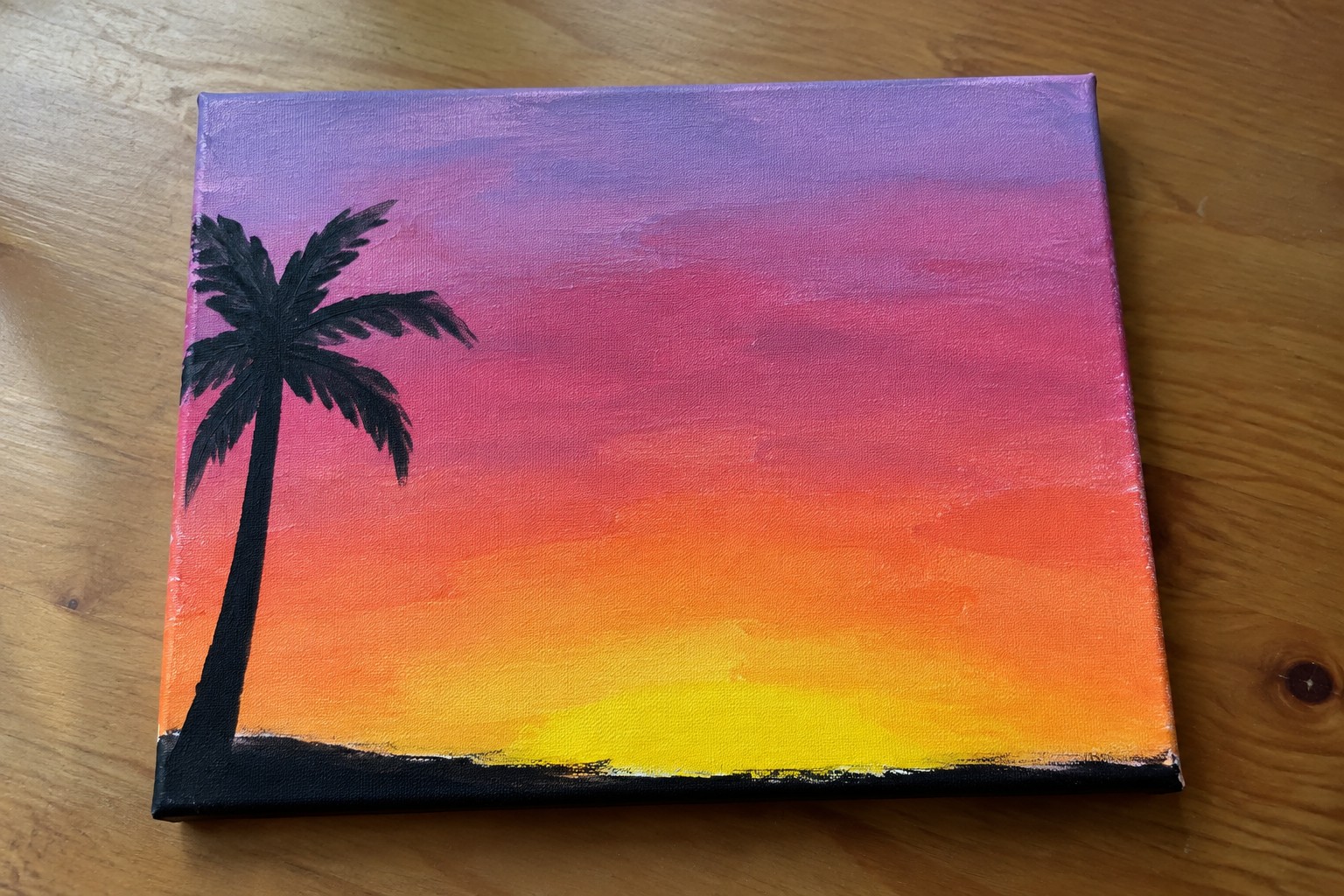
I started painting sunsets with acrylics a while back because the colors in the sky always caught my eye.
The ideas here keep things simple and center on getting those smooth gradients to look right.
I came up with 21 of them that do not require much beyond basic supplies and some time to blend.
They are the kind of projects I go back to when I want something relaxing to paint.
Maybe one of these will fit what you are looking for in your own work.
Silhouetted Palm Tree on a Gradient Sunset Sky
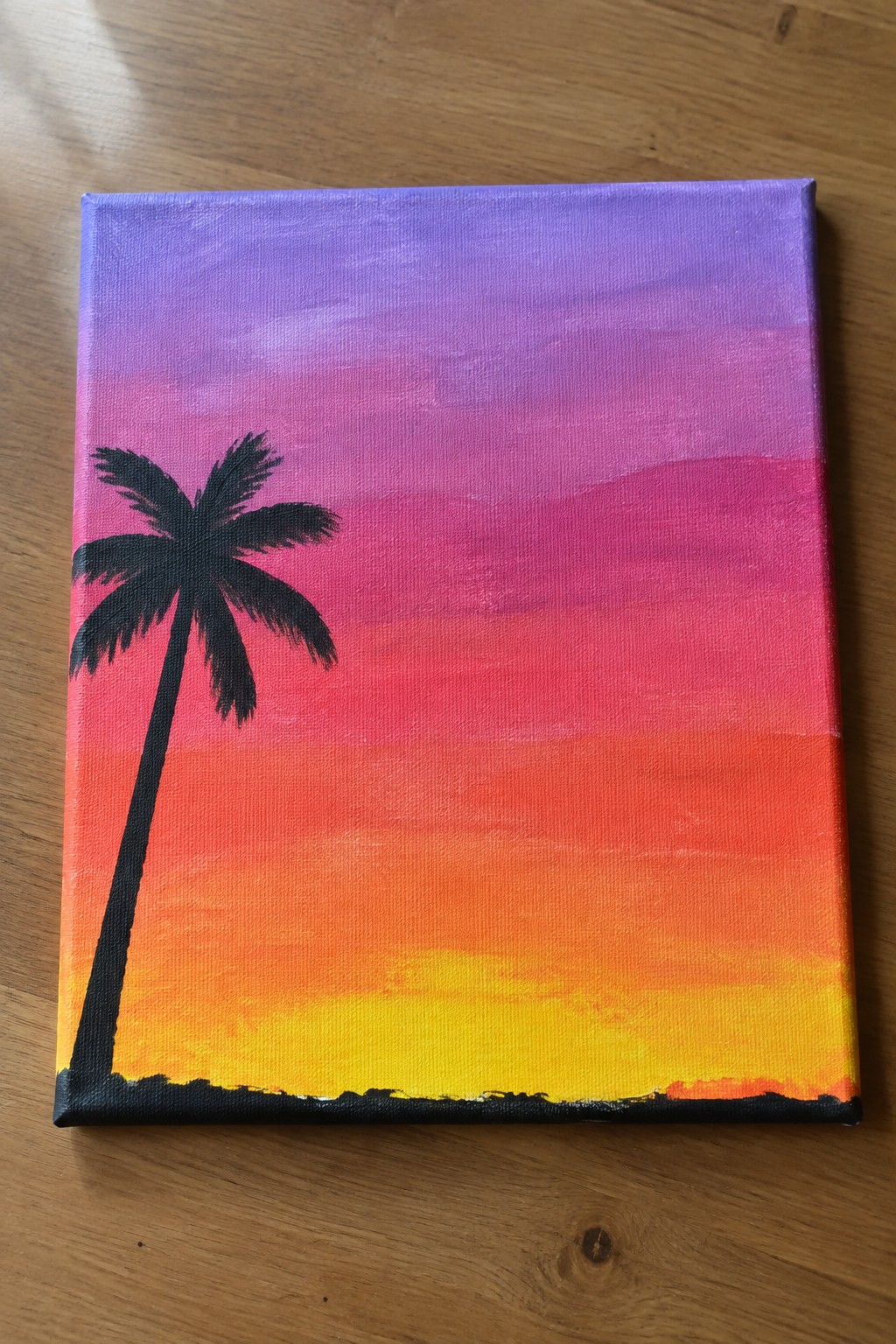
A palm tree silhouette set against horizontal bands of color gives you a clean sunset landscape idea that centers on the sky. The acrylic approach uses a simple dark shape to frame the gradient, with the color moving from purple at the top through pink and orange into yellow near the bottom edge. This layout works because the limited elements let the blended sky do the main visual work while the tree supplies strong shape contrast.
What makes this idea useful is how the silhouette removes the need for fine detail, so you can spend time on smooth color transitions instead. You can change the tree outline to a different species or shift the gradient order without changing the overall structure. The bold dark shape against the bright bands also helps the finished piece read clearly from a distance, which works well for canvas wall art or quick practice paintings.
Gradient Sunset with Tree Silhouette
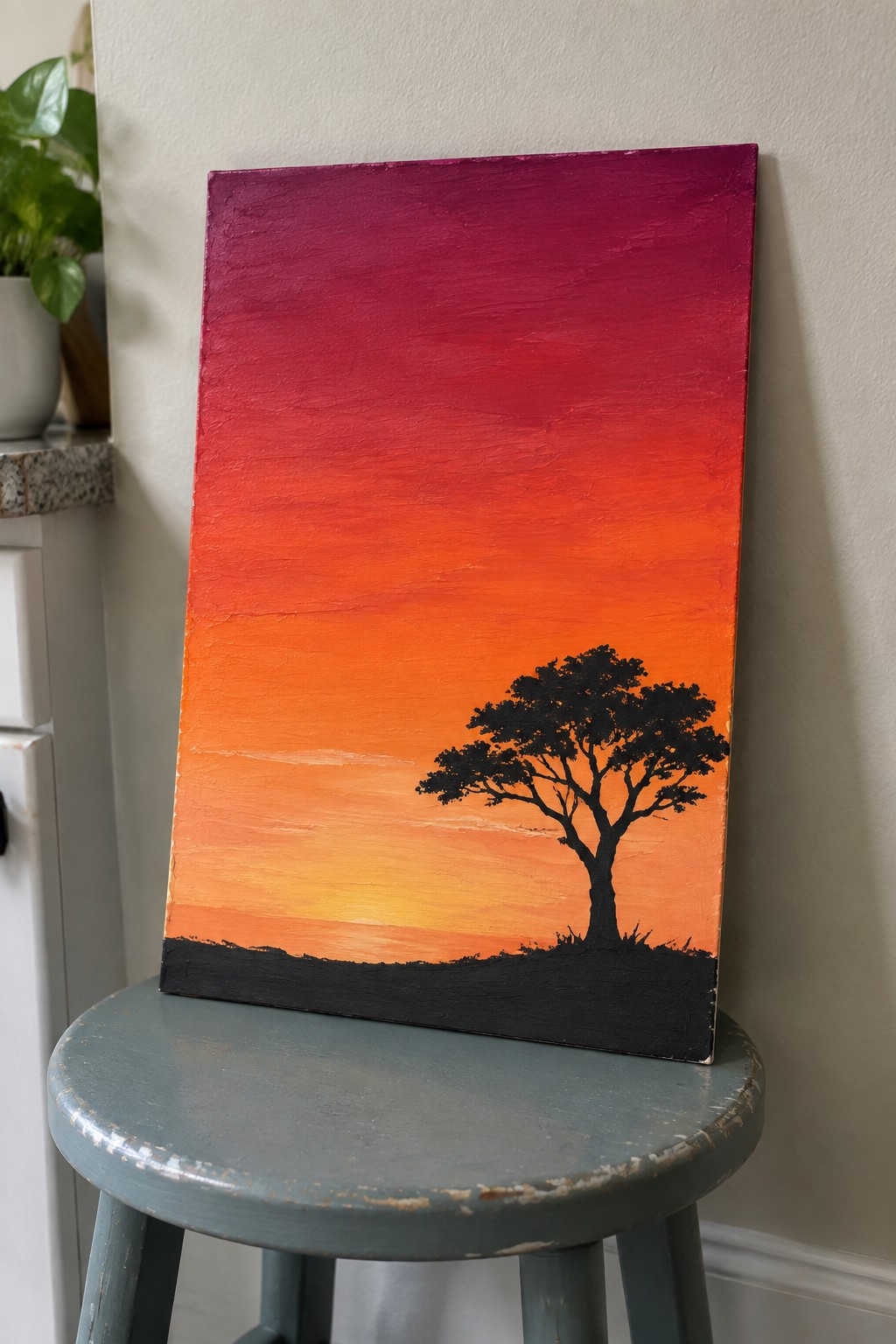
A sunset landscape idea built around a bold color gradient that moves from magenta at the top through orange to yellow near the horizon. The main subject is a single tree kept as a solid black silhouette, which lets the sky carry the visual weight while the dark ground line anchors the bottom edge. This fits the landscape category and works because the strong contrast keeps the gradient clean and readable even on a small canvas.
What makes this idea useful is how the silhouette removes any need for leaf or branch detail so you can focus on smooth sky blending. You can change the tree shape, shift the horizon higher or lower, or swap the top color to purple without losing the overall effect. The limited elements make it a quick canvas project that still reads clearly from across the room and shows up well in photos for sharing.
Gradient Sunset Seascape with Lone Sailboat

A compact sunset landscape idea centers on a smooth sky gradient that shifts from blue at the top through pink and peach tones near the horizon. A few soft white clouds and one small sailboat on the water give the composition a clear focal point while keeping the rest of the canvas open. This approach fits the landscape category and works by letting the color transition carry most of the visual interest.
What makes this idea useful is how the simple layout lets you focus on blending the sky colors on a small canvas without needing many details. You can adjust the boat size or move the clouds around if you want to change the balance. The limited elements also make it easy to try on different canvas sizes or swap the water color for a new version. For quick practice or gift projects, the clean horizon line helps the gradient stand out clearly.
Gradient Sunset Reflected in a Wide River
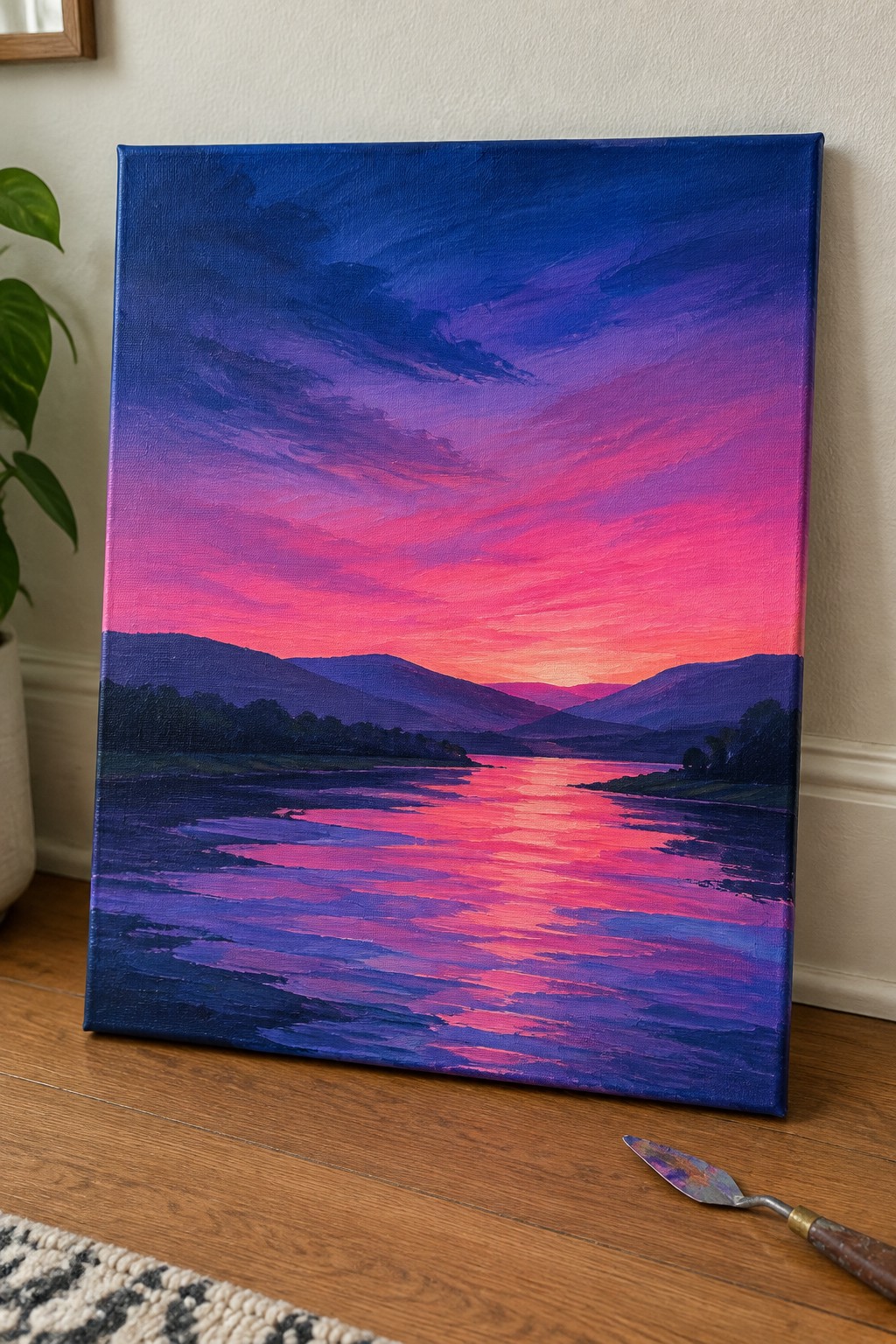
A landscape acrylic painting idea built around a strong sky gradient that shifts from deep blue at the top through purple into bright pink and orange near the horizon. The same colors repeat in the water as a loose reflection, with dark mountain and tree shapes sitting in between to separate the two glowing areas. This setup keeps the focus on color blending and simple shape blocking rather than fine detail.
What makes this idea useful is that the gradient does most of the heavy lifting, so you can spend time practicing smooth transitions without needing complex textures. The dark land masses give you clear negative space to fill in quickly once the sky is done. You could easily change the water to a field or simplify the mountains further if you want a faster version for practice or gifts. The strong color contrast also makes the finished piece stand out in a feed of sunset paintings.
Palm Tree Silhouettes Over a Sunset Gradient
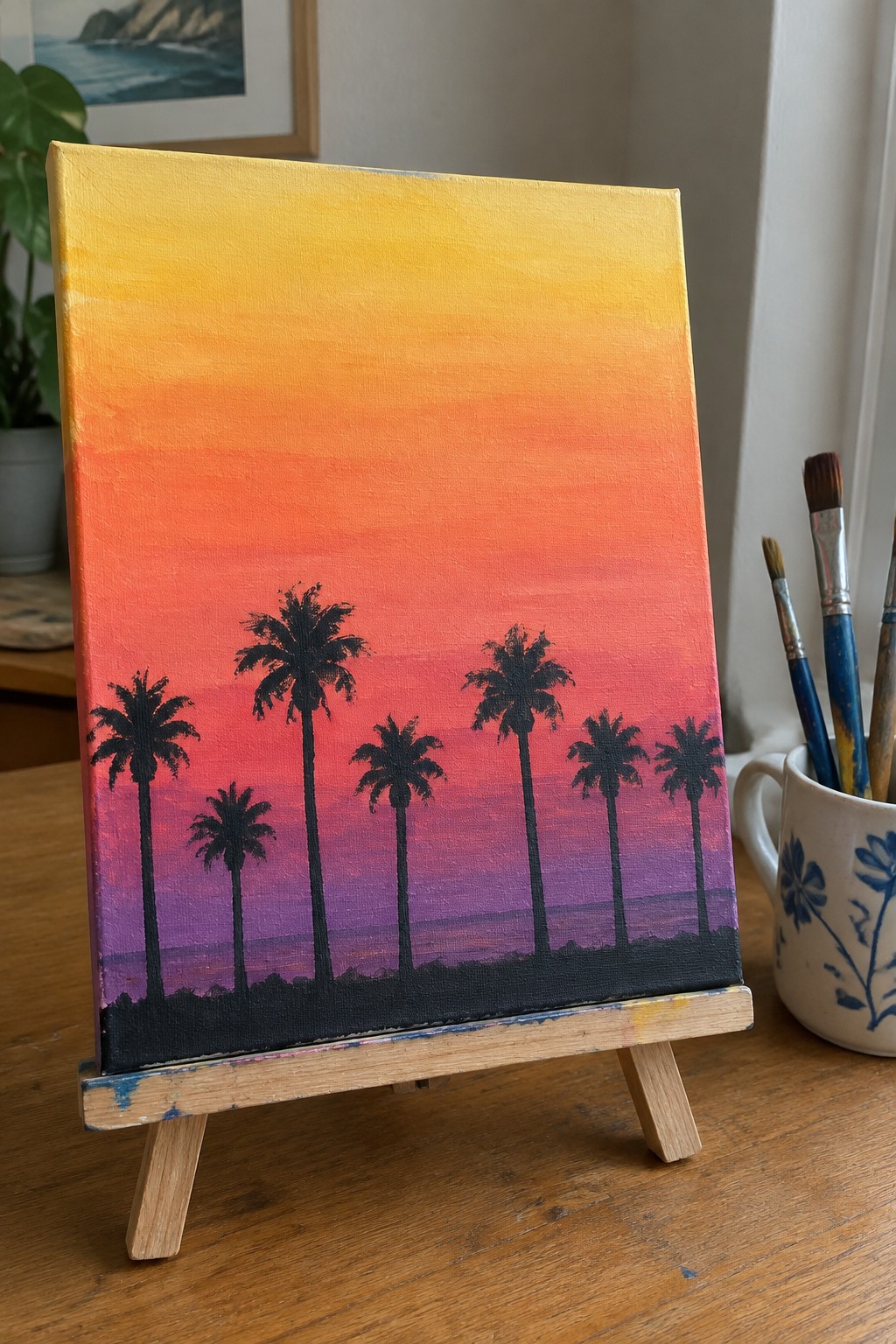
A simple row of palm tree silhouettes placed across the lower half of the canvas lets the sky gradient do most of the work. The sky moves from yellow at the top through orange and red into purple near the horizon, creating a clean horizontal flow that acrylics handle easily. This landscape idea stays effective because the flat black shapes sit sharply against the blended colors without competing for attention.
The strong contrast between the dark trees and the glowing sky makes the composition hold up even on a small canvas. Once the gradient is down, the silhouettes are quick to block in and can be adjusted by changing the number or spacing of the trees. This setup works well for practice because it isolates sky blending from detailed work, and the same layout scales to different sizes without losing impact.
Gradient Sky Sunset with Mountain Silhouettes
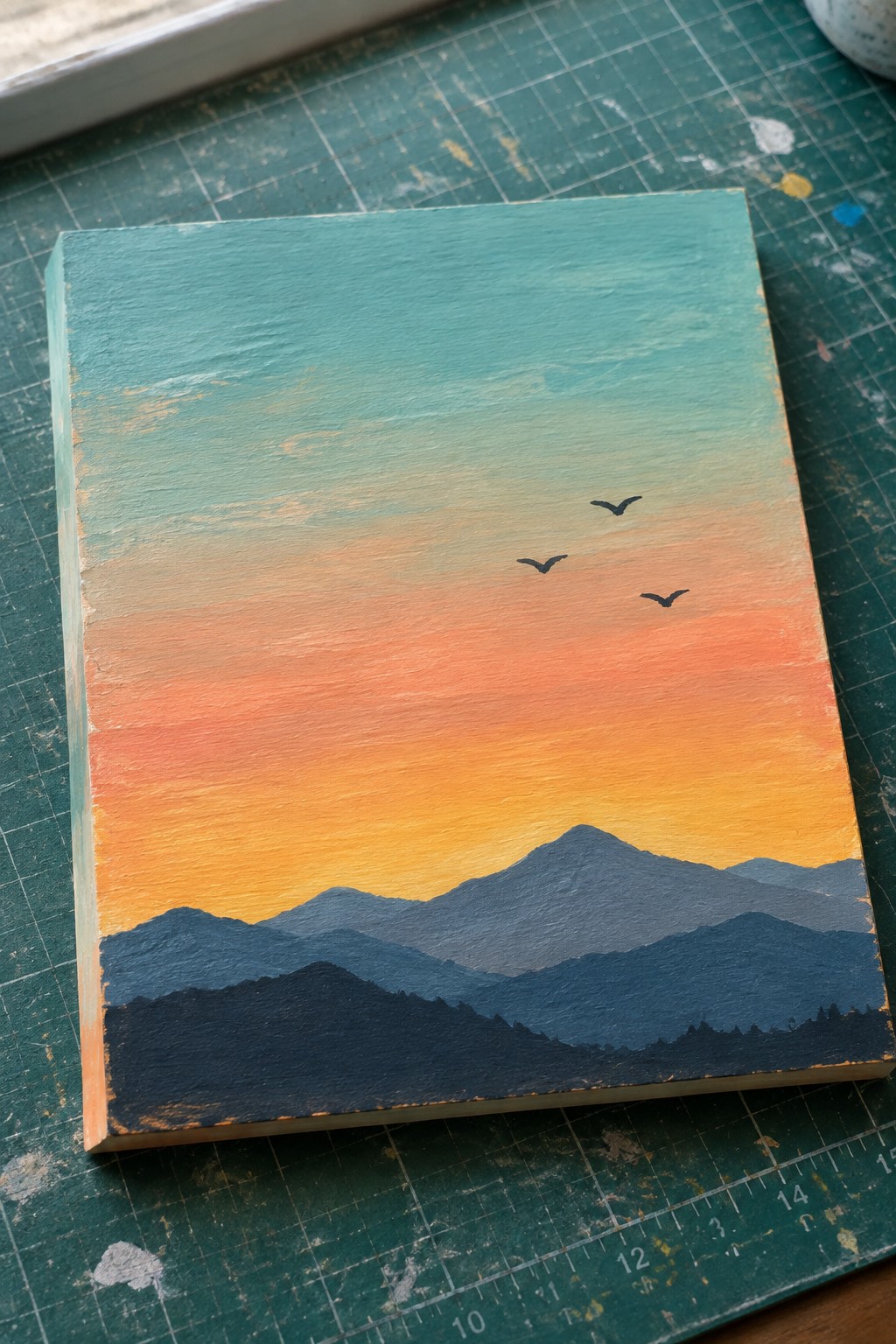
This acrylic painting idea centers on a clean sky gradient that moves from teal at the top through peach and into deep orange near the horizon. The dark layered mountains create a strong horizontal base, while three small birds add just enough movement without cluttering the scene. It works as a landscape concept that keeps the focus on smooth color transitions and simple shape placement.
What makes this idea useful is how the gradient carries the composition, so you can spend time practicing blends instead of building up texture. You can swap the mountain shapes or adjust the sky colors to match different times of year without changing the overall layout. For canvas decor or quick practice pieces, the high contrast between the glowing sky and solid land makes the result look finished even when kept minimal.
Sunset Pier Silhouette on Vibrant Sky Gradients
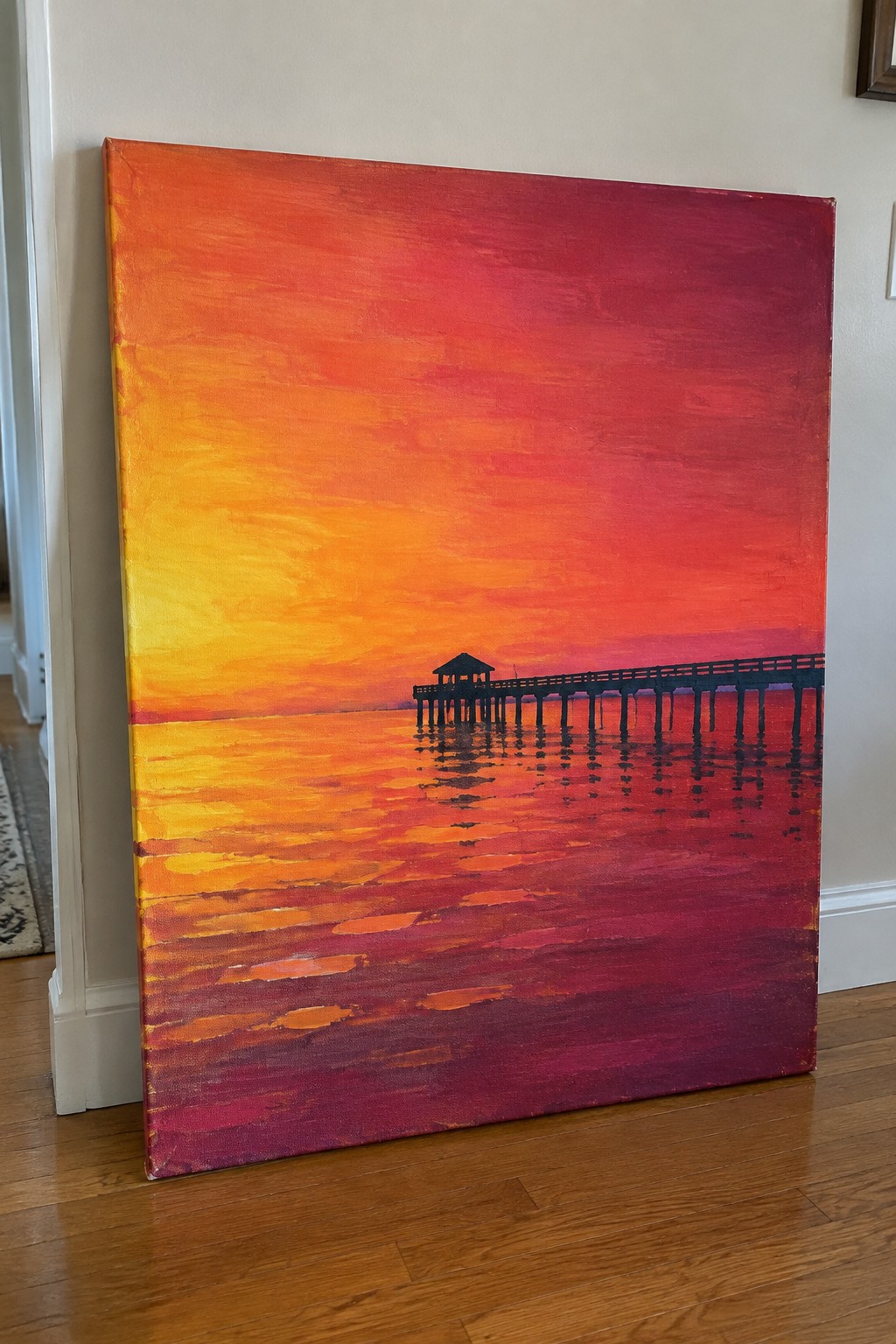
A sunset landscape idea built around a smooth color gradient that moves from bright yellow through orange into deep red across both sky and water. The dark pier silhouette sits low in the frame to create strong contrast without adding detail. Horizontal brushwork in the water repeats the sky bands, keeping the whole piece simple and balanced as wall art.
What makes this idea useful is how the single dark shape lets the gradient carry the composition. You can swap the pier for other simple silhouettes or stretch the same color flow across a wider canvas. The bold shifts also make it easy to practice blending on larger surfaces while still getting a finished look that stands out in a feed.
Sunset Gradient with Grass Silhouettes
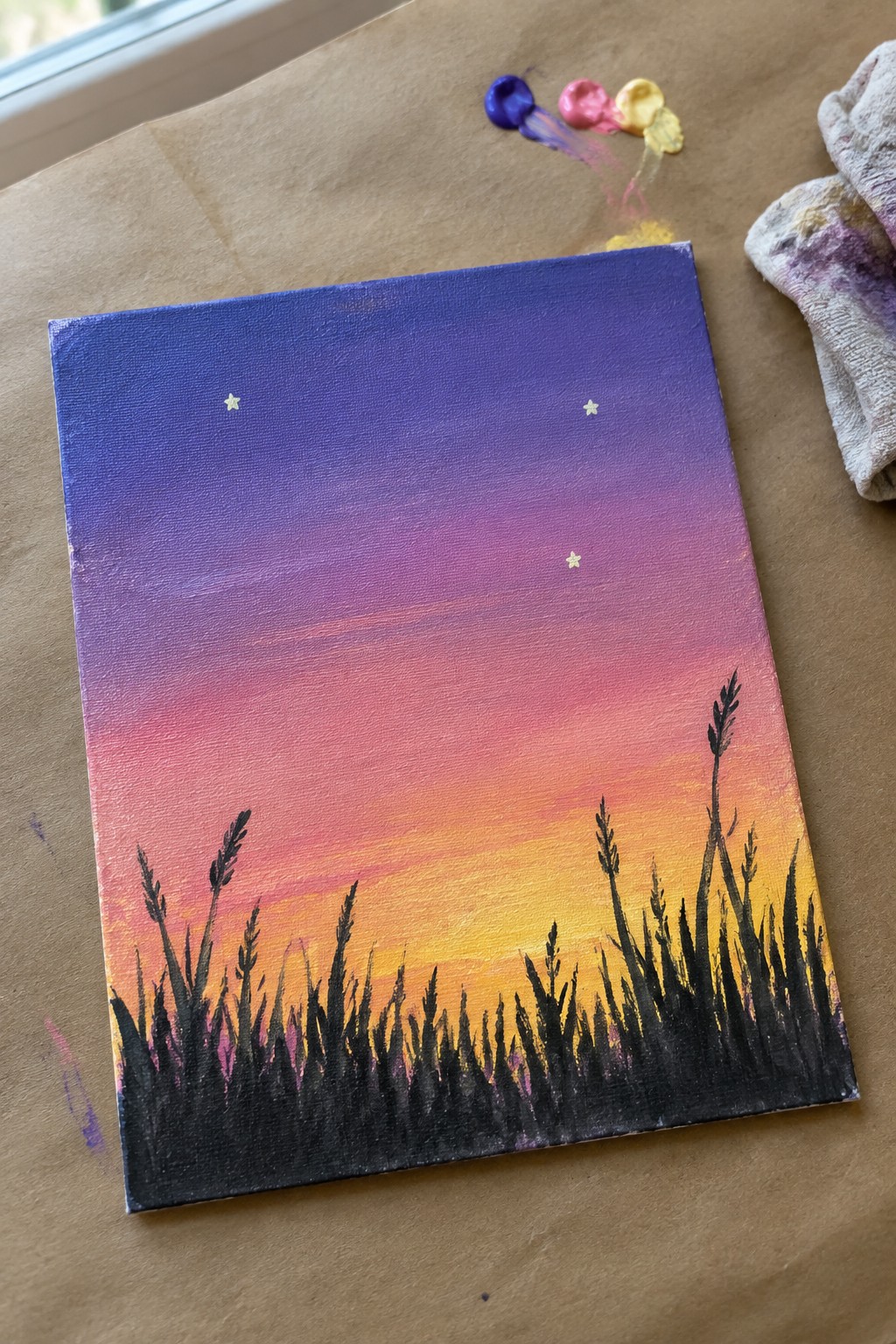
A sunset acrylic painting idea built around a smooth vertical gradient that moves from deep purple at the top through pink and into bright orange and yellow near the horizon. The lower third uses solid black grass silhouettes with varied heights and slight color accents at the base to create a clean separation from the sky. Three small white stars placed across the upper area give the scene a simple dusk transition without adding clutter.
What makes this idea useful is how the gradient carries the main visual weight while the grass only needs steady brushstrokes and basic shape variation. You can shift the color bands warmer or cooler depending on the sunset you want, or swap the grass for distant hills if you prefer less foreground detail. This layout stands out for quick canvas practice because the sky blending builds confidence fast and the dark silhouette keeps the whole piece balanced.
Sunset Gradient with House Silhouettes
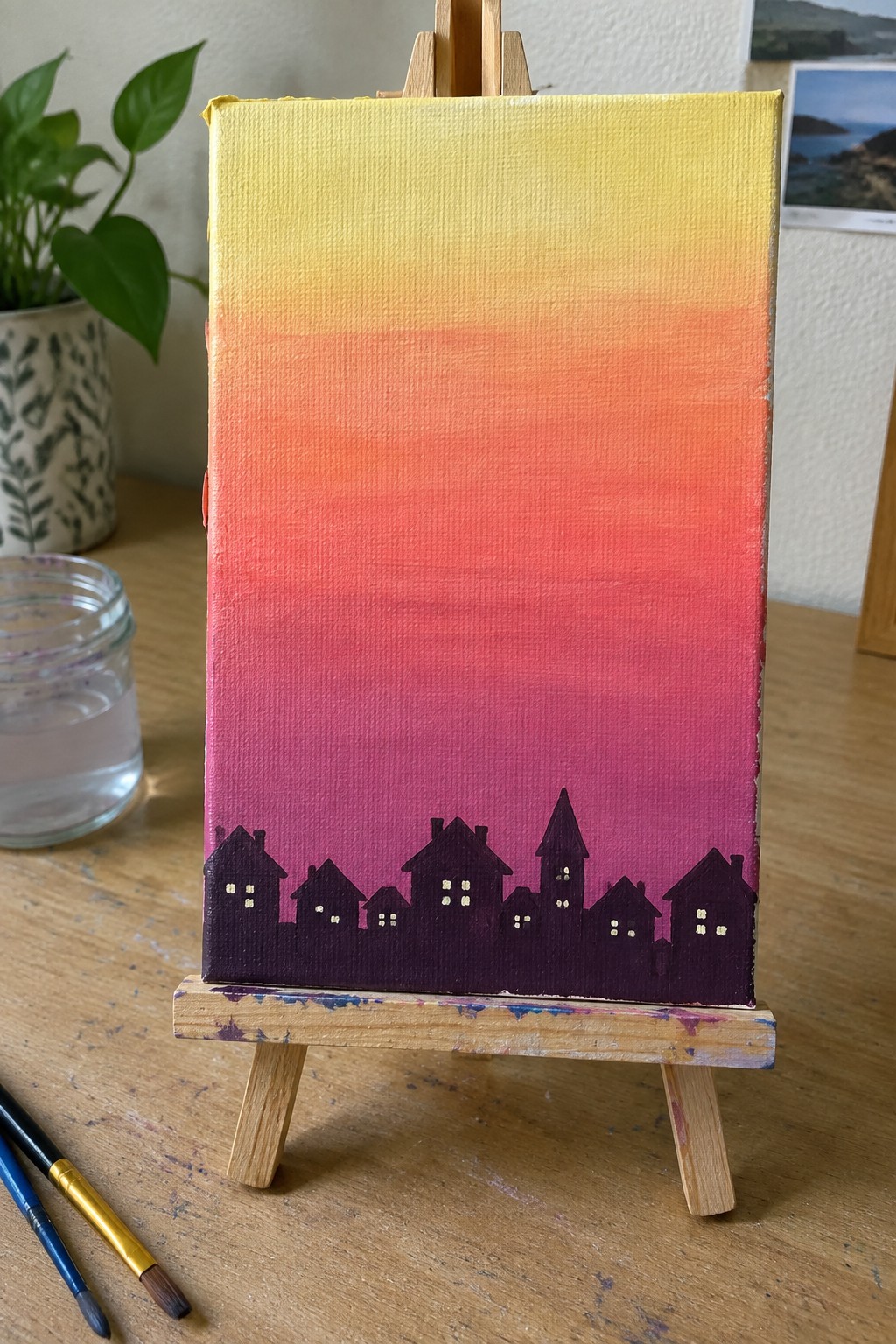
A smooth acrylic gradient that moves from yellow at the top through orange and into magenta at the bottom sets up this sunset scene. Simple dark purple house shapes sit along the lower edge, with small yellow marks added inside a few windows to suggest light. The idea fits a basic landscape approach that uses color blending and flat shapes rather than detail or texture.
What makes this idea useful is how the clean silhouette keeps the main work on the sky gradient, which is straightforward to practice on any size canvas. You can easily change the building outlines to trees or hills, adjust the color stops in the gradient, or add more windows without complicating the layout. The strong contrast also helps the finished piece read clearly from a distance, which works well for small wall pieces or quick gifts.
Mini Canvas Sunset Gradient with Moon and Stars
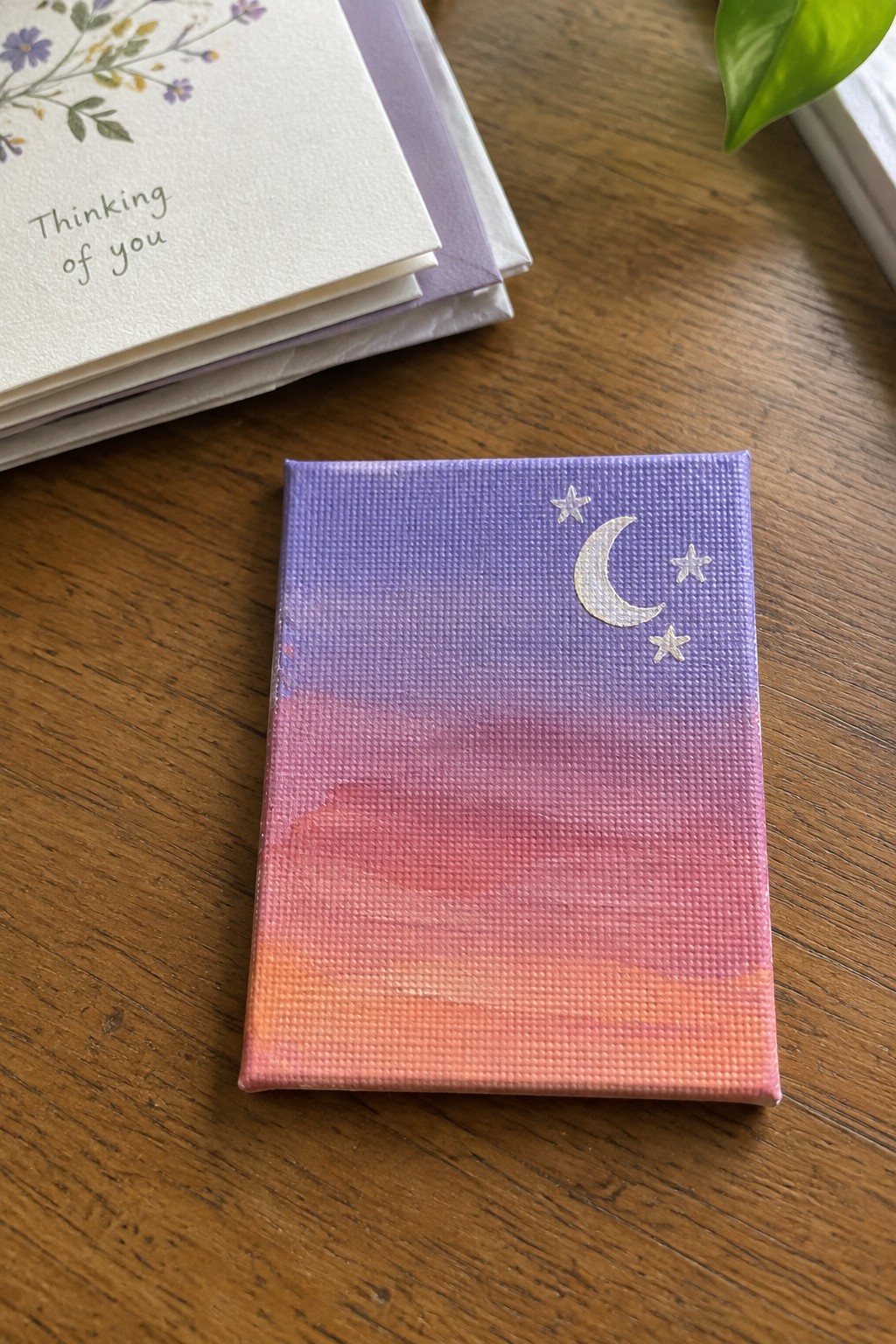
A compact canvas works well for a vertical sky gradient that shifts from purple at the top through pink into warm orange at the bottom. The addition of a simple crescent moon and a few stars keeps the focus on the color blend while adding a clear focal point in the upper corner. This type of acrylic idea falls into the decorative landscape category and relies on smooth blending rather than fine detail.
What makes this idea useful is how the small format lets you practice gradient control without committing to a large canvas. The limited elements make it easy to adjust the color stops or swap the moon for a sun if you want a daytime version. For wall art or gifts, the same layout scales quickly across several canvases with only minor color changes.
Silhouetted Sailboat on a Gradient Sunset Sea
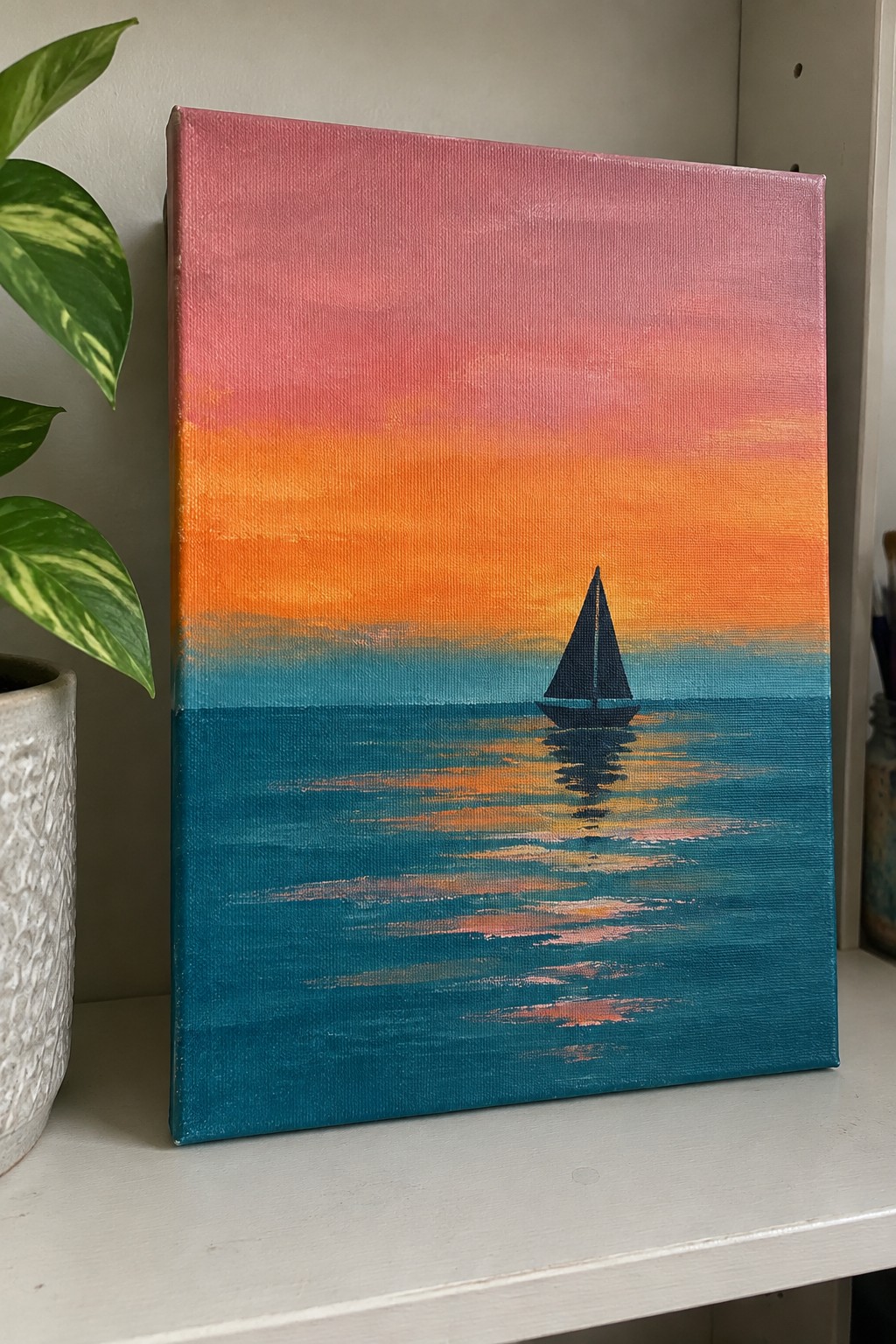
A landscape idea built around a single dark sailboat silhouette centered on calm water beneath wide bands of sky color. The painting uses a simple horizontal layout where pink fades into orange then blue at the horizon, with the teal water picking up matching reflections below. This approach keeps the focus on clean color transitions and the sharp shape of the boat against the bright background.
The bold contrast does a lot of the work here since the silhouette only needs one dark mix once the gradient is complete. This layout works especially well for canvas decor because the large color areas let you practice smooth blending without small details. You could swap the boat for a different shape or shift the horizon higher or lower to fit various canvas sizes. For practice, this kind of subject helps you build even gradients across bigger sections before adding the final reflection touches.
Silhouetted Cacti on a Vibrant Sunset Gradient
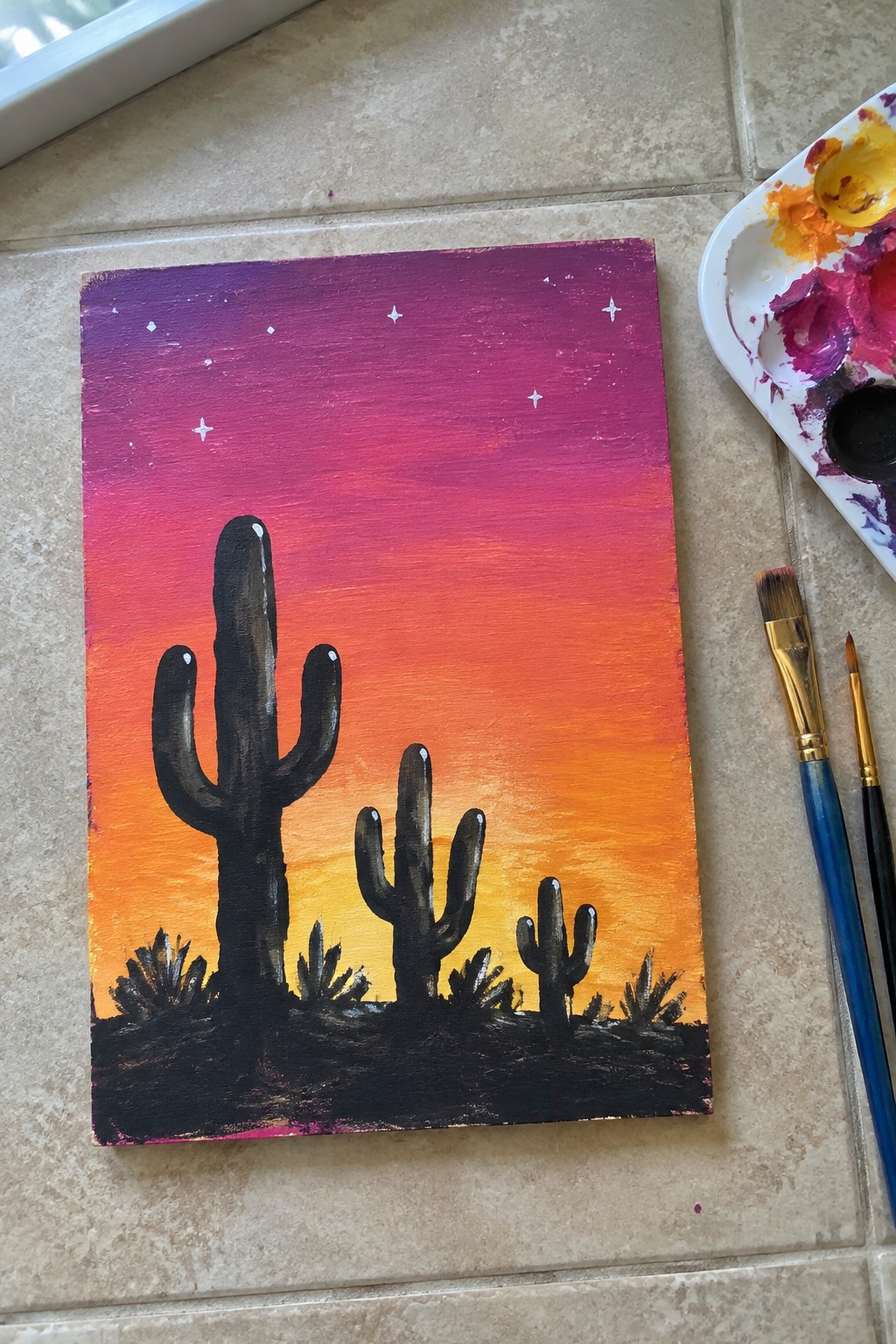
A desert scene with tall cacti works well as an acrylic painting idea because the glowing sky gradient becomes the main focus while the dark shapes stay simple. The color shift from purple at the top through orange to yellow at the horizon creates strong visual pull without needing complex details. This fits the landscape category where bold background work carries the composition.
What makes this idea useful is the high contrast that lets you finish the sky first and then drop in the cacti as solid shapes. You can change the cactus count or add smaller plants along the ground line to adjust the layout for different canvas sizes. For practice, this kind of sunset painting stands out on Pinterest because the bright gradient catches the eye quickly and still looks complete with minimal foreground work.
Silhouetted Wildflowers on a Sunset Gradient
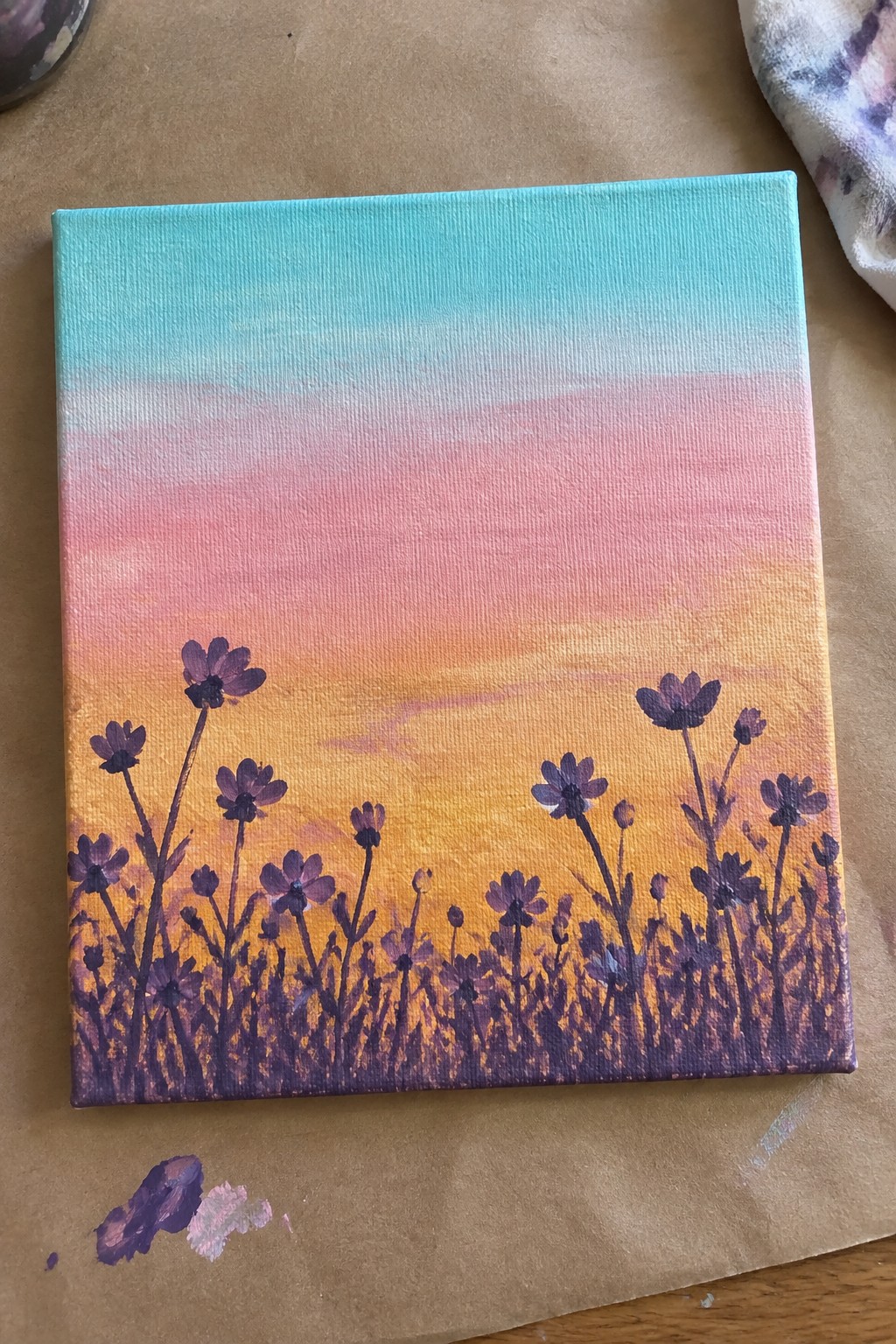
This acrylic painting idea centers on a smooth sky gradient that shifts from turquoise through pink and orange to yellow, with bold dark floral silhouettes layered across the bottom third. The main concept is a simple landscape where the glowing sky does most of the work and the flowers stay flat and graphic. The strong contrast between the bright gradient and the dark shapes keeps the composition balanced and easy to read from a distance.
What makes this idea useful is how the gradient handles the color interest while the silhouettes stay quick to paint. You can swap the flower shapes for different varieties or stretch the sky colors to fit a different sunset without changing the overall layout. For canvas decor, the high contrast helps the piece stand out even in small sizes. The same structure works well if you want to practice blending first and add the foreground last.
Gradient Sunset with Horizontal Cloud Bands and Birds
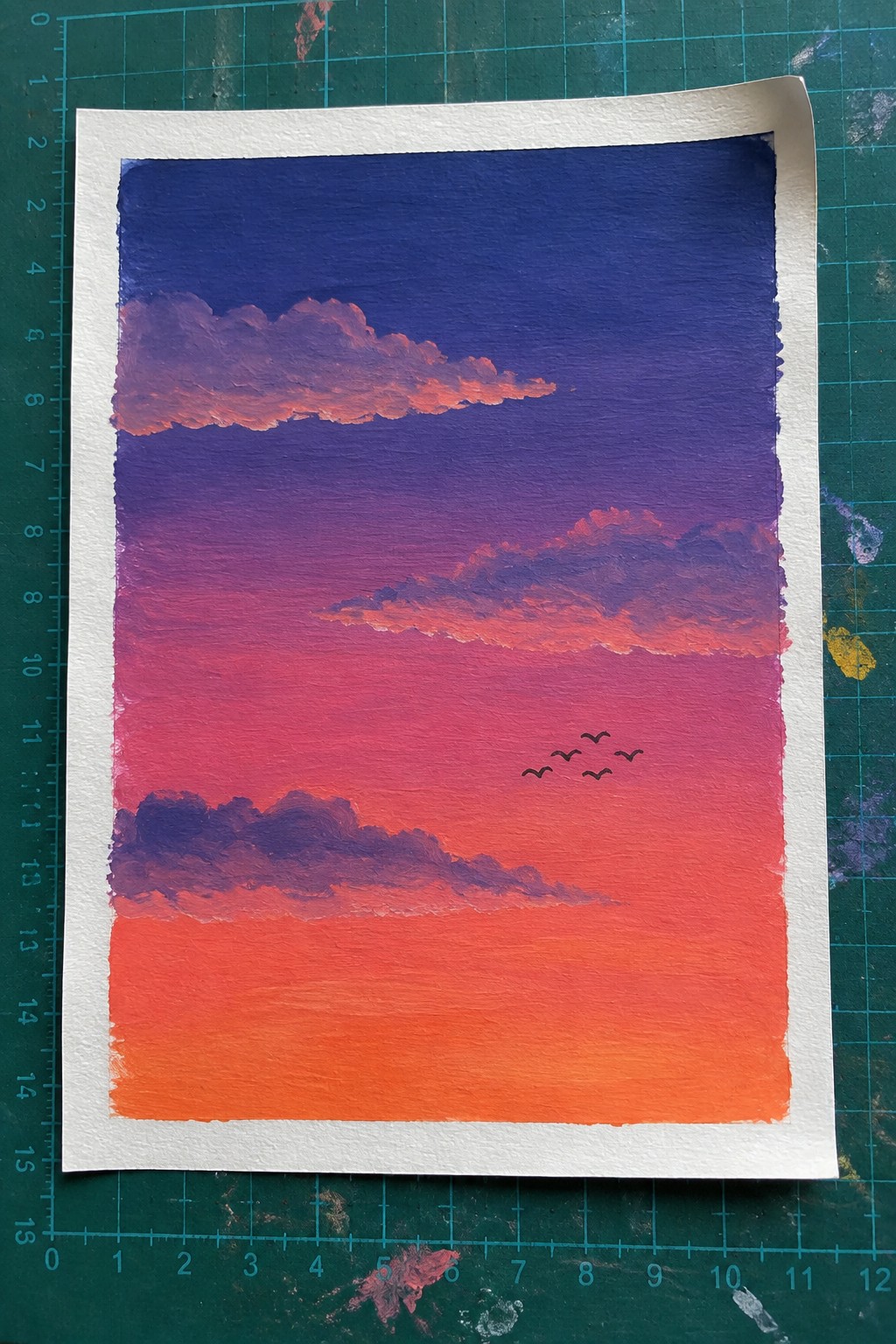
A sunset sky built from a smooth vertical gradient of deep blue down through purple and magenta into saturated orange gives this landscape idea its main impact. Horizontal cloud layers in blended shades of the same palette create bands that guide the eye across the canvas while keeping the focus on color transitions rather than detail. The small flock of birds adds scale and a sense of movement without crowding the composition, making the whole piece read as a clean, glowing sky study.
What makes this idea useful is how the large gradient areas let you practice even blending before adding the cloud layers on top. The color scheme can be shifted toward cooler tones for a dusk version or warmer oranges for a stronger sunset effect, and the birds can be left out or replaced with a simple moon shape. For canvas wall art this layout works especially well because the strong horizontal divisions show up clearly in small preview images on Pinterest.
Silhouette Figure Against a Gradient Sunset Sky
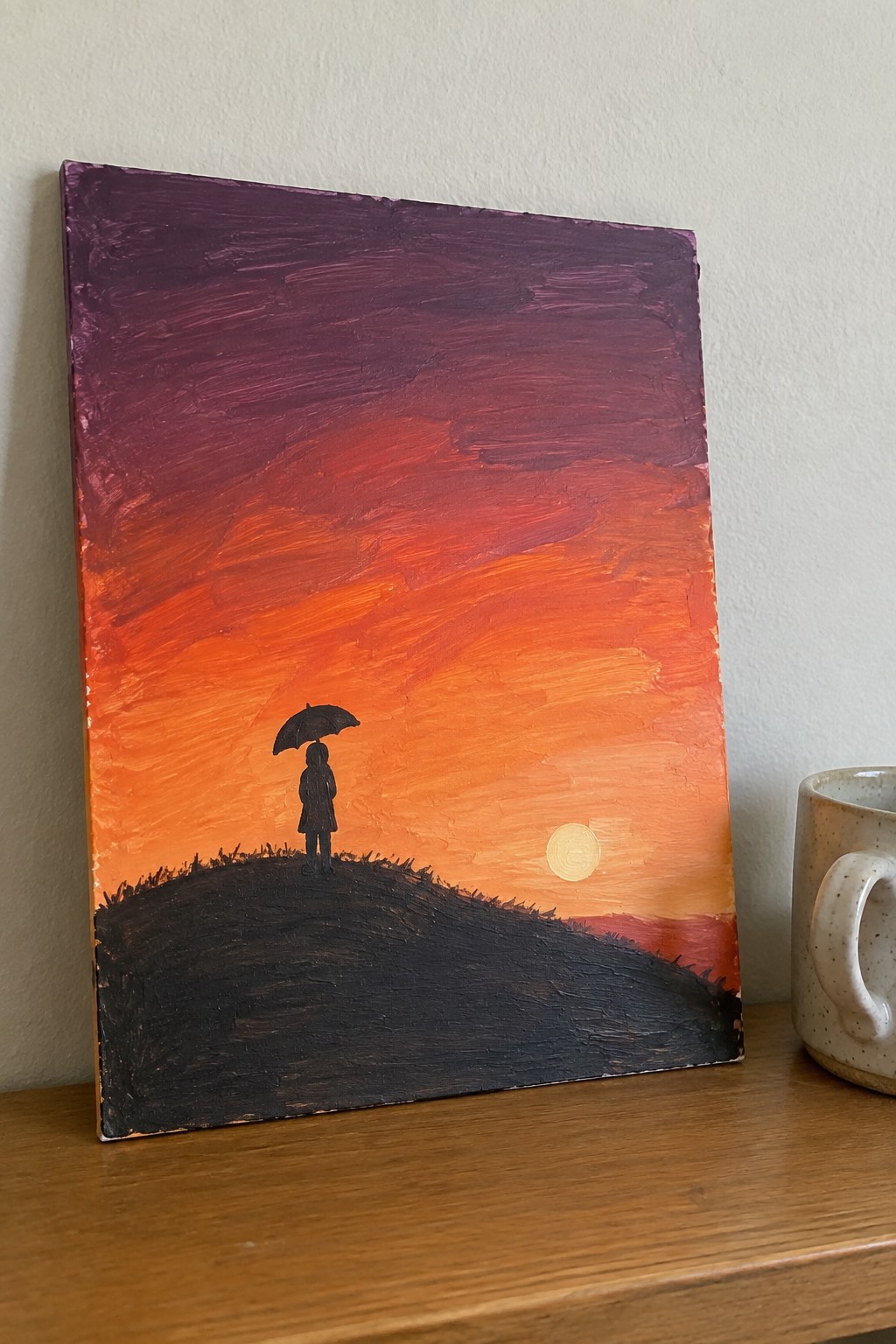
A lone figure holding an umbrella on a hill works well as a simple landscape idea that puts all the attention on smooth acrylic sky gradients. The dark hill and figure act as a solid base layer, letting the sky shift from deep purple at the top through strong oranges and reds toward a small pale sun near the horizon. This setup keeps the composition clean by using one strong shape against blended color bands instead of adding extra details.
What makes this idea useful is how the silhouette removes the need for precise figure painting, so you can focus practice time on blending the sky layers. You can swap the umbrella for a tree or keep the hill shape minimal if you want an even quicker version. The high contrast also helps the finished piece photograph well for sharing, and the color flow stands out next to other sunset paintings that use more even tones.
Gradient Sunset Sky with Layered Cloud Bands
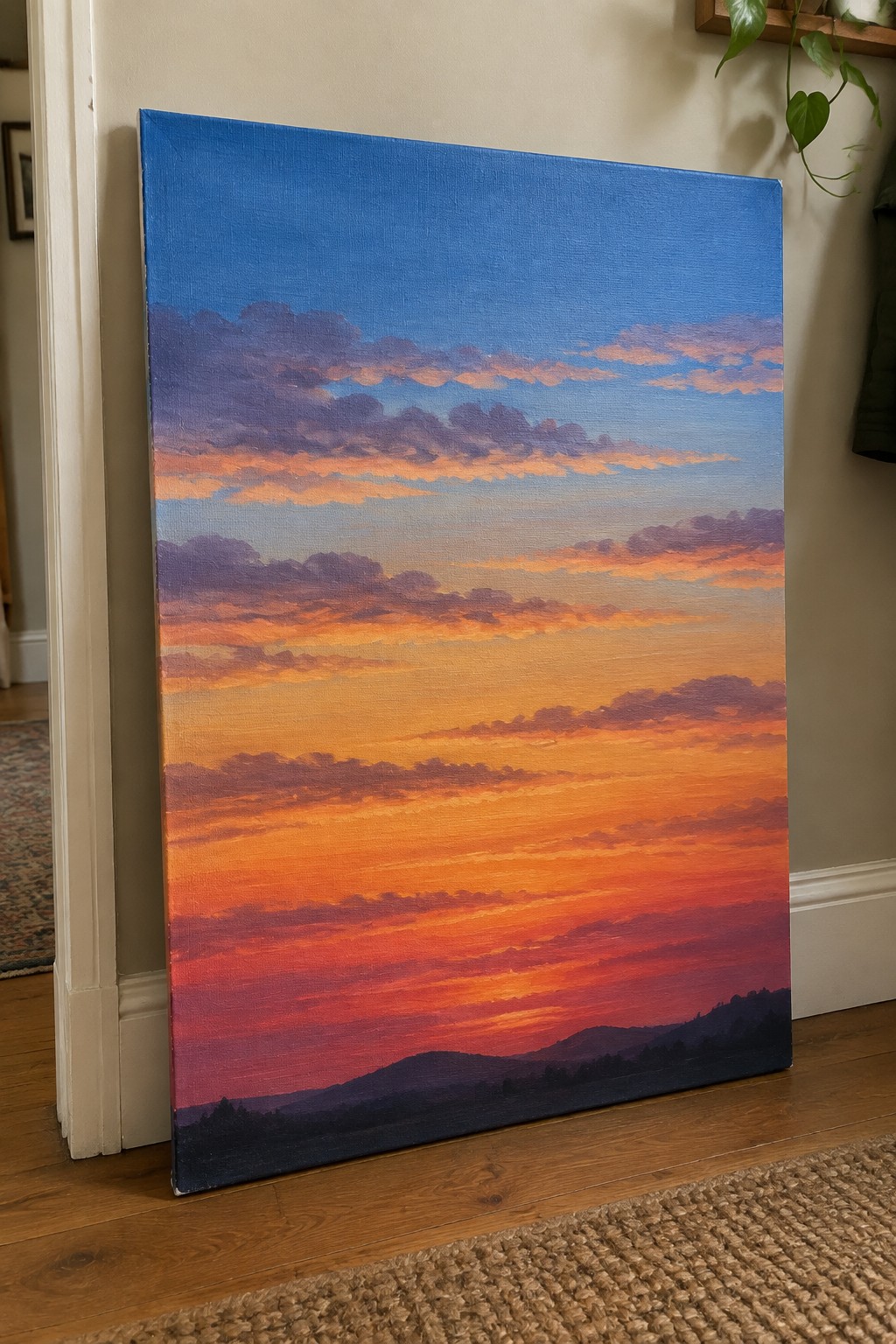
A sunset landscape idea built around a smooth vertical color shift from cool blue at the top through peach and orange into deep red near the bottom. Horizontal cloud layers break up the gradient and add depth while a low dark hill silhouette finishes the bottom edge. This approach keeps the focus on the sky itself through simple color blending and repeated cloud shapes rather than complex details or foreground elements.
The strong horizontal bands make this layout easy to scale up or down on canvas and quick to adapt by adjusting how many cloud layers you add. You could swap the hill for a flat horizon or water line if you want a different frame, or shift the color stops to match a specific season without changing the basic structure. For practice, this kind of acrylic painting idea helps build confidence with large blended areas while still producing a finished piece that works well as wall decor.
Sunset Gradient Block with Bird Silhouettes
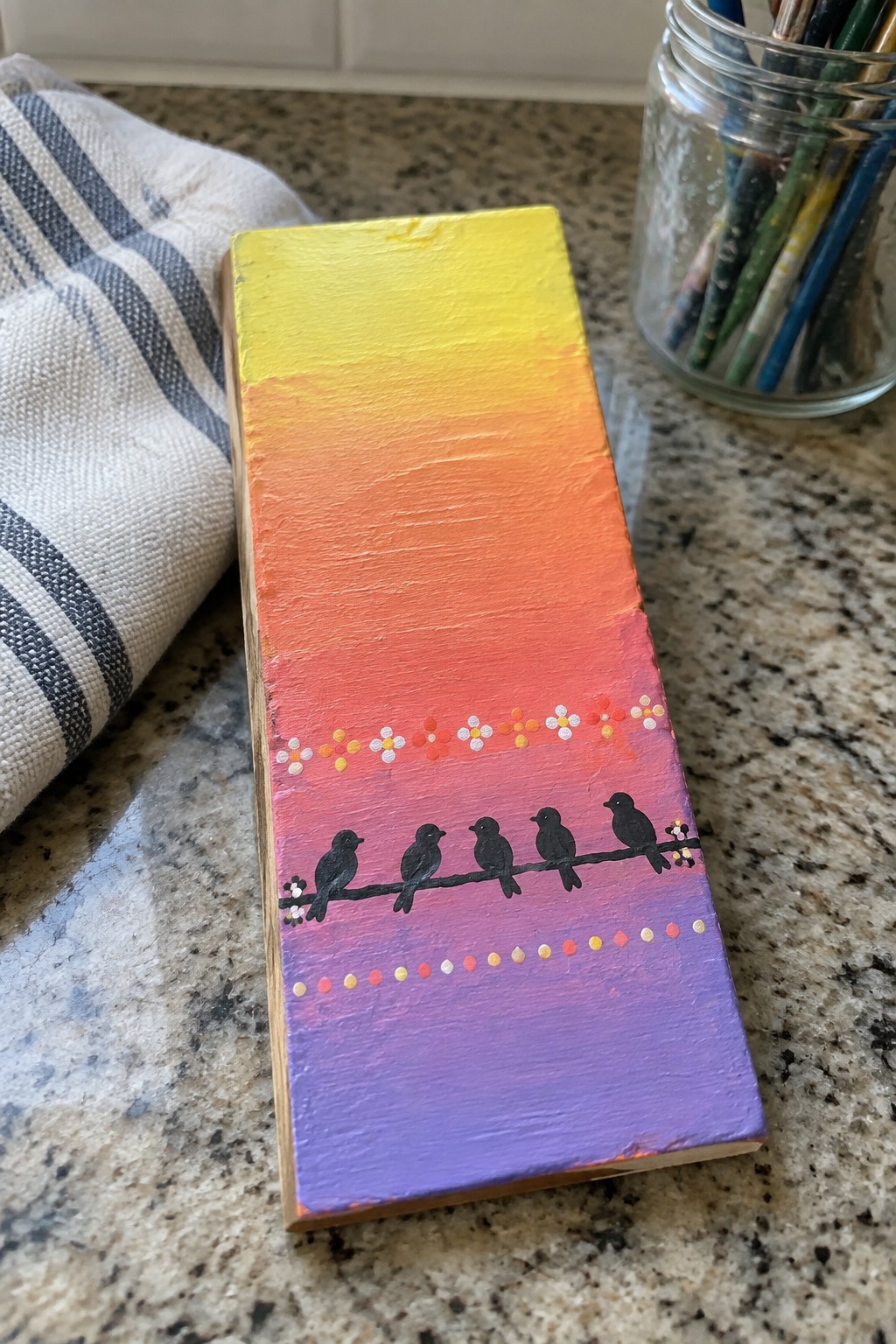
A narrow wooden block painted with a smooth vertical gradient from bright yellow at the top through orange and red into purple forms the base of this idea. Five simple black bird silhouettes sit on a thin horizontal branch across the lower third, framed by two bands of small dotted patterns in matching sunset colors. This approach fits the glowing sky gradient category because the color blend carries the main visual weight while the silhouettes provide clean contrast without extra detail.
What makes this idea useful is how the gradient does most of the work and leaves only basic shapes to paint on top. You could easily adapt it to a standard canvas by stretching the color bands wider or change the birds to other flat silhouettes like leaves or stars. The dotted lines add balance with minimal effort and can be adjusted in spacing or color if you want to personalize the piece for gifts or small shelf decor.
Stacked Canvas Sunset with Vertical Gradient
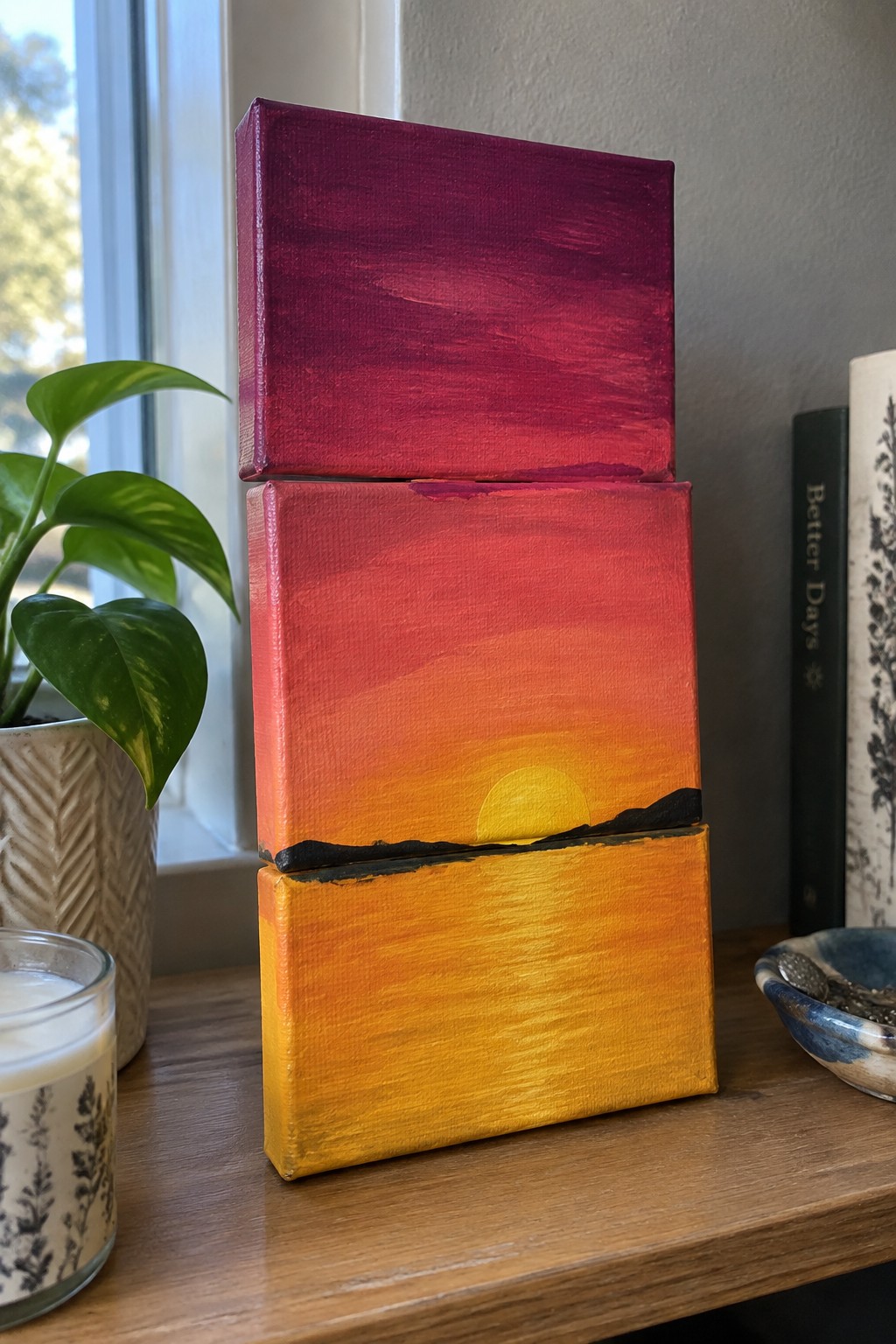
A stacked canvas sunset builds a tall glowing sky by painting three separate rectangles that sit directly on top of each other. The top canvas holds deep magenta, the middle shifts through orange with a simple yellow sun and thin black horizon, and the bottom stays in bright yellow. This creates a clean vertical gradient that reads as one tall piece while letting each section be painted and dried on its own.
What makes this idea useful is that breaking the gradient across three canvases removes the pressure of blending a large area before it dries. You can easily swap the bottom yellow for a different shade or move the sun higher or lower when you repaint one panel. For wall decor the stacked layout adds height and a slight ledge effect without needing a big single canvas, and the same layout works just as well turned into a four-panel version if you want even more color steps.
Gradient Sunset Seascape with a Lone Rowboat
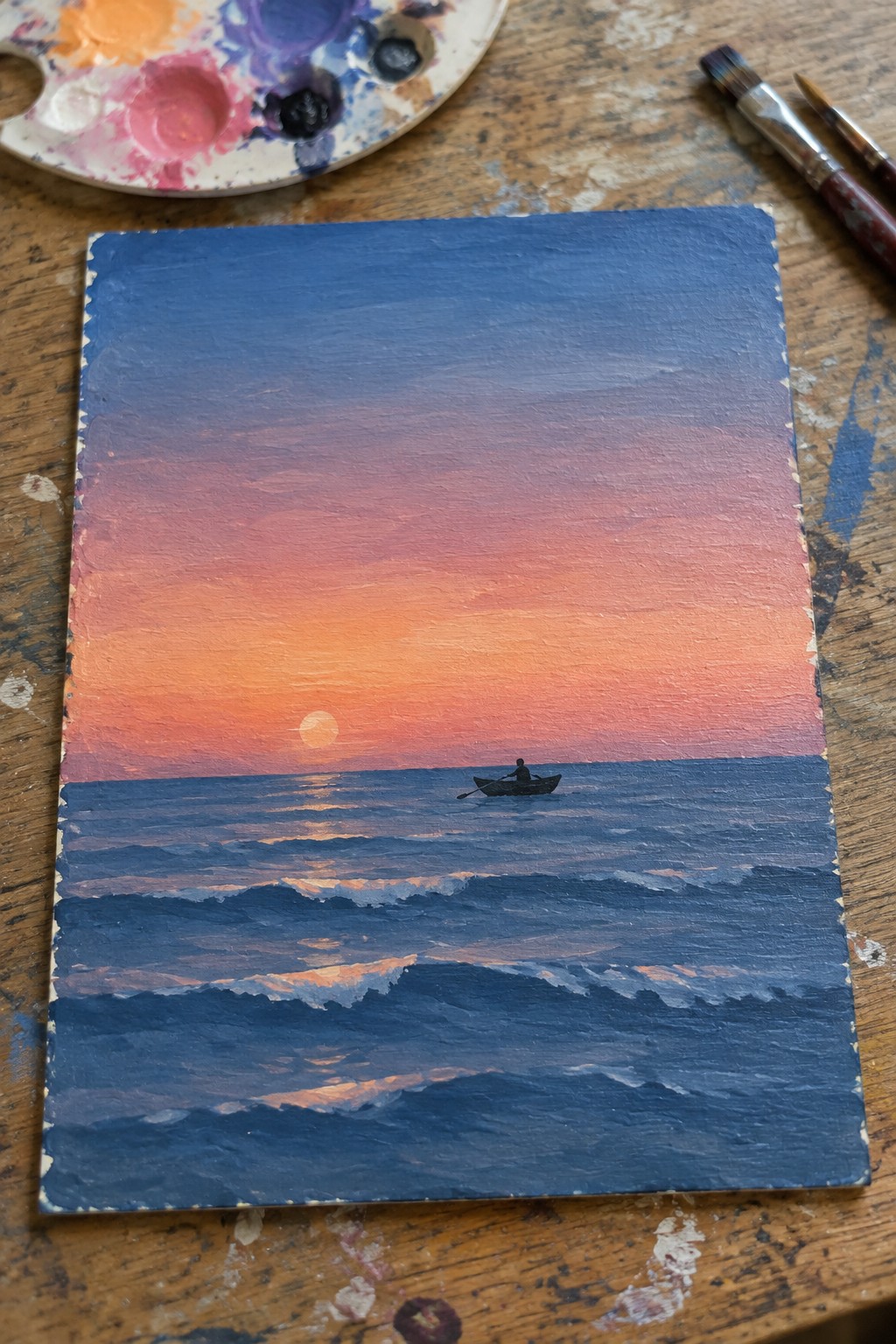
A sunset seascape idea built around a strong sky gradient works as a straightforward landscape acrylic painting. The sky shifts from blue at the top through warm orange and pink near the horizon while the ocean below stays in cooler tones with simple wave lines. Placing one small boat and rower low in the frame gives the eye a single focal point without competing with the color blend above.
What makes this idea useful is how the sky gradient carries most of the visual interest so you only need basic wave texture and one small dark shape to finish the scene. You can swap the boat for a buoy or sailboat or stretch the gradient into deeper reds if you want a different mood. For practice this layout lets you focus on smooth blending and simple horizon placement without needing lots of detail. The bold color split also makes the finished piece pop in photos for Pinterest boards.
Gradient Sunset with Pine Tree Silhouette
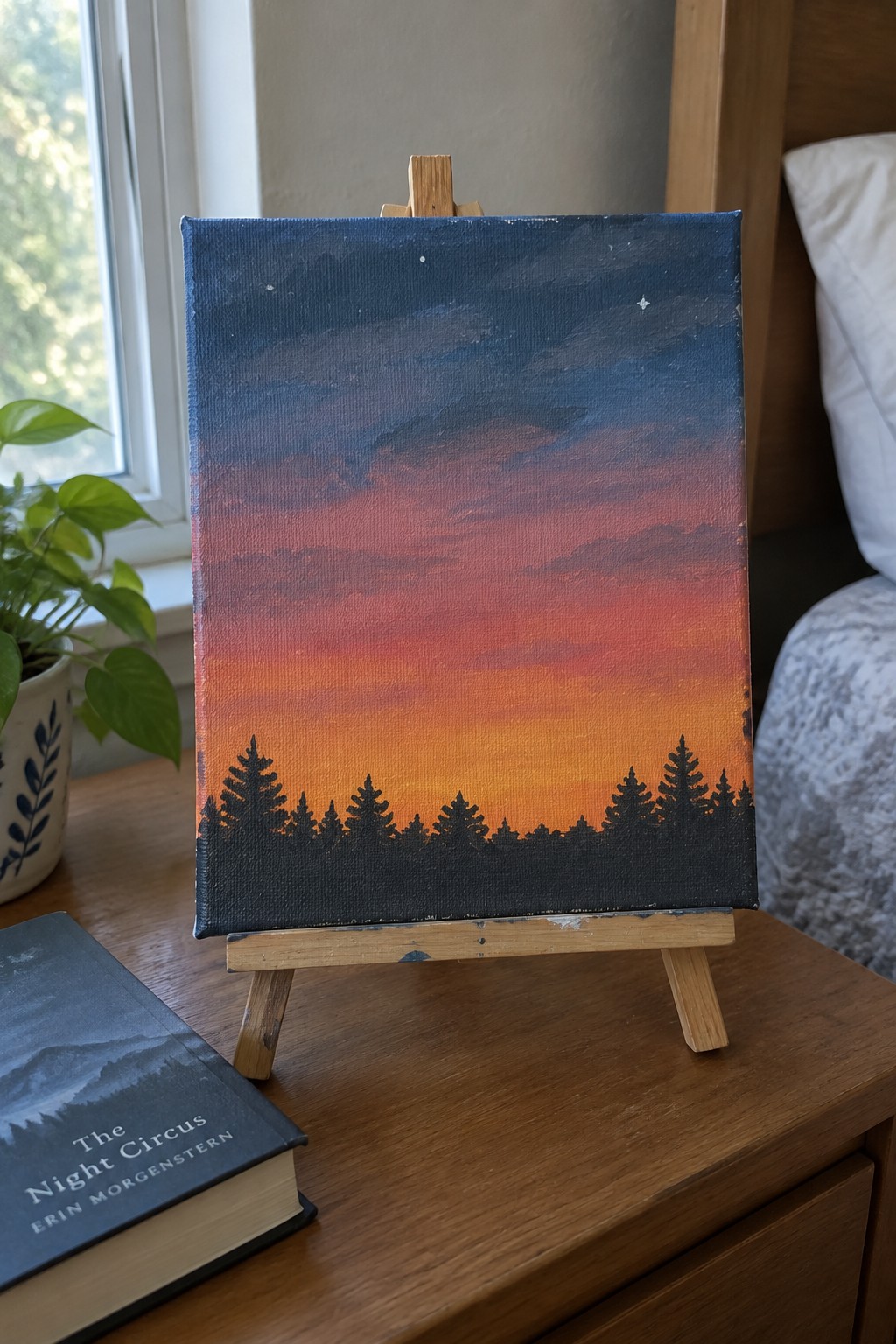
A sunset acrylic painting idea built around a smooth vertical gradient from deep blue at the top to warm orange and red near the horizon creates a strong glowing sky effect. The dark pine tree line sits along the bottom edge as a simple silhouette that lets the color transition carry the main visual weight. This landscape approach works because the sharp contrast between the sky and trees keeps the composition clean while still giving the scene structure.
The bold color shift does most of the work here so you can focus on blending practice without adding lots of detail. You can easily change the tree shapes, widen the gradient for a taller canvas, or use the same layout for quick seasonal pieces. For wall art or gifts this format adapts quickly to whatever warm tones you already have mixed and still reads well from across the room.
Rooftop Silhouettes Over a Teal to Orange Sunset Gradient

This acrylic painting idea centers on a row of house rooftops and chimneys painted as flat black silhouettes against a smooth sky gradient that moves from teal at the top through peach into a strong orange near the horizon. The concept keeps the buildings simple and graphic so the focus stays on the glowing color transitions in the sky. It works as a landscape approach that emphasizes clean edges and bold color blocks rather than fine detail.
What makes this idea useful is how the solid silhouette removes the need for building textures or perspective, letting you concentrate on blending the sky colors evenly. You could swap the rooftops for a tree line or distant hills if you want a different scene, or keep the same layout and just change the gradient colors for a sunrise version. The high contrast also helps the painting read clearly even on a small canvas, which makes it a practical choice for quick wall art or practice pieces.
Frequently Asked Questions
What is the best way to blend colors for a glowing sky gradient using acrylic paints? Start with a wet on wet technique by applying your lightest yellow or peach shade across the horizon line first. Then introduce orange and red tones above it while the paint remains damp and use a wide flat brush to pull the colors upward in smooth horizontal strokes. Add a small amount of white near the center to intensify the glow and finish by softening any harsh lines with a clean damp brush before the layer dries.
Which colors create the most luminous sunset effects in simple acrylic paintings? Cadmium yellow light mixed with a touch of titanium white forms the base glow at the horizon. Layer cadmium orange and pyrrole red next for warmth then transition into dioxazine purple or ultramarine blue at the top for depth. Keep the transitions gradual and test mixes on a scrap paper to ensure the light areas stay bright against the darker upper sky.
How can I make my acrylic sky gradient look radiant rather than flat? Build the gradient in thin layers allowing each to dry slightly before adding the next so light reflects off the surface. Mix a glazing medium with your highlight colors and apply it sparingly over the sun area to simulate light rays. Position the brightest spot off center and avoid over blending which can dull the vibrancy.
What tools help achieve smooth transitions in glowing sunset skies? A large synthetic flat brush works well for broad blending while a soft mop brush or even a piece of crumpled paper towel can soften edges without leaving streaks. Keep a spray bottle of water nearby to mist the paint lightly if it starts to dry too quickly and always work on a slightly tilted surface so gravity assists the color flow downward.
How do I add simple foreground elements without disrupting the glowing sky gradient? Complete and fully dry the sky first then use a small round brush with dark blue or black paint to create silhouettes such as distant hills or palm trees along the bottom edge. Keep these shapes minimal and low so they frame the gradient rather than compete with it and add a faint reflection of the sky colors into any water areas below for extra cohesion.

Hi, I’m Camille.
I’m a self-taught painter and creative blogger with a soft spot for acrylic painting, color play, and all the little art ideas that make everyday life feel more inspiring.
I started this space because I’ve always believed painting should feel joyful, approachable, and a little personal. Some of my favorite pieces come from simple ideas, messy palettes, and evenings where I just felt like making something pretty.
Most of what I share begins with acrylic painting, but I also love exploring other mediums when creativity pulls me in a new direction. My goal is to collect and share painting ideas that feel fun, beautiful, and actually doable, whether the mood is calm and minimal or bright and playful.
This is a space for inspiration, experimenting, and enjoying art without overcomplicating it.