
Have you ever wondered how much to vacuum your AC system? It’s a common question for anyone looking to keep their air conditioning running smoothly. Whether you’re a DIY enthusiast or just trying to save on service costs, knowing the right amount of time and effort to invest can make a big difference.
Vacuuming your AC system isn’t just about cleaning; it’s crucial for maintaining efficiency and prolonging its lifespan. This article will guide you through the key steps and best practices, ensuring you get the most out of your system without any guesswork. By the end, you’ll feel confident tackling this task and keeping your home cool and comfortable.
Key Takeaways
- Understanding Vacuuming: Vacuuming your AC system is essential for removing air and moisture, preventing contamination, and maintaining efficiency.
- Recommended Duration: Most residential AC systems should be vacuumed for 30 to 60 minutes, while smaller ductless units may require about 30 minutes.
- Factors Affecting Time: The size of the system, efficiency of the vacuum pump, and moisture levels significantly influence the duration of the vacuuming process.
- Essential Tools: Use a high-quality vacuum pump, manifold gauge set, refrigerant hoses, and safety gear to ensure an effective vacuuming process.
- Avoid Common Mistakes: Over-vacuuming and ignoring manufacturer recommendations can lead to system damage and reduced efficiency; always follow specified guidelines.
Understanding AC Systems
Air conditioning systems play a crucial role in maintaining comfortable indoor temperatures. Understanding their components and functions helps you keep them running smoothly.
What Is an AC Vacuum?
An AC vacuum refers to the process of removing air and moisture from the refrigerant system. This process ensures that the system operates efficiently and prevents damage. During a vacuum, a vacuum pump creates a low-pressure environment, allowing trapped air and moisture to escape. A typical vacuum lasts about 30 minutes to an hour.
Importance of Vacuuming the AC System
Vacuuming the AC system serves several essential purposes:
- Prevents Contamination: Removing moisture and air prevents contamination of refrigerant. Contaminants can lead to corrosion inside the system.
- Enhances Efficiency: A properly vacuumed system improves cooling efficiency. It maximizes the system’s ability to absorb and release heat.
- Extends Lifespan: Regular vacuuming helps prevent compressor burnout and other mechanical failures, thus extending the AC system’s lifespan.
- Improves Performance: A vacuumed system offers consistent and reliable cooling performance. This means a more comfortable environment for you and your family.
Vacuuming your AC system gets rid of debris and issues that may hinder its operation. Understanding these aspects helps you appreciate the importance of maintaining your AC system properly.
How Much to Vacuum AC System
Vacuuming your AC system takes time and precision to ensure optimal performance. Several factors influence how long the vacuuming process lasts.
Recommended Products

HVAC Vacuum Pump Kit: This AC vacuum pump and gauge set includes a 110V 1/3 HP 4.5 CFM Single Stage vacuum pump, a three-way manifold gauge, three hoses, a low-pressure quick coupler, a high-pressure quick coupler, two R410a adapters( from1/4'' male to 5/16'' female),2 R134a can taps( puncture-style and self-sealing ),a bottle of vacuum oil,a valve core wrench,a user manual and a cleaning cloth ;the vacuum pump,gauge and all other accessories can be packed into the storage bag for easy carry

HIGH-PERFORMANCE 4 CFM VACUUM PUMP: Single-stage rotary vane pump delivers fast, deep evacuation for automotive and home HVAC systems; Removes moisture before refrigerant chargin;. Die-cast aluminum body with anti-slip base ensures long-lasting use

【𝐌𝐚𝐧𝐢𝐟𝐨𝐥𝐝 𝐆𝐚𝐮𝐠𝐞 𝐒𝐞𝐭】3-way Manifolds with Sight-glass & 1/4" SAE fittings anodized aluminum block body, oversized sight-glass for easy viewing the refrigerant flow high quality gauge and high accuracy of reading.
Factors Influencing Vacuuming Duration
- System Size: Larger systems require more time to evacuate air and moisture. Expect longer durations for residential units compared to smaller portable units.
- Vacuum Pump Efficiency: A high-quality vacuum pump operates faster and more efficiently, reducing overall vacuuming time. Choose a pump with appropriate specifications for your system size.
- Moisture Level: High levels of moisture within the system prolong the vacuuming process. You might need additional time to reach desired vacuum levels if the system has been exposed to moisture.
- Contaminants: Excess debris or contaminants can complicate vacuuming. Address any blockages or issues before starting to avoid extended delays.
- Standard Time: For most residential AC systems, a vacuuming duration of 30 to 60 minutes is usually sufficient. Monitor the vacuum gauge throughout the process.
- Ductless Mini-Split Systems: These systems often require about 30 minutes, given their smaller size, but always check manufacturer instructions for specifics.
- Larger Commercial Units: Depending on size and conditions, these systems may need 1 to 2 hours. Larger systems often require thorough multiple checks.
- Initial Vacuuming after Installation: Up to 2 hours might be necessary if the system has never been vacuumed or if it has been open to the environment for an extended period.
Understanding these factors helps you gauge how much time to allocate for vacuuming your AC system.
Tools and Equipment Needed
To vacuum your AC system effectively, gather the right tools and equipment. Using the appropriate gear ensures a proper vacuum process and improves system performance.
Essential Vacuum Pump Specifications
Select a vacuum pump that meets the following specifications:
- Minimum Vacuum Level: Look for a pump that reaches at least 29 inches of mercury (inHg) to remove air and moisture effectively.
- Pump Rate: Choose a pump with a flow rate of at least 3 CFM (cubic feet per minute) for residential units. Higher flow rates suit larger systems.
- Oil-Sealed Pumps: Opt for oil-sealed pumps for better durability and efficiency. They reduce moisture levels more effectively than non-oil pumps.
- Noise Level: Consider a pump with a noise level below 70 dB for a quieter working environment.
Additional Tools for AC Vacuuming
Equip yourself with these additional tools for a comprehensive vacuuming process:
- Manifold Gauge Set: Use this for checking system pressure and ensuring proper operation.
- Hoses: Get high-quality refrigerant hoses that can handle the vacuum pressure without leaks.
- Vacuum Pump Oil: Use the correct type of oil for your pump to maintain optimal performance.
- Torque Wrench: Utilize a torque wrench for accurate connections during reassembly, preventing leaks.
- Safety Gear: Wear safety goggles and gloves to protect yourself from refrigerants and debris.
By having these tools ready, you’ll enhance the efficiency of your AC vacuuming process and maintain your system’s performance.
Common Mistakes to Avoid
Avoiding mistakes during the vacuuming process ensures optimal performance of your AC system. Here are some common pitfalls to look out for:
Recommended Products

OPTIMAL PERFORMANCE: Powered by a 1/4 HP (180W) motor running at 1440 r/min, the VIVOHOME vacuum pump delivers a flow rate of 3.5 CFM and reaches a ultimate vacuum of 5 Pa in just 3 minutes; The integrated motor current protection safeguards the system against overload or phase loss, ensuring reliable performance during its recommended duty cycle; This balance of power and safety makes the VIVOHOME pump a trusted tool for precise AC system maintenance
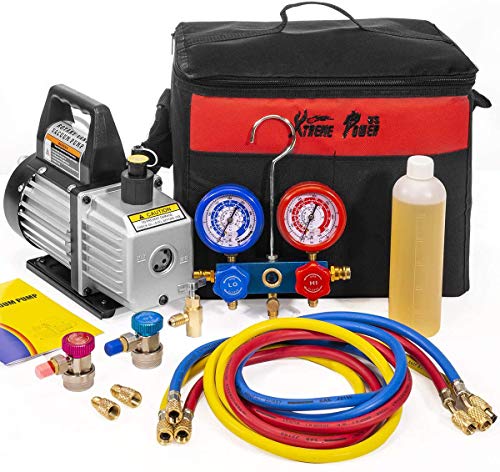
SIMPLE BUT POWERFUL - XtremepowerUS 1/4 HP 3 CFM 1-Stage Rotary Air Vacuum Pump is designed to have high efficiency and low noise output with internal high volume cooling fan for extended use (Include R-134A automotive air conditioning dispensing valve design with hand operated punch/valve control, connects all R-134a refrigerant cans with 1/4" Male threads)

PREMIUM VACUUM PUMP - Constructed from high-quality die-cast aluminum housing, this vacuum pump is built to last, reducing the need for frequent maintenance; With its powerful 1/4 HP single-stage motor, it achieves a flow rate of up to 3.5 CFM and draws systems down to 5 Pa; It is designed to maintain air conditioning system by efficiently removing moisture before refilling the refrigerant, perfect for those who are looking to self-diagnose or recharging AC systems
Over-Vacuuming the AC System
Over-vacuuming can cause issues such as damaging components or degrading system performance. Understand that a vacuum pump removes moisture and contaminants, but excessive vacuuming won’t provide additional benefits. Aim for the appropriate vacuum duration based on your system’s specifications. Typically, 15 to 30 minutes suffices for most residential systems. Monitor the vacuum gauge to ensure you reach a proper level without prolonged operation.
Ignoring Manufacturer Recommendations
Ignoring manufacturer guidelines can lead to improper vacuuming practices. Each AC system has specific requirements for vacuum levels and duration. Always consult your system’s manual for the recommended vacuum specifications. Not adhering to these can void warranties or compromise system efficiency. Follow instructions closely to maintain the integrity and longevity of your system.
Conclusion
Taking the time to vacuum your AC system properly can make all the difference in performance and longevity. By following the right steps and avoiding common pitfalls you’ll keep your system running smoothly. Remember to stick to the recommended vacuum levels and durations to ensure everything stays in top shape.
With a little care and attention your AC will thank you by providing cool comfort when you need it most. So grab your tools and get ready to enjoy a more efficient and reliable air conditioning system. You’ve got this!
Frequently Asked Questions
What is the importance of vacuuming an AC system?
Vacuuming an AC system is crucial for removing moisture, air, and contaminants. This helps prevent internal corrosion and refrigerant leaks, ensuring the system operates efficiently and lasts longer. Proper vacuuming is key to optimal performance, following manufacturer guidelines.
How long should I vacuum my AC system?
For residential AC systems, the recommended vacuuming duration is typically between 15 to 30 minutes. This timeframe allows sufficient time to remove unwanted air and moisture, ensuring the system’s efficiency and longevity.
What tools do I need to vacuum my AC system?
Essential tools for vacuuming an AC system include a vacuum pump, manifold gauges, and hoses. Additionally, a micron gauge is recommended to measure the vacuum levels accurately, ensuring that moisture and air are effectively removed.
What common mistakes should I avoid when vacuuming?
Common mistakes include over-vacuuming, which can harm the compressor, and ignoring manufacturer guidelines. Additionally, failing to use appropriate tools can lead to incomplete vacuuming, compromising system performance and longevity.
How does over-vacuuming affect my AC system?
Over-vacuuming can lead to various issues, including damage to the compressor and potential refrigerant leaks. It’s essential to adhere to the recommended vacuuming duration to protect the system and maintain its performance.
