
Ever wondered how much vacuum advance you should have at idle? If you’re tuning your engine or just curious about optimizing performance, you’re not alone. Many car enthusiasts face this common question, especially when trying to improve fuel efficiency and reduce emissions.
Key Takeaways
- Understand Vacuum Advance: It adjusts ignition timing based on manifold vacuum, improving fuel efficiency and reducing emissions.
- Optimal Settings at Idle: Most engines benefit from 10 to 15 degrees of vacuum advance at idle for optimal performance; high-performance engines may require 15 to 20 degrees.
- Performance Impact: Incorrect vacuum advance can lead to rough idling, sluggish acceleration, and decreased fuel efficiency.
- Adjust Carefully: Use tools like a timing light and vacuum gauge to monitor and adjust vacuum advance settings based on engine specifications.
- Consider Influencing Factors: Engine displacement, carburetor design, camshaft profile, load conditions, and altitude can all affect vacuum advance settings.
- Regular Maintenance: Regularly check and adjust vacuum advance to ensure optimal performance and fuel economy.
Understanding Vacuum Advance
Vacuum advance plays a vital role in engine timing. It adjusts the ignition timing based on engine load, which optimizes performance and efficiency.
What Is Vacuum Advance?
Vacuum advance refers to a mechanism in the ignition system that adjusts the timing of the spark based on manifold vacuum. As the engine runs, the throttle position directly influences the level of vacuum. When vacuum increases, the vacuum advance pulls the ignition timing forward, promoting better fuel combustion at idle and part throttle. This mechanism helps your engine run smoother and more efficiently.
Importance of Vacuum Advance in Engine Performance
Vacuum advance significantly impacts overall engine performance. Here’s why it’s crucial:
- Improved Fuel Efficiency: Proper vacuum advance helps achieve optimal combustion, reducing fuel consumption at lower speeds. For instance, a vehicle running with well-adjusted vacuum advance might see a 5-10% increase in fuel efficiency.
- Reduced Emissions: Efficient combustion lowers unburned fuel emissions. This not only benefits the environment but also helps meet regulatory standards.
- Enhanced Throttle Response: When set correctly, vacuum advance provides quicker throttle response. For example, you’ll notice better acceleration during light throttle conditions.
- Smoother Idle: Adequate vacuum advance at idle stabilizes engine speed, reducing vibration and improving overall drivability. Your engine should ideally see between 10 to 20 degrees of advance at idle, depending on the setup.
Adjusting vacuum advance based on engine specifications and driving conditions yields noticeable improvements in performance, fuel efficiency, and emissions reduction.
How Much Vacuum Advance at Idle?
Determining the right vacuum advance at idle is crucial for optimal engine performance. It enhances combustion efficiency, reduces emissions, and allows smoother idling.
Factors Influencing Vacuum Advance Settings
- Engine Displacement: Larger engines typically require more vacuum advance. This accommodates the increased air intake.
- Carburetor Design: Different carburetors generate varying vacuum levels. The design affects how much advance is needed.
- Camshaft Profile: Performance camshafts can alter vacuum levels. Check specifications to adjust advance accurately.
- Load Conditions: Higher loads demand more power, which affects vacuum draw. Adjust the advance for those conditions.
- Altitude: At higher elevations, air density decreases. This requires tuning the vacuum advance to maintain efficiency.
- General Range: Most engines benefit from 10 to 15 degrees of vacuum advance at idle. This range optimizes performance for street driving.
- High-Performance Engines: For engines with significant modifications, 15 to 20 degrees may enhance throttle response.
- Budget Tuning: If you’re tuning your engine on a budget, start with 12 degrees. Adjust based on performance tests.
- Diagnostics Considerations: Monitor your engine’s behavior. If you notice engine knocking or pinging, consider reducing the advance.
Adjusting vacuum advance settings takes careful tuning based on your unique setup. Consider these factors and ranges to improve your engine’s idle and overall performance.
Effects of Incorrect Vacuum Advance
Incorrect vacuum advance at idle can lead to several significant problems. Adjusting the vacuum advance improperly affects engine performance and efficiency.
Recommended Products

IGNITION PERFORMANCE UPGRADE: Optimize ignition timing for better throttle response and cruising efficiency; Designed for precise control in street and performance engines

Professional, premium aftermarket replacement
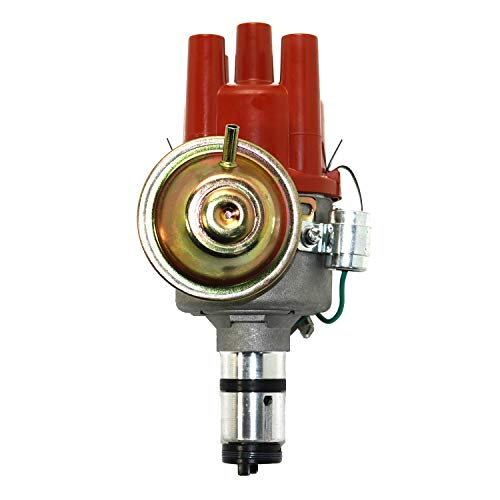
Includes cap and rotor
Engine Performance Issues
Inadequate or excessive vacuum advance can cause engine performance issues. If the advance is too low, you may experience rough idle and sluggish acceleration. If the advance is too high, knocking or pinging can occur under load. Both conditions lead to decreased throttle response and overall power loss. For example, a classic car with improper advance settings might struggle to launch or respond quickly during merging onto highways. Ensuring the correct range of 10 to 15 degrees can help mitigate these performance issues.
Fuel Efficiency Implications
Incorrect vacuum advance settings significantly impact fuel efficiency. When the advance is too low, incomplete combustion may occur, leading to increased fuel consumption. On the other hand, excessive advance can create a condition called pre-ignition, wasting fuel and reducing overall miles per gallon (MPG). For instance, if a vehicle normally achieves 20 MPG, improper advance settings could drop that to 15 MPG. Regularly checking and adjusting the vacuum advance ensures your vehicle runs optimally, helping you save money at the pump.
Adjusting Vacuum Advance
Adjusting vacuum advance ensures optimal engine performance and efficiency. Proper settings enhance fuel economy and reduce emissions.
Recommended Products

Comprehensive Automotive Kit: this all-in-one kit combines a 12V digital ignition timing light with a vacuum and fuel pump tester gauge, giving essential kit for emergency vehicle troubleshooting. It includes a variety of accessories for versatile use. Please read the instruction manual carefully before operation

Top-of-the line timing light with direct reading advance scale adjusts from 0-90 degrees

Four function digital readout: Tachometer; Advance; Dwell; and Voltage.Fit Type: Universal Fit
Tools Needed for Adjustment
Gather these essential tools for adjusting vacuum advance:
- Timing Light: Helps to check the ignition timing accurately.
- Vacuum Gauge: Measures manifold vacuum for adjustments.
- Wrench Set: Needed for adjusting distributor hold-down bolts.
- Screwdrivers: Used for tweaking any vacuum advance connections.
- Tachometer: Measures engine RPM, assisting in timing adjustments.
Step-by-Step Adjustment Process
Follow these steps for adjusting vacuum advance:
- Warm Up the Engine: Start and let your engine reach normal operating temperature.
- Connect the Timing Light: Attach it to the number one cylinder’s spark plug wire, linking the timing light’s power leads to the battery.
- Locate the Timing Mark: Find the timing mark on the crankshaft pulley, ensuring it aligns with the timing pointer.
- Check the Base Timing: Start the engine and note the timing on the timing light. Adjust the distributor by loosening the hold-down bolt and rotating it until you reach the desired base timing setting (generally around 10 to 15 degrees BTDC).
- Adjust Vacuum Advance: While monitoring the vacuum gauge, slightly increase or decrease the distributor’s vacuum advance canister’s adjustment screw to influence the amount of advance.
- Recheck Timing: After making adjustments, use the timing light again to ensure the timing mark reflects the correct advance.
- Test Drive: Take your vehicle for a test drive, paying attention to engine performance, idle quality, and throttle response.
- Make Further Adjustments: If necessary, repeat steps 4 through 7 until you achieve optimal performance.
Regularly revisiting this adjustment process helps maintain engine efficiency and prolongs engine life.
Conclusion
Getting your vacuum advance just right at idle can make a world of difference in your engine’s performance. By taking the time to adjust it properly you’ll enjoy better fuel efficiency and a smoother ride.
Remember to keep an eye on your timing and vacuum levels regularly. This little maintenance step can help you avoid bigger issues down the road and keep your engine running strong for years to come.
So grab your tools and get to work. Your engine will thank you for it!
Frequently Asked Questions
What is vacuum advance in engine timing?
Vacuum advance is a mechanism in internal combustion engines that adjusts the ignition timing based on the engine’s manifold vacuum. It ensures optimal timing for improved performance and efficiency under various driving conditions.
How does vacuum advance improve fuel efficiency?
By adjusting the ignition timing according to manifold vacuum, vacuum advance allows for a more complete fuel burn. This results in better fuel efficiency and lower fuel consumption during normal driving conditions.
What tools are needed to adjust vacuum advance?
To adjust vacuum advance, you will need a timing light, vacuum gauge, wrench set, screwdrivers, and a tachometer. These tools help ensure precise adjustments for optimal engine performance.
What is the process for adjusting vacuum advance?
The adjustment process involves warming up the engine, connecting a timing light, checking the base timing, adjusting the vacuum advance while monitoring the vacuum gauge, and rechecking the timing. Test drive and make further adjustments if necessary.
How often should I adjust vacuum advance?
It’s recommended to revisit vacuum advance adjustments regularly. This helps maintain optimal engine efficiency and prolongs engine life, especially as performance may change over time due to wear and tear.
