

I like painting landscapes with acrylics in my spare time because the paint dries quickly and lets me build up layers without waiting too long.
I put together some ideas that range from very basic scenes to ones with a bit more detail.
These should work fine whether you are new to acrylics or have tried a few paintings already.
I focused on subjects that do not require special supplies or advanced skills.
You can adjust the colors and shapes to fit what you have on hand.
Winding Dirt Path Through Rolling Hills
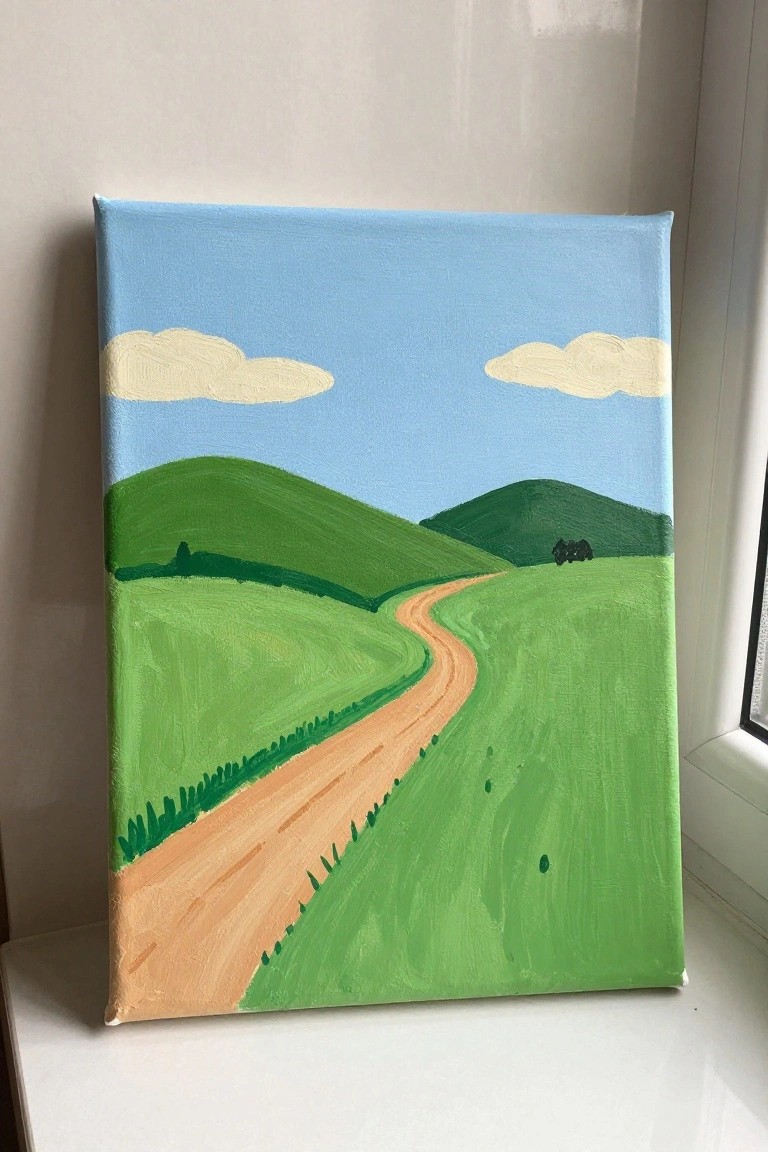
A landscape built around rolling green hills and a curving dirt path works well as an acrylic painting idea because the path acts as a clear focal line that leads the eye through the scene. Large color blocks for the hills and sky keep the shapes simple while still creating depth with overlapping layers. The contrast between the warm path tones and the cooler greens helps the composition stay balanced without extra detail work.
What makes this idea useful is how the basic layout translates easily to different canvas sizes and still reads clearly from a distance. The limited palette of sky blue, greens, and earth tones reduces color mixing time while leaving room to adjust the path curve or add small tree clusters. For canvas decor this kind of scene can be painted quickly and then varied by shifting the hills to different shades or softening the path edges for a smoother look.
Bold Sunset Mountains Reflected in a Lake

A mountain landscape at sunset reflected in still water works as a clean acrylic landscape idea. The dark tree silhouettes against the warm sky create strong contrast and guide the eye straight to the mirrored colors in the water. This layout uses large color blocks and simple shapes to keep the focus on the reflection rather than on small details.
What makes this idea useful is how the reflection adds visual weight without extra layers of paint. You could shift the sky colors to match a different season or adjust the tree placement to fit the size of your canvas. The high contrast between the trees and the water also helps the finished piece stand out in photos for Pinterest or as wall art.
Beach Scene with Seagulls on the Shore

A simple coastal landscape works well here by placing a few seagulls against a clear horizon line that separates the sky, water, and sand. This acrylic painting idea uses a limited set of flat color blocks and small bird shapes to keep the composition balanced without needing complex layers. The gentle curve of the shoreline and the single flying bird add just enough movement to hold interest while staying easy to paint on a small canvas.
What makes this idea useful is the straightforward layout that lets you focus on color mixing for the water and sand rather than fine detail. You can swap the seagulls for other shorebirds or change the water to deeper blues if you want a different season. For practice or quick canvas decor, the clean edges and small number of elements make it simple to finish in one session and easy to adapt to different canvas sizes.
Stylized Desert Dunes with a Single Tree

A landscape idea built around rolling sand dunes and one central tree uses strong curves and a limited color palette to guide the eye through the scene. The winding dune shapes create a natural path that leads toward the horizon while the tree serves as the main focal point against the gradient sky. This approach fits the landscape category and relies on simplified forms and color blocks rather than heavy texture or detail.
What makes this idea useful is the clear layout that lets you focus on blending large areas of color and keeping edges clean. You could shift the sky to deeper oranges or cooler tones for a different time of day or add a few more distant dunes to change the depth. For practice or canvas wall art, the bold shapes and reduced detail make it easy to adapt to different canvas sizes while still looking intentional.
Abstract Leaf Shapes with Flat Color Blocks

This acrylic painting idea centers on oversized, simplified leaf forms arranged in a loose overlapping pattern against a plain background. The approach relies on solid color fills and strong outlines rather than blending or fine texture, which keeps the composition graphic and easy to read from a distance. It works as decorative wall art that emphasizes shape and color contrast over realistic detail.
What makes this idea useful is how the large, connected shapes let you build the piece quickly with minimal layering. You can adapt the palette by swapping the greens for any color family or adjust the background tones to match a room without redrawing the layout. For practice, the flat style reduces pressure on brush control, and the same structure scales easily to different canvas sizes while still looking intentional on a wall.
Winding Road Through Autumn Trees

A curving road framed by tall trees in bold orange and brown tones forms a classic seasonal landscape idea. The composition relies on the road as a strong leading line that guides the eye toward a small distant house, while the trees on each side create balanced framing with their overlapping shapes and color blocks. This approach fits the landscape category and keeps the painting focused on large color areas instead of fine detail work.
What makes this idea useful is how the limited fall palette lets you mix and apply acrylics in broad strokes without needing many layers. You can adapt it easily by adjusting the road curve or adding scattered leaves on the ground for extra texture. For practice, this kind of scene works well because the perspective builds depth through simple overlapping shapes rather than complex blending. The same layout could be painted on a smaller canvas or with a different season’s colors if you want to personalize it.
Lavender Rows Converging at Sunset
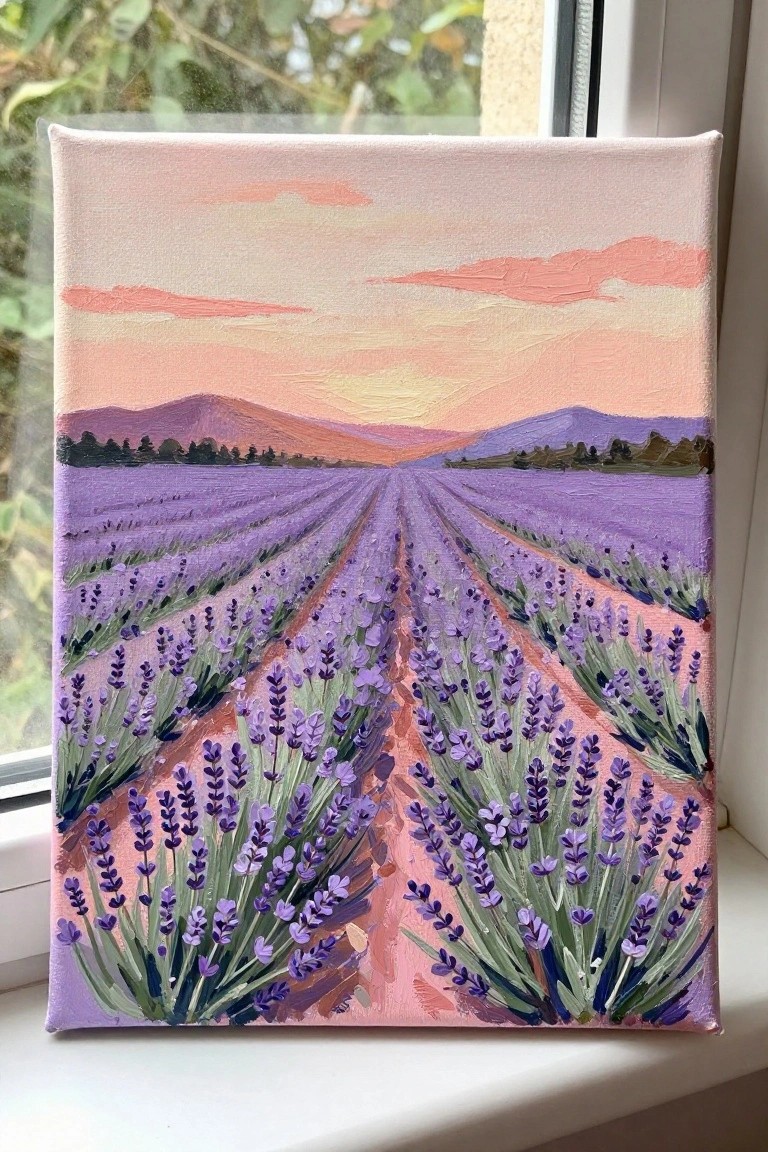
A lavender field landscape uses repeating rows of purple blooms to create strong linear perspective that pulls the eye straight toward distant hills. The idea centers on layering cool purples and greens in the foreground against a warm pink-orange sky to build depth with simple color contrast. This fits the landscape category and relies on broad sky washes plus vertical brush marks for the flowers rather than fine detail.
What makes this idea useful is how the converging lines do most of the compositional work without needing intricate shapes. You can adapt it by changing the sky colors for different times of day or shortening the rows to fit a smaller canvas. For practice this layout helps beginners focus on color blocking and edge control while still producing a finished piece that reads clearly on a wall.
Bridge Over a Reflective River Landscape
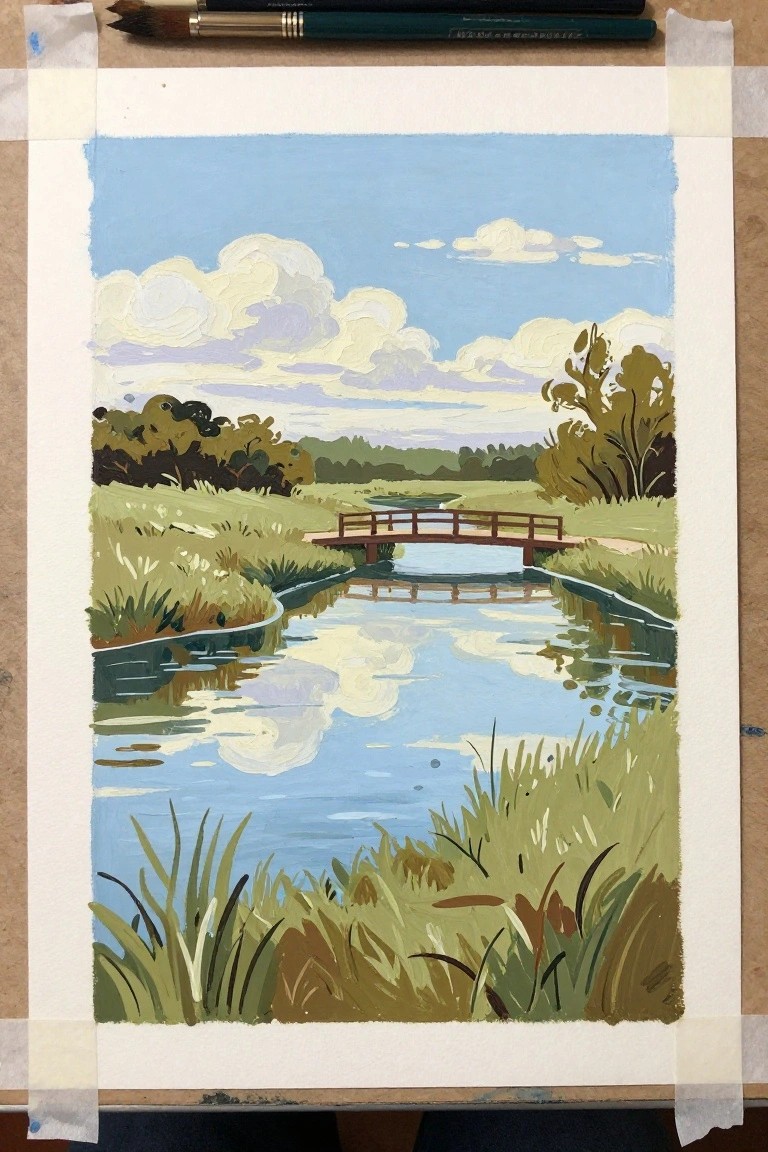
A riverside scene with a wooden bridge over calm water gives you a clear acrylic landscape idea built around strong horizontal lines and simple color blocks. The idea centers on using the water to repeat the sky and bridge shapes, which keeps the composition balanced without needing complex details. Grass and tree masses on both sides frame the river and guide the eye straight to the bridge as the main focal point.
What makes this idea useful is the way distinct color areas let you work section by section and fix mistakes easily with another layer. You could adapt it by swapping the greens for autumn tones or cropping tighter around the bridge for a smaller canvas version. For practice, this kind of layout helps build confidence with reflections and edge control while still looking finished enough for wall art or gifts.
Cliffside Lighthouse with Breaking Waves

A coastal landscape painting built around a lighthouse on a rocky cliff edge makes a strong acrylic idea because it relies on bold shapes and a limited color range. The dark vertical tower stands out against the pale sky, while the cliff forms a strong diagonal that guides the eye down to the waves. This approach fits the landscape category and uses simple blocks of color plus a few textured brushstrokes in the water to create movement.
What makes this idea useful is how the high contrast between the dark cliff and lighter sea keeps the composition clear even if your brushwork stays loose. You can easily change the sky to warmer or cooler tones or reduce the wave detail for a flatter look. For canvas decor, the vertical format and graphic shapes also translate well to different sizes without losing impact.
Layered Blue Mountain Landscape with Soft Gradients

A mountain landscape built from overlapping ranges in varying shades of blue gives a clear sense of distance through simple color shifts. This acrylic idea relies on broad strokes and a limited palette to suggest mist without extra detail. The small circular sun placed high keeps the focus on the layered peaks and the gradual fade from dark to light blue.
What makes this idea useful is how the overlapping shapes let you practice value changes and blending on a single canvas. You can switch the cool tones for earth colors or add one more ridge in the foreground to adjust the depth. For canvas decor, the clean edges and soft transitions make it easy to adapt into different sizes while keeping the same calm layout.
Minimalist Desert Dunes Landscape

This acrylic idea centers on a desert landscape made from overlapping dune shapes in a narrow range of warm neutrals. Broad, smooth color transitions build the sense of light and distance while keeping every form simple and graphic. It works as a straightforward landscape piece because the composition relies on shape and value rather than fine detail or texture.
What makes this idea useful is how the flat areas and limited palette let you focus on clean blending and edge control with acrylics. You can easily adapt it by shifting the foreground grass to rocks or adjusting the dune heights to fit a different canvas size. For wall art or quick practice, the design translates well to Pinterest because the calm, graphic look stands out among busier landscapes.
Stylized Hillside Landscape with Houses and Sun

A landscape painting idea built around bold, flat shapes that show rolling hills, scattered houses, and a large sun using simple color blocks. The composition works by stacking overlapping fields and hills in different tones to suggest depth while keeping every element graphic and easy to read. This approach falls into the decorative landscape category because it favors clean edges and strong color contrast over realistic detail or texture.
What makes this idea useful is the way the simplified shapes let you focus on color placement without needing fine brushwork. You can swap the house colors or change the field patterns to match a different season or location while keeping the same layout. The bright palette and clear separation between elements make it a good choice for canvas wall art that still feels approachable for practice.
Tropical Palm Tree Sunset Landscape

A tropical sunset landscape makes a clean acrylic painting idea with a single palm tree leaning over calm water. The sky uses a simple color gradient from pale yellow down to soft orange and pink, while the sun sits low with a bright reflection path painted across the blue ocean. The beach and foreground greenery stay minimal so the tree and sky stay the main focus.
What makes this idea useful is how the basic layout can be painted on any small canvas without much planning. The color bands in the sky and water are easy to adjust if you want a different time of day or a stronger sunset. For practice, this kind of scene works well because the shapes stay simple yet the finished piece still looks complete on a shelf or wall.
Winter Birch Trees in Snow

A birch tree landscape makes an effective acrylic idea because the repeated vertical trunks create strong rhythm across the canvas while the soft gray mountain shapes keep the background simple and supportive. The black bark markings add controlled contrast without needing fine detail, and the broad white foreground strokes suggest snow depth with minimal effort. This approach fits seasonal landscape painting that relies on a cool limited palette and clean shapes rather than complex textures.
What makes this idea useful is that the trees can be built with straight strokes and the background requires only light blending, so it works well for practicing composition on a standard canvas. You can reduce the number of trunks for a simpler version or add a winding path in the snow to change the focus. The high contrast between dark markings and white areas helps the finished piece stand out in a feed or on a wall without extra layers.
Cliffside Sunset Seascape with Sailboat

A coastal sunset landscape works well as an acrylic idea when the cliff takes up the left side and the horizon sits low to give the sky plenty of room. The composition relies on strong color blocks between the purple sky, orange horizon, and deep blue water, with the sailboat placed as a small but clear focal point. This approach fits the landscape category and keeps the painting readable through simple shapes and contrast rather than fine detail.
What makes this idea useful is the straightforward layout that lets you paint the sky and water first, then add the cliff and waves on top. You could change the boat size or remove it entirely, or shift the sky colors toward cooler tones for a different mood. For canvas decor the low horizon and bold cliff edge make the piece easy to adapt to different canvas sizes while still holding attention from across a room.
Vineyard Landscape with Rolling Hills and Rows of Vines

This landscape idea uses rows of grapevines that follow the curves of sloping hills to lead the eye toward a small house on the ridge. The approach relies on repeating vertical and diagonal strokes to suggest vines while keeping the hills as broad color areas. The result is a clear landscape composition that builds depth through overlapping hills and a simple background rather than detailed foreground work.
What makes this idea useful is how the vine rows can be added with quick brush marks once the hill shapes are in place. The warm earth tones and green accents adapt easily if you want to shift the season or swap the house for another element. For canvas decor this layout works well because the strong lines keep the eye moving through the scene without needing complex blending.
Misty Wildflower Meadow

A misty wildflower meadow works well as an acrylic landscape idea because the soft background trees and sky stay loose and blended while the foreground flowers carry the color and shape. The composition keeps the eye moving through the field by placing taller blooms at different heights against a muted wash of greens and pinks. This approach fits the landscape category with a floral focus and uses contrast between the hazy distance and the clearer lower section to create depth.
What makes this idea useful is that the background can be blocked in quickly with big brushes and light layers while the flowers get built up in stages. The color palette stays simple with soft greens, pinks, and purples so mixing stays easy even on a smaller palette. For canvas decor the high horizon leaves plenty of room for the flower field to fill most of the space and you could drop some of the smaller dots if you want a faster version for practice. The same layout would translate well to a larger canvas by stretching the field further across the bottom.
Moonlit Ocean Reflection

A full moon over open water makes a strong acrylic landscape idea because the glowing circle and its rippled path of light create an instant focal point against dark blue tones. The composition uses broad horizontal strokes for the water and a few darker shapes for rocks and distant hills to keep the eye moving across the canvas. This fits the classic seascape category and relies on value contrast rather than complex details to hold together.
What makes this idea useful is the narrow color range of blues and whites, which reduces mixing time and helps the reflection stand out clearly. You can simplify it further by cropping to just the moon and water or add small boats if you want more interest for a gift or wall piece. The bold light path also photographs well for Pinterest because it gives the image a clear vertical line that catches attention in a feed. For practice, this layout lets you focus on blending edges and building up the moon glow in layers without needing advanced techniques.
Winding River Through Flower Meadows

A curving blue river through rolling green hills makes a strong landscape idea that relies on simple shapes and bright color blocks to lead the eye. The composition uses the stream as a natural path that divides the scene into foreground wildflowers, midground hills, and a light sky, keeping the focus on the overall layout rather than small details. Bold greens, yellows, and flower accents in acrylic give the fields enough contrast to feel lively without extra texture or blending.
What makes this idea useful is how the river and hill shapes can be sketched quickly on canvas before filling with flat color areas. The high-contrast palette works well for wall art or gifts because it reads clearly from a distance, and you could easily swap the flower colors or shorten the stream to match a smaller canvas. For practice, this layout helps build confidence with basic landscape structure while still producing something that stands out when shared online.
Northern Lights Over Snowy Hills

An acrylic landscape idea like this centers on a winter aurora scene where bright green and blue light streaks fill the sky above rolling snow-covered hills. Dark pine tree silhouettes anchor the composition and create clear contrast against the lighter ground and sky. The idea works well because the simple shapes let the color mixing and brushwork in the sky become the main focus without needing fine detail everywhere.
What makes this idea useful is how the strong sky contrast does most of the visual work, so you can finish the painting quickly on a small canvas. You can adapt it by changing the aurora colors to pinks or adding a few more trees along the right slope for better balance. For practice, this kind of seasonal landscape helps you work on wet blending in the sky while keeping the foreground shapes clean and easy to paint.
Frequently Asked Questions
What basic supplies do I need to start with acrylic landscape painting ideas?
Begin with a set of acrylic paints in primary colors plus white and black for mixing. Add a few brushes of varying sizes, a palette for blending, stretched canvas or canvas boards, and a cup of water for cleaning. These items let you tackle simple ideas like basic mountain scenes or sunset fields right away while building up to more detailed work.
How can beginners adapt the more advanced landscape ideas in the article to their skill level?
Start by breaking down complex compositions into fewer elements such as a single horizon line or basic tree shapes. Use larger brushes for broad areas and focus on one color family at a time. Many of the listed ideas include step by step breakdowns that scale from loose sketches to refined details so you can practice the core scene first and add layers later.
What techniques help create depth in acrylic landscape paintings?
Layer colors from background to foreground with lighter tones in the distance and darker shades up close. Add a touch of blue to distant objects for atmospheric perspective and use dry brushing for texture on hills or foliage. These steps work across skill levels and turn flat ideas into scenes that feel spacious without needing advanced tools.
How do I choose and mix colors for realistic yet simple acrylic landscapes?
Begin with a limited palette of three to five colors that match your scene such as greens and blues for forests or oranges and purples for sunsets. Mix on the palette to create variations rather than using colors straight from the tube. This approach keeps ideas approachable while allowing you to match the natural tones shown in the article examples.
How can I practice the painting ideas regularly to improve over time?
Set aside short sessions a few times a week to paint one element from an idea such as skies or water reflections. Photograph your progress and compare it to the article images for adjustments. Over weeks this builds confidence and lets you move from beginner friendly scenes to more detailed ones without feeling overwhelmed.

Hi, I’m Camille.
I’m a self-taught painter and creative blogger with a soft spot for acrylic painting, color play, and all the little art ideas that make everyday life feel more inspiring.
I started this space because I’ve always believed painting should feel joyful, approachable, and a little personal. Some of my favorite pieces come from simple ideas, messy palettes, and evenings where I just felt like making something pretty.
Most of what I share begins with acrylic painting, but I also love exploring other mediums when creativity pulls me in a new direction. My goal is to collect and share painting ideas that feel fun, beautiful, and actually doable, whether the mood is calm and minimal or bright and playful.
This is a space for inspiration, experimenting, and enjoying art without overcomplicating it.