

I like using acrylics for landscape paintings because they are easy to work with and forgiving if I make a mistake.
Lately I have been thinking about mountains forests and lakes as subjects.
I came up with 24 different ideas that might give you some inspiration for your own work.
They range from simple compositions to ones with more details.
You can adapt them to fit your style or the supplies you have on hand.
Mountain Peaks Reflected in Still Water

A landscape idea built around a mountain range and its exact mirror image in a lake works well because the reflection doubles the main shapes without adding extra elements. Large blocks of color define the peaks, ridges, and tree line, letting the composition stay simple while still reading clearly from a distance. The limited palette of cool blues, warm golds, and deep greens keeps the focus on the strong horizontal split between land and water.
What makes this idea useful is how the reflection gives you an automatic second subject to paint once the mountains are blocked in. The flat color areas make it straightforward to adjust the mountain outlines or swap sky tones without repainting the whole piece. For practice, this kind of subject helps build confidence with shape matching and edge control. It would also translate easily to a larger canvas or a series with different color shifts in the peaks.
Mountain Lake Reflection with Misty Pines and Boat

A misty mountain scene centered on a calm lake with pine trees and a small boat offers a straightforward acrylic landscape idea. The concept relies on cool blue and gray layers to create soft atmospheric depth, while the water reflections provide natural symmetry that holds the composition together. This approach works as a classic landscape subject because the main shapes stay bold and the details stay loose.
What makes this idea useful is how the boat serves as a clear focal point without requiring precise work. The same layout can be adapted by shifting the color palette toward warmer tones for a different season or by simplifying the trees into darker silhouettes. For canvas decor, the reflection effect helps the piece look finished even when brushwork stays broad, which is why similar mountain lake scenes perform well when shared online.
Bold Color Blocked Mountains Above a Forest Lake

This acrylic idea uses stacked mountain forms in solid blocks of orange, rust, teal, and mustard to build a clean landscape without relying on gradients or fine detail. Dark pine silhouettes along the lower slopes add a forest layer, while the flat turquoise water in front creates a simple horizontal anchor. It works as a straightforward landscape approach that prioritizes shape and color contrast over texture.
What makes this idea useful is the flat paint application that covers canvas quickly and forgives minor edge mistakes. The strong horizontal bands let you resize the layout easily for different canvas sizes or turn it into a series by changing just the mountain colors. For practice, this kind of subject helps build confidence with composition because the shapes stay readable even if the paint is applied in a few thick coats.
Lakeside Cabin with Mountain Sunset

A lakeside cabin landscape idea works by stacking simple shapes: a small house in the foreground, a stretch of water, then layered mountains under a bright sky. The acrylic approach here relies on flat color blocks and clear edges rather than blending or fine texture, which keeps the focus on the overall layout. This fits the standard mountain-and-lake category and stays effective because the strong horizontal bands guide the eye without needing extra detail.
What makes this idea useful is the way large shapes handle most of the work, so you can finish it on a small canvas without getting stuck on tiny elements. You can adapt it quickly by changing the sky to cooler tones for a different time of day or swapping the cabin color to match another season. For practice this layout also scales well if you want to enlarge the mountains or move the trees to one side only.
Pine-Framed Mountain Lake Reflection

A landscape acrylic painting centered on a calm lake with mountain reflections gains strong structure when tall pine trees are placed on both sides to frame the view. The soft pink and yellow sky paired with cooler mountain tones creates a clear separation between sky, peaks, and water. This fits the mountain and lake category and relies on simple blocked shapes rather than fine detail to keep the composition balanced.
The bold contrast between the dark pines and light water does a lot of the work here. This layout adapts easily by swapping the sky colors for different times of day or seasons while keeping the same tree placement. For canvas decor, the centered reflection and natural borders make the piece stand out on Pinterest without needing complex brushwork.
Curving River Through Forested Mountain Slopes

A landscape painting idea built around a winding river that moves through hills covered in pine trees, with layered mountains rising in the background. The idea relies on broad color areas and simple shapes to suggest depth, keeping the focus on the river as the main path through the scene. It belongs to the landscape category and stays effective because the limited palette and clean edges let the composition hold together without extra detail.
What makes this idea useful is how the large color blocks reduce the need for blending or fine work, so it works well for practice on a standard canvas. You could change the greens to warmer tones or shift the mountain colors to match a different season while keeping the same layout. For canvas art, the graphic style makes the piece easy to adapt into wall decor without losing its structure. The color palette helps this stand out because the cool river against the muted hills creates clear contrast right away.
Mirrored Mountain Landscape with Bold Color Blocks

A mountain range painted in flat blocks of warm red and cream sits above a line of dark trees, with the entire upper scene repeated as a reflection in a lake below. The idea relies on strong horizontal division and simplified shapes to create a clean, graphic landscape that reads well from a distance. This approach fits the landscape category by using color contrast and symmetry instead of detailed brushwork or texture.
What makes this idea useful is the straightforward split between the main scene and its reflection, which lets you paint the top half first and then flip the shapes for the bottom. The limited palette of oranges, deep blues, and teal can be swapped for different seasons or adjusted with more or fewer tree silhouettes for variety. For canvas decor or quick practice pieces, the high contrast and large shapes keep the focus on composition without requiring advanced blending.
Moonlit Mountain Lake Reflection

A nighttime mountain landscape with a glowing full moon, silhouetted pine trees, and a mirrored reflection in the water makes a strong acrylic landscape idea. The composition works because the bright circle of the moon pulls the eye upward while the horizontal water line and vertical tree shapes create clear balance. Dark blues and blacks layered against the light moon and its reflection keep the focus on shape and contrast rather than fine detail.
What makes this idea useful is how the reflection can be built with a few horizontal strokes once the base water layer dries. The limited cool color palette makes it easy to mix and repeat on a small canvas without needing many shades. You could swap the full moon for a half moon, change the tree spacing, or shift the water to a warmer tone for a dusk version while keeping the same layout.
Sunset Mountain Layers with Lake Reflection

A sunset mountain landscape idea works well in acrylics when you build the scene with broad color blocks that fade from warm oranges into cooler purples and deep blues. The main focus stays on the layered peaks above a bright cyan lake that holds a simple yellow reflection, while dark pine silhouettes anchor the foreground. This type of landscape painting relies on strong horizontal divisions and high contrast between the glowing sky and the shadowed hills to keep the composition balanced.
What makes this idea useful is how the flat shapes let you focus on clean edges and quick color mixing without needing detailed brushwork. You could easily change the palette to cooler tones for a different time of day or extend the tree line across the bottom to shift the weight of the scene. For canvas decor the bold contrast helps the piece read clearly from a distance, which is why similar layouts often perform well as quick practice pieces or small wall art.
Winding Path to a Lakeside Mountain View

A landscape idea built around a curving dirt path that leads the eye toward a calm blue lake with a backdrop of layered trees and mountains. This type of acrylic painting works well because the path acts as a strong compositional line that adds depth while the broad shapes of foliage and water keep the scene readable from a distance. It belongs in the landscape category and relies on simple color blocks and edge contrast rather than fine detail to hold together.
What makes this idea useful is how the main elements break into large shapes that are easy to lay down first with acrylics before refining the edges. You can change the season by swapping the greens for warmer tones or shorten the path to fit a square canvas. For practice, this kind of layout helps with basic perspective and color mixing without needing complex brushwork, and the clear focal points make it stand out when shared online.
Mountain Lake Scene with Layered Peaks and Pine Silhouettes

This acrylic painting idea centers on a mountain lake landscape built from bold, simplified shapes and clear color blocks. The main elements include layered mountain ridges in muted earth tones, a wide reflective water area, and dark pine trees placed in the foreground to frame the view. The composition gains strength from the high contrast between the dark trees and the lighter water and sky, which keeps the focus on the central peaks without needing intricate details.
What makes this idea useful is the graphic approach that depends more on shape placement than blending or texture, so it works well even on a standard canvas size. You can swap the sky and mountain colors to match a different time of day or season while keeping the same tree and water layout. For practice or quick wall art, the strong foreground trees make it easy to adjust the scale or add a second lake reflection if you want to personalize it. The clean edges and limited color range also help the finished piece stand out in a Pinterest feed.
Stylized Autumn Lake with Reflected Trees and Mountains

This acrylic idea uses large blocks of warm orange and cool teal to build a forest scene around a central lake that mirrors the trees and sky. The composition works because the reflection creates symmetry while the overlapping tree shapes add depth without requiring fine detail or blending. It sits in the seasonal landscape category and relies on bold color separation rather than texture or complex brushwork.
What makes this idea useful is how the flat color areas let you practice clean edges and shape placement on a standard canvas. You can simplify it further by reducing the number of trees or adapt the colors for a different season while keeping the same mirrored layout. For wall art the strong contrast between foliage and water helps the piece read well from a distance, which is why similar designs perform well when shared online.
Birch Trees Framing a Mountain Lake

A landscape idea built around vertical birch trunks that act as natural frames for a view across flat blue water toward a single mountain peak. The trunks vary slightly in angle and spacing to guide the eye inward while the background stays simple with broad color blocks for the hills and sky. This fits the landscape category and works because the light trunks create strong contrast against the darker greens and blues behind them.
What makes this idea useful is the clear foreground-to-background split, which keeps the layout balanced even if the mountain shape changes. The limited color range of blues, greens, and pale trunks makes it simple to adapt by swapping in different tree types or adding a few more trunks on one side. For canvas decor this kind of scene stands out on Pinterest because the vertical lines give it structure without requiring fine detail work.
Stylized Mountain Landscape with Forest and River

This acrylic painting idea focuses on a mountain landscape built from overlapping peaks, a band of stylized pine trees, and a curving river that moves through the foreground. The composition uses flat color blocks and clean edges to separate sky, mountains, trees, and water while keeping everything simple and graphic. It fits the landscape category with an emphasis on shape and limited color zones rather than texture or fine detail.
The layered layout lets you paint one section at a time without worrying about complex blending. You can shift the mountain tones toward cooler blues or warmer oranges to match different times of day, or vary the tree heights and shades to suggest more depth. For canvas decor this kind of idea works well because the bold shapes stay clear even when scaled up, and it adapts easily if you want a smaller practice piece or a seasonal version with different foliage colors.
Stylized Mountains Over a Flat Lake Horizon

This acrylic idea centers on a simple landscape built from flat color blocks for the mountains and water. The overlapping mountain shapes create a sense of depth while the dotted horizon line and scattered yellow marks add just enough interest to the lower section without extra detail. It works as a clean, graphic landscape that relies on bold color choices and sharp edges rather than blending or texture.
What makes this idea useful is how the flat shapes let you focus on composition and color placement instead of brushwork. The layout adapts easily to different canvas sizes or color swaps, such as changing the central mountain to a deeper tone or extending the water area. For practice, this kind of painting helps build confidence with clean edges and limited palettes while still producing a finished piece that reads well from a distance on a wall or in a grid of similar canvases.
Mountain Lake with Pine Reflections and Fog
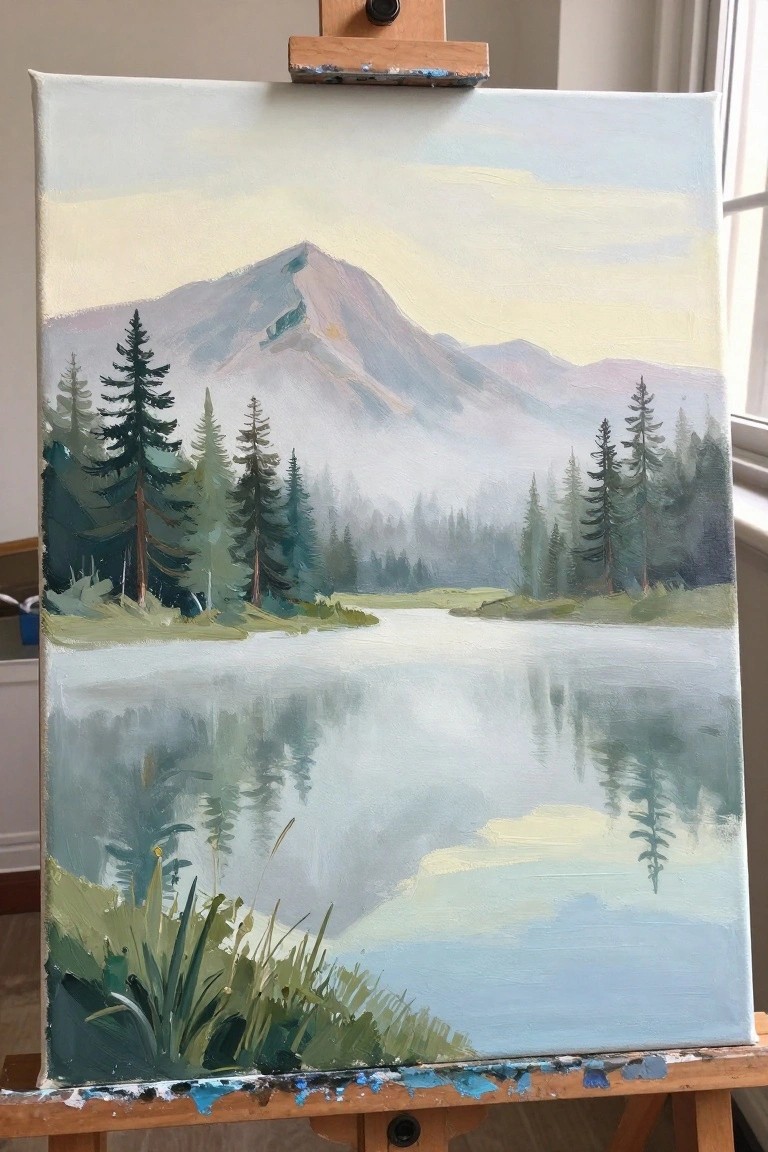
A landscape built around a still lake that mirrors a fog-covered mountain range creates depth through simple horizontal layers of water, trees, and distant peaks. The idea centers on placing dark evergreens along the edges to frame the softer middle ground, letting the water reflection carry most of the visual weight. This approach fits the standard landscape category where atmospheric haze and symmetry do the heavy lifting instead of fine detail.
The cool blue-green palette stays easy to manage with just a few tubes of paint and works well for building up layers without constant mixing. You could adapt the same layout by shifting the fog higher or lower on the mountain or by tightening the crop to focus more on the water surface. For canvas decor this kind of balanced scene holds together even with broader brushwork, which makes it a solid choice when you want a finished piece without spending hours on every tree.
Flat Color Mountain Lake Reflection Landscape

This acrylic painting idea centers on a graphic landscape where mountains and trees are mirrored in a calm lake below. The concept uses simplified shapes and solid color blocks to build a clean composition that feels balanced through direct symmetry between the upper and lower halves. It fits the landscape category and works visually because the strong horizontal division keeps the eye moving across the scene without needing complex blending or texture.
What makes this idea useful is the blocky layout that lets you paint in layers from background to foreground with minimal overlap issues. You can adapt the color palette by swapping the warm mountain tones for cooler ones or adjusting tree shapes to fit a different season. For canvas decor this stands out on Pinterest because the bold outlines and flat fills photograph cleanly. The same idea simplifies easily for smaller canvases by reducing the number of trees and keeping the reflection lines straight.
Layered Mountains Reflected in a Calm Lake

A mountain landscape with a central lake reflection works as a solid acrylic idea because the overlapping peaks and simplified tree clusters let you build depth through color blocks rather than fine detail. The idea centers on balancing warm and cool tones across the ridges while using the water to repeat the shapes below, which keeps the whole scene unified. This fits the landscape category where bold shape definition and flat color areas create strong visual structure.
What makes this idea useful is how the reflection handles half the composition with mirrored shapes, so you only need to paint the upper half in full and adjust values underneath. You could adapt it by changing the mountain hues to deeper blues or adding more varied tree heights along the shore for extra interest. For canvas decor, the layout works well because the clean edges and balanced water section make it easy to scale up or simplify for different canvas sizes while still looking intentional.
Winding Path to a Mountain Lake

A landscape idea built around a curving path that leads toward a lake, with layered hills and pine trees set against mountains. The composition relies on simple shapes and solid color blocks to keep the scene readable while the path creates a clear focal route through the middle ground. It belongs in the landscape category and stays effective because the overlapping elements build depth without extra detail or texture.
What makes this idea useful is how the strong path shape organizes the canvas and makes the layout easy to transfer or resize. The flat color approach works well for acrylic since it requires minimal blending and lets you finish a canvas in one or two sessions. For canvas decor or practice, you can swap the brown mountains for cooler tones or add more trees along the edges to change the balance. The same layout also translates quickly to smaller panels if you want to test color variations.
Bold Sunset Mountain Lake with Tree Silhouettes
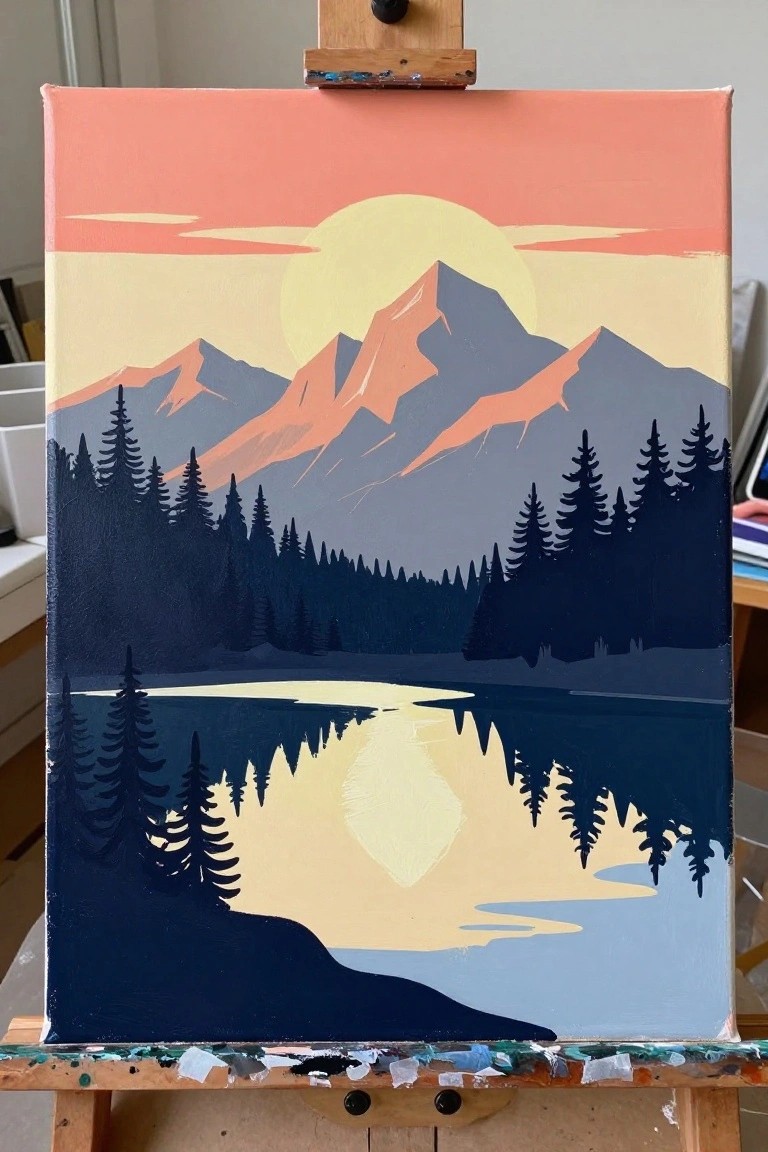
A mountain lake scene at sunset makes a strong acrylic landscape idea when built around a large central sun, jagged peaks, and dark pine silhouettes. The composition uses flat color blocks and sharp edges between the warm sky and cool blue mountains to create clear separation without relying on blending or texture. This fits the graphic landscape category where simple shapes and high contrast carry the design.
What makes this idea useful is how the flat shapes let you block in large areas quickly with acrylics before adding the tree layer. You can change the sky to different sunset hues or move the reflection line lower to fit a taller canvas. The clean outlines also make it easy to adapt the same layout for smaller studies or repeat the pattern across a set of canvases for wall decor.
Reflective Lake Between Purple Mountains

A mountain lake landscape works well as an acrylic idea when the water is used to create a mirrored path of light that leads the eye straight into the scene. Simple tree silhouettes on both sides frame the composition while the sky gradient shifts from deep purple down to soft yellow, keeping the focus on the central reflection. This approach fits the landscape category because it relies on shape contrast and color blending instead of intricate detail.
What makes this idea useful is the balanced layout that lets color do most of the work, so you can finish it on a standard canvas without getting stuck on tiny elements. The same setup adapts easily if you swap the purple mountains for warmer tones or drop the foreground trees for a faster version. For practice or wall art, the strong reflection keeps the painting looking complete even with broader brushstrokes.
Mountain Lake Reflection with Simple Foreground Reeds

A strong acrylic landscape idea here centers on a wide lake that mirrors the surrounding hills and mountains while keeping the tree shapes bold and simplified. The composition places most of the detail along the shoreline and lets the water carry the color repeats, which keeps the painting balanced and easy to read from a distance. Broad blocks of color for the hills and sky make this a classic landscape approach that relies on shape and reflection rather than tiny brushwork.
What makes this idea useful is how the large water section gives you room to test smooth color transitions without needing perfect edges. You can easily change the season by swapping the warm hillside tones for cooler ones or shorten the reeds if you want less foreground detail. For canvas decor the layout leaves plenty of open space so the piece stays calm and works well above a sofa or desk.
Reflective Lake in a Snowy Mountain Landscape

A winter landscape idea built around a still lake that mirrors a snow-covered mountain peak, with dark pine trees framing the water on both sides. This acrylic approach relies on simple shapes and strong value contrast between the trees, snow, and water to keep the composition balanced. It belongs to the seasonal landscape category, where the reflection adds symmetry and keeps the focus on the mountain without extra layers of detail.
The bold dark trees against the light mountain and water make the main forms straightforward to paint in acrylic first. You could easily change the blues to warmer tones or reduce the number of trees if you want a simpler version for practice or gifts. For wall art this layout stands out because the horizontal lake line breaks up the vertical trees and mountain in a clean way that works on standard canvas sizes.
Graphic Mountain Lake with Layered Peaks
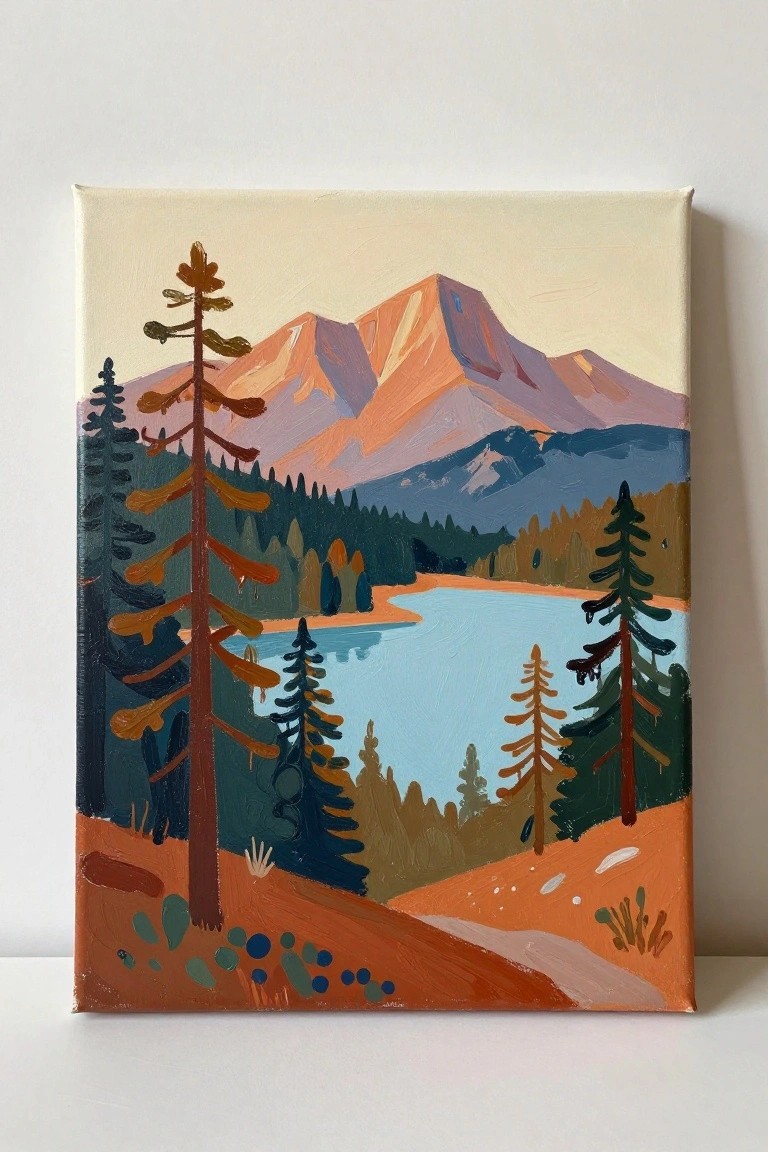
A landscape idea that centers on a bright blue lake framed by simplified pine trees and a series of angular mountains painted in warm oranges and cool purples. Large blocks of color and reduced detail keep the focus on the overall layout rather than small textures or realistic rendering. This fits the landscape category and relies on strong shape contrast and a warm foreground against cooler middle ground to hold the composition together.
The clean edges and flat color areas make the idea easy to scale up on canvas or adapt by swapping the orange tones for cooler greens if a different season is preferred. You can keep the tree shapes minimal or add one extra layer of hills without changing the basic structure. For practice or quick wall art pieces, the limited detail level helps the painting finish faster while still reading clearly from a distance.
Frequently Asked Questions
What basic supplies do I need to start acrylic landscape painting focused on mountains, forests, and lakes?
Acrylic paints in a range of colors including earth tones, blues, and greens work best for these scenes. Choose heavy body acrylics for better texture control along with a set of synthetic brushes in various sizes such as flats for broad areas and rounds for details. Add a primed canvas or panel, palette knives for mixing and applying thick paint, and a stay wet palette to keep paints workable. Include mediums like gloss varnish for water effects and matte for matte finishes on land areas.
How can I create realistic depth in mountain landscapes using acrylics?
Start with a base layer of lighter colors in the background and gradually build darker tones in the foreground to establish distance. Use dry brushing techniques to suggest distant peaks with soft edges and add layers of thicker paint for closer rock formations. Incorporate atmospheric perspective by mixing in more white or blue as elements recede. Practice blending wet on wet for smooth transitions between slopes and shadows.
What techniques help when painting dense forests in acrylic landscapes?
Apply a dark underpainting first to define tree trunks and shadows then layer lighter greens and yellows on top for foliage highlights. Use a fan brush or stippling with a stiff brush to build leaf textures without overworking details. Add depth by varying tree sizes and overlapping forms with cooler tones in the back. Work in thin glazes for misty effects between layers of trees.
How do I paint natural looking reflections in lakes with acrylics?
Begin by sketching the shoreline and main shapes then paint the water area with horizontal strokes using diluted blues and greens. Mirror the mountain or forest colors above the water line but soften them slightly with more water or medium for a rippled effect. Add subtle white highlights for light reflections and use a clean brush to drag colors downward in places for gentle distortions. Let layers dry between applications to avoid muddy mixes.
Where can I find additional inspiration for creative acrylic landscape ideas after trying the suggested ones?
Explore local parks or hiking trails to observe real mountains, forests, and lakes at different times of day for fresh color and light ideas. Study photographs from nature magazines or online galleries and adapt elements like unusual cloud formations or seasonal changes. Experiment by combining features from multiple scenes such as adding a forest edge to a mountain lake view. Keep a sketchbook to note quick color studies and compositions from these sources.

Hi, I’m Camille.
I’m a self-taught painter and creative blogger with a soft spot for acrylic painting, color play, and all the little art ideas that make everyday life feel more inspiring.
I started this space because I’ve always believed painting should feel joyful, approachable, and a little personal. Some of my favorite pieces come from simple ideas, messy palettes, and evenings where I just felt like making something pretty.
Most of what I share begins with acrylic painting, but I also love exploring other mediums when creativity pulls me in a new direction. My goal is to collect and share painting ideas that feel fun, beautiful, and actually doable, whether the mood is calm and minimal or bright and playful.
This is a space for inspiration, experimenting, and enjoying art without overcomplicating it.