

I like to paint lake landscapes when I want a quiet subject to work on.
The water and surrounding trees are straightforward to handle in acrylics.
I have tried different approaches over time and found some that feel natural.
These are the ideas I keep coming back to for my own paintings.
Maybe one of them will fit what you are looking for too.
Pastel Lake Dock at Dusk
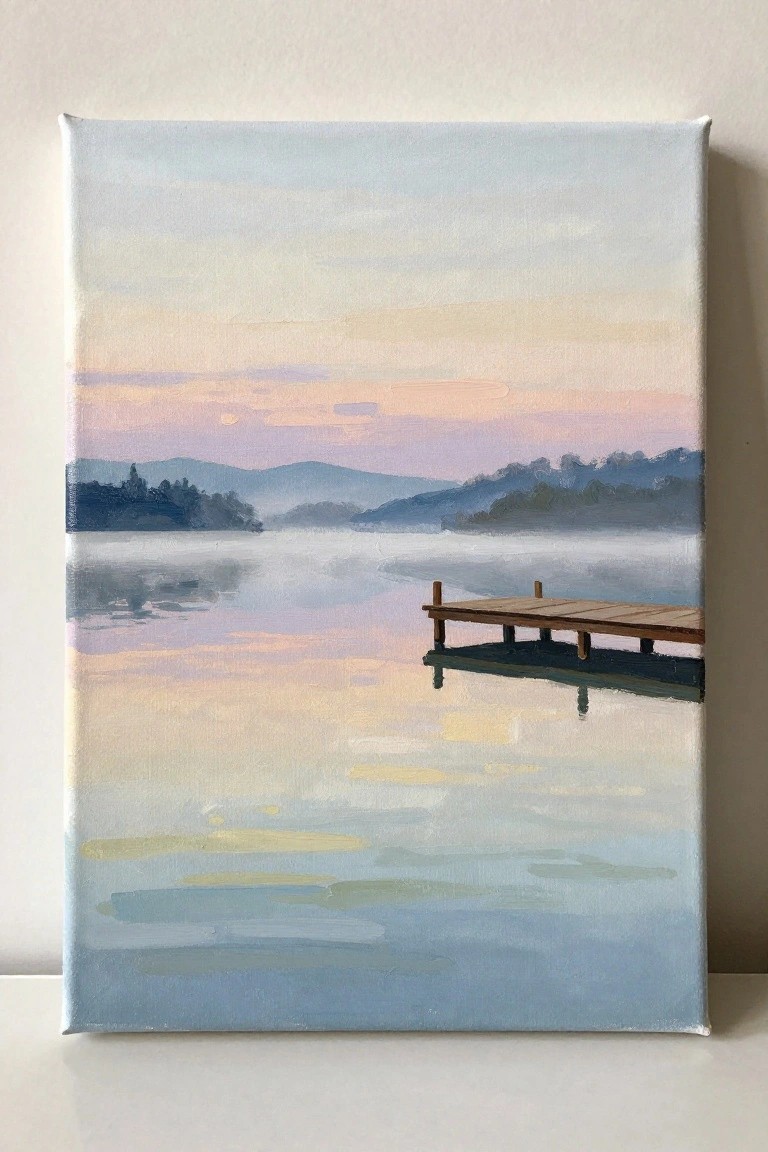
A lake dock set off to one side works as the main anchor in this landscape idea, with soft color bands in the sky and water suggesting distance without extra detail. The hazy hills on the left balance the structure on the right, while the muted reflections keep the surface simple and readable. This fits a straightforward landscape approach that relies on gentle gradients and minimal shapes rather than tight brushwork.
What makes this idea useful is how the restrained palette cuts down on color mixing time while still giving a finished look. You can easily change the dock length or shift the hill tones to match a different time of day. For practice, the loose edges around the water let you focus on blending without worrying about precision, and the layout scales well to smaller canvases if you want quick studies.
Sunset Lake Scene with Boat and Water Reflections

A lake landscape at sunset works as the main subject here, with the low sun creating a strong vertical streak of reflected light across the water. The small boat sits centered in the midground, its dark shape and reflection breaking up the horizontal bands of sky, distant trees, and foreground reeds. This landscape category relies on simple color blocks and clear horizon lines, which let acrylics build the sky-to-water transition through broad strokes rather than fine detail.
What makes this idea useful is the straightforward layout of sky, water, and land, so you can focus on color blending without juggling complex shapes. The bright reflection path does most of the visual work, so you could easily change the boat to a different simple object or shift the palette for a different season. For practice on canvas, this kind of scene adapts well because the limited foreground elements keep it from feeling overcrowded while still giving you room to adjust the tree line or add more reeds.
Crescent Moon Lake Reflection Landscape

A nighttime lake scene with a bright crescent moon and silhouetted pine trees forms a straightforward acrylic landscape idea. The composition works through strong contrast between the dark foreground shapes and the light moon and water reflections, using simple blocks of color rather than fine detail. This style fits into basic landscape painting where shape and value do the heavy lifting.
The bold contrast does a lot of the work here, so you can complete a canvas without spending time on tiny details. You could change the water to deeper blues or add a few more tree clusters on the opposite shore while keeping the same layout. For canvas decor, this kind of painting stands out on Pinterest because the clean reflection lines give it a finished look even on a small panel.
Wildflower Meadow Overlooking a Mountain Lake

A mountain lake scene gains visual interest when a dense band of colorful wildflowers fills the foreground against a soft blue water surface. The idea centers on layering loose mountain shapes in the distance with brighter, more defined flower forms up close, which creates a natural depth without needing complex perspective. This approach fits the landscape category while adding a floral element that brings extra color variety to the canvas.
What makes this idea useful is the clear division between the simple background wash and the varied flower shapes, letting you focus on color mixing without overworking the whole surface. You can adapt it by swapping in different bloom colors or scaling back the flower count for a quicker version on a smaller canvas. For practice, this layout helps build skills in both soft blending for the water reflection and sharper edge control on the foreground. The strong horizontal bands also make the finished piece easy to crop or resize for prints.
Gradient Lake Sunset with Lone Boat

A lakeside landscape with a small boat floating on calm water makes a strong acrylic idea because the stacked bands of sky and water colors create an easy horizontal structure to follow. Dark tree silhouettes along one side add sharp contrast that anchors the soft pink and blue gradients without needing much detail work. This approach fits the landscape category and uses simple color blocking plus reflection to hold the composition together.
What makes this idea useful is how the reflection does most of the visual work once the sky is blocked in. You can change the pink tones to oranges or keep the palette cool depending on the mood you want, and the small boat prevents the middle of the canvas from looking empty. The same layout works on a stretched canvas for wall art or scaled down for a quick practice piece where you focus on clean edges between the color layers.
Reflected Autumn Lake Landscape with Cabin

A seasonal landscape idea built around a still lake that mirrors rows of orange and rust-colored trees, with a small cabin placed along the far bank. The composition splits evenly between the upright foliage above the waterline and the inverted shapes below, using cool teal tones in the water to set off the warm leaf colors. This fits the landscape category and relies on repeated shapes and strong color contrast to keep the scene balanced without extra detail.
What makes this idea useful is the built-in symmetry from the reflection, which lets you reuse the same brushwork and color mixes on both halves of the canvas. The clear zones of trees, water, and sky make it easy to start with broad blocks of color before adding any smaller shapes. You could drop the cabin entirely or change the foliage to spring greens if you want a version for another season.
Willow Branches Framing a Lake Scene

A lakeside landscape idea built around long hanging branches that drop from the top right down toward the water. This acrylic approach keeps the background soft with blended hills and trees while using vertical strokes for the foliage to create a clear focal point. It works as a straightforward landscape with added foreground interest from the scattered lily pads on the surface.
What makes this idea useful is how the branches can be added last with simple downward strokes once the sky and water are dry. The limited color range of greens against pale yellows makes it easy to adapt by swapping in different foliage colors or changing the number of lily pads. For practice, this kind of layout lets you focus on reflections without needing tight details everywhere. An acrylic idea like this stands out on Pinterest because the vertical lines break up the horizontal water and hills in a clean way.
Bench by a Reflective Sunset Lake

A lakeside sunset idea centers on a winding foreground path and bench that lead the eye straight to the water’s bright reflection. Broad color blocks in the sky and water create strong contrast between warm yellows and oranges against cooler blues and purples. This landscape approach keeps the composition simple while still giving the scene depth through placement of the bench and the curve of the path.
What makes this idea useful is how the path and bench act as easy anchors that organize the rest of the canvas without extra planning. The color scheme can be swapped for different times of day or seasons while keeping the same layout. For practice this works well because the large sky and water areas let you focus on blending before adding the smaller path and bench details.
Misty Lake Heron Landscape

A great blue heron on a small rock makes a strong focal point for a calm lake scene in acrylic. The idea uses soft blending in the background to suggest distance and mist while keeping the bird and its reflection sharper. This fits the landscape with animal category and works because the muted gray and green palette keeps the whole piece quiet and balanced.
What makes this idea useful is the soft background, which lets you practice wet-on-wet blending without having to define every tree. You could swap the heron for a different shorebird or simplify the water reflections if you want a quicker version. For wall art the layout stays effective even when you reduce the number of layers in the fog or shift the color temperature slightly warmer.
Winter Birch Trees by a Frozen Lake
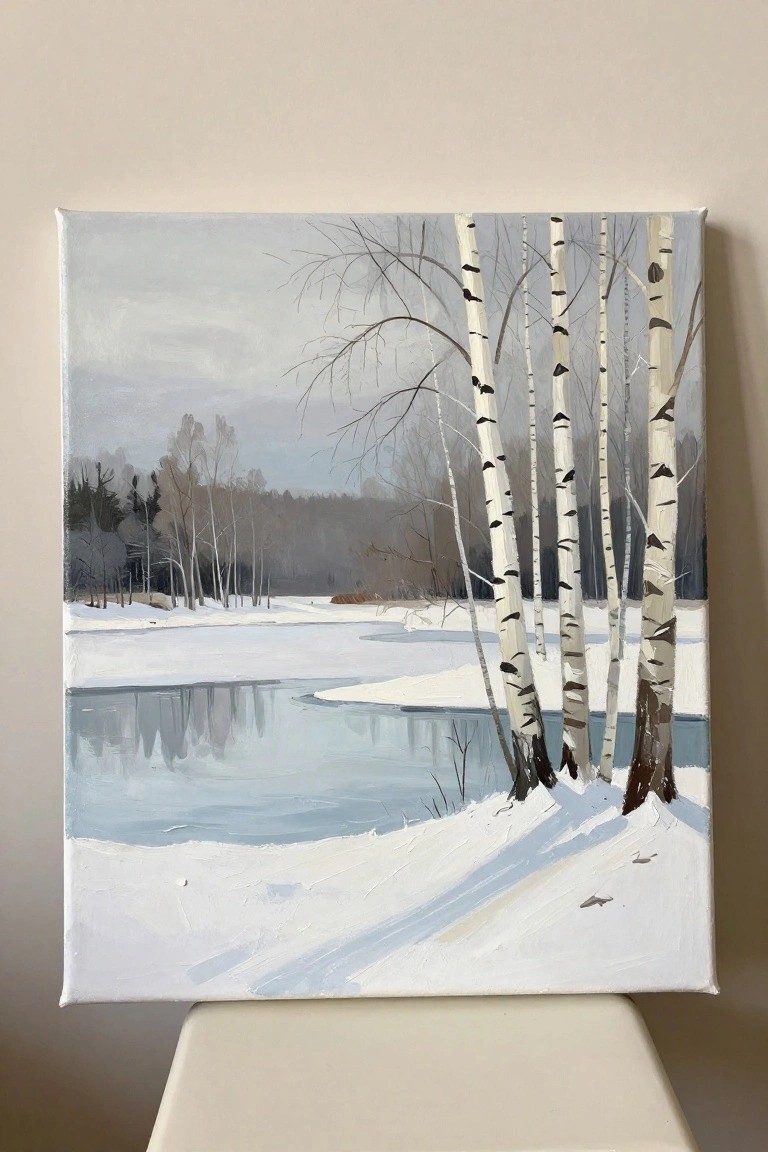
A winter landscape idea built around a calm lake with a row of birch trees along the snowy edge. The vertical trunks create a natural frame while the open water and distant treeline add depth without crowding the scene. This approach works as a seasonal landscape painting that relies on cool tones and simple silhouettes for its effect.
The narrow color range makes it straightforward to mix and block in with acrylic. You could adapt the layout by changing the water to fully frozen or adding fewer trees to fit a smaller canvas. For practice or wall art, the clear shapes and limited detail let you finish it quickly while still getting a balanced result.
Minimal Lake Scene with Soft Rock Formations and Reeds

A calm lake landscape in acrylics works well when built around soft sky-to-water gradients and a few simplified rock shapes placed at varying distances. The idea uses muted pinks, grays, and teal accents to suggest depth without heavy detail, while a small cluster of reeds creates a clear foreground anchor. This approach fits the landscape category and keeps the composition balanced through negative space and gentle color shifts.
What makes this idea useful is the simple layering of flat shapes that lets you focus on color mixing and soft blending first. You can swap the rock tones for warmer or cooler shades or move the reeds to a different corner without changing the overall layout. For canvas decor, the limited elements make it quick to finish and easy to repeat in different sizes. The color palette also translates cleanly to prints or smaller studies.
Sunset Lake with Boat Reflection

A lake landscape idea like this centers on a simple sunset scene where the sky gradients blend from soft blues into warm oranges and pinks above dark mountain shapes. The main subject is a small boat placed on the water to create a clear focal point through its reflection, which acts as a bright vertical stripe against the horizontal color bands. This fits the landscape category and gains its visual strength from the contrast between the vivid sky and the cooler foreground water.
What makes this idea useful is how the horizontal brushwork and limited color blocks make it straightforward to block in quickly on canvas. You can adapt it by swapping the mountain outlines or adjusting the boat size to fit different reference photos you already have. For practice, the strong sky-to-water contrast helps the whole piece read clearly even if your blending is still developing.
Stilted Cabin Reflection on a Lake

A stilted wooden cabin built over calm water gives this landscape idea a clear focal point through its sharp reflection that doubles the main shape. The composition works because the horizontal structure and its mirror image create natural balance while the soft tree line in the back adds depth without pulling focus away from the cabin. It falls into the landscape category with a simple architectural subject placed in a natural setting.
What makes this idea useful is the built-in symmetry that helps beginners handle reflections without extra planning. The limited color range of browns, greens, and soft blues can be swapped for warmer tones if you want a different season or time of day. For practice, this kind of subject lets you focus on clean edges and water surfaces while still producing a finished piece that works well as wall art.
Lake Scene with Tall Trees and Mirror Reflections

This landscape idea uses a row of tall trees rising from shallow water to frame a wide, open lake with distant hills. The vertical trunks and their clean reflections create a balanced layout that keeps the eye moving down the canvas without clutter. It belongs in the landscape category and succeeds because the soft color blocks and negative space in the center make the repeated shapes easy to read.
What makes this idea useful is how the reflections let you practice simple mirroring and edge control with acrylics while keeping the rest of the painting loose. You can adapt it quickly by changing the number of trees or swapping the green-yellow foliage for autumn tones. For wall art the strong vertical lines and calm palette make the piece work well at different sizes and stand out in a Pinterest feed.
Lake Sunset with Foreground Reeds

A landscape idea built around a calm lake at sunset, where the sky fills most of the canvas with blended pink and blue tones. A low horizon line lets the water reflect the sky and distant trees, while a cluster of tall reeds anchors the bottom left corner. A loose line of birds adds simple movement across the open sky area without crowding the space.
What makes this idea useful is the clear split between sky, water, and foreground, which helps keep the painting from feeling scattered. You can change the reed placement or soften the sky gradient to fit whatever colors you already have on hand. For practice, this layout works well because the reflection does a lot of the visual work once the base layers are down, and it adapts easily to different canvas sizes for wall art.
Lake Scene with Stepping Stones and Mountain Reflections

A landscape acrylic painting idea built around a calm lake with several rounded rocks placed in the foreground water. The rocks create a simple path that guides the eye toward the distant mountains and tree line, while soft reflections and a hazy sky keep the background minimal. This approach fits the landscape category and relies on layered color washes and basic shapes rather than fine detail.
What makes this idea useful is the clear division between foreground rocks and background elements, which lets you paint in stages without getting overwhelmed. The rocks can be textured with thicker acrylic while the water stays flat with thin layers, and the muted palette makes color mixing straightforward. You could reduce the number of stones for a faster version or swap the mountain shapes to match a place you have visited. For canvas decor this layout stands out on Pinterest because the horizontal bands of color read clearly even at small sizes.
Lake Sunset with Cabin Reflection and Wildflower Foreground

A landscape acrylic idea built around a calm lake at sunset, where a small cabin sits on the water and its light creates a clear reflection that runs down the center of the canvas. Dark tree shapes on both sides frame the glowing sky, while a strip of bright wildflowers in the foreground adds color and keeps the lower half from feeling empty. The composition relies on the strong horizontal line of the water and the contrast between the warm sky and cool dark trees to hold everything together.
What makes this idea useful is how the reflection handles most of the depth work, so you only need to blend a few sunset colors into the water rather than paint every ripple. The flowers can be simplified to loose brush marks or swapped for whatever colors you already have on your palette. This layout fits a standard canvas size well and stands out on Pinterest because the central reflection and bright foreground give it instant visual balance without needing fine detail.
Simple Sailboat Reflection on a Pastel Lake

A landscape idea built around a single sailboat placed dead center on the water, with its reflection creating a vertical line that splits the scene. Soft horizontal bands of color form the sky, distant mountains, and water, all kept flat and simple so the boat becomes the clear focal point. This fits the landscape category and works because the symmetry and limited palette let the composition carry the painting without extra detail.
What makes this idea useful is how the clean shapes and reflection give you an easy structure to follow on canvas. You can swap the pink tones for warmer sunset shades or stretch the mountains wider if you want a wider format. For practice or quick wall art, the idea adapts well since the flat areas paint fast and still look finished even with basic brushwork.
Frequently Asked Questions
What colors work best for creating a calm lake landscape painting?
Soft blues, greens, and gentle earth tones help set a peaceful mood. Start with a limited palette of muted shades like sky blue, sage green, and pale gray, then layer them gradually to build depth without overwhelming the scene. Adding subtle warm accents like soft peach in the sky can enhance the serene feeling while keeping the overall effect tranquil.
How do I paint realistic reflections in water for these ideas?
Use horizontal brush strokes to mirror the elements above the waterline, such as trees or mountains. Blend colors lightly with a damp brush to soften edges and create a glassy effect. Test your mixtures on a separate paper first to match the tones accurately, and remember that reflections are usually slightly darker and less detailed than the actual objects.
What composition tips help keep the scene calm and balanced?
Position the horizon line about one third from the top or bottom to give the lake plenty of space. Arrange elements like distant hills or reeds symmetrically on both sides to avoid clutter. Keep foreground details minimal so the eye rests naturally on the water, and use leading lines from the shore that fade gently into the distance.
Which techniques suit beginners trying these lake painting ideas?
Begin with a simple sketch using light pencil lines to outline the main shapes. Apply thin washes of color first to establish the background, then build up details in layers. Practice blending on scrap material to achieve smooth transitions, and focus on one element at a time, such as the sky or water, before adding trees or rocks.
What supplies are most helpful for painting these calm nature scenes?
Acrylic paints offer good control and quick drying times, while watercolor paper or stretched canvas provides a stable surface. Invest in a few medium sized round and flat brushes along with a palette knife for texture. Keep a spray bottle handy to maintain moisture in your paints, and work in good natural light to judge colors accurately.

Hi, I’m Camille.
I’m a self-taught painter and creative blogger with a soft spot for acrylic painting, color play, and all the little art ideas that make everyday life feel more inspiring.
I started this space because I’ve always believed painting should feel joyful, approachable, and a little personal. Some of my favorite pieces come from simple ideas, messy palettes, and evenings where I just felt like making something pretty.
Most of what I share begins with acrylic painting, but I also love exploring other mediums when creativity pulls me in a new direction. My goal is to collect and share painting ideas that feel fun, beautiful, and actually doable, whether the mood is calm and minimal or bright and playful.
This is a space for inspiration, experimenting, and enjoying art without overcomplicating it.