
I have been painting with acrylics for a few years now and I still find that simple projects help me the most.
When I first started I would get overwhelmed by big ideas but breaking things down into small steps made it easier to keep going.
These ideas are ones I have tried myself or shared with friends who wanted to try painting without pressure.
Each one focuses on basic techniques so you can finish something and feel good about it.
Over time doing projects like this has helped me enjoy the process more instead of worrying about the outcome.
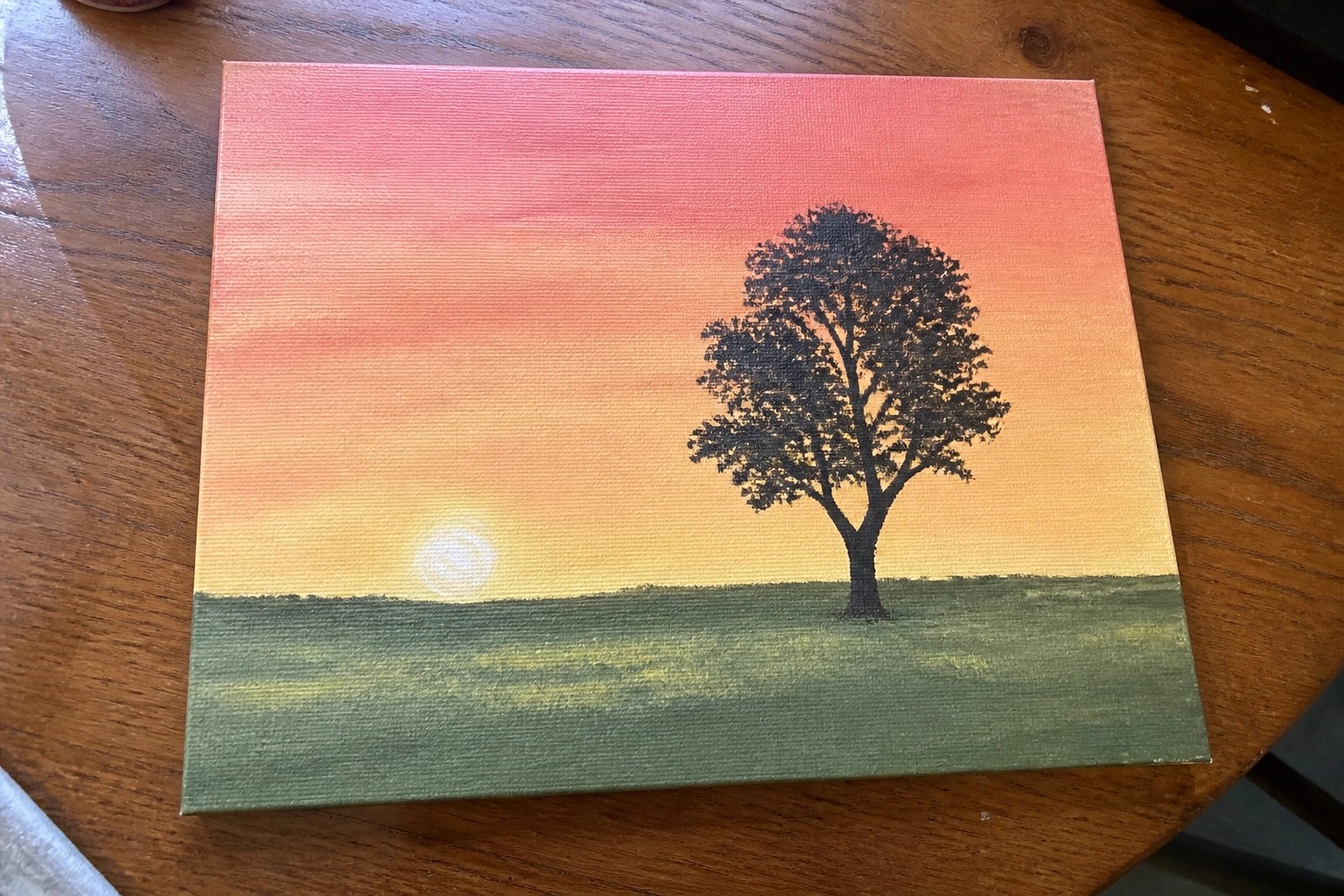
Sunset Landscape with Silhouetted Tree

A single dark tree placed against a wide open field creates a simple landscape idea that centers on a gradient sky and strong silhouette. The composition uses a low horizon line and smooth color shifts from pink to yellow to keep the focus on the sky while the tree adds a clear focal point on the right side. This approach fits the landscape category where basic shapes and color blending handle most of the visual impact.
What makes this idea useful is how the limited elements let you practice even acrylic blending without extra details. You can easily change the tree shape or shift the sky colors for different times of day while keeping the same layout. For canvas decor this kind of scene works well as a fast project that still reads clearly from a distance.
Layered Mountain Ranges Using Flat Color Blocks

A layered mountain landscape makes a strong acrylic painting idea because it builds interest through overlapping shapes and a limited color set rather than detailed rendering. Three distinct ranges sit in teal, dusty pink, and gray, each separated by clean edges and accented with thin white dashed lines. A single yellow circle placed high in the sky keeps the composition balanced without adding extra elements.
What makes this idea useful is the straightforward layout that lets you focus on color placement and edge control. The flat blocks of paint work well for practice since they require little blending, and the palette can be swapped for different seasons or room colors without changing the structure. This format also translates easily to smaller canvases or greeting cards while still reading clearly from a distance.
Minimal Coastal Scene with a Sailboat

A lone sailboat on open water makes an effective acrylic landscape idea when paired with a simple curved shoreline and a wide sky. The composition relies on a low horizon, soft color blocks for sky and water, and minimal brushwork to keep the boat as the clear focal point. Horizontal strokes in the water and sky create calm layers while the shoreline shape adds gentle movement.
What makes this idea useful is how few shapes it needs to feel finished on a canvas. You can easily change the boat size, swap the water tone, or adjust the shoreline curve to fit different room colors. For practice, this layout helps you focus on blending large areas first before adding one small sharp element like the sail. The same idea scales well for quick wall art or as a starting point for adding more boats later.
Overlapping Circles in Earthy Neutrals

An abstract idea built from large overlapping circles and solid color blocks creates a clean geometric layout that stays simple to paint. The shapes sit across a background split into warm orange and yellow sections on the left with cooler teal and cream areas on the right. The muted palette and soft edges where the circles cross keep the focus on shape and color rather than fine detail.
What makes this idea useful is how the basic layout can be adjusted by changing circle sizes or swapping in any neutral color set you already have on hand. The large blocks of color handle most of the visual weight so you can practice clean edges and simple layering without extra steps. For canvas decor this kind of abstract works especially well because it scales easily and still reads clearly from across a room.
Single Sunflower on Neutral Canvas

A single large sunflower works well as a floral acrylic idea because the round center and radiating petals give you a clear shape to build around. The bright yellow petals stand out against the plain background, while the green stem and leaves add just enough balance to keep the composition from feeling too centered. This approach fits into simple floral still life painting where the focus stays on one main subject rather than a full scene.
What makes this idea useful is that the neutral background removes the need to paint extra elements, so you can concentrate on blending the petal edges and building up the textured center. You can easily adapt it by switching to other large flowers like daisies or by using a different background tone to change the overall look. For practice, this kind of subject lets you work on value shifts in the center without having to fill the entire canvas with detail.
Three Daisies on a Mint Background

A small square canvas featuring three white daisies with yellow centers makes a straightforward floral acrylic project. The flowers sit on a soft green background with a few simple green leaves tucked around them, creating an uncluttered layout that fits nicely on a mini canvas. This type of idea works well as decorative wall art because the light background keeps the white petals bright while the yellow centers add a clear focal point.
What makes this idea useful is the limited color palette and loose petal shapes that still read clearly as daisies. You can easily swap the background to a different pastel or repeat the same flower layout on a larger canvas without much extra planning. The arrangement also translates well to greeting cards or small gifts since the design stays balanced even when scaled down. For practice, this kind of floral setup helps you focus on basic shape placement and center details before moving on to more complex subjects.
Fox with a Scarf and Bouquet

A fox character wearing a scarf and holding a small bouquet forms a cute animal acrylic painting idea that keeps the focus on simple body shapes with added accessories. The composition works because the orange fur stands out against the muted background while the scarf and flowers introduce color shifts and smaller details in one area. This fits the decorative animal category since the main forms stay large and readable.
The bold contrast between the fox and the cooler scarf tones does a lot of the work here, so the idea stays easy to paint without needing fine blending. This would be easy to turn into a series by changing the scarf pattern or swapping the flowers for different seasons. For practice, this kind of subject lets you build the main shape first then layer the accessories on top. The layout also works well for small canvases that can be displayed on an easel or shelf.
Cat Silhouette with Crescent Moon and Stars

A cat silhouette painting places a solid black shape against a dark blue night background filled with scattered stars and a bright crescent moon. This idea works through high contrast between the flat black form and the lighter sky elements, keeping the focus on clean outlines rather than shading or texture. It belongs to the animal silhouette and night scene category, where simple shapes carry the composition.
What makes this idea useful is how the flat black cat lets you finish the background first and then add the foreground in one or two layers. You can easily change the moon size, star density, or even swap the cat for another animal without altering the overall layout. For canvas decor, the graphic style holds up well at different sizes and stands out on Pinterest because the limited palette keeps it bold and easy to recognize.
Pear and Mug Still Life

A still life built around a single piece of fruit and a simple mug lets you focus on basic shapes and light in acrylics. The pear’s curved form next to the straight lines of the mug creates clear contrast, while the soft background keeps the eye on the main objects. This kind of setup fits the still life category and works with a limited palette so you can practice mixing and layering without extra complications.
What makes this idea useful is how easy it is to swap in whatever fruit or cup you already have at home. You can simplify the mug design or adjust the background color to change the mood without starting over. For canvas practice, the clean edges and modest detail level make it quick to finish in one or two sessions, and the everyday subject stands out on Pinterest when the colors stay natural and balanced.
Mushroom Trio on Green Canvas

This acrylic painting idea features three mushrooms in different sizes and earth tones placed against a solid green background with loose grass strokes along the bottom edge. The layout uses staggered heights and simple white spots to create visual interest while keeping the overall design flat and graphic. It falls into the cute decorative category and works well as a compact nature scene on a small canvas.
What makes this idea useful is how the solid background and minimal grass detail let the mushrooms stay the center of attention without extra layers. You can adapt the color palette by swapping the caps for different shades or scaling the same layout to a larger canvas for wall art. For practice, this kind of subject stays forgiving because the shapes remain clear even if the spots or stems vary slightly in placement.
Potted Succulent Cluster Still Life

A still life of three succulents in terracotta pots works well as an acrylic idea because the rounded leaf shapes and simple pot forms create clear focal points without needing intricate details. The layout places the largest plant slightly behind and centered between two smaller ones in front, which builds depth through overlapping and soft cast shadows. Muted greens against the warm brown pots and off-white background keep the color scheme limited so the focus stays on shape and subtle value changes.
What makes this idea useful is how the compact arrangement fits easily on a standard canvas while letting you practice blending edges and building soft shadows in acrylic. You could adapt it by switching the pot color to a cooler tone or stretching the spacing between plants to change the balance. For practice, this kind of subject stands out on Pinterest because the everyday houseplant theme feels familiar yet fresh when kept to a tight three-plant group.
Vertical Moon Phase Series on Neutral Canvas

A vertical lineup of moon phases creates a straightforward acrylic painting idea that fits decorative wall art. The concept relies on repeating circular shapes painted with black and white acrylic to mark each stage of the lunar cycle against a single muted background. Strong contrast between the filled and empty areas of each circle keeps the composition balanced without needing extra detail or texture.
What makes this idea useful is the simple repeat of the same circle shape, which removes the need to invent new elements as you work down the canvas. You can swap the background color or adjust the spacing between phases to fit a wider or shorter canvas. For practice, this kind of subject lets you focus on clean edges and value shifts while still producing something that reads clearly in a small photo for Pinterest.
Reflected Autumn Trees Over Calm Water

An autumn landscape idea built around tall trees with orange foliage flanking a quiet stretch of water. The composition uses the vertical lines of the trees against the horizontal water to create balance while the reflections turn the lower half into soft color repeats. This seasonal landscape fits the category of simple nature scenes that rely on color contrast between warm foliage and cooler water tones.
What makes this idea useful is how the reflections let you practice blending without needing crisp detail in the bottom half. You could shift the orange palette to spring greens or keep the same layout with different tree spacing to make a matching pair. For canvas decor this works especially well because the strong color blocks stand out even from across a room and adapt easily to different canvas sizes.
Lighthouse on Coastal Cliffs
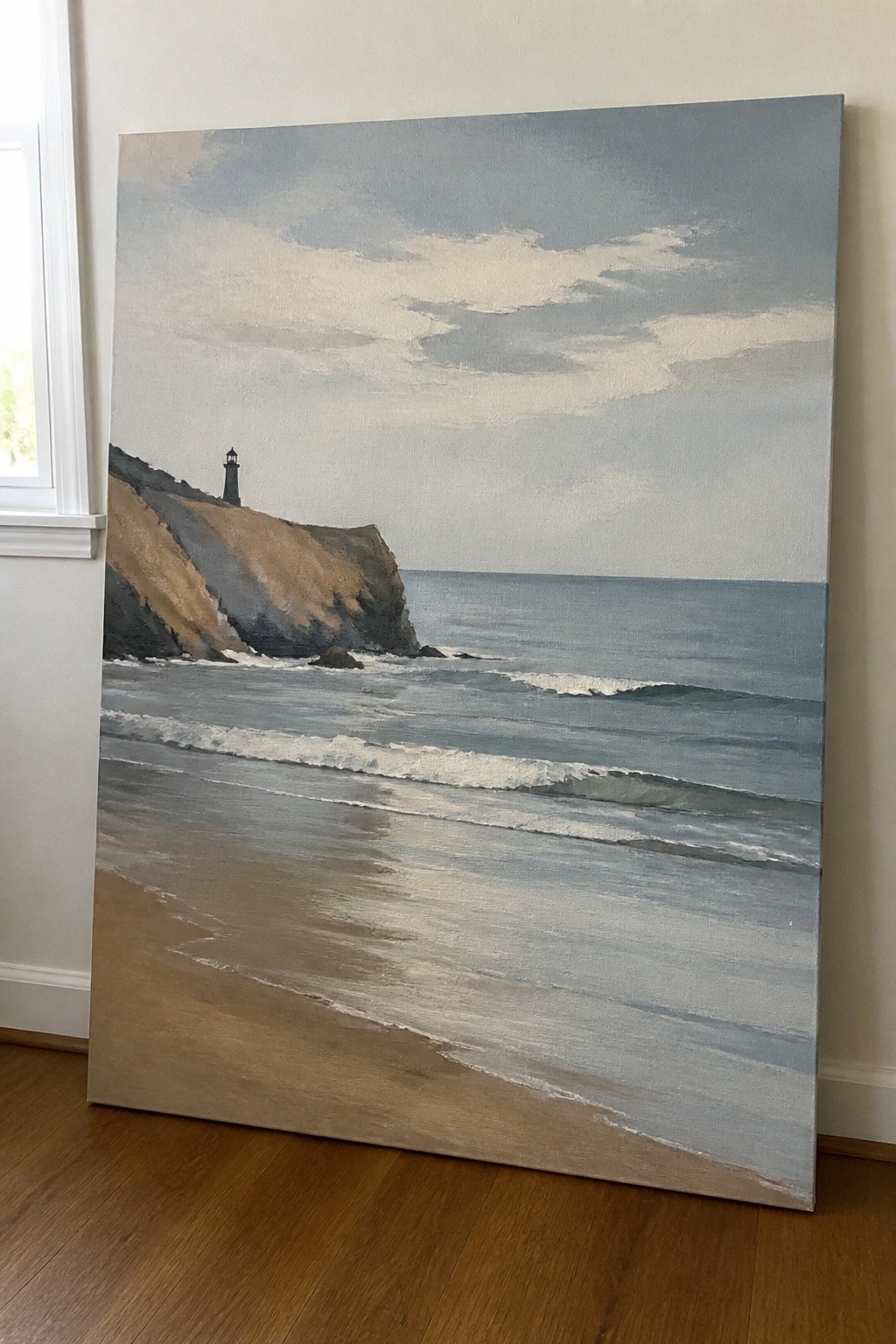
A coastal landscape built around a lighthouse on cliffs gives you a clear focal point while keeping the rest of the scene broad and manageable. The idea centers on horizontal bands of sand, water, and sky, with the cliff and lighthouse breaking the line on one side to create depth without complicated perspective. Soft color shifts in the ocean and sky do most of the work, so you can focus on simple layering rather than fine detail.
What makes this idea useful is how the layout stays readable even if you change the sky or water colors to match a different time of day. You can keep the waves to three or four loose strokes or add more rocks along the shore if you want extra texture. For practice this kind of scene helps you work on value changes across large areas, and the same composition scales easily to smaller canvases or a vertical format.
Abstract Overlapping Circles in Earthy Tones

This acrylic painting idea centers on large overlapping circles and curved shapes arranged across the canvas in a simple, graphic layout. The design uses a limited palette of muted greens, rust, teal, and mustard against a neutral base, with a few thin line details added for visual interest. The flat shapes and soft overlaps make the composition feel balanced without needing precise edges or complex layering.
What makes this idea useful is how the overlapping layout lets you build the painting one shape at a time while hiding any uneven edges. You can easily change the color order, adjust the size of individual circles, or repeat the pattern on a taller canvas to fit different spaces. For practice, this kind of abstract wall art works well because it focuses on shape placement and color choice rather than fine detail or texture work.
Monochrome City Skyline Silhouette

A city skyline painted in black and gray acrylics works well as a landscape idea because the tall building shapes create a strong graphic pattern across the canvas. The composition relies on simple blocks of dark color against a lighter sky and water area to keep the focus on the outline of the structures rather than fine details. This approach fits the decorative or wall art category since the contrast between the solid buildings and the soft cloud shapes gives the piece clear visual weight.
What makes this idea useful is how the flat shapes let you cover large areas quickly without needing advanced blending skills. The limited palette of black, gray, and white keeps the project low-pressure while still producing a finished look that works for canvas decor. You could swap in different building profiles to match a specific city or add a thin wash of color to the sky for a quick variation. For practice, this kind of subject helps build confidence with edges and negative space before moving into more complex scenes.
Pastel Three-Flower Bouquet on a Matching Background

A floral acrylic painting idea built around three overlapping blooms in cream, lavender, and pink set against a single tinted background. The layout keeps the flowers close together with broad leaves filling the gaps, which creates a compact bouquet without needing extra space or complex stems. This fits the decorative floral category and works because the soft color harmony lets the rounded shapes carry the composition.
What makes this idea useful is how the shared background tone reduces the need for sharp contrast or extra layers. You can swap the bloom colors for any pastel set or add extra leaves to adjust the density for different canvas sizes. For practice, this kind of subject lets you focus on basic shape blocking and simple leaf shapes before moving to more detailed work. The layout would also translate well to smaller canvases for quick gifts or matching wall sets.
Folk Art Owl on a Branch

This acrylic painting idea centers on a stylized owl as the main subject, using large flat color areas and repeating patterns to build a decorative animal piece. The composition keeps the owl centered on a simple branch while the dotted background and scalloped borders frame it without competing for attention. It fits the decorative wall art category because the bold shapes and limited details make the whole design easy to read from a distance.
What makes this idea useful is how the blocked-in colors and outlined shapes let you paint the owl in sections without tricky blending or wet-on-wet work. The color palette helps this stand out as canvas decor, and you could swap the teal and gold accents for other tones to match different rooms or seasons. For practice, this kind of subject works well because the patterns on the body and leaves give you a chance to repeat small shapes without needing perfect realism.
Vertical Color Gradient Stripes

This acrylic idea centers on three vertical bands of color that move from a deep coral red into a vivid orange and then a pale pink. The slight blending at each division creates a soft transition while keeping the overall layout clean and graphic. It works as a basic abstract color study that relies on bold saturation and simple vertical composition to hold visual interest.
What makes this idea useful is how few colors and steps it actually requires on a standard canvas. You can swap the palette for any three related shades to match decor or try different widths for the bands without changing the core layout. The strong color contrast makes the finished piece stand out in photos, which helps it perform well as a quick Pinterest project or beginner canvas exercise.
Potted Cactus with Clean Shapes and Stripes

A cactus in a terracotta pot works well as an acrylic subject because the overlapping pads are built from basic rounded forms that you can fill with solid green tones. The warm orange pot creates clear contrast against both the green and the white canvas, while the black stripes underneath add a simple graphic element that anchors the whole piece. This approach fits into decorative still life or minimalist plant painting, where shape and color placement matter more than fine texture or shading.
What makes this idea useful is how the large flat areas let you focus on even coverage and edge control without fighting small details. You can easily swap the stripe pattern for a different background or adjust the pot color to fit whatever decor you have in mind. For practice, this kind of subject helps build confidence with composition because the shapes stay readable even if your brushwork stays basic.
Striped Vase Floral Still Life

A striped vase with three flowers forms a straightforward still life idea for acrylic painting. The main subject centers on the vase itself, built from bold horizontal bands of blue and cream, holding an orange bloom, a blue bloom, and a white bloom on simple green stems. The neutral background and flat green base keep attention on the clean shapes and the contrast between the patterned vase and the soft flower colors.
What makes this idea useful is the built-in structure from the stripes, which reduces the need for precise drawing or complex shading. You can swap the flower colors, drop one bloom, or change the stripe width to fit a different canvas size without losing the overall look. For practice, this kind of still life gives quick results that still read clearly as finished wall art. The limited palette also makes it easy to adapt for seasonal versions or to match existing room colors.
Sailboat Horizon Seascape

A lone sailboat on the water forms a straightforward seascape idea that works well in acrylics. The layout divides the canvas into sky, open sea, and a thin strip of beach, keeping the boat as the single focal point against a simple horizon line. Gradual color shifts from light sky down through deeper blues to the sandy edge create visual balance with very little added detail.
What makes this idea useful is how few shapes it needs to read clearly on canvas. You can change the boat size, swap the sky tones, or extend the beach area to fit different canvas proportions without changing the core layout. The clean separation between sections makes it easy to practice basic blending and edge control while still producing something that looks finished for wall display or quick gifts.
Gradient Sunset Mountains

A landscape painting built around a large orange sun set against a smooth purple-to-orange sky gradient creates a simple but striking scene. Dark mountain silhouettes with a row of pine trees along the base give the composition clear horizontal layers and strong contrast. Scattered white stars in the upper sky turn the sunset into a dusk-to-night transition without adding extra elements.
What makes this idea useful is the easy top-to-bottom color blending that requires only basic brushwork and no small details. You can change the sun size, shift the mountain peaks, or swap the star placement to match different canvas sizes or color preferences. The bold shapes and limited palette make it a fast project that still looks finished on a wall or in a photo for sharing.
Color Blocked Bird with Patterned Branch

A graphic bird painting uses large flat areas of color for the head, body, and tail, with a patterned wing and speckled chest to create visual interest through simple repeats rather than fine detail. The bird perches on a branch treated with its own dot pattern and a single leaf, all set against a plain background so the shapes stay clear and readable. This fits the animal or decorative category and stays effective because the bold outlines and limited color choices keep the whole piece balanced without extra elements.
What makes this idea useful is how the flat shapes let you focus on clean edges and color placement instead of blending or texture work. You can swap the wing pattern or branch dots for stripes or other repeats, or change the bird colors to match a different room. For canvas art, something like this works especially well for practice because the high contrast makes it easy to adapt into other bird species while still looking finished.
Frequently Asked Questions
1. What basic supplies do I need to begin these simple acrylic canvas projects? Start with a few small canvases in sizes like 8 by 10 inches, a basic set of acrylic paints in primary colors plus white and black, a couple of synthetic brushes in different sizes, a palette for mixing, and a cup of water for cleaning. These items keep things affordable and focused so you can jump into the first easy idea without overwhelm. Add a few paper towels for wiping brushes and you are ready to build skills one painting at a time.
2. How should a beginner choose which of the 24 ideas to try first? Pick the simplest designs that use only two or three colors and basic shapes such as circles or stripes. This approach lets you finish a quick win and gain confidence before moving to slightly more detailed projects. Look for ideas that focus on one new skill like blending or layering so each completed canvas teaches you something useful for the next one.
3. What is the best way to handle mistakes without losing motivation? Acrylic paint dries fast and covers well so you can simply paint over any area you do not like with a fresh coat of color. Keep a small practice canvas nearby to test corrections first. Remind yourself that each project is a step forward and that visible brush marks or small adjustments often add character rather than ruin the piece.
4. How can I make time for these projects when my schedule is busy? Set aside just 20 to 30 minutes per session and choose ideas that can be completed in two or three short sittings. Break larger canvases into sections and work on one section daily. This steady pace keeps momentum high and turns painting into a relaxing habit that builds confidence without feeling like a big commitment.
5. What should I do after finishing a project to track my progress? Take a photo of each finished canvas and keep the images in a folder or notebook. Compare early paintings with later ones every few weeks to see how your brush control and color choices have improved. This visual record reinforces the idea that small consistent efforts lead to noticeable growth and encourages you to keep going.

Hi, I’m Camille.
I’m a self-taught painter and creative blogger with a soft spot for acrylic painting, color play, and all the little art ideas that make everyday life feel more inspiring.
I started this space because I’ve always believed painting should feel joyful, approachable, and a little personal. Some of my favorite pieces come from simple ideas, messy palettes, and evenings where I just felt like making something pretty.
Most of what I share begins with acrylic painting, but I also love exploring other mediums when creativity pulls me in a new direction. My goal is to collect and share painting ideas that feel fun, beautiful, and actually doable, whether the mood is calm and minimal or bright and playful.
This is a space for inspiration, experimenting, and enjoying art without overcomplicating it.