

I started painting animals in acrylics a while back because the medium handles details well on canvas.
Wildlife and birds have been my main focus since then.
I put together these ideas after trying out different approaches in my own studio.
Some are straightforward while others add a bit more layering.
You might find one or two that fit what you want to try next.
Fox Portrait with Teal and Gold Background

A close-up fox portrait in acrylics works well as a wildlife subject because the three-quarter angle shows both the face and the thick fur around the neck. The teal and gold background creates strong contrast that keeps the warm orange tones of the fox forward while still giving the piece a finished look. This type of animal painting fits the decorative wall art category since the composition stays focused on the head and shoulders without needing extra elements.
What makes this idea useful is the limited color palette that helps the fox stand out without complicated blending. The background texture can be simplified with just a couple of shades if you want a quicker version or swapped for different accent colors to match a room. For practice, this kind of tight crop lets you work on fur strokes and eye detail without painting a full scene. The same layout can be adapted to other animals like wolves or deer by keeping the same angle and background approach.
Close-Up Bald Eagle Acrylic Portrait

A bald eagle head portrait in acrylics focuses on the sharp contrast between the bright white feathers, golden beak, and dark background. The idea uses a tight crop around the head and eye to keep the composition simple while letting the strong color differences carry the visual weight. This approach fits the wildlife animal category and works because the limited background keeps attention on the bird’s key features.
What makes this idea useful is the high contrast that lets acrylics cover the dark areas quickly without extra blending. You can adapt it by swapping in other raptors or adjusting the background tone to match different room colors. For canvas decor, the centered head layout prints well and stands out in online searches for bird paintings.
Elephant Herd Silhouettes Against a Sunset Sky

This acrylic painting idea uses a line of elephants as dark silhouettes moving across a warm savanna at sunset. The large circle sun and blended orange-red sky create a simple landscape backdrop that keeps attention on the animal shapes. It works as an animal and wildlife acrylic painting where bold contrast and flat color areas replace fine detail.
What makes this idea useful is the silhouette style that hides most texture and lets you focus on shape and placement instead. You can easily change the number of elephants or swap the color scheme to cooler tones for a different mood. For canvas decor the horizontal layout fits wide walls well and the limited detail keeps it beginner approachable while still looking finished.
Vibrant Kingfisher Bird on a Branch

A kingfisher wildlife painting works well as an acrylic animal canvas idea because it centers on one clear subject with strong color blocks in blue and orange. The bird sits on a horizontal branch that runs across the lower third, with simple water lines added below to give context without crowding the composition. This layout keeps the focus on the subject while the light background makes the colors pop through contrast rather than heavy detail.
What makes this idea useful is the straightforward placement of the main subject that leaves room to adjust the branch angle or water depth if needed. The color choices stay bold enough to show up from a distance, which helps when the finished piece is used for wall art or gifts. For practice you can simplify the water to just a few strokes and still keep the same impact, or swap the background tone to match a different room.
Stacked Owl Tower Canvas Painting

A vertical stack of three owls in different colors creates a simple but eye-catching acrylic painting idea that works well on a tall, narrow canvas. Each owl gets its own solid color with basic belly patterns, and the scattered dots and small leaves fill the background just enough to keep the design balanced. This approach fits the cute animal category for decorative wall art, where flat shapes and clear color blocks keep the composition clean and readable from a distance.
What makes this idea useful is how the stacked layout scales easily to different canvas heights without needing extra details. You can swap the three colors or change the belly patterns to use up leftover paint, and the same structure works for other animals like birds or cats if you want a quick variation. For canvas decor or small gifts, the bold color separation makes the painting stand out even when kept simple.
Centered Deer in a Forest Setting

A single deer placed in the middle of a forest creates a direct focal point for an acrylic animal painting. Vertical tree trunks in the background add depth through gradual color changes without pulling attention away from the subject. This layout works as a wildlife piece because the soft, blended surroundings keep the composition balanced and easy to read from a distance.
What makes this idea useful is the simple placement of the deer that lets you focus on basic animal shapes before adding background layers. You can swap the tree tones for cooler or warmer shades depending on the season or room colors you want to match. For canvas art, this kind of subject stands out on Pinterest when the animal stays sharp against a lighter, less detailed backdrop.
Two Penguins with Water Reflection
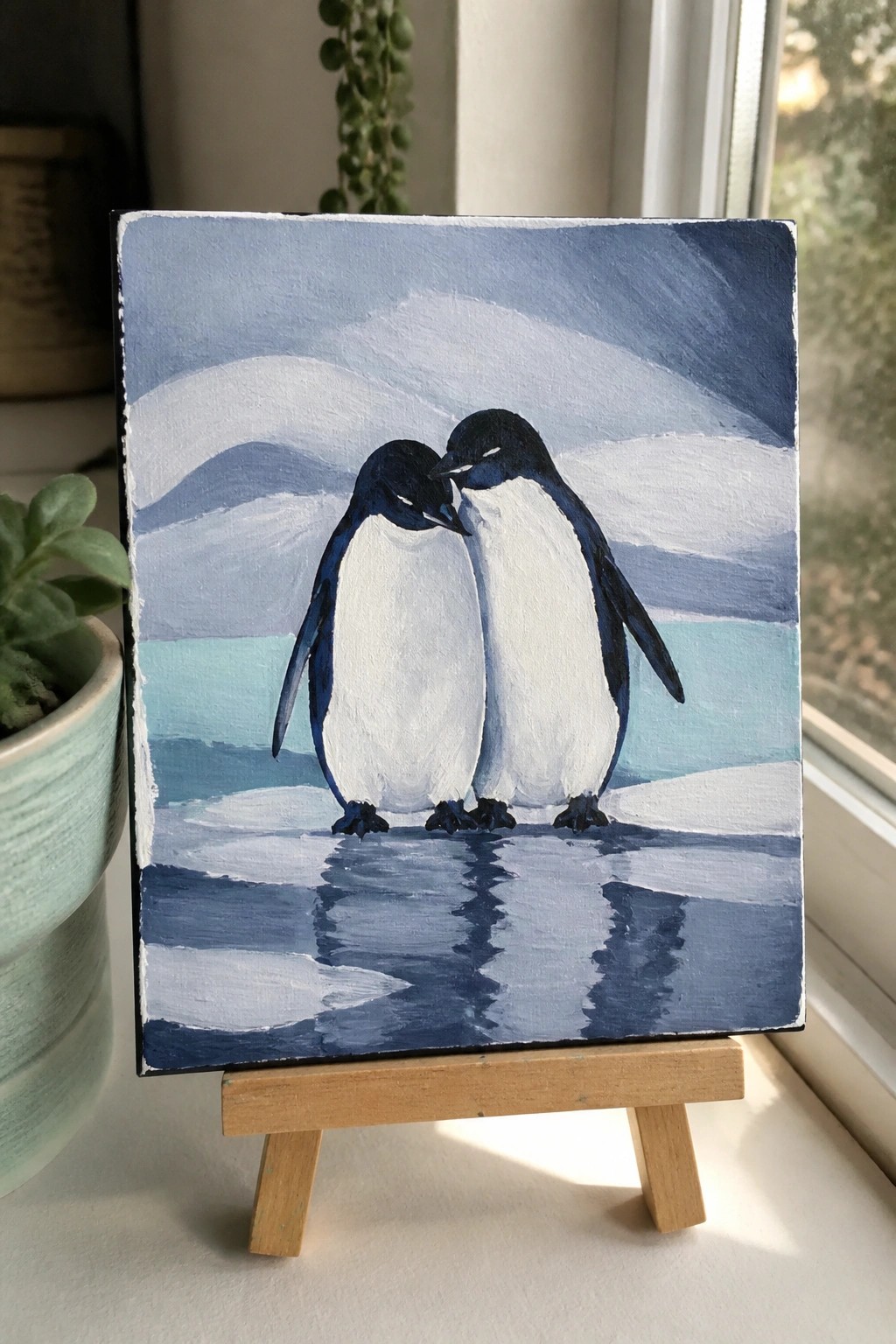
A pair of penguins forms the core of this acrylic painting idea, using their dark backs and white fronts for strong value contrast against a pale icy setting. The composition centers the birds side by side with beaks close, while their mirrored shapes in the water below create simple symmetry. Cool blue tones in the sky and water keep the focus on the animals and give the scene a clean, limited palette.
The bold shapes of the penguins let the idea translate quickly onto canvas without fine detail. Limited colors keep mixing simple and the reflection adds interest without extra work. This kind of wildlife subject stands out on Pinterest because the pairing feels complete on its own, and you could easily personalize it by adjusting the background hills or trying different blue mixes.
Hummingbird with Bold Geometric Color Blocks

A hummingbird in flight works well as an acrylic subject when set against large overlapping circles that divide the background into flat color sections. The idea relies on strong contrast between the bird’s layered green and teal feathers and the simple coral, yellow, and beige shapes behind it. This approach falls into decorative animal wall art where the clean shapes keep the focus on the subject without extra detail or scenery.
What makes this idea useful is how the large color blocks do most of the layout work, so you can spend time on the bird without worrying about a complicated background. You could easily change the coral and yellow to other bright tones to fit different decor or drop one of the shapes if you want a faster version on a smaller canvas. For practice or gifts, the high-contrast style helps the finished piece stand out clearly in photos, which is useful if you share work online.
Rhino Close-Up Portrait in Muted Tones

A close-up rhino portrait works as a strong acrylic wildlife idea because it focuses on the animal’s face and horn structure with layered gray tones and selective warm accents on the ears and horn edges. The centered composition draws attention to the eye and snout while the neutral background keeps the emphasis on the subject without distraction. This type of animal painting fits well for canvas wall art when the goal is a realistic but not overly busy result.
What makes this idea useful is the clear opportunity to practice building form through value shifts rather than bright colors. The limited palette helps beginners avoid color mixing overwhelm while still allowing room to add subtle highlights or deepen shadows for more dimension. For wall art, the same layout could be adapted with a darker background or slightly larger horn details to change the mood. It also translates easily to smaller canvases if you want a quicker practice piece before committing to a bigger version.
Flamingo Trio in Vertical Canvas Format

A group of three flamingos works well as an acrylic wildlife subject on a tall canvas. The idea places the birds at staggered heights with simple reflections below to fill the vertical space and keep the composition balanced. Soft blended background washes in teal and peach let the coral birds stand out without needing heavy detail or complex scenery.
What makes this idea useful is the basic flamingo shapes, which are quick to sketch and block in with acrylic before adding a few feather strokes. The color contrast between the bright birds and the muted background makes the piece easy to adapt by swapping the wash colors to fit different wall tones. For canvas decor, a layout like this stands out on Pinterest because the tall format and clean reflections give it a finished look without requiring advanced techniques.
Leopard Close-Up Face Study

A leopard portrait idea works well as a focused acrylic wildlife painting by using a tight crop on the face so the eye and muzzle fill most of the canvas. The pattern of dark spots against lighter fur creates built-in contrast that guides the eye straight to the center without extra elements. This approach fits the animal category because the natural markings supply the main texture and visual interest.
What makes this idea useful is that the tight crop removes the need to invent a background or full body. You can adapt the same layout for other big cats by swapping spot size or eye color while keeping the same head angle. For canvas decor the intense eye gives the piece strong presence on a wall, and the idea is easy to simplify by reducing the number of spots if you want a quicker version.
Seagull Soaring Over Rocky Shoreline

A flying seagull serves as the central subject in this acrylic idea, placed high on the canvas with a rocky coastline and ocean below to create a balanced wildlife scene. The painting combines an animal focus with a straightforward landscape, using the bird’s light body against the darker rocks and blue water for clear contrast. This setup keeps the composition effective by letting the seagull occupy the upper space while the shoreline adds context without competing for attention.
What makes this idea useful is the straightforward layering of sky, rocks, and water, which lets you build the background first before placing the bird on top. The color choices stay limited to blues, grays, and earth tones, so the same layout adapts quickly if you swap in a different bird or crop the rocks tighter for a smaller canvas. For practice, this kind of subject works well because the wing shapes and wave lines stay simple enough to block in with basic brushes while still looking finished on a standard canvas size.
Bear Holding a Bouquet Painting

A bear holding flowers makes a straightforward animal painting idea that pairs a rounded central subject with a small cluster of blooms. The layout keeps the bear large on the canvas while the flowers add color and break up the lower half. Soft brown tones against an off-white background create clear contrast without needing extra layers or details.
What makes this idea useful is how the basic shapes work well on small canvases and need only a few colors. You can change the flower mix or background shade to fit different seasons or match existing decor. For practice, this kind of centered animal subject helps build confidence with form and simple color blocking while still producing a finished piece that looks good on its own.
Wading Heron with Soft Reflection and Reeds
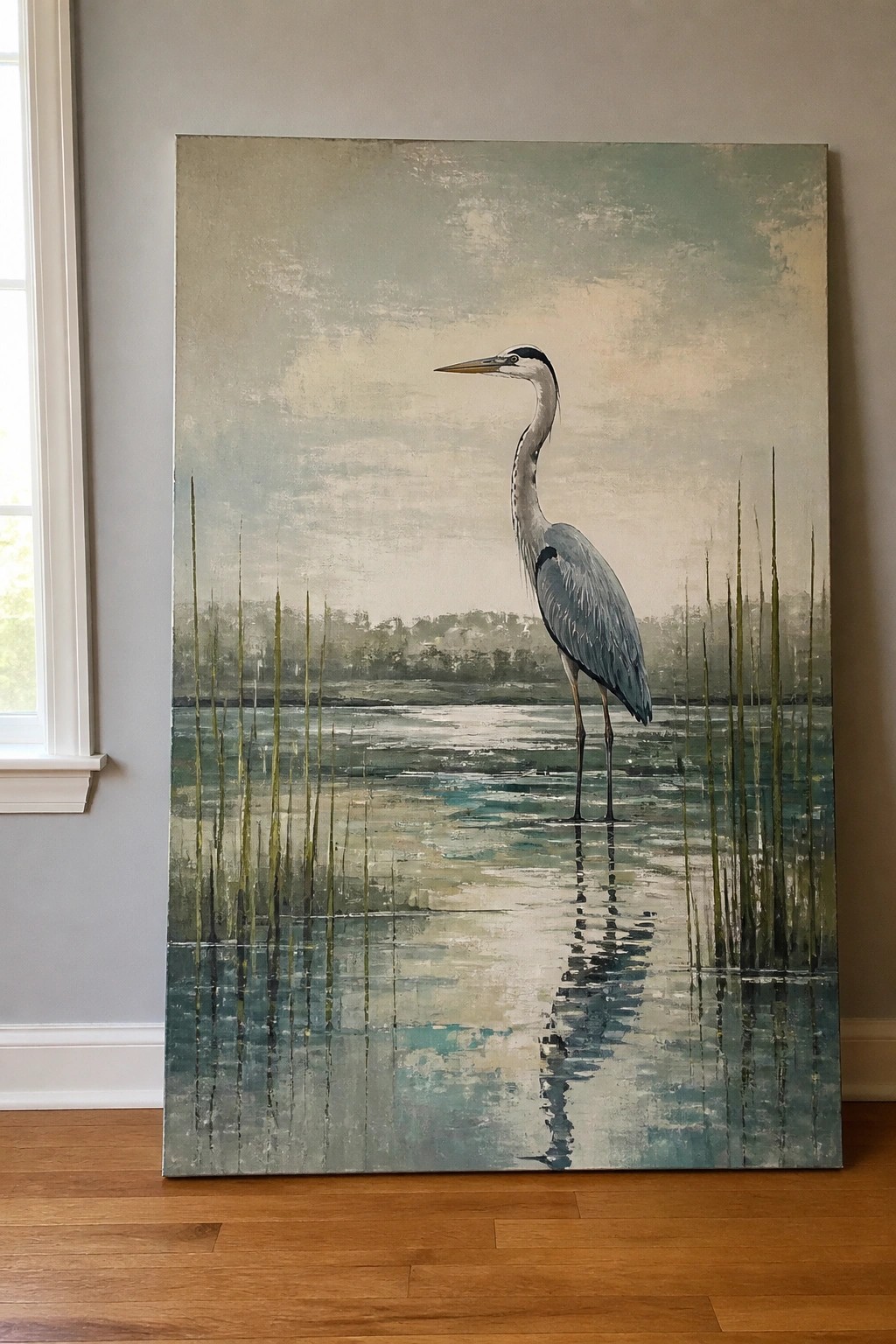
A tall wading bird placed off-center against a muted sky and water forms the core of this wildlife acrylic idea. Vertical reeds on both sides create natural framing while the reflection below doubles the height of the composition without adding extra elements. The soft background keeps the focus on the bird’s simple shape and the contrast of its long neck against the horizontal water lines.
What makes this idea useful is the narrow color range that reduces the need for complex mixing while still giving the scene depth. You can adapt it by changing the bird species or shortening the reeds to match a smaller canvas. For wall art the layout works because the vertical format fits standard stretched canvases and the calm tones suit living room or office spaces. The reflection is easy to build with light washes once the main bird and reeds are blocked in.
Squirrel with Acorn and Autumn Leaves

A centered squirrel holding an acorn makes a strong focal point for an acrylic animal painting. The idea pairs the main subject with a loose border of oak leaves in warm fall tones to keep the composition balanced without extra elements. This approach fits the cute wildlife category, where the orange-brown palette and simple background let the figure stand out clearly on canvas.
What makes this idea useful is the single-subject layout that stays easy to scale down for smaller canvases or simplify by reducing leaf count. The color choices in rusty reds and muted greens translate well to seasonal wall art or quick gifts, and you can swap in different leaf shapes if you want to personalize it for another time of year. For practice, the clear edges around the squirrel help keep the focus tight while still leaving room to build up fur texture.
Sleeping Fox Curled in Simple Shapes
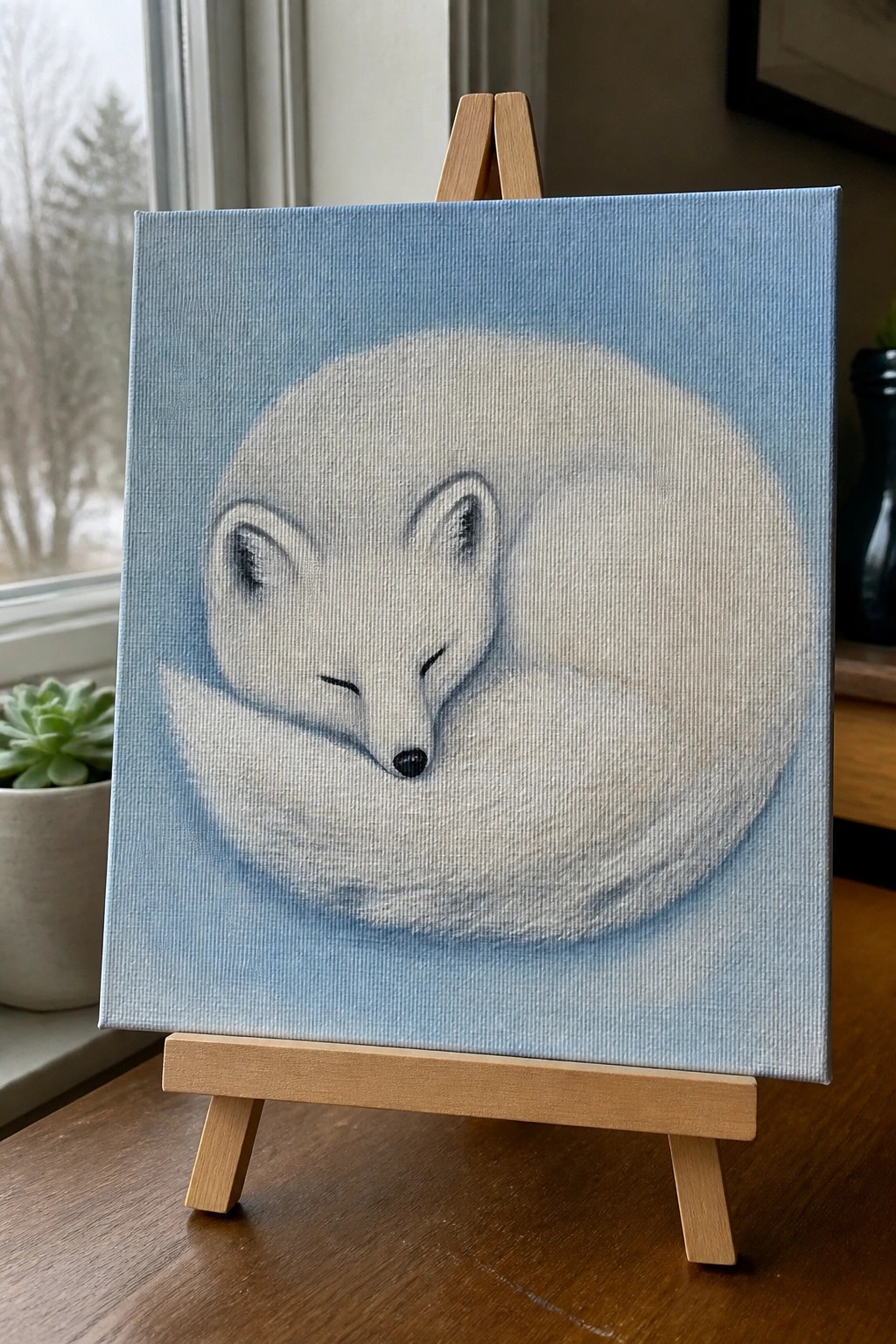
A curled sleeping fox works as an acrylic animal painting idea because the rounded body shape forms a clean, centered composition on the canvas. Light gray and white layers build the form against a flat blue background, keeping the focus tight without extra elements. This approach fits the cute animal category and translates easily into wall art or small canvas decor.
What makes this idea useful is how the basic oval layout reduces the need for complex drawing before painting starts. You can swap the blue background for another soft tone or simplify the fur with fewer blends to match your skill level. For canvas art, something like this adapts well to different sizes and still reads clearly from a distance, which helps it stand out in a feed of wildlife ideas.
Overlapping Peacock Feather Patterns

This acrylic painting idea centers on filling a canvas with stylized peacock feathers arranged in overlapping layers. The design uses repeated fan shapes and central eye motifs in teal, blue, green, and gold to create a dense pattern that reads as wildlife-inspired wall art. The composition stays effective because the circular forms and color blocks build depth through simple repetition rather than intricate detail.
What makes this idea useful is that the repeating shapes can be blocked in first, then refined with brushwork and accents without needing perfect symmetry. You could scale it down to fewer feathers for a smaller canvas or swap the gold for warmer tones to match different decor. The bold color contrast also helps the finished piece stand out in a grid of wildlife or bird-themed paintings on Pinterest.
Moonlit Wolf Silhouette on a Rocky Peak
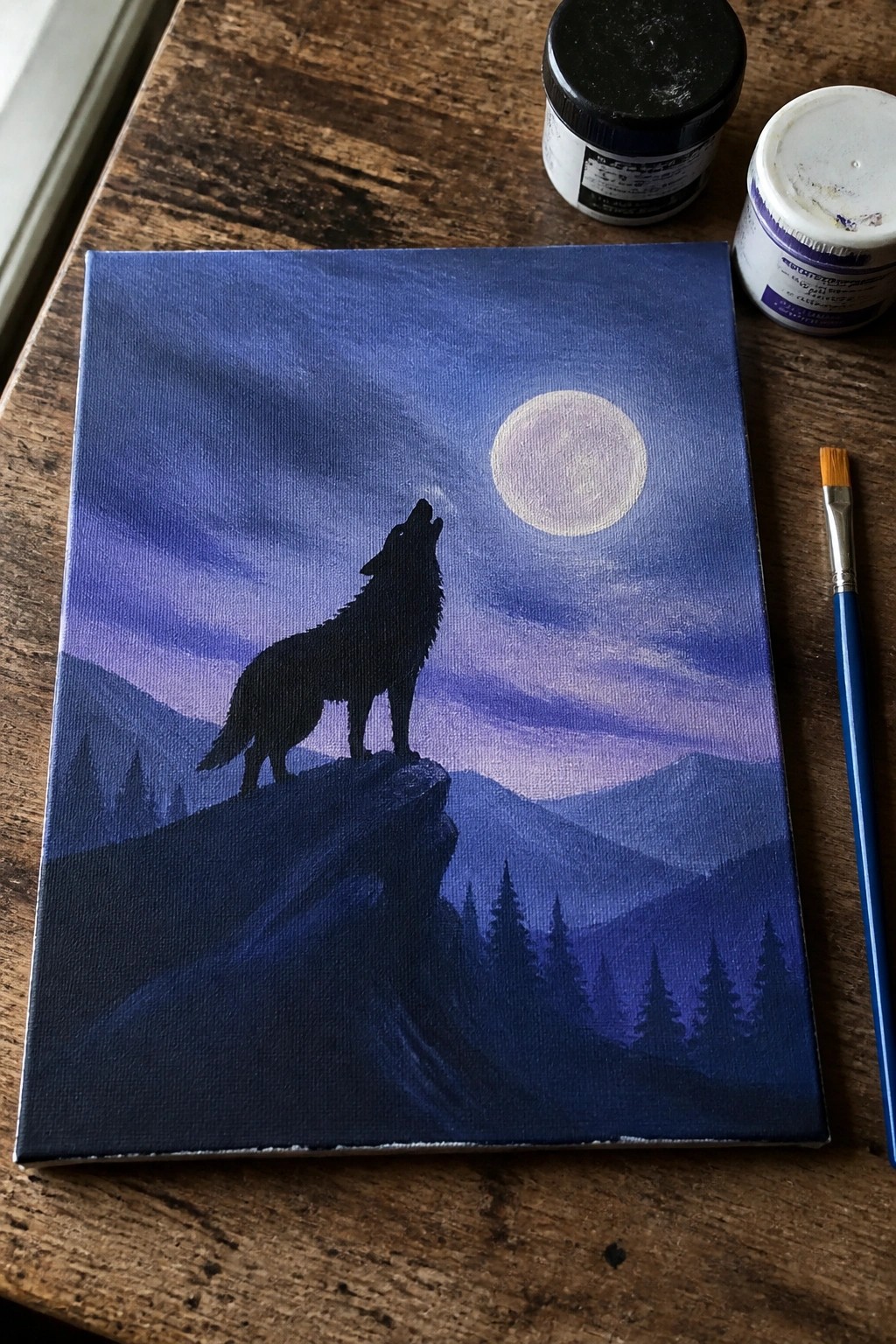
A wolf silhouette in solid black against a blended night sky gives this acrylic idea a clean, graphic look that keeps the focus on shape and placement. The full moon and receding mountain layers in muted blues and purples create depth through simple value shifts rather than detail work. This type of animal painting works well in the wildlife category because it uses strong contrast and limited elements to define the scene.
What makes this idea useful is how the silhouette removes the need to paint fur or facial features, so beginners can finish it on a single canvas without getting stuck on small details. The same layout can be adapted by changing the sky colors to sunset tones or swapping the wolf for another animal that shares a similar outline. For practice or quick wall art, the high-contrast moon and dark shape make the painting read well even when viewed small, which helps it perform on Pinterest.
Bold Bird on a Branch with Bright Yellow Backdrop
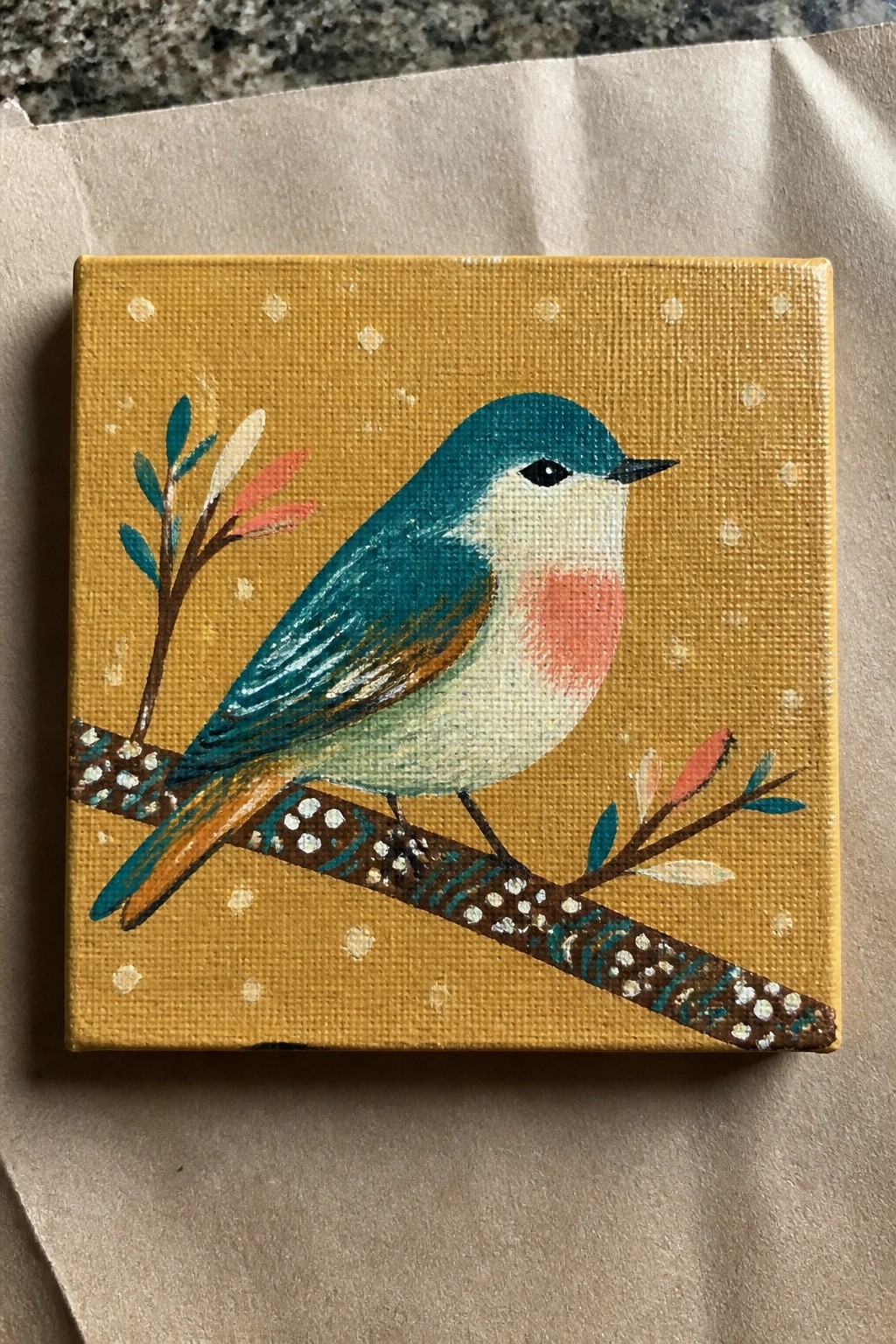
A small canvas bird painting idea like this relies on simple shapes and strong color contrast to create a clean wildlife subject. The teal and coral tones on the bird stand out immediately against the solid yellow background dotted with white, while the single brown branch gives the composition a natural anchor without extra elements. This approach fits squarely into the decorative animal category and works especially well for quick acrylic pieces on square canvases.
What makes this idea useful is how the limited color blocks let you finish the main subject fast with basic layering. You can easily swap the yellow for other bold backgrounds or adjust the bird’s chest color to match different decor. For practice, this kind of subject helps you focus on shape and edge control before adding more detail, and it translates well to other small canvas sizes for gifts or wall sets.
Moose Portrait with Geometric Triangle Backdrop
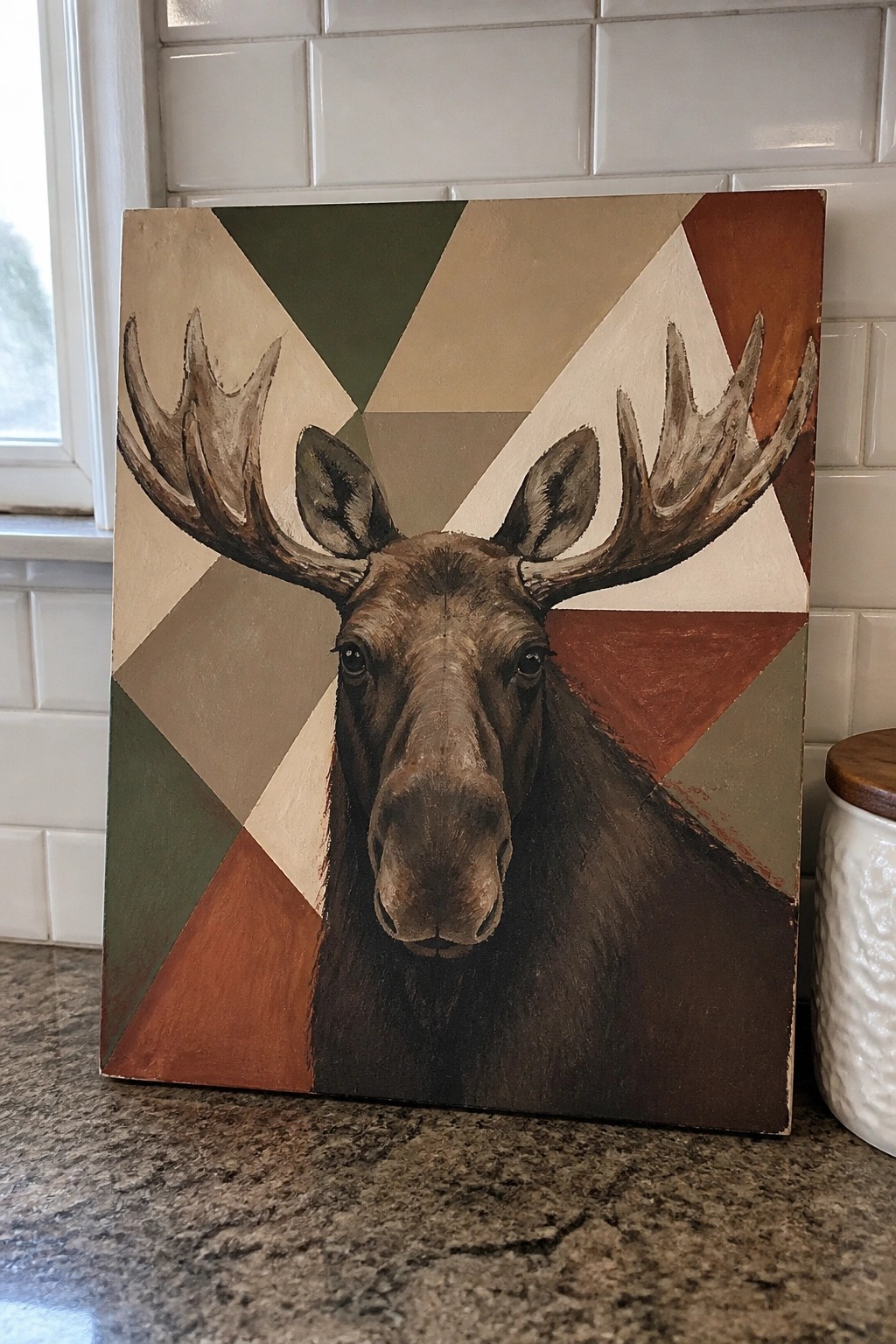
A moose head painted in realistic brown tones paired with a background of flat triangles in earthy greens, browns, and rust creates a strong animal painting idea. The layout works by keeping the moose centered and detailed while the surrounding shapes stay simple and angular, which gives clear separation between the subject and the modern background. This fits into the animal and decorative wall art category because it blends wildlife with graphic design elements without needing heavy texture or blending.
What makes this idea useful is that the background triangles can be painted first with straight edges and solid colors, leaving the moose to be added on top with standard layering. The limited earthy palette reduces color mixing decisions while still creating enough contrast to keep the focus on the animal. This would be easy to adapt by changing the moose to another large animal or adjusting the triangle sizes to match a different canvas shape. For practice, the split between clean shapes and the central subject helps build both control and detail work at the same time.
Graphic Toucan in Bold Flat Colors

A toucan rendered with large blocks of solid color against a teal background creates a clean animal portrait that reads well from a distance. The idea relies on strong shapes, high contrast between the black body and bright beak, and surrounding leaf forms to fill the canvas without extra detail. This approach fits the decorative animal category and works as straightforward wall art on a standard canvas.
What makes this idea useful is how the flat style removes the need for blending or texture work, letting you focus on shape placement and color choices. You could swap the bird for another species or change the background hue while keeping the same branch and leaf layout. The limited palette also makes it easy to match with existing room colors or turn into a quick weekend canvas project.
Three Playful Foxes in a Meadow Scene
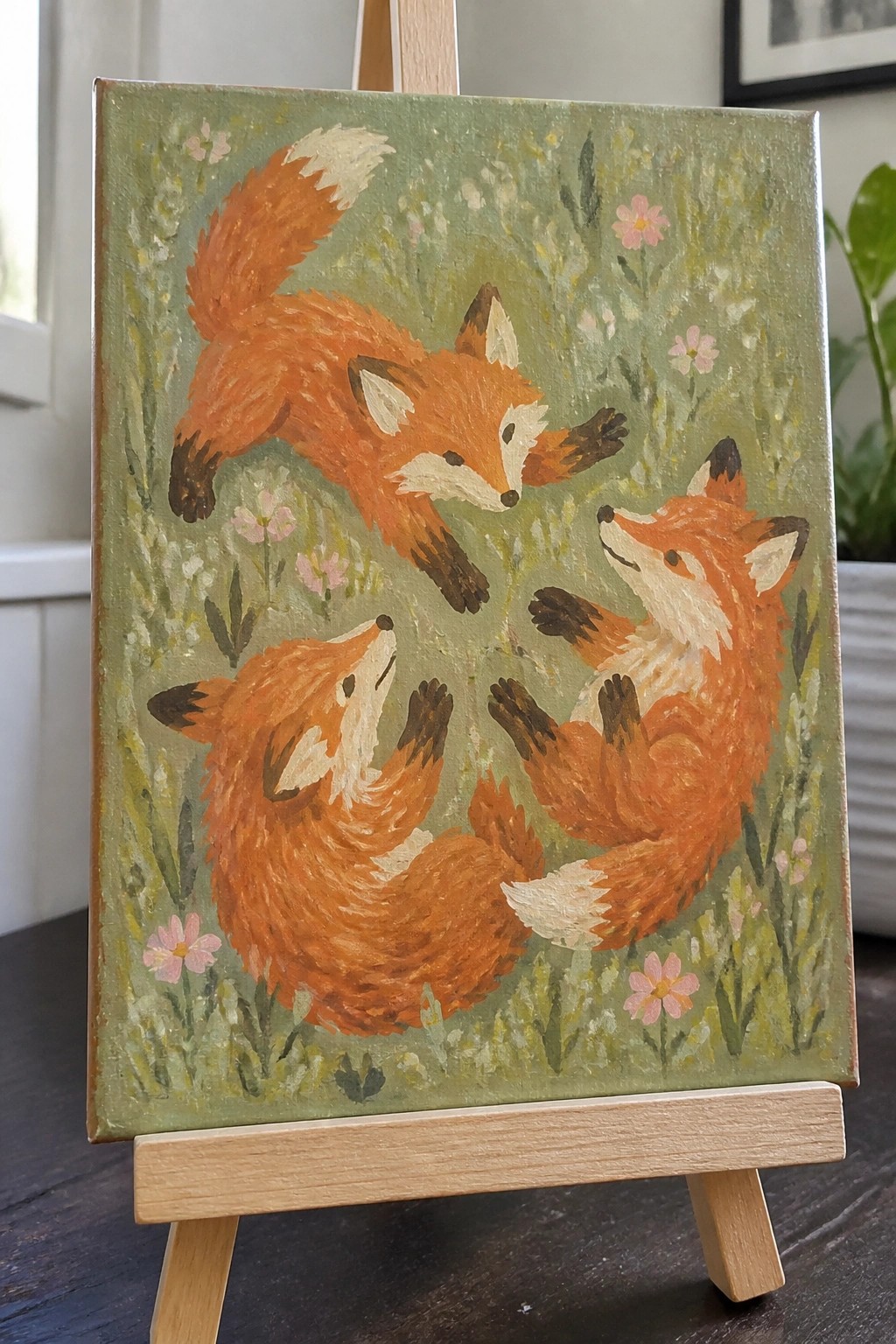
A group of three foxes posed in overlapping, curved positions creates a simple yet dynamic animal painting idea. The concept keeps the background light with a muted green wash and scattered pink flowers so the warm orange fur stays the main focus. Rounded body shapes and minimal facial details make this a straightforward example of cute animal acrylic work that still feels lively on canvas.
What makes this idea useful is the way the foxes’ bodies overlap, which reduces the need for perfect anatomy. The color scheme of orange against soft green translates well to different canvas sizes or even smaller studies. For practice, this layout works because the flower details can be added last with quick dabs, and the same composition can be simplified further by dropping a couple of flowers or adjusting the fox count.
Vertical Canvas of Silhouetted Birds in a Gradient Sky

A flock of birds in loose formation creates a clean wildlife painting idea when placed across a tall vertical canvas with a smooth sky gradient. The main concept uses dark bird shapes against shifting bands of blue, pink, and pale yellow to suggest movement and distance while keeping the focus on the overall layout rather than individual feather details. This approach fits the animal and landscape category by pairing simple silhouettes with a horizon line and color transition.
What makes this idea useful is the way the silhouettes reduce the need for complex bird anatomy so you can practice blending acrylics on the background instead. You could easily swap the pink tones for deeper oranges or keep the palette cool for a different season. For wall art the vertical format works well in narrow spaces and the repeated shapes make the piece easy to scale up or simplify by removing some birds if you want a quicker version.
Frequently Asked Questions
What supplies work best for acrylic animal paintings on canvas?
Acrylic paints, a variety of brushes including flat and round tips, a stretched canvas or canvas board, and a palette for mixing colors form the core supplies. Add a few tubes of titanium white, burnt umber, and ultramarine blue as versatile base tones for wildlife subjects. Include a spray bottle for keeping paints moist during longer sessions and some paper towels for blending. Start with student grade paints if you are new to the medium since they cost less while still delivering good coverage for birds and mammals.
How do I choose reference photos for wildlife and bird ideas?
Select high resolution photos that show clear details of fur patterns, feather structures, and natural lighting on the animal. Look for images taken in similar habitats to the scene you want to create so the colors and shadows match. Multiple angles of the same subject help when you need to adjust poses or add movement. Free stock sites and wildlife photography books offer reliable options without copyright concerns for personal practice.
What techniques help create realistic fur and feathers in acrylic?
Build layers gradually by starting with a base color then adding thin glazes of darker shades for depth. Use a dry brush technique with short strokes to suggest individual hairs or feather edges without overworking the paint. For birds focus on directional strokes that follow the wing and body contours while keeping the background slightly blurred to make the subject stand out. Practice on scrap canvas first to test pressure and brush angle before applying to the final piece.
How can I make the background enhance rather than distract from the animal?
Keep backgrounds simple with soft gradients or subtle textures that echo the animal’s natural environment such as muted greens for forest creatures or pale blues for water birds. Apply a thin wash of color first then add faint shapes like leaves or branches only after the main subject dries. This approach draws attention to the wildlife while adding context and mood without competing for focus.
What steps protect finished acrylic wildlife paintings?
Allow the painting to dry fully for at least two weeks before applying a varnish. Choose an acrylic varnish labeled for UV protection to prevent fading from sunlight. Spray or brush it on in thin even coats in a well ventilated area and let each layer cure before adding the next. Store or display the work away from direct heat sources and high humidity to maintain color vibrancy over time.

Hi, I’m Camille.
I’m a self-taught painter and creative blogger with a soft spot for acrylic painting, color play, and all the little art ideas that make everyday life feel more inspiring.
I started this space because I’ve always believed painting should feel joyful, approachable, and a little personal. Some of my favorite pieces come from simple ideas, messy palettes, and evenings where I just felt like making something pretty.
Most of what I share begins with acrylic painting, but I also love exploring other mediums when creativity pulls me in a new direction. My goal is to collect and share painting ideas that feel fun, beautiful, and actually doable, whether the mood is calm and minimal or bright and playful.
This is a space for inspiration, experimenting, and enjoying art without overcomplicating it.