

I like trying out acrylic paintings of forest animals because the subject matter feels calm and familiar.
I’ve collected some ideas that focus on animals in their natural surroundings like deer near streams or birds in the branches.
These setups usually use soft greens and browns to keep things realistic.
You can start with a basic sketch and build from there with thin layers of paint.
Deer Standing in an Open Meadow

A young deer positioned in a grassy field creates a clear wildlife acrylic painting idea that combines an animal subject with a simple landscape. The composition uses a soft green background of layered hills and trees to keep attention on the deer while adding a few small flowers in the foreground for balance. This approach fits the animal and landscape category because the limited color range and open space make the subject easy to read without extra detail.
What makes this idea useful is the way the deer acts as a single strong shape that holds the painting together even if the background stays loose. You can adapt it by changing the flower colors or shifting the sky tone to match a different time of year. For canvas art this layout works well because it leaves plenty of room to enlarge the deer or reduce the number of background layers if you want a quicker version. The clean separation between the animal and the field also helps the piece read clearly when shared online.
Fox Portrait Framed by a Loose Floral Wreath

A centered fox face with a surrounding ring of leaves and flowers creates a clean wildlife acrylic idea that keeps the focus on the animal. The painting uses warm orange and white tones on the fur with a soft transition at the chest, while the greenery and pink blooms form a decorative border that adds color without crowding the main subject. This approach fits the category of animal portraits with added botanical elements for canvas wall art.
What makes this idea useful is how the wreath layout lets you paint the fox first then build the frame around it in stages. The contrast between the bold ear outlines and the softer fur helps the face stand out, and you can easily swap in different leaf shapes or fewer flowers if you want a simpler version. For canvas decor, the balanced composition works well because it fills the space evenly without needing a full background scene.
Compact Forest Animal Scene with Hedgehog and Deer

A small canvas acrylic painting featuring a hedgehog, deer face, and mushroom works as a straightforward cute animal idea using flat color blocks and minimal background detail. The light green base keeps the three main elements distinct while the simple grass patches and scattered dots add just enough variety without crowding the space. This layout fits the wildlife scene category and relies on clear shape separation rather than heavy texture or blending to hold attention.
What makes this idea useful is the small scale that lets you complete the full piece in one or two sessions while practicing basic animal outlines. You could easily swap the mushroom for another plant or change the background to a different neutral tone to fit a new color scheme. For Pinterest or wall decor, the clean spacing helps the image read well even when reduced to a small thumbnail.
Autumn Fox in a Layered Forest Scene

A fox placed in a simplified autumn forest creates an approachable wildlife acrylic idea that combines animal and seasonal elements. The composition uses vertical tree shapes in the background to frame the central figure while the ground layer of scattered leaves adds visual weight without overcrowding the scene. This style relies on flat color blocks and clear edges to keep the focus on the subject, making it a good fit for canvas wall art.
What makes this idea useful is the way the limited color palette and bold shapes reduce the need for blending or fine detail work. You could easily change the fox to a deer or rabbit or shift the leaf tones for a different season while keeping the same layout. The strong contrast between the orange animal and the brown background helps the finished piece stand out for quick seasonal decor or beginner practice on a medium canvas.
Owl Perched on a Branch at Dusk

A wildlife acrylic painting centered on a single owl works well when the bird takes up most of the canvas and its feathers are built with overlapping browns, tans, and white. The gradient sky behind it shifts from blue to warm orange at the bottom, while a few dark pine silhouettes sit low to avoid pulling focus. This layout keeps the main subject clear and lets the color contrast do the heavy lifting.
What makes this idea useful is the straightforward subject and limited color range, which lets you focus on feather texture without needing a complicated scene. The branch and trees are simple enough to sketch first, then the owl can be layered on top in sections. You could swap the dusk colors for a daytime palette or crop tighter around the owl if you want a smaller canvas version that still reads clearly as wall art.
Striped Badger with Woodland Mushrooms

A badger centered on a solid green field creates a clean wildlife acrylic idea that relies on strong shape contrast and a simple stripe pattern across the body. The reddish underbelly and black-and-white face break up the form while the mushrooms at the bottom add a second layer of interest without competing for attention. This approach works as a straightforward animal painting that uses flat color areas and visible brush edges to keep the focus on the subject.
What makes this idea useful is the way the badger’s blocky body and repeating stripes let you practice clean color separation on a single canvas. You could easily change the green background to a warmer tone or shift the mushroom colors to match a different season while keeping the same layout. For practice or quick wall art, the limited palette and centered placement make it simple to adapt or scale down without losing impact.
Deer Silhouette in Foggy Pine Forest

A deer silhouette set against layered misty hills and pine trees gives a clean wildlife acrylic idea that focuses on shape and atmosphere. The painting builds the scene with soft background gradients in cool tones and darker tree forms that recede naturally, keeping the deer as the clear focal point. This style works well in the animal landscape category because it uses simple contrast and limited detail to suggest depth without complex rendering.
The strong dark shape of the deer against the lighter fog does most of the visual work here, so the idea stays approachable even for painters who want to skip fine fur details. You can easily change the sky colors or add a second smaller silhouette to adjust the mood or balance. For canvas decor or quick practice pieces, the flat graphic style also reproduces clearly on social media and stands out in a grid of more detailed wildlife scenes.
Raccoon Portrait with Berry Crown and Fern Border

A raccoon centered on a light green canvas with a small cluster of berries resting on its head creates a simple animal portrait idea that adds one clear decorative element. The surrounding fern shapes form a loose border that frames the subject without crowding it, and the limited color palette of greens, browns, and red keeps the focus tight. This approach fits the cute animal category for wall art and uses flat background shapes to make the main figure stand out.
What makes this idea useful is how the berry accent can be swapped for other small items like leaves or flowers without changing the overall layout. The even spacing of the ferns gives you an easy way to adjust the composition if you want more or less background detail. For practice, this kind of centered subject works well on smaller canvases because the main shapes stay clear even with broader brushwork.
Group of Colorful Songbirds on Intersecting Branches

A cluster of five songbirds in solid, bright colors arranged along crossing branches creates a straightforward wildlife painting. This acrylic idea relies on flat color blocks and simple shapes to show different bird species without heavy detail or blending. The layout fits the animal category well because the clean white background keeps attention on the birds and their positions.
What makes this idea useful is the basic branch setup that lets you focus on painting bird bodies and wing patterns one at a time. You can easily change the color choices or drop to three birds if you want a smaller canvas version. For wall art the graphic style holds up when scaled up and stands out on Pinterest because the colors stay bold and the composition stays balanced.
Sleeping Fox Framed by a Wildflower Circle

A curled sleeping fox serves as the main subject in this wildlife acrylic idea, placed inside a loose ring of flowers and leaves. The circular layout keeps attention on the animal while the mix of greens and soft pinks creates contrast that makes the orange fur stand out. This fits the decorative animal category and works well as canvas wall art because the simple border balances the composition without needing complex background details.
What makes this idea useful is the contained layout that lets you paint the fox first then add the foliage around it in stages. You could easily swap in different flowers or change the fox to another small forest animal to match a new color scheme. The idea translates well to smaller canvases for gifts and has strong Pinterest appeal because the clean circular frame and limited palette keep the whole piece easy to read at thumbnail size.
Squirrel Family Scene Under a Pine Tree

A family of squirrels gathered beneath a pine tree offers a clean animal scene idea that works well for acrylic on canvas. The composition uses simple rounded shapes for the figures and a single tree element above to create balance without crowding the space. This approach fits the cute animal category and keeps the painting easy to read from a distance with its flat color blocks and minimal background.
What makes this idea useful is the straightforward layout that lets you focus on blocking in forms first before adding small details like spots or facial features. You can scale the group size up or down depending on your canvas or swap the green squirrel for a different accent color to match a room. The limited palette and clear edges also make it a good choice for practicing even coverage with acrylics while still producing a finished piece that works as wall art.
Woodland Fox Holding a Bouquet
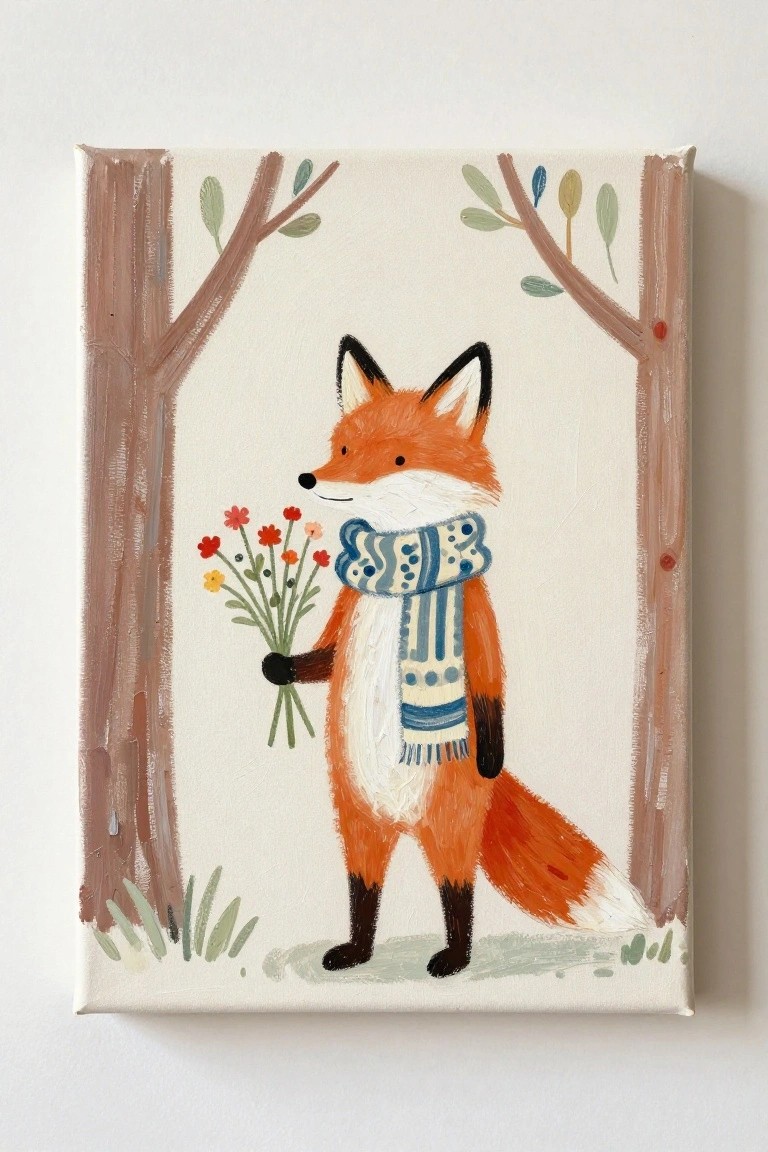
A fox centered between two tree trunks with a small bouquet of mixed flowers creates a direct animal painting idea that stays focused on the main subject. The scarf adds a single patterned element that breaks up the solid orange and white fur without complicating the overall shape. This fits the cute animal category for wall art because the light background and simple framing keep the composition balanced and easy to read from a distance.
What makes this idea useful is the clear central placement that works on standard canvas sizes without extra background work. You can swap the flower colors or scarf pattern to fit different seasons or match room decor while keeping the same layout. For practice, the rounded fox form and limited color palette let you build the shape in layers before adding small details like the scarf dots.
Howling Wolf Beneath a Crescent Moon

A night forest scene with a wolf tilted upward toward a crescent moon makes a strong wildlife acrylic painting idea. The composition relies on a clear light-to-dark contrast, with the pale wolf placed against deep blues and teals so it reads easily from a distance. Trees on both sides act as a simple frame that keeps attention on the animal without adding extra elements.
What makes this idea useful is the limited color palette of cool background tones against a warmer subject, which helps it stand out on a canvas or in a grid of forest animal paintings. The layout is straightforward to adapt by swapping the moon shape or adjusting how many trees you include on each side. For practice, this kind of piece lets you focus on building the wolf with a few layers of fur while keeping the background loose and flat.
Playful Badger and Hedgehog Pair with a Giant Mushroom

This acrylic painting idea features two small forest animals placed on either side of an oversized mushroom that serves as the clear focal point. It belongs to the cute animal category of decorative wall art, where simple rounded shapes and flat color blocks keep the focus on the main subjects rather than fine detail. The light green background with scattered dots and small leaf clusters creates enough contrast to make the warm mushroom and animals pop without adding extra layers or texture.
What makes this idea useful is how the central mushroom layout gives beginners an easy way to build a balanced scene on a square canvas. The limited color palette of earthy browns and soft greens can be swapped out for different seasons or simplified by dropping the background dots if you want a faster project. For canvas decor this kind of composition stands out on Pinterest because the large shape anchors the whole piece and leaves room to swap in other animals while keeping the same structure.
Resting Fawn Next to a Birch Tree

A simple animal acrylic painting idea that shows a young deer curled on the ground beside a birch trunk with scattered autumn leaves overhead. The layout keeps the fawn in the lower half and uses the vertical tree line to anchor the right side, creating an easy balance for a tall canvas or plaque. This approach fits the decorative animal category and relies on flat color areas and soft edges rather than heavy texture or fine detail.
What makes this idea useful is how the basic shapes of the deer and tree make it straightforward to paint on wood or stretched canvas without advanced skills. The muted browns and greens can be swapped for brighter tones or different leaf colors to match other seasons or room styles. For canvas art, the same layout works well as a small piece or repeated in a set with other forest animals.
Two Deer Facing Across a Winding Stream

This acrylic painting idea uses two deer as the main subject in a forest landscape, with a curving stream dividing the scene into balanced halves. The composition works by placing the animals at similar heights and angles so their poses create symmetry without needing complex perspective. Flat color areas and simple tree shapes keep it in the wildlife wall art category while the water line adds gentle movement through the middle.
What makes this idea useful is the mirrored layout, which makes it easy to sketch and block in before adding details. You can simplify the background hills further or swap the green tones for cooler blues if you want a different season. The limited color range also helps the deer stand out clearly on canvas, and the same setup could be adapted with different animals like foxes or rabbits in the same positions.
Lantern Lit Raccoon and Fox Forest Scene

A nighttime wildlife scene like this makes a strong acrylic painting idea by placing two animals around a single light source in a simple forest setting. The raccoon holding the lantern next to the seated fox creates a clear center of interest, while the dark trees and full moon provide a balanced backdrop that keeps attention on the animals. This type of idea falls into the animal and landscape category, where the contrast between cool night colors and warm lantern glow helps the composition read clearly even with basic brushwork.
What makes this idea useful is how the lantern defines both the focal point and the color scheme, so you can block in large dark shapes first before adding the animals and light. The limited palette of blues, grays, and orange makes it easy to adapt for different canvas sizes or to swap in other forest animals without changing the overall layout. For practice or quick canvas decor, the graphic tree shapes reduce the need for fine detail while still producing something that stands out on a wall or Pinterest board.
Woodpecker With Bold Red and Black Markings

A woodpecker painted with strong blocks of red, black, and white against a plain background forms a clean wildlife acrylic idea. The composition uses sharp color separation on the bird and a simple branch to keep attention on the main subject without extra elements. This approach fits an animal painting category where clear shapes and limited background detail make the piece easy to read from a distance.
What makes this idea useful is the high contrast between the red body and dark wing patterns, which does most of the visual work in acrylic. You can adapt the same layout for other forest birds by changing the head color and wing markings while keeping the branch angle and small leaf cluster. For canvas decor or quick practice pieces, the flat color areas build fast and still read well when viewed across a room.
Mother Bear and Cub on a Forest Path

A mother bear and her cub walking along a path makes a solid wildlife acrylic painting idea that fits the animal scene category. The vertical tree trunks create natural framing that draws attention to the bears while the soft background foliage adds depth without needing complex details. This approach keeps the focus on the animals through simple shapes and a limited color range of browns and greens.
What makes this idea useful is the clear separation between foreground subjects and background trees, which helps control layering in acrylic without getting muddy. The muted palette works well for practice because the colors mix easily and forgive small blending mistakes. This would be easy to turn into a gift canvas by swapping in different flower colors or simplifying the trees further for a more graphic look.
Frequently Asked Questions
What supplies work best for creating these acrylic forest animal paintings?
Start with a set of artist grade acrylic paints in earth tones like burnt umber, sap green, and titanium white along with a few brighter accents for highlights. Choose synthetic brushes in rounds and flats of varying sizes for detail work on animals and broader strokes for foliage. A stretched canvas or wood panel provides a sturdy surface while a stay wet palette keeps paints workable longer during sessions focused on layered forest scenes.
How do I paint realistic fur on animals like deer or foxes in these compositions?
Build up layers starting with a base color that matches the animal’s overall tone then add short directional strokes with a dry brush for individual fur strands. Use a small round brush for finer details around the face and ears while varying pressure to create depth. Reference the natural light direction in forest settings to add shadows and highlights that make the fur appear three dimensional without overworking the paint.
What background techniques make the wildlife subjects pop in acrylic forest scenes?
Apply thin glazes of translucent greens and blues over a dry base layer to suggest depth in the trees and undergrowth. Keep the background softer and less detailed than the main animal to create contrast through value differences. Experiment with a fan brush for textured leaves and add subtle color shifts to imply sunlight filtering through the canopy which draws attention to the central wildlife elements.
How can I adapt these ideas if I am new to acrylic painting?
Simplify the compositions by focusing on one animal against a basic forest backdrop rather than complex multi animal scenes. Practice basic shapes and color mixing first on smaller canvases before attempting detailed fur or foliage. Many of the ideas scale well by reducing the number of elements or using broader brushwork which still captures the beauty of forest wildlife while building confidence.
Where can I source ethical references for painting these forest animals accurately?
Use public domain wildlife photography from government conservation sites or observe animals in ethical sanctuaries and parks without disturbing them. Sketch from life when possible or rely on high resolution images that show natural poses and lighting in wooded environments. This approach ensures your acrylic paintings reflect authentic behaviors and habitats while respecting the animals featured in the ideas.

Hi, I’m Camille.
I’m a self-taught painter and creative blogger with a soft spot for acrylic painting, color play, and all the little art ideas that make everyday life feel more inspiring.
I started this space because I’ve always believed painting should feel joyful, approachable, and a little personal. Some of my favorite pieces come from simple ideas, messy palettes, and evenings where I just felt like making something pretty.
Most of what I share begins with acrylic painting, but I also love exploring other mediums when creativity pulls me in a new direction. My goal is to collect and share painting ideas that feel fun, beautiful, and actually doable, whether the mood is calm and minimal or bright and playful.
This is a space for inspiration, experimenting, and enjoying art without overcomplicating it.