
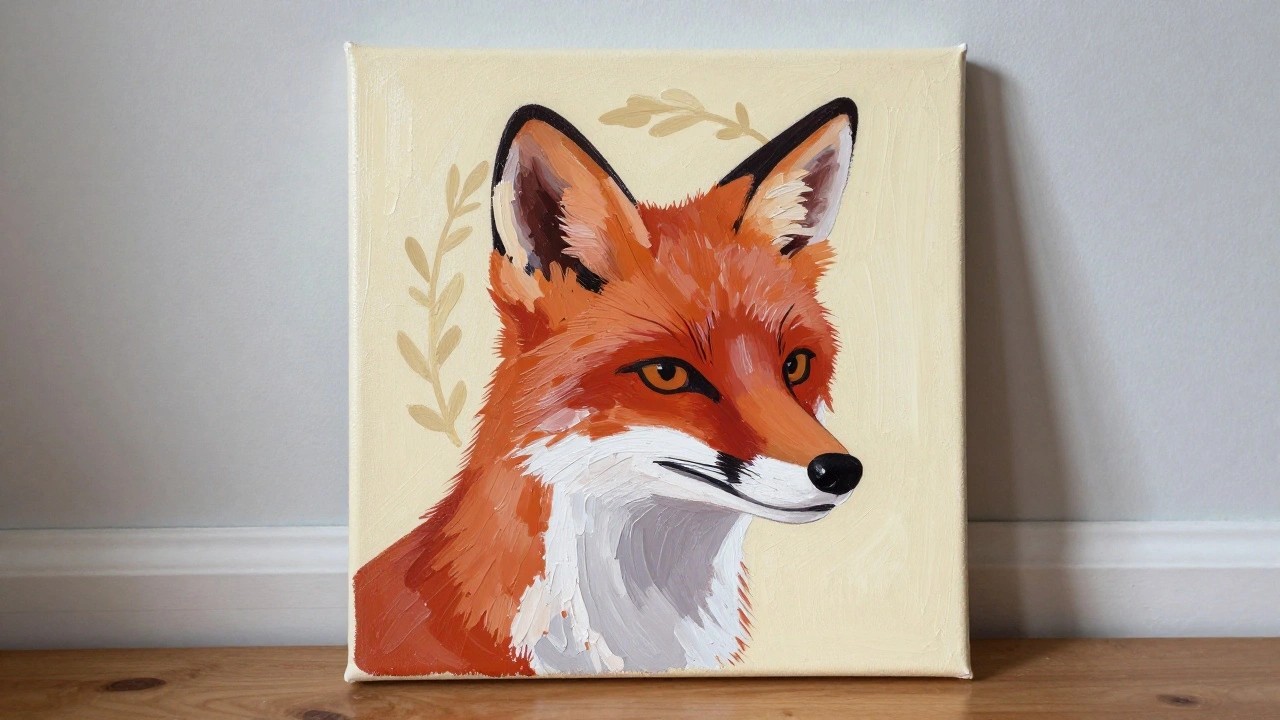
I have been painting animals with acrylics for a while now and I like keeping things simple.
Layering the colors one step at a time has helped me avoid mistakes and build up the shapes without stress.
I came up with some ideas that focus on common animals and use basic layering methods anyone can try.
These projects do not need fancy supplies or advanced skills.
I hope a few of them fit what you are looking for in your own painting time.
Stylized Fox Portrait with Leaf Branch

This acrylic painting idea uses a fox head in profile as the main subject, built with flat blocks of orange, white, and black against a plain cream background. The animal portrait category fits here because the composition relies on clear shape separation and a single green leafy branch to balance the right side without extra elements. The limited color areas and simple outlines keep the focus on the face while making the overall layout easy to follow.
What makes this idea useful is how the profile view lets you block in the main colors first before adding small details like the eye and whiskers. The neutral background helps the orange stand out, so the piece works as quick canvas decor or a practice study. You could adapt it by changing the branch to berries or leaving it out entirely, or swap the fox for a similar animal shape to make a small series for wall art.
Sleeping Tabby Cat on a Pillow

A simple acrylic idea centers on a curled sleeping cat built with soft color blocks for the body, head, and tail. The stripes and facial features are added in thin layers over a base tone, while the pillow and shadow keep the focus on the animal without extra clutter. This approach fits the cute animal category and works because the rounded shapes and limited background let the orange tones stand out clearly.
What makes this idea useful is the way the body and stripes can be painted in stages without needing perfect edges at every step. You could change the pillow color or add a different pattern to match a room, or shorten the tail to fit a square canvas. For practice the compact layout helps you work on blending and shape placement on a small surface before trying larger pieces.
Leaping Blue Whale Over Layered Waves

A whale jumping from the water works well as a simple animal acrylic painting idea. The composition places the dark blue whale body against lighter wave layers and a mostly empty sky, which keeps the focus on the main shape. Different blue tones build the ocean section through basic overlapping strokes rather than intricate detail.
What makes this idea useful is how the large whale silhouette reduces the need for precise line work while still giving practice with shape and color blocking. You can swap the blues for other shades or stretch the waves higher to change the balance without starting over. For practice sessions this layout stands out on Pinterest because the clean white background makes the subject pop even in small thumbnails.
Layered Owl on a Branch
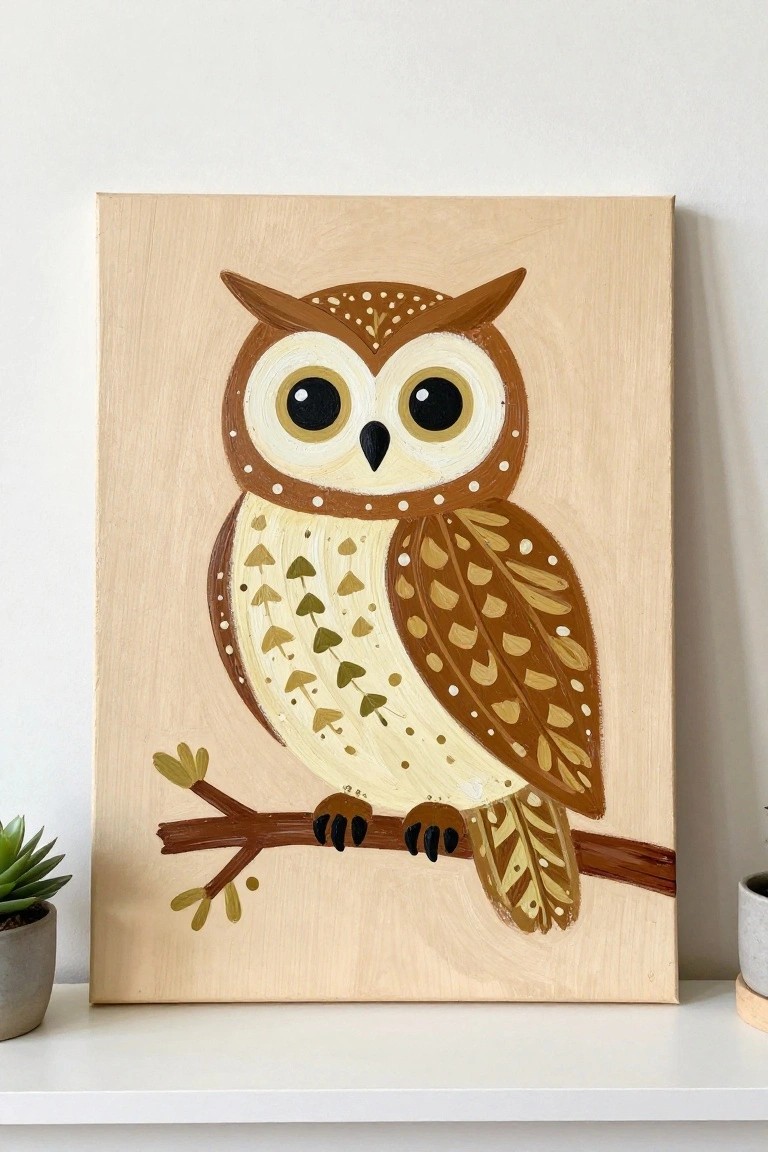
An owl perched on a branch works well as an acrylic animal painting because the body can be broken into large sections for simple layering. Start with a light base color on the chest and face, then add the darker wing and head shapes on top to build contrast. The big eyes and rounded forms keep the focus clear while the branch anchors the whole layout.
What makes this idea useful is that the main shapes stay easy to follow even if your brushwork stays loose. You can swap the brown palette for cooler tones or add a few more leaf details on the branch without changing the structure. For canvas decor this layout prints cleanly and works as a single piece or in a small series with other birds.
Boldly Layered Emperor Penguin

An emperor penguin works well as an acrylic animal painting when you build the body from simple overlapping color blocks. Lay down the white belly first, then add the black head and back, followed by the yellow chest marking and gray wing on top. The flat blue background and minimal snow base keep the focus on those clean shapes.
What makes this idea useful is how the limited palette and sharp edges let you practice layering without needing smooth blends. You can adapt it by changing the background to white or adding a few more penguins for a group scene while keeping the same block style. This kind of clear animal subject stands out on Pinterest because it reads well even as a small thumbnail.
Dog Portrait with Checkered Scarf
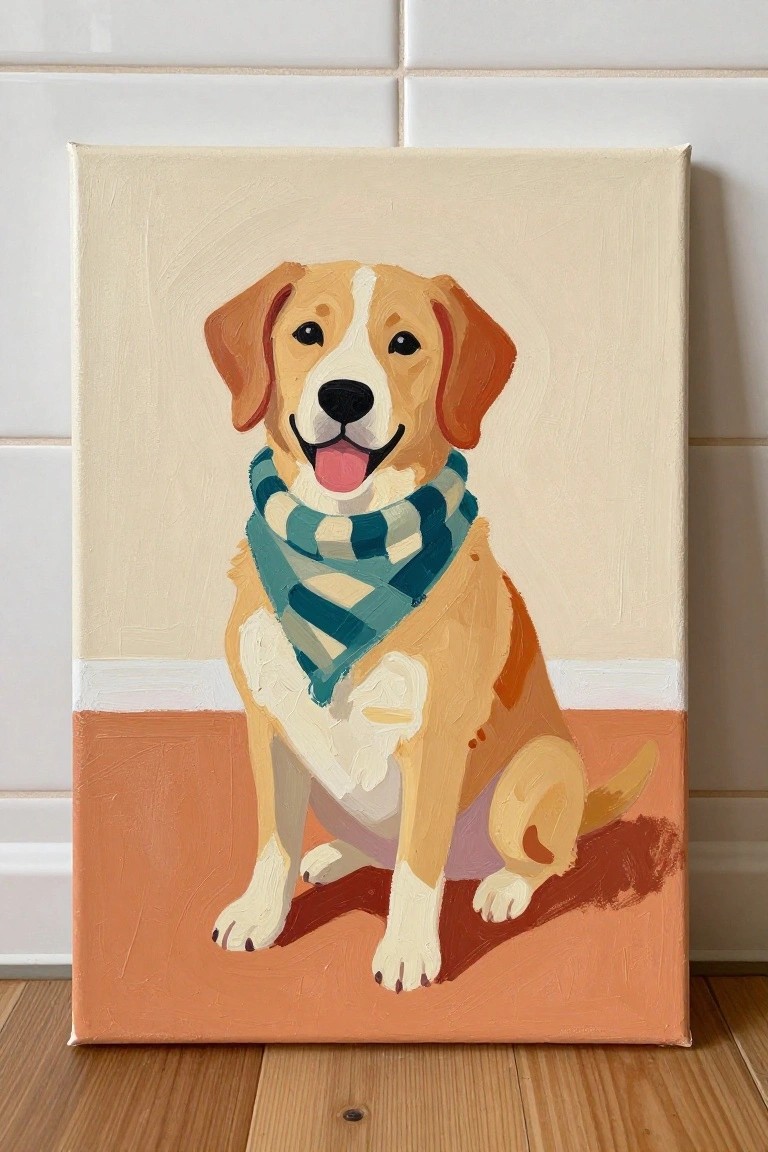
A dog portrait idea built from simple color blocks and light layering works well for acrylic because it keeps the focus on shape and contrast rather than fine detail. The two-tone background splits the wall and floor into flat sections, which makes the sitting dog stand out without extra work. This approach fits the cute animal category and uses a limited palette so the scarf pattern and ear shapes stay easy to read.
What makes this idea useful is how the clear edges and flat color areas let you build the dog in stages without blending everything. You can swap the scarf colors or adjust the floor tone to match your space or a specific pet. For practice, the layout helps you learn how to place the animal on the canvas so it feels balanced and ready for wall display.
Layered Goldfish with Simple Plants
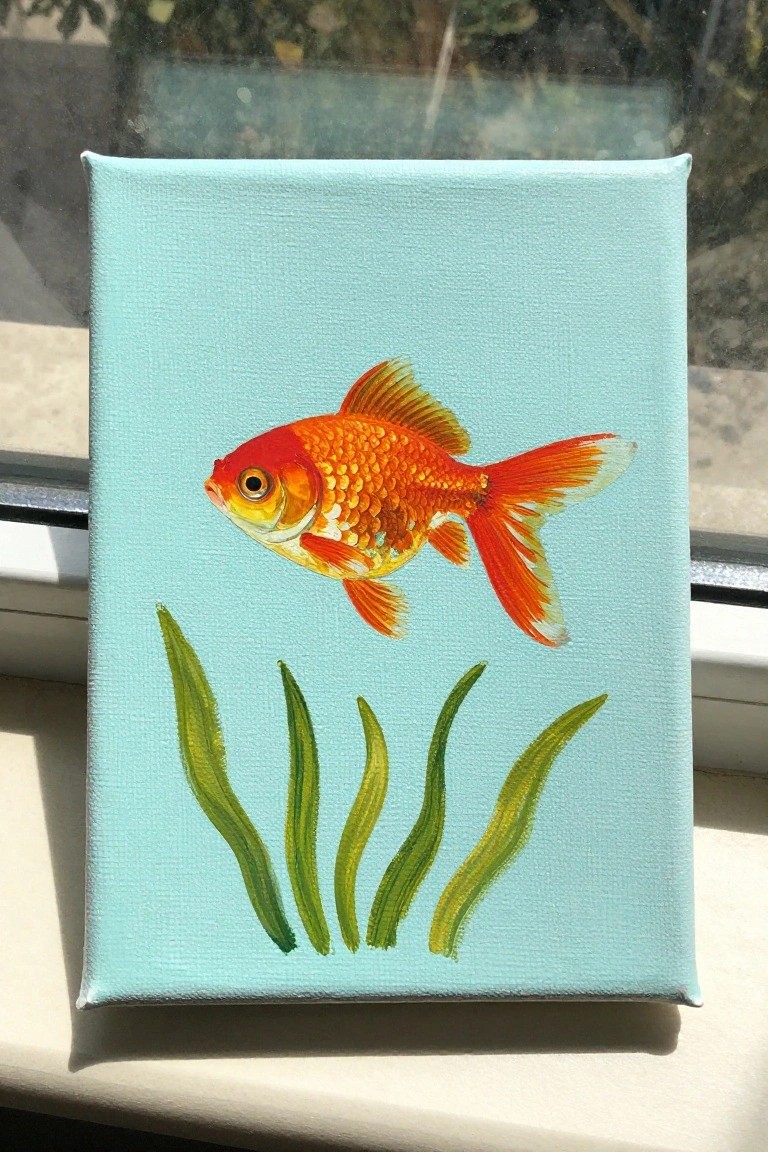
A goldfish works well as an acrylic animal idea because its solid body shape supports beginner-friendly layering to build scales, fins, and highlights in stages. The bright orange fish sits against a flat light blue background, which keeps the focus tight and lets the contrast do most of the visual work. Adding just a few green strokes at the bottom gives a sense of setting without adding extra elements that complicate the layout.
What makes this idea useful is how the centered fish can be painted on any small canvas size and still read clearly from a distance. The plant details can be shortened or lengthened to match different proportions, and the background color can be swapped for other soft tones if you want a quick series. For practice, this kind of single-subject animal painting lets you focus on building up layers on the fish itself while keeping the rest of the canvas simple.
Deer Silhouette Over Layered Hills
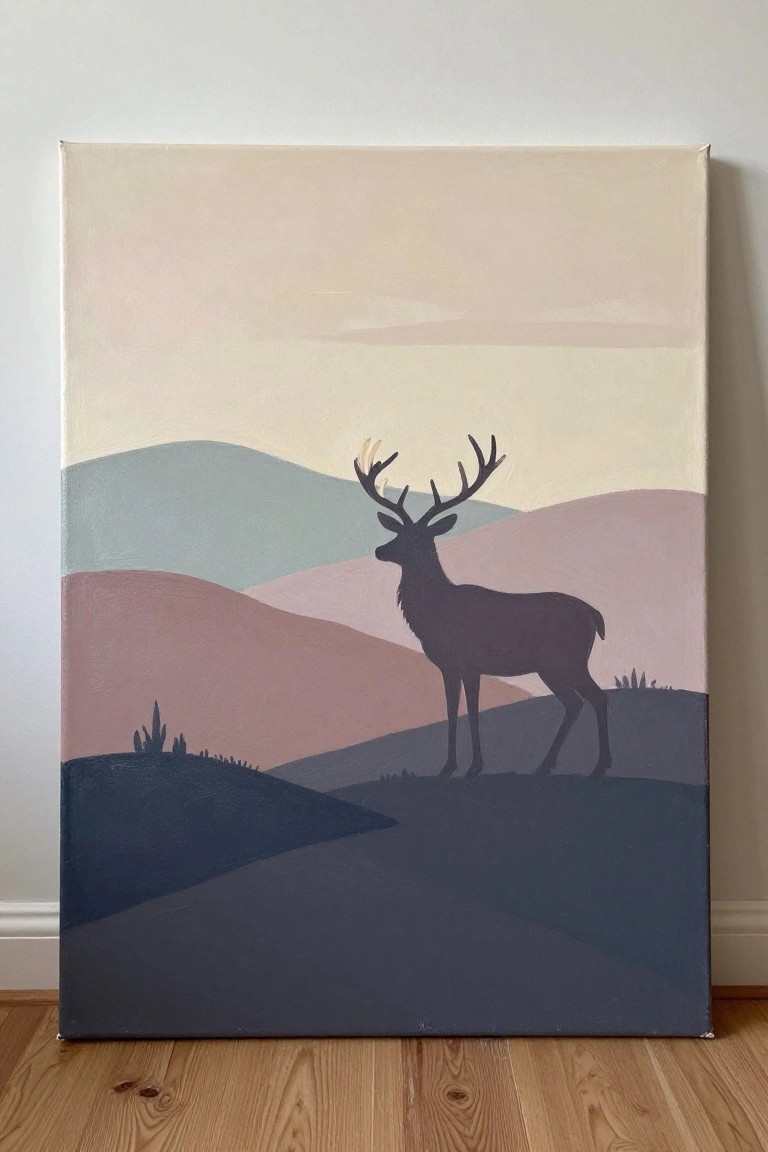
A deer silhouette set against overlapping hills offers a straightforward acrylic idea that relies on flat color blocks rather than detailed rendering. The animal stays simple and dark while the hills build depth through soft, muted layers in blue, pink, and gray. This keeps the focus on shape and placement instead of brushwork or texture.
What makes this idea useful is how the solid silhouette does most of the work, letting you practice even color application on the background hills. You can change the animal to a different shape or shift the hill tones for a new season without redrawing the whole scene. For wall art, the wide open sky area leaves room to add or remove elements as needed.
Tropical Toucan with Palm Leaf Accent
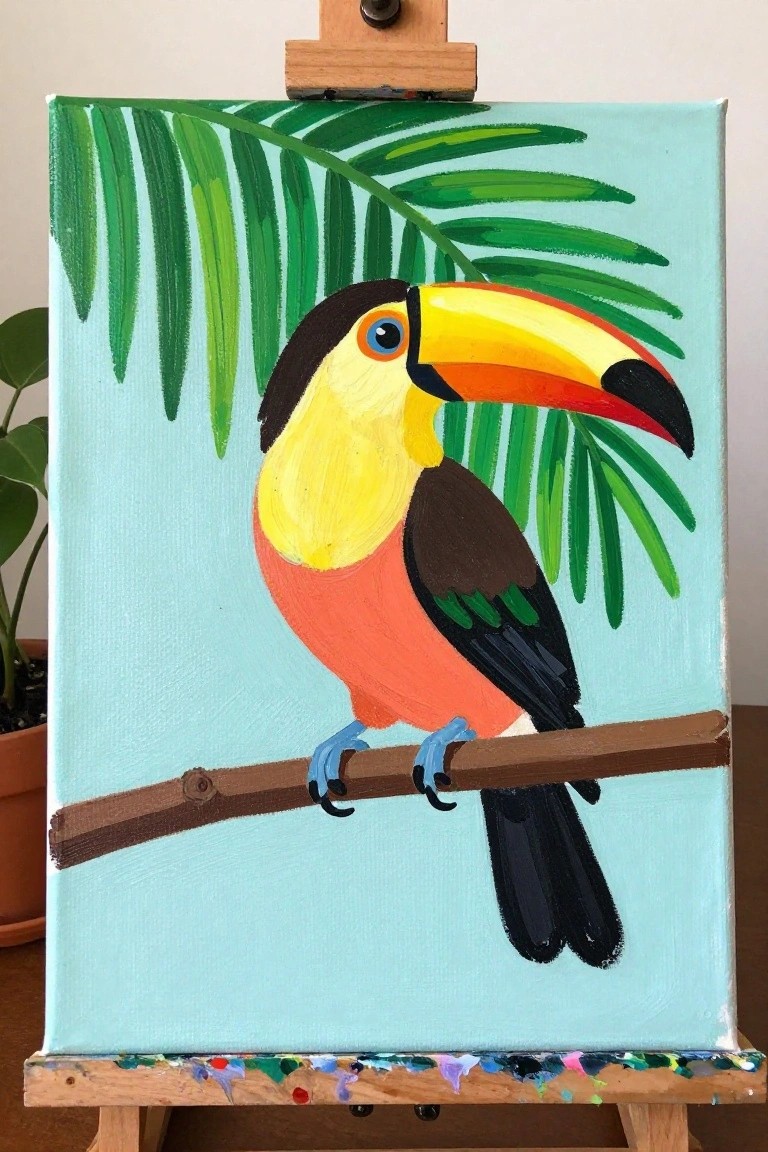
A toucan works well as an acrylic animal subject when you block in large areas of color first and then add the beak in separate yellow, orange, and black sections. The light blue background keeps the focus on the bird while the single green leaf above adds a simple tropical note without crowding the canvas. Clean edges and flat color fields make the composition read clearly from a distance.
What makes this idea useful is the way the bold color sections reduce the need for blending or fine detail. You can swap the toucan for other birds by changing only the beak and wing markings while keeping the same branch and background setup. For canvas decor this layout translates easily to different sizes and stands out on Pinterest because the bright beak pulls attention right away.
Stacked Birds in Bold Flat Colors
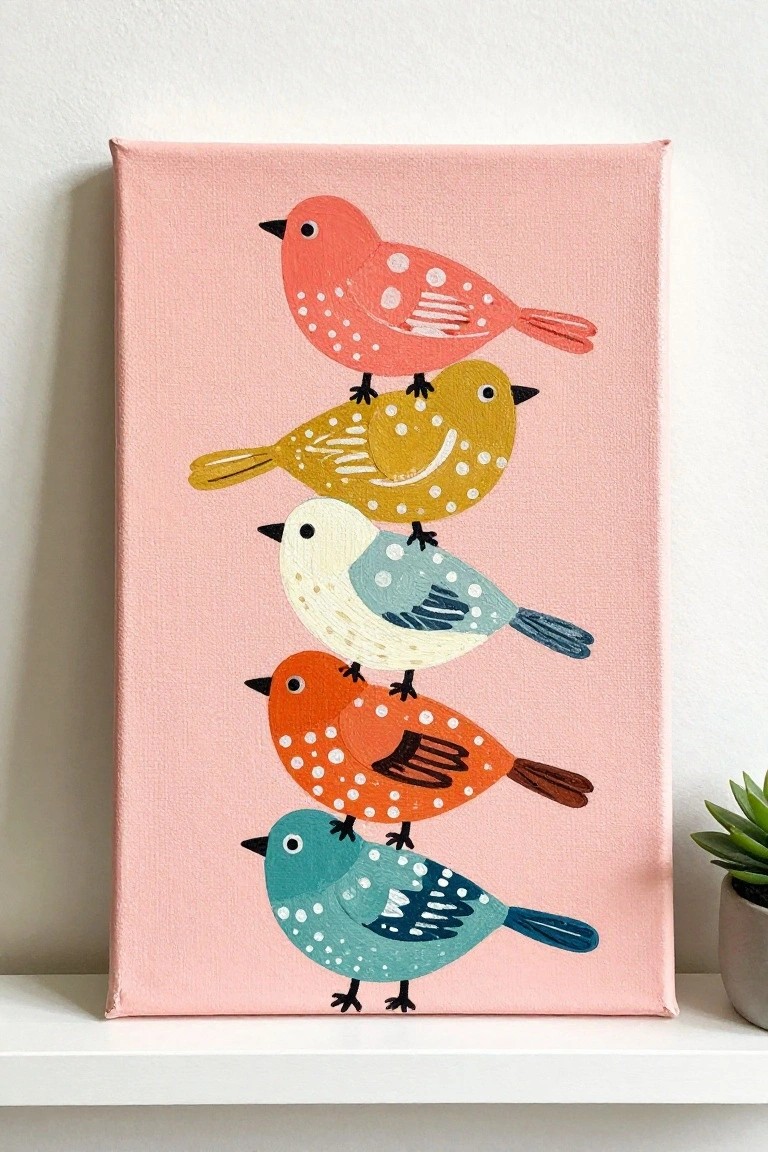
A strong acrylic painting idea is to stack stylized birds vertically in a single column against a solid background. The birds are built from simple overlapping shapes with flat color areas and minimal pattern details like dots and stripes. This fits the cute animal category for decorative wall art because the repeated forms and high contrast colors create a clean graphic impact without needing fine details or texture.
What makes this idea useful is how the vertical layout lets you focus on color blocking and edge control rather than complex composition. You can swap the bird colors or background to match different rooms or seasons while keeping the same stacked arrangement. For practice this subject works well because the flat style builds skills with shape placement before adding more layers. It would stand out on Pinterest as a fast canvas piece that feels modern and easy to personalize.
Sea Turtle on Sandy Shoreline
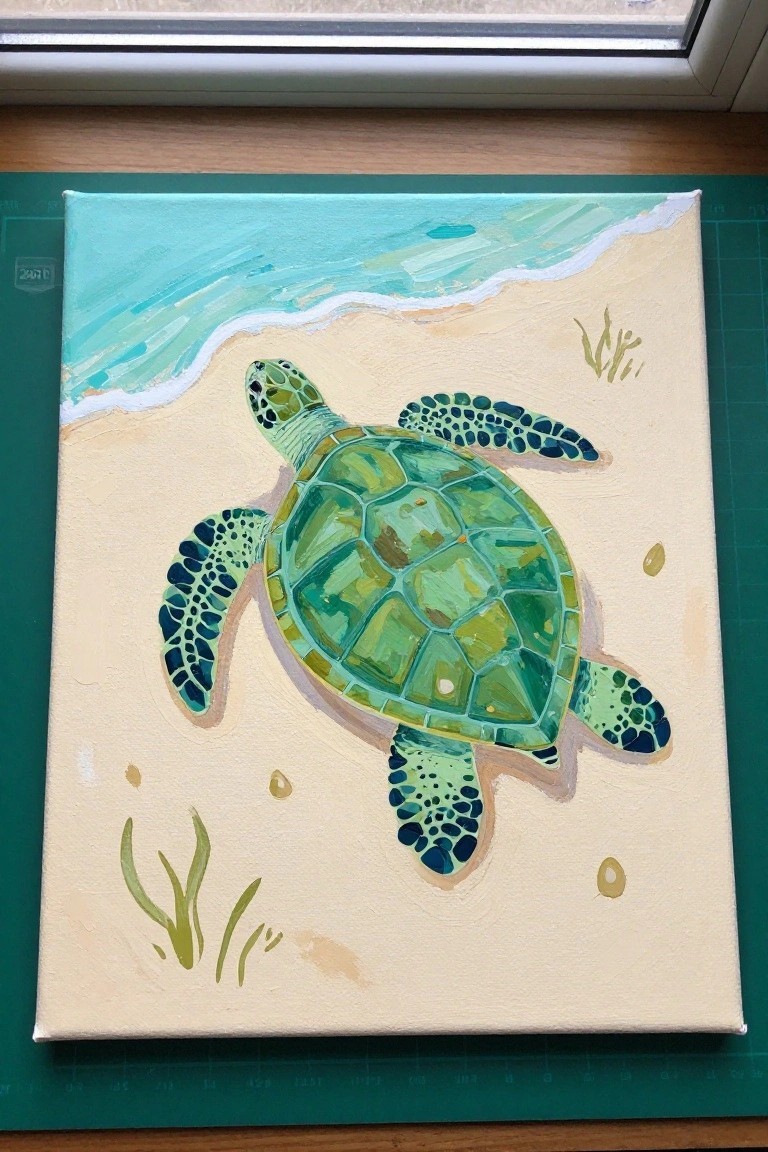
A sea turtle painting idea like this focuses on building up the shell and flippers with overlapping layers of green, blue, and yellow tones to form the segmented pattern. The subject sits centered on a flat sand area that meets a simple band of turquoise water with white wave edges. This approach keeps the animal as the clear focal point while using soft background shapes to suggest a beach setting without extra detail.
What makes this idea useful is the way the shell pattern lets you practice color layering and edge control on a single main subject. You can swap the water tones for deeper blues or remove the small seaweed accents to make the layout even quicker for a first try. The same turtle shape works well repeated on smaller canvases or turned into a set with different shell color mixes. For wall art, the high contrast between the detailed turtle and plain sand background helps it read clearly from a distance.
Fox with Bandana and Wildflowers

A seated fox wearing a simple bandana serves as the central subject in this acrylic idea, with a small bouquet of wildflowers placed to one side for visual balance. The painting combines an animal portrait with a minimal floral accent, using flat color areas and clean edges to keep the focus on the fox shape against a plain background. This approach fits into the cute animal category and works as easy canvas wall art that avoids heavy detail.
What makes this idea useful is how the fox can be built with basic orange and white layers while the flowers stay loose and quick to paint on the left. You could change the bandana color or swap in different flower shapes to fit a new season or room palette without redrawing the whole scene. For practice, the layout keeps the animal as the main focus but adds just enough extra interest to stand out on Pinterest when shared as a finished canvas piece.
Hedgehog on Grass with Mushrooms
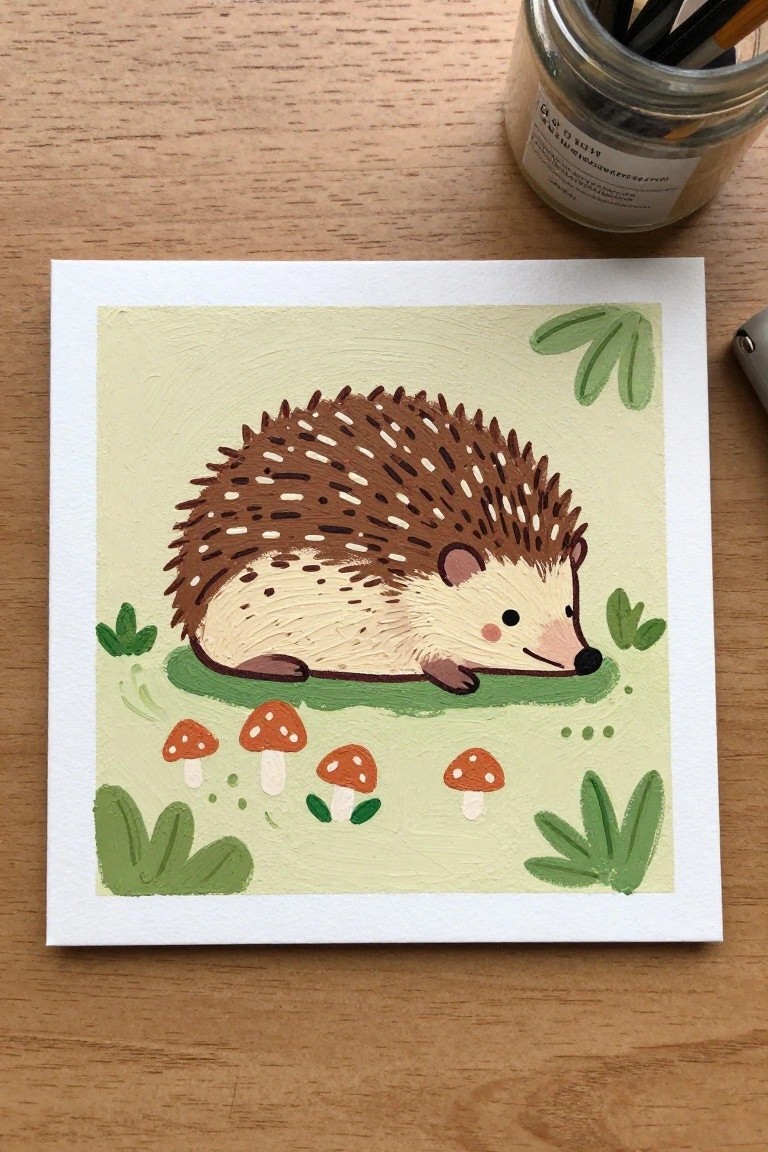
A hedgehog painted in layered browns and creams forms the main subject of this acrylic idea. The spines get built with short directional strokes over a darker base while the face stays smoother for contrast. Small mushrooms and leaf shapes placed around the edges create a simple setting that frames the animal without pulling attention away.
What makes this idea useful is the clear shape of the hedgehog that can be sketched first and filled in with basic layers. The light background color lets the browns and oranges stand out so the painting reads well even at small sizes. This would be easy to adapt by swapping the mushrooms for flowers or changing the grass color to match a different season. For practice the same layout works on a smaller canvas to focus on the spine texture before trying larger versions.
Soft Neutral Elephant Portrait
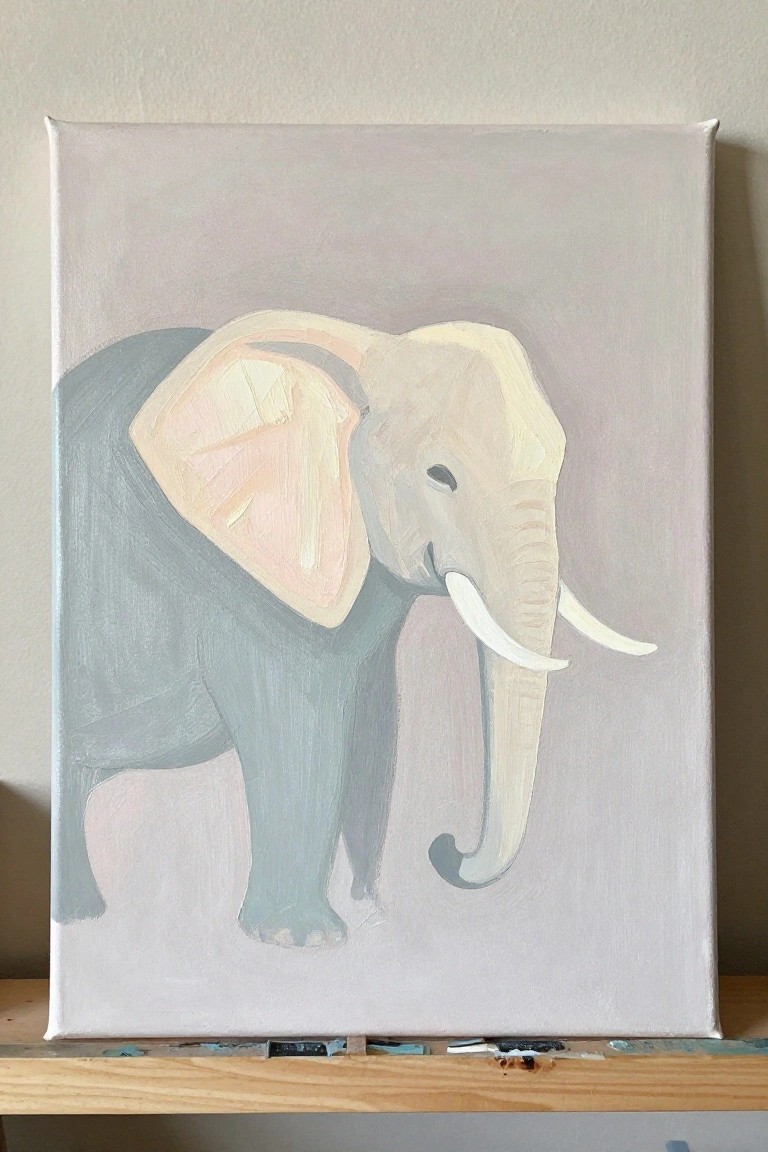
A simple elephant profile painted in muted grays makes an approachable animal painting idea that relies on basic shapes and light color layering. The inner ear gets a soft peach wash while the rest of the body stays in cool grays, creating gentle contrast without needing fine detail work. This approach fits the animal category well because the clean silhouette stands out against the blended neutral background.
What makes this idea useful is the straightforward side view that lets you focus on building form with just a few layers of acrylic. You could easily change the ear color or background tone to match different room palettes or try the same layout with other large animals. For canvas decor, the limited color range helps the piece stay calm and versatile while still giving you room to practice edge control and subtle shading.
Centered Rabbit with Lavender and Daisy Accents
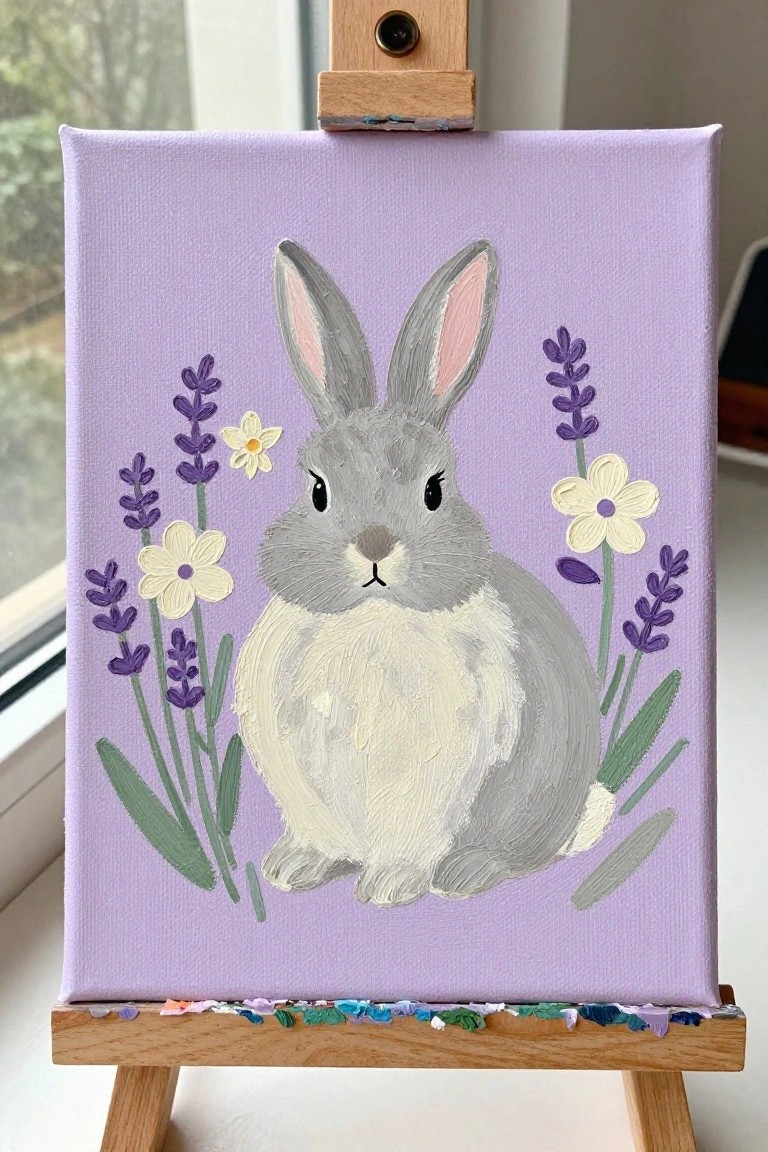
A seated rabbit forms the core of this acrylic idea, built up with layered brushstrokes in gray and white to create simple fur texture. The solid lavender background keeps attention on the animal while the lavender stems and daisy shapes on each side create a balanced frame without crowding the canvas. This approach fits the cute animal category, where rounded forms and limited color contrast keep the painting readable at a glance.
What makes this idea useful is the clear focal point that lets you practice basic animal shapes before adding details. You can swap the flower types or shift the background hue to match different seasons or room colors. For practice, this kind of subject works well on small canvases because the main forms stay simple enough to finish in one or two sessions while still looking polished.
Red Panda Sitting with a Leaf in Its Paw

A centered red panda forms the main subject of this acrylic idea, using its rounded body and striped tail as the primary shapes against a plain background. The painting works as a cute animal piece by keeping the branches and grass minimal so the focus stays on the animal itself. Warm brown and orange tones build the fur while the light canvas provides clean contrast around the edges.
The bold outline around the panda makes it easy to block in the main form first and add fur strokes afterward. You could swap the leaf color or adjust the branch placement to fit different canvas sizes without changing the overall layout. For practice, this kind of single-animal setup stands out on Pinterest because the simple background keeps the composition readable even when the image is shown small.
Peacock with Layered Eye Spot Feathers

A peacock works well as an acrylic animal subject because the tail feathers form a repeating pattern of eye spots that can be built with overlapping circles. The idea centers on blocking in teal, blue, and gold tones to create contrast across the fan shape while keeping the body simple in solid blue. This approach turns the natural symmetry of the feathers into an easy structure for layering without needing complex blending.
What makes this idea useful is the way the feathers spread out to fill the canvas on their own, so you can focus on building each eye spot step by step. The bold color blocks make it simple to adjust the palette or reduce the number of spots if you want a faster version. For practice this layout helps you work on shape repetition and edge control, and it translates easily to different canvas sizes for wall art.
Horse Head in Layered Earth Tones

A horse head portrait makes a strong acrylic animal painting when built from broad color blocks and visible brushstrokes rather than fine detail. The brown tones shift across the face and mane while the white blaze and light background create clear contrast that keeps the composition simple. This style fits the animal category well because it relies on shape and value changes more than intricate markings.
What makes this idea useful is the straightforward layout that lets you focus on layering without fighting a busy background. You can adapt the same approach by changing the brown palette to other horse colors or tightening the crop around the eyes and nose. For canvas decor the limited background helps the subject stand out quickly on Pinterest and works as an easy starting point for practice pieces.
Cat in a Patterned Teacup
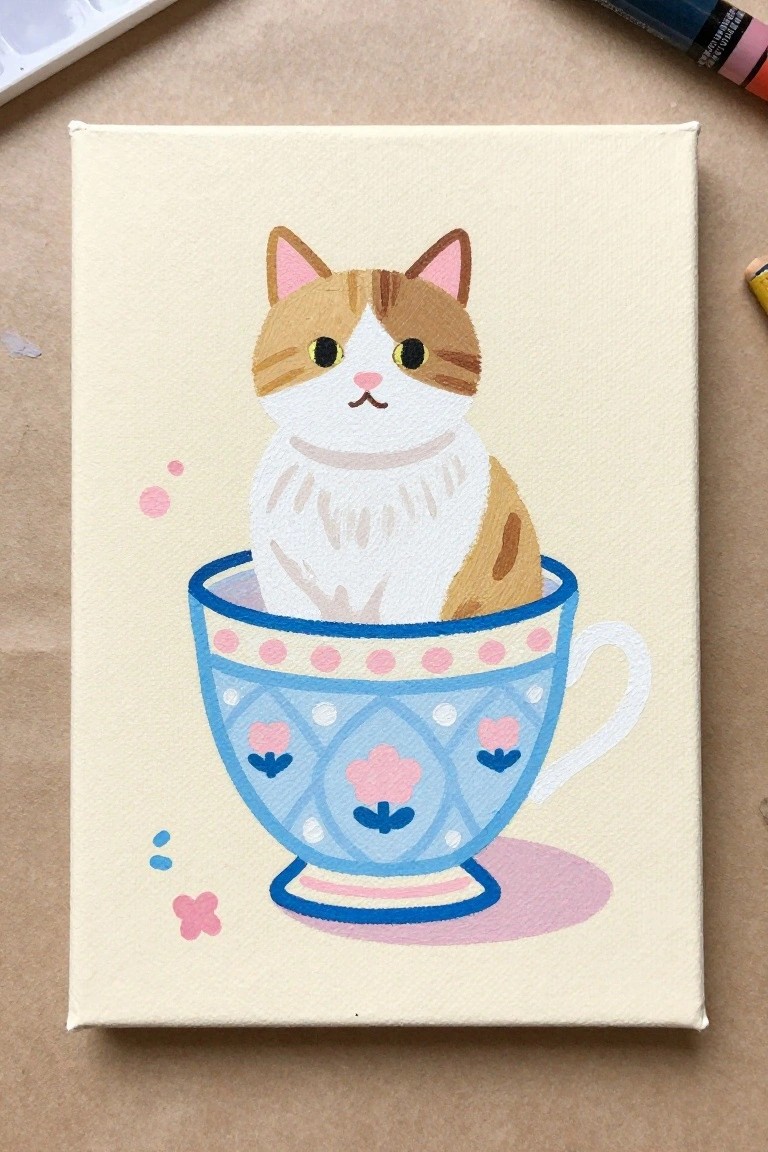
This acrylic idea pairs a simple cat shape with a teacup to create a compact animal portrait. Flat color blocks build the cat and cup first, then small details like the eyes, nose, and cup pattern are added on top. The light background keeps the focus on the central subject while the pink dots and flower add just enough extra interest without crowding the canvas.
What makes this idea useful is the cup shape that naturally frames the cat and limits how much background you need to paint. You can swap the cup pattern for stripes or solid color if you want fewer details, or change the cat’s markings to match a pet photo. For canvas decor this layout works well because the round cup and upright cat create a balanced shape that reads clearly even from a distance.
Seal Balancing a Ball on the Beach

A seal holding a striped ball on its nose creates a simple animal painting idea that combines a single subject with a basic beach setting. The idea uses flat color areas for the sky and water, then builds the seal with a few overlapping tones to define its shape against the sand. This approach fits the cute animal category and keeps the composition balanced by placing the main action in the lower half of the canvas.
What makes this idea useful is the clear focal point that lets you practice animal proportions without needing fine detail everywhere. The limited color range of blues and tans works well for quick layering on canvas, and you can easily change the ball pattern or add footprints in the sand to make it your own. For practice sessions, the setup helps you focus on edge control around the seal while keeping the background loose.
Bluebirds Perched on a Branch
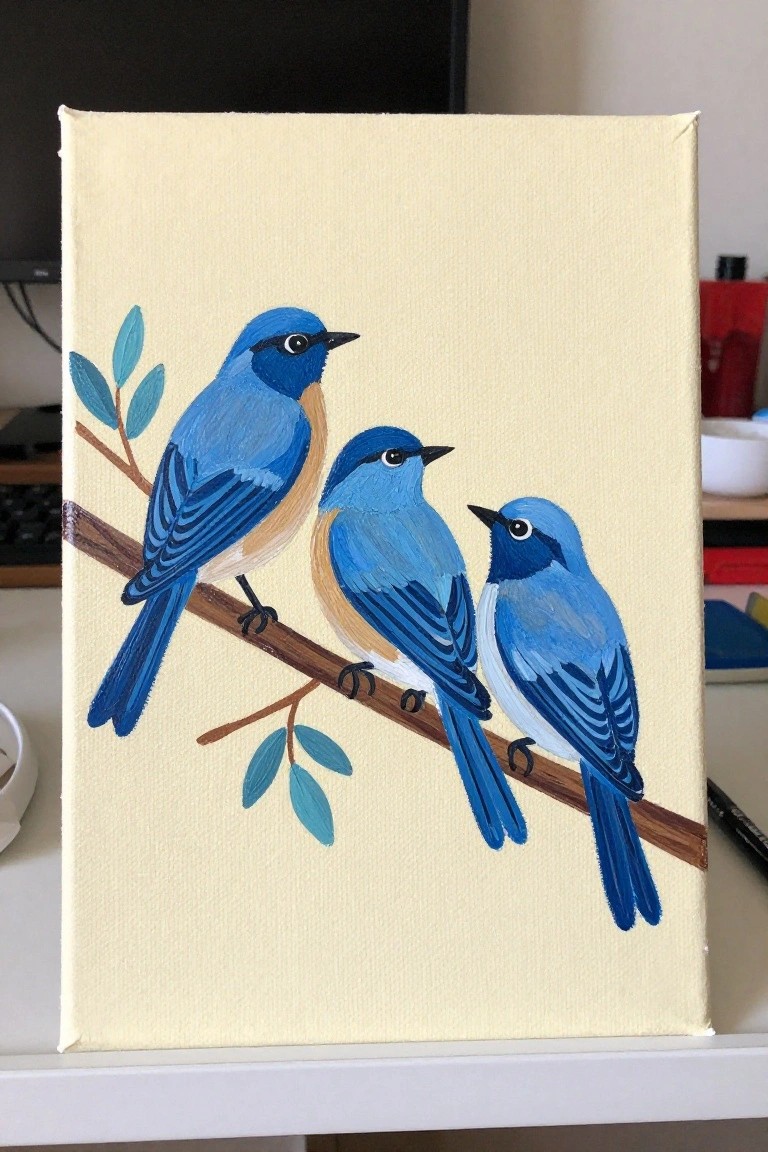
This acrylic painting idea focuses on three small blue birds lined up along a single branch with a few simple leaves. The approach uses flat color areas for the bodies and wings, with light layering added only on the feather edges to give some shape. The clean light background makes the birds stand out while keeping the whole piece easy to compose on a standard canvas.
What makes this idea useful is the row layout that lets you practice basic bird shapes without crowding the canvas. You can swap the blue tones for different colors or extend the branch if you want a wider version for wall art. For practice this works well because the limited elements keep the focus on color placement and simple edge control.
Raccoon Perched on Stacked Books Holding a Daisy

A raccoon centered on a stack of books while holding a single daisy forms the core of this acrylic painting idea. It pairs a simple animal subject with a still life base that keeps the composition grounded and easy to read. The clean white background and warm book colors let the figure stand out without extra detail or background work.
What makes this idea useful is the way the books create a ready-made platform so you do not need to invent extra elements around the animal. You can change the book spine colors or swap the daisy for a different small object to fit different rooms or seasons. For practice, the layout gives you a chance to build fur in layers while keeping the overall shapes straightforward.
Llama with Patterned Blanket on Oval Wood

A standing llama forms the main subject on an oval wood panel, painted in soft brown tones with scattered spots and a fluffy mane. The teal and coral blanket draped across its back adds bold geometric patterns and fringe, while a string of small lights wraps around the neck for extra color. This setup fits a cute animal category for decorative wall art, where the oval shape keeps the composition compact and the blanket handles most of the visual interest through simple blocks of color.
What makes this idea useful is the way the blanket turns a basic animal shape into something more finished without extra background work. You could change the blanket pattern to match holiday colors or skip the lights entirely for a simpler version on canvas. For practice, the flat wood surface makes layering the spots and fringe straightforward while still producing a ready-to-hang piece that stands out in a feed of animal paintings.
Frequently Asked Questions
What basic supplies do I need to begin these acrylic animal paintings? You will need a small set of acrylic paints in primary colors plus white and black, a few brushes in different sizes such as flat and round, a canvas or heavy paper, a palette for mixing, clean water, and paper towels for wiping brushes. These items are inexpensive at any craft store and let you complete all 23 ideas without extra purchases.
How does beginner friendly layering actually work in practice? Start with a light base coat that covers the main shape of the animal and let it dry. Add a second layer of slightly darker color to show form, then finish with thin details like eyes or fur lines once the previous layer is dry. This step by step approach builds depth slowly and hides small errors under later coats.
Which animals from the list are best for someone who has never painted before? Simple shapes such as a cat face, a fish, or a butterfly are easiest because they use large areas of flat color first. These let you practice layering without needing fine control right away and still produce recognizable results after only a few layers.
How do I pick colors that make the animals look lively? Choose one main color for the body, then mix a lighter version with white for highlights and a darker version with a touch of black for shadows. Apply the light mix on top edges and the dark mix under the belly or around legs to create a rounded look without needing many different paint tubes.
What should I do if a layer dries with an uneven patch? Let the paint dry completely, then lightly sand the spot with fine sandpaper or cover it with a thin new layer of the base color. Once that dries, continue with the next layer as planned. This method keeps the surface smooth and works well for all 23 projects.

Hi, I’m Camille.
I’m a self-taught painter and creative blogger with a soft spot for acrylic painting, color play, and all the little art ideas that make everyday life feel more inspiring.
I started this space because I’ve always believed painting should feel joyful, approachable, and a little personal. Some of my favorite pieces come from simple ideas, messy palettes, and evenings where I just felt like making something pretty.
Most of what I share begins with acrylic painting, but I also love exploring other mediums when creativity pulls me in a new direction. My goal is to collect and share painting ideas that feel fun, beautiful, and actually doable, whether the mood is calm and minimal or bright and playful.
This is a space for inspiration, experimenting, and enjoying art without overcomplicating it.