

I’ve tried painting tigers a few times with acrylics and found that building up layers really helps with the fur texture.
It takes some patience to get the stripes to look natural instead of just painted on.
I usually start with a base coat and then add lighter and darker shades on top to build depth.
These ideas come from what worked for me in my own practice sessions.
They might give you a starting point if you want to try something similar.
Centered Tiger Portrait with Strong Stripe Contrast

A frontal tiger portrait idea centers on building realistic fur through layered orange tones and sharp black stripes that define the face shape. The composition uses a muted green background to push the warm colors forward while keeping the eyes and nose as the clear focal points. This fits squarely into the animal painting category with a realistic wildlife approach that works well for canvas wall art.
What makes this idea useful is how the limited background keeps the focus on practicing stripe placement and fur direction without extra elements. You could adapt the same layout by shifting the background to a deeper brown or cropping tighter around the eyes for a more intense version on a smaller canvas. For practice, this kind of tiger study stands out because the bold contrast between the stripes and white muzzle areas makes progress easy to see as you build the layers.
Resting Tiger Against Stylized Green Foliage

A tiger in a resting pose makes a strong acrylic animal painting subject because the orange fur and black stripes create immediate contrast against the green background. The idea uses simplified leaf shapes and a low horizon line so the tiger fills most of the canvas while the environment stays secondary. Clean color blocks and clear stripe placement let the painter focus on building the animal’s form without complex blending.
What makes this idea useful is how the flat green backdrop reduces the need for detailed scenery, so you can spend time layering the tiger’s white chest and stripe edges over the base orange. You could adapt it by swapping the leaf shapes for taller grass or adjusting the tiger’s body angle slightly for a different canvas size. This layout works well for wall art because the horizontal pose and direct eye contact give the piece a clear focal point that reads easily from a distance.
Tiger with Layered Stripes Against a Neutral Backdrop

A realistic tiger acrylic painting idea works by building the fur through overlapping layers of orange, white, and black to create depth in the stripes and body. The tiger stands in a three-quarter view with the lower portion anchored by loose green and brown strokes that suggest grass without competing for attention. This animal painting category keeps the focus tight by using a muted gray background that lets the bold stripe patterns and facial details carry the composition.
What makes this idea useful is the clear separation between the detailed tiger and the simple background, which makes it easier to control contrast during layering. The grass section at the bottom can be reduced to a few quick strokes or left out entirely if you want a cleaner vertical layout on canvas. For practice this subject lets you test stripe placement and edge sharpness without needing complex scenery, and the same approach scales well for larger or smaller canvases.
Frontal Tiger Face with Layered Stripes

A realistic tiger portrait idea focuses on a direct head-on view that highlights the animal’s facial structure through layered fur and crisp black stripes. The composition keeps the face centered so the eyes and muzzle become the main points of interest while the surrounding fur builds outward with mixed orange and white tones. This fits squarely in the textured animal category because the stripe edges and color shifts create natural depth without needing extra background elements.
What makes this idea useful is the tight crop that reduces the amount of canvas to cover while still letting you practice fur blending and stripe placement. The bold orange-to-black contrast does a lot of the work in defining the form so you can focus on brush direction rather than inventing details. For practice you could simplify the whiskers or shift the head angle slightly to make the same layout work on a different canvas size.
Frontal Tiger Portrait with Layered Stripe Details

A realistic tiger portrait idea focuses on the animal’s face and upper chest as the main subject using acrylic layers to build fur texture and stripe patterns. The centered composition with a plain background makes the orange, black, and white color blocks stand out clearly. This type of animal painting works because the strong contrast between the stripes and lighter fur areas creates visual interest without needing extra elements.
The direct head-on view keeps the layout simple to transfer onto canvas and lets you practice building up fur in sections. You can adapt the idea by adjusting the background tone or extending the body lower on a taller canvas for more wall impact. The bold stripe work also translates well to smaller studies if you want to test color mixing first before committing to a full piece. For Pinterest, this kind of clear animal close-up tends to get saved quickly because it reads as a complete finished look.
Front-Facing Tiger Portrait on a Warm Solid Backdrop
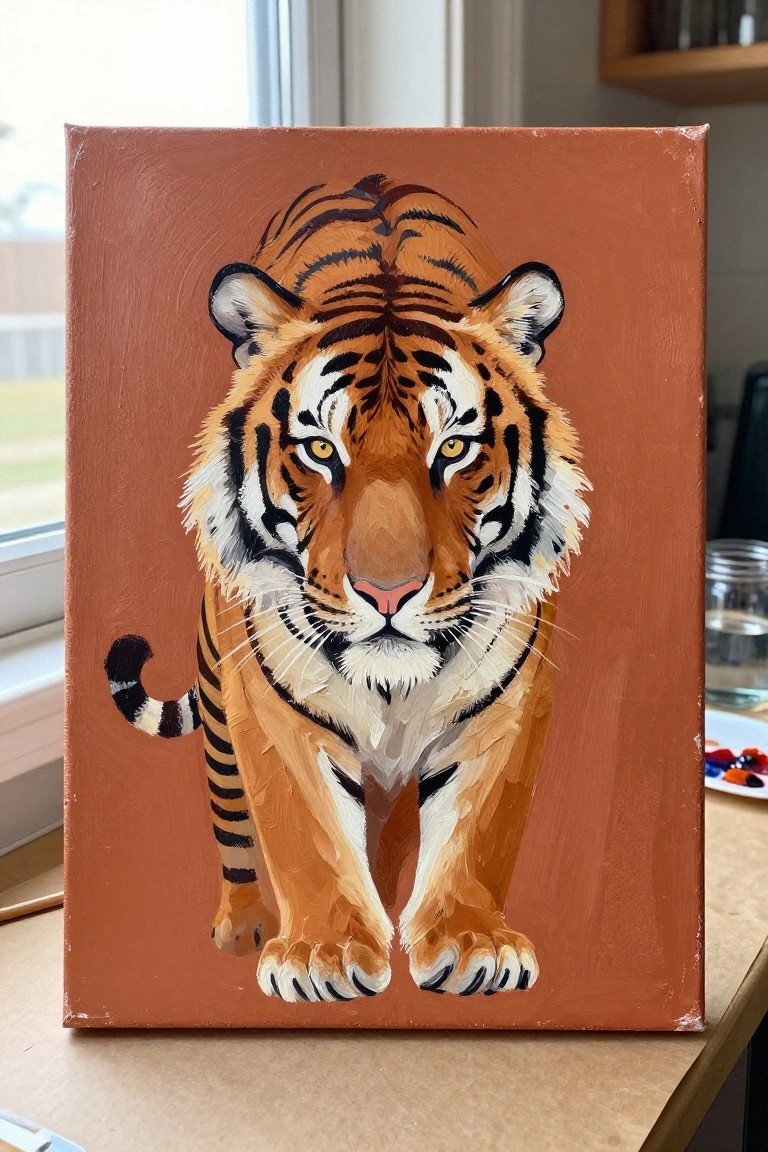
A frontal tiger portrait makes a strong acrylic idea because the solid warm background keeps all attention on the striped face and direct eye contact. Layering the fur tones around the muzzle and forehead builds the facial structure while the black stripes provide natural contrast against the orange tones. This setup works as an animal painting that stays focused on the head and upper body without extra scenery or props.
What makes this idea useful is how the centered layout and flat background reduce the need for blending large areas or planning complex depth. The same approach can be adapted by changing the background color to match a room or simplifying the stripes for quicker practice sessions. For canvas decor this kind of tiger painting stands out on Pinterest because the bold eyes and clean edges create an immediate focal point that works at different sizes.
Paired Tigers with Bold Stripes in a Green Jungle Setting
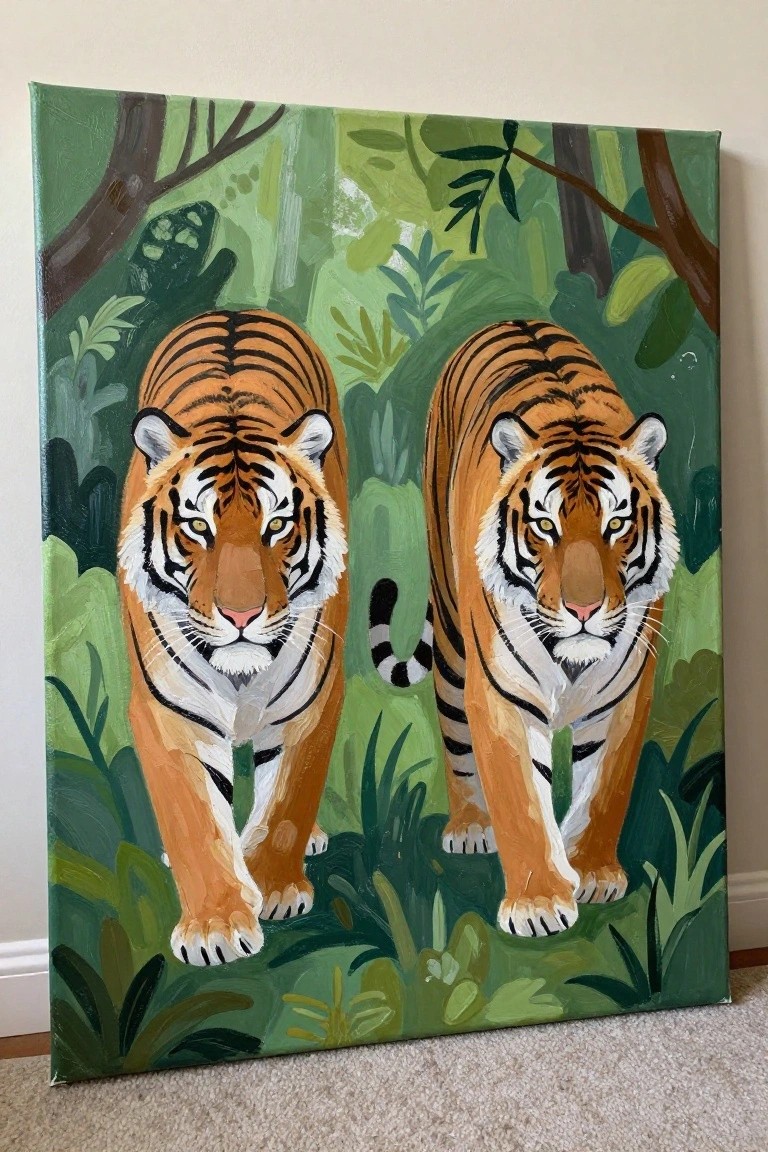
This acrylic painting idea focuses on two tigers placed side by side as they move straight toward the viewer through simplified jungle foliage. The main concept relies on repeating the tiger shape with strong stripe patterns and warm orange against layered greens to keep the composition balanced and easy to read. It belongs in the animal category and gains visual strength from the clear contrast between the detailed fur areas and the flatter background shapes.
What makes this idea useful is the repeated subject that lets you practice stripe placement and fur layering on one tiger before moving to the second. You could simplify it to a single tiger or shift the greens to cooler tones if you want a different season feel. For wall art the direct facing angle and color split help it stand out in a feed without needing extra detail in every leaf.
Centered Tiger Cub with Bold Stripe Blocks

A front-facing tiger cub portrait works well as an acrylic idea because it relies on clear color separation and stripe placement to build the face and body shape. The upright seated pose keeps the focus on the head and chest while the plain background removes any need for extra elements. This approach fits the animal portrait category where strong contrast between orange fur and dark stripes does most of the visual work.
What makes this idea useful is the straightforward layout that lets you practice layering without complicated backgrounds. You can adapt it by softening the stripe edges or changing the canvas size for different wall displays. For practice sessions the centered composition helps keep proportions consistent while still allowing room to add more texture in the fur areas. The same tiger cub pose can be simplified further by reducing the number of stripes if you want a quicker version.
Realistic Tiger Close-Up with Layered Stripes

A tiger portrait idea like this focuses on a direct head-on view that lets the black stripes stand out sharply against the orange and white fur sections. The composition keeps the eyes and nose centered so the face carries the whole piece while the fur builds outward with visible brush marks and color shifts. This approach fits the animal painting category and works well when the goal is to show realistic detail without painting the full body.
What makes this idea useful is the centered layout, which makes it straightforward to practice building fur layers one section at a time. The bold stripe contrast does most of the visual work, so you can simplify the whiskers or adjust the background color without losing impact. For canvas decor this kind of tiger face adapts easily to different sizes and stands out in searches because the strong eye contact catches attention fast.
Tiger Face with Layered Stripes and Floral Green Backdrop
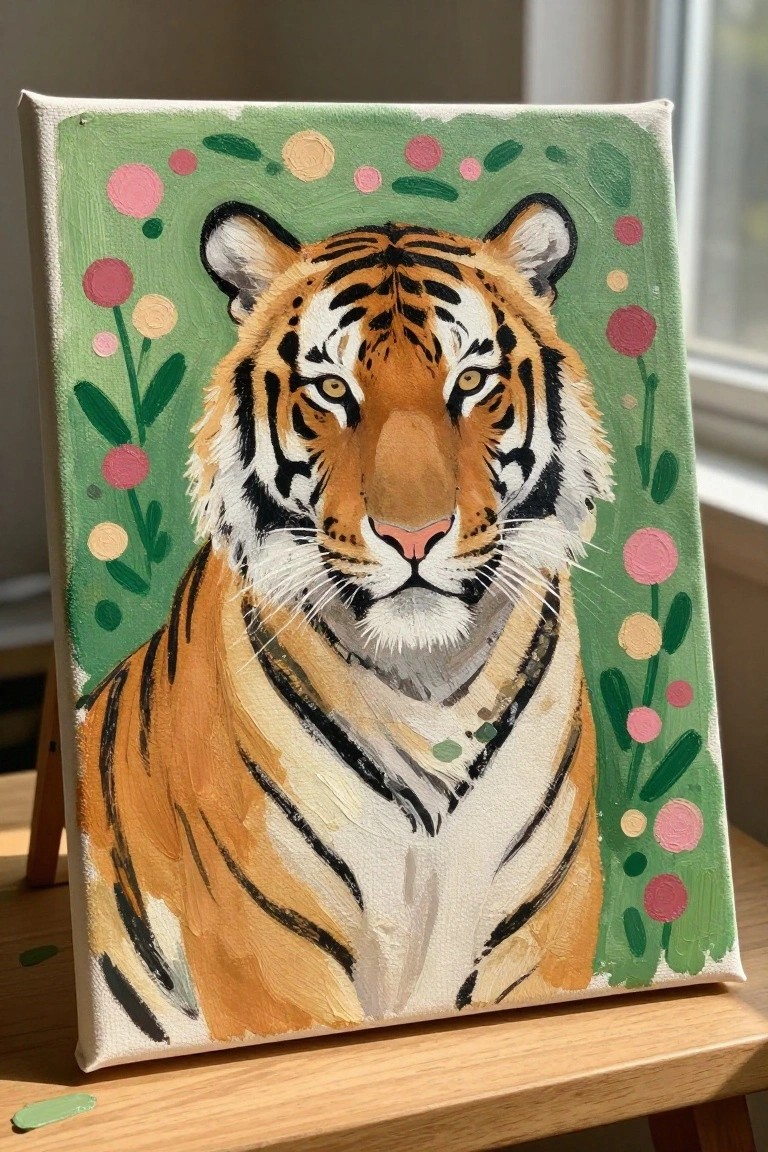
A centered tiger portrait makes an effective acrylic idea when the stripes and facial fur are built with overlapping layers to create natural depth and texture. The solid green background with simple flower shapes on both sides frames the animal without competing for attention and turns the piece into decorative wall art. This approach fits the animal category while keeping the layout balanced and easy to scale on a standard canvas.
What makes this idea useful is the way the bold orange and black stripes do most of the visual work once the base layers are down. You can adapt the flower shapes to different color combinations or reduce their number for a faster session. For practice, this kind of tiger layout helps you focus on fur direction and edge control without needing a full body. The same idea could be personalized by changing the background to a different solid color or adding a few extra stripes for more intensity.
Centered Tiger Face Built from Bold Color Blocks

A frontal tiger portrait makes a strong acrylic painting idea by starting with large orange and tan shapes for the face and muzzle, then layering the black stripes on top for clear definition. The composition stays effective through strong contrast between the dark stripes, white facial markings, and the light background, which keeps the eyes and nose as the clear focal points. This approach fits the animal wall art category and works especially well when the goal is realistic tiger details without heavy blending.
What makes this idea useful is how the stripes can be added once the base layers are dry, which helps maintain clean edges and avoids muddy colors. You can adapt it by changing the background to a deeper shade or simplifying the stripes for a quicker version on a smaller canvas. For practice, this layout lets you focus on shape placement and value contrast before adding whiskers or fur texture. The graphic quality also helps the finished piece stand out in a feed of tiger paintings.
Curled Tiger with Layered Stripes

A curled tiger pose lets the stripes wrap naturally around the body and legs to show realistic fur flow. Layering warm orange with darker brown and white accents builds the coat texture while keeping the face simple enough to finish in one session. The soft green background provides clean contrast that makes the tiger stand out without competing details.
What makes this idea useful is the compact circular shape that fits a square canvas and reduces background work. You can adjust stripe width or soften some edges to match your brush size and still keep the realistic look. The strong color contrast also translates well to smaller studies or quick color tests before committing to a larger piece.
Realistic Tiger Portrait with Layered Fur and Stripes
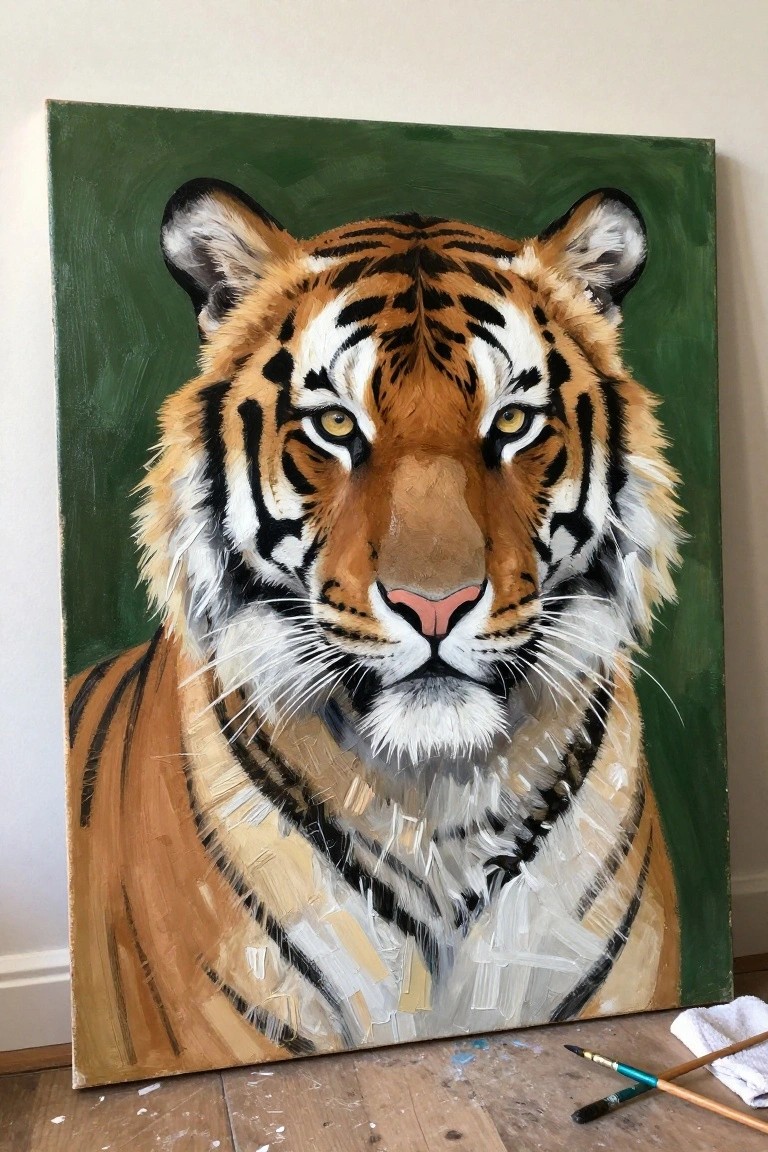
A centered tiger face makes a strong acrylic painting idea because the direct gaze and large scale fill the canvas without needing extra elements. Short brushstrokes build up the fur around the cheeks and muzzle while the black stripes stay sharp against the orange tones. The solid green background removes any distraction and lets the facial details carry the whole piece.
What makes this idea useful is the simple vertical layout that works on common canvas sizes without complex planning. The high contrast between the stripes and lighter fur areas does much of the visual work, so you can focus practice on blending and edge control. You could adapt it by softening the background to a lighter tone or reducing the fur layers for a faster study. For Pinterest, the intense eye contact and clear subject make it easy to crop into thumbnails that still read well.
Profile Tiger with Layered Stripes on Dark Ground

A realistic tiger portrait works well as an animal acrylic idea when the focus stays on the head and upper body in profile. The solid dark background lets the orange fur and black stripes stand out without extra elements competing for attention. Layered brushwork on the chest and face builds the fur texture while keeping the overall shape clean and readable.
What makes this idea useful is the strong value contrast that makes it easier to block in the main forms first before adding stripe details. You can adapt it by cropping tighter on the face for a smaller canvas or loosening the stripes if you want a faster study. For practice, the limited background keeps the work centered on building form and color shifts rather than inventing scenery. This kind of layout also translates directly to prints or canvas decor because the subject fills the frame without needing extra space around it.
Close-Up Tiger Face with Layered Stripes and Open Mouth

A close-up tiger portrait in acrylics centers on building realistic fur through overlapping layers of orange, black, and white while keeping the stripe patterns sharp and directional. The idea relies on strong contrast between the dark stripes and lighter fur areas to define the face shape without a busy background. This animal painting category works because the direct gaze and open mouth create a clear focal point that holds together even with visible brush marks.
What makes this idea useful is the straightforward layout that lets you practice stripe placement section by section before blending edges. The bold color blocks help the finished piece stand out on canvas without extra elements. For practice, this kind of subject can be simplified by reducing the number of stripes or softened by muting the mouth details. The layered paint makes this easier to build up over multiple sessions while still looking finished on a plain white ground.
Advancing Tiger with Bold Stripes

A tiger painted in a forward-moving pose works well as an animal acrylic idea because the stripes and body shape create natural contrast against a simple background. The composition relies on diagonal lines from the legs and body to guide the eye, while the open mouth adds a clear focal point. This approach fits the category of realistic animal wall art that uses color blocking and edge definition to keep the subject strong without extra elements.
What makes this idea useful is the limited background, which lets you focus practice time on building up the tiger’s stripes and fur layers. You can adapt the same pose to a smaller canvas by simplifying the brushwork on the paws and whiskers, or shift the background tone to match different room colors. For Pinterest, the direct eye contact and strong diagonal keep the image readable even at thumbnail size, so it translates easily into prints or greeting cards.
Stylized Tiger Portrait with Bold Stripes and Flat Color Blocks

A front-facing tiger painted in acrylics works as a graphic animal portrait that relies on simplified shapes and strong black stripes rather than realistic fur blending. The warm coral background keeps the orange and white tones of the tiger from blending into the canvas while the teal side accents create separation between the body and the edges. This style fits decorative wall art because the flat color areas and clear outlines make the tiger readable from a distance without requiring small details.
What makes this idea useful is how the solid color blocks and thick stripe lines reduce the need for shading practice, so you can finish a clean canvas in fewer layers. You could swap the coral background for deep red or mustard yellow to match different room colors or repeat the same tiger layout on smaller canvases for a matching set. For practice, start with the face shape first and add stripes afterward since the graphic approach forgives small shape adjustments.
Centered Tiger in Tall Grass

A realistic tiger painting idea works well when the animal is placed front and center walking straight toward the viewer through tall grass. The bold black stripes against the orange and white fur create clear contrast that stands out against the solid green background. This animal category painting fits canvas wall art because the simple setting keeps attention on the tiger’s shape and layered fur details without extra elements.
The direct front view makes the proportions easier to block in before adding stripe details with acrylics. You can adapt the color of the grass or background to match a room while keeping the same tiger pose. For practice this layout helps with building up fur texture in layers and getting the face shape accurate. The clean edges around the tiger make the whole piece read clearly even on a medium-size canvas.
Tiger Face Portrait Using Layered Fur and Contrasting Stripes

A close frontal view of a tiger works well as an acrylic painting idea because it lets the stripes and fur layers build the main visual interest across the canvas. The composition keeps the eyes and nose centered so the orange, black, and white tones create clear blocks of contrast without needing extra background elements. This approach fits the animal portrait category where texture comes from visible brush marks rather than heavy blending.
What makes this idea useful is the way the bold stripe pattern guides the eye and reduces the need for fine shading. The limited color range adapts easily to smaller canvases or can be adjusted by softening some edges if a less crisp look is preferred. For practice, the direct face angle helps focus on building fur direction in stages while keeping the overall shape simple to block in first. This kind of tiger study tends to perform well as a standalone canvas piece because the high contrast reads clearly even at thumbnail size.
Walking Tiger with Layered Stripes on Minimal Background

A realistic tiger in a walking pose makes a strong acrylic subject when the fur is built with overlapping orange and black layers to show stripe direction and body shape. The horizontal background stripes keep the focus on the animal while adding just enough texture to the canvas without competing for attention. This approach fits the animal category and works well for wall art because the clean edges and centered placement give the piece balance.
What makes this idea useful is the clear separation between the detailed tiger and the simple background, which helps control how much time you spend on each part. You can adapt it by changing the stripe colors in the background or reducing the grass details if you want a faster version for practice. For canvas decor, the layout stands out on Pinterest because the tiger’s forward movement draws the eye without needing extra elements or a busy scene.
Tiger Portrait with Teal Circular Backdrop

A tiger portrait idea that places the animal’s head and upper chest against a solid teal circle to create immediate visual focus. The stripes are painted in bold black lines over layered orange and cream fur tones, with white accents around the eyes and muzzle for definition. This fits the animal painting category and stands out because the clean circular shape keeps attention on the face while the neutral canvas border adds breathing room around the edges.
What makes this idea useful is how the simple backdrop lets you practice building up fur layers and stripe details without needing a complex scene. You can swap the teal for any color that matches your space or adjust the circle size to change the overall balance on the canvas. For wall art, the centered layout works well at different scales and gives you an easy way to personalize the background shade.
Frequently Asked Questions
What supplies do I need to start painting realistic tigers with acrylics?
You will need acrylic paints in shades of orange, black, white, and brown. High quality brushes of various sizes, including fine detail brushes for stripes, and a canvas or painting surface primed for acrylics. Also gather reference images of tigers and a palette for mixing colors.
How can I layer fur to make it look realistic?
Begin with a base coat of the main fur color. Then apply lighter and darker shades in thin layers, building up texture with short brush strokes that follow the direction of the fur. Allow each layer to dry before adding the next for better control.
What is the best way to paint tiger stripes with detail?
Use a fine brush and black paint mixed with a bit of blue for depth. Paint the stripes in varying thicknesses and directions, overlapping some fur layers to integrate them naturally. Add highlights on the edges of stripes for a three dimensional effect.
Which of the 21 ideas are suitable for beginners?
Start with simpler compositions like a tiger face close up or a resting tiger. These allow focus on fur and stripes without complex backgrounds. Progress to full body or action poses as your skills improve.
How do I avoid common mistakes in tiger paintings?
Do not overblend colors as this flattens the texture. Study real tiger photos to get stripe patterns accurate. Practice on small areas first and use glazing techniques for subtle color variations in the fur.

Hi, I’m Camille.
I’m a self-taught painter and creative blogger with a soft spot for acrylic painting, color play, and all the little art ideas that make everyday life feel more inspiring.
I started this space because I’ve always believed painting should feel joyful, approachable, and a little personal. Some of my favorite pieces come from simple ideas, messy palettes, and evenings where I just felt like making something pretty.
Most of what I share begins with acrylic painting, but I also love exploring other mediums when creativity pulls me in a new direction. My goal is to collect and share painting ideas that feel fun, beautiful, and actually doable, whether the mood is calm and minimal or bright and playful.
This is a space for inspiration, experimenting, and enjoying art without overcomplicating it.