
I have painted quite a few Christmas cards with acrylic paint over the years.
It is something I do in the evenings when things are quiet.
I stick to easy patterns that do not take too much time to finish.
Some designs work better than others depending on the paper I use.
These ideas come from what has worked well for me so far.
Red Mittens with Twine Bow and Pine Sprig

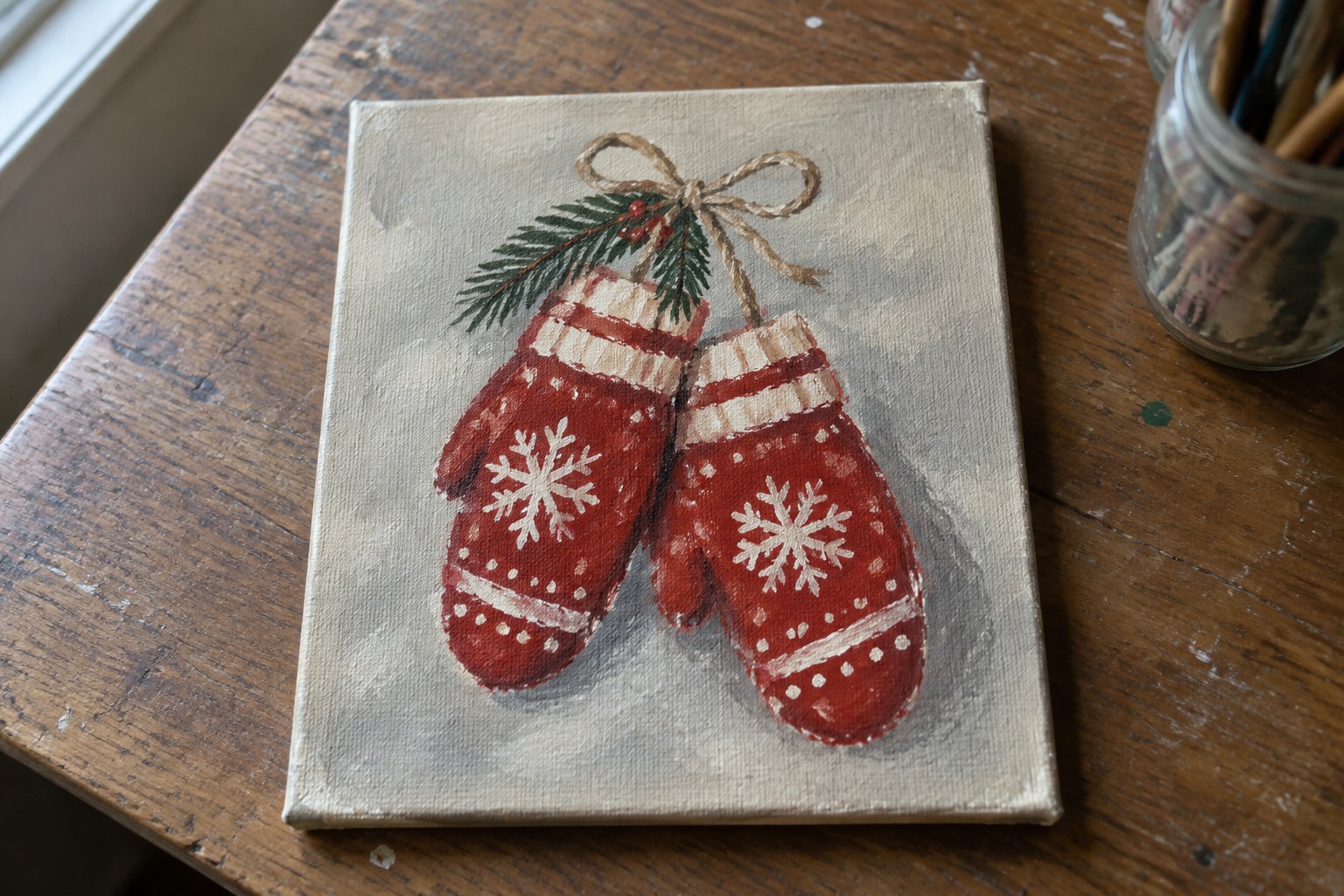
A pair of red mittens tied together with twine forms a clean seasonal subject that works well as canvas wall art. The idea centers on simple mitten shapes filled with solid red, accented by white snowflakes and striped cuffs, while a small pine sprig and bow add a single focal point above. The neutral background keeps the red dominant without extra layers or complex blending.
What makes this idea useful is the straightforward layout that fits small or medium canvases and requires only basic shape blocking plus a few detail layers. You can easily swap the snowflake pattern for dots or stripes, change the mitten color, or shorten the bow tails to fit different canvas sizes. The limited color palette and clear edges make it a quick option for holiday gifts or repeated practice runs.
Christmas Wreath with Bow on Canvas
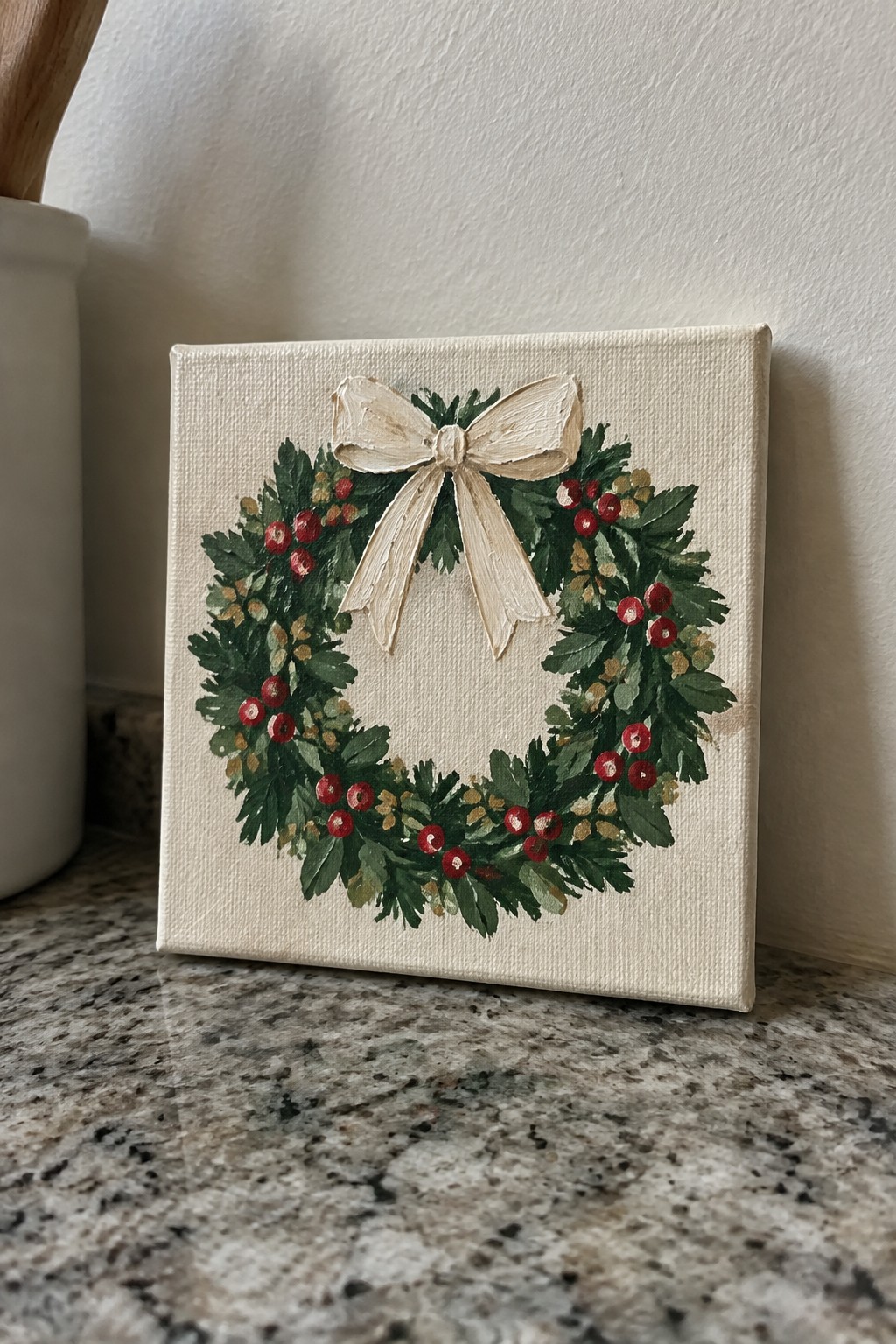
This acrylic painting idea centers on a circular holiday wreath built from layered green leaves, scattered red berries, and soft gold accents, topped with a large off-white bow. It falls into seasonal decorative painting where the wreath shape itself becomes the main subject against a plain background. The composition stays effective because the bow anchors the top while the berries create visual breaks that keep the eye moving around the circle without overcrowding any one area.
What makes this idea useful is how the contained wreath format works well for small canvases or quick holiday pieces without requiring a full scene. You can adapt it by changing the bow color, reducing the berry clusters, or painting it on a larger scale for wall decor. The layout also gives practice with building leaf edges and placing color accents in a repeating pattern. For cards or gifts, the same idea scales down easily by tightening the spacing between elements.
Christmas Ornament Cluster with Patterned Baubles
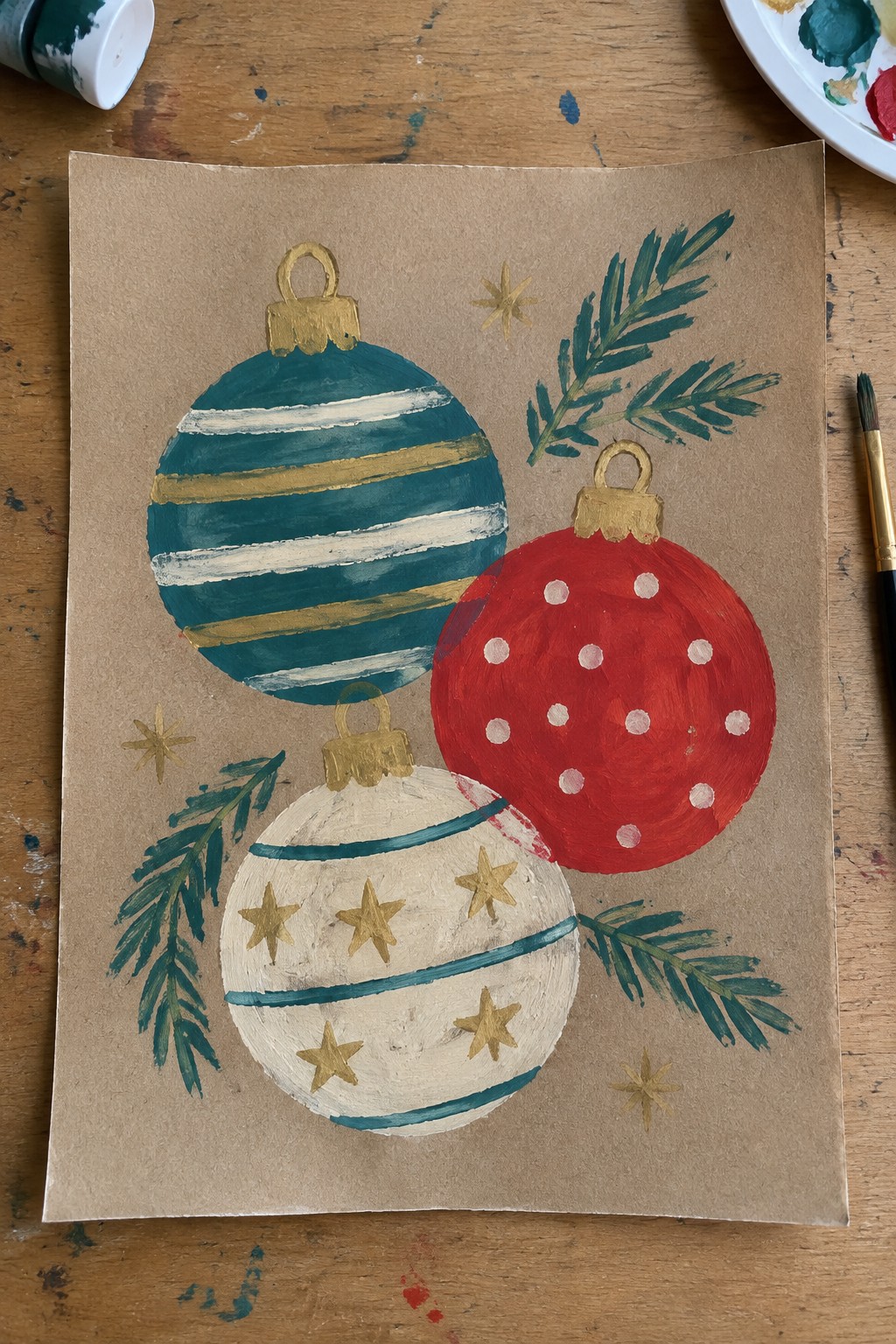
Painting three overlapping Christmas ornaments gives you a clean seasonal subject that works well on cards or small canvases. One ornament uses teal with white and gold stripes, another relies on solid red with white dots, and the third mixes cream with teal bands and gold stars. Pine branches and scattered gold stars around the group add just enough greenery and sparkle to frame the main shapes without complicating the layout.
What makes this idea useful is the strong color contrast and simple repeating patterns, which read clearly even when scaled down for greeting cards. The flat shapes and limited background details make it straightforward to paint with basic brushes and a few acrylic colors. You could easily swap the patterns for different motifs or drop one ornament if you want a quicker version, and the kraft-style background keeps the focus on the bright baubles for easy sharing online.
Tiered Green Christmas Tree with Dot Ornaments

A tiered Christmas tree built from overlapping green triangles creates a simple graphic subject that works well for small canvases or holiday cards. The design relies on three stacked shapes for the tree, a short brown trunk, and scattered circles in red, gold, and white to suggest ornaments, all placed on an unpainted background. The strong silhouette and limited color palette keep the composition balanced without requiring precise detail work.
What makes this idea useful is how the flat triangle shapes let you finish the main form in just a few brushstrokes before adding the dots. You can swap the ornament colors or adjust their spacing to fit different canvas sizes, and the same layout translates easily to greeting cards or gift tags. For practice, this kind of subject works well because the high contrast between the dark green and light background hides small edge imperfections.
Hot Chocolate Mug Still Life for Cards

A hot chocolate mug still life works well as an acrylic painting idea because the central cup with marshmallows and a candy cane creates a clear focal point against a plain warm background. Small holly clusters and scattered gold stars fill the corners without crowding the main shape, and the red snowflake on the mug adds a simple repeated motif that balances the composition. This seasonal still life category stays effective through limited colors and soft edges rather than heavy detail or texture.
What makes this idea useful is the rounded mug shape that gives practice with curves and basic highlights while the surrounding elements stay small enough to finish quickly. You could swap the candy cane for a cinnamon stick or change the snowflake to a different pattern to make new versions without starting over. For Christmas card art, the warm beige background and red accents help the piece stand out in a feed because the layout leaves room for text or a border around the edges.
Gnome Trio with Patterned Hats
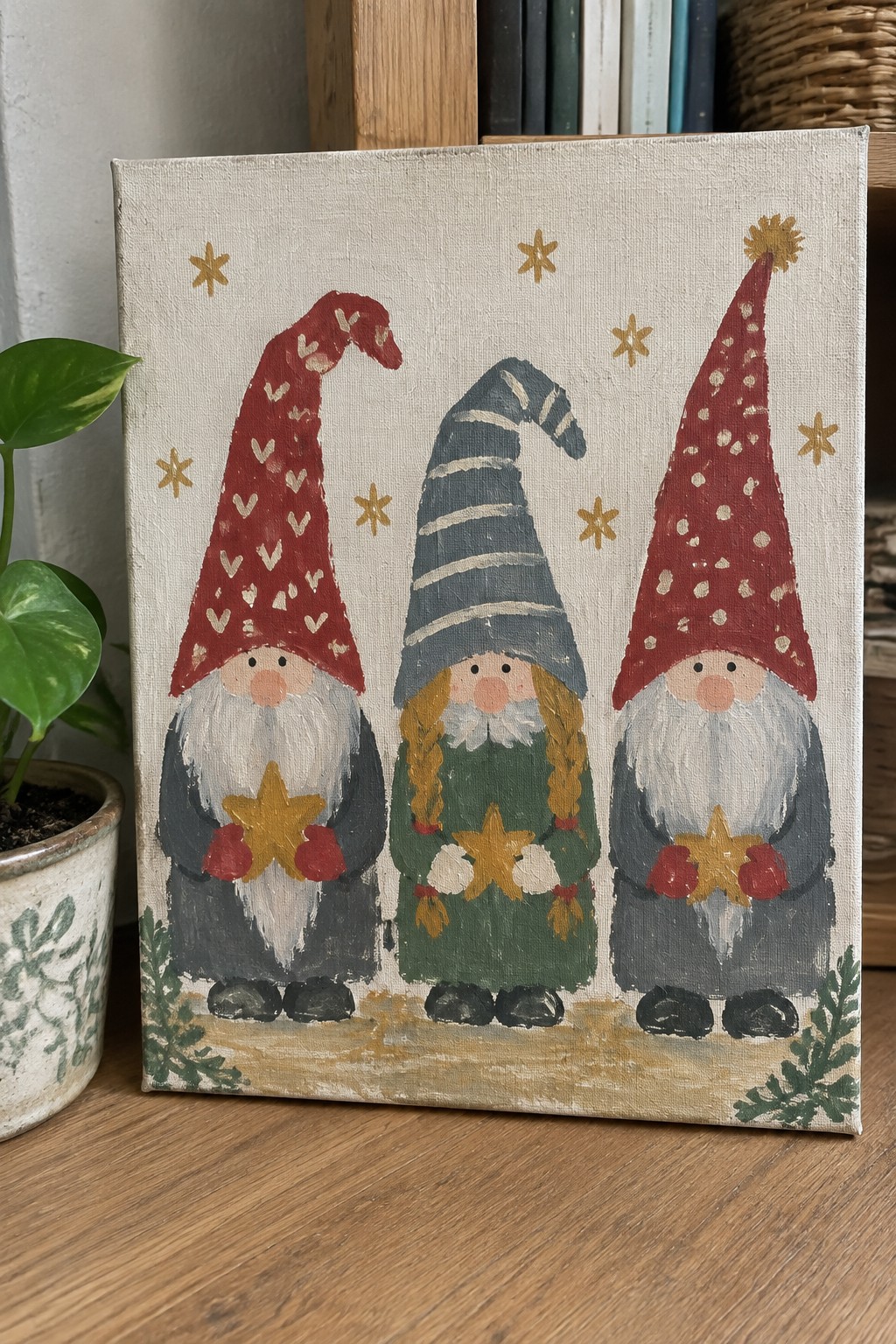
A trio of gnomes with differently patterned hats and matching star details creates a simple seasonal acrylic project on canvas. The idea uses flat color blocks for the bodies and hats, with small repeated motifs like hearts, stripes, and dots to add interest without extra layers. This approach fits the cute seasonal decorative category and works well for wall art or card-sized pieces because the shapes stay readable even when simplified.
What makes this idea useful is the clear division between the three figures and the background, which helps beginners keep proportions consistent. The limited palette of reds, blues, and golds makes it easy to match with common acrylic sets or swap in whatever colors you already have. For canvas decor, you can shrink the whole layout to a smaller board or stretch it across two canvases by painting just two gnomes each. The same structure also translates directly to greeting cards if you reduce the size and skip the bottom foliage.
Nighttime Snowy Village Street

A winter village street at night works as an acrylic idea because the strong contrast between cool blue snow and warm yellow window lights gives the scene instant depth and focus. The composition uses a winding path to lead the eye forward while keeping most shapes simple and blocky, which suits acrylic layering. This seasonal landscape relies on value contrast more than fine detail, making it straightforward to build with a few layers of paint.
The bold warm-cool contrast does a lot of the work here, so you can spend more time on placement than on blending. This layout adapts well if you want to reduce the number of houses or swap the street lamp for a different focal point. For Christmas card art, the glowing windows stand out on a small scale and give the piece a clear festive direction without requiring advanced techniques.
Reindeer Portrait with Striped Scarf
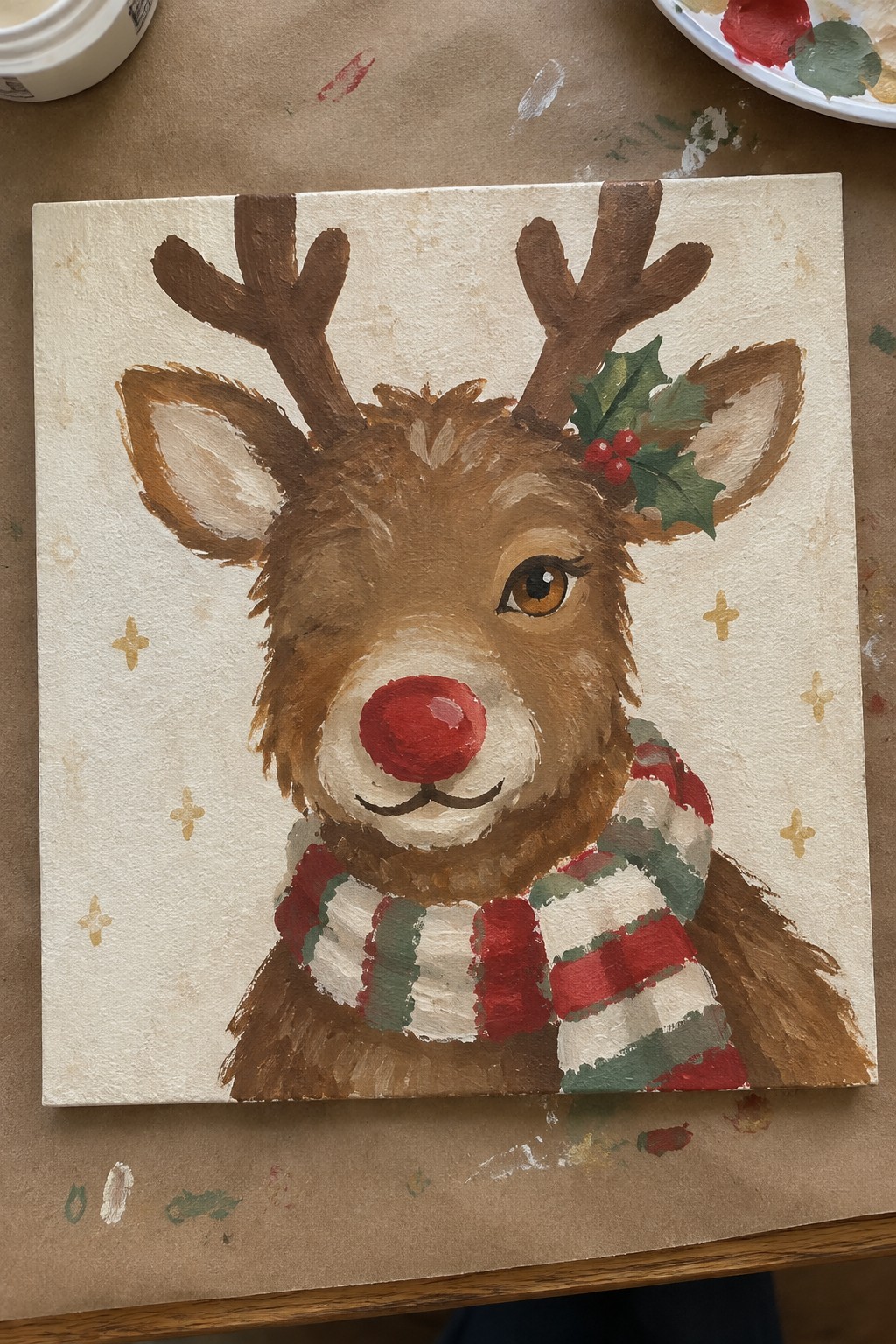
A reindeer face painted in acrylic works well for Christmas card ideas because the centered composition and large antlers give the subject clear structure while the red nose and striped scarf supply the seasonal color without extra elements. The light background with scattered gold accents keeps the focus on the animal and prevents the brown tones from feeling heavy. This style sits comfortably in the cute animal category and suits square canvases where the head and shoulders fill most of the space.
What makes this idea useful is how the main shapes can be blocked in first with larger brushes before adding the scarf stripes and holly last. The limited palette of brown, red, green, and cream makes it simple to scale down for actual cards or to swap the scarf pattern for a solid color if you want fewer details. For practice, the subject lets you work on soft blending around the muzzle and eyes while the bold scarf keeps the overall look finished even if the fur texture stays loose.
Patterned Hanging Ornaments with Merry and Bright
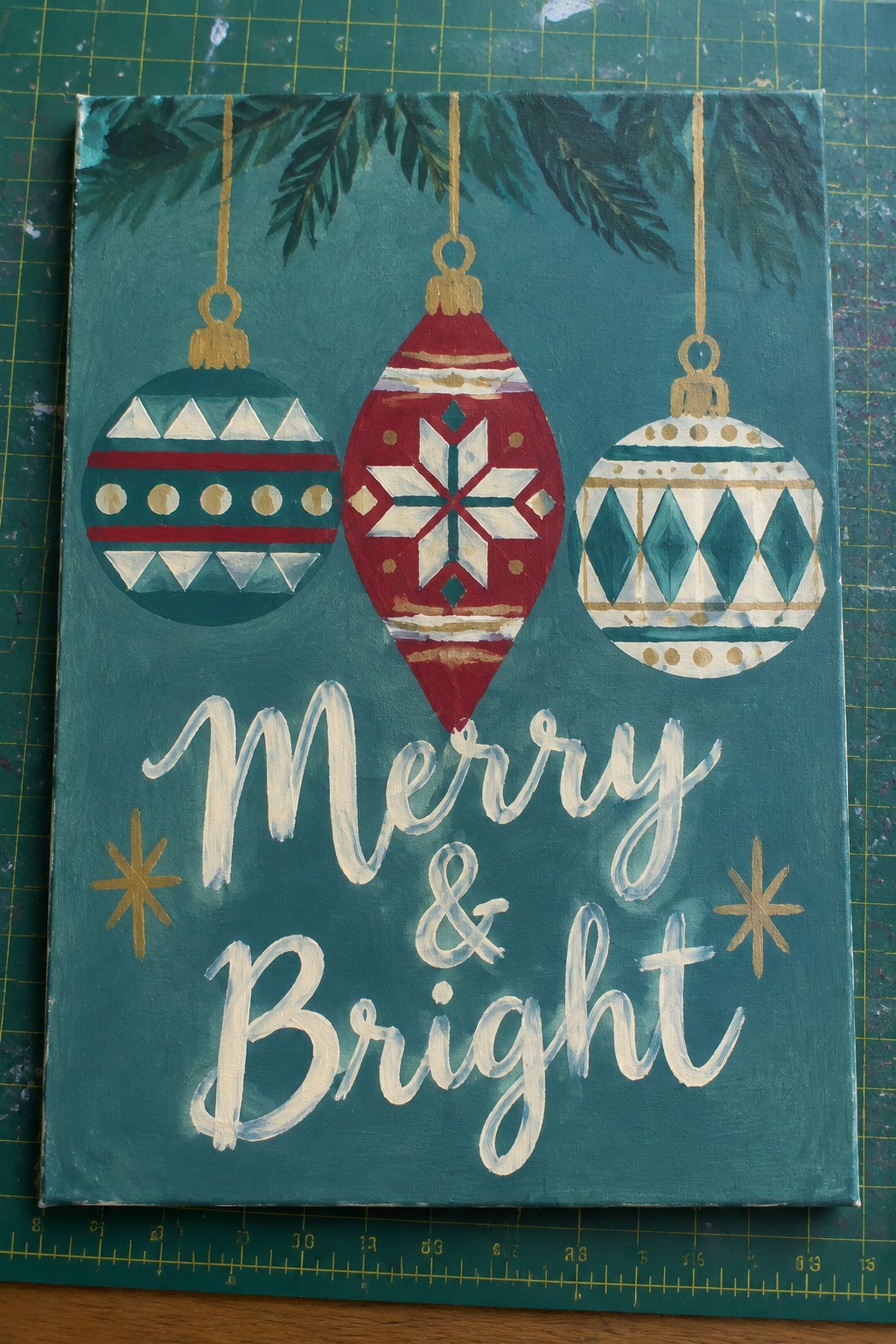
Three hanging Christmas ornaments create a clean seasonal acrylic idea that focuses on bold shapes and repeating patterns. The design uses a solid teal background with simple pine branches at the top and a large handwritten message below, letting the ornament patterns stand out through strong color contrast and clear outlines. This fits into decorative seasonal wall art where graphic shapes and limited colors do most of the visual work.
What makes this idea useful is how the ornament layout stays balanced even if you change the patterns or swap the color palette. The solid background and straight hanging lines give you an easy structure to follow, so you can paint it on canvas or scale it down for cards. You could simplify the gold details or repeat the same ornament shape in different colors to make quick variations for gifts.
Oversized Poinsettia Canvas Painting

A single large poinsettia works as a strong acrylic idea because the bold red petals create immediate visual impact against the light background. The painting builds from a detailed center outward using distinct petal shapes and a few green leaves for balance. This floral approach fits the seasonal category and translates well to canvas wall art or holiday card formats.
What makes this idea useful is how the high contrast does most of the work, letting you focus on shape and edge control rather than complex blending. You can adapt it by changing the red tones to other holiday colors or by cropping tighter around the center for smaller card versions. For practice this layout stays approachable since the graphic style forgives minor brush variations while still looking finished on a shelf or in photos.
Snowy Tree with Gold Joy Lettering
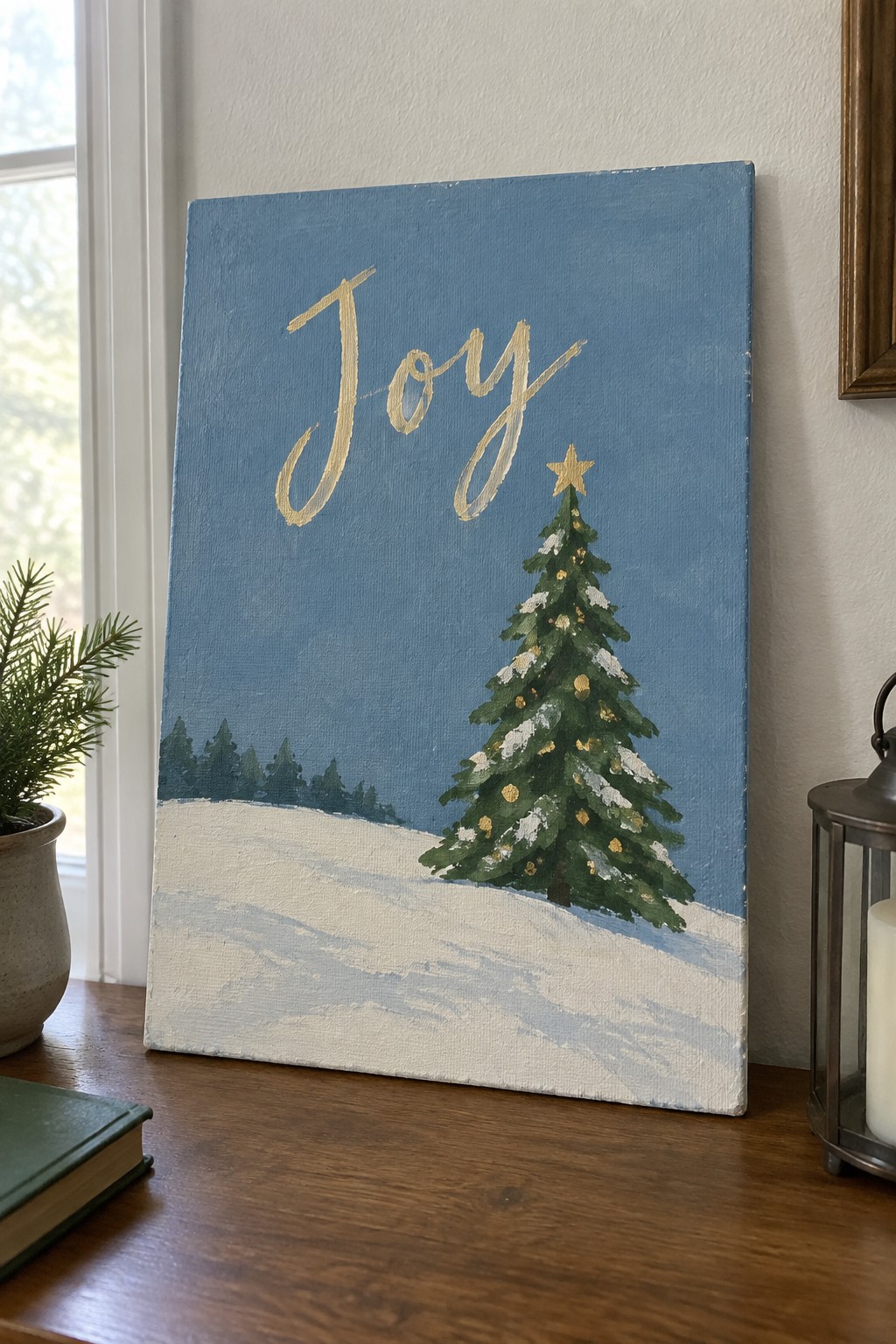
This acrylic painting idea pairs a single decorated evergreen with large script lettering on a simple winter background. The tree uses layered green tones with gold and white dots for ornaments, while the word “Joy” sits in the upper space in metallic gold. The flat blue sky and white snow ground keep the focus on the tree and text without extra detail.
What makes this idea useful is the limited color palette and clear shape separation that translate easily to smaller card sizes. You can swap the lettering for other short words or adjust the tree size to fit different canvas proportions. The gold accents add contrast that shows up well even with basic brushes, and the layout works for both wall pieces and quick seasonal cards.
Sleeping Polar Bear in a Striped Hat
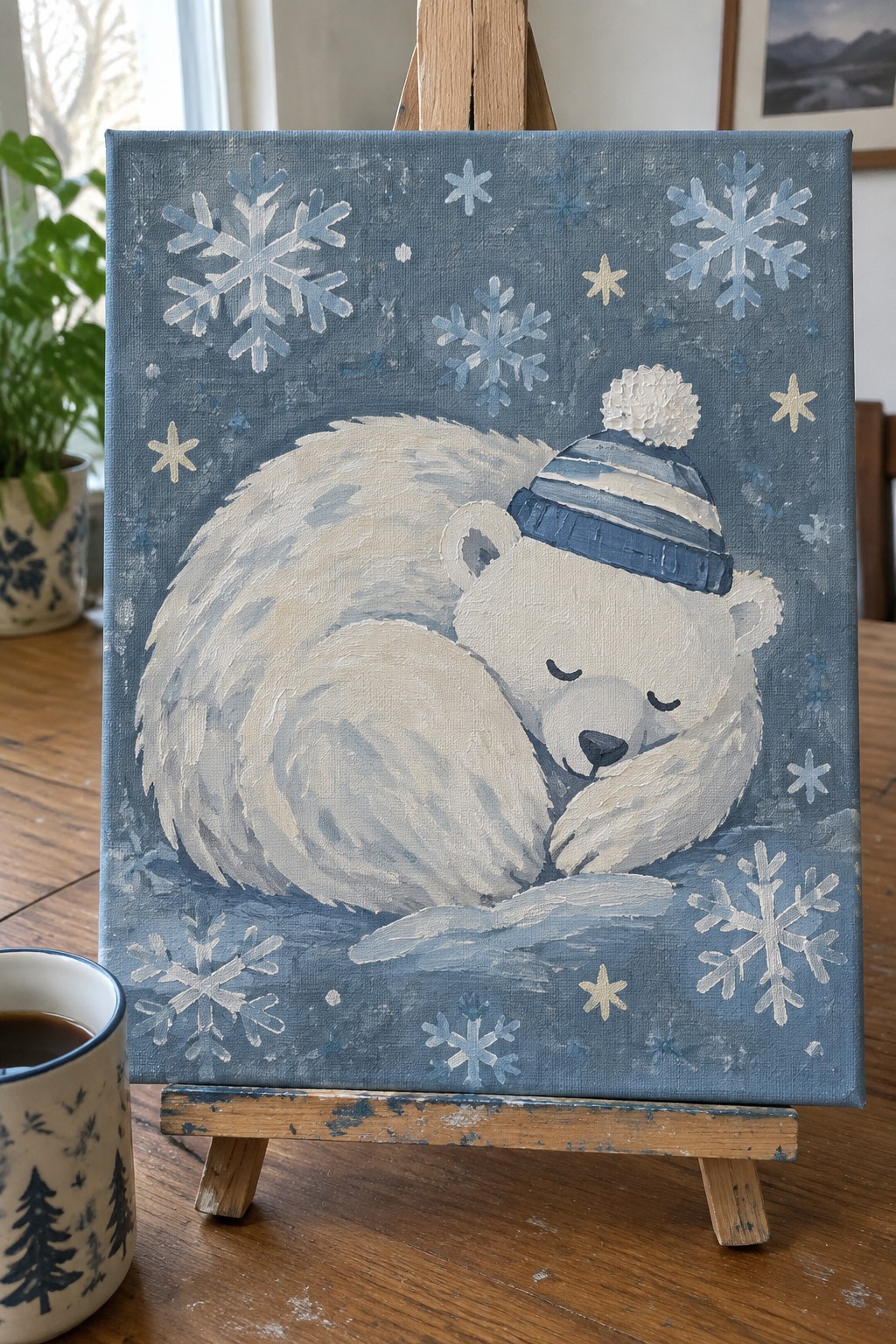
A curled polar bear wearing a striped knit hat works well as a Christmas card idea because the rounded body shape and simple pose translate easily into acrylic on a square canvas. The cool blue background with scattered snowflakes keeps the focus on the bear while adding a seasonal feel without extra elements. This fits the cute animal category and relies on soft blending for the fur and basic shapes for the hat and face.
What makes this idea useful is how the compact composition fits a card format without crowding. You can change the hat colors or add a few more snowflakes to adjust the density and still keep the same layout. The limited palette of blues and whites makes it straightforward to practice blending and edge control. For canvas decor, the same bear could be painted larger with thicker strokes to add more texture to the fur.
Rustic Sled Leaning Against Stacked Gifts

A still life built around a red wooden sled propped against three stacked gift boxes works well as a seasonal acrylic idea. The angled sled gives the composition a clear diagonal line while the stacked boxes create simple rectangular forms that are easy to block in first. Pine sprigs placed at the top and bottom add just enough organic shape to break up the straight lines without adding complex detail.
What makes this idea useful is how the basic shapes of the sled and boxes make it straightforward to paint on wood or canvas. You can lay down the main color blocks first then add the ribbon details and distressed edges on top. This setup adapts quickly if you change the box colors or simplify the sled into fewer planks for a smaller card format.
Winter Fox with Striped Scarf in Snowy Woods

This acrylic idea pairs a seated fox as the main subject with a simple winter forest background of dark pine trees and falling snow. The striped scarf adds a clear seasonal element while the deep blue sky and white snow create strong contrast against the fox’s orange fur. The composition works because the fox takes up most of the space and the background stays loose with basic tree shapes and scattered snow dots.
What makes this idea useful is how the scarf turns an ordinary animal into a Christmas card subject without extra props. You could paint the trees as flat silhouettes to speed up the process or change the scarf stripes to match different color schemes. For practice, the rounded fox shape and limited color palette keep the focus on blocking in the body and adding the scarf details last.
Gingerbread Cookie Shapes with Icing Details
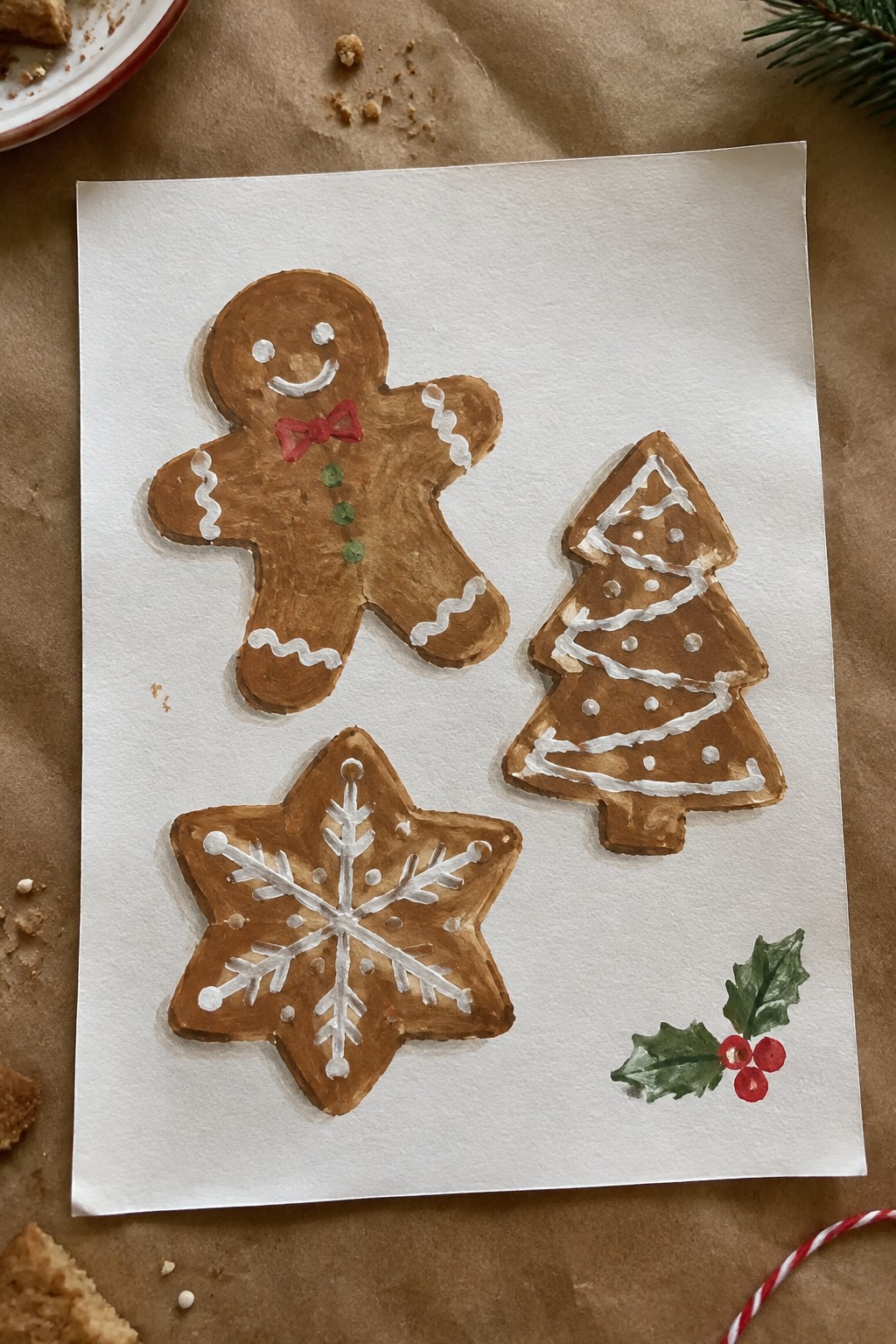
Painting gingerbread cookie forms with acrylic gives a direct route to Christmas card art that stays graphic and clean. Use a flat brown base for each shape, then layer white for the icing lines, dots, and small accents like the bow or holly. The approach fits the cute seasonal category, where strong shape contrast and minimal color keep the pieces readable even at small card sizes.
What makes this idea useful is how the solid brown fills and white line work let you practice both coverage and control without complex blending. You can trace cookie cutters for the outlines, then vary the icing patterns or swap shapes to fit different card layouts. The same idea scales easily to actual cardstock and photographs well for Pinterest because the high contrast holds up in thumbnails.
Hanging Mittens with Simple Patterns
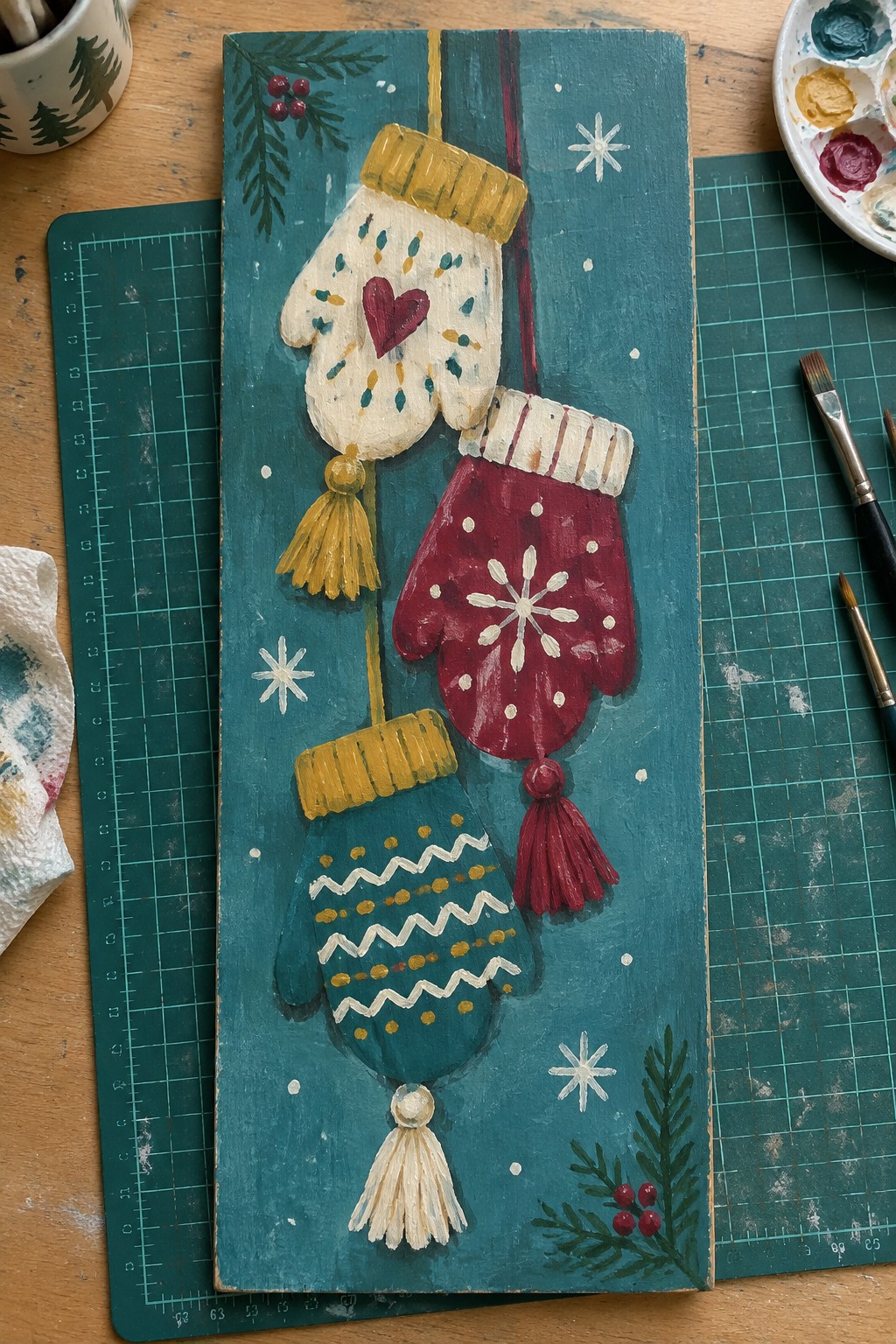
This acrylic painting idea uses three mittens in different colors suspended on strings against a flat teal background, each decorated with basic motifs like hearts, snowflakes, dots, and zigzags. The layout relies on bold color blocks and repeated shapes rather than fine detail, which keeps the focus on the hanging forms. It works as a seasonal decorative piece that translates easily to small canvases or card designs.
What makes this idea useful is the straightforward structure of vertical strings and mitten shapes, which lets you adjust colors or swap patterns without changing the whole composition. The solid background means you can finish the piece faster and still get a clean result. For card art, you could crop it to two mittens or shrink the whole design while keeping the same spacing and contrast.
Snow Globe with Cabin and Trees
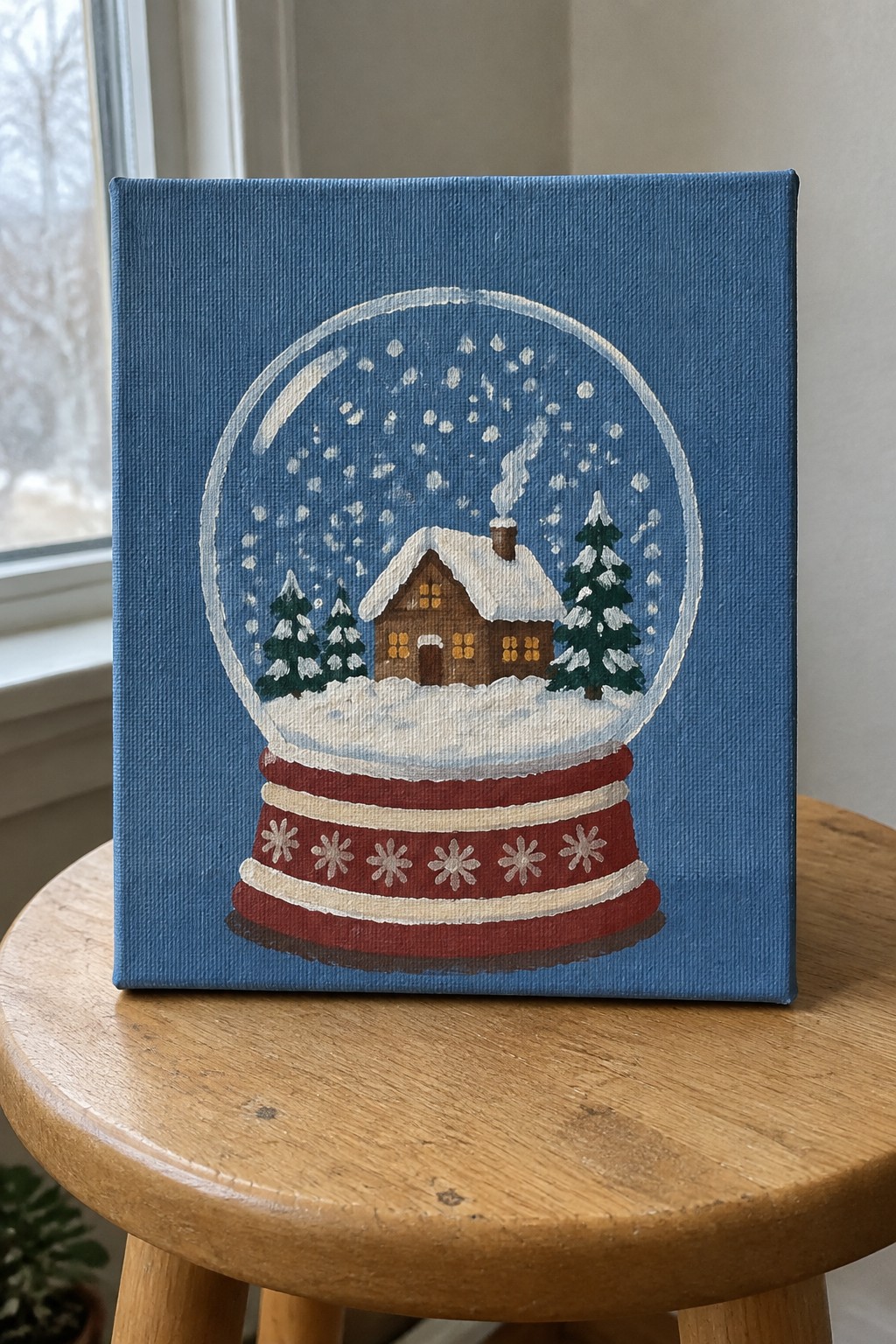
A snow globe scene is a self-contained acrylic painting idea that places a small winter landscape inside a circular frame. The main subject is a brown cabin with glowing windows, snow-covered roof, and two pine trees, all set against a blue background filled with scattered white dots for falling snow. The red base with white snowflake patterns completes the composition and gives the circle a solid visual anchor.
What makes this idea useful is the fixed circular boundary, which keeps the painting area manageable and reduces the need for complex background work. The limited color palette of blue, red, brown, and white makes it straightforward to mix and repeat for multiple cards. You could simplify the design by using fewer trees or adapt it for smaller canvases by shrinking the globe size while keeping the same layout.
Stacked Gift Boxes with a To You Tag

A still life of three stacked gift boxes works well as a Christmas card idea in acrylics. The layout relies on simple rectangular shapes in white, red, and green, held together by gold ribbon strips and a loose bow on the top box. A dark teal background and small tag keep the composition focused and easy to read from a distance.
What makes this idea useful is how the straight edges and flat color blocks let you finish the main shapes fast without blending. You can change the tag text, swap ribbon colors, or add a fourth box to adjust the height for different card sizes. For canvas decor or practice pieces, the limited palette and clear layering make it a quick project that still reads clearly as a wrapped present.
Row of Candles with Greenery Base

A row of five candles in different heights and colors forms a straightforward seasonal still life idea that works well for acrylic. The dark background makes the soft glows around each flame stand out, while the band of pine branches and berries along the bottom adds weight and keeps the layout balanced. This kind of painting fits the decorative category and translates easily to card-sized work because the repeated shapes and limited palette reduce the need for complex details.
What makes this idea useful is how simple it is to swap candle colors or change the number of flames to fit different card formats. The even spacing gives you clear areas to practice soft blending around the light without needing advanced brush control. You could also drop the greenery band entirely or paint it in fewer colors if you want a quicker version for multiple cards.
Cute Penguin with Cheers Banner for Winter Cards
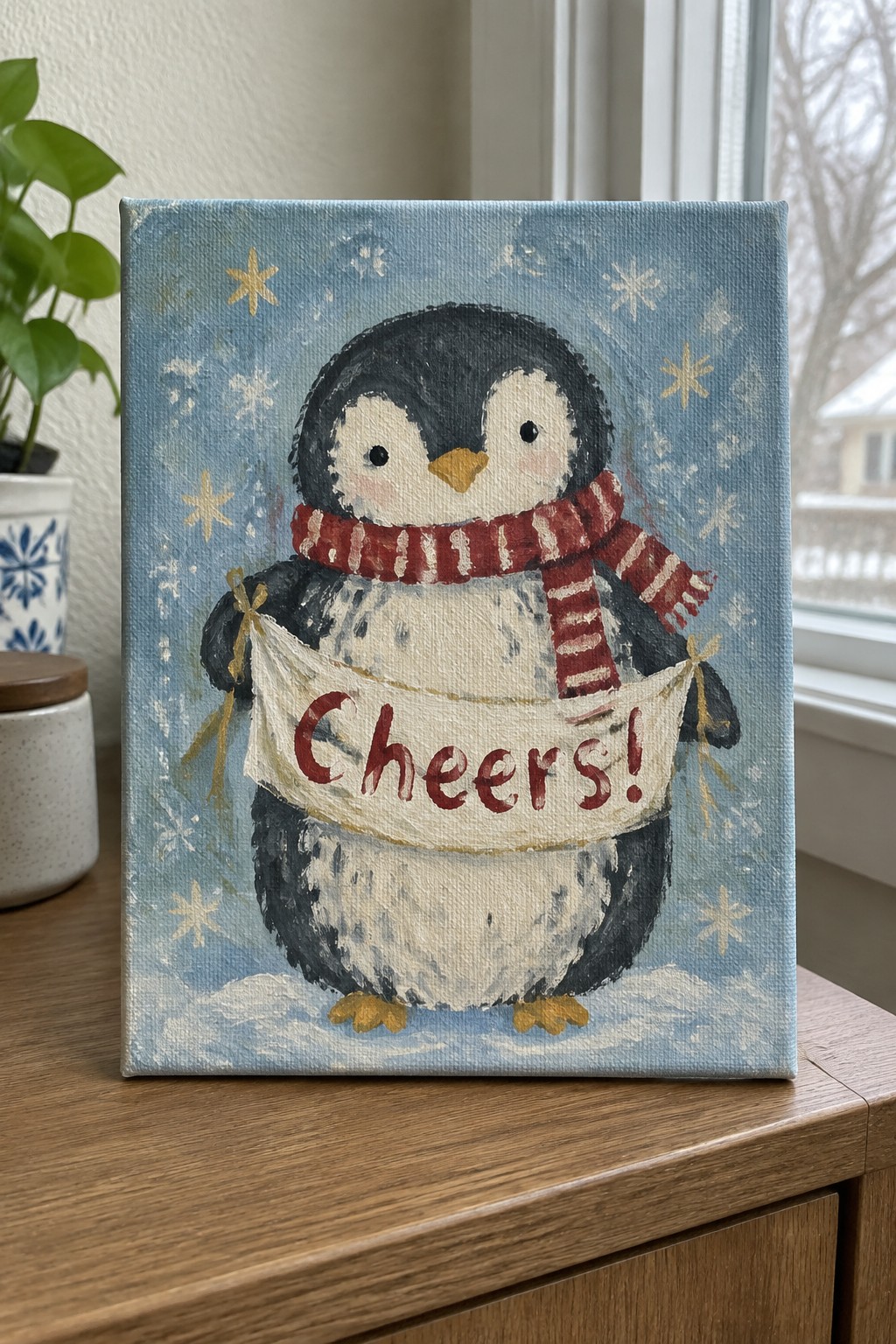
A cute penguin makes an approachable main subject for an acrylic painting idea aimed at Christmas cards or seasonal decor. The design places the penguin front and center holding a banner with text, which creates a clear focal point and lets the red scarf and lettering add quick color contrast against the cool blue background. This fits the cute seasonal animal category, where simple rounded shapes and a limited palette keep the composition balanced without extra detail.
What makes this idea useful is how the penguin’s basic body shape and the banner layout work well for practice on small canvases or card-sized panels. The strong contrast from the dark body and bright scarf means you can finish the piece with fewer layers while still getting a polished result. You could easily change the banner text or swap the scarf color to fit other holidays, and the overall layout translates directly to greeting cards or small wall pieces that stand out on Pinterest.
Frequently Asked Questions
What is the best surface to paint on when creating these acrylic Christmas card designs?
Cardstock that is at least 100 pounds in weight works well because it holds acrylic paint without excessive buckling. Start by applying a thin layer of gesso to the surface if the paper feels too absorbent. This step helps the paint glide smoothly and keeps colors vibrant across the 20 ideas.
How can beginners adapt the more detailed acrylic paint ideas like intricate snow scenes or layered ornaments?
Focus on simpler shapes first such as basic trees or stars using larger brushes to build confidence. Many of the ideas can be simplified by tracing basic templates onto the card before painting. Practice on scrap paper to test color mixes and then transfer successful results to the final cards.
What steps help acrylic paint dry faster when making multiple Christmas cards in one session?
Work in a warm dry room with good airflow and apply paint in thin layers rather than thick ones. A hair dryer on low heat held at a distance can speed the process but avoid overheating to prevent cracking. Rotate cards on a drying rack so air reaches all sides evenly.
How do I add texture to flat acrylic designs without special tools?
Mix the paint with a small amount of modeling paste or sand for raised effects on elements like snow or wreaths. Use household items such as a crumpled paper towel or the edge of a credit card to dab or scrape patterns into wet paint. These methods enhance many of the charming ideas while keeping supplies minimal.
How should painted Christmas cards be stored to avoid smudges before mailing?
Allow full drying for at least 24 hours then place each card between sheets of wax paper inside a flat box. Store the box in a cool spot away from direct sun or humidity. This protects the acrylic surfaces and keeps the cards ready for envelopes without damage.

Hi, I’m Camille.
I’m a self-taught painter and creative blogger with a soft spot for acrylic painting, color play, and all the little art ideas that make everyday life feel more inspiring.
I started this space because I’ve always believed painting should feel joyful, approachable, and a little personal. Some of my favorite pieces come from simple ideas, messy palettes, and evenings where I just felt like making something pretty.
Most of what I share begins with acrylic painting, but I also love exploring other mediums when creativity pulls me in a new direction. My goal is to collect and share painting ideas that feel fun, beautiful, and actually doable, whether the mood is calm and minimal or bright and playful.
This is a space for inspiration, experimenting, and enjoying art without overcomplicating it.