
Ever wondered why your HVAC system isn’t performing at its best? You’re not alone. Many homeowners face issues with air conditioning and heating efficiency, often stemming from trapped moisture and air in the system.
Key Takeaways
- Understanding Vacuum Pumps: Vacuum pumps are essential in HVAC systems for removing air and moisture, which enhances overall efficiency and performance.
- Benefits of Using a Vacuum Pump: Key advantages include improved efficiency, prevention of moisture-related damage, extended system lifespan, and ensuring the correct refrigerant charge.
- Preparation is Key: Ensure you gather necessary tools like a vacuum pump, manifold gauge set, and PPE to ensure a safe and effective operation.
- Step-by-Step Process: Follow a careful process: set up equipment, connect the vacuum pump, evacuate the system, and monitor vacuum levels for optimal results.
- Avoid Common Mistakes: Be cautious of over-evacuating the system and ignoring leak detection to prevent damage and inefficiency in your HVAC system.
Understanding Vacuum Pumps in HVAC Systems
Vacuum pumps play a crucial role in maintaining HVAC systems. They help remove unwanted air and moisture, ensuring optimal performance.
Recommended Products

HIGH-PERFORMANCE 4 CFM VACUUM PUMP: Single-stage rotary vane pump delivers fast, deep evacuation for automotive and home HVAC systems; Removes moisture before refrigerant chargin;. Die-cast aluminum body with anti-slip base ensures long-lasting use
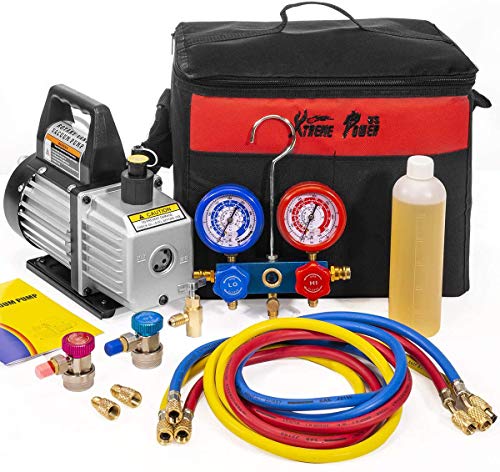
SIMPLE BUT POWERFUL - XtremepowerUS 1/4 HP 3 CFM 1-Stage Rotary Air Vacuum Pump is designed to have high efficiency and low noise output with internal high volume cooling fan for extended use (Include R-134A automotive air conditioning dispensing valve design with hand operated punch/valve control, connects all R-134a refrigerant cans with 1/4" Male threads)

[MULTI-USE] - Robinair's 15500 VacuMaster Economy Vacuum Pump is designed for use with A/C-R systems using CFCs, HCFCs, and HFCs in conjunction with mineral oil, ester oil, alkyl benzene oil, and PAG oil as lubricants
What Is a Vacuum Pump?
A vacuum pump is a device that creates a vacuum by removing air and other gases from a sealed environment. In HVAC systems, it connects to the refrigeration system during maintenance. The pump creates a low-pressure environment, essential for eliminating moisture and non-condensable gases, such as air.
Importance of Vacuum Pumps in HVAC
Using vacuum pumps in HVAC systems is vital for several reasons:
- Improved Efficiency: Removing trapped air enhances system efficiency, leading to better heating and cooling performance.
- Preventing Moisture Damage: Moisture in the system can lead to corrosion and freezing. A vacuum pump eliminates this risk by ensuring the system remains dry.
- System Longevity: Proper evacuation using a vacuum pump extends the lifespan of HVAC components, saving you money on repairs or replacements.
- Optimal Refrigerant Charge: A vacuum pump helps achieve the correct refrigerant charge by removing air and dirty contaminants, which ensures your system operates correctly.
Using a vacuum pump is essential for running your HVAC system efficiently and effectively. Proper maintenance keeps your home comfortable year-round.
Preparing for Vacuum Pump Usage
You must gather necessary tools and prioritize safety when preparing to use a vacuum pump in an HVAC system. Proper preparation ensures efficient operation and effective results.
Recommended Products

HVAC Vacuum Pump Kit: This AC vacuum pump and gauge set includes a 110V 1/3 HP 4.5 CFM Single Stage vacuum pump, a three-way manifold gauge, three hoses, a low-pressure quick coupler, a high-pressure quick coupler, two R410a adapters( from1/4'' male to 5/16'' female),2 R134a can taps( puncture-style and self-sealing ),a bottle of vacuum oil,a valve core wrench,a user manual and a cleaning cloth ;the vacuum pump,gauge and all other accessories can be packed into the storage bag for easy carry

RELIABLE PERFORMANCE - The VIVOHOME HVAC vacuum pump kit is a versatile tool that makes refrigerant evacuation, recharging, and other automotive air conditioning repair work a breeze; It features a powerful 1/3 hp vacuum pump, a 4-way manifold gauge, a leak detector, 2x R134a quick couplers, 2x R134a can taps of self-sealing type and puncture style, a bottle of vacuum oil of 330ml, and 4 color-coded hoses

EXCELLENT MAINTENANCE TOOL: The VIVOHOME 3.5 CFM Vacuum Pump features die-cast aluminum housing and a composite anti-slip rubber base, making it lightweight and durable; Ideal for diagnosing and recharging AC systems on your own; Efficiently removes moisture from air conditioning systems before refilling with refrigerant
Necessary Tools and Equipment
- Vacuum Pump: Choose an appropriate vacuum pump based on system size and type. Common options include single-stage and two-stage pumps.
- Hoses: Use high-quality vacuum hoses suitable for HVAC work. Ensure they’re rated for the correct pressure and temperature.
- Manifold Gauge Set: Acquire a manifold gauge set to monitor pressure levels during the vacuum process. This tool helps you ascertain when the system reaches the desired vacuum level.
- Measurement Instruments: Employ a micron gauge to measure vacuum levels accurately. This enhances precision during the pumping process.
- Sealant: Keep a suitable sealant handy for any potential leaks in the system.
- Personal Protection Equipment (PPE): Wear safety glasses and gloves for protection during the procedure.
- Ensure Ventilation: Work in a well-ventilated space to prevent inhalation of harmful gases or fumes.
- Check Equipment: Inspect all tools and equipment before use. Look for signs of wear or damage that could lead to leaks or malfunctions.
- Avoid Electrical Hazards: Turn off power to the HVAC system before beginning work. Also, ensure tools don’t contact live electrical components.
- Protect Yourself: Always use appropriate PPE like gloves and glasses. Avoid direct contact with refrigerants, as they can be hazardous.
- Follow Manufacturer Guidelines: Refer to the vacuum pump manual and HVAC system instructions. These documents provide essential information for safe and effective usage.
Step-by-Step Guide on How to Use Vacuum Pump HVAC
Using a vacuum pump in HVAC systems can enhance efficiency and prevent damage. Follow these steps for effective usage.
Step 1: Setting Up the Equipment
Gather all equipment in a well-ventilated area. Ensure your vacuum pump, hoses, and manifold gauge set are within reach. Confirm that the vacuum pump is off and unplugged before setting it up. Then, check for leaks in hoses and fittings, as any leaks can compromise the evacuation process.
Step 2: Connecting the Vacuum Pump
Connect the vacuum pump to the HVAC system using the manifold gauge set. Attach the low-pressure hose from the manifold gauge to the pump’s inlet port. Secure all connections tightly. Make sure you connect the high-pressure hose to the refrigerant service port of the HVAC system.
Step 3: Evacuating the System
Turn on the vacuum pump. Allow it to run for at least 15 to 30 minutes. Monitor the gauge on your manifold for a vacuum reading of 500 microns or lower. This ensures that both moisture and air have been effectively removed from the system. If the gauge does not reach this level, inspect for leaks and repeat the connection process if necessary.
Step 4: Monitoring the Vacuum Level
Continue monitoring the system’s vacuum level. Keep an eye on the manifold gauge. If the vacuum level rises above 500 microns, you’ve likely encountered a leak. If so, stop the pump, check connections, and ensure everything is secured before restarting the evacuation. Maintain the vacuum for at least 30 minutes after reaching the desired level to confirm the system is free of moisture and air.
With these steps, handling a vacuum pump for HVAC usage becomes straightforward, ensuring optimal performance for your system.
Common Mistakes to Avoid
Using a vacuum pump in HVAC systems is straightforward, but avoiding common mistakes is crucial. Here are two key pitfalls to watch out for during your operation.
Over-evacuating the System
Over-evacuating can cause damage to the system components. Excessive vacuum levels may lead to issues like compressor failure. Aim for a vacuum level that sits between 500 and 1000 microns. If you’re unsure, reference the manufacturer’s specifications for guidance. Use a vacuum gauge to monitor the level during evacuation. If you notice levels dropping below 500 microns, stop and check for issues.
Ignoring Leak Detection
Ignoring leak detection may result in wasted energy and inefficient performance. After you’ve evacuated the system, wait for about 10 to 15 minutes to check for leaks. Use a bubble solution or electronic leak detector. If you spot bubbles or receive a leak alert, address the issue before proceeding. Doing this step prevents refrigerant loss and ensures optimal system operation.
Conclusion
Using a vacuum pump in your HVAC system is a game changer for maintaining efficiency and performance. By following the right steps and avoiding common pitfalls you can ensure your system runs smoothly. Remember to monitor vacuum levels and check for leaks regularly to keep everything in top shape.
Taking the time to properly use a vacuum pump not only enhances your HVAC system’s lifespan but also helps save on energy costs. With a little practice and attention to detail you’ll be well on your way to mastering this essential tool. Happy pumping!
Frequently Asked Questions
What are common HVAC issues related to air conditioning and heating?
Common HVAC issues include trapped moisture, air leaks, and inefficient heating or cooling. These problems can lead to reduced system efficiency, higher energy bills, and potential equipment damage.
Why are vacuum pumps important in HVAC systems?
Vacuum pumps are crucial for removing trapped moisture and air from HVAC systems, enhancing their efficiency. A good vacuum helps prevent future issues like frozen coils or compressor damage.
How do I set up a vacuum pump in an HVAC system?
To set up a vacuum pump, first, ensure all necessary tools are ready. Connect the pump to the service port of the system, ensuring all fittings are tight. Once connected, start the pump and monitor the gauge.
How do I monitor vacuum levels during the evacuation process?
Monitor vacuum levels using a gauge connected to the system. Watch for the pressure to drop consistently to your desired vacuum level, typically around 500 microns or lower, indicating that the system is adequately evacuated.
What are common mistakes to avoid when using a vacuum pump?
Avoid common mistakes such as over-evacuating the system, which can cause damage, and neglecting leak detection. Always check for leaks before starting and monitor the vacuum level carefully to ensure optimal performance.
