

Sometimes I paint on small canvases because they let me finish something in one sitting.
Acrylic paint works well for this since it dries quickly.
I have put together a list of ideas that are straightforward for beginners.
Each one is cute and can be done in a short amount of time.
They are things I have tried myself when I needed a quick creative break.
Gray Rabbit with Lavender and Daisies

A centered gray rabbit serves as the main subject on a solid purple background, with lavender stalks and white daisies placed symmetrically on each side. This acrylic idea combines a simple animal shape with basic floral elements to create a balanced layout that stays contained within a small square canvas. The flat color blocks and clean outlines make the composition easy to read without requiring complex layering.
What makes this idea useful is the straightforward subject and limited palette that translate well to quick mini canvas sessions. You can swap the lavender for other stems or shift the background to a different solid color if you want to match a specific space. For practice, the design lets you focus on shape placement and basic flower forms before adding any extra detail.
Mini Mushroom Trio on a Green Canvas

A group of three mushrooms in staggered sizes creates a simple acrylic idea for a small canvas. The largest mushroom uses a spotted red cap while the others shift to softer beige and brown tones, all set against a flat light green background that keeps the focus on the forms. This approach fits neatly into cute nature subjects and works through basic shapes and gentle color contrast instead of heavy detail.
What makes this idea useful is the way the different heights and rounded caps let you build the painting with straightforward layering and minimal brushwork. You can easily change the cap colors for seasonal versions or add a bit of grass texture at the base if you want more practice with edges. For quick sessions on mini canvases this layout stays beginner-friendly while still looking finished enough to use as wall decor or small gifts.
Cute Pear Character Mini Canvas Painting

A rounded green pear painted as a simple character works well as an acrylic idea on a small canvas. The main shape gets filled with blended green tones, a short stem, and one leaf on top, while a basic face with dots for eyes and a curved line for the mouth sits in the lower half. Light background washes and a few scattered leaf shapes on the sides keep the layout balanced and easy to paint without extra layers.
What makes this idea useful is how the rounded fruit shape lets you practice smooth blending on a forgiving form. You can swap the pear for an apple or peach and keep the same face layout, or change the background wash to match different color schemes. For practice, this kind of subject finishes fast on a mini canvas and still looks intentional enough to hang or gift.
Crescent Moon Night Sky Mini Canvas

A compact night sky scene built around a crescent moon, scattered stars, and soft clouds on a deep blue ground makes a clean celestial landscape idea. The composition stays effective because the moon sits slightly off-center while the stars and clouds balance the space without crowding the small surface. Strong contrast between the warm yellow shapes and the dark background keeps the simple forms readable even at a small size.
What makes this idea useful is how few elements are needed to fill the canvas while still looking finished. The same layout works for quick practice sessions or small gifts since the shapes can be adjusted in size or number without changing the overall feel. Swapping the moon color or adding a few more clouds gives an easy way to personalize it for different color schemes or seasons.
Layered Hills and Single Tree Landscape

A landscape built from horizontal bands of color creates an easy structure for quick acrylic sessions. Different shades of green form overlapping hills that sit above a broad yellow field, while a single tree with dotted foliage adds a focal point without crowding the space. The clean divisions between sky, hills, and ground keep the composition balanced and readable even on a small canvas.
What makes this idea useful is the way large flat shapes handle most of the visual work, so you only need to focus on one small detailed element like the tree. You can change the hill colors or move the tree to the other side to create a new version without starting over. For practice, this layout helps you test color mixing on the sky and clouds while the lower sections stay simple. The same idea scales easily to other canvas sizes or seasonal palettes.
Stacked Birds with Patterned Wings

This acrylic painting idea centers on three birds stacked vertically on a mini canvas, each using a solid body color paired with a single patterned wing. The composition stays effective through bold color blocks, simple outlines, and repeating geometric patterns like stripes, dots, and chevrons that add variety without crowding the space. It falls into the cute decorative animal category and works well for small canvases because the flat shapes keep everything readable at a glance.
What makes this idea useful is how the basic bird forms let you practice color placement and pattern work without needing advanced blending. You could swap the wing patterns for new motifs or adjust the color order to fit different room styles or seasons. For quick sessions, the stacked layout stays balanced even if you change the spacing or leg thickness slightly, and the graphic style stands out on Pinterest when the colors stay bright and high-contrast.
Color-Blocked Rainbow Arcs for Mini Canvases

A rainbow built from wide arched stripes in pink, yellow, teal, and rust stands out against the plain background on this mini canvas. The stripes follow the same curve and get slightly narrower toward the center, with a line of dots marking the base. This layout relies on bold color placement and clean edges to hold visual interest.
The bold contrast does a lot of the work here, making the design quick to paint even on a small surface. You could change the color order or add more stripes to personalize it without changing the overall shape. For canvas art, something like this works especially well when you want a fast project that still feels finished.
Cute Cupcake Still Life on a Mini Canvas

A single cupcake with swirled pink frosting and scattered sprinkles makes a straightforward still life subject for acrylic on a small canvas. The light green background creates clean contrast that keeps the focus on the cupcake without needing extra elements or busy details. Simple shape blocking and soft edge blending handle most of the work, while the brown wrapper and subtle shadow add just enough depth to make the form read clearly.
What makes this idea useful is how easily the color palette and layout can be swapped for different frosting shades or sprinkle patterns. The centered composition works well on a 4×4 or 5×5 inch canvas and leaves room to practice smooth blending on the frosting without tackling complex backgrounds. For quick sessions or gift sets, the same cupcake can be repeated with minor color changes to create a small series that still feels cohesive.
Sleeping Kitten with Lavender on a Mini Canvas

A curled sleeping kitten paired with lavender stems creates a compact cute animal painting that fits neatly on a small canvas. The cat fills the center with soft gray fur while the flowers sit to one side, adding color and height without crowding the space. A muted green background and simple beige ground keep the whole piece balanced and easy to read from a distance.
What makes this idea useful is the clean split between the animal and the single flower element, which leaves room to adjust colors or swap in different blooms. The soft edges on the cat let you practice gentle blending while the straighter stems give a clear contrast to work against. This layout also translates well to other small canvases if you want quick pieces for gifts or a series with different flowers.
Simple Potted Cactus on Mini Canvas

A potted cactus works well as an acrylic painting idea because the main forms rely on a few rounded shapes for the pads and a basic tapered form for the terracotta pot. This still life approach keeps the composition balanced by centering the plant and using a thin ground line to anchor it without extra elements. The limited color range and flat application make the shapes read clearly even on a small canvas.
What makes this idea useful is how the same layout adapts quickly by changing the pot color or adding a second smaller cactus. For practice, this kind of subject helps with blocking in clean edges and handling negative space on a tiny surface. This would be easy to turn into matching pieces by varying the number of pads or switching to a different houseplant while keeping the pot and background the same.
Simple Sailboat on Wavy Waters
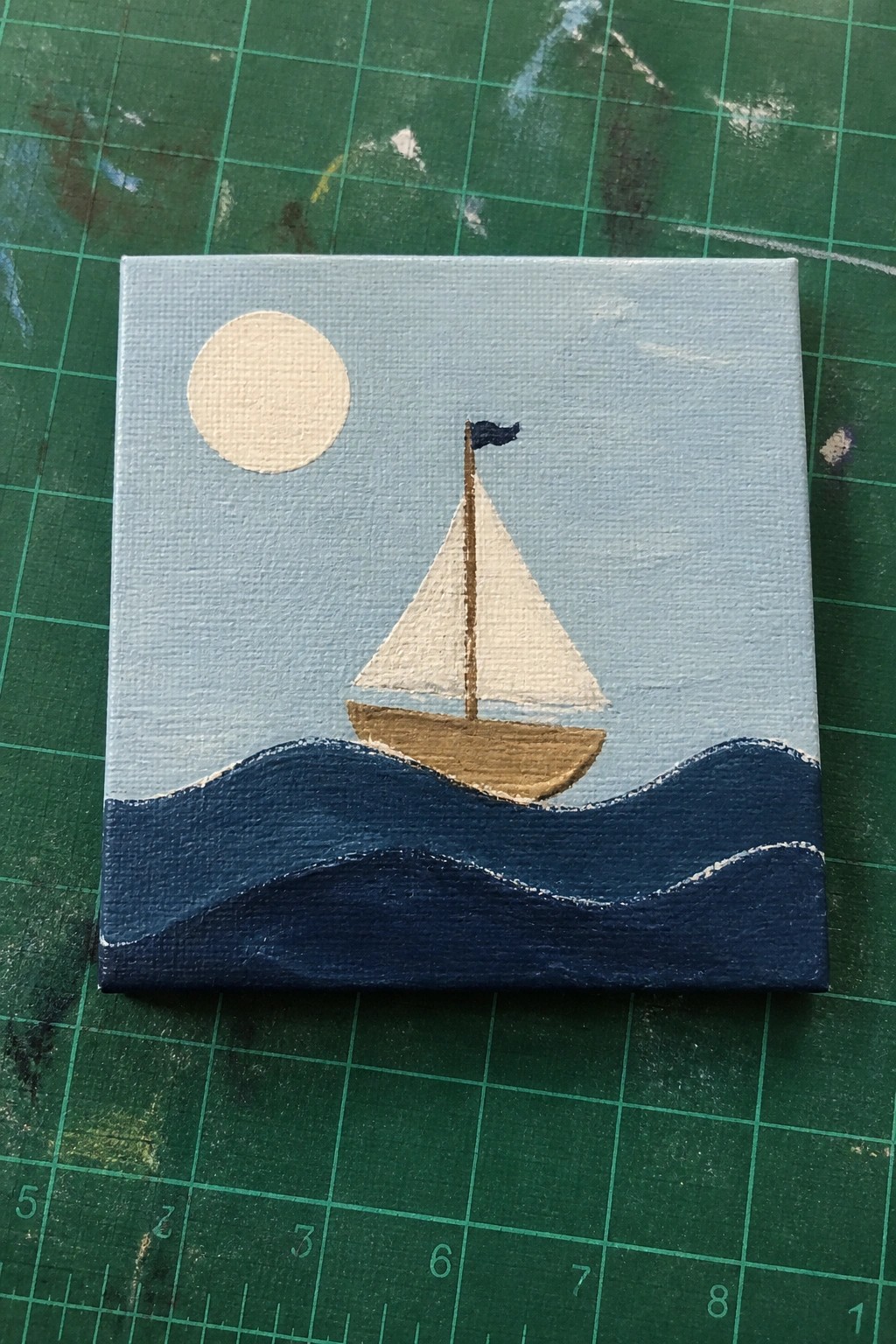
A sailboat on rolling waves forms a straightforward seascape idea that fits well on a small canvas. The layout relies on a few clear shapes for the hull, sails, and water line set against a flat sky with one circle for the sun. This approach works because the limited elements and strong horizontal split between sky and water keep the painting balanced without extra detail.
What makes this idea useful is how easily the same layout can be adjusted by changing the sail color or adding more wave layers for variety. The simple color blocks and shapes make it a good choice for quick practice sessions or small wall pieces. You could also repeat the design with different sky tones or a second boat to create a matching pair for gifts.
Mini Canvas Floral Bouquet with Bold Colors

A cluster of five flowers in pink, yellow, white, and teal creates a straightforward floral painting idea for a mini canvas. The concept uses simple stem and leaf shapes to connect the blooms without overcrowding the space. Strong color contrast against the off-white background makes each flower stand out quickly.
What makes this idea useful is the loose layout that works well even if the petals are not perfectly round. You can change the color mix or add one extra bloom to adjust the balance for different rooms. For practice, this kind of subject lets you test basic color mixing and leaf shapes on a small surface before moving to larger canvases. The same arrangement can be repeated on multiple canvases for matching wall decor.
Cute Fox with Scarf and Bouquet

A fox holding a bouquet works as a straightforward cute animal idea on a mini canvas because the rounded body shape and clear head-to-body proportions stay easy to block in. The scarf and flowers add a bit of detail on one side while the soft background keeps the focus tight. This kind of layout fits the decorative animal category where simple outlines and limited color areas help the subject read clearly even at small size.
What makes this idea useful is that the main forms can be painted first in flat color before adding the scarf dots and small blooms. You could change the flower mix or scarf pattern to match a different season or color scheme without redrawing the fox. For canvas decor or quick gifts, the centered pose and side bouquet keep the composition balanced even if you simplify the background further.
Mason Jar Bouquet on Neutral Canvas

A mason jar holding three simple flowers creates an easy still life idea that fits right into beginner acrylic sessions. The orange bloom, light blue flower, and white one sit at different heights with their stems crossing inside the jar, while the plain canvas background lets the shapes stand out without extra work. This floral setup keeps the focus on basic color blocking and stem placement rather than fine detail.
What makes this idea useful is how the jar gives the stems a clear structure so you do not have to figure out their arrangement on your own. You can change the flower colors to match leftover paint or drop one bloom if you want a faster version. For mini canvases the limited palette and centered layout make it quick to finish and easy to photograph for sharing.
Horizontal Moon Phase Series

A row of moon phases painted across a small black canvas forms a compact study of the lunar cycle. Each phase uses simple circular shapes with gradual shading to show the changing light, while small stars fill the negative space without crowding the layout. The idea works as decorative wall art because the limited palette and even spacing keep the focus on the sequence itself.
What makes this idea useful is how the high contrast between the pale moons and dark background handles most of the visual work. You can adapt it by changing the background color, adding a few constellation lines, or stretching the row across a longer canvas. For practice on mini canvases, the subject stays balanced even if you simplify the shading or reduce the number of phases.
Cute Mini Canvas Whale Painting

A cute whale painting idea uses a simple animal shape placed across two horizontal bands of color to separate sky and water. The whale is painted in solid blue with minimal shading, and a few small hearts float above it to add a light decorative element. This layout keeps the composition balanced on a small canvas while letting the curved whale body stand out against the lighter background.
What makes this idea useful is how the basic shapes let you finish the piece in one short session without needing many layers. The same layout works if you swap the hearts for stars or bubbles or change the water to a different shade of teal. For practice, this kind of acrylic painting idea helps you focus on clean edges and simple color blocking before moving on to more detailed subjects.
Bold Overlapping Shapes Abstract

This acrylic painting idea centers on large, simple geometric forms that overlap to fill a mini canvas with minimal effort. Warm orange and yellow shapes sit against a teal accent on the right, with two thin vertical marks adding subtle balance. The composition works because the rounded edges and flat color blocks keep the focus on shape placement rather than detail.
What makes this idea useful is how the overlapping layout hides minor brush mistakes and lets you build the design quickly in one or two layers. The color palette helps this stand out as wall art or shelf decor because the warm and cool tones create contrast without extra elements. For practice, this kind of subject works well for testing different color combinations on small canvases. This would be easy to turn into a series by swapping in new shape arrangements or shifting the background tone.
Cute Smiling Sun Mini Canvas

A smiling sun with simple rays works as the main subject against a light blue sky background. The idea keeps the layout balanced by placing two clouds at the bottom and scattering small dots around the edges to fill the space. This style fits the cute decorative category and stays effective because the yellow sun creates strong contrast without needing fine detail.
What makes this idea useful is how quickly the basic shapes come together on a small canvas. The flat color blocks make it easy to change the background to pink or purple or swap the clouds for more stars. For practice, this kind of subject lets you focus on clean edges and simple color placement before trying larger pieces.
Frequently Asked Questions
What supplies do I need to start with these beginner acrylic mini canvas ideas?
You will need a set of mini canvases typically sized around 4 by 4 inches or smaller, a basic acrylic paint kit with colors like white black red blue yellow and green, a few small brushes including a detail brush and a flat brush, a palette for mixing colors, a cup of water for cleaning brushes, paper towels, and an optional primer if your canvases are not pre primed. Start with affordable student grade paints to keep costs low while you practice the quick cute designs.
How can I make sure my painting sessions stay under 30 minutes as a beginner?
Focus on simple shapes and limit your color palette to three or four hues per session to reduce mixing time. Sketch a basic outline with a pencil first so you can paint directly without overthinking details. Work in thin layers and let the paint dry naturally between steps rather than using a hair dryer every time. Choose ideas like basic hearts or stars from the list that require fewer steps overall.
What are some easy ways to fix mistakes on a mini canvas without starting over?
Acrylic paint dries fast but you can gently wipe away wet paint with a damp paper towel or cotton swab right away. For small errors once it has set lightly sand the area with fine grit sandpaper and repaint over it. If the mistake is in a background layer add a cute element like a cloud or flower on top to cover it instead of scraping everything off.
How do I seal and protect my finished mini acrylic paintings?
Once the paint is fully dry which usually takes a few hours apply a thin layer of acrylic varnish or mod podge using a soft brush. Choose a matte finish if you want to keep the original look or a glossy one for extra shine. Let the sealant dry completely before handling the canvas and store the pieces in a cool dry place to prevent cracking over time.
Where can I display or use these small completed paintings?
These mini canvases work well as desk decor fridge magnets or part of a gallery wall when grouped together. Attach a small easel stand to the back for tabletop display or use washi tape to hang them in a grid pattern. They also make thoughtful handmade gifts when wrapped with a simple ribbon or placed in a shadow box frame.

Hi, I’m Camille.
I’m a self-taught painter and creative blogger with a soft spot for acrylic painting, color play, and all the little art ideas that make everyday life feel more inspiring.
I started this space because I’ve always believed painting should feel joyful, approachable, and a little personal. Some of my favorite pieces come from simple ideas, messy palettes, and evenings where I just felt like making something pretty.
Most of what I share begins with acrylic painting, but I also love exploring other mediums when creativity pulls me in a new direction. My goal is to collect and share painting ideas that feel fun, beautiful, and actually doable, whether the mood is calm and minimal or bright and playful.
This is a space for inspiration, experimenting, and enjoying art without overcomplicating it.