

I’ve been trying out simple line art on small canvases with acrylics and it turns out to be a straightforward way to paint without getting too complicated.
Small canvases keep things manageable and let me focus on clean lines instead of filling big spaces.
I usually stick to basic shapes or outlines because they look neat and don’t require a lot of layers or details.
Acrylics work fine for this since they dry quick and I can fix mistakes easily if something goes off.
These ideas are ones I’ve found helpful for beginners who want to keep it minimal.
Profile Face Line Art with Crescent Moon Accent

A continuous black line outlines a woman’s profile with closed eyes and soft lip shapes on a plain canvas. This acrylic painting idea keeps the focus on clean contour work while adding just two small color details: a soft pink circle on the cheek and a gold crescent moon earring. The approach fits the decorative line art category because the limited elements and open negative space let the single stroke define the whole form without extra layers or texture.
What makes this idea useful is how the single flowing line reduces the need for precise blending or shading, making it straightforward on small canvases. You can easily swap the moon earring for a star, leaf, or initial, or change the cheek color to fit seasonal themes. The bold contrast between the black line and off-white background helps the piece stand out in a grid of other minimal paintings on Pinterest.
Minimal Botanical Line Art with One Color Accent

A botanical line art idea that builds three vertical plant stems using simple black outlines on a plain white canvas. One stem carries layered green leaves, another stacks rounded buds along a thin stalk, and the third adds a single yellow circle as a flower head with narrow spiky leaves. The layout keeps visual balance through even spacing and very restricted color so the shapes read clearly without extra detail.
What makes this idea useful is how the flat shapes and limited palette let you finish a small canvas in one session with basic brushes. You can swap the yellow circle for any other accent color or repeat the same stems in different arrangements to create a matching set. For canvas decor, the clean graphic style photographs well and stands out in a feed of more detailed paintings.
Minimal Seashell Line Art on Neutral Backdrop

A seashell rendered in simple outlines makes a strong still life choice for small canvases. The dark lines define the shell shape clearly while a few inner curves suggest form without heavy shading. Placing the shell over an irregular neutral shape keeps the composition balanced and prevents the white canvas from feeling empty.
What makes this idea useful is how the limited color palette and clean edges translate easily to quick practice sessions or matching sets for wall art. You can swap the background shape for a different neutral tone or add a second small accent dot to tie in another color from your room. The layout also adapts well if you want to try different shell types or tilt the angle slightly for variety. This style shows up well on Pinterest because the graphic quality reads clearly even at thumbnail size.
Moon Phases Line Art on a Neutral Canvas
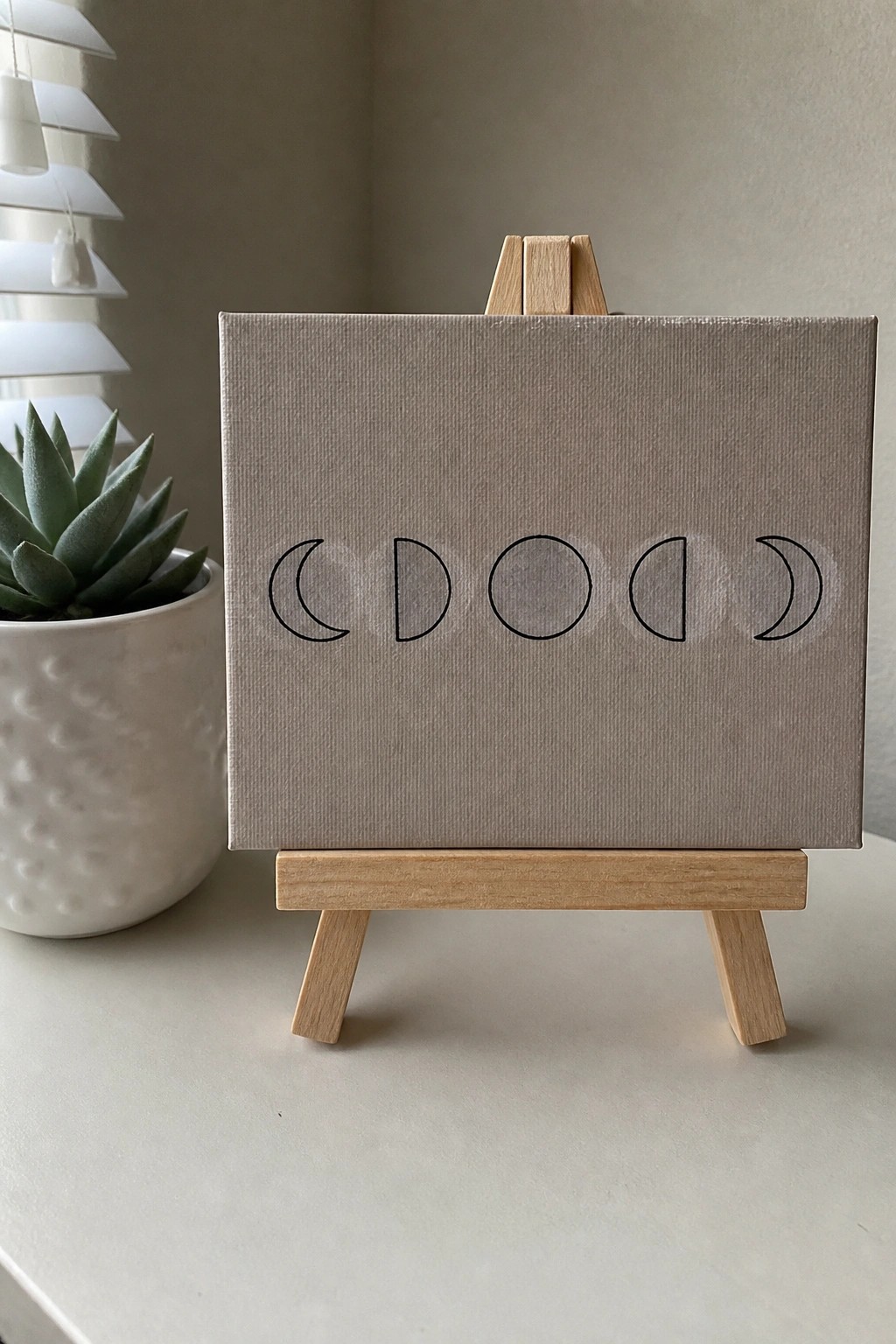
A row of moon phases drawn as simple black outlines makes an easy line art project for a small canvas. The shapes move from crescent through full moon and back, with clean edges and even spacing that keep the design balanced. This approach works well as a decorative piece because the minimal composition relies on shape and negative space rather than color or texture.
What makes this idea useful is how little paint and skill it actually needs. You can paint it on any light background color or switch the lines to a different shade to fit your space. For practice, the repeating circular forms help you work on consistent line control while staying beginner-friendly. The same layout could be adapted with stars added between the moons or scaled down for even smaller canvases.
Minimal Mountain Line Art with Contrasting Outlines

A mountain landscape built from thin acrylic lines gives a clean graphic look that suits small canvases. The idea uses one solid outline color for the main ridge and a second dashed line color for the receding layers to suggest depth without extra shading. This approach sits in the landscape category but stays minimal through flat color and simple shapes.
What makes this idea useful is how quickly you can finish it while still getting a finished result that works as wall art. The flat background lets you focus on line control and spacing, and the limited palette keeps mistakes from showing much. You could change the line colors, swap the sun for a moon, or add a third dashed layer if you want more variation. For practice this layout helps you test how different line weights read from a distance before moving on to more detailed subjects.
Minimal Cat Face Line Art with Accent Cheeks

A simple line art cat face works well as a beginner acrylic idea on a small canvas. The design uses continuous black outlines to shape the ears, eyes, nose, and whiskers against a plain background, while two solid peach circles provide the only color accents on the cheeks. This keeps the composition balanced and graphic without needing extra layers or details.
What makes this idea useful is how the single subject and limited elements let you finish it quickly while practicing clean line work. You can change the cheek color to match other decor or adjust the whisker length and ear tilt for a different look. For canvas art, this layout stays effective even if the lines vary slightly in thickness.
Coffee Cup Line Art with Looping Steam

A steaming coffee cup works well as a minimal still life subject for small canvases. The idea uses simple outlines to define the cup, handle, and saucer, with light brown fills only in the coffee surface and along the saucer edge to create contrast. The looping steam lines add movement while keeping the overall composition clean and graphic.
What makes this idea useful is how the limited elements let you focus on steady brush control without complex layering. The same layout adapts easily by changing the steam pattern, swapping the cup color, or adding a second smaller cup beside it. For canvas decor, this kind of subject stands out on Pinterest because the negative space around the cup keeps it from feeling crowded even on a small surface.
Oval Fern Line Art with Soft Wash Background

A single fern frond painted in thin lines over a muted green oval wash creates a simple botanical piece suited to small canvases. The composition keeps the focus on the central stem and repeating leaflets while the light background wash adds subtle shape without extra layers. White dots placed along the leaflet edges give the work a clean graphic finish that reads well from a distance.
What makes this idea useful is the oval format, which naturally contains the fern and reduces the need for complex background work. You can swap the fern for other single leaves or change the wash color to fit different spaces while keeping the same layout. For practice the subject helps with steady line control and lets you test small highlight details without committing to a full scene.
Minimal Stacked Cairn with Flat Color Block

A cairn built from three stacked oval shapes works as a simple line art subject when the forms are outlined in black and set against a solid terracotta rectangle. The off-white canvas keeps the focus on the clean outlines while a small green oval at the base anchors the stack without adding extra detail. This layout fits a minimalist still life approach that uses shape repetition and negative space instead of texture or shading.
What makes this idea useful is the way the flat color block handles most of the visual weight so you only need steady lines for the stones. You can swap the terracotta for any solid hue or adjust the green base to test different background combinations on the same small canvas. For practice this subject stays approachable because the limited shapes let you focus on even spacing and proportion before moving to more complex line work.
Minimalist Bird Line Art on a Branch

A single continuous black line forms the bird, branch, and feet while three leaves receive flat color fills in teal and soft peach. The rest of the canvas stays open with only a light wash behind the main elements. This keeps the composition balanced through negative space and lets the clean outlines carry the whole piece.
What makes this idea useful is how little paint it actually requires while still looking finished on a small canvas. You can change the leaf colors or shift the branch angle to match different rooms without redrawing the bird. For practice, this kind of subject builds control with steady lines and shows how selective color can keep the focus sharp. It works especially well for quick gifts or sets of matching canvases.
Minimal Sailboat Horizon Scene
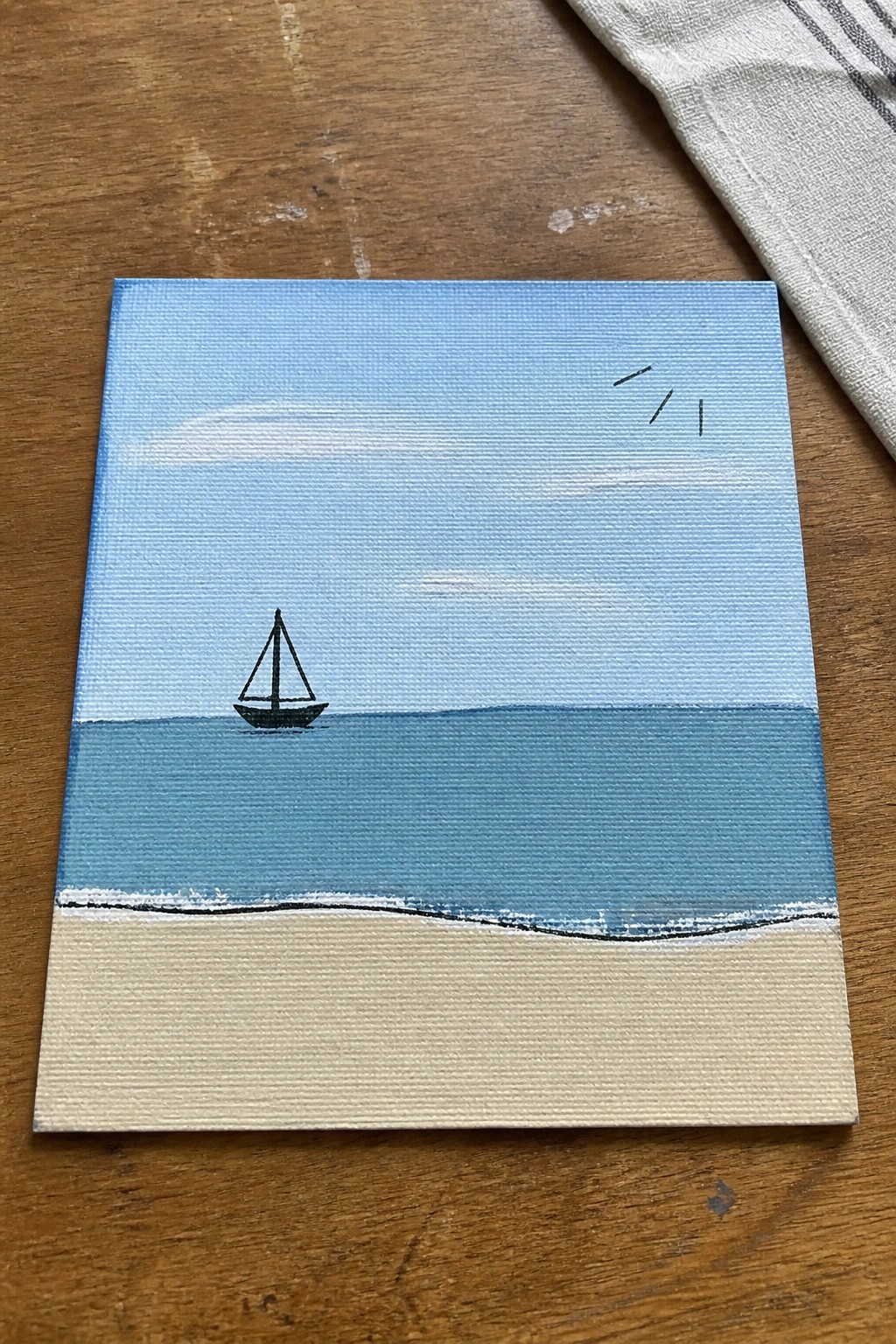
A simple seascape idea built from three horizontal color bands for sky, water, and sand. A small sailboat silhouette anchors the middle distance while a few quick lines suggest the sun in the upper corner. The approach relies on clean edges and restrained detail to keep the whole composition balanced and easy to read.
What makes this idea useful is how the flat color blocks let you focus on smooth coverage and a steady horizon line without extra layers. You could swap the boat for a buoy or wave crest, shift the sun position, or test a warmer sky tone for variety. For small canvases the layout stays effective because the main shapes stay large enough to avoid looking cramped.
Minimal Mushroom Line Art on a Green Wash

Three mushrooms in different sizes form the core of this acrylic idea, drawn with simple brown outlines and basic gill details inside the caps. The flat green background with a few white dots provides just enough contrast to make the line work stand out without extra layers or shading. This approach fits the line art category well because the tall vertical stems and rounded caps create an easy, balanced layout on a narrow canvas.
What makes this idea useful is how the clean outlines reduce the need for blending or texture, so it works on small canvases with basic brushes. You can change the green to other soft tones or adjust the number of mushrooms to fit different canvas sizes. For practice or quick gifts, the straightforward subject stands out on Pinterest because it stays minimal while still looking complete.
Minimal House with Heart Line Art

A simple house outline with a solid roof color and a small heart above the chimney makes an easy line art subject for small canvases. The idea uses bold black lines to define the shape while filling only the roof with one flat color, keeping everything else as negative space on the background. This approach fits the decorative wall art category and works because the limited elements stay balanced and readable at small sizes.
What makes this idea useful is the way the strong outlines and single roof color reduce the number of decisions during painting. You can swap the heart for a different small shape or change the roof shade to match a room without altering the rest of the layout. For practice, the design lets you work on clean edges and consistent line weight while still producing a finished piece that fits on a shelf or desk.
Minimal Floral Wreath with Line Branches
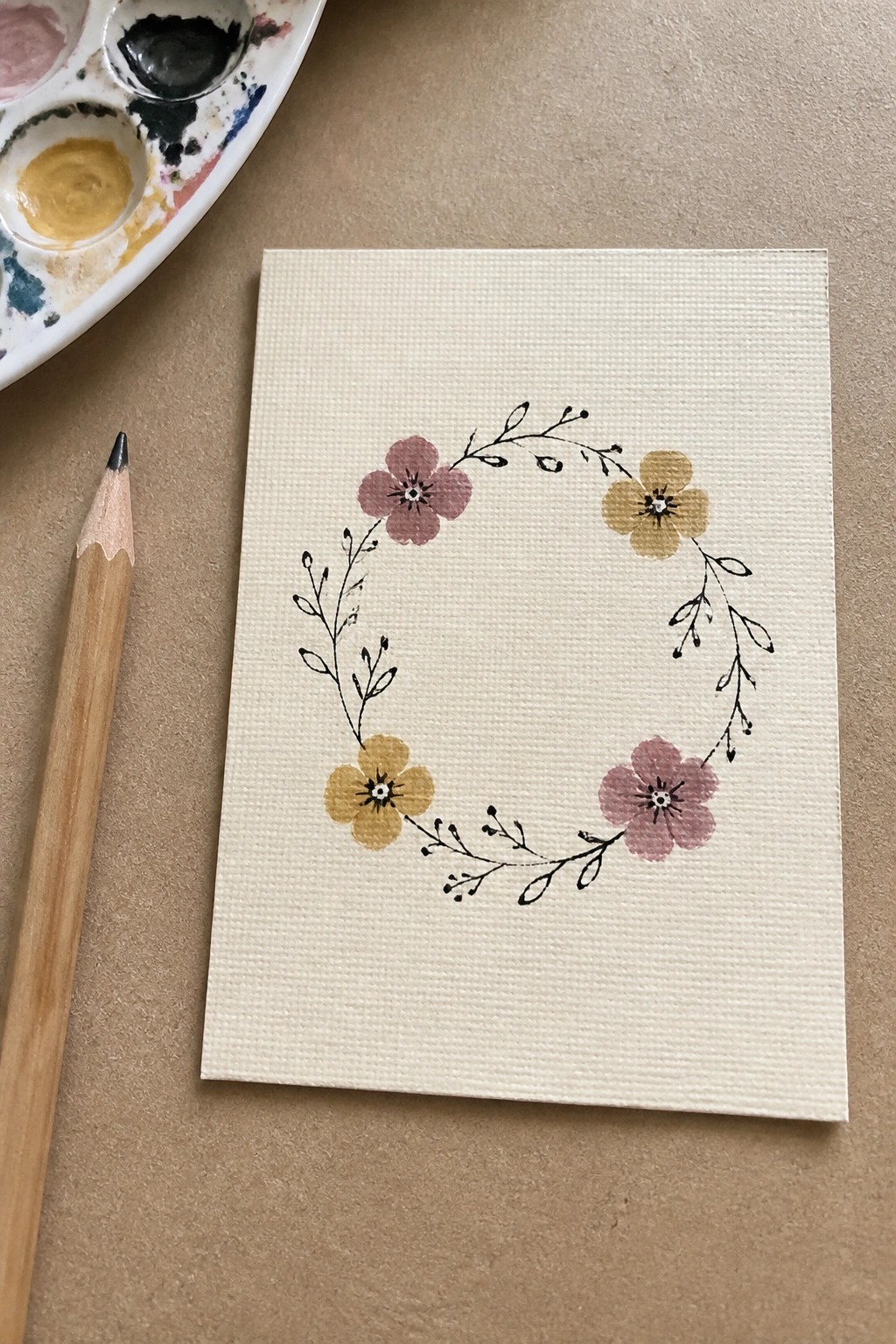
A simple circular wreath built from four painted flowers and connecting black lines creates a clean decorative piece that uses negative space effectively. The idea centers on spacing the blooms evenly but not rigidly, then linking them with thin, branching lines that suggest stems and leaves without filling every gap. This approach belongs to minimal floral line art, where the contrast between the soft yellow and dusty rose flowers and the black line work keeps the composition balanced on a small canvas.
What makes this idea useful is how the open center and sparse layout reduce the amount of painting needed while still filling the canvas nicely. The same wreath can be adapted by swapping in different flower colors, adding one extra bloom, or loosening the lines further for a more open feel. For practice, this kind of subject helps build control with small brushstrokes on petals and steady line work without requiring full coverage or complex backgrounds. The result also translates well to quick gifts or repeated canvas sets.
Continuous Line Seated Figure Over a Color Block
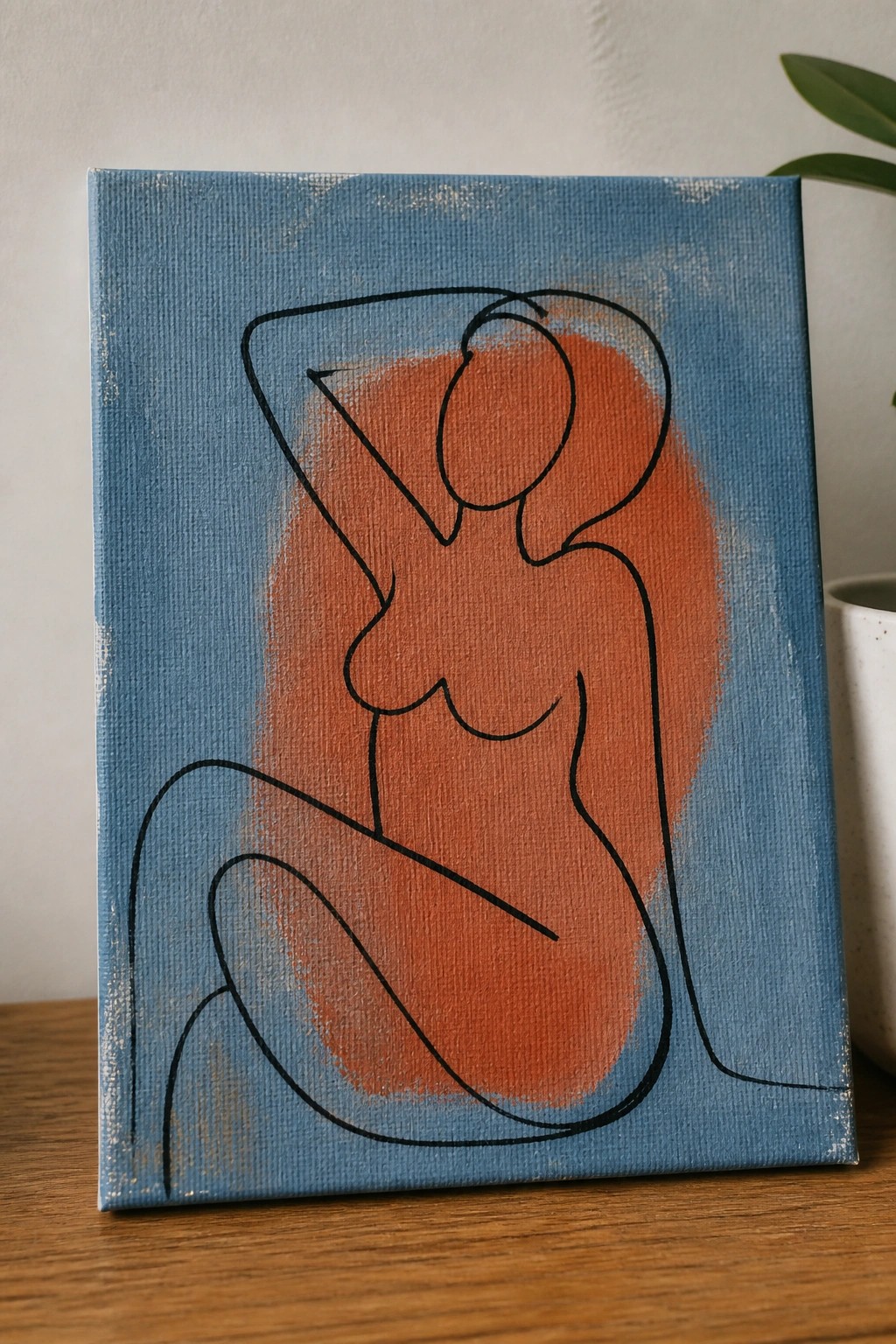
A single flowing black line outlines a seated figure with one arm raised behind the head, positioned directly over an orange-red circle on a blue ground. The idea centers on minimal line art that uses one unbroken stroke to suggest form and posture without adding shading or extra detail. The color block behind the figure creates clear separation and keeps the focus on the line itself.
What makes this idea useful is how the limited color choice and single-line approach reduce decisions while still producing a finished piece. The layout works well on small canvases because the figure can be scaled to fill most of the space without needing complex background work. You can swap the blue and orange for any two contrasting colors or keep the background plain if you want even less to manage. For practice, this kind of subject helps build steady line control and shows how negative space can carry the composition.
Three Color-Filled Flowers with Clean Line Stems
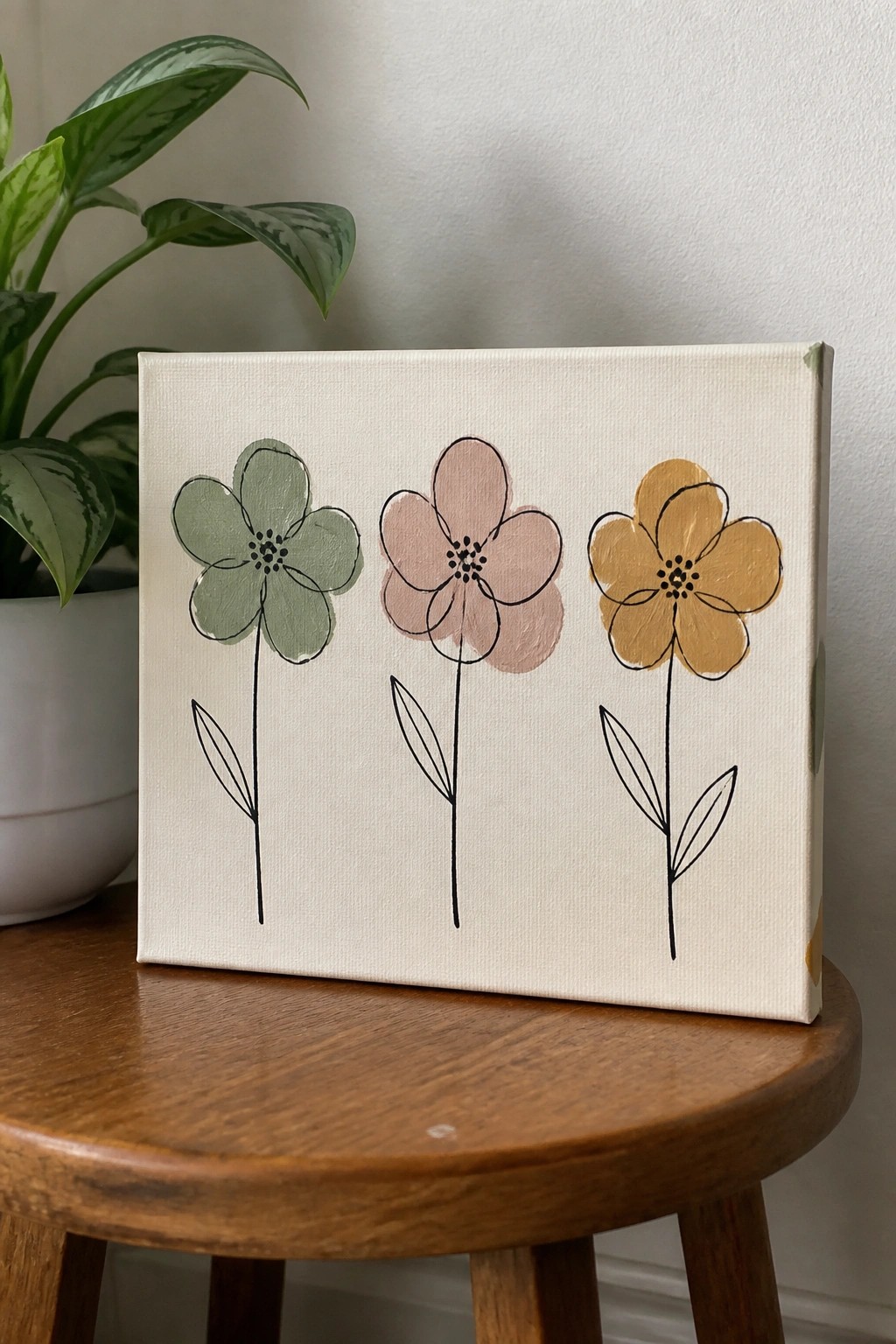
A row of three flowers painted with flat color fills and black outlines creates a simple floral arrangement that works well on a small canvas. Each bloom uses one solid color with slight edge variation from the brush, while the stems and leaves stay as thin black lines against the off-white background. This keeps the idea focused on shape and color placement rather than shading or detail work.
What makes this idea useful is how the balanced spacing and limited elements let you finish it in one session without overworking the surface. You can change the colors to match a room or use whatever shades you have left on the palette. The same layout adapts easily if you want to stretch the canvas taller or shorten the stems for a tighter crop. For canvas decor, the graphic style stands out on Pinterest because it reads clearly even in a small thumbnail.
Minimalist Line Art Buildings on a Small Canvas
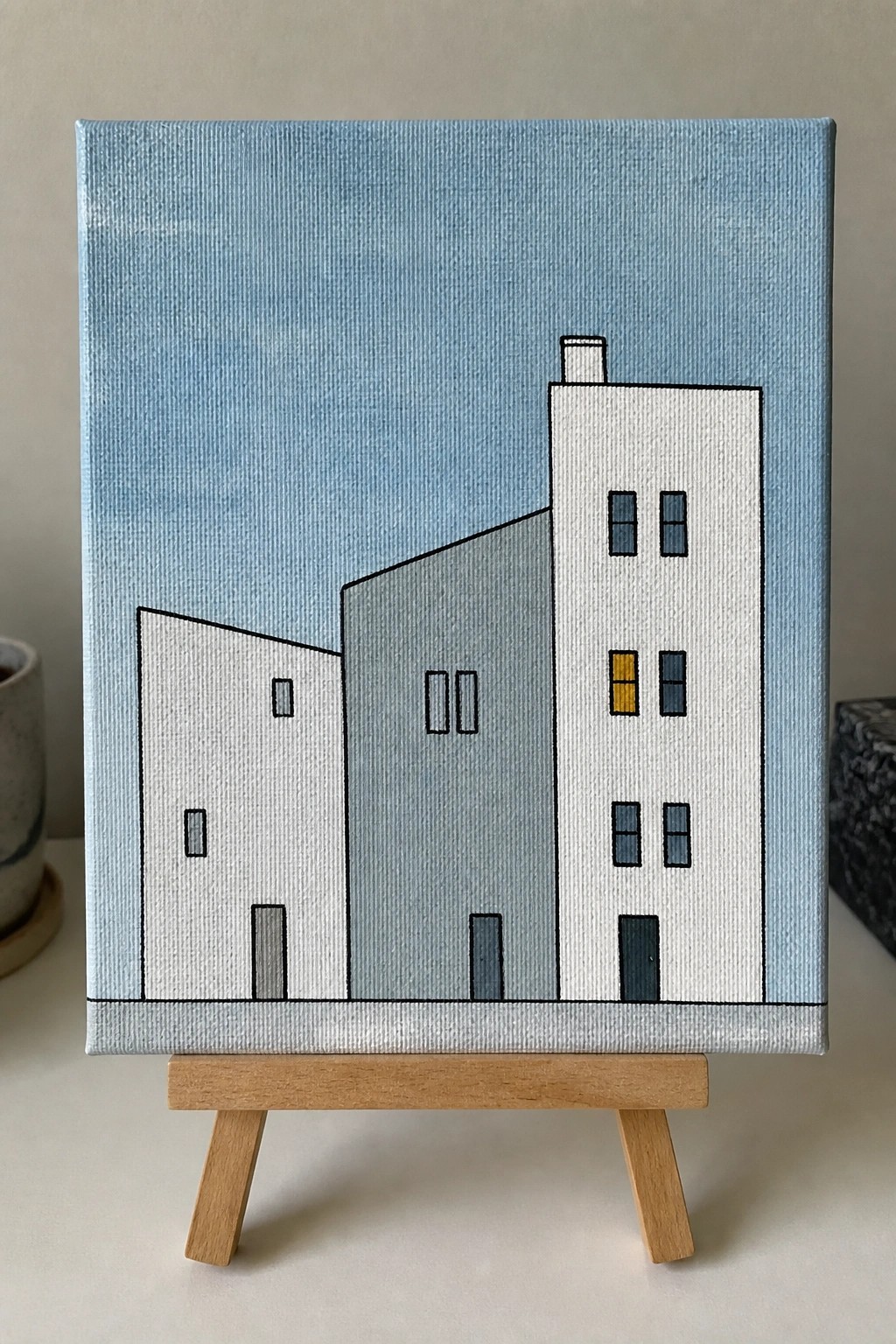
A simple cityscape idea like this uses three overlapping building shapes in flat white and gray acrylic to create an architectural scene. Thin black outlines define the edges and add windows and doors without extra detail. The pale blue background fills the rest of the canvas and keeps the composition balanced and uncluttered.
What makes this idea useful is how quickly the flat shapes can be blocked in with basic brushes before the outlines are added. You can easily change the building heights, swap window colors, or shift the spacing to fit a different canvas size. The limited palette and graphic style also make it a strong candidate for quick practice pieces or small wall sets that photograph well for sharing.
Minimal Two-Leaf Plant with Black Outlines
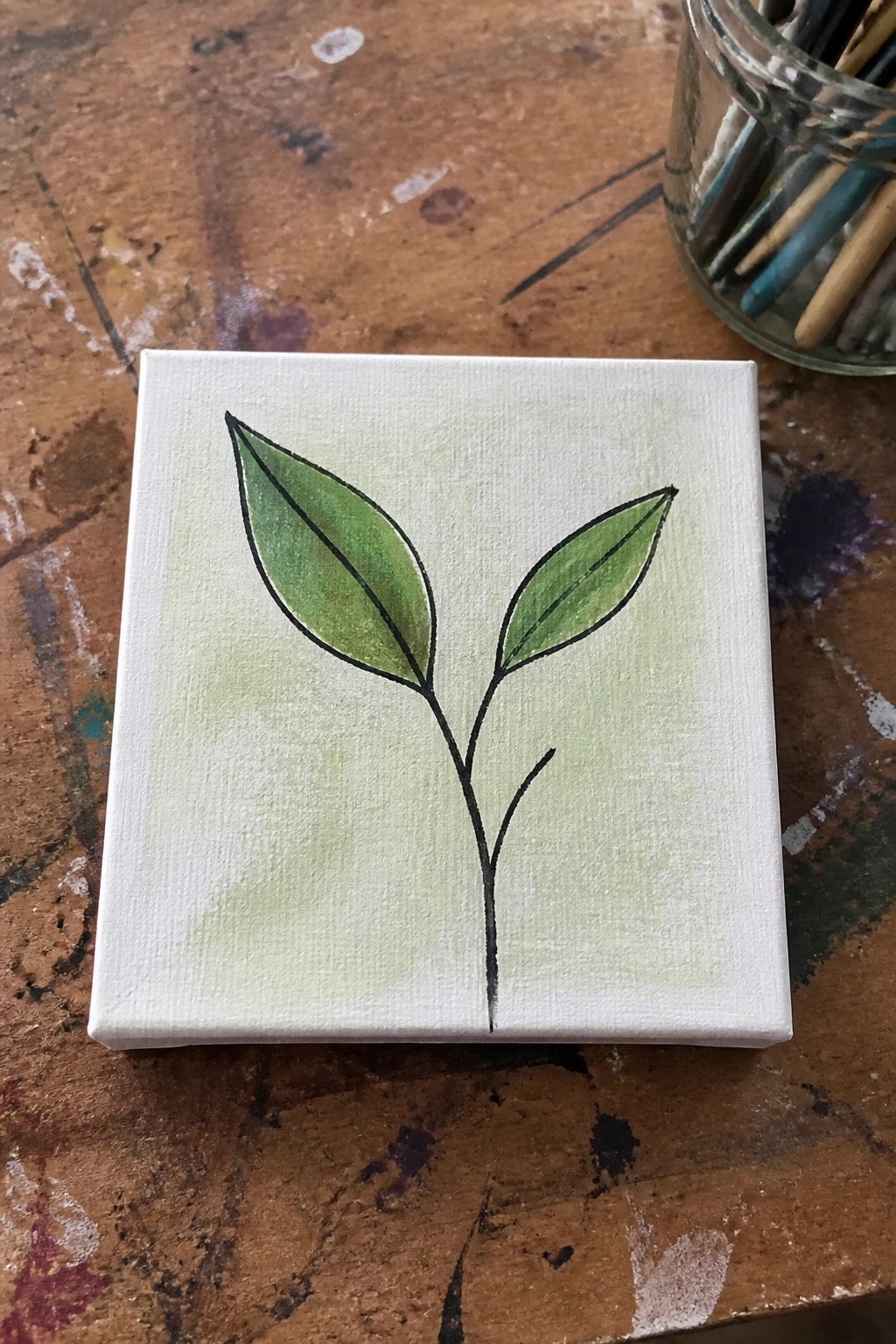
A basic botanical idea like this uses a single stem and two leaves to create a balanced line art piece on a small canvas. The black outlines keep the leaves defined while a soft green wash fills the background for gentle contrast. It works as a clean nature subject that stays simple enough for quick acrylic sessions without extra layers or textures.
What makes this idea useful is how the stem placement can shift left or right to leave room for a title or date if you want to personalize it later. The color scheme stays limited to greens so you can test different leaf shades or swap the background to a pale blue without changing the core layout. For canvas decor this stays easy to adapt by adding a third leaf or keeping it as a pair. The sharp edges help it read clearly even when the painting is small.
Minimal Whale Outline Over a Split Neutral Background

A simple black line drawing of a whale forms the main subject here, placed across a canvas divided into a white upper section and a soft beige lower band. Small blue dashes above the whale suggest water spray and give the design a light accent without adding much detail. This acrylic painting idea fits the animal category but stays minimal through its clean outlines and limited color use.
What makes this idea useful is how the divided background gives the whale a sense of place while still keeping the overall look sparse and easy to paint. The same layout works well if you swap the whale for another sea animal or shift the beige tone to a pale blue for variety. For practice this kind of piece helps build steady brush control on small canvases and stands out on Pinterest because the negative space keeps the design from feeling crowded.
Frequently Asked Questions
What basic supplies do I need to get started with these minimal acrylic line art ideas on small canvases?
For beginner friendly results gather a few small canvases around 5 by 7 inches or 8 by 10 inches, a set of acrylic paints in black white and a couple of accent colors, thin detail brushes in sizes 0 and 1, a pencil for light sketching, an eraser, a palette for mixing, and water for cleaning. Start with high quality artist tape to mask edges for clean borders and a varnish for finishing once dry. These items keep projects simple and focused on line work without overwhelming a new painter.
How do I sketch and transfer ideas onto the canvas without making it look messy?
Begin by lightly drawing your chosen design with a pencil on paper first then trace it onto the canvas using minimal pressure. Keep lines simple and avoid over sketching since acrylics cover well. If you prefer freehand practice on scrap paper until your hand feels steady then transfer key points with a ruler for straight elements. Wipe away excess pencil marks gently before painting to maintain a clean base.
What techniques help create crisp lines with acrylic paint on small surfaces?
Use a small round brush loaded with slightly thinned acrylic paint and apply steady even strokes while holding the brush like a pencil for control. Work in thin layers allowing each to dry before adding details and rest your hand on a stable surface to reduce shakes. For extra precision try a fine liner brush or even a toothpick for the thinnest lines and practice on a test canvas to build confidence before committing to your final piece.
How should I choose colors to keep the artwork minimal yet visually interesting?
Stick to a limited palette of two or three colors maximum such as black lines on a white background with one soft accent shade for highlights. This approach emphasizes the clean line work without clutter. Test combinations on paper first and consider the mood of your idea like cool blues for calm scenes or warm earth tones for organic shapes to ensure the final result feels balanced and beginner approachable.
What are good ways to fix small mistakes or smudges during the painting process?
Acrylic paint dries quickly so act fast by wiping errors with a damp cloth or cotton swab before they set. For dried mistakes gently sand the area with fine grit sandpaper then repaint over it with a matching base color. If the line is off simply incorporate it into the design by adding a connecting element or start a new layer once fully dry to preserve the minimal aesthetic.

Hi, I’m Camille.
I’m a self-taught painter and creative blogger with a soft spot for acrylic painting, color play, and all the little art ideas that make everyday life feel more inspiring.
I started this space because I’ve always believed painting should feel joyful, approachable, and a little personal. Some of my favorite pieces come from simple ideas, messy palettes, and evenings where I just felt like making something pretty.
Most of what I share begins with acrylic painting, but I also love exploring other mediums when creativity pulls me in a new direction. My goal is to collect and share painting ideas that feel fun, beautiful, and actually doable, whether the mood is calm and minimal or bright and playful.
This is a space for inspiration, experimenting, and enjoying art without overcomplicating it.