
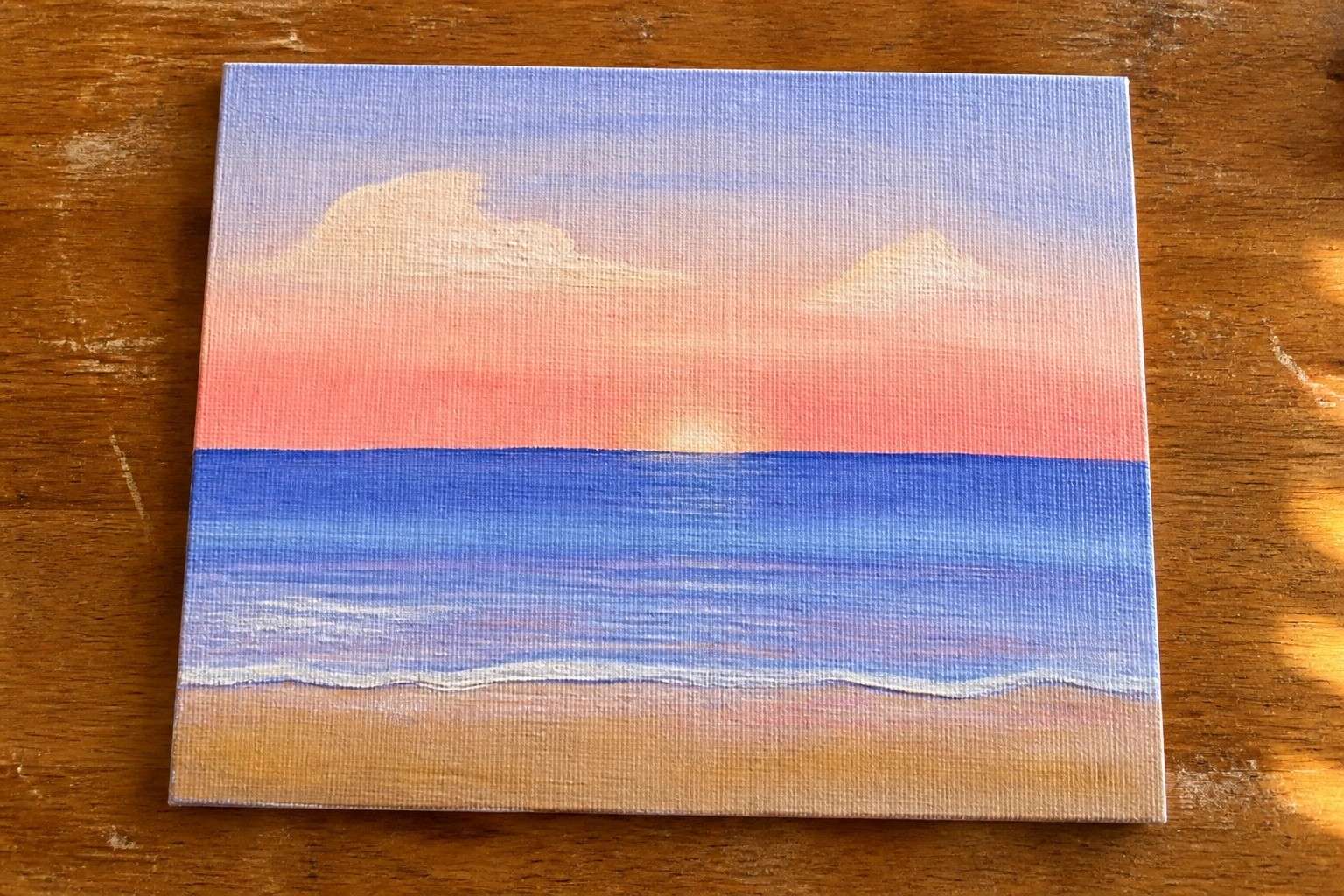
I like painting beach scenes on canvas when I want a simple project that fits my home.
Acrylics make it easy to layer colors without waiting too long between steps.
I have tried several basic designs over time that do not need much planning or skill.
These ideas keep things light and give a coastal feel without trying too hard.
Most of them use just a few colors and basic brushes.
Gradient Sunset Over Ocean Waves
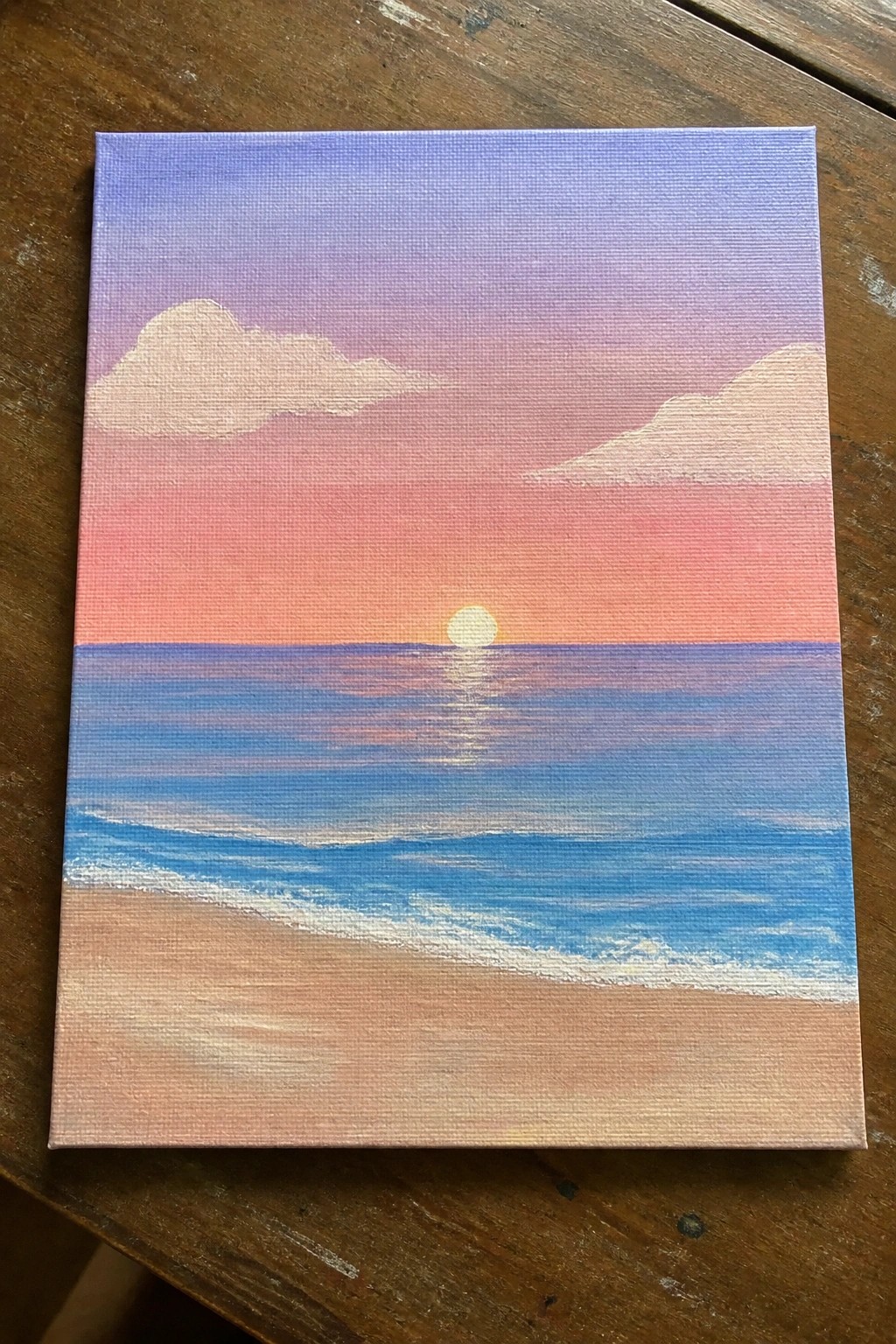
A beach sunset works well as an acrylic landscape idea because the main focus stays on smooth color transitions across the sky and water rather than fine details. The composition uses a low horizon line with the sun centered to create a natural reflection path, while simple horizontal strokes suggest gentle waves and a sandy shore. This keeps the painting in the landscape category and makes the color flow the main feature.
What makes this idea useful is that the gradient sky does most of the work, letting you practice blending without needing precise shapes or textures. You could easily adapt the colors for a different time of day or simplify the waves further for an even quicker version. For canvas decor, this layout stands out on Pinterest because the strong horizon and warm-cool contrast read clearly even in small thumbnails.
Overlapping Seashells in Contrasting Colors

A group of three overlapping seashells creates a straightforward still life idea that works on small canvases. The teal shell sits behind the coral one, with the white striped shell layered in front, and the simple beige background keeps the focus on the shapes. This approach fits decorative coastal painting where color contrast and clean edges do most of the visual work.
What makes this idea useful is how the overlapping layout hides tricky edges and lets you build the painting in stages. You can easily change the shell colors or swap the background for a different shade to match your decor. For practice, this kind of subject helps you work on basic shape blocking and small details like stripes without needing a large canvas. The scattered dots add interest without extra effort, and the same layout can be simplified to two shells if you want a quicker version.
Silhouetted Palm Tree at Sunset

A sunset beach landscape works well as a silhouette painting built around one leaning palm tree set against a smooth sky gradient. The idea uses a dark foreground shape to contrast with horizontal bands of teal, pink, and orange that fade into the horizon. A bright sun reflection on the water gives the composition a clear focal point and keeps the layout balanced.
What makes this idea useful is the simple color blocking that lets you finish the sky first and then drop in the tree shape. The limited palette of warm tones against black makes it easy to adapt by swapping the palm for a different tree or adjusting the sun position lower. For canvas decor this kind of scene stands out on Pinterest because the strong silhouette reads clearly even in small thumbnails.
Striped Umbrella with Polka Dot Towel

A beach umbrella with wide red and white stripes sits over a sandy area next to a folded towel that has blue dots and red stripes. The idea uses a flat sky, a single dark blue horizon line, and a simple shadow under the umbrella to keep the focus on the main objects. This fits into a decorative coastal category that relies on bold color blocks and clean shapes rather than fine detail.
The bold stripes and limited color palette make the layout easy to sketch and block in with basic brushes. You can swap the towel pattern or change the stripe colors without changing the overall structure, which works well if you want a quick canvas for a guest room or a small gift. The flat style also translates nicely to larger or smaller canvases since it does not depend on heavy texture or blending.
Three Pastel Beach Huts in a Row
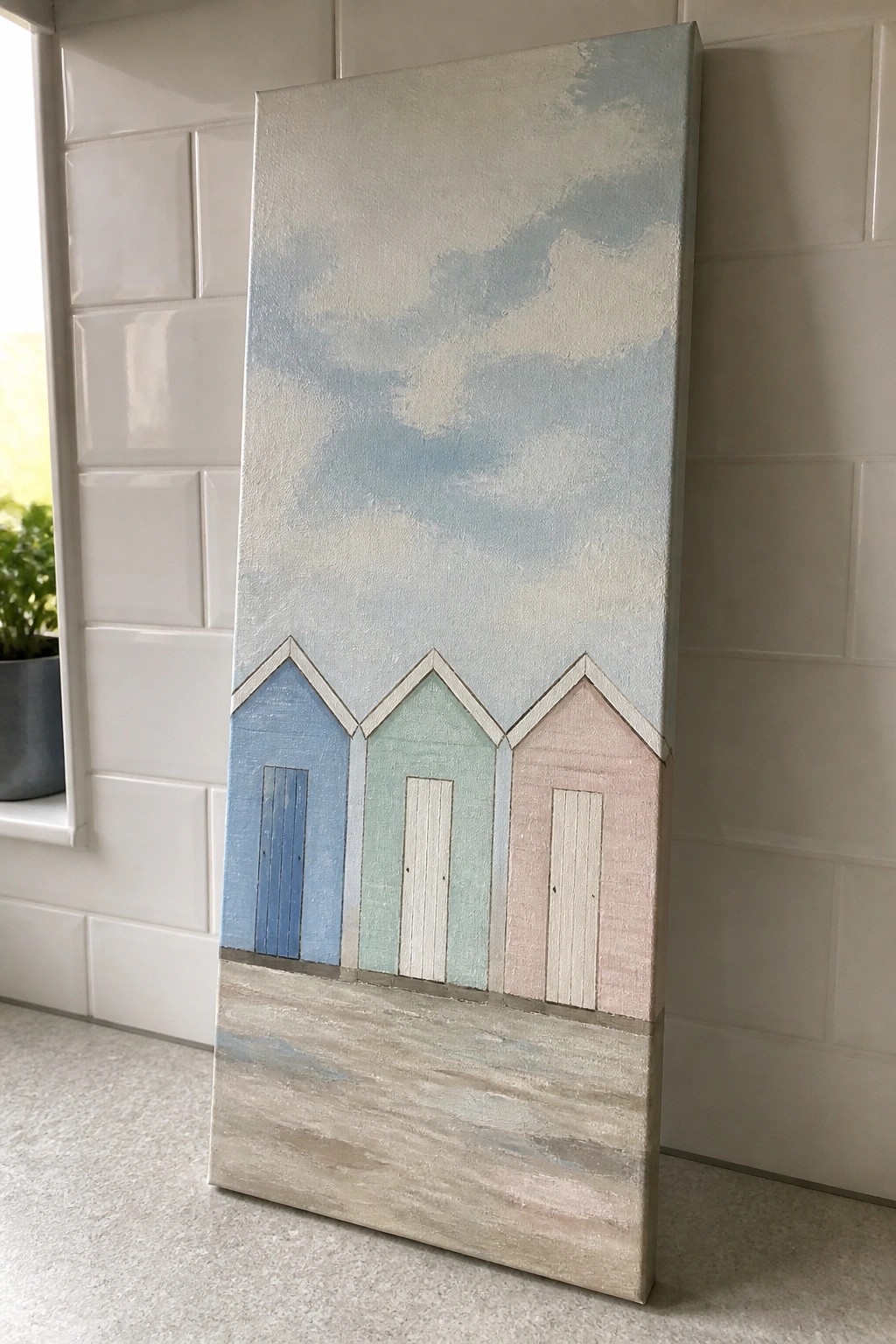
A row of three beach huts painted in soft pastel colors forms the core of this acrylic idea, with simple triangular roofs and rectangular bodies placed evenly across the lower half of the canvas. The sky uses a light wash of blue and white to create a gentle gradient behind them, while the foreground adds a few horizontal strokes for a sandy base. This setup works as decorative coastal wall art that keeps the focus on clean shapes and color placement rather than complex detail.
What makes this idea useful is how the straight edges and flat color areas let you finish the main elements quickly on canvas. You can swap the hut colors or stretch the row to fit a different canvas size without changing the overall layout. The limited detail also makes it a solid choice for practicing even brushwork and basic color mixing before adding any texture to the ground.
Layered Wave Bands in Coastal Tones

This acrylic painting idea stacks horizontal bands of curved wave shapes across the canvas, each rendered in a different shade of blue or green with white foam accents along the crests. The composition relies on repeating the same basic wave form while shifting colors from deep navy at the top to lighter teal and sage below. Clean horizontal divisions and smooth brushstrokes keep the focus on the flowing lines rather than fine detail, making it a straightforward decorative landscape style.
What makes this idea useful is how the repeating shapes reduce the need for complex composition while the color shifts create variety. You can easily change the palette to match other rooms or swap the width of the bands to fit taller or wider canvases. For practice this layout lets you focus on blending within each section and keeping edges consistent without worrying about perspective. The flat graphic look also translates well to quick pieces meant for wall decor or gifts.
Cute Orange Starfish on Textured Sand Canvas

A centered orange starfish with a simple face and dotted ridges forms the main subject of this acrylic idea. The painting uses a rough beige background to suggest sand and adds small white shell shapes at the corners for balance. This approach fits the cute decorative category and relies on bold color contrast against a muted ground to keep the layout clean.
What makes this idea useful is the single focal subject that works on a small canvas without crowding. The limited shell details let you practice basic shape placement while the starfish itself stays straightforward to paint. You could swap in different shell sizes or change the starfish to a different bright color to personalize it for gifts or seasonal decor. The bold outline and central placement also make the design easy to spot in a Pinterest feed of beach-themed projects.
Beach Cottage with Boardwalk to the Ocean

A coastal landscape painting like this centers on a small beach house placed beside a straight wooden boardwalk that leads the viewer out to the water. The idea works because the path acts as a strong diagonal line that organizes the whole scene and keeps the house as the main focal point without crowding the composition. It falls into the landscape category for canvas wall art and uses soft color shifts between sky, sand, and sea to build depth rather than relying on sharp details or heavy texture.
What makes this idea useful is how the boardwalk gives the layout built-in direction so you do not have to invent perspective. You can easily adapt it by swapping the house color, shortening the path, or adding fewer dune grasses if you want a simpler version for practice. For canvas decor this kind of scene works well because the open sky leaves room to adjust the horizon and still keep the painting balanced.
Seagulls in Flight Over a Simple Gradient Horizon

A pair of seagulls gliding across a sky that fades from blue at the top into beige at the bottom forms the main subject of this beach painting idea. A narrow strip of blue near the base suggests water and gives the composition a clear horizontal structure without adding extra layers. The idea sits in the landscape and animal category, using minimal detail on the birds and soft color shifts to keep the focus on their shapes against the open background.
What makes this idea useful is how the plain gradient does most of the work, letting the birds stay simple while still reading clearly from a distance. You could easily change the sky tones for different times of day or add one more bird without complicating the layout. For practice or quick canvas decor, this kind of painting adapts well because the limited elements make it easy to finish in one session and still look finished on a wall.
Sailboat Silhouette With Gradient Sunset

A sailboat silhouette placed against a simple sunset makes an effective landscape acrylic idea. The painting uses broad horizontal bands of color for the sky and water, with a bright circle for the sun and a matching reflection below. Strong contrast between the dark boat and the light background keeps the focus on the main shape while the stacked water layers create depth with minimal brushwork.
What makes this idea useful is how easily the color blocks can be adjusted to fit different sunset tones or canvas sizes. You can simplify the water stripes further or add more bands if you want extra practice with blending. For wall art, the clean layout reproduces well in photos, which helps it perform on Pinterest. The same structure also works if you swap the sailboat for a different simple shape like a small island or buoy.
Beach Dunes Path to the Ocean

A landscape acrylic painting idea built around a sandy path cutting through low dunes dotted with grass clumps that leads the eye straight to a distant ocean horizon. The composition uses a soft sky with layered cloud shapes and gentle color shifts between sand and water to keep the scene balanced without heavy detail. This approach sits in the landscape category and works because the leading lines from the path and grass create natural depth on the canvas.
What makes this idea useful is the simple layout that lets you focus on blending sky and sand tones first before adding the grass as a final layer. You can adapt the colors by shifting the sky to warmer tones or reducing the grass clusters for a more open feel, which makes it easy to personalize for different wall sizes. For canvas art, this kind of scene stands out on Pinterest because the horizon placement keeps everything readable even at smaller sizes.
Striped Surfboard Beach Canvas

A vertical surfboard with red and white stripes and a teal accent serves as the main subject in this beach scene. The idea relies on three horizontal color bands for sky, water, and sand, plus one small starfish detail to balance the composition. This approach fits into simple coastal landscape painting where the surfboard shape and stripes do most of the visual work.
The bold contrast does a lot of the work here since the surfboard stands out clearly against the flat color blocks. This would be easy to turn into a series by changing the stripe colors or swapping the starfish for a shell. For canvas art, something like this works well as quick practice for straight edges and basic layering without needing advanced blending. The layout stays effective even if you enlarge the canvas or adjust the sand height.
Beach Footprints Along the Shoreline

This acrylic painting idea uses two sets of footprints in wet sand to create a simple coastal scene, with one pair angled toward the water and the other slightly offset. The layout splits the canvas into a soft blue-green water section at the top and a pale sandy area below, connected by a thin line of white foam. It fits the landscape category with a focus on clean shapes and gentle color transitions rather than fine detail.
What makes this idea useful is the limited number of elements, which keeps the painting approachable even on a small canvas. The color palette of turquoise, white, and warm beige can be swapped for deeper blues or sunset tones without changing the layout. This would be easy to turn into a series by varying the print sizes or adding a single shell near the edge. For canvas art, the straightforward division between sand and water helps the piece read clearly from a distance.
Lighthouse on Rocky Cliffs
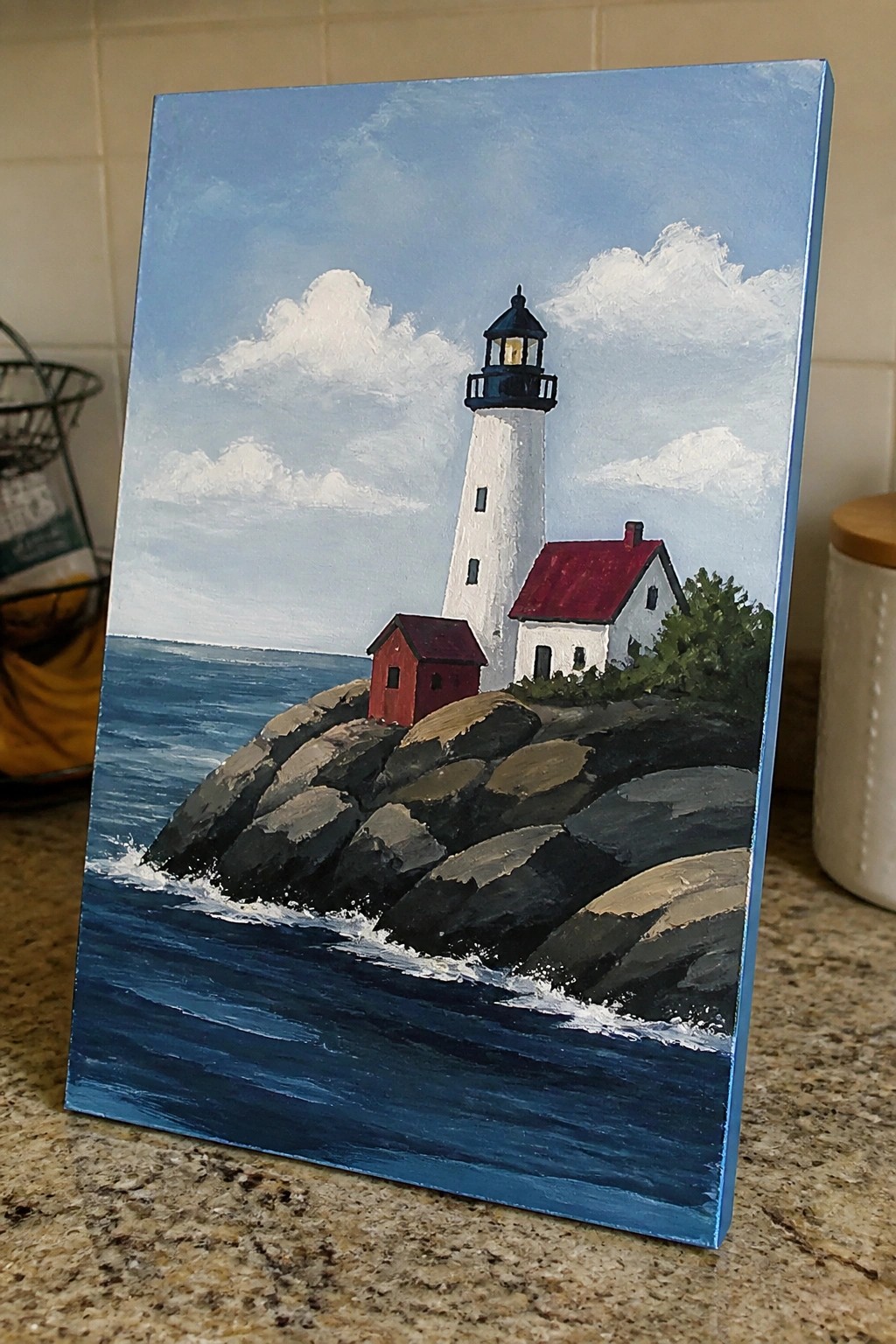
A lighthouse on a rocky outcrop works well as a landscape acrylic idea because the tall white structure creates an immediate focal point against the darker rocks and water below. The composition keeps the main elements simple by placing the lighthouse slightly off center with the ocean filling the lower half and sky above, which helps the eye move naturally through the scene. This type of painting falls into the straightforward coastal landscape category where strong value contrast between the tower, rocks, and sea does most of the visual work.
What makes this idea useful is the clear separation of shapes that lets you paint large areas first before adding smaller details like foam on the waves or the red roof. The limited blue and earth-tone palette reduces color mixing while still giving room to change the sky or water tone if you want a different mood. For canvas decor this kind of subject adapts easily by cropping tighter around the lighthouse or softening the rock edges, and it stands out on Pinterest because the vertical tower breaks up the horizontal lines of sea and sky in a recognizable way.
Coastal Tide Pool with Drifting Seaweed

This acrylic idea focuses on a shallow water view where rocks and shells rest on the bottom while long strands of seaweed stretch across the surface. The composition relies on the contrast between cool greens and teals in the water and a single warm orange-pink reflection running through the center. It fits the landscape category because the diagonal lines of the seaweed and the staggered rock placements guide the eye without requiring intricate detail.
What makes this idea useful is the straightforward layout that lets the color contrast do most of the visual work. The same scene can be adapted by swapping the reflection color for a different time of day or reducing the seaweed to fewer broad strokes. For canvas art, the mix of larger foreground shapes and smaller background elements keeps the painting balanced while still allowing room to practice blending and simple layering.
Driftwood Beach Landscape

A driftwood beach scene makes a solid landscape acrylic idea because the weathered wood serves as the main subject while simple horizontal bands of sand, water, and sky keep the background clean. The angled placement of the driftwood creates a natural diagonal that moves the eye across the canvas, and the contrast between the rough wood texture and the smoother water and sand keeps the composition balanced. This fits into a straightforward coastal landscape category that uses natural forms and limited color layers rather than complex details.
What makes this idea useful is how the wood can be built with basic dry brushing and light shading to suggest texture without needing fine detail everywhere. The limited palette of soft teal, sand, and brown tones is easy to adjust by swapping the water color or adding a few small shells near the wood. For canvas art, something like this works well for practice because the subject stays recognizable even if the brushwork stays loose, and the realistic wood element helps it stand out in a feed of simpler beach paintings.
Gradient Sunset Beach with Surfers
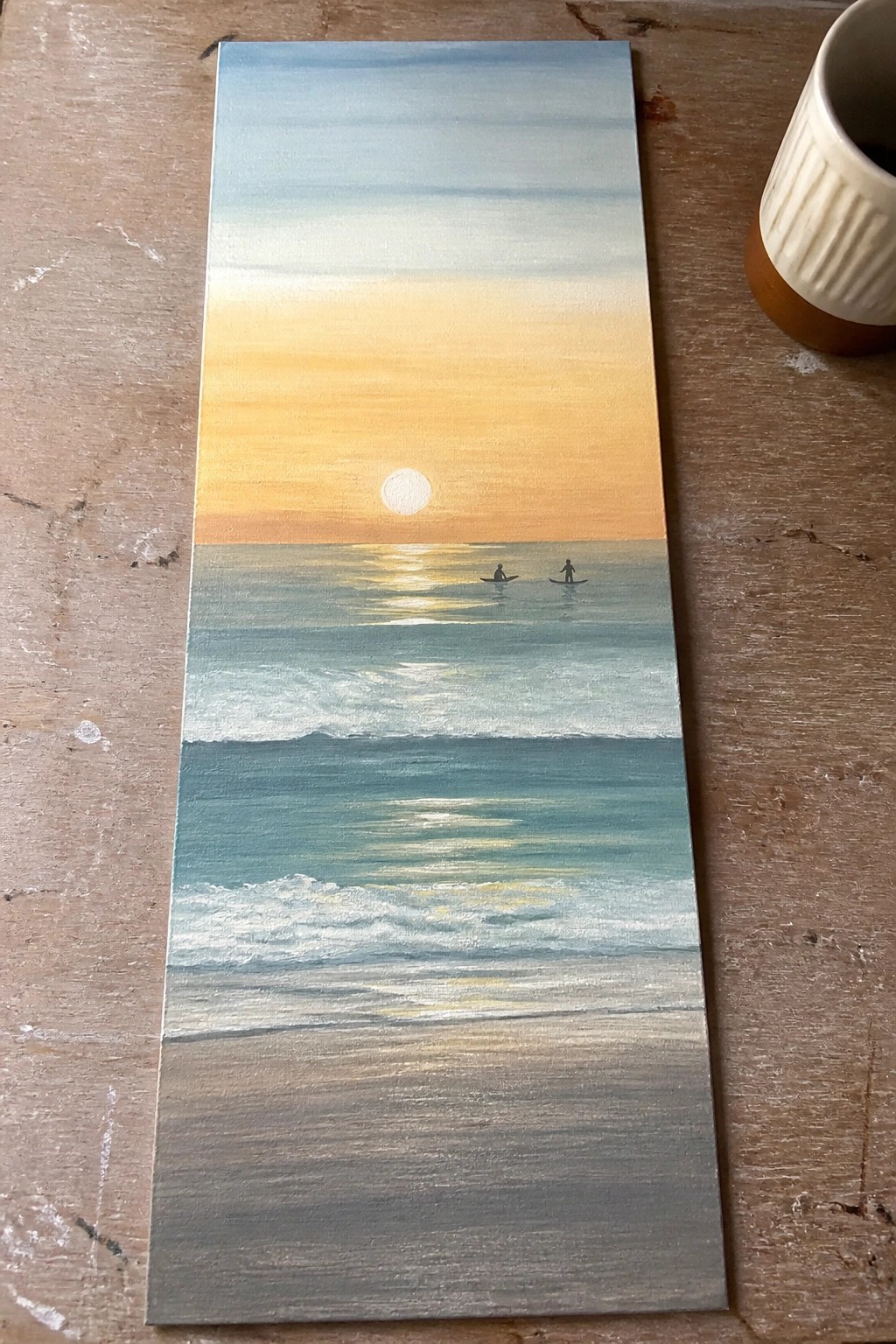
A coastal landscape idea built around simple horizontal layers works well for this sunset scene. The sky moves through blue to orange tones around a single white sun, while the ocean below uses similar blends to show light reflection on the water. Two small surfer figures add scale without needing extra detail, and the sand at the bottom anchors the whole composition.
What makes this idea useful is how the color shifts do most of the work, so you can focus on smooth blending rather than complex shapes. The tall canvas format fits a vertical wall space nicely and leaves room to stretch the sky or water bands if you want a different proportion. You could easily remove the surfers or change them to birds for a quieter version, and the same layout works with other sunset color mixes.
Nautical Icons Arranged in a Grid

A repeating grid of anchors, seashells, and waves turns basic beach symbols into a clean decorative canvas on a solid turquoise background. Each motif stays simple with flat color areas and minimal outlines so the pattern stays balanced without crowding. The even spacing and limited palette keep the focus on the shapes themselves rather than any blending or shading.
What makes this idea useful is how easily you can paint one icon at a time and repeat it to fill the canvas. You can swap the color order or change the background shade to match your room without changing the layout. The flat areas and clear edges make the finished piece photograph sharply for online boards. For practice this works well because the small scale lets you test brush control on individual shapes before committing to the full grid.
Frequently Asked Questions
What basic supplies do I need to start these beach canvas paintings?
You will need stretched canvases in various sizes, acrylic paints in ocean blues, sandy beiges, whites, and soft greens, a set of round and flat brushes, a palette knife for texture, and water for mixing. Gather paper towels for blending and optional items like sponges to create wave effects or sea salt sprinkled on wet paint for a natural sparkle that fits the relaxed coastal look.
Are these projects suitable for beginners with no painting experience?
Yes, each of the 18 ideas uses simple layering and basic brush strokes that anyone can follow. Begin with designs that involve broad color washes for sky and water before adding details like horizon lines or minimal palm silhouettes. Practice on scrap paper first to build confidence and achieve that effortless beach vibe without frustration.
How can I customize the paintings to match my home decor?
Shift the color scheme slightly by swapping turquoise for softer pastels or adding hints of coral to tie into existing furniture tones. Incorporate personal touches such as faint outlines of local landmarks or subtle shell shapes while keeping the overall composition light and airy. This keeps the relaxed coastal aesthetic while making each piece feel unique to your space.
What is the best way to display these finished paintings?
Arrange them in odd numbers on a wall for visual balance or lean several against a shelf alongside beach found objects like driftwood. Use natural light to highlight the soft color transitions and consider rotating them seasonally to refresh the room. Group similar styles together to create a cohesive coastal gallery that feels inviting and serene.
How do I care for and clean my beach canvas paintings?
Dust them regularly with a dry microfiber cloth to preserve the paint surface. Keep them away from direct sunlight and humid areas to prevent fading or warping. If a spot appears, use a barely damp cloth with mild soap and test it on an edge first. Store unused canvases upright in a cool dry place to maintain their quality for years.

Hi, I’m Camille.
I’m a self-taught painter and creative blogger with a soft spot for acrylic painting, color play, and all the little art ideas that make everyday life feel more inspiring.
I started this space because I’ve always believed painting should feel joyful, approachable, and a little personal. Some of my favorite pieces come from simple ideas, messy palettes, and evenings where I just felt like making something pretty.
Most of what I share begins with acrylic painting, but I also love exploring other mediums when creativity pulls me in a new direction. My goal is to collect and share painting ideas that feel fun, beautiful, and actually doable, whether the mood is calm and minimal or bright and playful.
This is a space for inspiration, experimenting, and enjoying art without overcomplicating it.