

I have been painting with acrylics for a few years now and I still like to keep things simple.
When I was starting out I wished there were more ideas that did not require fancy skills or lots of supplies.
Over time I came up with a list of projects that are straightforward and actually enjoyable to do.
These ideas are ones I have tried myself and they work well for beginners.
I think you might find a few that suit what you are looking for.
Minimal Sunset Seascape with Sailboat
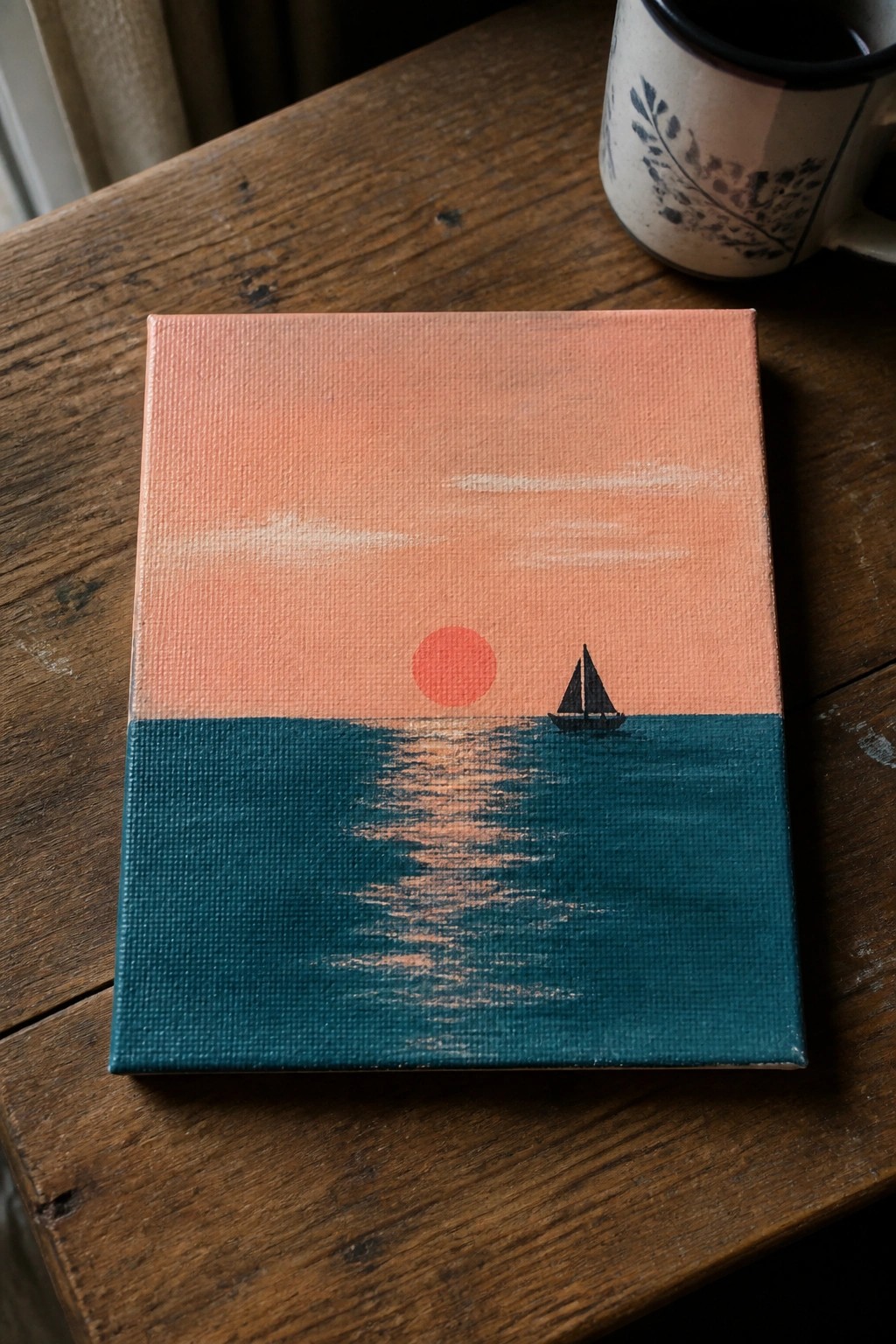
A basic sunset seascape idea centers on a two-tone gradient sky above a solid teal water area, with a small dark sailboat placed off-center and a single red sun sitting on the horizon line. The reflection streak running down the water adds just enough movement to keep the layout from feeling too static. This type of landscape painting works because it relies on large flat color zones and one clear focal point rather than lots of detail.
What makes this idea useful is how the simple divide between sky and water lets you focus on blending a smooth sky gradient without needing advanced brush control. You could easily swap the sailboat for a different small shape or shift the water tone to create a warmer or cooler version. For canvas decor, this layout stays readable even when the finished piece is viewed from across a room.
Three Daisies on a Light Blue Background

A simple floral acrylic idea with three white daisies works well because the solid light blue background lets the white petals and yellow centers stand out through basic color contrast. The green stems and leaves are placed to create balance without crowding the canvas, keeping the overall layout clean and easy to follow. This style fits into decorative wall art that uses flat color blocks and clear shapes instead of heavy texture or shading.
What makes this idea useful is how the limited color palette and straightforward flower shapes make it approachable for practicing even brush strokes and petal placement. You could change the background color, adjust the number of blooms, or swap in different leaf angles to make it your own while keeping the same structure. For canvas decor, the bold centers draw attention on a shelf or desk and work well as a quick project that still looks finished.
Layered Mountain Landscape with Pine Trees

A mountain landscape made from overlapping triangular peaks and simple foreground trees gives beginners a clear structure to follow in acrylics. The idea relies on color blocks that shift from purple at the top through blue mid-grounds down to green and yellow fields, creating depth with minimal blending. Placing clusters of dark pine trees on either side of the canvas anchors the scene and keeps the eye moving toward the central peaks.
What makes this idea useful is how the flat shapes reduce the need for precise brush control while still producing a finished look. You could easily adapt the palette to warmer tones for a different time of day or enlarge the trees to fill more of the foreground. For practice this layout works well on small canvases because the sharp edges between layers make it forgiving and quick to complete, and the strong horizontal bands help the finished piece stand out in a grid of other paintings.
Striped Cat with Scarf and Flowers

A striped cat wearing a simple scarf forms the main subject in this acrylic idea, placed against a flat green background with a small bouquet of flowers added to one side. The composition uses bold color blocks for the cat and scarf, keeping shapes clean and outlines defined so the eye stays on the animal. This fits the decorative animal category and works well when painted on wood or canvas.
What makes this idea useful is the scarf, which gives the cat extra interest without extra brushwork. You can change the scarf stripes or flower colors to use whatever paints you already have. For practice, this kind of subject builds confidence with layering and edge control while staying simple enough to finish in one or two sessions. The flat background also makes it easy to adapt for different panel sizes or to turn into a quick gift.
Overlapping Geometric Shapes in Earthy Tones
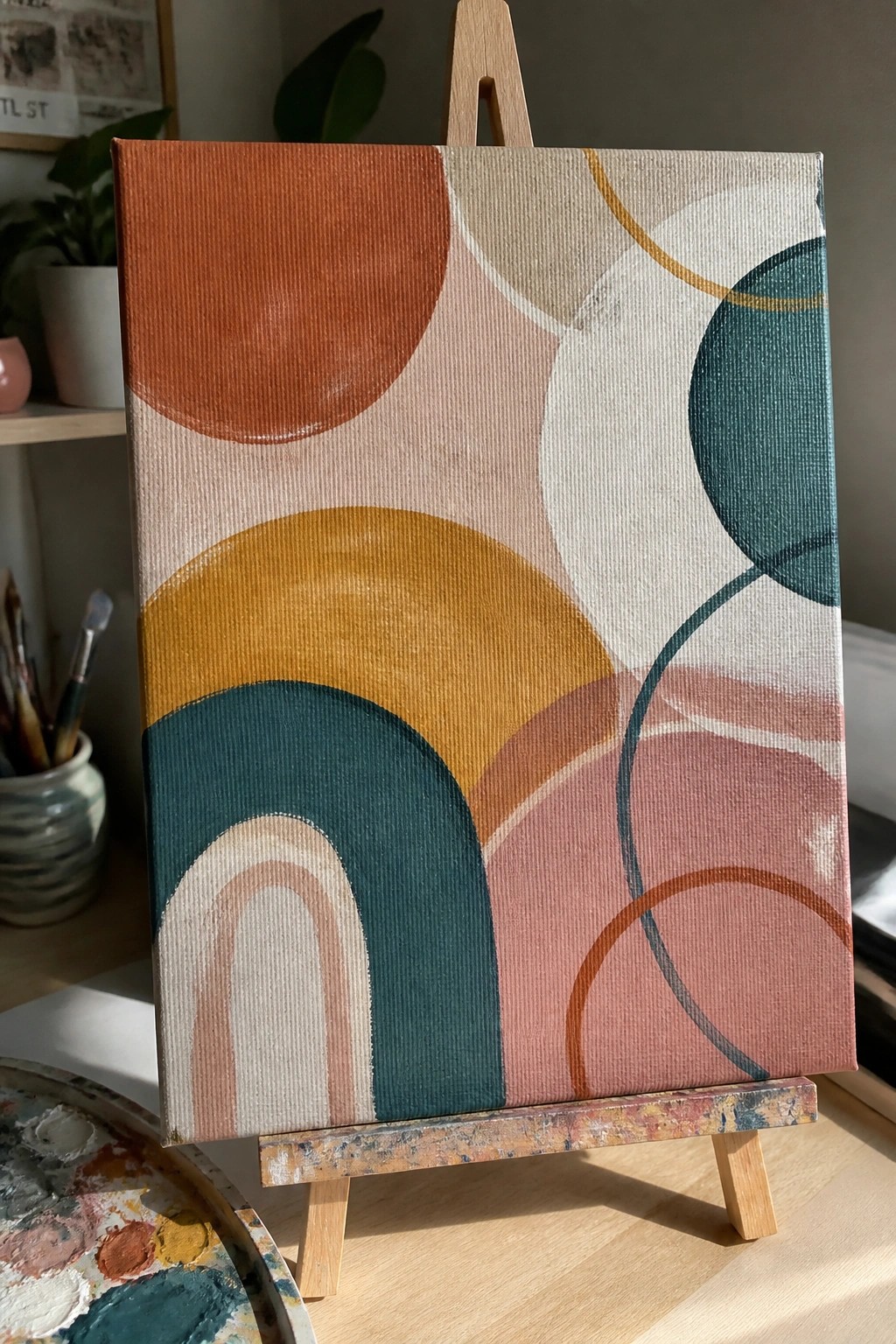
An abstract painting idea built from overlapping circles, semicircles, and curved forms creates a balanced composition using only shape and color. The design works by letting larger warm shapes sit behind cooler ones so the overlaps add depth without extra detail or blending. This approach fits decorative abstract wall art that stays graphic and flat while still feeling structured.
What makes this idea useful is how the shapes can be rearranged or scaled to match any canvas size without changing the overall look. The color palette of terracotta, mustard, teal, and soft pink keeps mixing simple yet gives enough contrast to make overlaps stand out. For practice, this kind of subject helps focus on clean edges and basic layering before trying more detailed work. It would also adapt easily to smaller canvases or repeat patterns for matching decor pieces.
Stacked Peach Still Life

A still life of three peaches on a simple plate gives you a clear subject for practicing rounded forms and gentle color shifts in acrylic. The fruits sit in a loose stack with two leafy branches placed on either side to frame the arrangement without crowding it. This setup works as a classic still life idea that keeps the background plain so the color transitions on the peaches stay the main focus.
What makes this idea useful is the limited color range and single light source, which let you concentrate on smooth blending rather than complicated details. You can swap the peaches for other round fruit or change the leaf style to match what you have available. For canvas decor, the compact layout fits well on a small square canvas and still reads clearly from a distance. The same composition can be simplified further by dropping one peach if you want a quicker practice piece.
Spotted Mushrooms on Light Green Canvas
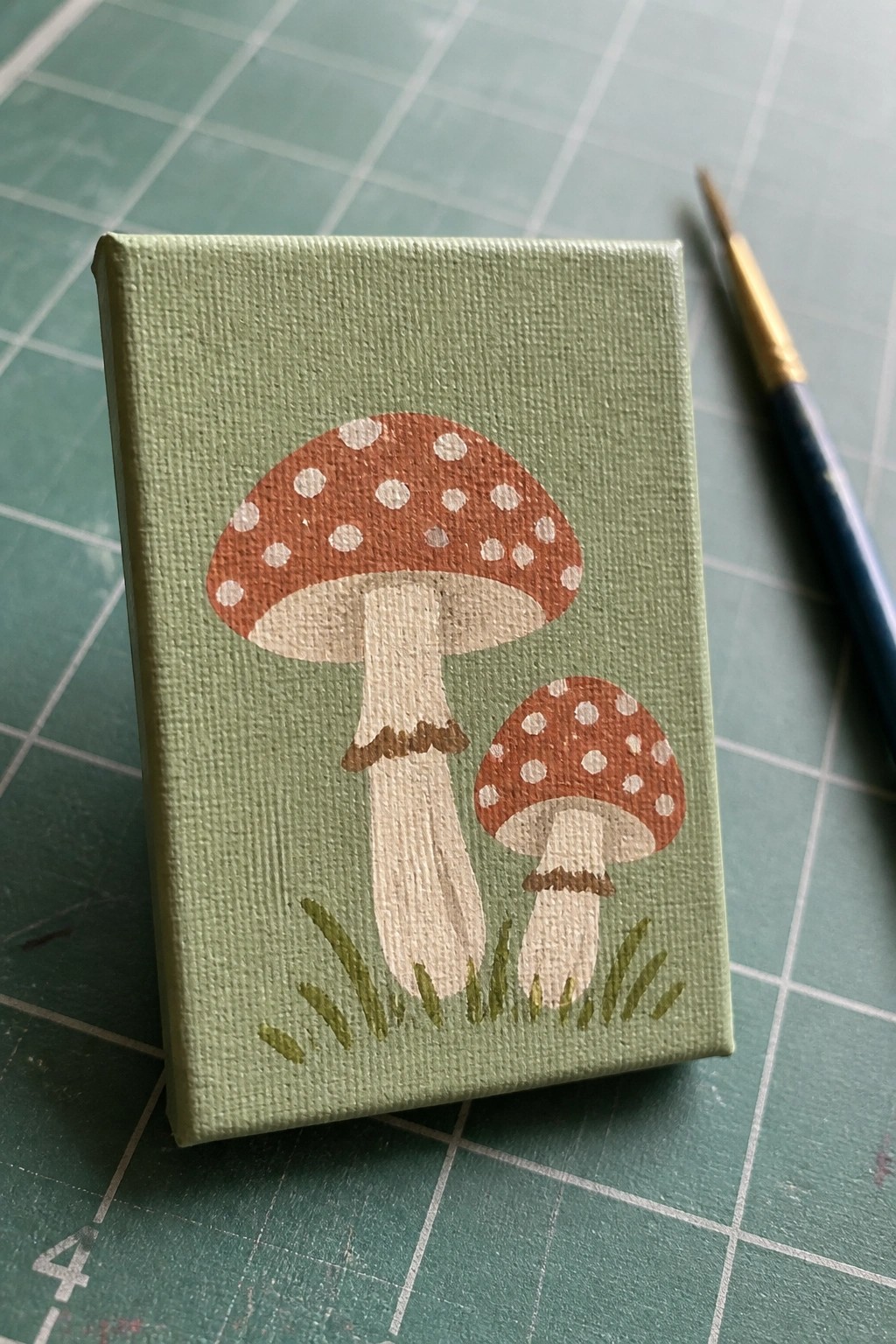
Mushrooms work as an acrylic painting idea because their caps and stems translate into simple rounded forms that build quickly with flat color blocks. The layout places a larger mushroom beside a smaller one against a solid light green background, which keeps the focus on the brown caps and the white spots that create an easy repeating pattern. A thin band of grass at the bottom adds a grounded element without complicating the overall composition.
What makes this idea useful is how the clean shapes let you practice edge control and basic layering on a small canvas. You could swap the background for a different neutral or change the cap color to test contrast while keeping the same layout. For practice, this kind of subject adapts well to gifts or a set of matching pieces since the design stays readable even when simplified. The flat graphic style also shows up clearly in photos, which helps it perform on Pinterest.
Tropical Leaf Wall Art with Bold Color Blocks
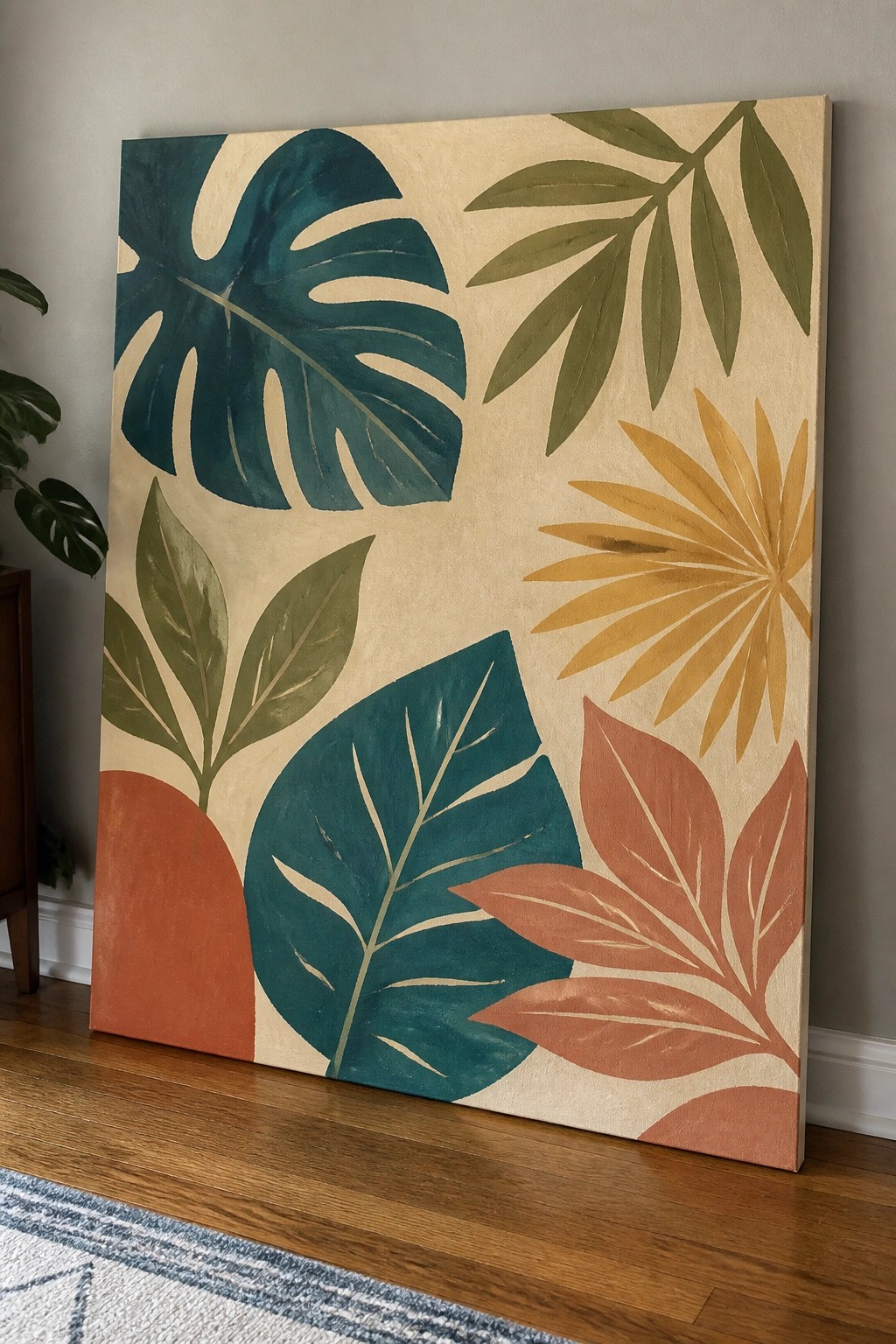
Large overlapping leaves in teal, olive, mustard, and terracotta create a graphic botanical painting on a neutral canvas. The idea relies on simplified shapes and strong color contrast rather than fine detail, which keeps the composition balanced and easy to read from a distance. This style falls into decorative wall art where flat acrylic shapes and a limited palette do most of the visual work.
What makes this idea useful is how the flat shapes remove the need for blending or texture, so you can focus on placement and color choices. You could swap the leaf types or shift the palette to cooler tones if you want a different mood. For canvas decor, the clean edges and big blocks of color make the finished piece photograph clearly, which helps it perform well when shared online.
Monstera in a Striped Pot on Pink
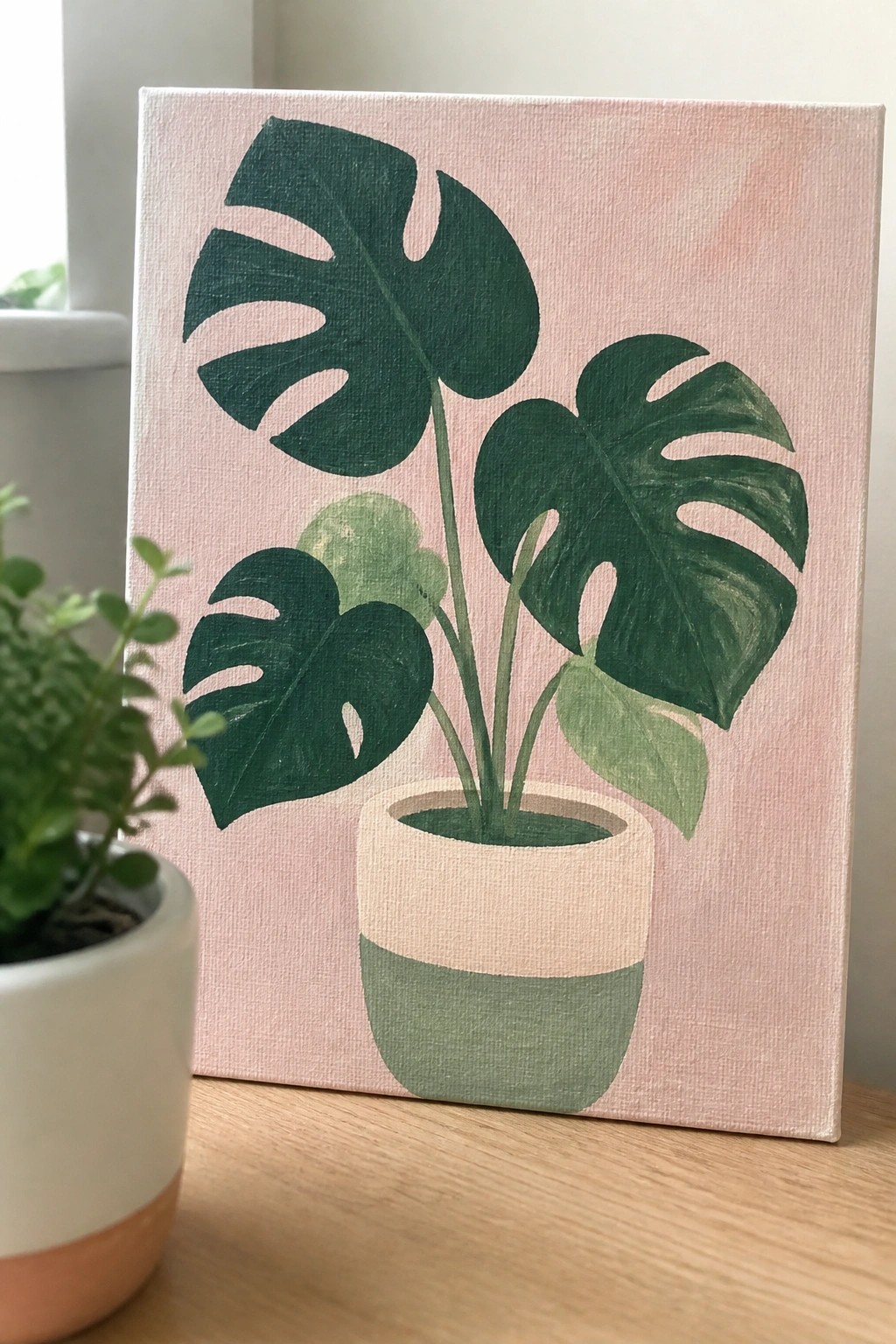
A potted monstera works well as an acrylic subject because the big split leaves give you clear shapes to block in with solid color. The pink background creates strong contrast against the greens so the plant stands out without extra shading. This type of still life fits decorative wall art since the layout stays simple and balanced around the centered pot.
The bold leaf outlines and flat color areas make it straightforward to build up in layers after the background dries. You could switch the pink to another neutral or adjust the pot stripes to fit your space. The graphic plant style tends to perform well on Pinterest because people search for easy houseplant decor they can finish in one or two sessions.
Coastal Seashell Still Life on Waves
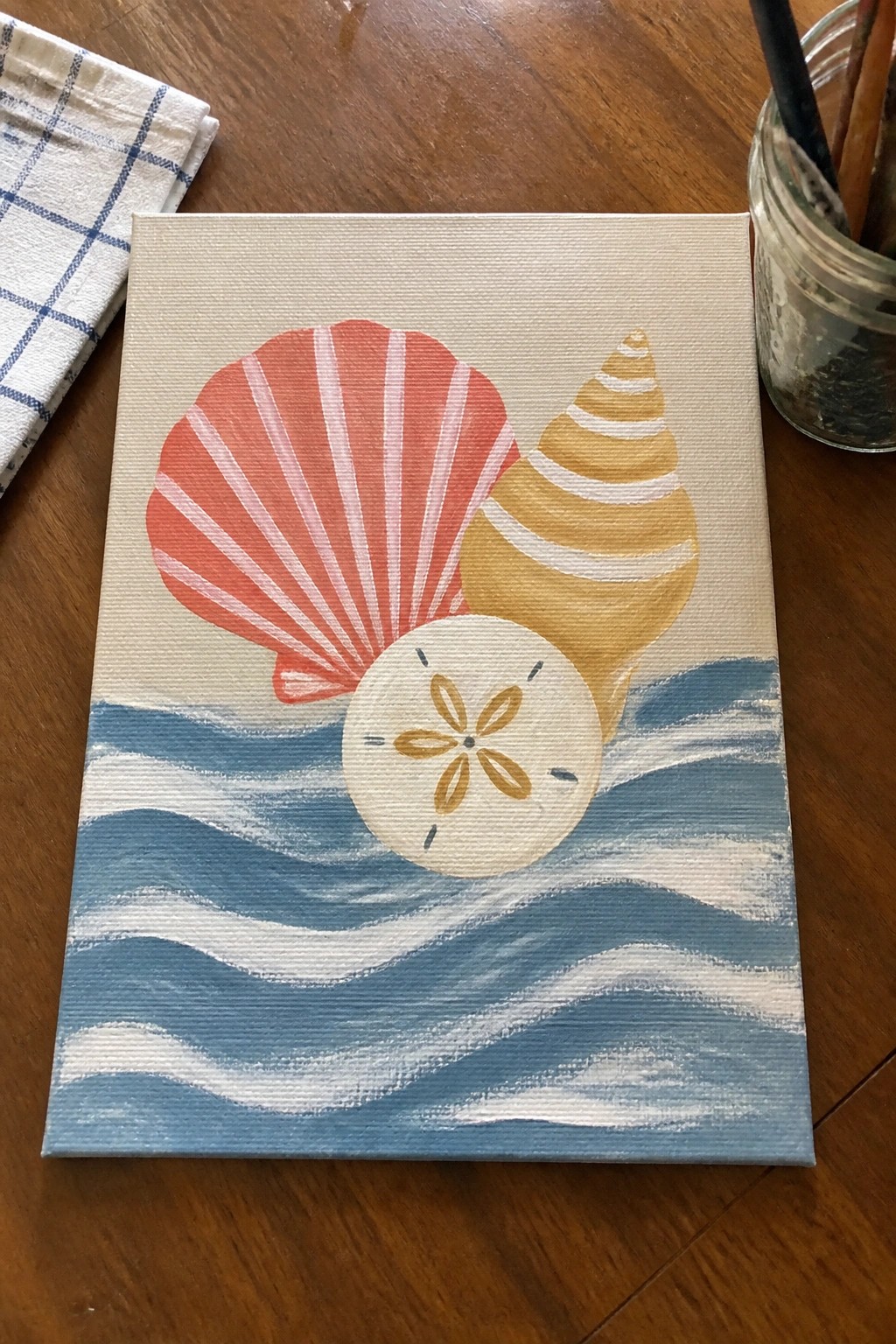
A simple still life of three seashells set against stylized blue waves works well as a beginner acrylic project. The red fan shell, yellow spiral shell, and sand dollar sit in a loose cluster that lets the color blocks and curved shapes carry the composition. Broad brushwork on the waves and flat fills on the shells keep the painting graphic and easy to read from a distance.
What makes this idea useful is how the wave lines can be adjusted in height or spacing to match any canvas size. You could swap in different shell types or change the shell colors to match a room without changing the overall layout. For practice, this kind of subject gives clear edges to follow while still letting you experiment with color placement.
Fox with Flower Crown

A fox portrait with a flower crown makes a strong acrylic painting idea because the side profile keeps the focus on clean shapes like the ears, snout, and eye while letting you practice fur texture in the mane. Pairing the animal with a simple floral band adds a decorative layer without needing a full scene or background details. The light background with scattered leaves balances the composition and prevents the canvas from feeling empty.
What makes this idea useful is that you can block in the fox with bigger brushes first, then add the crown and leaves last so any color changes stay easy. The palette works with limited paints since the teal background contrasts nicely with the orange fur and soft florals. For practice, this kind of subject helps you build both animal and botanical skills on one canvas, and you can simplify the flowers or change their colors to fit whatever you have available.
Crescent Moon Night Landscape

A night landscape idea like this centers on a crescent moon and stars set against a dark blue sky, with simple tree silhouettes placed on layered hills below. The approach uses flat shapes and strong contrast between the gold moon and deep background tones to keep the focus clear without extra detail. It fits into the landscape category but stays minimal enough to work as wall art or seasonal canvas decor.
What makes this idea useful is how the basic hill and tree outlines let you build the scene with just a few layers of acrylic. You can easily change the moon size, add or remove stars, or shift the tree placement to match a different canvas shape. The limited palette also makes color mixing straightforward, so the finished piece photographs well for sharing.
Abstract Geometric Design with Overlapping Color Blocks

An abstract painting idea built from overlapping rectangles, squares, and rounded forms creates a clean graphic effect through flat color areas and strong contrast. The layout uses a limited palette of teal, coral, gray, and warm neutrals to keep the shapes distinct while allowing some to layer over others for visual interest. This type of acrylic painting falls into the decorative abstract category and works well as wall art because the bold blocks of color carry the composition without extra detail.
What makes this idea useful is how the large shapes can be painted with basic brushes and straight edges, making it approachable even if you are still getting comfortable with acrylics. You can simplify the overlaps further or change the color scheme to match a room without losing the overall structure. For canvas decor, something like this stands out on Pinterest because the retro color blocks read clearly even in a small thumbnail.
Seashell Wreath on Neutral Canvas
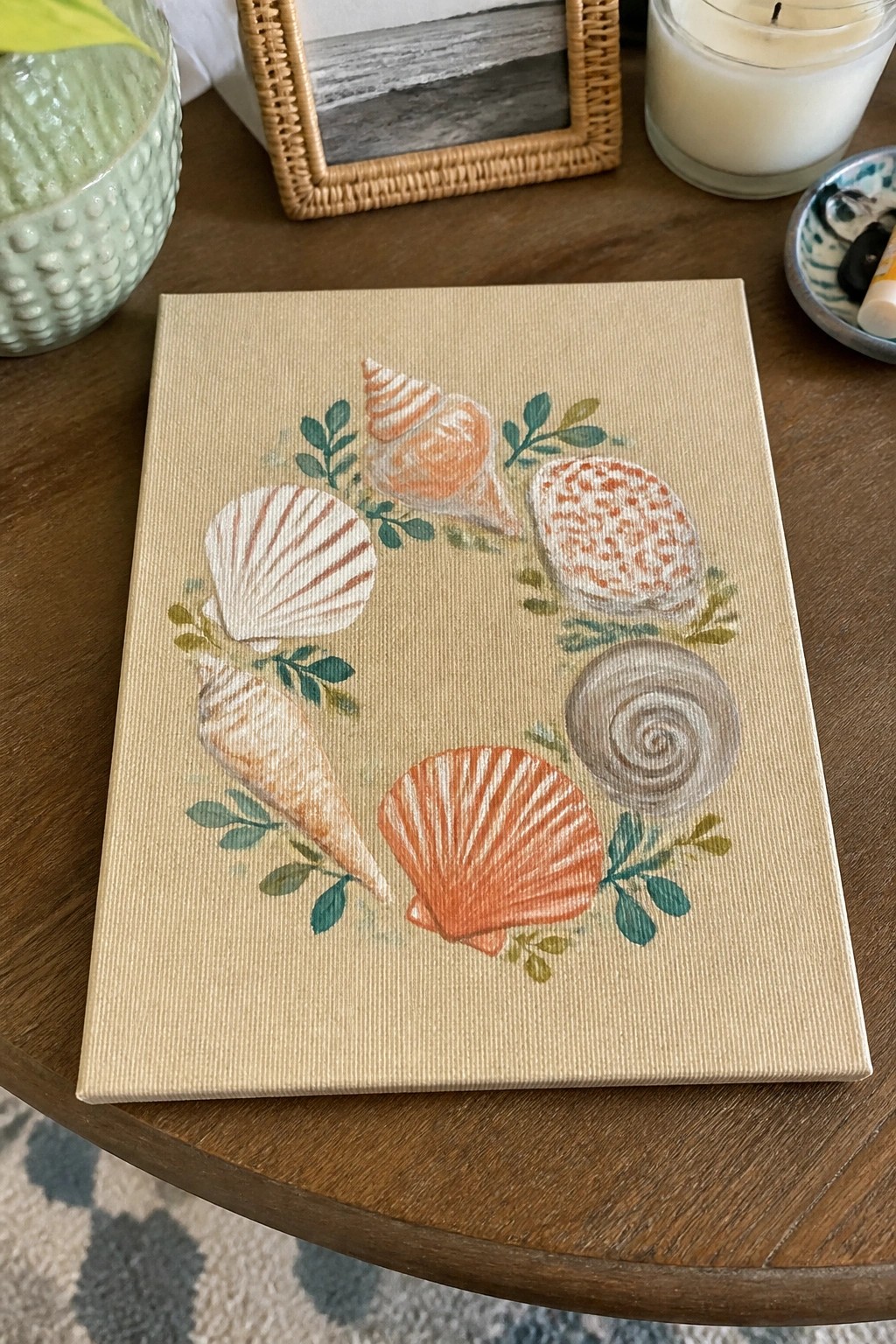
A circular layout of mixed seashells with small leafy sprigs between them forms a balanced decorative piece. The shells vary in shape and tone, placed at even intervals so the eye moves naturally around the center. A plain light background keeps the focus on the forms without extra detail or shading.
The even spacing makes the design simple to plan on canvas before adding color. You can swap in whatever shell shapes you prefer or reduce the leaves to quick strokes if you want less work. For wall art this format fills the space cleanly and adapts easily to different color choices or shell sizes.
Pastel Rainbow with Cloud Details

A rainbow built from stacked curved bands in soft pastels makes a clean decorative piece for a canvas. The arcs move from pink on the outer edge through orange, yellow, green, and blue, all set on a light neutral background. Small cloud shapes placed along the bottom edge add a simple finishing touch that keeps the focus on the color layers.
What makes this idea useful is how the repeated arc shapes let you practice even brushwork without complex drawing. You could easily change the color order, swap the background for a bolder tone, or enlarge the clouds if you want more texture to add. For canvas art, this layout works especially well when you need something quick that still reads clearly from across a room.
Pumpkin and Maple Leaves Still Life
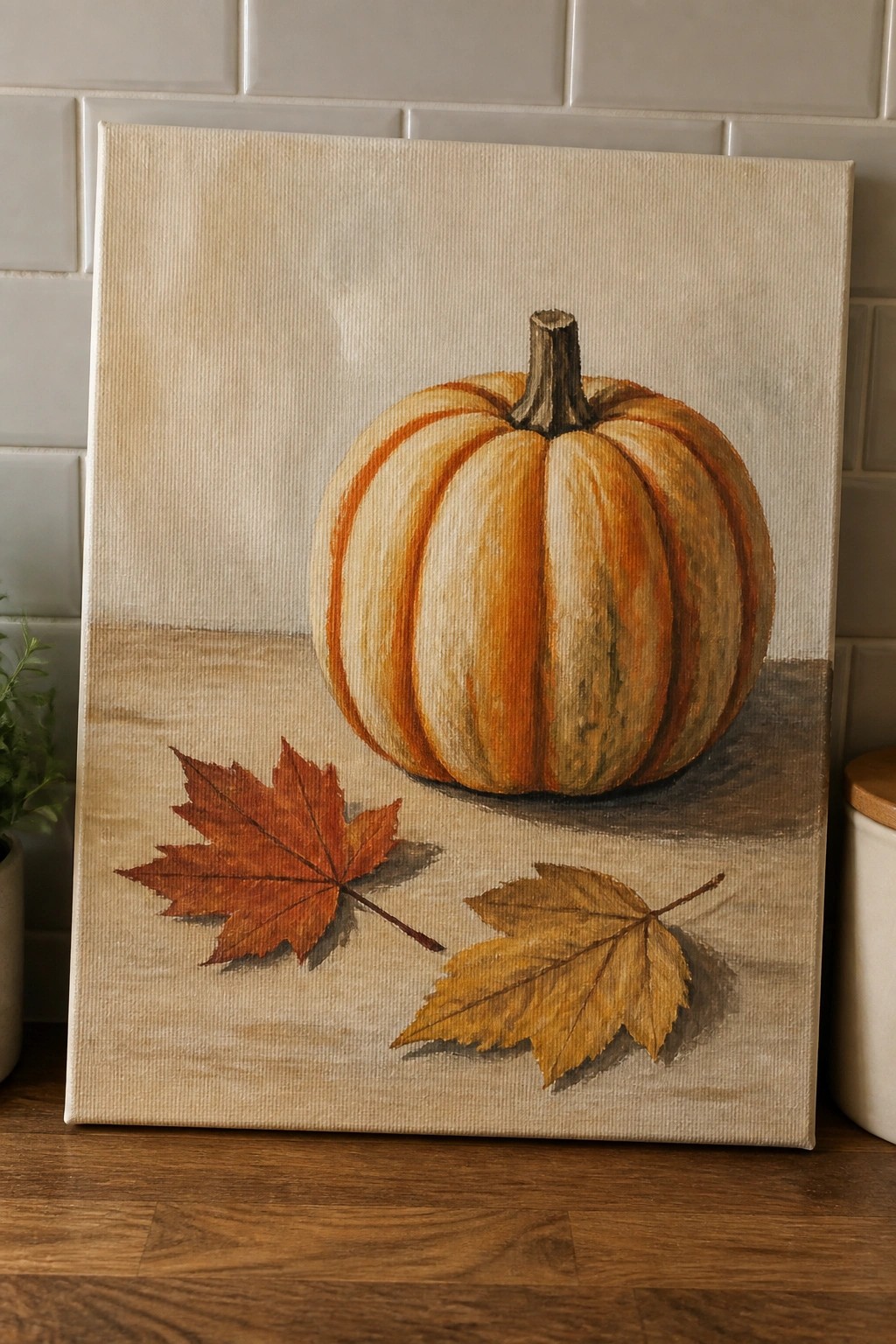
A pumpkin paired with two maple leaves creates a simple seasonal still life that focuses on shape and color blending. The main subject sits centered with the leaves placed lower and to the side, which balances the composition without crowding the canvas. This approach fits the still life category and works because the rounded pumpkin form contrasts with the flat ground plane and the pointed leaf shapes.
What makes this idea useful is how the neutral background lets you concentrate on the pumpkin’s ridges and basic shadows first. You can change the leaf colors or add a third leaf if you want variety without redesigning the layout. For canvas art, something like this works especially well for quick fall pieces and can be painted smaller to practice blending before trying a larger version.
Monochrome Winding Path Landscape

A simple landscape idea built from stacked hill shapes in dark tones with a single light path running through the middle. The composition uses overlapping layers to create depth while keeping the color range limited to grays and black against a pale background. This approach fits the landscape category and works through strong value contrast and clean edge work rather than detailed brushwork.
What makes this idea useful is how the flat layers let you block in large areas quickly before adding the path last. You can change the gray tones to any color family or shift the path width to match different canvas sizes. For practice, the layout helps you focus on shape placement without needing fine detail. The same structure also works as quick wall art since the high contrast reads clearly from a distance.
Stacked Birds with Patterned Bodies

Painting three birds stacked vertically gives you a clean, graphic layout that works well as decorative wall art. Each bird gets its own color block and simple repeating pattern like dots or stripes, with a small cluster of leaves and flowers at the base to ground the design. The flat shapes and limited palette keep the focus on color contrast and easy pattern work rather than blending or shading.
What makes this idea useful is how the stacking lets you practice blocking in shapes and adding basic details without a complicated background. You can change the bird colors, swap the bottom foliage for different seasons, or scale the whole thing down for smaller canvases. For practice or quick gifts, the bold outlines and repeating motifs make it simple to adapt while still looking finished.
Stylized Blue Waves with a Small Sailboat

A seascape idea built from overlapping curved shapes in several shades of blue creates the sense of rolling water without realistic blending. The small dark sailboat sits high in the composition so the waves remain the main focus, and white paint dabs suggest foam along the edges of the shapes. This approach falls into the decorative landscape category and relies on bold color contrast and simple repeated forms rather than fine detail.
What makes this idea useful is how the wave shapes can be painted with just a few brush sizes and repeated at different scales to fill any canvas. The limited blue-and-white palette is easy to adapt by changing the boat color or swapping the background for a sunset tone. For practice this layout keeps attention on shape placement and edge control, and the graphic look holds up well when turned into larger wall pieces or repeated on smaller canvases for gifts.
Coffee and Croissant Still Life
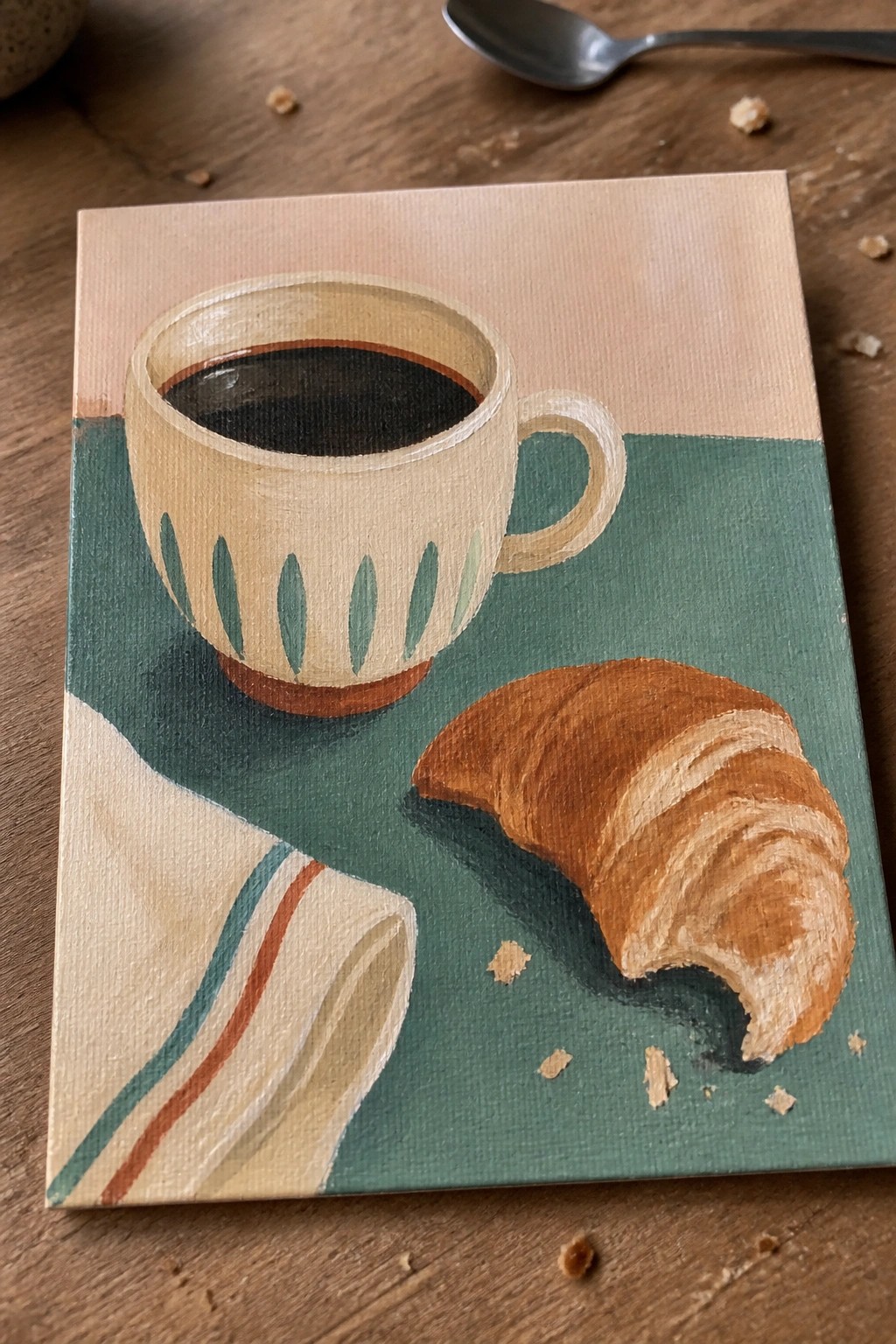
A still life built around a coffee cup and pastry gives you a straightforward acrylic idea that centers on everyday objects. The setup places the cup on a teal surface with a soft pink backdrop, using the striped napkin and croissant to break up the space and add visual weight. Strong color contrast between the warm brown tones and the cool green table keeps the shapes readable even with simple brushwork.
What makes this idea useful is how the clear edges and limited palette reduce the need for blending or complex shading. You can adapt it by changing the napkin stripes or background hue to match whatever colors you already have on hand. For canvas decor, this kind of subject works especially well because the objects stay recognizable even if you simplify the details or scale the whole scene down.
Mason Jar Rose Bouquet
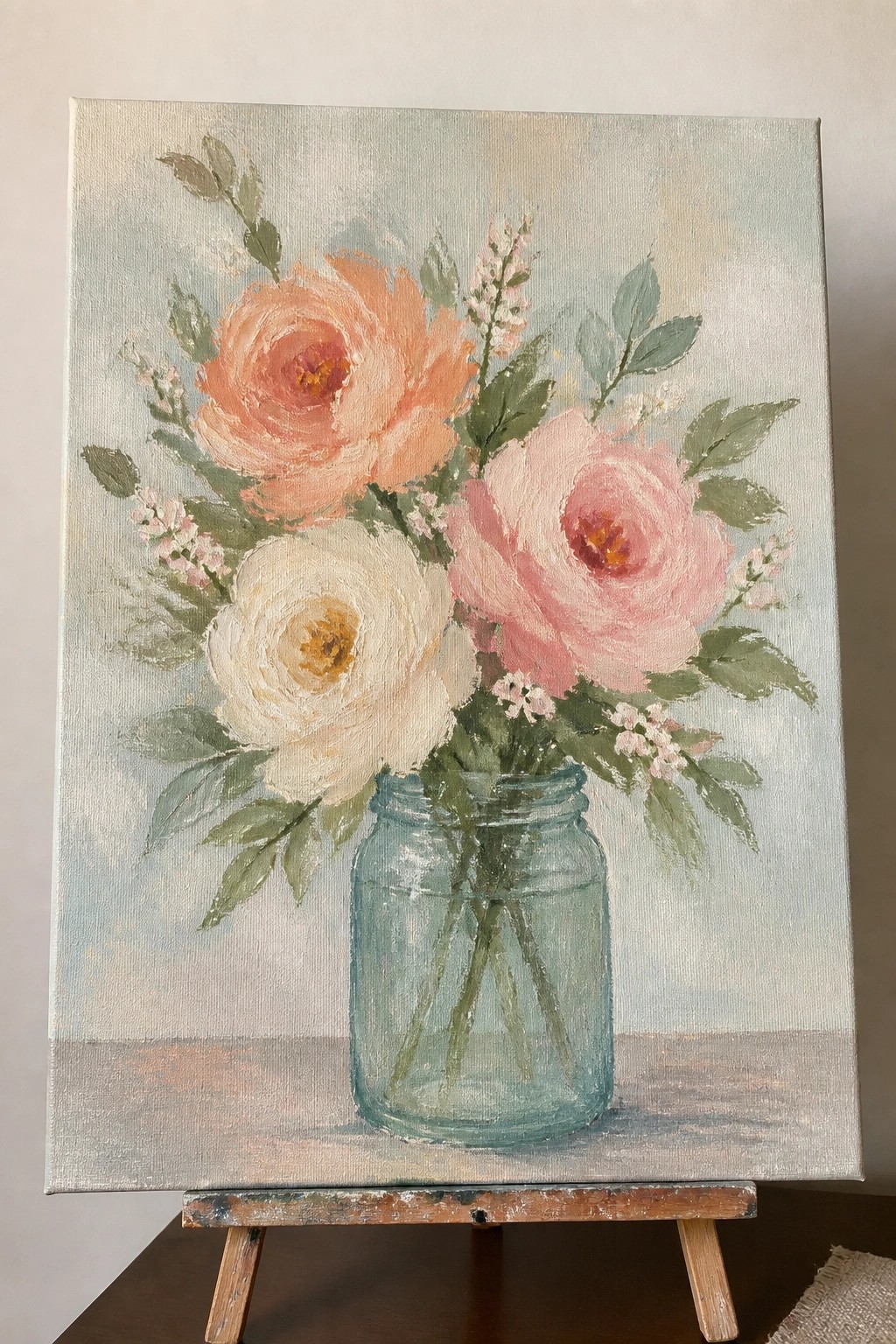
A floral still life of roses in a clear mason jar works as a direct acrylic idea because it combines simple shapes with a limited color range. The main blooms sit at different heights and angles, which creates natural overlap and lets the brushwork define the petals instead of requiring precise outlines. A soft background keeps attention on the jar and flowers without extra elements to manage.
What makes this idea useful is the upright format that translates well to standard canvas sizes and needs only basic color mixing. You can simplify it by using fewer blooms or change the jar to a vase if that fits your supplies better. For practice, this kind of subject builds skills in layering and soft edges while still producing a finished piece that works as wall art.
Frequently Asked Questions
What basic supplies will I need beyond paint to try these ideas successfully? Start with a few acrylic paints in primary colors, a set of synthetic brushes in various sizes, a palette for mixing, and a canvas or heavy paper. Add water for thinning, paper towels for cleaning, and a cup for rinsing brushes. These essentials keep costs low while allowing you to complete most beginner projects without frustration.
How do I keep acrylic paint from drying out too quickly during a session? Work in small batches on your palette and mist it lightly with water from a spray bottle every few minutes. Keep a damp cloth nearby to cover unused paint. Painting in a cooler room also helps slow drying, so you have more time to blend and adjust without rushing.
What surfaces can I use if I do not have a canvas on hand? Thick watercolor paper, wood panels, or even old cardboard work well for practice. Prime the surface first with gesso if it is absorbent to help the paint adhere evenly. These alternatives let you experiment freely and save money while building skills.
How should I handle mistakes without ruining the whole painting? Acrylics dry fast but can be painted over easily. Let the error dry, then apply a new layer of the background color or adjust with opaque paint. For wet mistakes, blot gently with a paper towel and rework the area. This forgiving quality makes acrylics ideal for beginners learning through trial.
How do I choose colors that will make my finished piece look polished? Begin with a limited palette of three to five colors that complement each other, such as blue, yellow, and white for simple landscapes. Test mixes on scrap paper first. Stick to one main color family and add neutrals for depth, which creates harmony without overwhelming new painters.

Hi, I’m Camille.
I’m a self-taught painter and creative blogger with a soft spot for acrylic painting, color play, and all the little art ideas that make everyday life feel more inspiring.
I started this space because I’ve always believed painting should feel joyful, approachable, and a little personal. Some of my favorite pieces come from simple ideas, messy palettes, and evenings where I just felt like making something pretty.
Most of what I share begins with acrylic painting, but I also love exploring other mediums when creativity pulls me in a new direction. My goal is to collect and share painting ideas that feel fun, beautiful, and actually doable, whether the mood is calm and minimal or bright and playful.
This is a space for inspiration, experimenting, and enjoying art without overcomplicating it.