

I like to paint with acrylics when I have a free afternoon and want to make something small.
Some of my favorite ideas come from everyday objects or simple color combinations.
I have tried quite a few of these over the years and they never feel complicated.
They work well even if I only have basic paints and brushes on hand.
Sharing them here feels like passing along things that have been useful to me.
Gradient Sky Sunset Landscape

A sunset landscape idea like this centers on blending acrylic colors from peach through orange and into yellow to form a smooth sky gradient, with a single white circle representing the sun. The dark blue shape across the bottom creates a clean horizon line that keeps the composition simple while giving the eye a place to rest. This type of landscape painting works especially well for wall art because the strong color contrast and minimal elements make it readable from a distance.
What makes this idea useful is how the sky can be painted quickly with broad horizontal strokes and then layered for smoother transitions. The limited palette and silhouette foreground make it easy to adapt by changing the sun position or swapping the horizon color to match a different season. For practice, this kind of acrylic painting helps build blending skills without requiring fine detail work, and the graphic look performs well in Pinterest thumbnails.
Cactus Trio in Patterned Pots

A still life idea built around three cacti in terracotta pots, each given its own simple white pattern. The light green background dotted with small color accents keeps the focus on the plants while adding just enough visual interest. This approach works as a decorative piece because the shapes stay graphic and the limited color palette prevents the composition from feeling crowded.
What makes this idea useful is how the pot patterns can be changed or simplified without losing the overall look. The layout fits small canvases well, so it works for quick practice sessions or sets of matching pieces. You could drop the background dots or shift the pot colors to match a different room if you want to adapt it for wall art.
Loose Tulip Painting with a Dotted Border

A simple floral acrylic idea like this uses three tulips in two shades of pink against a light blue background. The flowers are built from broad shapes rather than fine petals, and the stems and leaves are added with straight, visible brushstrokes. A row of white dots around the edge frames the composition and gives the canvas a clean, finished look without extra work.
What makes this idea useful is that the tulips can be painted larger or smaller depending on your canvas size, and the color palette is easy to change with just two or three tubes of paint. The light background does most of the work, so you do not need to fill every inch. For practice or quick gifts, this layout works well because the border adds polish while the flowers stay loose enough to finish in one session.
Abstract Overlapping Circles in Muted Tones

An abstract acrylic idea built from large overlapping circles works well when you focus on color blocks and simple placement rather than detail. A palette of teal, rust orange, mustard, soft pink, and off-white creates visual balance through contrast and negative space. The loose brushwork and occasional thin outlines add just enough structure without complicating the layout.
What makes this idea useful is how easy the shapes are to adapt on any size canvas. You can change the color order or add a metallic circle to shift the mood while keeping the same arrangement. For practice, this kind of painting lets you work on edge control and layering without needing perfect blending. It also translates cleanly to wall art because the bold forms hold up from a distance.
Coffee and Cookie Still Life

A still life idea built around a steaming coffee mug and a single cookie on a folded napkin works well when you want a contained subject with clear shapes. The limited color range of warm browns, muted green, and soft cream keeps the focus tight on the cup and cookie without extra clutter. Placing the objects on a simple surface with a plain backdrop lets the steam line add a small dynamic touch that breaks up the solid forms.
What makes this idea useful is how the basic arrangement gives you room to practice edges and color mixing without needing complex details. You can change the mug pattern or cookie type to fit whatever you have on hand, or shift the background tone for different rooms. The contained setup also makes it easy to paint as a quick canvas piece or turn into a matching pair for kitchen decor.
Stacked Birds with Patterned Wings

Painting a vertical row of three stylized birds gives you a clean decorative piece that relies on flat shapes and simple wing patterns. Each bird gets its own solid body color while the wing carries a repeating motif like dots, stripes, or small flowers. The stacked layout and limited palette per bird make the design read clearly from a distance and keep the focus on color contrast rather than shading or detail.
What makes this idea useful is how quickly you can block in the bodies and then fill the wings with basic brush marks. You could swap the flower pattern for stars or leaves, or change the body colors to match a specific room. For canvas decor the vertical format works well because it fills the space without extra background elements. The same idea could be simplified to two birds or expanded with more pattern layers if you want extra practice with acrylic layering.
Beach Landscape with Sailboat on the Horizon

A coastal scene built around sand dunes, sea grass, and a distant sailboat gives a clean landscape idea that focuses on open space and simple perspective. The foreground path leads the eye toward the water while the boat sits small on the horizon to create depth without extra elements. Broad sky and water areas let the painting rely on soft color shifts rather than tight detail.
What makes this idea useful is how the large flat zones of sky and sea make blending practice straightforward while the dunes give an easy spot to add light texture. You can swap the sailboat for a bird or buoy or shift the palette toward sunset tones without changing the layout. For canvas decor this works well at larger sizes since the open composition stays balanced even when scaled up.
Moon Phases Painted in a Vertical Row

A moon phase painting lines up the lunar cycle as a series of circles and half-circles down the center of the canvas. The idea uses strong contrast between black and white sections on a gray background to keep the shapes clear and balanced. This fits into a minimalist decorative style where the repeating circular forms and simple color split do most of the visual work.
What makes this idea useful is how straightforward it is to adjust the spacing or scale to fit different canvas sizes. You can leave out the textured craters on the full moon or swap the background for another neutral tone if you want a different look. For practice, the layout helps build clean edges and basic value shifts with acrylic, and the finished piece works as straightforward wall art that stays graphic and uncluttered.
Fox Portrait with Patterned Scarf and Wildflower Bouquet

This acrylic painting idea centers on an animal portrait where the fox wears a floral scarf and holds a small bouquet of daisies and mixed wildflowers. The composition places the fox in profile against a flat, muted background so the warm orange fur and the brighter scarf and flowers stand out clearly. It fits into the animal portrait category with added decorative elements that keep the focus on the subject rather than a full scene.
What makes this idea useful is the simple profile angle that reduces the need for detailed facial features while the scarf and bouquet give the piece a clear focal point. You can swap the scarf pattern or flower colors to match different seasons or room palettes without changing the overall layout. For practice, this kind of subject works well on a standard canvas because the background stays minimal and the main elements can be built up in layers. The same idea could be simplified by using fewer flowers or turned into a series with different scarf designs.
Bold Color Block Canvas with Minimal Leaf Accent

This acrylic painting idea uses three stacked horizontal color sections in deep teal, warm rust, and soft beige, divided by thin gold lines that run across the canvas. A single leafy branch silhouette sits in the bottom section to add a touch of organic shape without filling the space. The clean divisions and flat color areas keep the focus on the contrast between the bold blocks and the delicate gold details.
What makes this idea useful is how the taped edges and simple shapes let you build a finished-looking piece quickly on any canvas size. The gold lines add polish with minimal extra work, while the leaf can be left out or swapped for a different small motif if you want a more abstract result. This layout works especially well for matching existing room colors since you can swap the three main shades without changing the structure.
Patterned Mountains with Leaf Motifs

This acrylic painting idea uses three overlapping triangular shapes to create a simple mountain landscape. Each mountain gets its own solid color base in rust, ochre, and green, then a repeating leaf pattern is added across the slopes in lighter and darker tones. White snow caps sit at the peaks, while a row of chevron marks runs along the bottom of each shape against a plain blue sky.
What makes this idea useful is the way the leaf pattern acts as a built-in filler that covers the surface quickly once the base color is dry. The flat shapes and limited palette make it straightforward to resize for different canvas sizes or swap colors to match a room. For practice, this kind of layout works well because the bold outlines keep everything readable even if the leaf shapes vary slightly in size.
Raccoon Painting a Sunflower on Stacked Books
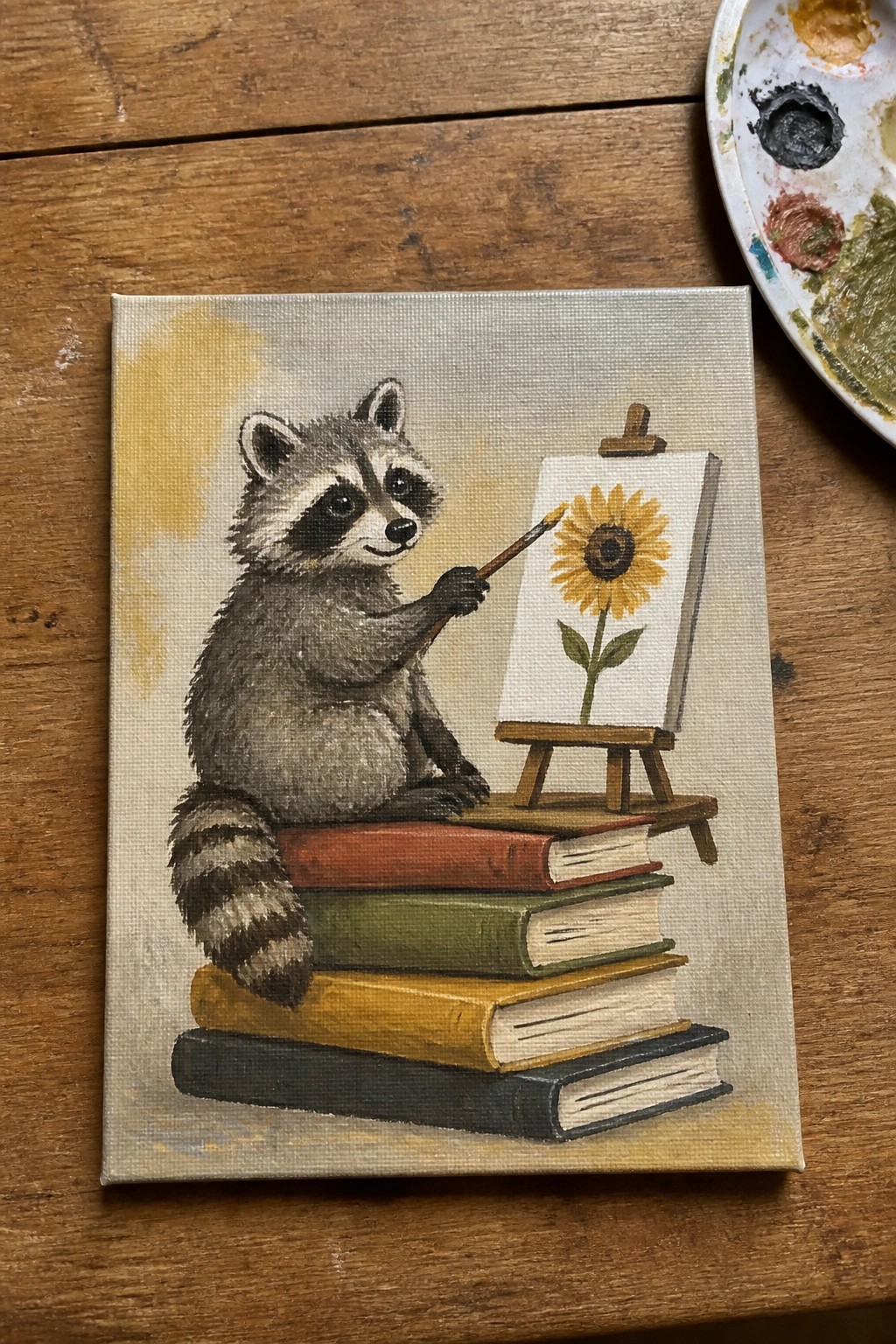
A raccoon seated on a pile of books while painting a sunflower on a small easel makes a clear animal-plus-still-life idea. The scene combines a simple character with everyday objects to create a self-contained story without needing extra background elements. The stacked books act as a solid base that lifts the raccoon and easel into the center of the canvas, while the limited color range keeps the focus on the main action.
What makes this idea useful is how the books give you an easy way to add height and structure without painting a full setting. You could swap the sunflower for another flower or change the book colors to match a different palette you already have on hand. For practice, this layout lets you try both fur texture on the raccoon and clean edges on the easel and canvas in one piece. It would work well as a small canvas for gifts or as a repeatable motif if you want to vary the animal or flower in future versions.
Layered Botanical Leaves in Earthy Acrylic Colors
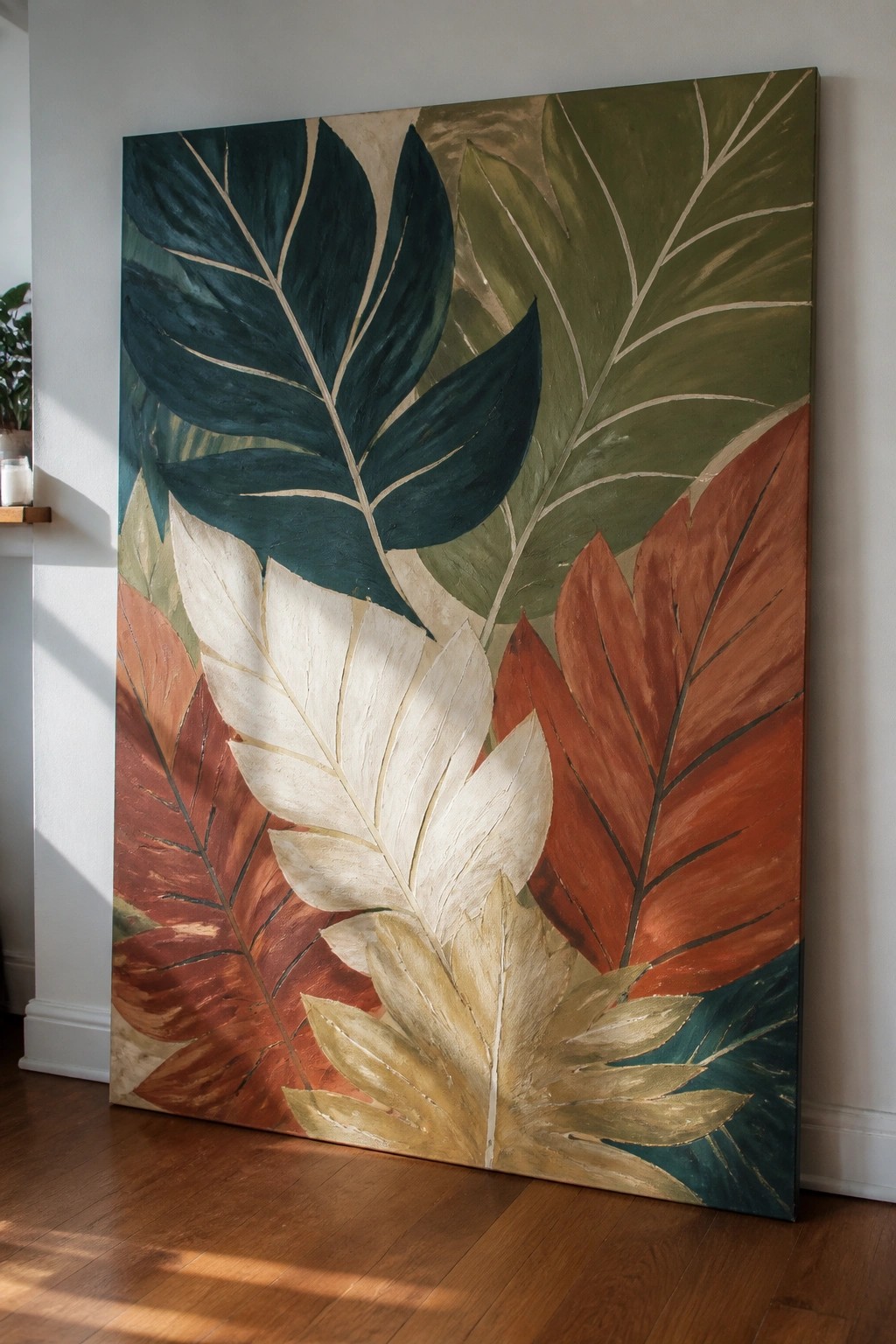
A botanical painting built around large overlapping leaves creates a strong decorative piece using just a few simple shapes. The idea works by placing leaves in different sizes and angles, then filling them with blocks of color like deep teal, olive, rust, and cream so the forms stand out against each other. This approach fits wall art because the bold outlines and color contrast carry the composition without needing fine detail or realistic shading.
What makes this idea useful is that the leaf shapes are straightforward to draw freehand or trace from a reference, so you can focus on paint application instead of complex drawing. You can easily change the palette to match a room by swapping the rust tones for cooler blues or warmer yellows while keeping the same layout. For canvas decor, the large scale and flat areas of color make it quick to cover and forgiving if edges are not perfectly clean. The same structure works at a smaller size if you want to test the idea first before committing to a big piece.
Stacked Rounded Shapes with Striped Accent

This acrylic painting idea uses three stacked rounded rectangles in a simple vertical layout. The top form is painted solid blue, the middle one features black vertical stripes over a light ground, and the bottom one is a soft pink. The limited palette and clean edges keep the focus on shape and balance, making it a straightforward abstract approach for wall art.
What makes this idea useful is how the flat color blocks and minimal detail reduce the need for blending or shading. You can swap the stripe pattern for dots or change the order of the colors to fit different spaces. For canvas decor, the design adapts easily by scaling the shapes or adjusting the background tone while keeping the stacked format intact.
Cupcake Trio on a Checkered Cloth

A simple still life idea works well here by grouping three cupcakes with different pastel frostings on a pink gingham napkin. The brown liners give each cupcake clear shape while the scattered sprinkles add small color accents without extra work. This fits into the cute food category and keeps the focus on soft color blocks and basic forms rather than fine detail.
What makes this idea useful is how the checkered cloth anchors the composition and gives the eye a place to rest. The color choices stay light so the painting reads as fresh and approachable on a canvas. You could swap the frosting shades for seasonal tones or reduce it to two cupcakes if you want a smaller practice piece. For Pinterest, the food theme combined with the picnic pattern tends to get saved quickly because it translates easily to kitchen wall art or beginner canvas projects.
Lighthouse Over Dark Crashing Waves

A lighthouse perched on jagged rocks forms the main subject in this seascape acrylic painting idea. The composition relies on strong contrast between the light tower and the dark, moving water below, with layered brushwork suggesting waves without heavy detail. This landscape approach keeps the sky and sea simple so the vertical shape of the lighthouse stands out clearly.
What makes this idea useful is the built-in contrast that does most of the visual work with just a few tones. You can adapt it by changing the wave height or sky darkness to match the canvas size you have on hand. For practice, the subject helps focus on basic wave shapes and edge control while still looking finished, and the same layout works at smaller sizes for quick studies or larger ones for wall pieces.
Spotted Mushrooms on a Flat Green Background

A simple mushroom painting idea works by grouping three different-sized caps with white spots against a solid green field. The largest mushroom sits near the center while two smaller ones sit lower, with just a few grass strokes at the base to anchor them. This approach keeps the focus on clean shapes and limited colors rather than complex blending or texture.
What makes this idea useful is how the flat background and bold cap outlines let beginners finish a complete piece on a small canvas without much layering. You can easily change the mushroom colors or swap the green for another solid shade to fit different decor. For quick gifts or wall art, the same layout works on wood slices or larger canvases by adjusting the spacing between the caps.
Overlapping Arches in Earthy Abstract Style

This acrylic painting idea centers on building a balanced abstract composition from repeated arch shapes and rounded forms. The layout uses vertical color blocks in soft pink, teal, mustard, and gray against a neutral base, with a few thin white lines for separation. The flat color areas and clean edges keep the focus on shape and placement rather than texture or blending.
What makes this idea useful is how the repeating arches create structure without needing complex drawing skills. The limited palette lets you swap colors easily to match a room or try different moods while keeping the same layout. For canvas decor, the graphic style works well because it reads clearly from a distance and can be adjusted by changing the width of the shapes or adding a couple more lines.
Folk Striped Heart and Motif Bands

This acrylic painting idea uses a series of horizontal bands across a panel, each filled with repeating hearts, dots, or small flower clusters in red, gold, and green. The composition works by alternating solid color stripes with patterned rows on a light background, keeping shapes simple and evenly spaced. It fits into the decorative category, where the focus stays on pattern repetition and clear color blocks rather than shading or detail.
What makes this idea useful is how the basic shapes let you build the design quickly without complex techniques. You can change the band widths or swap colors to match different rooms or seasons while keeping the same layout. For canvas decor, something like this stands out on Pinterest because the graphic stripes read clearly even in small thumbnails. The same pattern could be simplified further by using fewer bands or expanded by adding more motif variations.
Frequently Asked Questions
What supplies do beginners need to try these acrylic painting ideas?
Start with a small set of acrylic paints in primary colors plus black and white, a few brushes of different sizes, a canvas or thick paper, a palette for mixing, and water for cleaning. Many of the ideas in the article use household items like sponges or old credit cards for texture, so you can keep costs low while still achieving creative results.
How do I make my paintings look effortless rather than overworked?
Focus on simple shapes, loose brushstrokes, and limited color palettes as suggested in the article. Work quickly in thin layers and step back often to avoid adding too much detail. The key is embracing imperfections, which often give these ideas their relaxed charm.
Are these 19 ideas suitable if I have never painted before?
Yes, they are designed with beginners in mind and rely on basic techniques like dabbing, swirling, and blending rather than advanced skills. Begin with the simplest concepts such as abstract color blocks or nature silhouettes, and practice on small surfaces until you feel comfortable scaling up.
What should I do if my acrylic paint dries too fast while I am working?
Acrylics dry quickly, so keep a spray bottle of water nearby to mist your palette and canvas lightly. The article recommends working in small sections or using a slow-drying medium if you want more time to blend colors smoothly on the ideas that involve gradients.
How can I display or preserve the finished paintings?
Let each piece dry fully for at least 24 hours, then apply a thin layer of acrylic varnish for protection against dust and fading. Many of the effortless ideas look great in simple frames or even as part of a gallery wall grouped with other small canvases for a cohesive, creative display.

Hi, I’m Camille.
I’m a self-taught painter and creative blogger with a soft spot for acrylic painting, color play, and all the little art ideas that make everyday life feel more inspiring.
I started this space because I’ve always believed painting should feel joyful, approachable, and a little personal. Some of my favorite pieces come from simple ideas, messy palettes, and evenings where I just felt like making something pretty.
Most of what I share begins with acrylic painting, but I also love exploring other mediums when creativity pulls me in a new direction. My goal is to collect and share painting ideas that feel fun, beautiful, and actually doable, whether the mood is calm and minimal or bright and playful.
This is a space for inspiration, experimenting, and enjoying art without overcomplicating it.