

I have been trying out different ways to paint mountains with acrylics lately and found that sticking to basic shapes makes it much easier for beginners.
Many people think landscapes need a lot of detail but breaking them down into triangles and rectangles can get you started without feeling overwhelmed.
I put together 22 ideas that use these simple forms so anyone can follow along at their own pace.
Acrylic paint is forgiving which helps when you are experimenting with layers and colors on the mountains.
These projects do not require special skills just some basic supplies and time to practice.
Geometric Mountains Using Overlapping Triangles and a Circle Sun
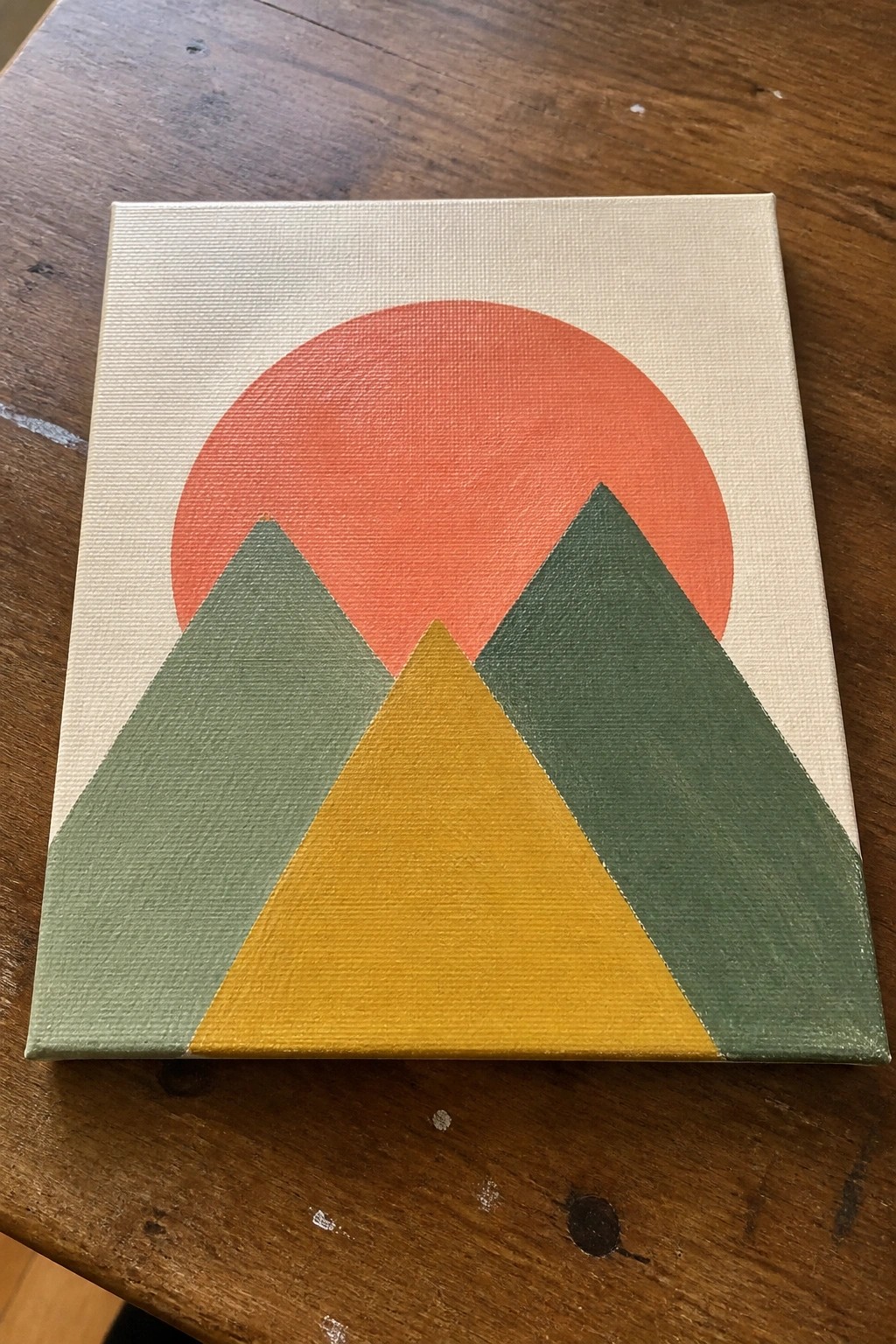
This acrylic idea builds a landscape from three overlapping triangles placed in front of a large circle to suggest mountains at sunset. The flat color areas and sharp edges create clear separation between the shapes without any blending or fine detail. It works as a minimalist landscape that relies on simple geometry and limited colors rather than realistic rendering.
What makes this idea useful is how the basic shapes remove the pressure of drawing accurate forms so you can focus on color placement and balance. The layout adapts easily by changing the triangle heights, swapping the yellow peak for another green, or shifting the circle color for different times of day. For practice or small canvas pieces, the large flat sections make it quick to finish while still looking structured enough to stand out in a feed.
Geometric Night Mountains with Basic Triangles

A night mountain scene built from overlapping triangles in different blue shades creates a clean landscape against a dark background. The acrylic painting idea relies on flat color blocks and a few simple elements like a crescent moon and scattered dots for stars. This approach fits the landscape category with a minimalist style that uses shape contrast instead of fine detail.
What makes this idea useful is how the triangle layout reduces the need for complex drawing while still forming a recognizable scene. The limited blue palette and silver accents make it simple to adapt by changing the moon phase or adding more peaks in different sizes. For practice, this kind of subject helps beginners focus on clean edges and value shifts without getting lost in texture. The same idea could be turned into a larger canvas piece or repeated in a series with varying color temperatures.
Layered Triangle Mountains with a Tiny House
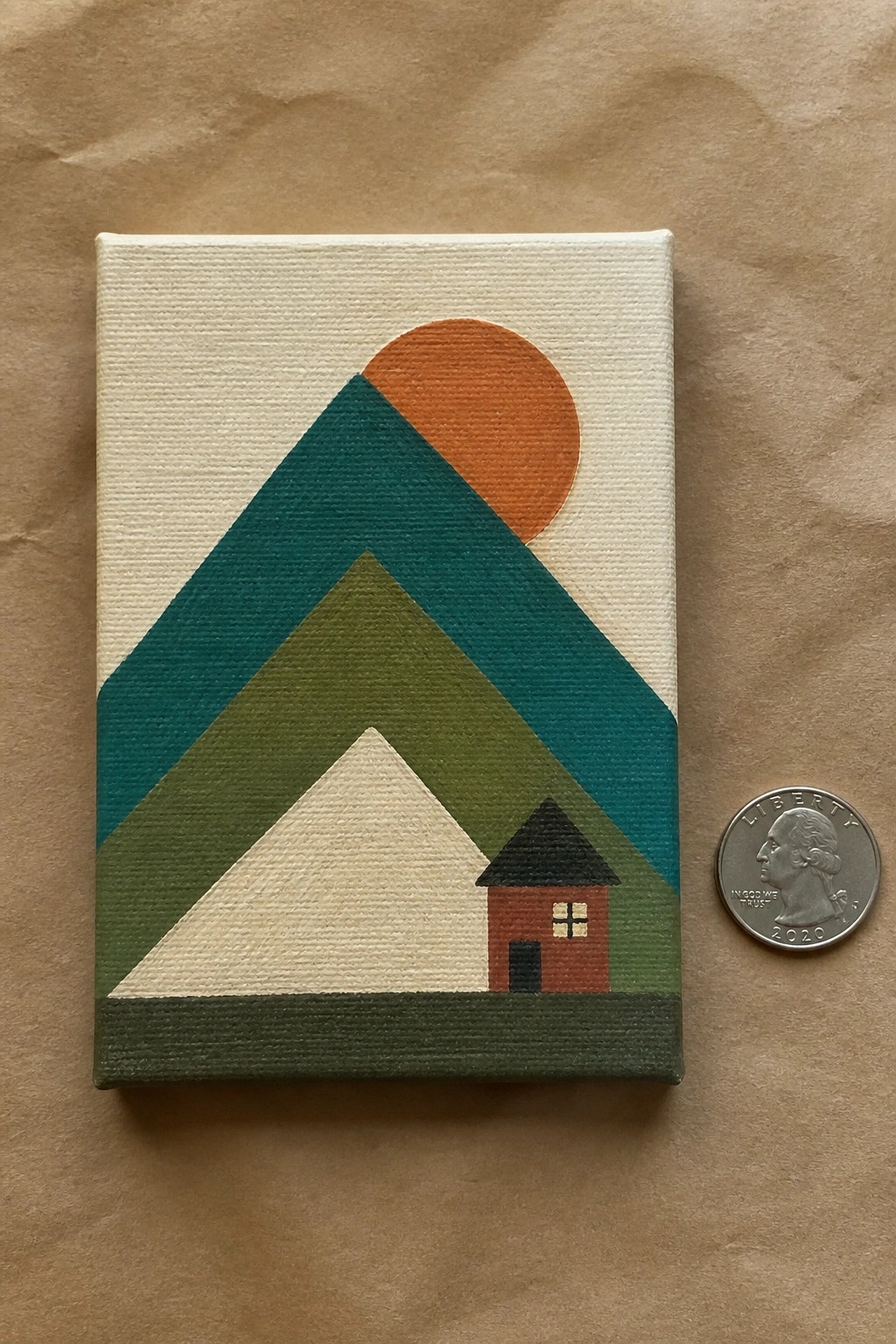
A geometric mountain landscape made from stacked triangles gives this acrylic idea a clean, graphic look while keeping the focus on simple shapes. The overlapping hills in cool tones build depth, and the small house plus round sun add a focal point without complicating the design. This fits into landscape painting using basic shapes for a flat, modern style that relies on color blocks and edges rather than blending or detail.
What makes this idea useful is how the triangle layout lets you sketch the whole scene quickly on any small canvas. You could change the house color, swap the sun for a moon, or shift the palette to cooler tones for different seasons. For practice, this kind of subject builds confidence with shape layering and color contrast, and the compact size makes it easy to finish in one session or repeat as a series for wall decor. The bold blocks also help it stand out in a Pinterest feed without needing extra texture.
Layered Sunset Mountains with Flat Color Blocks
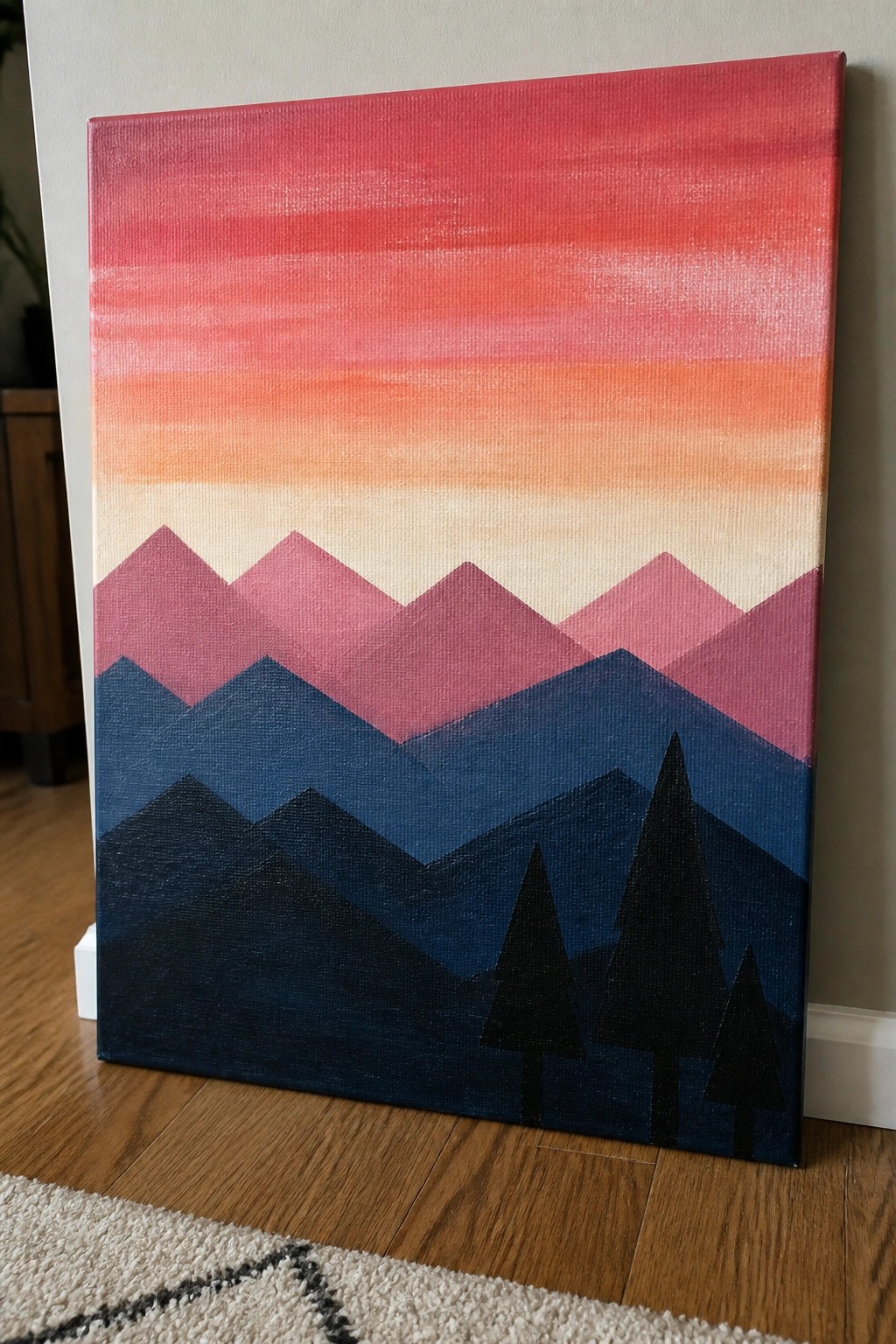
This acrylic painting idea builds a landscape around overlapping mountain ridges that step back in color from warm pinks to cool blues. A smooth horizontal gradient fills the sky above, moving from red through orange into a light band right at the peaks. Solid black pine tree shapes placed at the bottom add immediate contrast and keep the whole piece graphic and simple.
What makes this idea useful is how the flat shapes let you focus on clean color mixing and straight edges instead of fine detail. The same layout works for a sunrise version or a cooler winter palette by swapping the top colors and adjusting the mountain tones. For canvas art, the bold horizontal bands make it fast to finish and easy to adapt to different sizes while still looking strong on a wall or in a feed.
Striped Triangle Mountains Under a Night Sky
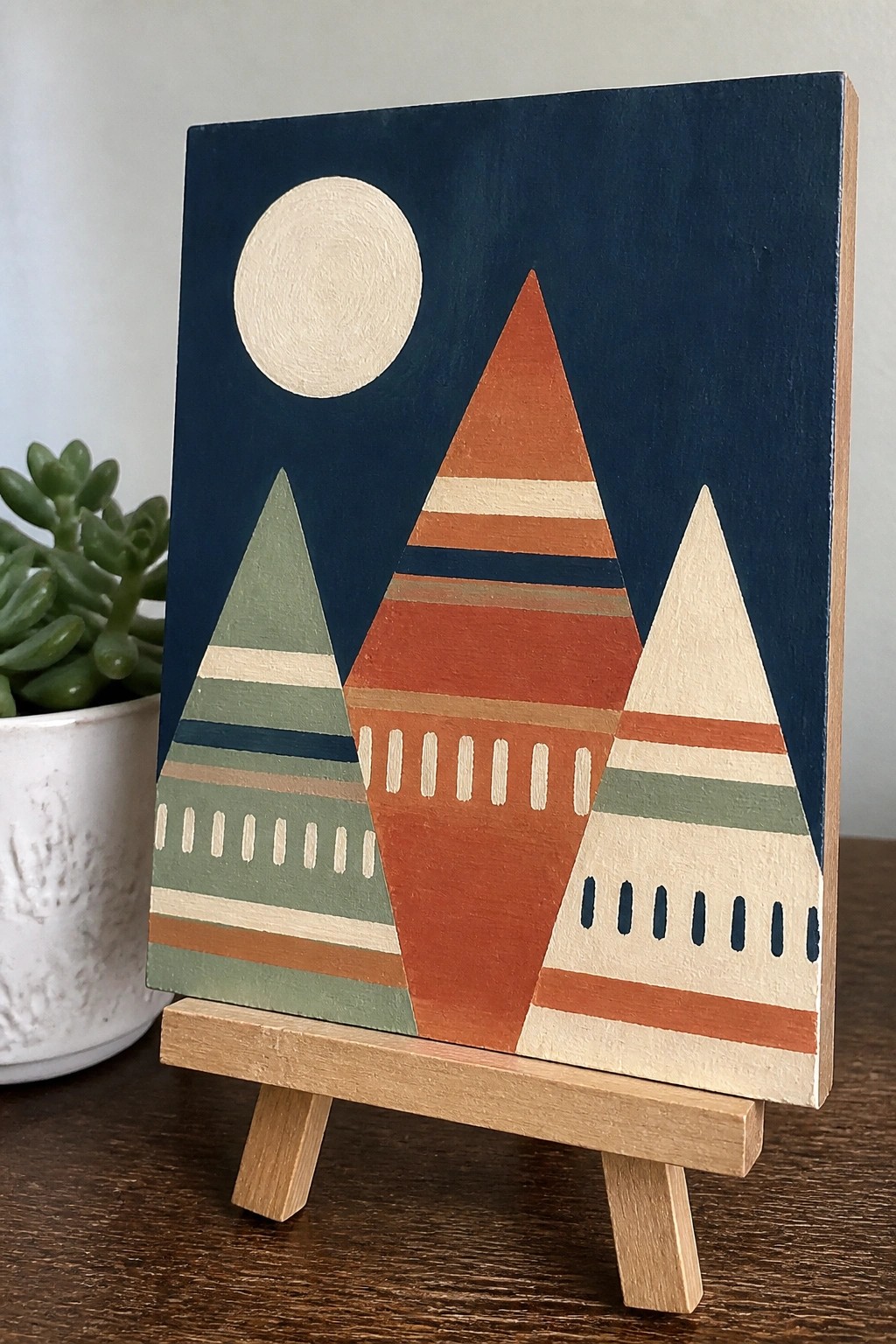
This acrylic painting idea turns a simple night landscape into a set of overlapping triangles that form mountains against a solid dark blue background. Each triangle uses repeating horizontal stripes in contrasting colors plus short dashed lines for added pattern. A single pale circle represents the moon and sits high to balance the taller central peak without crowding the space.
What makes this idea useful is how the flat shapes and repeated stripes let you focus on clean edges and color placement rather than blending or fine detail. The layout works well on small wood panels or canvas and can be adapted by changing the stripe colors or swapping the moon position. For quick practice or shelf decor, the same structure scales easily to different sizes while keeping the graphic look intact.
Overlapping Mountain Peaks with a Flat Sun

A clean landscape idea built from three overlapping triangles in different colors forms the mountains, while a single circle adds a sun element in the sky. This acrylic approach relies on shape and color blocking to create depth, so the composition stays graphic and readable without extra details or blending. The flat treatment and limited palette make it a straightforward landscape option that works on standard canvas sizes.
What makes this idea useful is how the overlapping shapes handle the sense of distance with almost no extra work. You can swap the mountain colors or move the sun position to fit different color schemes or room styles. The solid background keeps the focus tight, so the same layout scales easily for quick practice pieces or small canvas decor.
Triangle Mountains with a Winding River
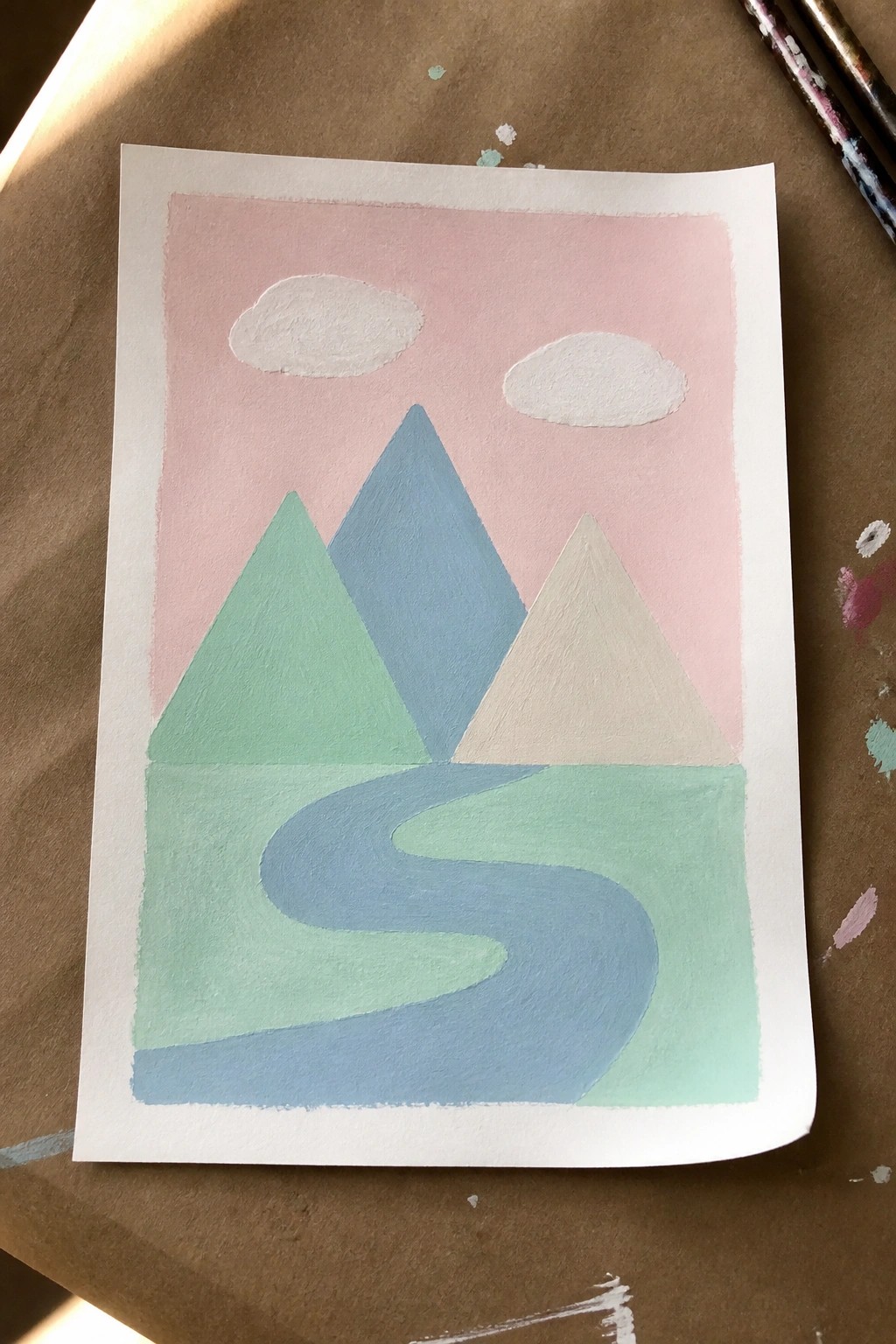
This acrylic painting idea builds a landscape from three overlapping triangles in different muted colors to form the mountains. A single curving river cuts through the flat green area below, while a solid pink sky and two simple clouds complete the scene. The limited shapes and flat color blocks keep the focus on clean edges and easy color placement.
What makes this idea useful is how the triangle forms let you block in the mountains fast without complex drawing. You can swap the mountain colors or adjust the river curve to change the look while keeping the same layout. For practice or small canvas pieces, the flat areas cover quickly and the strong shapes still read clearly from a distance.
Layered Mountain Forms with Triangular Trees
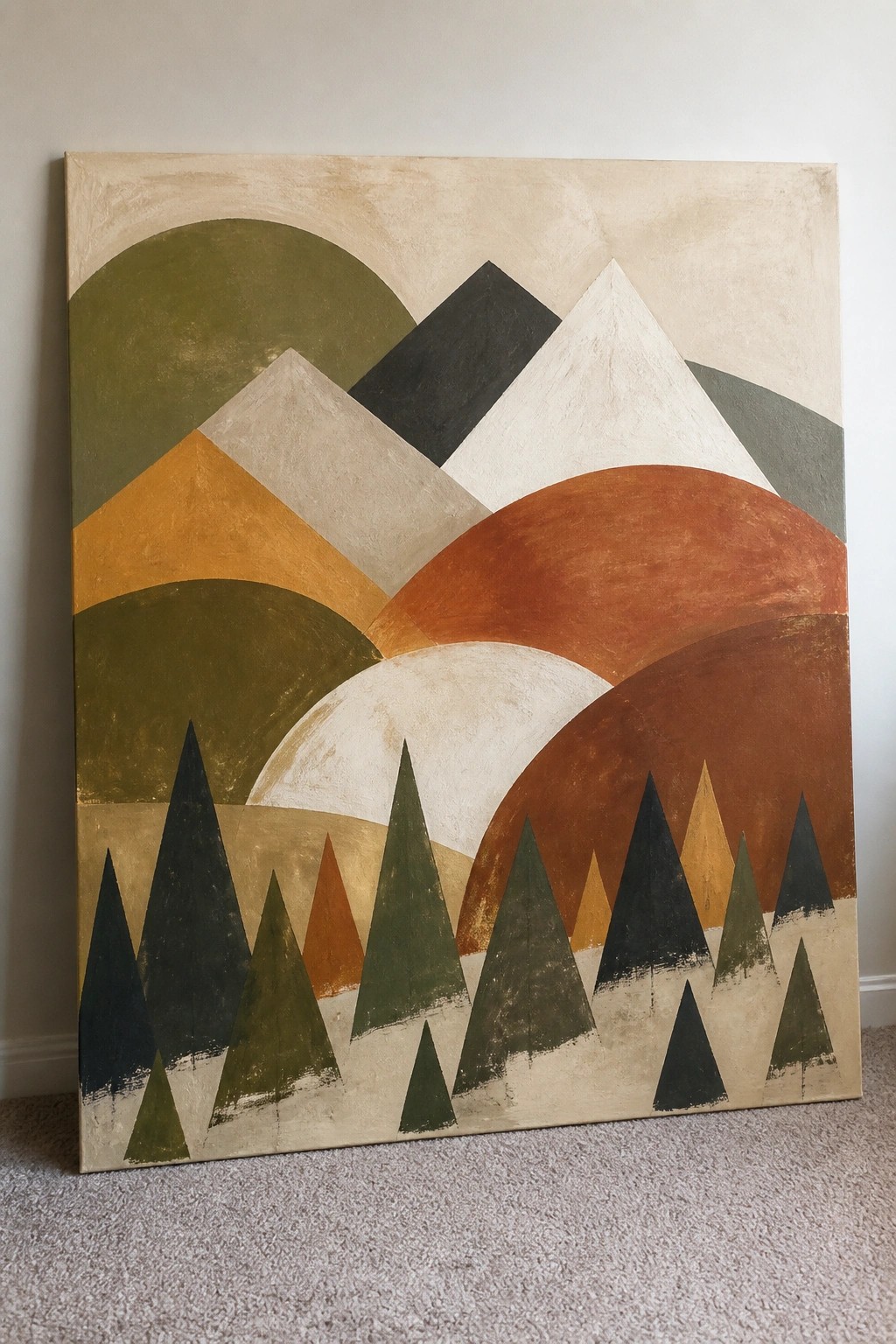
This acrylic painting idea builds a landscape from overlapping geometric shapes where large semi-circles and triangles create the mountains and hills. Earthy tones of olive, rust, mustard, and cream keep the color blocks distinct while the foreground uses repeated dark triangles for a row of pine trees. The approach works as a clean landscape category piece because the flat shapes and limited palette let the composition stay readable without needing fine detail.
What makes this idea useful is that the basic shapes remove the need for realistic drawing, so beginners can focus on clean edges and color placement. The layout adapts easily by changing the tree count, swapping in cooler mountain tones, or extending the hill curves for a wider canvas. For wall art or practice pieces, the strong contrast between the dark trees and lighter background makes the whole scene stand out on a feed even at small sizes.
Geometric Mountains With Reflections
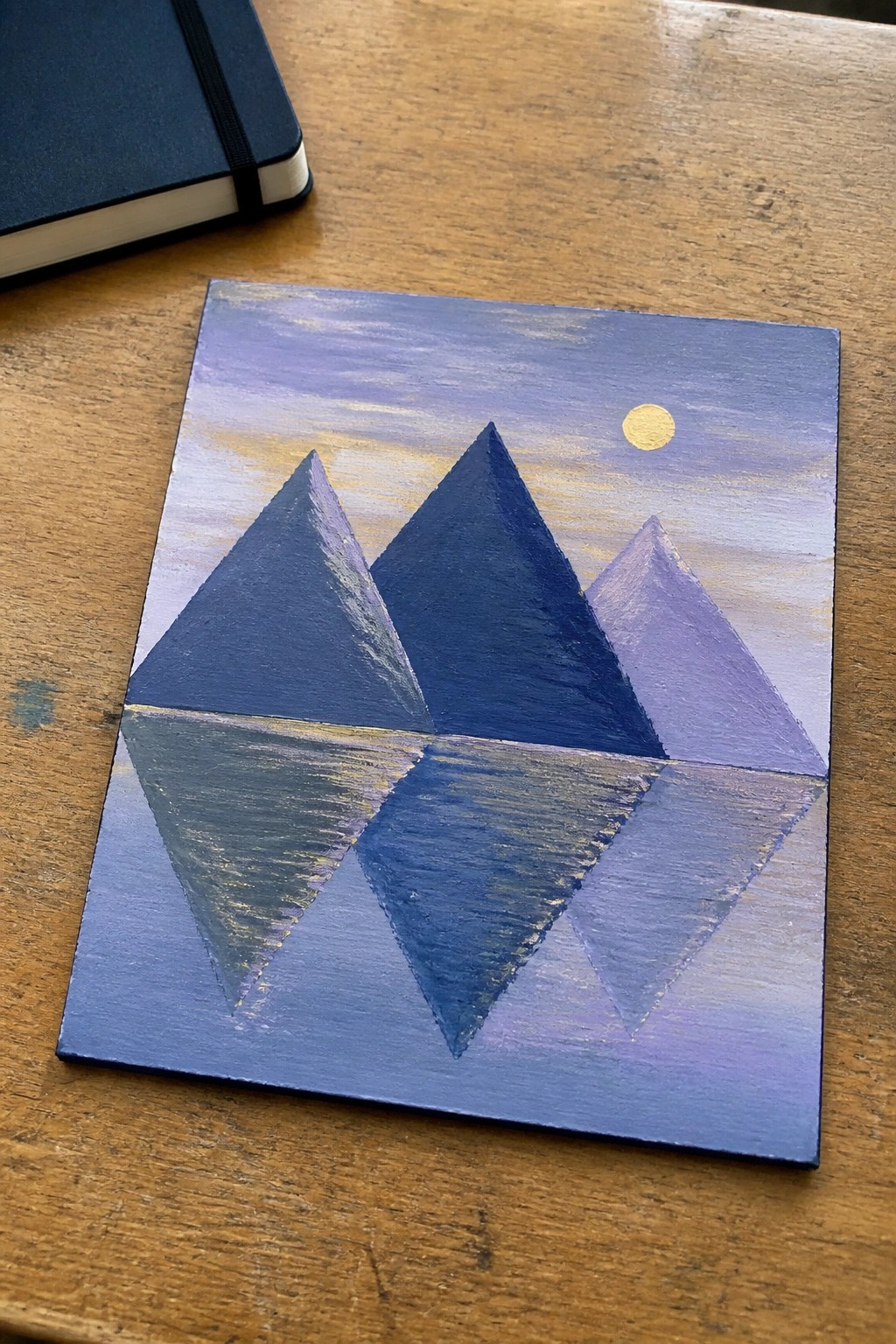
This acrylic painting idea uses overlapping triangles in graduated shades of blue and purple to form mountain peaks above a clear horizon line, with matching inverted shapes below to create a water reflection. A small yellow circle sits in the upper right against a softly blended sky, keeping the focus on the strong triangular shapes and the symmetry between the peaks and their reflections. The idea fits into the landscape category and relies on basic shapes, limited colors, and a clean division between sky and water for visual impact.
What makes this idea useful is the straightforward layout that lets beginners practice shape placement and color blending without needing fine details. The reflection effect adds interest while staying easy to paint since it simply repeats the same triangles upside down. You can swap in different blue tones, add a few more peaks, or change the sun color to match any season or room decor. For canvas art, this kind of balanced composition works well for quick weekend projects or small wall pieces that still look polished.
Geometric Sun Over Layered Mountain Shapes
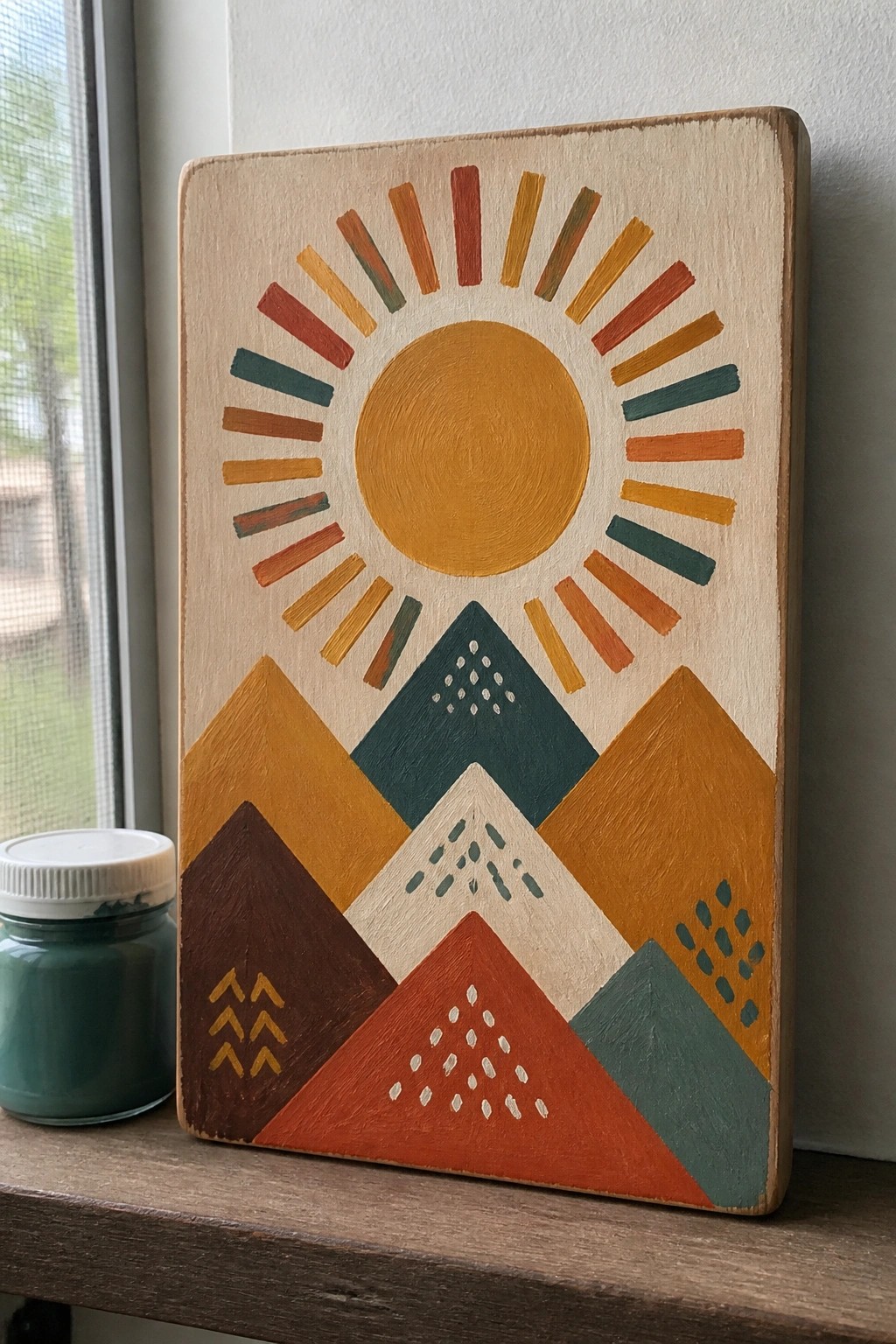
A central yellow sun with straight radiating stripes in warm orange, red, and teal sits above a series of overlapping triangular mountains. The design relies on flat blocks of color and simple geometric forms to build a landscape that stays balanced without needing gradients or blending. Small dotted patterns on a few mountain faces add light texture while keeping the overall look clean and graphic.
What makes this idea useful is how the strong shapes and limited palette let you focus on color placement and edge control instead of blending or detail work. You could swap the sun rays for cooler tones or change the mountain colors to fit a different season while keeping the same layout. For canvas decor, this kind of piece works well as a fast project that still reads clearly from a distance on a wall.
Layered Triangle Mountains in Blue Gradients
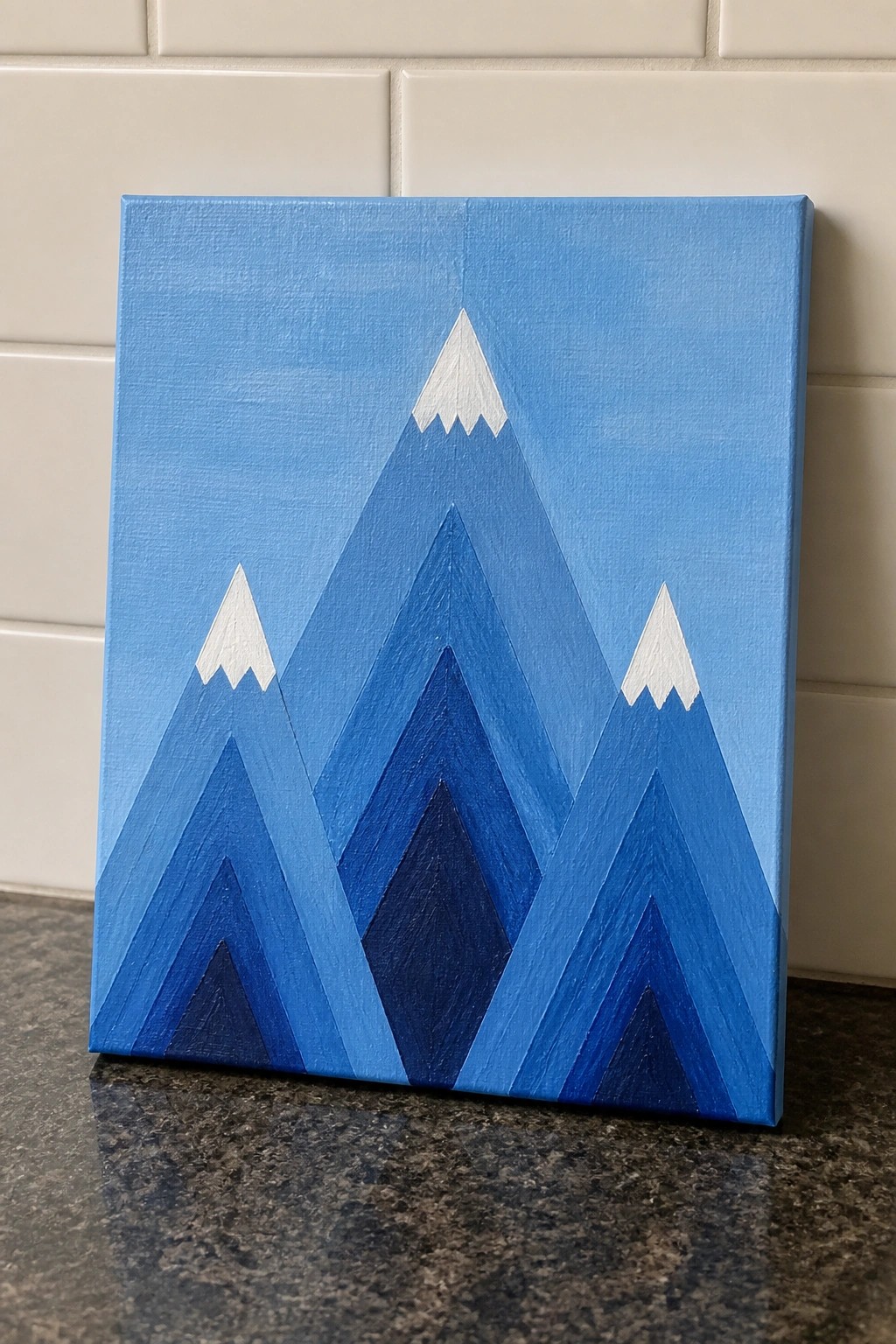
This acrylic painting idea builds a mountain range from overlapping triangles in different shades of blue. The white peaks sit on top of the darker bases to create clear contrast while the light blue background keeps the focus on the shapes. It works as a straightforward landscape approach that relies on color blocking and simple geometry instead of detailed outlines.
What makes this idea useful is how the triangle layout lets you practice even brushwork and smooth color transitions without complex drawing. You can easily change the number of mountains or shift the palette to warmer tones for a different mood. For canvas decor the flat graphic style finishes quickly and stands out on Pinterest because the limited colors and strong shapes read well even at small sizes.
Stacked Triangle Mountains with Patterned Base

This acrylic idea uses three overlapping triangles as the main shapes to form a simple mountain range. Each peak gets its own color while the white tops suggest snow without extra brushwork. A band of circles and small triangles across the bottom creates a clean border that balances the larger forms above.
What makes this idea useful is how the flat shapes let you practice even paint coverage and color placement on one canvas. You can change the three main colors to match a different palette or swap the bottom pattern for lines or dots if you want a quicker finish. For wall art, the bold outlines and limited detail help it read clearly from a distance.
Geometric Mountain Landscape with a Small House
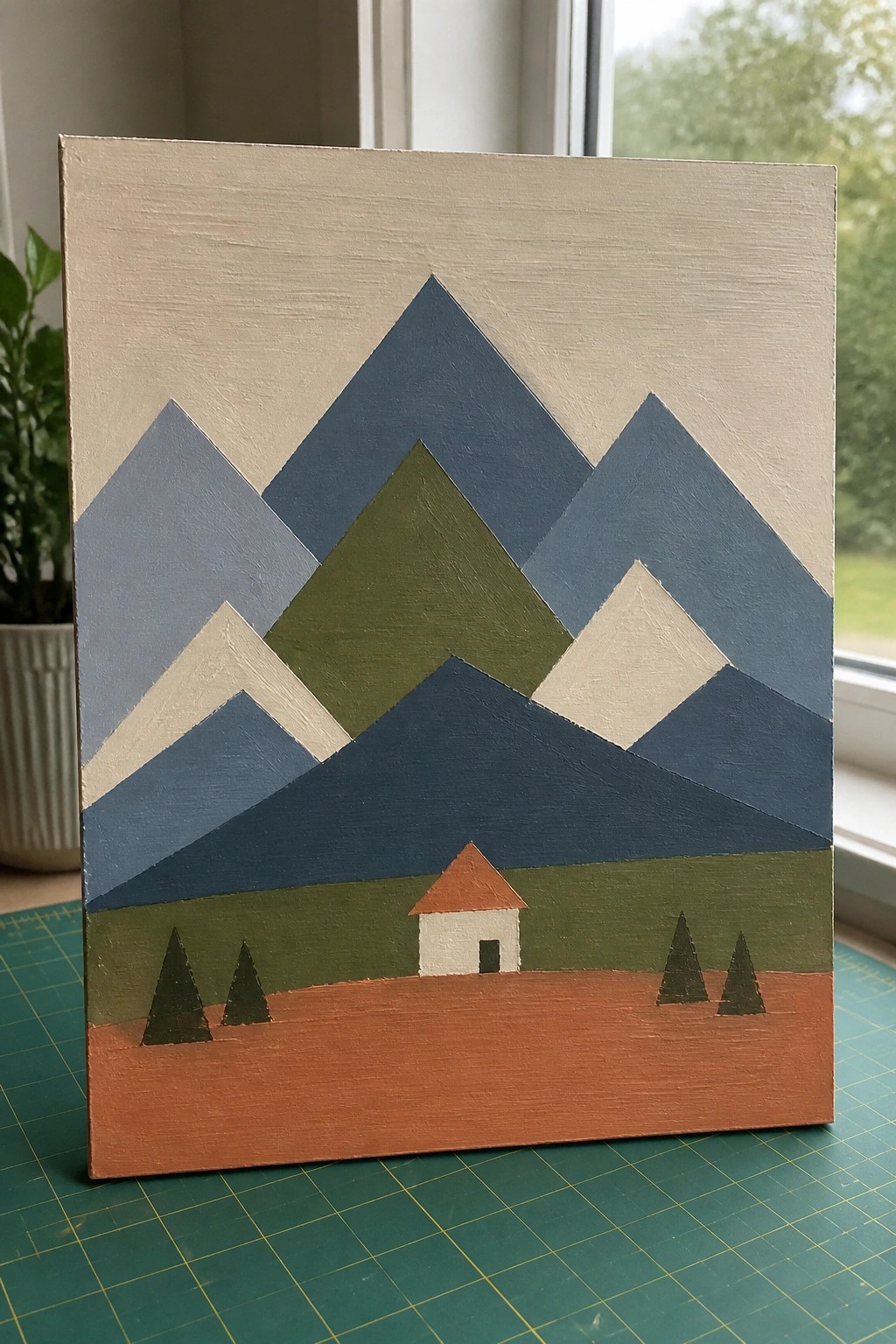
This acrylic painting idea uses stacked triangles and trapezoids to form a mountain range in varying shades of blue and green. A small house with a terracotta roof sits at the base along with a few simple triangular trees, all placed over a flat brown foreground. The flat color blocks and clean edges keep the focus on shape and composition rather than fine detail.
What makes this idea useful is how the strong outlines do most of the work, so you can build the scene quickly without blending. The limited color palette and repeating triangle shapes make it easy to adjust the mountain heights or swap in different roof colors for variety. For canvas decor or quick practice pieces, this layout stands out on Pinterest because the graphic style reads clearly even at small sizes. You could simplify it further by reducing the number of mountains or personalize it by changing the house size and tree placement.
Layered Mountains with Rainbow Arches and Rounded Foreground
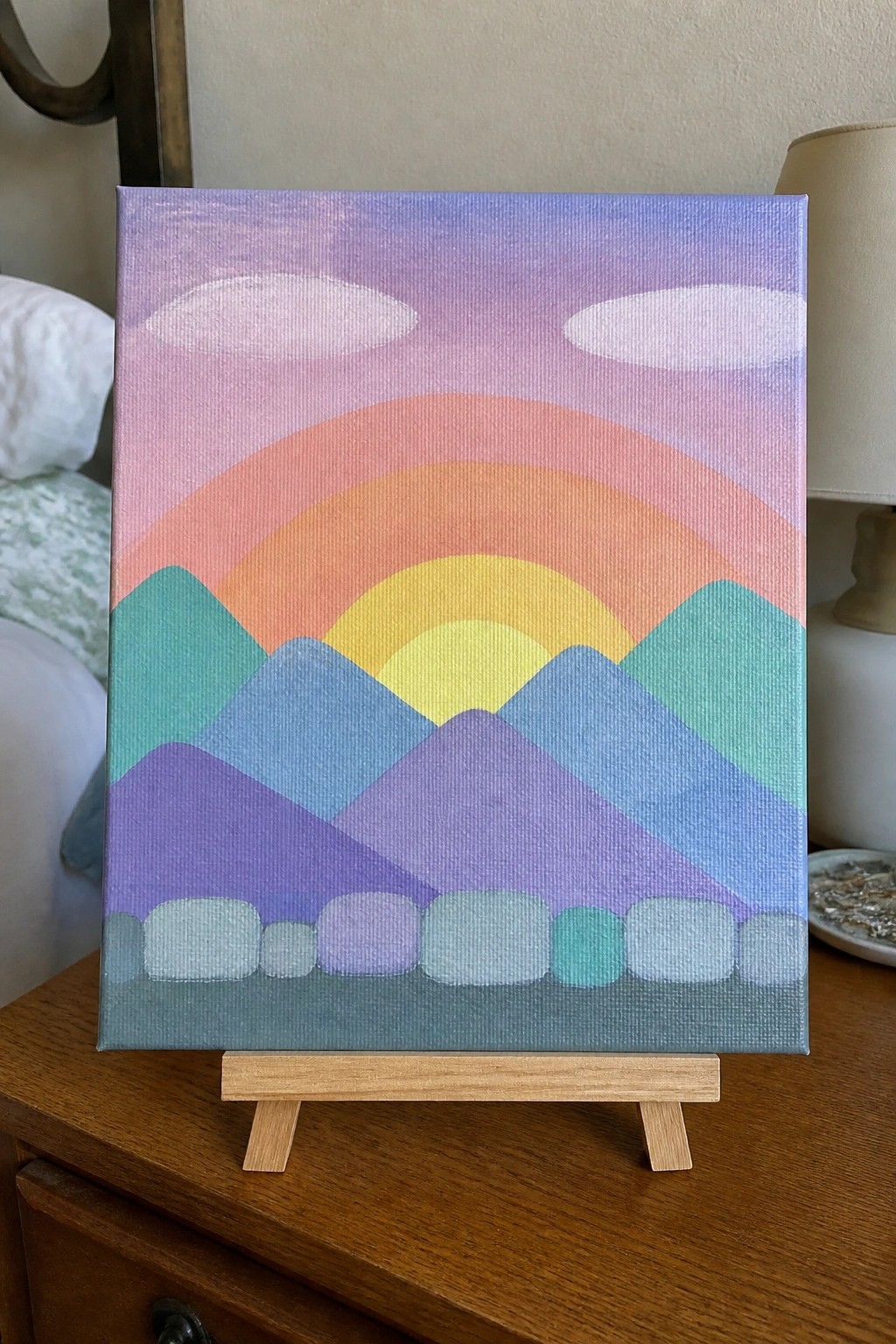
This acrylic painting idea uses overlapping triangular mountain shapes in teal, blue, and purple tones to create depth without complex blending. A series of curved bands in yellow, orange, and pink form a simplified rainbow that sits behind the mountains, while soft oval clouds sit in the upper gradient sky. The bottom row of rounded shapes adds a simple decorative edge that balances the strong curves above.
What makes this idea useful is the clear separation between the sky gradient and the flat mountain layers, which lets you paint one section at a time. The curved rainbow bands are easy to adapt by changing the number of colors or swapping them for a sunset palette. For canvas decor or quick practice pieces, this layout works well because the shapes stay bold and graphic even with basic brushwork. You could shrink the rainbow or repeat the rounded shapes in different sizes to make the design feel more personal.
Geometric Mountains with Concentric Sun

This acrylic painting idea uses three overlapping triangles in different shades to form a simple mountain range beneath a sun made of concentric circles. The design keeps everything flat and graphic, relying on color blocks and clean shapes rather than blending or fine detail. It works as a landscape approach that emphasizes strong silhouette contrast against a single background color.
What makes this idea useful is how the basic triangle forms let you focus on color mixing and edge control without complex drawing. The sun circles can be adjusted in number or width to change the overall balance, and the mountain colors are easy to swap for warmer or cooler tones. For canvas decor this layout stays readable from a distance, which helps it stand out when shared as a quick project idea.
Overlapping Triangular Mountains with Pine Tree Base

This acrylic painting idea uses three overlapping triangles for mountain peaks in graduated blues and grays, topped with white snow caps, and a row of smaller triangles for pine trees across the bottom. The landscape stays flat and graphic by relying on shape repetition and simple color blocks rather than detailed brushwork. It fits the basic shapes category because the whole scene is built from triangles and straight edges on a single canvas.
What makes this idea useful is how the overlapping peaks create depth without extra layers or blending. The cool color palette keeps the focus on value changes between the mountains and trees, which makes it straightforward to adapt by swapping in different shades or stretching the tree line higher. For canvas decor this layout works well because the clean shapes read clearly from a distance. You could simplify it further by dropping one mountain or personalize it by varying the tree sizes.
Patterned Triangles Forming a Mountain Landscape

This acrylic idea builds a mountain range from simple overlapping triangles, each filled with its own repeat pattern of zigzags or dots. A restricted palette of teal, rust, brown, and peach on a pale ground keeps the shapes clear and lets the patterns carry the interest. The approach works as decorative landscape wall art that stays graphic and flat rather than trying to show depth or realism.
What makes this idea useful is how the triangle layout lets you finish a full scene quickly while still varying each peak. You can swap the pattern types or shift the color order without changing the overall structure, which makes it easy to match different rooms or seasons. For canvas decor the flat style reproduces well in photos, so the same design translates straight to smaller pieces or prints.
Stacked Triangle Mountain with Flag
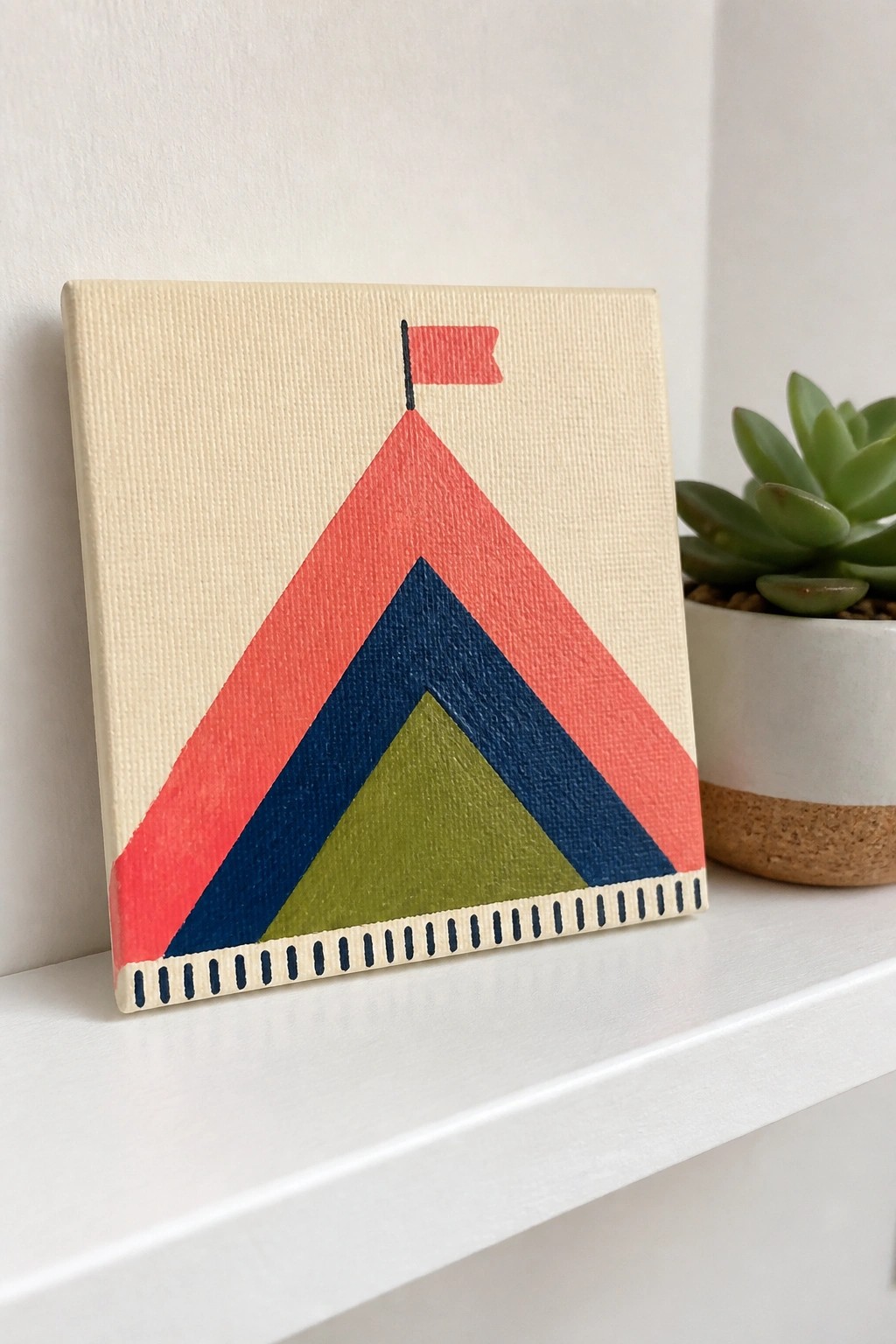
A mountain built from three overlapping triangles in bold coral, navy, and olive creates a clean geometric landscape on a plain background. The outer triangle sets the overall peak shape while the inner layers add depth through color contrast alone. A small flag at the top serves as the only added detail, keeping the focus on simple shapes rather than fine lines or blending.
What makes this idea useful is how the triangle layout removes the need for freehand drawing, so beginners can concentrate on even paint coverage and straight edges. The color blocks can be swapped for different seasons or moods without changing the structure, and the dashed base line can be skipped or replaced with a solid one. For canvas decor, this format works well because the high contrast makes the piece stand out even from a distance.
Geometric Mountains Using Flat Color Blocks

This acrylic painting idea builds a mountain landscape entirely from triangles and rectangles filled with solid blocks of green, olive, and muted gold. The main peaks sit at different heights with a light vertical path cutting through the center to separate the forms. Sharp edges and repeating horizontal bands keep the whole scene graphic and easy to construct with basic shapes.
What makes this idea useful is how the flat sections remove any need for blending or gradients right away. You can start with just a few large triangles for the peaks then fill them in row by row, changing the color mix slightly for variety. For canvas decor this layout adapts quickly if you want to enlarge the central path or shift the palette toward cooler tones for a different season.
Nighttime Mountain Scene with Moon and Lake

A night mountain landscape built from simple triangular peaks offers a straightforward acrylic idea that stays beginner-friendly. The large circular moon with visible swirl texture anchors the top half while a band of horizontal strokes suggests water and reflections at the bottom. Dark tree silhouettes along the mountain bases add a quick layer of contrast without requiring fine detail.
What makes this idea useful is how the strong value contrast between the moon and dark mountains does most of the visual work. You can easily adjust the number of peaks or change the water color to match a different season while keeping the same layout. For practice this subject works well because the basic shapes let you focus on brush control and blending rather than drawing accuracy. The same composition can be painted smaller on paper or scaled up for wall art without major changes.
Overlapping Triangles for Abstract Mountain Layers

This acrylic idea uses simple overlapping triangles to form a set of mountains in a limited palette of dusty rose, teal, and beige. A small circle sun sits in the upper left while three horizontal bands with scattered dots create a structured foreground. The flat shapes and clear color blocks make the composition read as a clean graphic landscape rather than a detailed scene.
What makes this idea useful is how the triangle layout lets you block in the main forms fast before adding the dot rows for interest. The same structure works with different color groups or fewer bands if you want to simplify it further. For wall art this style stands out on Pinterest because the bold shapes and even edges show up well in photos and translate easily to smaller canvases.
Faceted Triangular Mountains in Cool Tones

This acrylic idea builds a mountain range from overlapping triangles in different shades of blue, gray, and beige to create a faceted surface across each peak. A smooth gradient sky fills the upper half while rounded shapes anchor the base and break up the straight lines. The approach works as a landscape that stays graphic rather than realistic because the shapes stay simple and the color shifts happen within those fixed forms.
What makes this idea useful is that the repeating triangles let you practice value changes and color mixing without drawing complex outlines first. You can easily adjust the number of peaks or swap in warmer tones if you want a different mood. For canvas decor the limited palette and clean edges keep the result looking intentional even if your brushwork stays loose.
Frequently Asked Questions
1. What basic supplies do I need to begin these acrylic mountain paintings using simple shapes? Start with a small set of acrylic paints in colors like blue, white, green, brown, and gray. Grab a few flat and round brushes in different sizes, a canvas or heavy paper, a palette for mixing, water for cleaning brushes, and paper towels. These items keep things affordable and allow you to focus on shapes such as triangles for peaks and rectangles for bases without needing advanced tools.
2. How do I turn basic shapes into mountain scenes as a complete beginner? Begin by sketching light outlines of triangles and trapezoids on your canvas to form mountain outlines. Fill the largest shapes first with a base color, then add smaller overlapping shapes for hills or foreground elements. This method builds the landscape step by step and helps you see progress quickly while practicing color mixing for skies or snow caps.
3. What tips help with blending colors to create depth in these paintings? Apply a thin layer of lighter color at the top of a mountain shape and gradually mix in darker shades toward the bottom while the paint is still wet. Work in small sections and use a clean brush to soften edges between shapes. This creates a natural gradient that makes flat shapes look like three-dimensional peaks without requiring complex techniques.
4. How can I avoid common mistakes when layering shapes for mountains? Let each layer dry fully before adding the next shape on top to prevent colors from mixing unintentionally. Start with fewer shapes and build up slowly, and keep a reference photo nearby to check proportions. If a shape looks off, simply paint over it with the background color once dry and try again.
5. How do I adapt these 22 ideas for different canvas sizes or personal styles? Scale the shapes up or down to fit your surface while keeping the same simple structure, such as using bigger triangles on a large canvas. Experiment by changing the color palette to match a favorite season or adding one extra shape like a circle for the sun. This keeps the beginner approach intact while making each painting unique to you.

Hi, I’m Camille.
I’m a self-taught painter and creative blogger with a soft spot for acrylic painting, color play, and all the little art ideas that make everyday life feel more inspiring.
I started this space because I’ve always believed painting should feel joyful, approachable, and a little personal. Some of my favorite pieces come from simple ideas, messy palettes, and evenings where I just felt like making something pretty.
Most of what I share begins with acrylic painting, but I also love exploring other mediums when creativity pulls me in a new direction. My goal is to collect and share painting ideas that feel fun, beautiful, and actually doable, whether the mood is calm and minimal or bright and playful.
This is a space for inspiration, experimenting, and enjoying art without overcomplicating it.