

I started trying acrylic flower paintings a few months ago when I wanted something simple to hang in my living room.
These ideas focus on soft colors and basic shapes that even beginners can handle without getting frustrated.
I picked out 24 of them that turned out pretty well for wall art and didn’t take too much time to finish.
They helped me practice without needing fancy supplies or perfect technique.
Mixed Yellow and White Daisies on Mint Green

A straightforward floral painting idea that uses daisy-style flowers in both white and yellow, placed at different heights against a single mint green background. The stems vary in thickness and angle while a few simple leaves fill the lower spaces. This approach works because the two flower colors create natural contrast without requiring extra shading or detail work.
What makes this idea useful is how quickly it can be adjusted by swapping the yellow flowers for another pastel shade or changing the background to match a room. For canvas art, something like this works especially well because the light base lets the petals stand out with just one or two coats of paint. You could easily turn it into a smaller version by dropping one or two flowers or add extra leaves if the canvas feels too empty. The balanced spacing also helps it photograph cleanly for sharing.
Oversized Soft Pink Peony on Muted Background

A single large peony painted in blended shades of pink creates a simple floral acrylic idea that fills most of the canvas. The petals use soft color shifts and visible brush marks to suggest form while the muted gray background keeps the focus on the bloom itself. This approach works as a straightforward wall art piece because the limited color range and centered layout avoid extra elements that can complicate a beginner canvas.
What makes this idea useful is how the large bloom size lets you practice petal blending without needing to plan a full scene. You can easily change the background to a warmer tone or shift the pinks toward peach or rose depending on the space where the finished piece will hang. For canvas decor, the same layout adapts well if you want to try a smaller version or repeat the flower in a different color on a second canvas.
Flat Color Tulips with Crisp Outlines

This acrylic idea uses three tulips painted in solid blocks of pink and cream with strong blue outlines against a matching blue background. The stems and leaves stay simple with minimal shading so the shapes stay readable from a distance. It works as a decorative floral piece that depends on color contrast and clean edges rather than blending or texture.
What makes this idea useful is how the flat shapes let you finish a small canvas quickly without worrying about smooth gradients. You can easily change the tulip colors or swap the blue background for another solid tone to match different rooms. The same layout scales well to larger canvases or repeats across a set of three small ones for wall art.
Wildflowers in a Mason Jar Still Life
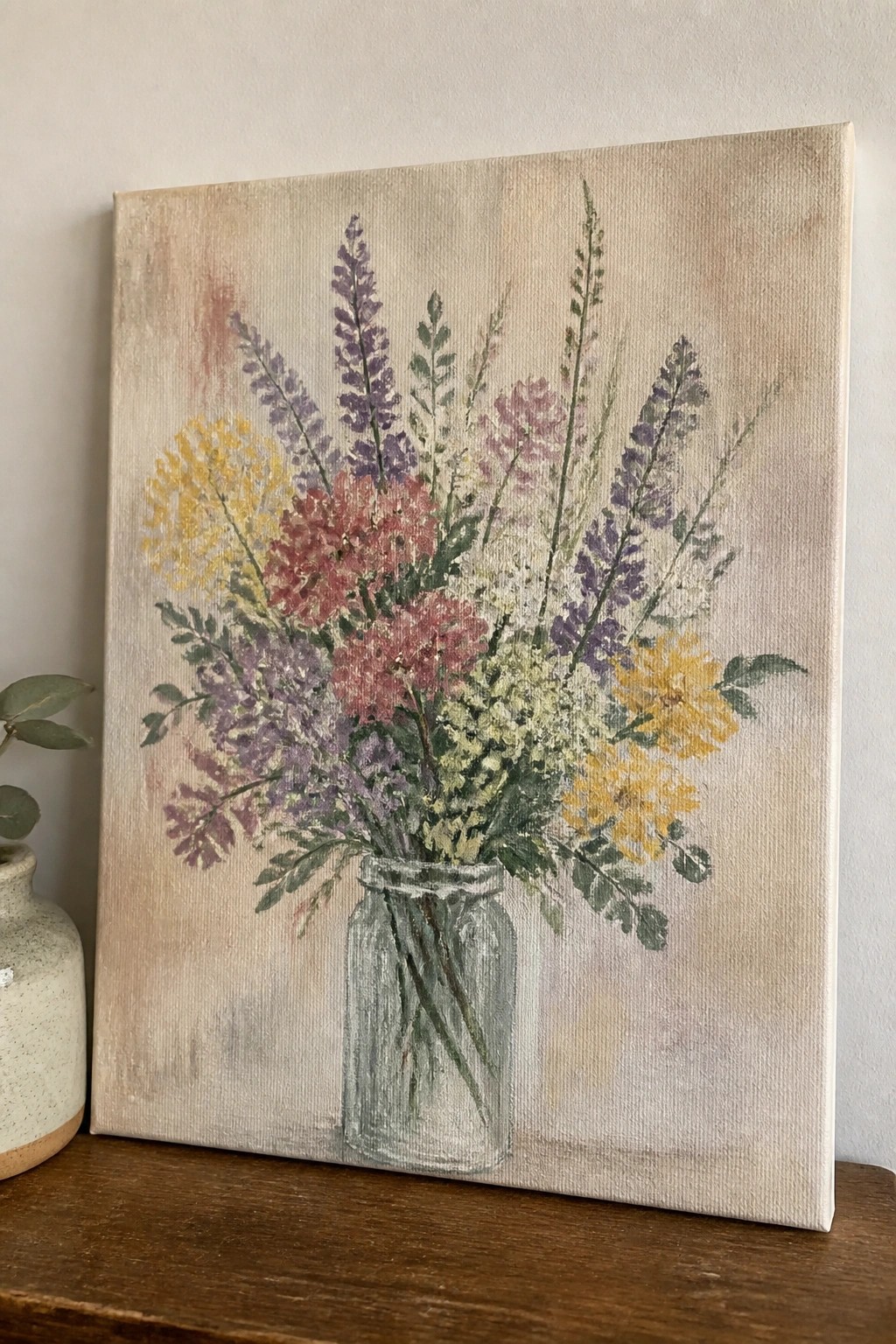
A loose floral still life idea centers on a mixed bouquet of wildflowers placed in a clear mason jar. The approach relies on soft color blocks and varied brushstrokes to suggest different flower shapes without tight outlines. A pale neutral background keeps attention on the bouquet while the jar shape adds a simple vertical anchor.
What makes this idea useful is the way the muted background lets bright flower colors stand out even with basic layering. You can easily swap bloom colors or reduce the number of flower types for faster practice sessions. For wall art, the tall bouquet shape fits standard canvas sizes and works well when you want a light, unfussy result that still reads as a full arrangement.
Soft Pastel Flower Row on a Light Background

A horizontal row of five simple flowers makes a straightforward floral acrylic idea. The flowers alternate between soft pink and white with gold centers, while the stems and leaves use a few overlapping green shades for light variation. The pale pink background keeps the composition balanced without adding extra elements or texture.
What makes this idea useful is how the even spacing and limited color range let you finish it quickly on any canvas size. You can easily change the flower colors to match a room or swap in different leaf shapes if you want more practice with brushwork. For wall art, the clean layout stands out on Pinterest because it reads clearly even in a small thumbnail.
Floral Wreath with Central Heart

A floral wreath idea centers on building a loose circle of mixed flowers around a single heart shape in the middle. The arrangement uses different flower sizes and colors to create a balanced ring that leaves the heart as the clear focal point. This type of decorative floral painting works because the scattered leaves and small filler dots help connect the blooms without crowding the open center space.
What makes this idea useful is how the wreath can be painted section by section, starting with the larger flowers and adding smaller ones around them. The color palette stays soft enough to swap shades easily for different seasons or room styles. For canvas decor, the heart gives the layout a built-in center that makes the whole piece feel complete even with simple brushwork. You could shrink the design onto a smaller board or stretch the wreath wider to fit a longer canvas.
Vertical Stack of Overlapping Coral Poppies

This acrylic painting idea uses a tall vertical format to show three poppies stacked along a single stem line. The blooms are painted in soft coral and peach layers over a dusty rose background, with dark centers and stems providing contrast. The idea fits into floral wall art because the large shapes and limited color range keep the focus on the flowers without extra elements.
What makes this idea useful is the way the overlapping petals build the design quickly on a single canvas. The solid background color lets the flowers stand out, so you can swap the rose tone for another muted shade to match different rooms. For practice, this kind of subject works well because the shapes stay readable even if the brushwork stays loose. You could adapt it by painting just the top two flowers on a smaller canvas or adding one more bloom at the bottom for a longer piece.
Loose Lavender Sprigs in Soft Layers

Lavender flowers painted with light purple and blue tones on thin stems make a simple floral subject that stays airy and uncluttered. The idea works by letting the stems spread naturally across the canvas while using a pale background to keep the focus on the blooms. This approach fits soft floral wall art that depends on gentle color placement instead of sharp outlines or heavy texture.
What makes this idea useful is the vertical layout that fills a canvas without needing lots of extra elements. You can shift the purple shades toward blue or add a few more stems on one side to change the balance. For practice the loose stems and leaves let you work on light brush control and soft edges while still producing a finished piece that looks good as wall art or on a small canvas.
Sunflowers in a Jar on a Striped Table

A still life acrylic idea centered on a cluster of sunflowers in a simple white jar works well because the bright yellow petals stand out sharply against the solid blue background. The striped table adds a graphic base that balances the round shapes of the flowers and jar without adding extra objects. This floral still life keeps the focus on the blooms through clear edges and a limited color set that translates easily to acrylic layers.
What makes this idea useful is how the stripes break up the foreground and give the composition structure while staying simple to paint. You can swap the blue background for another color or adjust the stripe pattern to fit different decor. For practice, this layout lets you block in large areas first and build the flower centers last. The high contrast between the yellow flowers and cooler tones helps the finished piece pop on a wall or in a Pinterest feed.
Hanging Floral Branches for Vertical Canvases

This acrylic idea uses a vertical layout of draped flower stems to fill a tall narrow canvas. Soft pink and white blooms are scattered along thin branches with simple green leaves, all set against a plain light background. The loose arrangement and limited color range keep the focus on the downward flow rather than fine detail.
What makes this idea useful is how the vertical format suits narrow wall spaces like hallways or beside windows. You can easily adjust the number of flowers or change the pink tones to match your room colors. For practice, the simple leaf shapes and scattered blooms let you work on basic brush control without needing perfect symmetry. The same layout can be stretched or shortened depending on your canvas size.
Mini Canvases with Single Flowers on Solid Color Blocks

Painting one flower on each small canvas with a bright solid background gives a simple, graphic result that works as quick wall art. The flowers use basic petal shapes, a clear center, and just a couple of leaves so the color contrast carries the design. This style falls into decorative floral painting where flat color areas and defined edges keep the composition straightforward.
The small size lets you finish a set of three or more in one sitting while testing different background and flower color combinations. You can swap the center details or leaf placement to make each one slightly different without adding extra steps. For practice, this layout keeps the focus on basic flower construction and color pairing, which makes it simple to adapt into larger canvases or repeat for matching pieces.
Soft Pink Rose on Round Canvas

A centered rose built from overlapping petals in graduated pinks and creams creates a simple floral focal point on a round canvas. The idea relies on gradual color shifts from deep center tones to lighter outer edges to give the bloom shape and depth. This approach fits the decorative floral category, where the round format keeps attention on the flower without needing extra background elements.
What makes this idea useful is how the blended transitions let you build the rose layer by layer without worrying about crisp edges. You can change the pink range to any color family or scale the same layout down for smaller canvases. The tight composition works especially well for practice sessions or quick wall pieces that read clearly from a distance.
Coral Bouquet Tied with a Ribbon

A clustered bouquet of coral, cream, and white flowers tied at the base forms a clean floral acrylic idea that works as wall art. The solid muted blue background lets the rounded petal shapes and darker leaf accents stand out without extra background work. The ribbon adds a single strong line that holds the whole arrangement together and keeps the eye moving from the blooms down to the stems.
What makes this idea useful is how the ribbon simplifies the lower half and removes the need to paint individual stems all the way down. You can easily change the coral tones to any accent color or swap the background for a warmer gray to fit different rooms. For canvas decor this layout stays balanced even if you add or remove a few smaller flowers on the sides. The color contrast also makes the finished piece photograph well for Pinterest without needing perfect detail on every petal.
Patterned Grid of Soft Floral Motifs

A repeating grid of stylized flowers painted in soft pink and coral tones makes an effective decorative acrylic idea for wall art. Each flower uses a simple rounded shape with a dotted center and paired teal leaves, arranged evenly across a cream background with small yellow accents filling the spaces. The flat color blocks and consistent layout turn the canvas into a clean, graphic floral pattern that reads well from a distance.
What makes this idea useful is how the repeat structure lets you paint the same flower shape several times for practice while building a finished piece. You can easily change the palette to match a room or swap the background color without redesigning the whole layout. For canvas decor, the even spacing and limited details keep the focus on the overall pattern, which photographs clearly for sharing online. This approach works especially well if you want something that feels organized but still handmade.
Close-Up White Lily with Spotted Petals
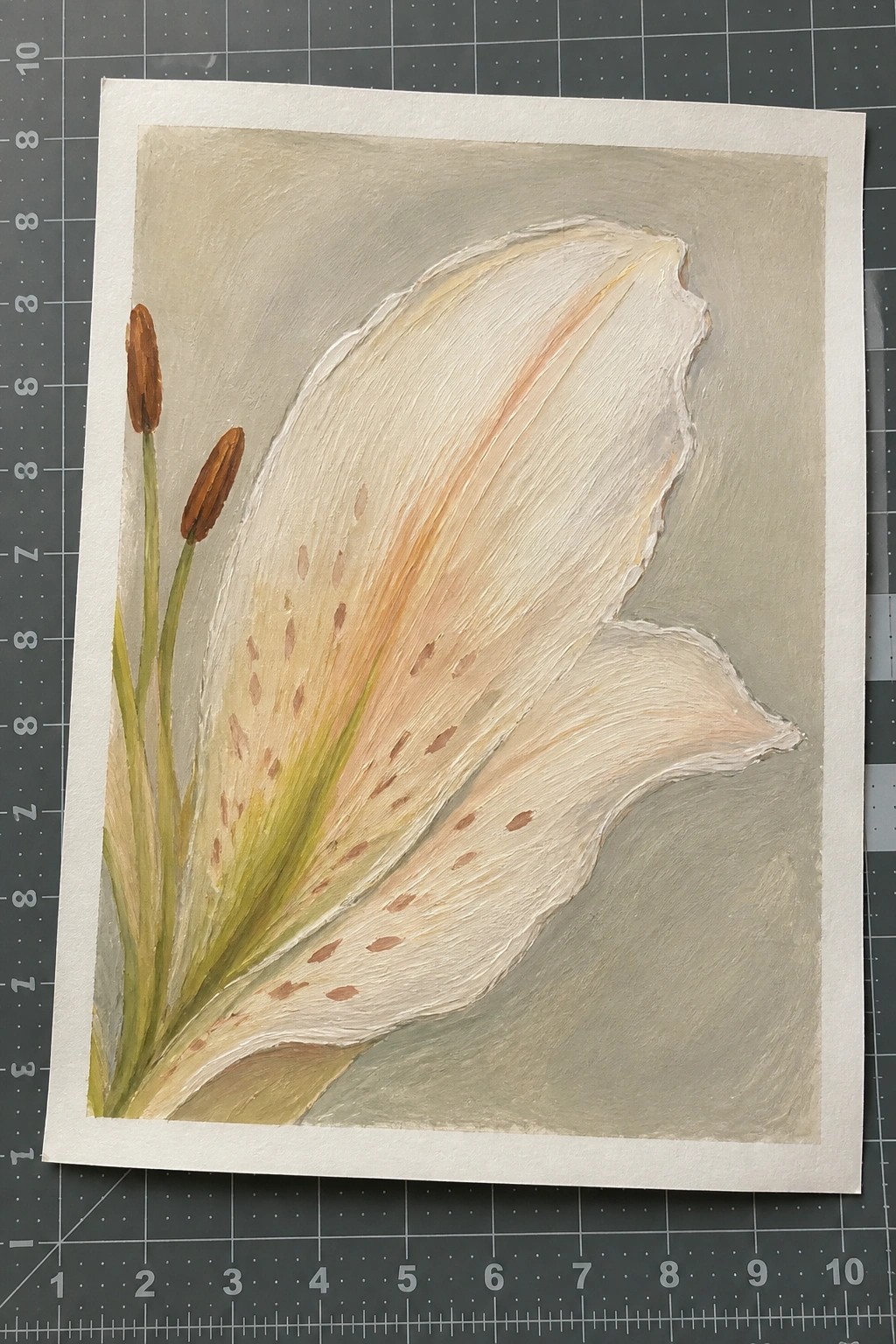
A single large white lily takes up most of the space in this floral acrylic idea, shown from the side with visible brushstrokes that follow the petal curves. Two narrow buds on thin green stems sit to the left, creating a simple vertical balance against the soft gray-green background. The brown speckles on the petals and the gentle shift from cream to peach tones give the flower its main interest without requiring tight detail everywhere.
What makes this idea useful is the way the large bloom fills the frame while the buds keep the composition from feeling empty. You can adapt it by swapping the background for a warmer tone or skipping some of the spots if you want a faster version on canvas. For wall art the tall layout works on a standard 8×10 or 9×12 and shows up well on Pinterest because the light petals stand out against the darker base.
Wildflowers Behind a Picket Fence
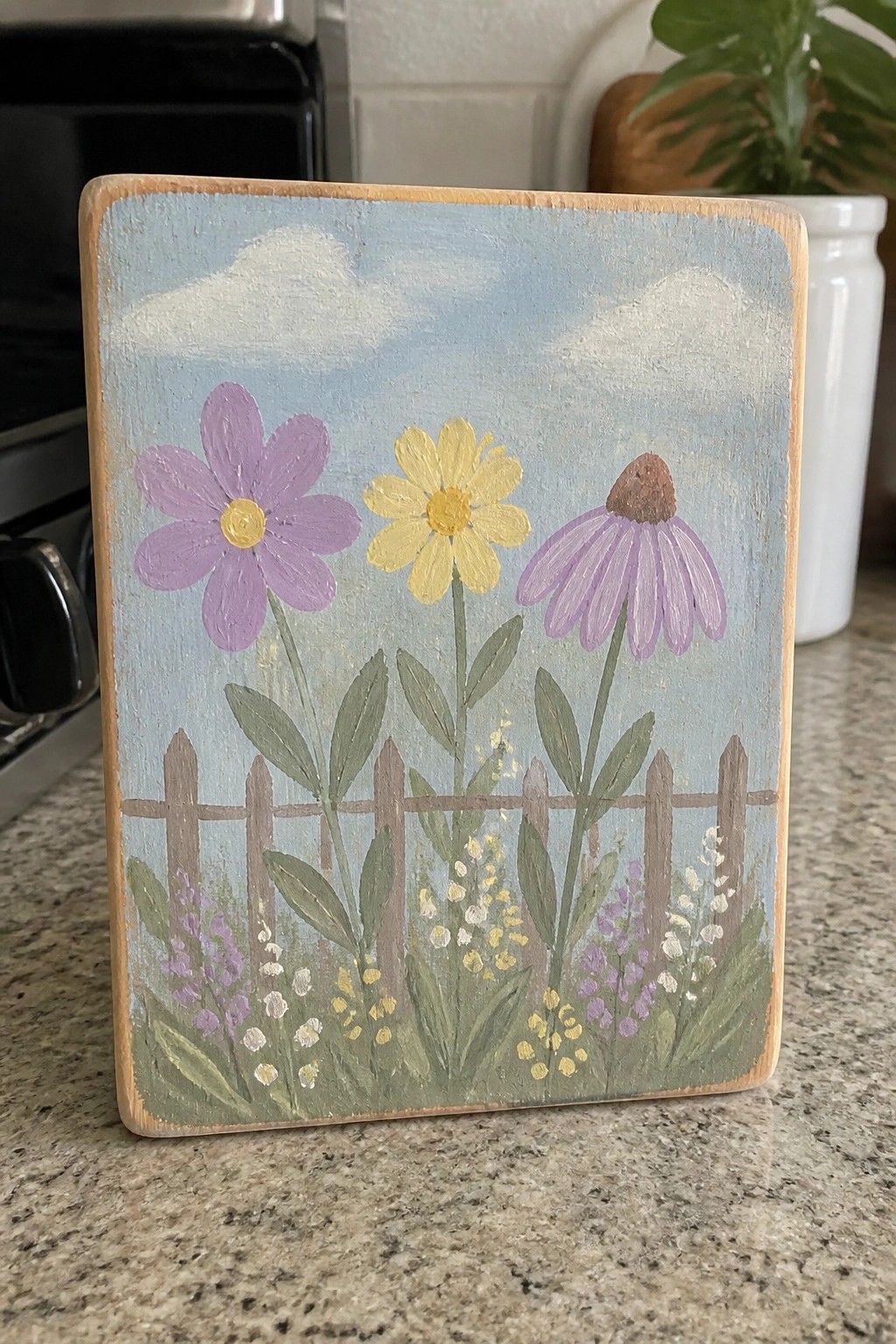
A simple garden scene with three flowers rising above a picket fence makes an approachable acrylic idea for wall art. The fence gives the composition a built-in base layer while the flowers create height and color contrast against a light sky. This decorative floral approach works because the elements stay grouped and contained on a small surface without needing intricate backgrounds.
What makes this idea useful is how the fence handles the lower section so you can spend more time on the flowers and stems. You could change the bloom colors or add extra small flowers along the base to match different rooms or seasons. For practice or quick gifts, the layout stays easy to adapt on canvas or wood because the main shapes stay distinct and the sky keeps the focus on the foreground. The fence also gives the finished piece a ready-made frame that photographs cleanly for Pinterest.
Oversized Earth Tone Floral on a Single Canvas

A bold stylized flower built from overlapping curved petals in terracotta, mustard, and cream creates the main subject against a plain beige ground. The idea relies on simple flat shapes and a few green leaf accents rather than fine detail or blending. This approach lands in the decorative floral category where strong color contrast and clean edges carry the composition.
The flat shapes keep the painting approachable on a large canvas since you only need to block in colors without worrying about texture or shading. You can easily change the palette to cooler greens and blues or reduce the size of the flower to fit a smaller frame. An idea like this works well for quick wall art because the graphic layout stays readable even when the canvas is viewed from across a room.
Mason Jar Bouquet of Mixed Wildflowers

A still life of mixed wildflowers tucked into a clear mason jar gives a straightforward floral acrylic idea that works on a neutral canvas. The loose grouping of pink, yellow, purple, and white blooms with scattered green leaves creates natural height and balance, while the jar sits low to anchor the whole arrangement. This approach fits the decorative wall art category because the simple background keeps attention on the color mix and the jar shape without extra elements.
What makes this idea useful is how the neutral ground lets the flower colors handle most of the visual work, so you can build the bouquet in stages. You could change the color mix to match different seasons or reduce the number of blooms for a quicker practice piece on a smaller canvas. For wall art, the jar layout stays easy to adapt to other canvas sizes and gives a clear focal point that still feels light.
Pastel Floral Wreath with Centered Word

A loose circle of soft pink, peach, and white flowers with green leaves creates a simple wreath on a gray background, leaving the word breathe painted in dark cursive at the center. This acrylic painting idea uses basic flower shapes and light layering to build a balanced decorative piece without needing exact placement or heavy detail. The muted palette against the solid background keeps the focus on the wreath shape and the lettering.
What makes this idea useful is how the neutral background makes the soft flower colors pop while the central word gives the composition an instant focal point. You can change the word to something shorter or swap the flower tones to match different rooms. For canvas art, this layout works well because the flowers stay loose and can be built up quickly in a few layers without tight brush control.
Simplified Sunflower with Gold Center Details

A sunflower built from wide yellow petals around a dark center creates a strong focal point for a small canvas. The idea uses flat color blocks and a few scattered gold dots to add detail without extra layers or blending. This keeps the painting in the decorative floral category and makes it easy to read from a distance as wall art.
What makes this idea useful is how the basic petal shapes reduce the need for precise drawing before painting. You can change the background shade or repeat the same flower on a larger scale without much adjustment. For practice, this kind of subject lets you focus on clean edges and color placement rather than complex shading.
Horizontal Wildflower Meadow on a Narrow Canvas
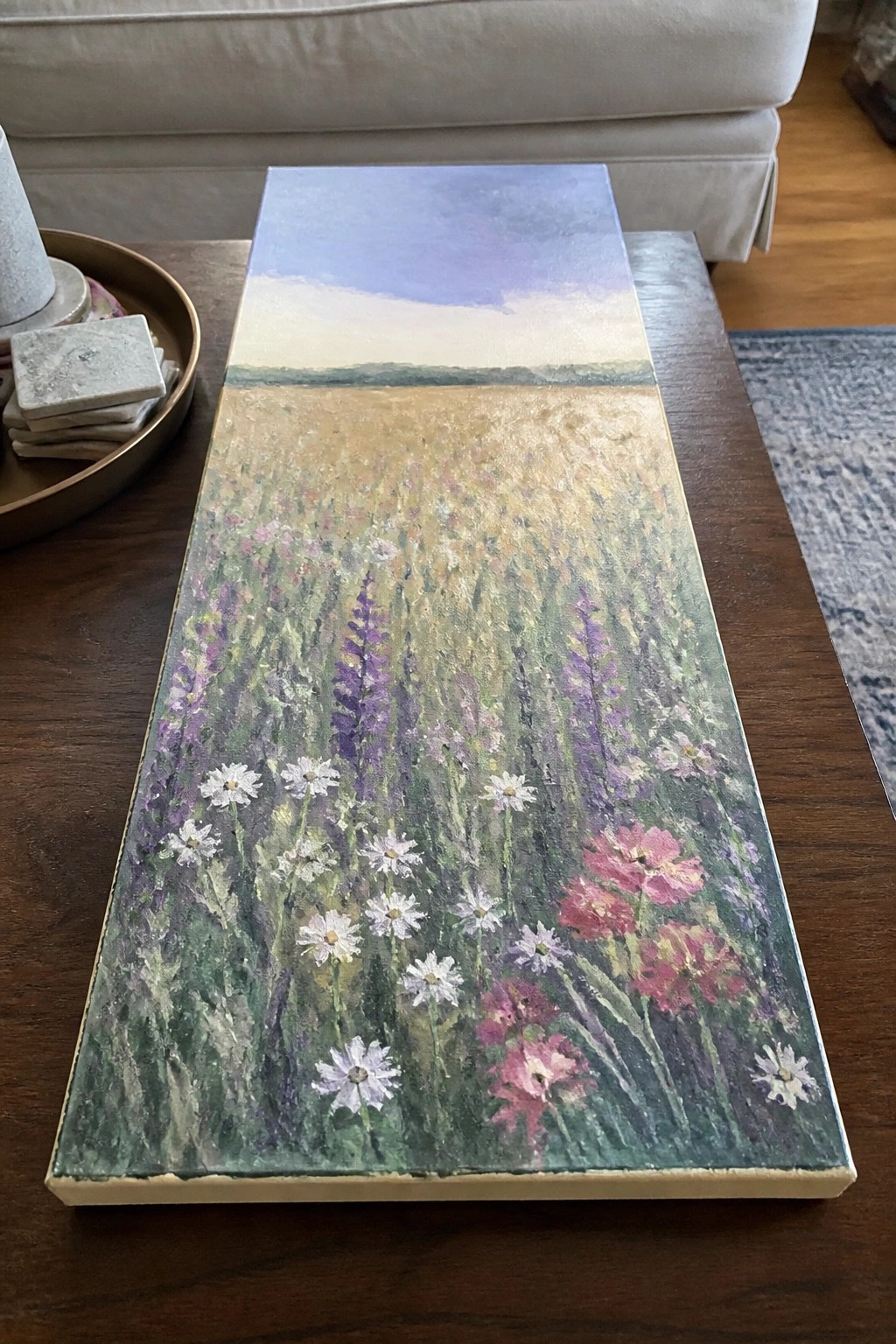
A wildflower meadow idea works well when painted across a long horizontal canvas, with clusters of white daisies, purple spikes, and pink blooms rising from blended green and tan grass under a soft blue sky. This acrylic approach mixes floral subjects with a simple landscape format so the eye moves across the full width without needing tight details or strong perspective. The loose layering of taller flowers over shorter ones creates natural depth while keeping the overall look soft and approachable.
What makes this idea useful is the way the mixed flower heights let you practice building layers without a rigid plan. You can adapt it by narrowing the color range to just two or three bloom shades or by cropping the composition to fit a standard square canvas. For wall art above a table or bench, the wide shape fills space nicely, and the varied flower placement helps the finished piece catch attention in a feed without extra texture or highlights.
Bold Coral Bloom with Smaller Yellow Accents

This acrylic painting idea uses a single vertical stem to hold one large coral flower at the top and two smaller yellow blooms lower down, all set against an empty background. The rounded petal shapes and clear color blocks keep the layout simple while the size difference between the flowers creates natural balance. It works as a decorative floral piece because the limited elements and neutral base let the colors stand out without extra detail.
What makes this idea useful is how the main bloom carries most of the visual weight, so you only need to paint two smaller flowers to finish the composition. You can change the coral to any strong shade or swap the yellow for another accent color to match different rooms. For canvas decor, the plain background makes it easy to try on different sizes or add a second stem later if you want more coverage. The graphic style also photographs cleanly for Pinterest without needing perfect brushwork.
Soft Pastel Floral Border Frame

A floral border painted around all four edges leaves the center open and creates a ready-made frame for canvas or paper. Soft pinks, mint greens, and pale yellows keep the flowers and leaves light while the repeated leaf clusters and small blooms build a balanced edge without crowding the space. This decorative floral idea works because the simple shapes and muted palette let the border sit nicely on its own or around text, photos, or a second layer of paint later.
What makes this idea useful is how quickly the border can be scaled up or down to match different canvas sizes. The limited color range and loose flower shapes make it easy to paint one side at a time and still keep the layout consistent. You could swap the bloom types or extend the border inward slightly if you want more coverage while keeping the same soft look. For canvas art, this layout stands out on Pinterest because the open center gives it a clean, adaptable feel that works for gifts or seasonal pieces.
Pastel Heart of Layered Acrylic Flowers

A heart-shaped cluster of acrylic flowers in soft pink, peach, and white tones forms the main subject here. Each flower is built with thick, visible paint layers that create dimension, while small green leaves are scattered around the edges to define the shape. The neutral background keeps the focus on the overall heart form rather than on individual details, placing this idea in the textured floral wall art category.
What makes this idea useful is how the heart outline serves as a built-in guide for placing flowers, so you do not need precise spacing. The limited color palette helps the piece stay cohesive even if flower sizes vary, and you can easily scale it down to a smaller canvas or adjust the shades to match existing decor. For practice, this kind of subject works well because the background can hide minor placement mistakes while the raised paint adds interest without requiring advanced blending.
Frequently Asked Questions
What supplies do beginners need to start painting soft acrylic flowers for wall art? You will need a set of acrylic paints in soft pastel shades like blush pink, lavender, mint green, and cream. Grab a few brushes in different sizes including a flat brush for backgrounds and round ones for petals. Prepare stretched canvases or wood panels, a palette for mixing, water cups, paper towels, and optional acrylic medium to help with blending. Start with inexpensive supplies to practice without pressure.
How can I achieve those soft blended looks in the flower petals? Load your brush with two similar colors and apply them side by side on wet canvas so they gently merge. Add a touch of water or glazing medium to thin the paint and create smooth transitions. Work in thin layers and let each one dry slightly before adding the next to keep edges soft. Avoid heavy pressure with the brush to prevent harsh lines.
Which painting ideas from the list work best if I have never painted before? Choose simple single bloom designs such as loose daisies or cherry blossoms that use only three or four colors. These focus on basic shapes and light washes rather than many details. Once comfortable, move to ideas with repeated small flowers like lavender sprigs that build confidence through repetition.
How do I prepare and finish the paintings so they look ready to hang as wall art? Prime your canvas with white gesso for even color and better paint adhesion. After the painting dries fully, apply a thin layer of matte or satin varnish to protect the surface and give a professional finish. Choose canvas sizes like 8 by 10 or 11 by 14 inches that fit standard frames for easy display in living rooms or bedrooms.
What should I do if colors turn out too bright or muddy during the process? Tone down bright colors by mixing in a little white or complementary soft shade on your palette before applying. If areas look muddy, let them dry then paint over with a fresh light layer of the original soft hue. Keep a reference photo of muted tones nearby and test mixes on scrap paper first to maintain the gentle overall feel.

Hi, I’m Camille.
I’m a self-taught painter and creative blogger with a soft spot for acrylic painting, color play, and all the little art ideas that make everyday life feel more inspiring.
I started this space because I’ve always believed painting should feel joyful, approachable, and a little personal. Some of my favorite pieces come from simple ideas, messy palettes, and evenings where I just felt like making something pretty.
Most of what I share begins with acrylic painting, but I also love exploring other mediums when creativity pulls me in a new direction. My goal is to collect and share painting ideas that feel fun, beautiful, and actually doable, whether the mood is calm and minimal or bright and playful.
This is a space for inspiration, experimenting, and enjoying art without overcomplicating it.