

I have tried painting landscapes with acrylics for some time now.
A few simple scenes turned out better than I thought they would.
I gathered twenty ideas that stay pretty basic but still look decent when finished.
These are the ones I go back to when I want to paint without overthinking it.
You might find something here that works for your own projects.
Winding Path Through Rolling Hills

A landscape built from stacked curved hills in different greens and one bright yellow section gives the painting strong horizontal flow. The light path that curves down the middle breaks up the color blocks and leads the eye without needing any small details. This type of acrylic idea sits in the simple landscape category where big shapes and clear color changes handle the composition.
What makes this idea useful is how the path can be redrawn in any gentle curve to fit the canvas size. The flat areas of color are easy to block in first then adjust the edges afterward. For practice this layout works well because the sky and path keep the focus high while the hills stay simple. The same color scheme can be swapped for fall tones or muted greens if you want a different season without changing the structure.
Lavender Field Rows at Sunset

A lavender field painted with rows that narrow toward distant mountains under a sunset sky is a straightforward landscape idea for acrylic. The repeating rows create depth through simple perspective while the sky uses broad color bands to set the scene. This approach sits in the landscape category and relies on shape repetition and a clear vanishing point to hold the composition together.
What makes this idea useful is how the rows can be blocked in with basic lines before adding color, which keeps the layout easy to follow on canvas. The sky’s warm-to-cool shift works well in acrylic because you can build it in thin layers without much blending. For wall art the same layout can be simplified by reducing the number of flower clusters or swapped to a different flower color if you want a seasonal version.
Mini Canvas Sunset Seascape

A sunset seascape idea like this uses a simple horizontal layout with a centered sun to create clear separation between sky and water. The warm gradient in the upper half transitions into cooler teal tones below, while a few light strokes suggest waves and a small section of sand anchors the bottom left corner. This landscape approach keeps the composition balanced through strong color blocks rather than fine detail.
What makes this idea useful is how the limited elements fit well on small canvases without needing much blending time. You can adjust the wave lines or shift the sand placement to match different canvas sizes while keeping the same color split. For practice, this kind of subject works especially well for testing quick gradients and horizon placement before trying larger scenes. The compact format also makes it easy to produce multiple versions with minor color changes for wall sets or gifts.
Twilight Mountain Lake Reflection

A mountain lake landscape at twilight uses the water’s surface as a mirror to repeat the sky colors and distant peaks, creating a strong sense of depth with simple horizontal brushwork. Dark tree and mountain silhouettes frame the scene and keep the focus on the lighter band of sky near the horizon. This landscape idea fits the category of reflective water scenes, where the composition relies on contrast between the dark land masses and the soft sky gradient rather than fine detail.
The bold dark shapes against the lighter sky do a lot of the work here, so you can block in the main areas quickly with acrylics and then add the water reflections last. This layout works especially well for canvas art because the horizontal bands of color make it easy to adjust the sky tones or move the tree line without redrawing the whole piece. For practice, try varying the amount of light on the water to see how it changes the mood while keeping the same mountain shapes.
Autumn Path Through Rolling Hills

A seasonal landscape idea built around a winding path that leads the eye through layered hills and scattered autumn trees works well for acrylic because the composition relies on simple color blocks and directional lines rather than fine detail. The path acts as a strong leading element while the trees in varying sizes and warm tones create depth without complex blending. This approach fits the easy landscape category, using broad brushwork for the sky, ground, and foliage masses.
What makes this idea useful is the limited palette of earth tones and fall colors that keeps mixing straightforward on the palette. You can adapt it by reducing the number of trees or adjusting the path curve to fit a taller canvas. For practice or quick wall art, the layout stays approachable since the main shapes are easy to block in first and refine later. The same idea translates easily to other seasons by swapping the foliage colors.
Coastal Cliffs with Distant Sailboat

A coastal cliff landscape makes a strong acrylic idea because it relies on big shapes and clear color blocks rather than tiny details. The cliffs sit on the left side and angle down toward the water, giving the eye a path that leads straight out to the open sea and the small sailboat on the horizon. The contrast between the pale rock faces and the deeper teal water does most of the visual work.
What makes this idea useful is how the simple layout lets you finish the main forms fast and then add only a few wave lines for movement. You can easily change the water color or sky tone to match a photo you already have. For canvas decor, the wide horizontal format works well above furniture, and the single small boat keeps the scene from feeling empty without adding extra work.
Golden Hour Wetland with Foreground Reeds

A landscape acrylic painting idea like this centers on a sunset scene where tall reeds frame a body of water that reflects the sky. The composition works through simple horizontal layers of sky, distant hills, and water, with the reeds providing vertical contrast and depth. Warm yellow and orange tones in the sky and reflection stand out against the darker greens and browns of the vegetation and hills.
What makes this idea useful is how the broad color bands and reflections let you practice blending without needing precise shapes. You can adapt it by changing the reed placement or shifting the sky colors to match a different season or location. For canvas decor, the strong horizon line and foreground detail keep the painting balanced and easy to read from a distance, which helps it perform well as a Pinterest pin.
Layered Blue Hills Landscape with a Lone Tree

This acrylic painting idea centers on a simple landscape built from overlapping hills in graduated blue tones and a single bare tree placed off to one side. The composition relies on soft horizontal layers that recede into the distance, with the tree acting as a clear focal point against the lighter sky. It belongs to the minimalist landscape category, where limited colors and clean shapes handle the depth instead of fine detail.
What makes this idea useful is the easy layering process that lets you build the hills with thin acrylic washes before adding the darker foreground. The strong value contrast between the tree and background does most of the work, so you can finish the piece quickly without needing advanced brush control. You could swap the blues for earth tones or greens to match a different season, or reduce the number of hills if you want a faster practice version. For canvas decor, this layout works well because the horizontal bands and single tree keep the design balanced and easy to read from a distance.
Curving Dirt Road Through Fields to a Distant House

A landscape idea like this uses a winding dirt road as the main path that leads the eye from the foreground straight back to a simple building on the horizon. The sky fills the top portion with broad color shifts from warm orange to cooler blue tones, while the fields on either side stay loose with blocks of green and gold. This type of acrylic painting works as a basic landscape that depends on the road’s curve and the sky’s contrast to create depth without needing tight detail work.
What makes this idea useful is how the main shapes stay large and forgiving, so you can focus on blending the sky and keeping the road light against the darker edges. You could swap the building for a barn or change the field colors to match a different season without changing the overall layout. For canvas practice, this kind of subject stands out on Pinterest because the strong path creates instant visual interest even when painted quickly with basic brushes.
Sunset Beach with Silhouetted Palm Trees

A sunset beach landscape works well as an acrylic idea by placing a row of dark palm silhouettes against a simple gradient sky that shifts from orange to pink. The composition stays effective through strong horizontal layers of sky, water, and sand, plus the bright sun reflection that pulls the eye across the canvas. This fits the landscape category and relies on clear color blocks rather than fine detail.
What makes this idea useful is the basic shape blocking for the hill and trees, which lets you finish the main elements fast before adding the water lines. The color palette helps this stand out on a canvas because the warm sky tones pop against the cooler blues and the dark palms. For practice, this kind of subject adapts easily by changing the number of trees or swapping the sand color to match a different beach you have in mind.
Layered Desert Landscape on Wood Block

A minimalist desert landscape works well as an acrylic idea because it relies on flat color blocks and simple overlapping shapes to create depth without needing fine detail. The main elements are a series of warm-toned dunes stacked against a light sky, plus a small sun and single cactus silhouette placed low for balance. This approach fits the landscape category and keeps the composition clean so the eye moves easily across the horizontal bands of color.
What makes this idea useful is the limited number of shapes, which lets you finish it quickly on a small surface like a wood block or canvas scrap. The color palette can be swapped for other warm or cool tones while keeping the same stacked layout, making it easy to personalize or repeat for matching pieces. For practice, this kind of subject helps you focus on clean edges and basic layering rather than blending or texture work.
Winding River with Weeping Willows

A landscape acrylic painting built around a curving river works well because the water creates a strong leading line that moves the eye from the foreground into the distant hills. The weeping willows on both banks add vertical interest and frame the scene without needing complex details. This approach fits the landscape category and relies on clear color blocks, with the teal water contrasting against the greens and yellow fields to keep the composition balanced.
What makes this idea useful is the simple layout that lets you focus on basic shapes and edges instead of intricate textures. You can easily adapt the water color or tree placement to fit a different canvas size or season while keeping the same river curve. For practice, this kind of subject helps with blending large areas like sky and water before adding the darker tree trunks and foliage. The clean contrast also makes the finished piece stand out in a feed as straightforward nature wall art.
Sunset Wildflower Meadow Landscape

A landscape idea centered on a wildflower field at sunset uses the low sun behind layered mountains to create a clear focal point and warm sky gradient. The colorful meadow in the foreground adds variation through loose clusters of yellow, pink, and white flowers against the darker mountain shapes. This approach fits the landscape category where simple color blocking and soft blending handle most of the visual interest.
What makes this idea useful is the clear division between sky, mountains, and field that lets you paint in stages without overworking any area. You can swap in different flower colors or reduce the meadow to broader patches if you want a faster version. For canvas decor this layout works especially well because the sunset tones stand out in photos and adapt easily to different canvas sizes.
Rocky Coastal Inlet with Water Channel
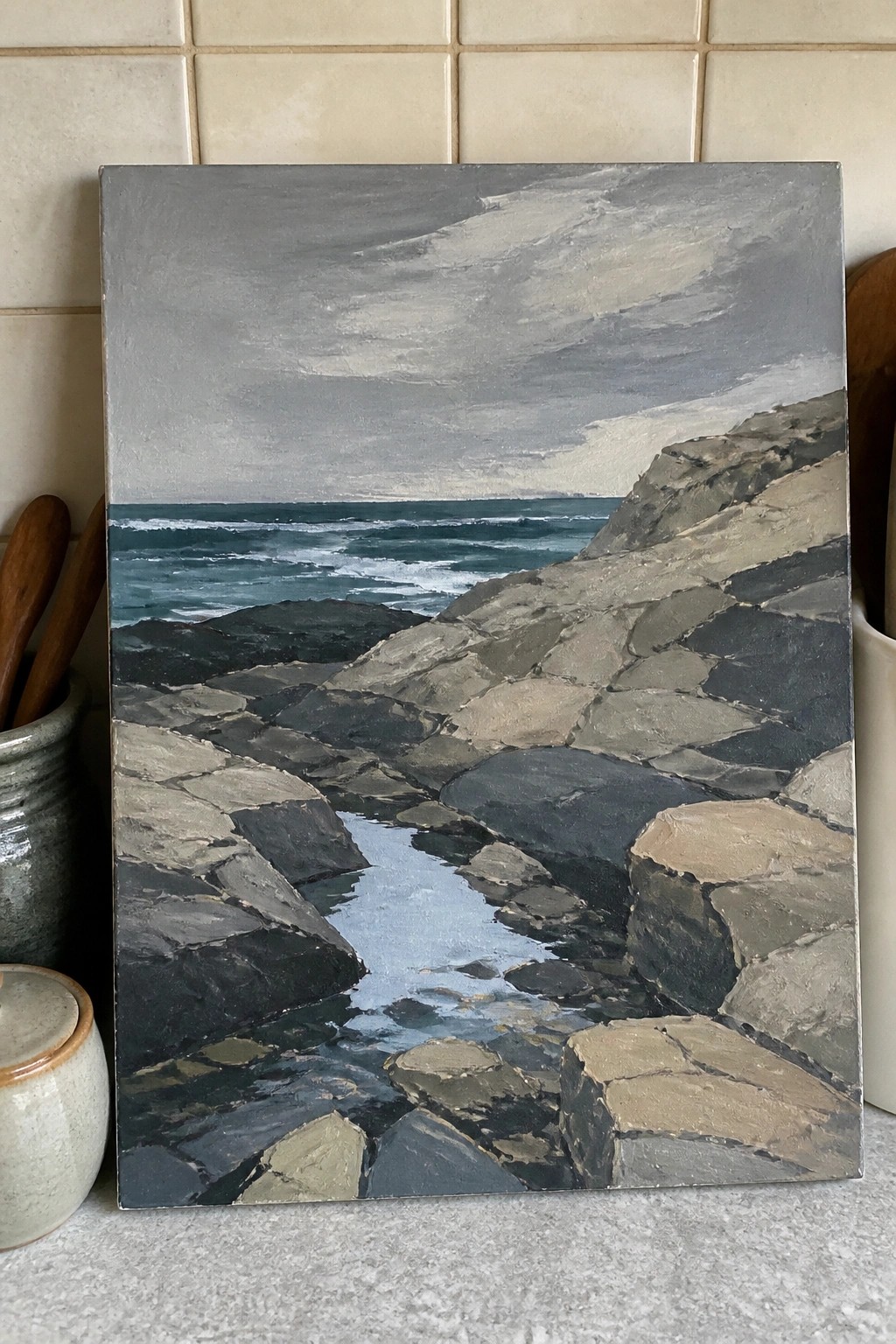
A landscape idea like this focuses on a rocky shoreline where a narrow stretch of water cuts through dark stones and leads out to the ocean. The acrylic approach relies on strong value contrast between the heavy rock masses and the lighter water to create depth without needing lots of fine detail. The composition stays effective because the water path acts as a clear leading line that moves the eye from the foreground straight into the distance.
What makes this idea useful is how the large rock shapes can be painted with flat blocks of color first and then adjusted with a few darker or lighter edges. You could easily change the mood by shifting the sky to a clearer blue or making the ocean a deeper teal while keeping the same rock layout. For canvas work this kind of scene gives you a solid structure to practice without requiring tiny details or many layers.
Layered Wavy Hills in Gradient Color Bands

A landscape idea built from horizontal wavy bands lets you create rolling hills using simple color blocks instead of detailed scenery. The approach stacks sky tones at the top and moves through shifting greens, yellows, and oranges below to suggest distance with color changes alone. This keeps the painting in the landscape category while staying graphic and easy to read from a distance.
What makes this idea useful is how the flat areas of color reduce the need for blending or texture work, so you can finish it on a single canvas in one or two sessions. You can swap the bottom orange and green layers for cooler tones if you want a different season, or stretch the same layout across a longer board for a mantel or shelf piece. The bold horizontal flow also photographs well for Pinterest without extra props.
Winter Landscape with Pine Silhouettes and Snowy Ground

A seasonal landscape idea built around dark pine tree shapes set against a soft blue sky with a low pale sun. The composition gains its impact from the clear contrast between the trees and the white snow, plus the gentle slope of the hills that leads the eye toward the center. This approach fits neatly into simple landscape painting and works as a quick canvas project that still reads well from a distance.
What makes this idea useful is how the limited color range and basic shapes let you practice sky blending and snow texture without needing fine detail work. You could easily adjust the tree placement or swap the sun for a brighter moon to match different times of day. For canvas decor, the same layout scales well to larger sizes while staying beginner friendly and quick to finish.
Gradient Sunset with Tree Silhouette and Water Reflections

A sunset landscape idea like this uses a smooth color transition from deep purple at the top through red and orange down to yellow to suggest time of day. The water below repeats those warm tones in horizontal strokes to show reflections while a small pale circle marks the sun. Dark tree and land shapes placed on the left create sharp contrast that keeps the focus on the horizon line.
What makes this idea useful is how the silhouette approach keeps the foreground simple so most of the work stays in the sky and water blending. You can swap the pine trees for different shapes or change the water to land without changing the core layout. The limited palette also makes it easy to finish on a small canvas and the strong color bands help it read clearly in photos for sharing.
Cliff Path to a Lone Tree

A landscape idea built around a winding path that draws the eye toward a single tree on a cliff edge above open water. The composition keeps the focus tight by using the path as a clear leading line while the flat sea and sky fill the rest of the space without extra elements. This approach works well in the landscape category because the limited shapes and soft color blocks let the eye rest on the main subject.
What makes this idea useful is the simple layout that relies on basic blending and one strong line rather than lots of small details. You can change the tree size or shift the path curve to fit a different canvas size without losing the effect. For practice this kind of scene adapts easily if you want to try a different season or swap the water for fields. The clean horizon and path also help the finished piece stand out in a feed because it reads clearly even at small sizes.
Rolling Coastal Dunes Landscape

A coastal dunes scene makes a strong acrylic painting idea because the overlapping hills create a clear sense of depth with simple curved shapes. The idea relies on a muted palette of sand tones, soft greens, and sky blue, with the distant sailboat serving as a small focal point that balances the open space. Sparse grass clusters add just enough texture to break up the dunes without complicating the composition.
What makes this idea useful is the way the layered hills let you build the scene gradually with broad strokes before adding the finer grass details. The limited color range keeps mixing simple and works well if you want to swap the boat for a different element or adjust the sky tone. For practice or quick canvas pieces, the clean horizon and minimal detail make it easy to finish in one or two sessions while still looking complete.
Night Sky Gradient with Layered Hills

A simple night landscape idea built around a smooth vertical gradient that shifts from deep blue at the top to purple near the horizon, finished with small scattered stars. The lower half uses overlapping curved shapes in progressively darker blues to suggest rolling hills without any fine detail or texture. This approach keeps the focus on clean color blocks and basic layering, which fits the minimalist landscape category.
What makes this idea useful is how the strong color contrast does most of the work, letting you practice smooth acrylic blending on the sky while the hills stay flat and easy to mask off. You can easily swap the purple for teal or keep the same layout but change the hill colors to match a different season. For canvas decor or quick practice pieces, the graphic style stands out on Pinterest because the shapes read clearly even in a small thumbnail.
Frequently Asked Questions
1. What supplies do I need to get started with these acrylic landscape paintings? You will need acrylic paints in basic colors like greens, blues, browns, and whites. Include a few brushes of varying sizes, a canvas or sturdy paper, a palette for mixing, clean water, and paper towels. Many of the 20 ideas use just these items so you can begin without extra costs.
2. How can beginners make these easy landscapes look impressive? Start with large simple shapes for sky and ground then layer in details like trees or mountains. Use contrast between light and dark areas to add depth. The article shows that quick techniques like dry brushing for texture can make even basic scenes stand out.
3. What common mistakes should I avoid in these acrylic landscape projects? Do not mix too many colors at once as this leads to muddy results. Work from background to foreground and let layers dry before adding fine details. The 20 paintings emphasize keeping strokes loose to maintain a fresh impressive look.
4. Can I customize the 20 landscape ideas to match my own style? Yes, change colors or add personal elements like different trees or skies while following the basic steps. This keeps the projects easy yet allows creativity. Experiment on small canvases first to see what works best for you.
5. How do I finish and protect these completed acrylic paintings? Let the paint dry fully for at least 24 hours then apply a clear acrylic varnish for protection against dust and fading. Frame the piece or store it flat in a dry spot. This step ensures your impressive landscapes last for years.

Hi, I’m Camille.
I’m a self-taught painter and creative blogger with a soft spot for acrylic painting, color play, and all the little art ideas that make everyday life feel more inspiring.
I started this space because I’ve always believed painting should feel joyful, approachable, and a little personal. Some of my favorite pieces come from simple ideas, messy palettes, and evenings where I just felt like making something pretty.
Most of what I share begins with acrylic painting, but I also love exploring other mediums when creativity pulls me in a new direction. My goal is to collect and share painting ideas that feel fun, beautiful, and actually doable, whether the mood is calm and minimal or bright and playful.
This is a space for inspiration, experimenting, and enjoying art without overcomplicating it.